Legion Premiere Review: 6 Ups & 2 Downs From 'Chapter 1'
The first instalment of the X-Men series is very weird and even more wonderful.

Legion has managed to generate a lot of hype in the buildup to its pilot episode, promising an X-Men TV series from the creator of Fargo, with all manner of trippy visuals, a movie star lead, and a whole lot of weirdness.
It's centred on Dan Stevens' David Haller, a schizophrenic mutant who has spent his entire life in various hospitals and institutions. The first episode, written and directed by series creator Noah Hawley, introduces us to David and the world - or maybe that should be worlds, since the show spends so much time questioning what is real - he lives in.
Along the way we meet a host of key characters, including Rachel Keller's Syd and Aubrey Plaza's Lenny, but mostly we're getting to learn more about David, and see the world as he does.
It's a smart, confident pilot episode, with some truly stunning moments, and while it won't be for everyone, those who do go with it will surely find a lot to love. Now that the first season is finally underway, let's take a look at what worked and what didn't in Legion's pilot episode.
(Please note, this review contains spoilers.)
Ups...
6. The Supporting Players Are All Excellent

Legion may be keenly centred on David Haller, but there's still plenty of scope for the supporting players in his life to make a big impact.
Much like he does on Fargo, Hawley populates this world with an array of weird and complicated characters, few of whom are outright good or bad. There's Hamish Linklater's Interrogator, as close as we really come to an antagonist of the episode (along with his lesser-seen superior), and effectively the straight-man of the episode. Linklater sells it well, retaining an authoritative tone despite the craziness going on around him.
Then there are the more minor players, such as Kerry Loudermilk and Cary Loudermilk; pronounced the exact same way, and affiliated with each other but seemingly not related. Amber Midhunter and Bill Irwin fill their respective roles well - the former with child-like wonder, the latter your more typical scientist figure - and, especially with that naming quirk, they're archetypal Hawley characters.
Leading the way, though, are the two main women in David's life: Lenny (Plaza) and Syd (Keller). Plaza is obviously having a blast as Lenny, David's drug-addled friend in Clockworks, and has pitch-perfect delivery (as you'd expect from her) for her droll remarks - though it's not entirely clear how she fits into the series going forward. Keller's Syd is a more enigmatic figure, who appears to have a sense of fun, but there's an inherent sadness and longing within as well.
5. It Serves As A Great Introduction, And Makes You Want More

Pilot episodes are never easy, given the fact that they have to sell the show to as wide an audience as possible, start building the world and characters in a satisfactory manner (while still withholding information), and ensuring they're strong enough to make you want to come back for more.
As a pilot, then, Legion absolutely does its job and then some, and yet does so almost without a care for adhering to the more typical pilot rules. It's weird, it's unconventional, and yet it completely leaves you wanting more.
The opening, which features a tableau of images moving through David's life(and soundtracked to The Who's Happy Jack), means we immediately get an understanding of who this person is, as we see him go from happy kid to frustrated, worn-down adult. From there, we take a deep dive into his psyche, getting to see the world through his eyes, hear it through his ears, understand it through his brain.
At the same time, it does a solid job of building the wider aspects of the narrative too. When we step outside into the one part of the episode that is assuredly real - when the Interrogator leaves the room, and discusses "mutants" with his boss - it hints at something larger at play with these powered beings. The actions of Syd and Melanie Bird (Jean Smart) suggest they know this too. It's going to take its time unspooling the bigger story, but it makes sure you want to follow it anyway.
4. A Truly Original Superhero Series
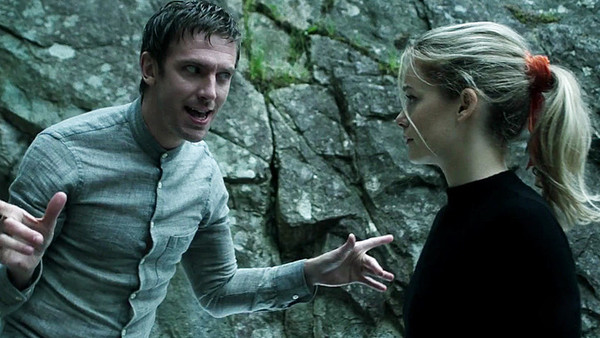
There are a lot of comic book shows on TV right now, the vast majority of which contain superheroes. The tone and quality can differ wildly as you move from Netflix to ABC to The CW to Fox, but there are some general consistencies you can expect to see in terms of overarching narrative and character (good guy saves his/her city from bad guy).
NBC have recently moved to provide an antidote to this apparent superhero fatigue (though that in itself is overstated; people never complain about law drama fatigue, or workplace sitcom fatigue) with Powerless, a superhero show without superheroes. Legion takes the idea of doing something different with the genre to its extreme, delivering a wholly unique comic book TV show.
In its first episode we aren't tasked with fighting crime, we aren't presented with a recognisable superhero figure or, for a lot of its runtime, discernible superpowers. It may be billed as an X-Men series, but the only similarity to that world is the word "mutant", otherwise this instalment owes more to influences from Stanley Kubrick to Wes Anderson than it does Marvel Comics.
3. Dan Stevens' Performance

For all the excellent supporting parts we get here, the pilot - and thus the show - wouldn't work without Dan Stevens at its core. A hugely talented actor who has come a long way since his Downton Abbey days (see also: The Guest), and will soon be starring in a probable billion dollar movie (Beauty and the Beast), he really gets the chance to shine here.
Stevens' Haller is a ball of kinetic energy and mental anguish, who has accepted his fate but then gets a chance to fight against it. There are a number of different elements Stevens needs to bring together here, such is the melting pot of emotions, thoughts, and tics that David is, but he carries them all superbly.
He's twitchy, distracted, and at other times perfectly still. He's weird, and yet there's also a relatable self in there, a man worn down by the system, making his way through life on auto-pilot. Stevens is always likeable throughout the episode, and utterly mesmerising.
2. The Stunning, Trippy Visuals

Nevermind comic book shows, in a visual sense there isn't really anything like Legion currently on TV. Hawley directs the hell out of this opening episode, which is full of stunning visuals and tricky camera techniques.
There are numerous sequences which are visually arresting, pulling us between seemingly different realities, the past and present, in disorientating fashion. It's not just flashiness for the sake of it however, but instead is utilised to truly take us into Davd's head, the kaleidoscope of colours and images the best way of presenting the world as he sees it.
There are a couple of scenes particularly worthy of a mention here. The one in the kitchen, in which time slows down and David's powers are unleashed, sending food and objects flying around, is an absolute delight. And then, at the end of the episode, when the show gets closest to superhero territory during the escape, it explodes into action in a stunning one-shot sequence that caps off the bedazzling pilot episode.
1. Its Handling Of Mental Health

Legion is many things, but one of the aspects that it really puts a focus on and handles well is an area still not explored too often on TV: mental health.
There's still, sadly, a stigma around mental health, in both real life and apparently in fiction as well, almost as if its some taboo subject, or people aren't sure what they're supposed to do with it.
In its first episode, Legion takes a confident approach to the issues around mental illness. In a more grounded sense, it looks at the medication patients receive, and the care and treatments provided by places like Clockworks; it also, through David's sister (played by Katie Asleton, who nails the perfect-life suburban-wife image) starts to look at the stigma around it.
At the same time, it explores it in a more reality-bending way too, its visuals, sound, and indeed story all serving to help us understand David and his world view, at least as much as he does.
Now, onto what didn't quite work in Chapter 1...
Downs...
2. It Can Be Too Weird

Legion is a WEIRD show. We patiently watch the drool hanging from a man's mouth, the visuals and sound mesh together to dizzying effect, there's a Bollywood dance sequence breaking out from apparently nowhere.
For the most part, it uses its weirdnesses to its advantage (the dance scene, for example, somehow manages to work), helping to sell the reality questioning nature of the show. Is any of this real? Who knows!
There are times, however, when it can all become a bit too much; where it feels like it's doing something more outrageously out-there simply because it can, Noah Hawley's brilliant mind free to run in any direction it chooses, and often going in many different ones at once. There are moments that intentionally throw you off, but other times it feels a bit too random, as you try - and fail - to get a grip on just what's going on.
1. It Feels A Bit Overlong

The Legion premiere comes in at 67 minutes, which is over 20 minutes longer than at least each of the subsequent two episodes. Admittedly there's often a need for first episodes - like finales - to be longer than usual, due to the extra legwork they have to do.
The decision doesn't fully payoff for Legion though. While having a slightly longer episode is understandable and probably necessary, it nonetheless feels like it goes on for about ten minutes too much. It could've been cut down to just under an hour, which would've trimmed some of the fat - there are scenes that go on too long, or feel perfunctory in just going over ground we've already covered. The overall package is so impressive that it doesn't impact the quality of the pilot too much, but it'll also help the show narratively to settle into a slightly shorter rhythm.
What did you think of Legion? Share your thoughts down in the comments.