10 Times Star Trek: Voyager Went Woke
Voyager was questioning accepted narratives long before the word 'woke' became an insult.
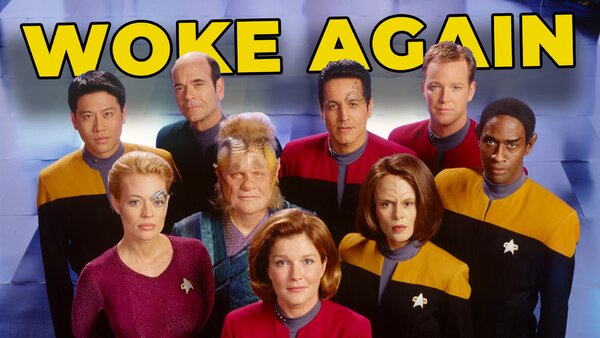
From the moment Star Trek first appeared on our screens, it had a message for us. Never stop being curious, live and let live, and don't be a jerk. With a diverse crew, oddly human stories and even the occasional hippy, Star Trek was woke before many of us had even smelt the coffee.
And of course later chapters in the epic franchise were no exception. Star Trek: Voyager, the first Star Trek show to be led by a female captain, made no secret that it intended to carry that progressive DNA through the late 90s and into the millennium.
Voyager launched with a very different story to tell. A lost crew, stranded alone, trying to get home. But it was Janeway's determination not to compromise Starfleet principles that tied the show to the hope, tolerance and compassion of The Original Series.
So in true Times Star Trek Went Woke fashion, let's recap exactly what being 'woke' means according to the Merriam Webster dictionary:
Aware of and actively attentive to important societal facts and issues (especially issues of racial and social justice)
Now, we're not saying that Voyager got everything right. On the contrary, there are definitely a few 'WTF were they thinking' moments. But on the whole, Voyager shared that same optimism of the original while still delivering plenty of 'must do better' rebukes.
Buckle up, this is going to be quite a ride...
10. Equal Healthcare For All

Even now, we're still arguing about the best and fairest way to deliver healthcare to everyone in need. And Voyager decided to wade into the debate back in November 2000 with the episode Critical Care.
The Doctor is sold to a hospital ship that assigns medical resources based on social status. The patients are separated into wards, with the higher echelons receiving overly abundant care while the lower classes remain cramped and under-treated.
What's more, treatment for a patient is only authorised based on their 'TC', a number assigned via a formula that weighs up their skills, profession, accomplishments and societal worth. While high TC patients are given medication just to increase their life expectancy, low TC patients are denied the same medication even when their lives depend on it.
The US Health Maintenance Organization allegory is savage. Yes, you can have doctors, medication and facilities, but an administrative system will decide how much, for how long, and whether you even qualify at all. And it's clear that this allusion to HMOs isn't a coincidence.
Robert Picardo himself described the episode as 'the Doctor's abduction by an alien HMO'. And producer Ken Biller reportedly suggested that the episode would be reminiscent of The Original Series tackling contemporary political and social issues.
Not that Star Trek has always been woke, right...?
This is against the backdrop of 1999 figures that showed 42.6 million people were without medical insurance in the US. And that was actually an improvement on the previous year.
The issue of healthcare was all over the 2000 US election campaign, with Al Gore in favour of a patients' bill of rights, and George W. Bush proposing tax credits to help lower-income families.
So while at first glance Critical Care might seem like just another Doctor abduction story, there was far more going on under the surface.
9. Question The Official Story

Living Witness may well be remembered for Kate Mulgrew's performance as dark Janeway, but there's an earnest warning under all that roleplay.
In the distant future, The Doctor is awakened in a museum and is horrified to find the Voyager crew portrayed as violent, ruthless warmongers. As he watches a simulation (very loosely based on real events), he realises that the truth has been severely warped to blame his crewmates for crimes they never committed. Worse, this rewritten history has supported the continued oppression of an entire race.
While the episode makes for an entertaining 'what-if' story, showing us the villainous alter-egos of our favourite characters, it was deliberately drawing on questions being asked at the time. In a 1998 edition of Cinefantastique, writer and producer Brannon Braga said:
It's also a show about revisionist history, which is a very topical issue. Cultures are taking issue with the way history is portrayed in the books right now, and controversies come out of that. Is the revisionist history accurate? Or is it being done to bolster one's cultural identity in the present?
And the remarkable thing is that almost 30 years later, we're still having the same debate. Still questioning the narratives presented to us. If anything, fake news and social media have only made it harder to separate fact from fiction. But the most important thing is that no matter how difficult it gets, we keep asking questions and challenging the stories we've inherited as fact.
8. The Pressure To Conform

Many of us think of B'Elanna Torres as the firecracker down in Engineering; in fact, that spirit is what we love about her. But it's not so simple for B'Elanna, who equates her hot-headed nature with her struggle to balance her Human and Klingon heritage.
The episode Faces forces B'Elanna to come to terms with both sides. A horrible experiment splits her into two separate versions of herself, one fully human, the other Klingon. They argue and struggle to work together, blaming each other for the hardships they've endured. And it's only when they finally accept that neither can manage without the other that they start to make progress.
This isn't just a case of reading too deeply between the lines. In Captains' Logs Supplemental: The Unauthorized Guide To The New Trek Voyages, writer Kenneth Biller is quoted:
I have a younger adopted brother who's biracial, and it's very interesting to see how he has had to deal with his identity. So this story idea, thematically, is very interesting to me.
Voyager doesn't pretend that one misadventure can undo a lifetime of prejudice and misplaced internalised shame. On the contrary, it resurfaces in the Season 7 episode Lineage. When B'Elanna finds out she's pregnant, she considers erasing her unborn daughter's Klingon traits. Her own childhood anxiety becomes fear for her baby's fate, and she almost caves to the pressure of assimilation by making the girl less visibly 'other'.
The painful rejection B'Elanna experienced as a child wasn't just some quaint futuristic problem. It was very much part of the real world in the 1990s and still is for too many people.
In a poll taken in 1994 (the year before Faces aired), only about half of Americans approved of interracial marriages between black and white people. And be warned, just the language used around some of these polls tells a depressing story. Around the time Lineage aired, that had only risen to about 65 per cent.
That suddenly puts B'Elanna's worry for her part-Klingon, part-Human child into a whole new context. Her fear that her child might face a more difficult life just because of her mixed heritage was sadly all too relevant for the time the episode aired.
7. Ethics of Cultural Interference

This is by no means a Voyager solo project. After all, Starfleet's Prime Directive is based on this very concept. But there's no getting away from Voyager's doubling down on the issue.
Natural Law sees Chakotay and Seven stranded in a shielded reserve and helped by the secluded, pre-warp community that lives there. To rescue them, the barrier has to be lowered. But with the barrier out of the way, their technologically advanced neighbours immediately seize the opportunity to 'improve' their lives with infrastructure and education. When Seven wonders if that might be for the best, Chakotay vocalises the question behind the story:
Can you honestly say that you know what's better for them?
The late 1990s and early 2000s were a time of cultural and historical reckoning. In the year 2000, the US Bureau of Indian Affairs gave a strongly worded apology for the historic mistreatment of Native American and Alaska Native peoples. In the same year, The Guardian ran a piece about the Brazilian policy shift in the 90s, from making contact with Indigenous people 'for their own good', to leaving them alone. And 250,000 Australians marched (and danced) over the Sydney Harbour Bridge to support reconciliation with Indigenous peoples.
So by the time Natural Law aired in 2001, the idea of governments deciding that Indigenous peoples should be 'improved', absorbed or educated based on their own values was being very publicly challenged around the world.
And that fits the particular flavour of cultural interference we see in Voyager's stories about unintentional harm.
Blink of an Eye sees Voyager's continued presence change an entire civilisation's mythology and technological development. Friendship One is about a 21st-century Earth probe that's reverse-engineered with terrible consequences.
Even in the pilot, we meet the Caretaker, left behind to care for the Ocampa after his people accidentally devastated their world's environment. Their overprotective response is shown to have continued to impede the natural progress of the Ocampans.
There's a theme running through Voyager that refuses to let us off the hook for even well-meaning or unintended damage. We're being warned to do better and take more care in how we insert ourselves in other people's lives.
6. The Duty To Remember
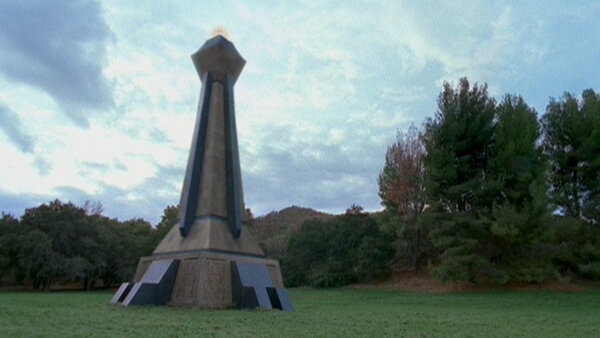
The episode Remember centres around B'Elanna receiving the memories of an elderly guest aboard the ship. She relives the descent of a society into fascism as they persecute, isolate and execute a group of people because of their beliefs. A dark chapter of their history that was later covered up.
Guest star Athena Massey said of the episode:
The Holocaust and so many different genocides have happened in our history, and I think it's important that people always be reminded and to keep humanity in check and not let this happen again.
Just a couple of years before Remember aired, Steven Spielberg formed the Survivors of the Shoah Visual History Foundation. The project aimed to record as many video testimonies from Holocaust survivors and witnesses as possible, so they could be preserved.
And that sentiment is at the core of Remember. An ageing witness saw the real story disappear from history and decided to pass her testimony to someone who could carry it forward.
But this wasn't just an abstract, historical concept. It was also happening in real time. In the same year Remember aired, the first trial at the tribunal for war crimes in the former Yugoslavia began. People were having to come to terms with atrocities that were happening in their own lifetime.
But the tone changes ever so slightly by the time Memorial arrives in 2000. It was more than just another Star Trek anti-war story.
When crewmembers of Voyager experience flashbacks about their involvement in war crimes, they eventually discover that a war memorial is the cause of the misplaced memories. The inscription on the memorial reads: words alone cannot convey the suffering, words alone cannot prevent what happened here from happening again.
In Cinefantastique, Brannon Braga is quoted on this episode:
It's about more than post-traumatic-stress disorder. It's about memorials, and the controversial nature of memorials.
That's not a random observation, given that Germany had just spent a decade debating how to memorialise genocide. And in 1999, the harrowing investigation into the atrocities that had just taken place in Kosovo was a stark reminder that humanity wasn't learning the lessons from history.
This speaks to a pivotal cultural moment, when the international community was debating how memories and evidence of war should be preserved, how they should be commemorated and whether doing so could help prevent repetition.
And not long after, in an episode of Star Trek, Chakotay and Janeway are arguing about whether people should be forced to relive the traumatic memories from a memorial...or whether they should be preserved, both for remembrance and as a warning.
5. Rehabilitation and Second Chances
The buzzword for crime and punishment in the 80s was 'tough'. In the US, President Reagan waged his 'war on drugs'. And by the 90s, controversial 'three strikes' laws handed dramatically longer sentences to some repeat offenders.
On the other hand, the 90s also saw substantial investment in US crime prevention programs. And Canada introduced a major sentencing reform that allowed for more alternatives to incarceration.
The argument over punishment and rehabilitation was far from settled. And frankly, it still isn't.
Then along came Voyager in 1995, and in many ways, it became the ship of second chances.
In the Alpha Quadrant, captured Maquis were considered criminals. Janeway could have thrown Chakotay's crew in the brig. Instead, they became a part of her crew, and eventually, her family. She doesn't just tolerate Chakotay; she makes him her first officer, despite past deeds.
The episode Learning Curve is as on the nose as it gets in advocating for education rather than punishment. Janeway and Tuvok discuss how best to deal with a handful of ex-Maquis crewmembers who are struggling with Starfleet discipline. In Janeway's words:
Instruct them in how to run a Starfleet vessel. Show them why we do things the way we do. Give them an opportunity to feel like they're part of the team.
Even Suder fits the theme, although his journey makes for a much darker story. When Suder murders a crewmember, Janeway explicitly says she would prefer to rehabilitate him than end his life. Confined to quarters, Tuvok becomes his mentor, guiding him through meditation to help control his violent urges.
While Janeway is hesitant to allow Suder more freedom, his progress after months of support and rehabilitation is apparent. And later, he would give his life to save the ship and crew.
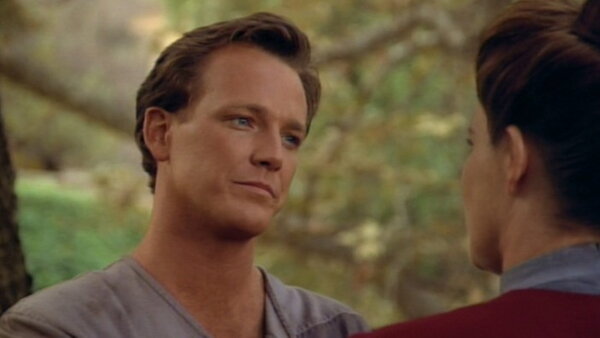
But the message really begins with Tom Paris. He was kicked out of Starfleet, not for the piloting error that caused the death of three officers, but for covering it up. His next stop was the Maquis, where he was almost immediately captured and thrown into prison for treason. But his luck finally changed when Janeway needed him to track down Chakotay's ship.
When Voyager was pulled into the Delta Quadrant, Tom went from observer to bridge officer. So if anyone's the poster boy for second chances, it's Tom Paris.
4. Environmental Responsibility

As long as there's been industrialisation, there's been environmental campaigning. But by the 1990s it was clear we were facing a global crisis. And yet again, we wish we could say that has changed.
One thing's for sure, Voyager was not messing around with subtlety when it came to environmental matters.
Meet the Malon, a race prepared to dump their toxic waste in space and endanger people's lives rather than clean up their industrial practices. Even when offered the chance to develop a purification system, a waste ship captain turns it down in favour of the profit he can make exporting waste.
We're just going to do our best Tuvok-with-raised-eyebrow impression here.
In the episode Night, we learn that a waste ship's captain is fully aware that the area of space they're polluting is inhabited. As Torres would say in a later episode:
How many worlds are you willing to contaminate to keep your own home so tidy?
The 1980s saw public outrage when the dumping of hazardous waste in poorer countries was exposed. In 1992, the Basel Convention came into force, restricting cross-border dumping, and by the time Voyager hit our screens, stricter amendments were already in the works.
Juggernaut expands the Malon's nauseating tale of corporate negligence and environmental exploitation. When disaster occurs on a waste ship, the crew is more concerned about reaching a safe distance than trying to avoid a massive toxic spill.
We did say that Voyager wasn't messing around on this one.
The Cloud dealt with a slightly different issue. Voyager enters a nebula to harvest particles needed to boost their energy supplies. But they soon realise that the nebula is a living organism that they inadvertently hurt. And quite rightly, Janeway decides it's their responsibility to help heal the injury they caused.
It's a story that's reminiscent of the ozone layer crisis. Just a few years earlier, more drastic measures were added to the Montreal Protocol to allow the ozone layer to heal. There was also the literal 'Call to Action' over the degradation of coral reefs, alongside growing concern about the impact of deforestation.
All of these things have one theme in common. We made this mess...it's our responsibility to help the planet heal from it.
But the episode Thirty Days took environmental activism to a whole new level. An ocean planet is facing destruction, and cutting back oxygen-mining could help. But the government has little interest in pursuing that solution. So Tom Paris takes matters into his own hands, attempting to disable one such facility to help save the ocean. While the episode makes it clear that there were consequences for Tom's extreme actions, it has a message that's hard to ignore.
Looks like Tom is actually the poster boy for third chances..?
3. Crew Diversity
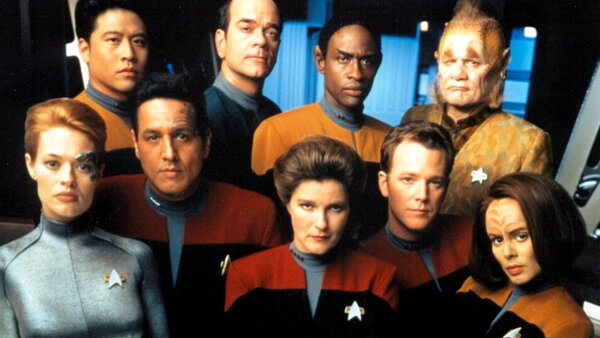
You might be forgiven for thinking, 'But aren't all Star Trek crews diverse?' The answer is yes. Right from the start, The Original Series took care with the diversity of its cast. And yet, as Voyager began airing, headlines like Now for a Politically Correct 'Star Trek' appeared.
Even by Star Trek standards, the diversity of the Voyager crew was evident in the very best of ways. Voyager was determined to convey the message that bringing more points of view, life experiences and cultures to the table enriches all of us.
For the first time, we had a female captain leading a show...but more on that later. B'Elanna Torres is of mixed human and Klingon heritage, but her actor, Roxann Dawson, also brought Latino representation to the cast. Tim Russ played the first prominent Black Vulcan, Asian American Harry Kim headed up Operations, and the first officer's seat was filled by a Native American character.
Although, we do have to lament that the representation of that particular culture wasn't up to scratch, a fact that Robert Duncan McNeill has been vocal about on The Delta Flyers podcast. The hiring of Jamake Highwater, otherwise known as Jack Marks, as a Native American consultant was meant to give Chakotay authenticity. But his claims of Cherokee ancestry had already been publicly challenged years before he was tasked with shaping Chakotay's biography. In the end, the shallow nature of some of the research surrounding Chakotay does show onscreen.
Meanwhile, Tim Russ sometimes found himself in the bizarre situation of having to defend Black Vulcans even existing. In an interview with Cinescape, he said:
...people like to see themselves on television. If a minority sees a minority, he'll watch it. People can identify with these characters - and beyond demographics, this is supposed to be the 24th century, by which time [race and gender] are no longer factors.
And of course, it's not just a matter of diversity. How we represent minorities is just as crucial. Speaking to Star Trek: Voyager Magazine, Russ said:

...Tuvok is a well-respected, high-ranking officer in Starfleet. That aspect is very important. People are always asking me how there could even be a Black Vulcan.
Online chats from the time are still around, arguing about Voyager's 'political correctness', even referencing a lack of white males in the crew.
But the ethos behind this diversity wasn't just representation. It was about showing people from all walks of life working together. In A Vision of the Future - Star Trek: Voyager, executive Tom Mazza is quoted:
People love to see interesting characters. They like to see them working together as a team. It's important. People want to have hope.
2. Women in Engineering

Understandably, a lot of kudos is given to Janeway's representation of women in Voyager. But there was also another very important female role model in the crew.
In The Next Generation, we had a brief appearance from Chief Engineer MacDougal, but B'Elanna Torres was the first permanent female chief engineer of Star Trek. And for a franchise that had often put women into communication, specialist or care-giving roles, it really was a big deal to see a woman rolling up her sleeves and fixing the warp core.
Most importantly, she wasn't just an engineer. She was the chief. After earning the spot over internal candidate Joe Carey, Engineering became her domain. Not only was she inevitably expected to work miracles and pull off a six-hour job in two, but she was also giving orders, submitting reports and running a department.
And having a woman be the go-to technical expert in the room was powerful, because in the real world, women only made up about 12% of engineers in the US around the time Voyager aired.
Shocked? You have every right to be, but it gets worse, because as of 2024, that had only gone up to about 16%. We must do better, and every time we see a woman in engineering and STEM, it normalises it just that little bit more. Even if it is just on our favourite show, because we know these role models make a difference.
Only recently, Cassidy Parrish, an engineering major, created an innovative robotic glove to help her father's hand pain. And guess who she cited as an inspiration? You guessed it, B'Elanna Torres:
It was cool to see not only someone who was powerful and an engineer but also a woman in STEM.
1. Women in Leadership

It cannot be overstated how impactful it was to see a woman in the centre seat. But it wasn't just that she was there. It was the character of Janeway herself, and how everyone around her reacted to her leadership.
There was no doubt that Kathryn Janeway was in charge of that bridge. Confident, smart and decisive, she was exactly the kind of captain that would inspire a generation of girls (and boys). And she didn't have to be overly ruthless or macho to make her mark. On the contrary, her compassion and empathy were continuously shown to be a strength.
But don't just take our word for it. Kate Mulgrew herself said in a 1995 interview for the Los Angeles Times:
[The captain] has to have an emotional center, an intellectual center, a power, a presence, a calm. Full thrusters, you know? This is a great woman.
Producer and writer Jeri Taylor was also quoted in the Los Angeles Times:
In the 24th Century, having a woman captain is nothing extraordinary. To all the people around her, there is nothing she has to prove. It's really the 20th-Century audience [to whom] it must be proven.
And that last part is key. Janeway was the captain of Voyager before women were even allowed to serve aboard UK or US submarines. In fact, in the year Voyager first graced our screens, figures show that only 9% of US senators, 2% of US state governors, and 0% of CEOs in Fortune 500 companies were women.
The good news is that Janeway was exactly the kind of role model we needed if that bleak reality was ever going to change.
Dr. Erin Macdonald, astrophysicist and Star Trek science consultant, wrote a beautiful piece on startrek.com about how inspirational Janeway had been. Likewise, Dr. Joan Schmelz, solar physicist and astronomer, looked to Janeway for the female leadership role model missing from her all-male mentors. And of course, there's the now-famous picture of astronaut Samantha Cristoforetti, dressed like Janeway in space, with the caption 'there's coffee in that nebula'.
Kate Mulgrew spoke in a 2022 interview about how much it meant to have been such an influence:
Those women in STEM - a lot of them changed their minds, reformed, reshaped their opinions and their goals as a result of Captain Janeway. And because I saw it directly, I was deeply and directly affected by it. And over the years it's done nothing but evolve. Very, very few actresses have that. I've had it for over 25 years. It's extraordinary to me.
And one thing is absolutely certain. She inspired, encouraged and gave confidence to a certain article writer when she was a little girl, too.