10 Doctor Who Episodes That Were Doomed From The Start
It's not always plain sailing in the Whoniverse...
Doctor Who has been through quite a lot over the years. We've had Daleks, Cybermen, the Master, the Time War, weird little slug guys from Thoros-Beta, and the occasional universe-ending catastrophe.
But sometimes, the biggest threat to the programme hasn't been lurking in the shadows of a distant planet. It's been happening behind the cameras.
For a show that's been running for over 60 years, Doctor Who has had its fair share of production nightmares. From freezing film sets and last-minute rewrites to cancelled episodes, unfinished adventures, and some rather questionable monsters, there have been times when getting an episode on screen has been a bigger challenge than saving the universe itself!
But which Doctor Who episodes struggled most? And which of them were fighting such an uphill battle that they were essentially doomed right from the word go? Let's just say that some of these really were bigger disasters than a malfunctioning TARDIS...
10. Legend Of The Sea Devils

Legend of the Sea Devils had all the ingredients: the long-awaited return of one of the show's most iconic monsters in a swashbuckling pirate adventure?! Sign me the hell up, what could go wrong?
Well, quite a lot actually.
The crew was already coming off the back of the absolutely gruelling conditions of filming Flux during the pandemic, and the specials that followed were no easier. Legend of the Sea Devils was filmed under very strict COVID conditions, with the production having to contend with cast and crew bubbles, testing protocols, elaborate sets and ships, period costumes, and a huge amount of VFX in non-ideal conditions.
Furthermore co-writer Ella Road has confessed that the very task of completing the script was "mad and accelerated". Chris Chibnall has also confirmed that the BBC asked him to make an extra episode fairly late in the day – widely believed to be this one, which would explain its rushed writing process.
Overall then it's no surprise that the episode itself is a hot mess. The Sea Devils are underused, the plot is all over the place, and the editing and direction is amateur at times, with the choppiest of choppy action scenes and a hilarious moment where a Sea Devil channels his inner Mario when jumping onto his ship.
It's a right shame, really. The production team have obviously put in a tremendous amount of effort to make this work, but the circumstances clearly worked against them.
9. An Unearthly Child (Version One)

In the early '60s it was absolutely unthinkable that a show like Doctor Who could happen at all. Producer Verity Lambert and director Waris Hussein faced enormous difficulty from the very beginning, resulting in An Unearthly Child, the very first episode of Doctor Who, being doomed to the cutting room floor.
Verity, being the BBC's only female producer at that time and the youngest as well, was of course not taken seriously and faced a lot of friction when developing the show. The script was delayed several times forcing filming schedules to constantly change, which angered the BBC Planning Department. And when cameras finally did start rolling, major problems like the TARDIS doors failing to close properly – resulting in the crew members struggling to shut them being visible in the final footage – rendered certain moments unusable.
It's no surprise that such a complex and risky show was so difficult to put together, but the net result was that Head of Drama Sydney Newman chucked the first episode in the bin and demanded it be re-recorded in its entirety. Alongside all the production problems, Newman felt the story itself was lacking, with glacial pacing and an unlikeable Doctor.
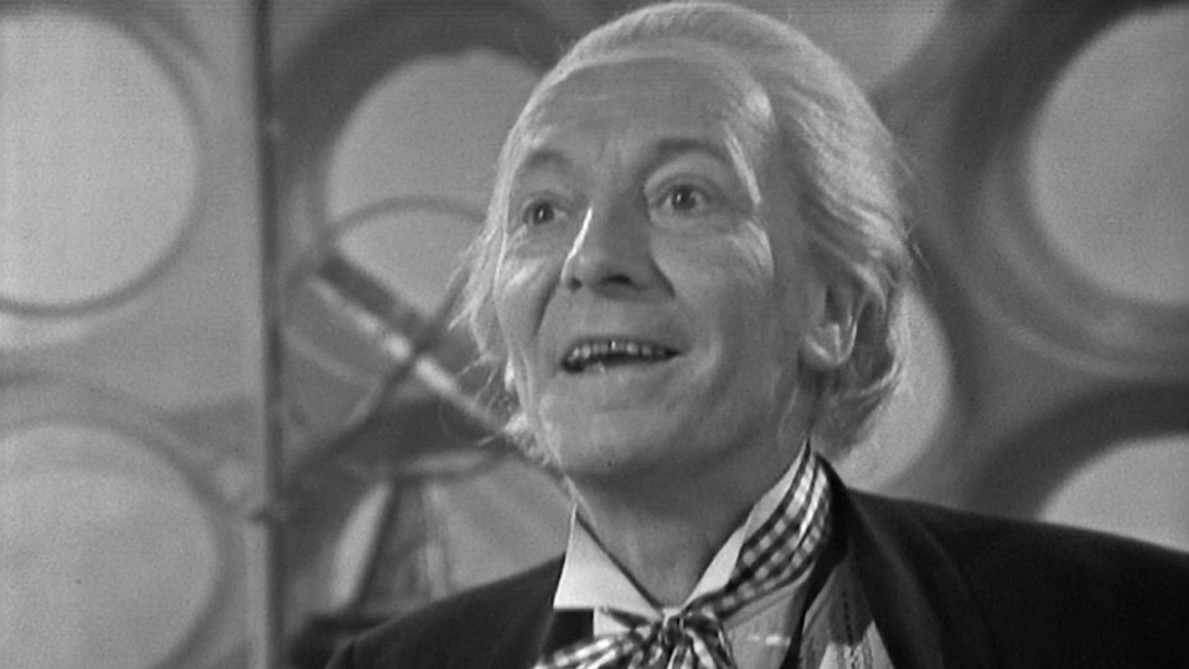
Doctor Who was a big gamble at that point, and it could easily have ended there if they hadn't been given a second chance to reshoot the pilot and rework the episode, but thankfully the next version was vastly improved.
And from there on, everything was fine and dandy. Wrong! An Unearthly Child actually aired the very next day after the JFK assassination, which of course meant the public's attention was all over the place.
To keep this tragedy from killing Doctor Who before it had even got going, the episode was repeated the following Saturday, which gave it a bit more breathing room. And that's the end of that, Doctor Who has never had any production problems ever again!
Ah, wouldn't that be nice?
8. The Name Of The Doctor

Steven Moffat absolutely knew how to give himself a right old laugh.
The Name of the Doctor was a big culmination point for the Eleventh Doctor's story, bringing together Clara's impossible timeline, the Great Intelligence, the Paternoster Gang, River Song, and the whole 'what's the Doctor's name?' thing.
The episode was produced under rather unusual circumstances. Regular producer Marcus Wilson was putting together the 50th anniversary special and was therefore unavailable, while the recording itself overlapped with a completely different recording block, crossing over with the final week of Nightmare In Silver.
And the ending was so interwoven with the anniversary special that they simply couldn't film it until Spring 2013 when the special was in production, which was very close to when The Name of the Doctor would actually air.
But the thing that doomed the episode from the start was expectation. It might seem silly looking back now, but at the time everyone was expecting some huge, shocking revelations about the Doctor's real name – understandably so – and a bigger and better finale that lived up to such an audacious episode title.
What actually happened was that the episode underwhelmed, while the John Hurt ending, though a massive moment, was just confusing. So... is this Matt Smith's successor? What the hell is going on here?!
Still, without the weight of expectation we can look back on The Name of the Doctor as a pretty decent episode overall, but at the time it never really stood a chance considering all the hype going in.
7. The Two Doctors

Having Patrick Troughton back in Doctor Who should have been a dream. Having Robert Holmes write the story should have been even better. Turns out, not so much.
Initially, producer John Nathan-Turner wanted The Two Doctors to be set in New Orleans and planned to film on location in the US, while Holmes planned his script to get as much out of the location as possible. But it wasn't to be.
After all their time and planning had been put into a New Orleans shoot, funding was pulled at the last minute, rendering the trip impossible. Scrambling for an alternate plan, Nathan-Turner settled on Seville, Spain, much to the chagrin of Holmes, who was forced to rewrite his scripts and was frustrated at the wasted time spent devising them for the original location.
The Two Doctors' chaotic production continued once time came to roll cameras, with props going missing on the flight to Seville, and extreme heat and stomach bugs hampering the cast and crew throughout.
It's little surprise then that the result was a very odd, very disjointed three-part serial, with a plot that spends a great deal of time wandering around Spain, doing the one thing media should never do: just being boring.
With two brilliant Doctors, one of the show's very best writers, and the Sontarans, you'd have expected something a lot better, but with such a messy route to screen, this one was fighting an uphill battle from day one.
6. 42

42 was Chris Chibnall's first foray into the main show, after previously working his magic (and occasional chaos) on Torchwood.
Funnily enough for a story about a spaceship hurtling into the sun, this one was cold. Like, really cold. The production took place in a converted paper mill, where very low temperatures caused all sorts of filming problems. Actors had to be careful not to let their breath steam up on camera, which is hardly ideal when you're trying to convince an audience that you're right next to a massive ball of sentient fire and you're supposed to be sweating buckets.
But the cold was the least of the production team's problems. 42 was originally scheduled to be filmed before Utopia, with both episodes forming Block Seven of the production schedule under director Graeme Harper. However, things took an unexpected turn in December 2006 when the filming order was reversed. Then, in January 2007, it was discovered that Derek Jacobi – who was playing Professor Yana in Utopia – would be unavailable for the revised filming dates.
So things were reshuffled. Again.
42 was suddenly brought forward, leaving the design teams with precious little time to get the sets, props and costumes ready. What had originally been a pretty straightforward production schedule became a frantic race to get everything ready before taping began.
Considering the scheduling chaos and freezing conditions, the writing was on the wall for 42 right from the start. It's not the worst episode in the world, granted, but its tricky production clearly didn't do it any favours.
5. Shada

Shada is a story that was doomed with a capital D.
Penned by legendary writer Douglas Adams, it was intended to be the big finale to Season 17, but little did those involved know that it would never see the light of day at all.
While working on the scripts, Adams was busy with another small project you may have heard of: The Hitchhiker's Guide to the Galaxy. As a result Shada was put together fairly quickly, resulting in a story that Adams wasn't best pleased with and that he felt was quite bloated.
This was the least of Shada's problems however. Production of the episode was derailed entirely by labour disputes, which had been brewing for some time and meant that filming of the story simply could not be completed. The Doctor Who team tried to hang on but after a while it became clear that Shada would have to be abandoned altogether, with The Horns of Nimon instead marking the end of the season.
Though this was the end for Shada in its original, intended form, it has been revived in various ways over the years, including an Eighth Doctor adaptation for Big Finish, and a 2017 edit combining live-action and animated material, with Tom Baker himself returning for a brand-new scene set in the TARDIS!
4. The Battle Of Ranskoor Av Kolos

A new Doctor, a new showrunner, a completely new companion team and a fresh start for the programme: Series 11 was a major swing for Doctor Who.
You'd hope for such an important series that it would all come together in a spectacular finale. But The Battle of Ranskoor av Kolos shows, rather spectacularly, what happens when you take something out the oven well before it's cooked.
Chris Chibnall wrote the episode himself, while also spending lots of time with other writers and working on their scripts as well. As Chibnall has confessed, this took up more of his attention than he expected, and he just didn't have time to give The Battle of Ranskoor av Kolos the attention it required.
As a result, the version of the episode that went before cameras was a very unpolished first draft.
It's a damning admission that is fully evident onscreen. The story brings back Tim Shaw, introduces the enigmatic Ux and then tries to weave the various companion stories together, but in the end it doesn't really do much of anything. It just doesn't feel like a proper finale in any sense whatsoever, more an oddly underwhelming adventure which is in no way convincing as the climax.
There are some interesting ideas in there, and the Graham/Ryan relationship gets a real pivotal moment. But it all feels like the script needed another pass – which, um, was exactly the case. Who'd have thought that not giving your finale the required attention would doom it to mediocrity?
3. Warriors Of The Deep
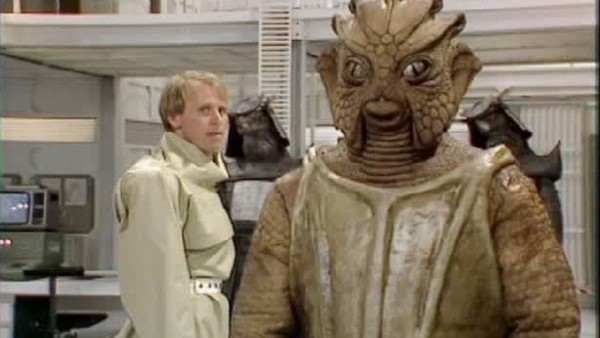
If you want one Doctor Who story to illustrate just how bad things can go when production is rushed, Warriors of the Deep is a strong contender.
The return of the Silurians and Sea Devils should have been a winner, but before production could even begin the episode hit an unfortunate turn.
After the announcement of the 1983 General Election, the BBC suddenly needed more studio space for its election coverage, so Warriors of the Deep's entire schedule had to be overhauled. This resulted in production essentially being one big rush – rehearsals were cut short, scenes were often given only one take, and the VFX department was absolutely reeling from the amount of work it had to do to get everything ready on time.
And then there's the Myrka. Oh, the Myrka. What a magnificent disaster. The massive aquatic creature was meant to be one of the story's major features, but the costume wasn't finished until right before filming, and the performers had absolutely no opportunity to rehearse in it. And what did we get? One of the most infamously bad monsters in Doctor Who history.
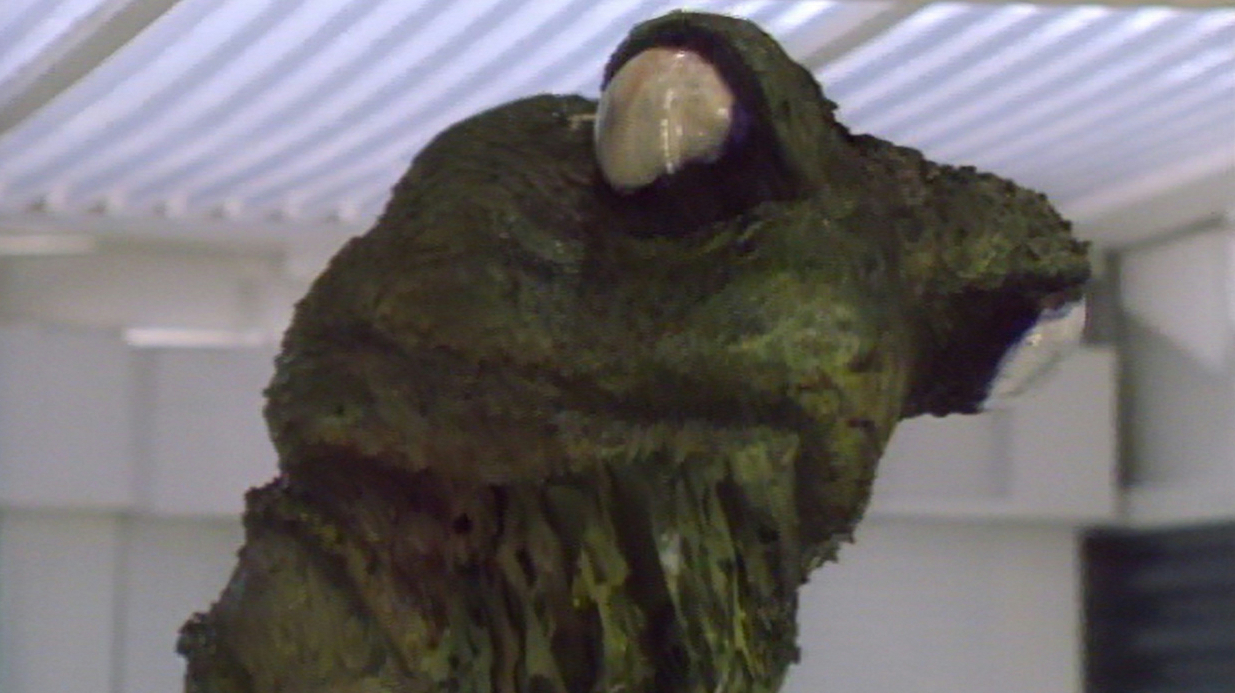
So rushed was the Myrka that its paint was still drying, causing Janet Fielding's outfit to become stained through contact with it. Crazy stuff.
The Silurians and Sea Devils uniting onscreen is precisely the sort of thing Doctor Who should be doing. But it didn't have a chance in the first place given the election, the production delays and the fact that the monster looked as if it had walked out of a school pantomime.
2. The 2026 Christmas Special
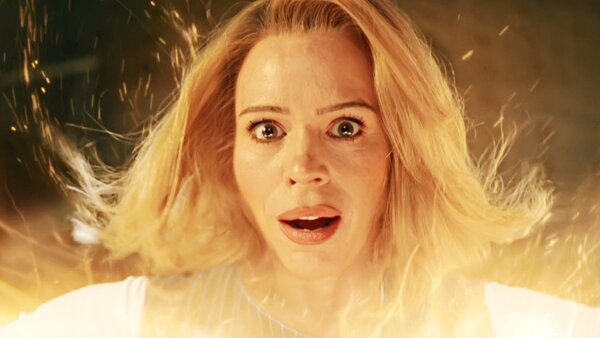
Oh boy. Where to even start.
I think we can all agree that this one still stings a bit. Such a monumental Billie Piper-shaped cliffhanger deserved a proper resolution, but in a way the writing was on the wall right from the words "Oh, hello!"
That's because there was never a proper, concrete plan. Piper was chucked into The Reality War at the last minute, after Ncuti Gatwa chose to regenerate. Then in late 2025 the BBC announced a Christmas Special for 2026, but at the time nobody involved really knew what that would look like. Bad Wolf had finished its contracted run of episodes, Disney was no longer an international streaming partner, and the BBC wasn't sure how to fund and produce the show going forward.
The Christmas Special was a mere stop-gap while those bigger decisions were being made. Nobody's hearts were truly in it – so its cancellation in June of this year was something of an inevitability.
Perhaps the craziest thing of all was what Russell T Davies had to say about the special. He confirmed there was no script, that he'd never actually written the episode and that no actor had been approached to play the next Doctor. Even so, in previous interviews and in his memoir, The Queerest of Folk, he detailed plans for the episode and confirmed he'd pitched an idea to the BBC, who contracted him to write the special in March 2026.
In other words, the special did exist... but it also didn't. It was going ahead... but it also wasn't.
It's a very strange, messy situation that would've surely doomed the episode one way or another. Had it been made then you can imagine it being a total disaster – but perhaps mercifully, we live in the timeline where we never got to find out.
1. Almost All Of The Seventh Doctor

Look up the definition of 'uphill battle' and you're bound to see a picture of the Seventh Doctor in his iconic question mark sweater. Though his era produced many fantastic stories, the circumstances of McCoy's time in the TARDIS were, to put it mildly, not great.
By the time the Seventh Doctor debuted, Doctor Who was in a pretty shaky state. The previous era had been in terminal decline, with falling audiences, a steadily worsening public image and a constant battle to convince the BBC the show was worth continuing.
McCoy's first series was a real struggle. The scripts were all over the place, the production values were a bit dated, and McCoy was left with the difficult job of taking over from Colin Baker, who refused to come back for a regeneration scene and instead wanted a final series, which the BBC declined.
The odds were stacked against the Seventh Doctor from the beginning, but there was another significant blow that was dealt by the BBC itself: the decision to air McCoy's episodes opposite ITV's juggernaut soap, Coronation Street.
This was something of a David vs Goliath battle, and Doctor Who never stood a chance. In an era before catch-up and streaming, people simply weren't able to watch Doctor Who if they wanted to watch Corrie, which millions upon millions did. It's no secret that higher-ups at the BBC had lost faith in Doctor Who around this time, and this bizarre scheduling decision felt like a transparent attempt to hinder the show and allow them to justify cancelling it. Which, in the end, is exactly what happened.
This is to take nothing away from the quality of the McCoy era, which found a really great stride in the partnership of Ace and the Doctor, with some fantastic stories like Remembrance of the Daleks and The Curse of Fenric.
But it doesn't matter how good the show is if nobody is watching it, and in that regard, McCoy didn't stand a chance.