10 Doctor Who Moments More Important Than You Realised
You won’t believe how long it took for the classic Doctors to appear in NuWho…

Fittingly for a show about time travel, there’s some stuff in Doctor Who that can only be truly understood in hindsight.
Whether it's through new information coming to light or the show going off in new, unexpected directions, some moments end up having far greater significance than is first apparent.
And despite the best efforts of fans to analyse every frame of every scene of every episode (and every bit of behind the scenes content!), there are still things that go over people’s heads.
For instance, think you know everything that was going on in the Fourteenth Doctor’s head? Think the Timeless Child’s friend was just a stranger? And think the child Doctor in Listen was just cast at random? Think again.
There are also hidden depths to stuff you’ll literally never have thought about, like Wilfred Mott’s hat and Jackie Tyler’s age (it’s almost too exciting, we know). Plus milestone moments that might have passed you by.
Basically, brace yourself. Because in each of these cases there’s much more going on than meets the eye.
10. Christopher Eccleston’s Own Father’s Day

As he’s reiterated many times, Christopher Eccleston didn’t have the happiest time shooting Series 1.
But beyond his own struggles and his deteriorating relationship with the higher-ups, there was something else he had to contend with – his seriously ill father, Ronnie, which forced Eccleston to leave Doctor Who for three weeks to go and care for him.
And it just so happened that Eccleston's three week break – and subsequent return – coincided with the episode Father’s Day.
For obvious reasons, there was an added resonance when it came to Eccleston filming his scenes for this episode. At New York Comic-Con in 2019, he described Father's Day (11:43 in the video below) as one of his favourite episodes to shoot, saying:
"To come back and to be shooting Father's Day which was all about Rose's desire to meet her father was very emotional. I enjoyed that one, it resonated with me... it's an issue that I've come back to, fathers and sons."
Though the Doctor’s role in the story is quite small, there was an emergency alternate script prepared in case Eccleston needed more time off. This would've taken the Doctor out of the action sooner, reducing his role to that of a disembodied voice.
Father’s Day is astonishing in its own right, but this real-life parallel makes it even more special. And Eccleston often cites it as his favourite story, so the connection clearly isn’t lost on him either.
9. The Young Doctor's Lookalike
For the most part, the Doctor’s childhood has always remained a mystery, and many would argue rightly so.
During RTD1 a spin-off following the exploits of a young Doctor at the Time Lord Academy was vetoed, on the basis that it would've reduced the character’s intrigue.
But in the years since we have caught odd glimpses of a younger Doctor.
One of the most significant came in Listen, where the final scene takes us back to Gallifrey, to the barn where the Doctor grew up, requiring someone to briefly play his younger self – a gig that ultimately went to Michael Jones.
But Jones wasn’t just picked at random. He was specifically cast because he looked like a young version of First Doctor William Hartnell, with the costume team even giving him a Hartnell-esque hairstyle to match.
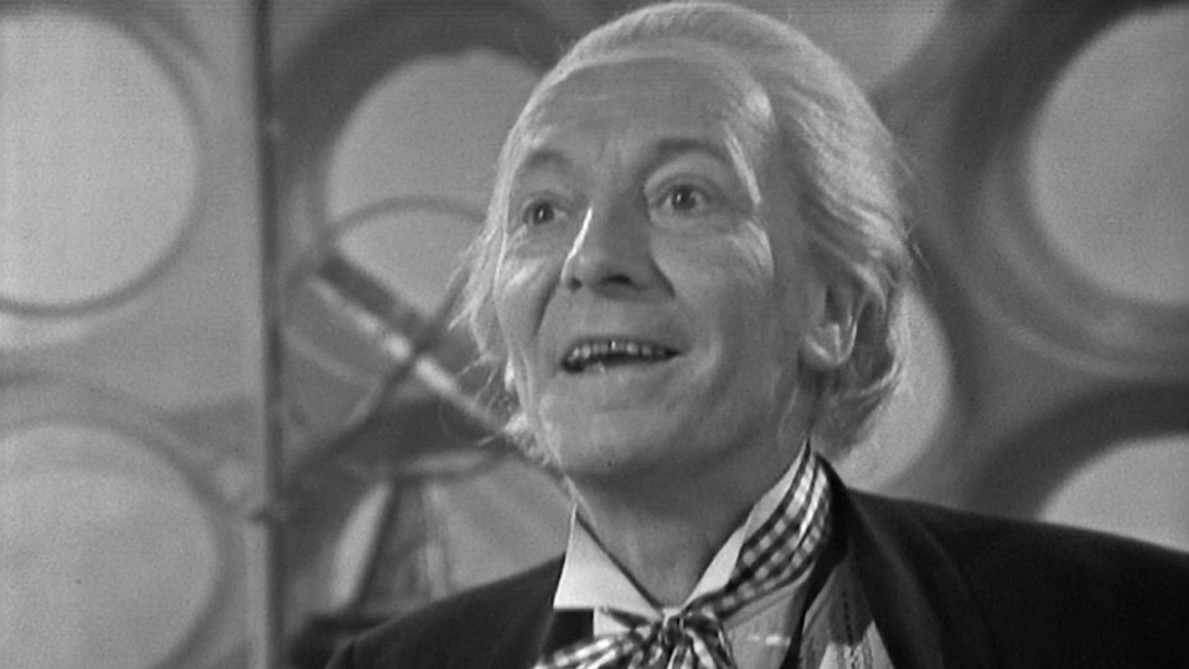
However in order to preserve that all-important sense off mystery, we never actually see Jones’ face in the episode. So we’ll just have to take their word for it.
It's still a cool touch though. After all, if you’re going to delve into the Doctor’s origins the least you can do is honour the man who started it all!
8. The Meddling Trailblazer
Most Time Lords we've met other than the Doctor have turned out to be bad eggs. Granted the Doctor can also be a bad egg at times, but you get the point.
The most well-known example of course is the Master – the Moriarty to the Doctor’s Sherlock Holmes. In the years since the show has built a massive rogues gallery of Time Lords who also deserve a few hours on the naughty step, from Omega and Borusa to Rassilon, the Rani and Tecteun.
But there's one that pre-dates them all: the Meddling Monk.
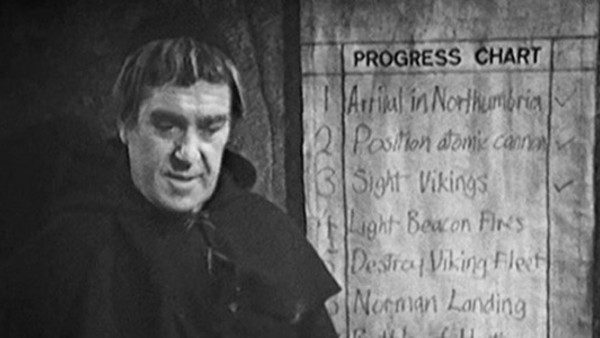
Encountered by the First Doctor in 1965's The Time Meddler and three instalments of The Daleks’ Master Plan, the Monk is a rebel Time Lord who likes to disrupt history purely for the lulz. He was also the first villain to have a rematch with the Doctor, and the first Time Lord other than Doctor and Susan to appear in the show. So quite a trailblazer!
Yet he never really gets the credit for any of these things, because he wasn't actually denoted as a Time Lord at the time – that concept wasn't introduced for another four years. But without the Monk, we may not have seen as many of the other renegade Time Lords that followed.
And while we're here... bring back the Monk! The Master's returned enough times already. It can't be any worse than what they did to Omega, can it?
7. The REAL Reason Jackie Tyler Turned 40
It was the Cybermen that featured in Doctor Who's 25th anniversary special Silver Nemesis, and by the time they returned in the 2005 revival in Rise of the Cybermen/The Age of Steel, another anniversary was hiding in plain sight.
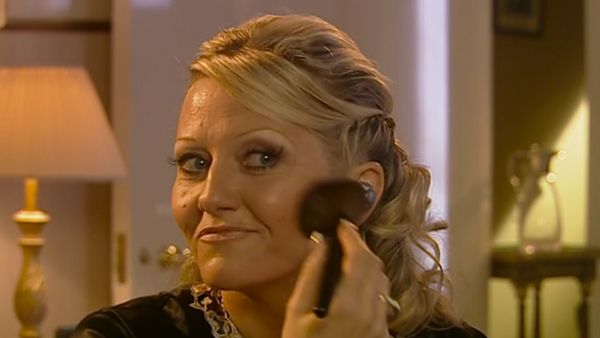
The big reveal of the redesigned Cybus models comes at the Tyler mansion, where the Jackie of Pete’s World is holding her 40th (or, as she’d have you believe, 39th) birthday party.
You might assume that this number was picked at random. Or on the basis that Camille Coduri had, at the time of recording, just celebrated her own big 4-0. But no! As RTD has since confirmed, it was actually a nod to the fact that The Tenth Planet – the story that first introduced the Cybermen, and saw the First Doctor regenerate – was turning 40 that year.
So yes, Jackie turning 40 was a nod to the fact that the Cybermen were also 40. Rather fitting, given that she ends up getting turned into one.
Given that 2026 marks the 60th birthday of the Cybermen, might they feature in the upcoming Christmas special in some way? Will we get to see Jackie Tyler's 60th?!
Never mind Billie Piper, these are the questions we should really be asking.
6. Wilf’s War Stories

Bernard Cribbins had quite a journey with Doctor Who.
Having played companion Tom Campbell in the second 1960s Peter Cushing Dalek movie, he made his proper television Who debut as a newspaper seller in Voyage of the Damned – a character later retooled into Donna’s grandad Wilf.
Then, for the Tenth Doctor’s final story, Wilf became a companion in his own right.
To flesh the character out a bit more, Russell T Davies drew on Cribbins’ own experience of serving in the British Army’s Parachute Regiment. Hence why he has that all-important revolver.
In The End of Time Part Two, when Wilf’s looking down at Earth and telling the Doctor about being caught in a blizzard of bullets on a rooftop in Palestine, he’s basically remembering it for real – these lines were added specifically based on Cribbins' own real-life experiences.
And then there's Wilf's iconic hat. For many of his previous appearances (even as far back as Voyage of the Damned), Cribbins had worn his own regimental badge on his beanie. Which means that every time Wilf wears that beanie, there’s a genuine piece of history there on screen, hidden in plain sight. Extraordinary.
Still, the award for Wilf’s most iconic piece of headwear has to go to the reindeer antlers. We don’t make the rules.
5. Pertwee Era Precursors

When Jon Pertwee took over as the Doctor in 1970, much had changed.
In addition to being in colour rather than black and white, the show was now set on present-day Earth and followed the Doctor’s adventures alongside UNIT.
But the origins for this change in the show's format were actually planted two years earlier, during Patrick Troughton’s time as the Doctor.
Unbeknownst to viewers at the time, the show was seeding a shift away from space-set stories with bases staffed by futuristic crews, to those set on contemporary Earth, where monsters were fought by traditional soldiers.
Things really got going in 1968's The Web of Fear, which brought Yetis to the London Underground and introduced UNIT boss the Brigadier (initially just a colonel, and working for the regular army).
The great work continued in that same year's The Invasion, which promoted Lethbridge-Stewart to Brigadier and introduced UNIT proper.
A few stories later the Doctor was forcibly regenerated and exiled to Earth… and the rest is history.
It’s common for some elements of one Doctor’s era to carry over to the next, to ease the transition. But this is taking things to the next level. Has one era ever set up another so stealthily?
Without The Invasion and The Web of Fear, the Pertwee era, and the course of Doctor Who history, would've looked radically different.
4. The Canon Of The Doctor
One of the many things that fans loved about The Night of the Doctor was the way that it didn’t ignore existing Eighth Doctor continuity.
Right before he regenerates, Paul McGann’s Doctor name-drops all the companions that he’d travelled with (up to that point) in Big Finish audio dramas, including Charley Pollard, Lucie Miller and Molly O’Sullivan.
Beyond putting a neat bow on the Eighth Doctor’s era, this line had bigger implications, because it was the first time televised Doctor Who had directly acknowledged Big Finish.
And extrapolating this further, you could argue that this single line effectively canonised all Big Finish, before and since. Which would mean that the Sixth Doctor’s met Jackie Tyler, the Master’s been played by Neil’s Dad from The Inbetweeners (yes really), and River Song has met every classic Doctor.
Obviously Big Finish’s audios had always been licensed by the BBC, and before the 2005 revival they were the closest thing to 'new Doctor Who' that fans had.
But acknowledging Big Finish on screen gave it a legitimacy it hadn’t had before, while simultaneously giving new fans an excuse to check it out.
3. The Truth Behind Fourteen's Anger

One of the things that made the Fourteenth Doctor different to the Tenth is the fact that he was so much older, carrying the weight of everything that had happened to Eleven, Twelve and Thirteen.
We see evidence of this in all three of his television adventures, but most notably in Wild Blue Yonder when the Not-Thing Donna taunts him about the Timeless Child and the Flux.
Directly after this we see the Doctor crash out in a corridor, having just been tricked into opening up by an alien pretending to be his best friend. Yep, that'll certainly do it.
But according to the script for Wild Blue Yonder, it also goes much deeper than that.
In this moment, the Doctor’s actually thinking about everything that’s happened to him since he last had this face, including all the people he’s lost. And one person in particular? Clara. The script notes:
"THE DOCTOR runs. But he’s ragged, wild-eyed, desperate. Everything the Donna-2 said to him rising and rising, the Flux, his losses, Clara, 15 years, everything."
So David Tennant wasn’t just doing some generic angry acting in this moment. He’d been told to think about the person who arguably had the single biggest impact on the Doctor in those intervening years. Something that, as a fan himself, he’d have completely understood.
They might not always be obvious, but it’s touches like these that make Fourteen’s character arc truly special.
2. The Significance Of The Infostamp

2008 Christmas special The Next Doctor tried to trick us into thinking that David Morrissey was the TARDIS’ next occupant...
...until we learned that he’s actually just a human dude called Jackson Lake, who accidentally absorbed information about the Doctor from a Cyberman infostamp.
We're then treated to a good old Doctor Who clip show of all the previous incarnations, from Billy Hartnell through to Davey T.
With the amount of clip shows we've seen in the show over the last 20 years (or hell, even in the last two years) you'd be forgiven for thinking that they've always been as common as hot dinners. But amazingly, this Next Doctor clip show was the first time footage of classic Doctors had featured in NuWho.
Yes, really. King of Flashbacks Russell T Davies waited till he was almost out the door to do his first classic highlight reel.
This was a time when Doctor flashbacks were actively avoided, for fear of alienating the audience – and as a result there were some people who, three years into the revival, still weren't sure whether the classic series was properly canon. So this particular clip show was important for that reason too.
Of course, in the years since we’ve had plenty more sequences showcasing all the Doctors, with memorable examples in The Eleventh Hour and The Name of the Doctor.
And these days it feels like we get one every other week. Imagine how effective it would be if we had to wait another four years for the next one! Just saying…
1. Master Of Disguise
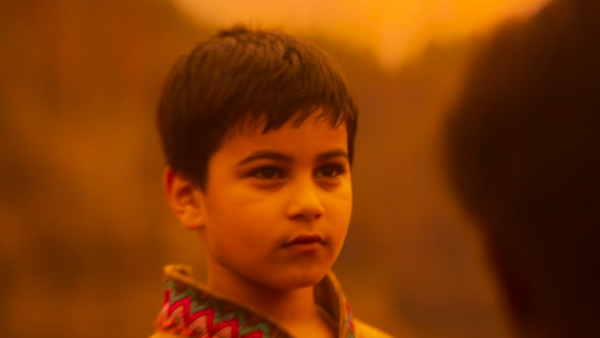
The Timeless Children gave us a pretty comprehensive account of the Doctor’s early life as the Timeless Child. But there are still some things we don’t know.
Things like, who was the boy who tries to steal the Child’s toy spaceship on the clifftop, inadvertently causing them to fall and regenerate?
Sure, it could've just been some random kid. But for a long time, fans have suspected he was the Master.
After all, stealing one of the Doctor’s toys out of jealousy is exactly the kind of thing you can imagine the younger Master doing. And it would be rather fitting for him to have been inadvertently responsible for the Doctor’s first regeneration! It doesn't feel like it would quite work timeline-wise given that we also see a child Master after the formation of Gallifrey in The Sound of Drums, but it's a bloody cool idea nonetheless.
The question has since been put to Chris Chibnall, who confirmed that this character was indeed a deliberate parallel to the Master, saying, "It's not canon... but I agree."
If this boy really was the Master, it means he’s been messing with the Doctor for much longer than we thought – since before the Doctor was actually the Doctor. Which is kind of twisted... but also kind of fitting for their relationship.