Breaking Bad: 10 Behind The Scenes Facts You Didn't Know
Remember that time Samuel L. Jackson demanded a cameo in Los Pollos Hermanos?

Breaking Bad has aged like a fine wine over the near decade it's been off screen thanks largely to its superb cast, great writing and timeless central concept of a good man spiralling down a dangerous path. The show may have outlasted its contemporaries because it managed to keep a consistent quality throughout its five seasons and most importantly managed to finish with a satisfying ending.
However, the behind the scenes drama was not as smooth a journey as the show itself. Right out of the gate the writer's strike of 2007 severely reduced the first season's length, forcing a rather abrupt ending to it. This was just the start of countless problems as Vince Gilligan attempted to take his crazy pitch of a chemistry teacher turned meth cook and put it on the small screen. The fact it turned into one of the most successful TV shows of the century was a minor miracle.
Whether it be Samuel L. Jackson making a surprise visit to the set of Los Pollos Hermanos or the stars of the drama creating some drama themselves, Breaking Bad managed to persevere through its challenges and become the classic its celebrated as today.
10. Breaking Bad Was Nearly Set In L.A.

The barren deserts and never ending skies of New Mexico are as much a part of Breaking Bad as its nuanced characters and blue crystal meth. With this in mind it is incredible that the show nearly took place in California rather than the luscious scenery of Albuquerque.
Considering the overabundance of American TV shows which take place in L.A. or New York, the two default American cities that always act as a backdrop, it is refreshing to see another city represented on TV. However, this idea of variety was not the intention of the production. The show simply could not afford to film in California on its limited budget and chose instead to film in New Mexico where a generous tax rebate helped stretch the show's money further.
By a happy coincidence this setting transformed the show into a modern Western with its New Mexico deserts emanating that of the Old West and its tense shootouts hearkening back to John Wayne films before it. Albuquerque's remote setting in the middle of a desert manages to conjure up a sense of isolation from civilisation while also allowing a sense of timelessness which would have been impossible to gain in the bustling heart of California.
9. The Ever Shifting Antagonist

After setting up Tuco to be the antagonist of season two it does seem strange that he was killed off two episodes into the season. Behind the scenes drama was actually the main reason for Tuco's sudden demise, Vince Gilligan stating the actor Raymond Cruz had become a regular on the TV series The Closer and was unavailable to them.
Cruz tells a different story claiming that he asked for his character's death citing a struggle to play such a horrific character which maybe triggered memories of the gang violence and meth addicts he was around growing up. While he eventually reprised Tuco in Better Call Saul it did leave Breaking Bad's second season with a gaping villain shaped hole in it.
Gilligan decided to go in a different direction compared to Tuco's manic energy and invented the stoic Los Pollos mastermind Gus Fring, which Giancarlo Esposito memorably brought to life. Esposito originally declined the role, Gilligan only intended to use Gus in seven episodes of season three, but he noted "then they offered me nine, and I wound up doing eleven". While the shifting antagonists could have potentially disrupted the show, these complicated behind the scenes antics resulted in the birth of Breaking Bad's signature villain.
8. Samuel L Jackson Demanded A Cameo

While The Avengers may have been the crossover event that brought earth's mightiest superheroes together, Samuel L. Jackson was not satisfied with just the one crossover that year. As chance would have it the Marvel juggernaut happened to be filming right next door to Breaking Bad and it was here that Jackson decided to pay Heisenberg a visit.
Unbelievable as it may be, Albuquerque was hosting both these giant big and small screen productions and they were very nearly tied together by Nick Fury. Jackson in full attire, donning his big leather jacket and signature eye patch, turned up to the Los Pollos Hermanos set and floated the idea of being a background extra during the scene. In his own words "I just wanted to order a three piece and really freak people out, then people would be going, 'wow, was that him?'"
Hilarious as this would have been he was ultimately denied this opportunity as it was rightfully noted that you cannot simply put the King of Cool in the corner booth of a fast food restaurant and expect an audience to ignore him. Which part of the story is the most surreal is hard to decide: the idea of the character Nick Fury appearing in Breaking Bad or Samuel L. Jackson pitching this crazy idea to some nervous producers who were just trying to get through a frantic day's filming.
7. The Writer's Strike Changed Season One

The Writer's Guild of America strike took place from November 2007 to February 2008, lasting exactly 100 days, making it the most disruptive strike of the century as the writers sought better pay and a larger share of the profits from the big studios.
This strike took a toll on films - famously forcing Daniel Craig to co-write Quantum of Solace on the fly with its director - and on the small screen as Breaking Bad's first season was reduced from nine episodes to seven. As many fans know, Jesse Pinkman was supposed to suffer a grisly death in one of these final unwritten episodes, but thanks to the strike, and Aaron Paul's performance, Vince Gilligan let Jesse live to see another day.
Another aspect of the show that benefited from shortening the debut season was Walter White's arc which over just nine episodes would have seen him dramatically transform into the cool blooded Heisenberg. As Vince Gilligan confessed "[the final two episodes] would have taken the characters into a hugely different realm than that they were already in, and it would have been a hard thing to come back from, coming into season two." While Walter White had admittedly murdered Krazy-8 with a bike lock we still sympathised with him to some extent but if he had committed another horrific act an audience may have not been so forgiving.
6. The Chemistry Is Not Respected

"The chemistry must be respected," growls Water White to Gus Fring in one of their tense exchanges. The irony of this statement considering the show's fairly lax approach to real world science would not be lost on Heisenberg.
One of the most memorable scenes from the show is the birth of Heisenberg, as he introduces himself under this alter ego to Tuco before using a chemical known as mercury fulminate, disguised as his blue meth, to create an explosion. Since the debut of this season one episode, Gilligan has admitted "I've since learned that mercury fulminate does not blow up just by throwing it against the linoleum floor; it doesn't go off quite that easily."
MythBusters applied a similar level of scrutiny to the show's dramatic shot of a bath tub falling through the ceiling as hydrofluoric acid has burned straight through it. After some thorough experiments they reached the conclusion that the powerful acid was not able to fully dissolve through organic matter (such as flesh), the bath, the floor or the ceiling. As for the blue crystal meth, it has been heavily documented by multiple scientists that it would be impossible without blue colour dye to achieve this striking colour.
5. Bryan Cranston's Script Was Stolen
On 1 March 2013 Bryan Cranston reported a break in to his car where among the items stolen was a Breaking Bad season five script. Cranston even reported the theft to the police with the 9-1-1 call being picked up by eager American news stations who quickly blew it up to be the crime of the century.
The script was luckily not the finale of the show, which many of the networks were erroneously declaring it was, and while if the script was leaked it would have revealed some of the intricacies of the second half of season five, it would by no means have revealed the ending. In the age of online piracy with shows like Game of Thrones having episodes hijacked by hackers demanding millions for its return, it is astonishing that Breaking Bad's main data breach was a chance smash and grab crime with the culprit caught by bragging about his theft in his local pub.
Things reached insane levels when Charles Baker, Skinny Pete himself, issued a statement when they were trying to track down the culprit where he noted: "You've already made a choice to steal from a person [Bryan Cranston] who is loved by millions of people. Don't make it worse by betraying the rest of the cast and crew and fellow fans of the show." Pure madness.
4. Rian Johnson Directed Both 'Fly' And 'Ozymandias'

Rian Johnson's career is a fascinating one that began with crime indie film Brick before breaking through with cerebral sci-fi movie Looper and more recently gracing the screen with quirky murder mystery Knives Out. However, it seems fitting that his first venture to the world of Breaking Bad with 2010's 'Fly' was met with the same level of polarising fan response as his most well known film Star Wars: The Last Jedi.
'Fly' was deemed by many as the ultimate Marmite episode of the show. Is it a coincidence that the most divisive episode in the show's history was overseen by the man who wrote and directed The Last Jedi, a Star Wars film which angry fanboys on both sides of the debate are still arguing about today? In a word: yes. After all he is only responsible for directing 'Fly' and had no written input into the story which saw Jesse and Walt chase a fly around the lab while exchanging anecdotes in a 'bottle episode' format (an episode set in one location to save a show's budget).
'Fly' may be the lowest rated episode of the show according to IMDb, with a still respectable 7.8, but Johnson's other episodes included the season five episodes 'Fifty-One' and 'Ozymandias'. The latter is not only the best episode of the show, with a rare score of a perfect 10 on IMDb, but a remarkable piece of television in its own right.
3. Everyone Thought The Title Was Stupid
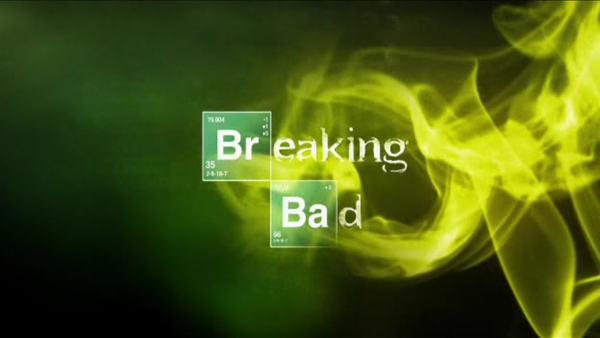
When pitching Breaking Bad to various networks Vince Gilligan was met with rejection from many including HBO but even when the show found its home on AMC it still faced challenges. One battle that he faced was the show's title itself which many, including some high ranking executives at the network, failed to understand.
Gilligan quickly became fed up explaining the meaning of this Southern phrase, which according to him means "to raise hell", and it only made him more adamant to keep the show's title as season one was nearing its debut. While the phrase does allude to Walter White's transformation from mild mannered teacher to meth kingpin, it does make it sound like it was just one defining moment when Walt 'broke bad' rather than a series of decisions over five seasons.
Although Breaking Bad is a fairly nonsensical title for such a critically acclaimed show, it is possible to see why these executives kept the original title. What else could it be called? 'Cooking with Walt and Jesse'? 'Once Upon A Time in Albuquerque'? 'Keeping Up with the Whites'? While these are all valid titles, except maybe the last one which sounds like a white supremacist reality TV show, maybe sticking with Gilligan's original suggestion was the wisest idea.
2. AMC Literally Wanted Anyone Apart From Bryan Cranston

There was a time when people went to the cinema to see films based solely on an actor's star power with people queuing around the block to see the latest John Wayne picture or Clint Eastwood's latest vehicle. Nowadays bona fide A-Listers are no guarantee that a film will succeed; look at The Mummy starring Tom Cruise, or Dwayne Johnson's Skyscraper which both bombed at the box office.
With this in mind, it is incredible that studios seem to think that people value an A-List actor over genuinely good writing. AMC fell into this insane line of thinking as they suggested some big names for who should play Walter White in their newest show Breaking Bad. One suggestion was John Cusack, an indie darling who was too well known as the down on his luck love interest to convincingly play a meth kingpin. Another more baffling suggestion was Ferris Bueller himself Matthew Broderick, looking for a good project after starring in two mid '00s remake flops, The Stepford Wives and The Producers.
Why AMC was so desperate to attach a celebrity is remarkable and thankfully both the actors rejected the offer to play Heisenberg. After ignoring Gilligan's initial suggestion of Bryan Cranston, then best known as the dad from Malcolm in the Middle, they reluctantly gave him the thumbs up. Aside from his lack of 'bankability', AMC were most nervous about his comedy origins which they believed would not be a good fit for this drama. Of course, the irony was not only did Cranston become instantly iconic as Walt but he was one of many comedy actors cast in the show alongside Bob Odenkirk as Saul Goodman, and Lavell Crawford and Bill Burr as Saul's henchman Huell and Kuby.
1. Bob Odenkirk Had Never Watched Breaking Bad

Bob Odenkirk is a fan favourite amongst Breaking Bad lovers and delivers many of the best lines from the moment he shows up halfway through the second season to his final appearance in the penultimate episode of the show. While Odenkirk felt undeserving of such a great role, insecure in his status as a comedy actor compared to the dramatic actors he was brushing shoulders with, Gilligan was so impressed with his performance that he even wrote a prequel series for the actor, Better Call Saul.
Considering his remarkable performance and Saul's reputation as a lawyer who cannot keep his mouth shout, it is fairly remarkable that up until the end of season three, Odenkirk had no idea what he was talking about. Confessing he only caught up with the show while starting work on its fourth season, he noted that most of the names and plot points he was spouting were gobbledygook to his ears.
At various points during shooting long dialogue heavy scenes with Bryan Cranston, Cranston had to pick him up on his emphasis of certain lines as he became aware very quickly that Odenkirk had never seen the show. Ironically, Saul Goodman is by far the most featured character in the Breaking Bad universe and Odenkirk now has to get his head around the chronology of the character's history before Breaking Bad took place too.