Arrow Vs The Flash: Which TV Show Is Better?
How does the Scarlet Speedster stack up to the Emerald Archer?
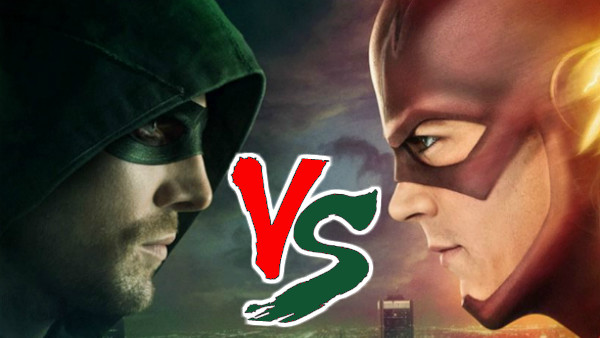
Since starting back in 2012, the Arrowverse has become a huge enterprise, spanning four separate TV shows, online spin-offs, comics, novels, and earning a legion of loyal fans.
All return from the summer break next month but, as ever, the focus is largely placed on Arrow and The Flash. The former is entering its sixth season in a much stronger place than the last couple of years, after Season 5 saw some big improvements and dramatic changes, while the latter - which hasn't yet bettered its debut season - has to find a way to reintroduce its hero.
Arrow is the one that started it all, and The Flash the one that gave it a shared universe and catapulted it to the next level. Even though Barry Allen was first introduced on Arrow, and the two have crossed over a number of times, the shows are pretty different. One is fun, funny, lightning-fast superpowered action, the other skewing more towards the good ol' grounded, 'dark and gritty' post-Nolan take on superheroes.
The two shows, despite these differences, are the standard bearers for DC on the small screen, but which of them is better?
10. Action
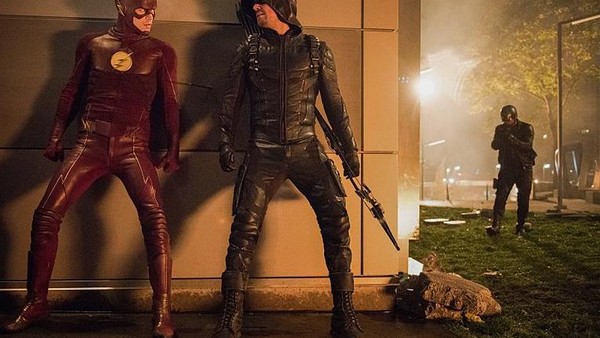
Being superhero shows, both Arrow and The Flash are action-packed, with nary an episode going by without some sort of fight sequence, whether it's the more hand-to-hand combat of Oliver Queen or the run-'em-into-the-ground stylings of Barry Allen.
The Flash has made great use of Bary's powers, giving him new abilities each year - such as lightning bolts and mirages - and really turned the speed to his advantage, whether it's having things happen incredibly fast or slowing things right down to see it all unfold. The apex of this was Enter Zoom, which saw Barry being dragged all over Central City by the villain, and given one hell of a beating in a thrilling sequence.
Arrow, being a far more grounded show that is (mostly) without superpowers, relies more on traditional combat, along with the hero's trusty bow. The fight scenes were one of the reasons the series earned a big following in the first place, and it's easy to see why. Especially in the first couple of years they were intense, frenetic encounters with inventive choreography, something that returned with the battles against Prometheus in Season 5. Even in its weaker seasons there were standout moments, such as the mountaintop duel between Ollie and Ra's, and even without its hero the show has delivered some stunning fights, like Speedy vs Andy in Season 4.
The Flash's fight scenes are good fun, if sometimes a little samey, but Arrow's are more violent, visceral, and entertaining to watch.
Winner: Arrow
9. Story

With five seasons of Arrow and three of The Flash, there's a lot to unpack here, with successes and misses on both sides. Both shows take the serialised approach of having one overarching narrative per season, but with a number of 'filler' episodes in there too, which is par for the course when you've got over 20 episodes to deliver between September and May.
Arrow's arc generally follows the line of a big bad attempting to destroy Star City - or just Oliver - and the obstacles the hero has to come to stop him, with one of the major themes being Oliver learning to trust others and work with them rather than going alone. That's also intercut with flashbacks to his time on the island, which ran out of steam by Season 3 and felt totally pointless by 4, though did improve in the fifth year. The show's story started to fall flat in the third season, and was bogged down by magic and mysticism in the fourth - along with just being quite dull - and there was a lack of momentum hindering those years. But in the first two, the show made you want to keep coming back week-to-week.
The Flash, by contrast, tends to have much more of a mystery to its narrative, usually around the identity of the main villain. That's both a help and a hindrance, as it adds a layer of intrigue but, after seeing it so many times, feels a little rote (and has also been weighed down by its increasing reliance on time travel). At the same time, though, it generally feels like more fun to watch, and the mysteries provide an easy hook, while the journey Barry has been on as a hero - including hitting some hugely emotional beats - outstrips that of Oliver, who has repeatedly fallen back into the same patterns and examined the same questions.
Winner: The Flash
8. Comic Book Roots

Even though Arrow came first, The Flash enjoys a slightly higher status in part due to how recognisable its hero is. Flash, and certainly the Barry Allen iteration, is a comic book icon, hence why we'll also be seeing him on the big screen later this year. But it's more than just being based on a big character: The Flash knows where it comes from, and wholeheartedly embraces it. Whether it's lifting panels directly from the comics, hueing (somewhat) closer to the core of the characters, or just having a lot of ridiculous, comic book fun (from multiverses to multiple Flashes, Gorilla City to King Shark) this pays homage to the source material and, in some cases elevates it.
Arrow has largely gone the other way. Green Arrow has its fans, but it's a B-list comic that isn't as well known to a wider audience (and that was definitely the case when the show debuted). To that end the character was retooled, his humour and lightness being swapped for darkness and angst, and very much heading down the Batman Begins route. The show has flirted with the comics since, including eventually giving him the Green Arrow moniker in Season 4 - and trick arrows and more of a social conscience are supposedly on their way in Season 6 - but it doesn't match the comic bookiness of its sibling.
Both shows may have been inspired by comic books, but only one can be called a comic book show at heart.
Winner: The Flash
7. Villains-Of-The-Week (And Mini-Arc Foes)

Both shows, to varying degrees, follow the monster-of-the-week template for a number of their episodes. For Arrow, this generally means someone working for the big bad or pushing drugs (or other trouble) around Star City, but otherwise a human threat, whereas Flash deals more with metahumans.
Given the sheer amount of episodes both series have got through thus far, there have been some real duds, but also a number of memorable bad guys as well. Arrow's first season was mostly just a bunch of corporate execs, before getting into a slightly wider variety of criminals, whereas Flash had a deeper pool to pull from in metahumans. That was to its benefit, as it allowed for a wider range of characters, but the metahuman-of-the-week trope was tiresome at times.
Both shows have found greater success in foes who recur for mini-arcs, whether over consecutive episodes or an appearance or two each season. The likes of Vertigo and Tobias Church have covered the drugs angle on Arrow to good effect, Floyd Lawton an excellent anti-hero, while someone like Cyrus Gold posed a more direct physical threat to Oliver.
On the Flash it's been even better though: Captain Cold and Heat Wave were charismatic villains, who become even more charismatic (and well-developed) anti-heroes (and eventually Legends), Gorilla Grodd and King Shark are both remarkable achievements for a show of this size, and Mark Hamill's Trickster a gloriously manic delight. It's another very close call, but outside of Big Bads, the Flash is able to mix things up more, and has the more memorable foes.
Winner: The Flash
6. Supporting Cast

Although there are times when they try to go solo, neither of these could achieve what they do without a team behind them. But while Team Flash has largely stayed the same over three seasons, Team Arrow has had a number of changes during its run.
Team Arrow of the first two seasons was a brilliant combination of brains and brawn, with Felicity's tech-smarts and humour, and Diggle's moral compass and own fighting skills all perfectly complementing Oliver's vigilantism. Since then, however, the team has expanded, and not for the better. Roy was an interesting addition at first, but was mostly reduced to just doing random parkour. Thea is a great character, but her bloodlust arc wasn't. Laurel was awful in the first couple of years, and then pushed to the side. Likewise Diggle was pushed to the side at various points as well. The new team is solid, but not much more just yet, although at least Quentin Lance remains a great presence.
The Flash has been more consistent in terms of line-up, even if characters themselves have changed, with a couple of additions too. Cisco has largely remained the comedic heart of the show, as well as becoming something approaching a hero in his own right (but dipped a bit in Season 3). We've seen Caitlin develop her powers too, which has given the character some agency and real purpose that was lacking beforehand. Joe West remains one of the show's emotional pillars, and Tom Cavanagh - through three iterations of Harrison Wells and counting - has given some of the finest performances on any superhero TV show.
Winner: The Flash
5. Tone
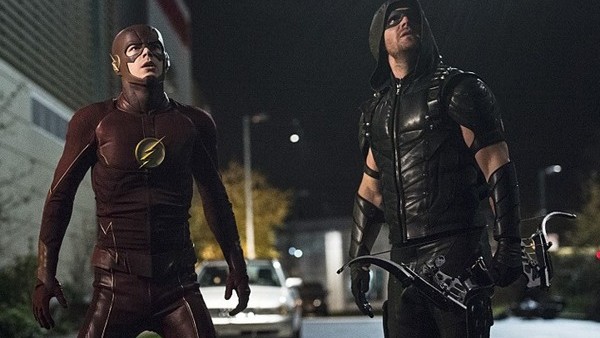
When Arrow debuted, it was very much of the dark trend that had overtaken the superhero genre (at least on the DC side of things) in the wake of Christopher Nolan's Dark Knight Trilogy. That served it well for a couple of years, especially as that darkness was balanced with moments of levity, and used it to propel some intense, ferocious, and personal storylines. Over the next couple of years, though, there was a noticeable shift from dark to depressing, and it became a slog to get through because of that (in part, at least). Season 5 re-balanced it to an extent, getting back to the basics of Season 1, with darkness still prevailing.
The Flash, at launch, couldn't have been more different. The show in its early days was an absolute blast, with a whole lot of fun to be had. Crucially, though, it wasn't just cookie-cutter stuff, as the writers and actors also managed to imbue the series with a lot of emotional heft (mostly driven by the death of Barry's mother). That's continued to be a juggling act across the subsequent two seasons, though one they've had less success with. The show has become too mired in angst and lost some of what made it so great in the first place. But when both shows are on top form, and looking at the core of what they are, The Flash is (just about) the more enjoyable watch.
Winner: The Flash
4. Love Interests

As is customary for superheroes - and more to the point, The CW network - there's plenty of romantic melodrama on both shows (which at times has become too much).
As befitting his playboy status (early on, anyway), Oliver Queen has had a few love interests, though three really stand out: Sara Lance, Laurel Lance, and Felicity Smoak. His relationship with Laurel was a sticking point for the show, with the comics dictating that they should be together, but not much chemistry present. Conversely, he and Sara worked much better together, but it couldn't be a long-term thing. And that brings us to Felicity, or 'Olicity'. Stephen Amell and Emily Bett Rickards had a lot of chemistry, which is why they were eventually put together in the first place, and in theory that should've worked. But it dominated the show far too much, and started to ruin Felicity's character, to the point where they then had to be forced apart. They might well get back together in the future (the groundwork is certainly there), but Oliver's arguably better off alone right now.
The Flash, on the other hand, has only really had one love: Iris West. A brief relationship with Patty Spivot (who was very Felciity-esque) aside, it's always been Iris for Barry, which has often worked to the detriment of the show. At first it was kinda weird, because they were like brother and sister. Then Barry kept his identity from her for too long, and a lot of the time it felt like they were getting together because that's what the future said. Even more egregious, though, is that Iris - despite Candice Patton's performance - largely stopped being a character, and instead became a plot point.
Winner: Draw
3. Big Bads

The Flash's first season had a villain who was part dark mirror of its hero, part a connection to both Flash's future and past, and also a thrilling mystery just waiting to be solved. He felt like a serious threat, the questions and reveals were well spread out, and the end result was more than satisfying. That was all great, but a problem for The Flash is that, over the next two seasons, they did the same thing in increasingly convoluted ways. Zoom had his moments, especially in Enter Zoom, but the ultimate mystery wasn't satisfying, and the Savitar storytelling even less so.
Arrow, on the other hand, has tended to succeed with its Big Bads. Dark Archer was a brilliant reflection of the Hood, and a perfect entry point villain for the show's first season; Ra's al Ghul was good in spots, especially the duel in The Climb, but again faded by the end; Damien Darhk was brilliantly, enigmatically played by Neil McDonough, but bogged down in the magic plotting; and Prometheus was a real throwback, a violent, vicious villain with a real personal vendetta against Oliver Queen.
And even despite their many merits, they all pale in comparison to Manu Bennett's Slade Wilson/Deathstroke. The character had some of the best development on the show, his hatred of Oliver burned onto our screens, he was charismatic, sadistic, and the action sequences between the pair were a series highpoint.
Winner: Arrow
2. The Hero

Whatever other issues the two shows have had over the years, there's generally been a dependable core, and that's thanks to the lead performances of Stephen Amell and Grant Gustin.
Of the two, Amell had the rockier start, with a slightly more leaden performance in the show's earliest episodes. He's grown year-upon-year though and done everything asked of him both in and out of costume. He's undergone some big changes, moving from the Hood to Arrow to Green Arrow, and you can see the maturity in him as an actor as it goes along. He's brilliant at being the stoic, tortured hero, but it's also fun when he gets the chance to cut loose a little bit too.
Gustin had a faster start, which was helped by the fact his character is a lot lighter, but what could be cocky or annoying is made likeable by his charm and grounding in the role. But while he's cracked wise and excelled at the fast and fun side of the character, what's more surprising is just how much heart and soul he puts into the character. He puts the show on his shoulders when required, and he absolutely nails the emotional beats to tragic effect. Both are great, but Gustin has shown more in his time as a superhero.
Winner: The Flash
1. Overall

Winner: The Flash
Well, that's ended up as 6-2 in favour of The Flash, which is a much heavier win than I anticipated when setting this out, but also one that doesn't fully reflect the big picture.
The Flash is the better show, thanks to its more upbeat, hopeful tone, comic book nature, and winning lead performance, but there are a number of areas where it's really close between them. When Arrow is at its very best it's an absolute thrill, and likewise The Flash. The issue is that both shows have had far too many struggles over the last few years, with Arrow peaking in Season 2, and The Flash peaking in Season 1. The highs are on a fairly even keel, and maybe more a matter of preference in terms of tone, but Arrow's lows are lower than The Flash's, which has remained at more of a mid-level rather than going outright terrible.
With Seasons 6 and 4 respectively on the horizon, hopefully Arrow can continue its upward trajectory, and fingers crossed The Flash can get back on track.
Are you Team Arrow or Team Flash? Share your thoughts down in the comments.