8 Hidden Clues You Never Noticed In Famous TV Shows

The answer was staring you right in the face all along...
There's nothing more satisfying than a clever bit of foreshadowing. Of course, these are clues that tend to be more obvious on repeat viewings, but nevertheless they're placed there by television writers in order to reward the eagle-eyed viewer, to tease plot resolutions and sometimes just to blatantly wave answers in fans faces, right where they can't perceive them. Films are known for doing this all of the time, largely because once you're in the cinema or have started watching a movie, you aren't going to pause a scene to analyse it, or have enough time to really consider the depth of what you're seeing. Clues in television, on the other hand, are completely different. Often they're a lot subtler, owing to the fact viewers have time to discuss and analyse between episodes. In this way they're immensely more clever, and wildly more satisfying. So from American Horror Story: Coven giving away its biggest mystery in the first ten seconds to Futurama waiting four seasons to reveal a fascinating plot detail, here are some of the most interesting hidden clues you never noticed in famous television shows.

8. American Horror Story: Coven Gives Away One Of Its Biggest Mysteries In The First Ten Seconds

Talk about ballsy. Throughout the entirety of American Horror Story: Coven, fans wondered who might succeed Jessica Lange as the new Supreme Witch. But the show essentially risked spoiling an entire season's worth of material by blatantly giving away the identity of the new Supreme from the very first minute of the show. So how'd they do it? Well, it's not uncommon for the show to hint at the overall plot of the season during the opening credits. In fact, the show's creator Ryan Murphy said when American Horror Story first began that the opening credits are supposed to be a mystery in and of themselves, and that viewers will understand every grotesque image by the time each season ends. Fans should have kept a keen eye on the credits for Coven, then. When the name Sarah Paulson flashes up (who plays character Cordelia) there's an image of Santa Muerte, a folk saint also known as €œLady Of The Seven Powers€. In the show, only mastery of the Seven Wonders (seven powerful abilities) enables a person to become the Supreme Witch. The answer was right there from the very start.

7. True Detective Flat Out Confirms Who The Yellow King Is

Ah, True Detective season one...a slice of television that will likely go down in entertainment history as a miraculous (yet brilliant) fluke. At least, it seems that way given the incredibly mixed response to the show's second season. Will there be a redemptive third? Only time will tell. True Detective season one got everything right. From the acting to the story to yes, even the incredible amount of foreshadowing. There's nothing more satisfying than re-watching a fantastic show only to realise that there were a bunch of hints out in the open from the very beginning. The use of colour in film and television isn't uncommon (there are a bunch of mind-blowing analyses about Vince Gilligan's use of colour in Better Call Saul) but it's something that True Detective fans really should have been paying attention to, given the ultimate villain was named the Yellow King. In fact, throughout the show, the shady characters who work to cover-up Rust and Marty's investigation are all depicted as wearing yellow. The reverend Tuttle, for example, wears a yellow tie, and Reggie Ledoux has yellow hair (in many scenes, his whole, grimy body appears yellow). But the biggest clue? Well, it's hardly a clue at all €“ more like a blatant confirmation of one of the show's biggest mysteries. As the camera pans across to the detectives meeting with a seemingly innocuous man mowing the lawn, it briefly obstructs a few letters on the sign in the foreground, spelling out the words NOTICE KING. Of course, it's later revealed in a massive twist that this very man was the Yellow King. Damn, if only Rust and Marty had been watching season one too, they would have figured it out in no time.

6. House Of Cards Waves Zoe's Murder In Viewer's Faces From The Very Start

Though the third season of Netflix's House Of Cards (starring Kevin Spacey as scheming politician Frank Underwood) received a rather mixed reception from fans and critics, the first two seasons are regarded as quite brilliant. This is largely owning to the lengths that Frank is prepared to go to in order to gain power and defeat his political adversaries. One of the most extreme (and therefore most memorable) things Frank does is throw journalist Zoe Barnes into the path of an oncoming subway train. But did you know the violent encounter is teased from the very offset? There a bunch of frankly (heh...FRANKly) blatant hints if you know to look out for them. In the second episode of the first season, for example, Frank asks Zoe to meet him at the subway station where he ultimately kills her. And what does he say after their exchange has finished? €œDon't miss your train, Miss Barnes. It's the last one tonight.€ On top of that, there's a piece of dialogue during the first episode of season one which takes place between Francis and Zoe. €œMetro is killing you, huh?€ says Francis, and Zoe responds €œYes, Metro is killing me.€ The metro, of course, is another name for the subway. Oh, and at the start of the episode in which she dies, Frank is seen reading a map of the subway. Frank also comments that he doesn't use people unless he can throw them away afterwards. Guess he was being literal.

5. Mad Men Blatantly Foreshadows Lane Pryce's Suicide

In the season four episode Commissions And Fees, one of the show's long-time characters Lane Pryce commits suicide following the reveal that he'd been stealing money from the company. It's the most shocking moment in season five, and took many people by surprise despite the fact that Pryce essentially loses his job. Nevertheless, the show was hinting at Pryce's eventual suicide from fairly early on. For a start, during the sixth episode of the third season titled Guy Walks Into An Advertising Agency, Lane tells Don that he feels like he perhaps witnessed his own funeral (and wasn't a fan of the eulogy). During the premiere of season five, Lane tells a woman on the phone €œI'll be here for the rest of my life€. But it's the visual clues that really spell out Pryce's fate. Throughout season five, Don Draper starts drawing nooses on his notepad, and on top of that, a man can be seen in episode five standing next to Pryce with a scarf wrapped around his neck like a noose. Joan's dress also has a bit around the neck which hangs down her back like a noose. There's enough imagery to last any film studies student a life time.

4. Game Of Thrones Reveals Who Poisoned Joffrey In The Very Episode It Happens

The second episode of season four of Game Of Thrones (titled The Lion And The Rose) will long be celebrated as the episode in which Joffrey finally got what was coming to him. After building up his cruelty since the very beginning of the first season, fans were delighted to finally see the snotty little brat poisoned. But the next few episodes were fairly coy about who was actually responsible. Was it Littlefinger? Sansa? Tyrion? Who was lying, and who was telling the truth? In fact, one of the season's main story arcs is the trial of Tyrion Lannister, accused of being responsible. Though viewers were fairly sure it wasn't Tyrion (he appears to be one of the few €œhonest€ characters on the show) it wouldn't have been massively surprising if there had been a twist involving Tywin's estranged son. The identity of the person responsible, however, was revealed in the very episode that it happened, and the plan was actually put into action during the episode before, titled Two Swords. In Two Swords, Sansa is rewarded by Dontos Hollard, who's life she saved when she convinced Joffrey not to have him executed. Hollard gifts Sansa a jewelled necklace which is ultimately part of the murder plot. In The Lion And The Rose, then, Olenna Tyrell is seen distracting Sansa and grabbing one of the jewels on her necklace (which contains the poison that kills Joffrey). Later, Margaery takes Joffrey's cup and places it on the table next to Olenna, giving her enough time to insert the poison. A mystery that is never explicitly solved on-screen, then, is actually solved in the very same episode it happens.

3. A Song In Breaking Bad Reveals How The Show Will End

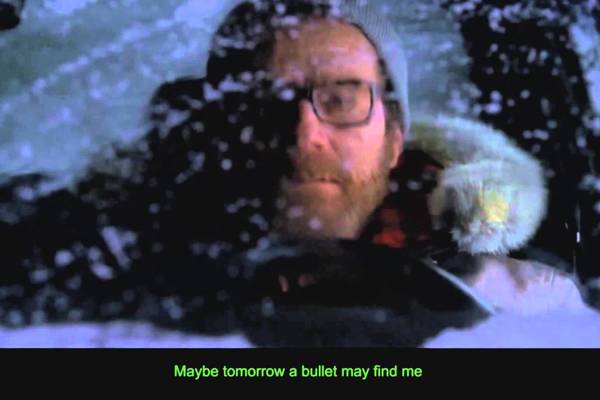
Ah, Breaking Bad €“ remember when everyone was desperately theorizing about how the show would end? Fans online analysed everything from the use of colour in the show to how certain shots were framed to try and pinpoint where it was all going. Though creator Vince Gilligan frequently employs effective use of symbolism and subtext, it turns out the whole thing is laid out at the very beginning of the finale, when Walter White plays the song El Paso by American singer Marty Robbins as he drives towards his ultimate fate. So what's up with the song? Well, it basically details Walt's journey during the final season. The lyrics tell of a cowboy who falls in love with a woman named Felina (which happens to be the title of the finale), and how the cowboy runs away after killing someone who threatens to stand between them. In the end, though, the cowboy returns, and during a violent shoot-out is hit, dying after one last kiss from the woman he loves. In the show, Walt flees from New Mexico as the law closes in on him, but ultimately decides to return, essentially going on a suicide mission. Heck, the section of the song that plays while Walt is sitting in the car and preparing to return is €œI saddled up and away I did go, riding alone in the dark. Maybe tomorrow a bullet may find me, tonight nothing's worse than this pain in my heart€. Like the cowboy in the song, Walt is hit in a shoot-out and dies next to the criminals' meth lab (the creation of meth, of course, being his ultimate love).

2. Arrested Development Makes Fun Of Buster Losing His Hand Long Before It Happens

The first three seasons of Arrest Development are brilliant, filled with subtle hints and gags that can only be appreciated upon repeat viewing. Take the loss of Buster's hand, for example. Comedy shows rarely seriously injure or maim main characters, so of course Arrested Development had to give it a try. Buster's hand is bitten off by a loose seal (Lucille €“ get it? God, what a brilliant show) and he then has the stump decked out with a replacement hook. Though it doesn't happen until the third season, the show blatantly hints it's coming from the very first season. At the end of season one, for example, Buster exclaims €œThis party is going to be off the hook!€. At the beginning of season two, Buster comments after locating his lost, hand-shaped chair €œWow, I never thought I'd miss a hand so much€. But things only get more hilariously tongue-in-cheek. Later, Buster wins a stuffed seal from a claw machine, and Ron Howard narrates €œBuster had gotten hooked playing€. Heck, Buster's father George Senior even says €œWhat if I never get a chance to reach out and touch that hand of his again?€ To top it all off, before Gob releases the seal which ultimately encounters Buster into the sea, he says €œYou're not going to be hand-fed any more!€. Absolutely brilliant.

1. Futurama Set Up Fry's Backstory Four Seasons In Advance

It's not uncommon for shows to return to the origins of its main characters quite far into their run. Many writers spend a bit of time setting up characters early on, but they're eager to start writing about new relationships and exciting antics. It's only once those relationships have been drawn out and those antics become less fresh that they return to character's pasts. Futurama, then, is no different...or perhaps it truly is? In the tenth episode of the show's fourth season titled The Why Of Fry, it's explained that Fry's cryogenic freezing until the 31st century wasn't the accident most viewers believed (Fry was thought to have fallen into the freezing machine after losing his balance on a chair). The whole thing was actually planned by a creature called Lord Nibbler, who believed Fry was key to saving the universe, and actually pushed him. It sounds exactly like the kind of crowbarred origin story that many television writers resort to, and it's nearly always disappointing. The appeal of many characters is how average they are until they're thrust into extraordinary circumstances, and removing this averageness later on is often damaging. Yet it seems the writers had planned this twist from the very start. During the scene in the first episode of the show (titled Space Pilot 3000) in which Fry watches what happened on a television screen, Nibbler's shadow can be seen underneath his chair right from the very start.

In this post: 
Mad Men
 
Posted On: 
Contributor
Contributor

Commonly found reading, sitting firmly in a seat at the cinema (bottle of water and a Freddo bar, please) or listening to the Mountain Goats.