5 TV Shows That Improved With Age

It's a rare enough occurrence in this day and age for TV shows to maintain quality throughout their run, but it's considerably more impressive when they can actually get better as the seasons pass.
Let's face it; there have been many a TV show we've seen start out strong and deteriorated or run out of steam after a couple of seasons. Shows like Heroes have taught us that having a great premise and a strong first season isn't always enough to sustain the quality of the show for further years. Heroes declined by the end of season 1, and by early season 2, all hope of the show ever being something really special was destroyed. It's a pity, really, when a show hits the ground running right from the get-go but runs out of energy in no time at all. I know lots of people who'd argue the same point for Lost, usually pinpointing season 3 or 4 as the season when it all started to go downhill. Lost is one of, if not my favourite show ever, and so I'm not fully on board with this notion, but alas, it is another example. Other shows stay consistent throughout their run. Friends was funny for 10 whole seasons and never really showed signs of ever being unwanted. The same goes for Seinfeld, and a heap of HBO shows, most notably for me being The Sopranos and Six Feet Under. Then of course, there are shows that actually improve in their later years. It's a rare enough occurrence in this day and age for TV shows to even maintain quality throughout their run, but it's considerably more impressive when they can actually get better as the seasons pass. Sometimes this will come down to the show not quite finding it's feet in beginning. Often pilots will tinker with a few ideas, and see what works and what doesn't, and changes are made to try and improve the show. Other times, a show will be good right from the get-go and they have the brains to utilise their greatest assets while adding something even more to make it into a truly great show. Here are 5 very different shows which I believe improved with age.

5. Enlightened

HBO's Enlightened is a show that came out of nowhere in 2011 and sustained criminally low ratings for it's 10 episode first season. Despite being lauded by critics , the show could never hold a decent audience share, and it was a small miracle that it even got commissioned for an eight-episode sophomore season. But I, and the small number of devoted fans were so glad it did. Regardless, the show had a superbly strong first season. In which, Laura Dern's Amy Jellicoe, who after the implosion of her career goes into rehabilitation and comes out on the other side with a whole new philosophical view of life, and a much more positive attitude to everything. It's an excellent character study, written brilliantly by co-creator and lead writer Mike White, and brought to life by Laura Dern in a performance that deserved much, much more recognition. It is in season 2 when the show expands it's horizons and becomes something more emotional and heaps more exciting. With Mike White's character Tyler coming into the picture, the show finds a character that is even more likeable that Amy, and a love story that is absolutely beautiful to watch. Jellicoe's ex-husband Levi (played by the surprisingly excellent Luke Wilson) gets more depth in season 2 as well and gets a whole episode to himself which is an emotional and fascinating journey about a drug addict trying to get his act together. In the midst of all the emotional stuff, the show also manages to create a plot so juicy and exciting, it's a wonder they managed to squeeze it all into 8 episodes. Amy, after uncovering evidence of corruption and abuse in the company she works for enlists the help of some of her co-workers in attempt to bring the situation to light and take them down. It's overall a much stronger season than the first and manages to deliver a satisfying ending to the season that simultaneously seems to see a lot of things come full circle, but also leaves you wanting more. Exactly what any season finale should do. As it turned out (and Mike White and co. probably knew it), it was the show's last season, and I'm glad it went out with a deserving bang.

4. Mad Men

Mad Men is probably the most debatable choice on this list, and even one I debated about myself. It's definitely arguable that the show has improved each year upon the last, although I don't believe that this is the case. I do, however think that the show grew and became much more compelling from season 3 onwards, really hitting it's stride in the three seasons that followed, and that's good enough to have it appear on the list. Although I did enjoy Mad Men in seasons 1 and 2, it was never anything to write home about for me. It has always been brilliantly written and it looks gorgeous, bringing us as close to the 60's as we could ever want. But the most important part of any TV show for me is usually the characters, and in the earlier season I just didn't care about them enough. As the show progressed, Don's character started becoming more and more compelling as he became simultaneously easier to understand and harder to figure out. Jon Hamm's continued to outperform himself as he started to get to know the character and I think his divorce to Betty gave he and January Jones more freedom to work with, making both characters much more interesting from then on. The rest of the characters started developing more depth too as the years went on, and the result is a cast of vastly interesting people who you really feel like you know. Peggy, Joan, Pete and Roger are all as fascinating as Don in their own ways, and I found myself caring about them more and more as I got to know them better in the later seasons. Not to mention, seasons 4, 5 and 6 had the episodes "The Suitcase", "Far Away Places" and "The Crash" respectively. Each one a unique experiment and some of the best hours of television ever produced.

3. Dollhouse

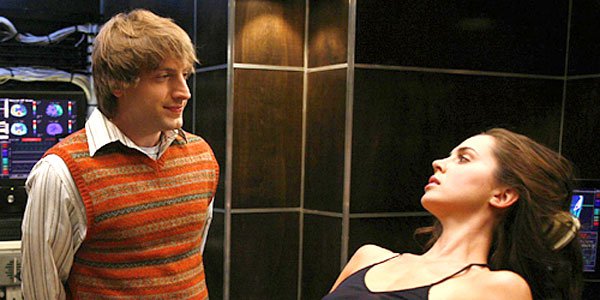
Joss Whedon's Dollhouse is probably his least known and by far his least popular show. The premise is excellent and the main problem with the first season is that it doesn't live up to it. The first half of the season succumbs to one-off filler episodes with little or no serialisation or worthwhile mythology. Sure they're watchable, but with such a strong concept and such a strong character writer at the helm, it seems a real waste of talent. The show finally starts to find it's footing towards the end of season 1 with the excellent episode "Epitaph One", which is the first real glimpse of what this show could be capable of being. A post apocalyptic episode set in the future where the Dollhouse mind-wiping technology has become more widespread and a small group of rebels must fight for their lives. By mid season 2 it turns into some of the best work Whedon has been a part of. The stakes get higher and the characters finally start developing some depth in a string of clever episodes that deliver high octane and exciting sci-fi where the dolls are forced to confront their own moral complicity. Many people criticise Eliza Dushku as unable to carry a show as a lead, but by the end of season 2 she starts to improve. As does her co-cast, especially Frank Franz who becomes much more interesting when he starts to question the morality of his work. The final episode of the series continues not longer after "Epitaph One" in the future where the attempts to destroy the mind-wiping technologies have not been successful and Kranz's Topher must try and restore the world's original personalities. It's another excellent episode that proves that if the show was allowed to go on for more seasons would've gone on to be something terrific in the genre. A show that definitely improved with age.

2. Breaking Bad

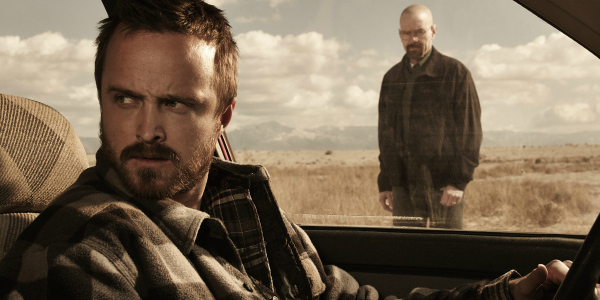
Another choice here that will definitely spawn some debate. Breaking Bad has been a consistently excellent show since it first aired in 2008. Vince Gilligan had a plan, employed an excellently-cast group of actors to play it out and it was exciting from the word go. However, whatever excitement that season 1 delivered was blown out of the water by season 2, and again by season 3. Like a good thriller novel, it established stakes and made them even higher with each chapter introduced. Breaking Bad can be analysed from a lot of perspectives and compared to many other pieces of fiction. One show I have always likened it to is Showtime's Weeds, in which Mary Louise Parker gets herself into the drug game, and with each passing season finds herself getting deeper and deeper into the world of crime. The comparisons between the two don't need to be spelled out, as Breaking Bad obviously deals with the drug game too. But where Breaking Bad differs from Weeds (apart from the tone being 100 times more serious) is that the quality of the show actually improved as Walter White got deeper into the game. The journey we take with this character is absolutely enthralling and as he slips deeper into the world of danger and power, he becomes terribly more fascinating. Equally as fascinating is Jesse Pinkman's journey, which sees him question the morality of his decisions more and more as the show progresses and he becomes the light to Walter's dark, wanting to escape from the world he finds himself in, but never quite able to. We feel for Jesse so much, and as the show neared it's end, the most important resolution a lot of the fans wanted was for Jesse to get a deserving conclusion. The show burns and burns and burns for 5 seasons right up until possibly the most exciting and terrifying episode the show has ever produced, "Ozymandias" where everything comes to a halt and pretty much explodes, leaving the last 2 episodes feeling more like an epilogue than anything else, delivering a thoroughly satisfying and almost full-circle ending to one of the best shows TV will ever know.

1. Angel

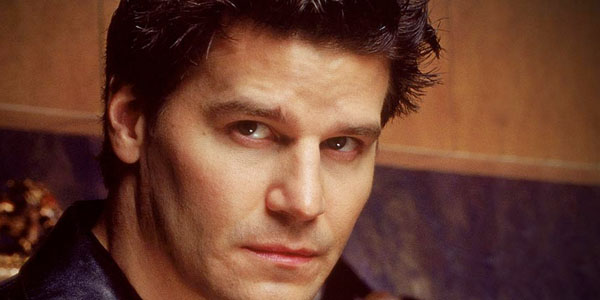
Yes, it's another Whedon show here, but all fanboying aside, Angel is a prime example of a show that became surer of itself in it's later years and ended at possibly the highest point in it's run; a rare thing indeed, making it very worthy of it's spot in this list. Angel spawned in 1999 as a spin-off of the cult classic Buffy The Vampire Slayer, a show at it's height of popularity and quality, making it as good a time as any to develop the vamp on his own stage. The show began more or less as you'd expect it to, feeling like most spin-offs do, trying to recreate what made their parent show so popular. Like Buffy did it it's first (and weakest) season, it succumbs to a few too many "monster-of-the-week" stories for my liking. Bringing in some Buffy deferrals like Cordelia and Wesley proved to be a good choice, and they really became much more three-dimensional characters here than they ever were on that show. New characters like Irishman Doyle and tough guy Charles Gunn were less interesting than most, but with the introduction of Amy Acker's Fred, Vincent Kartheiser as Angel's son Connor & Andy Hallett as the flamboyant, green Lorne, the show found itself a group of characters who are in their own right as interesting or even more interesting than Buffy's gang of Scoobies. Once the "monster-of-the-week" stuff started to fade out of the show for the most part, it could really start developing and building on the mythology that made it interesting in the first place. In the character of Angel we are presented with a definitive anti-hero who is one of the most inspired creations in the vampire genre; a vamp with a soul. And the show really starts delve into what this means as it grows older, with moral dilemmas aplenty and even a string of episodes where he defers back to the dark side. Bringing Spike into the show for the final season was an equally inspired choice and the chemistry between the two "frenemies" is nothing short of brilliant. As the seasons progressed the show became so much more confident in itself and in it's fanbase, which allowed it to be simultaneously more dark and adult than Buffy ever was, while also allowing it to have a lot of fun with episodes like the genius "Smile Time". By the end of season 5 the show had made itself known as something more than just a spinoff, and the finale is a bittersweet but fitting ending to a show in the prime of it's life. It goes out fighting.

Contributor
Contributor

Joe is a television junkie. A film fanatic. A pop culture know-it-all. An interactive media masters student, and a bass player. 22 years old and Irish. Thinks Netflix is a Godsend.