12 Problems With Every Marvel Netflix Show
They were doomed from the beginning.
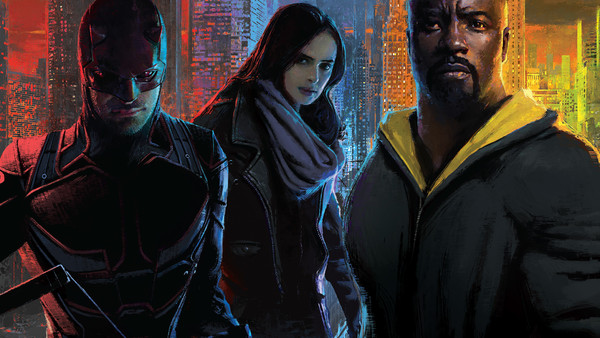
RIP the Marvel Netflix Universe, we hardly knew ye.
With the recent news that both Jessica Jones and The Punisher are cancelled, the final nail has effectively been hammered into the coffin of Netflix and Marvel Studios' collaboration as part of the Marvel Cinematic Universe.
And though the partnership certainly had its highs across seasons of Daredevil and Jessica Jones in particular, as a whole it can't help but feel like an undercooked experiment that never got close to realising its full potential.
And worse still, fans have been raising most of the nagging issues for years, yet the shows have mostly done little to remedy them - with Daredevil's strong recent third season serving as the outlier.
Had the shows adopted a "less is more" approach to concise, artful storytelling, then the Netflix MCU could've been a fantastic peripheral component to the wider movie world. Instead, it mostly feels like a bit of an inconvenience, an also-ran that the mainline MCU is just a bit embarrassed of.
And so, read on as we detail the ins-and-outs of how all that brilliant potential amounted to so little...
12. Awful Pacing (AKA Netflix Bloat)
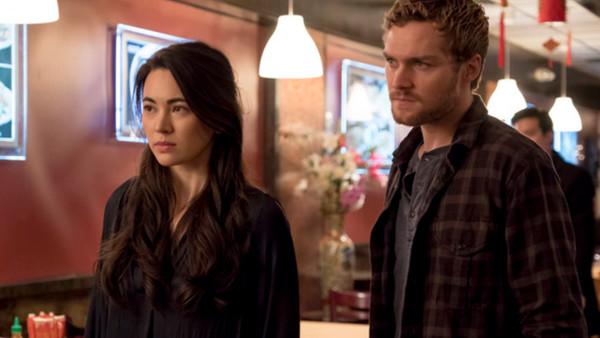
Surely the most commonly cited issue across the Marvel Netflix shows is their uniformly brutal pacing, primarily the result of an excessive episode order.
All the seasons produced to date have contained 13 episodes, save only for The Defenders (8 episodes) and Iron Fist Season 2 (10 episodes). The irony here is that The Defenders actually could've benefited from a 13-episode arc, and took far too long to establish the superhero team-up.
Every single one of these 13-episode seasons - even the better ones, such as Daredevil's first-and-third seasons and Jessica Jones Season 1 - have blatantly struggled to fill that many episodes with meaningful content.
If you cut away the filler material and all the turgid dialogues, these seasons could've easily consisted of "only" 8 or 9 episodes of quality material.
Further exacerbating the issue is the needlessly self-indulgent run-times, with most episodes clocking in at around 50-60 minutes, when honestly the network TV standard of 42 minutes would've almost always sufficed.
Your average Marvel Netflix season lasted about 11 hours, and even at their best, they usually ended up feeling like a bit of a slog, especially if you were brave enough to binge one over a mere weekend (or God forbid, a single day).
With a tighter focus and a smaller number of streaming hours, the term "Netflix bloat" probably would've never become a thing. Instead, it's been a spectre that's hovered over every new MCU season.
11. Gory Violence Is OK, But Nudity & Swearing Aren't

Like much of American-produced TV, the Marvel Netflix shows are beholden to a peculiar content advisory when it comes to "mature" elements. The shows are given the green-light to feature explicit violence ad infinitum, yet depictions of sexuality and profanity are largely off-limits.
Beyond the very occasional, hushed swear word, it's rare you'll hear characters drop an F-bomb despite the intense situations the superheroes so often find themselves in.
More jarring is the approach to sex, though. Most of them have featured sex scenes at one point or another, all of which are shot in the most hilariously sanitised, PG-13 fashion, where female nipples must be covered at all costs and butts are something to be horrified by.
It of course speaks to a wider general double-standard in American entertainment, where networks like FOX can allow Jack Bauer to sadistically torture terror suspects, but nobody ever curses, and sex scenes are largely shot from the neck-up.
Despite Daredevil and The Punisher especially indulging in gnarly, nauseating violence, apparently showing a bare breast or an ass is just too much for Marvel Studios.
It's an extremely bizarre and specific line to draw, yet if the violence was also of the PG-13 variety, at least it would feel more consistent with the tone of the MCU's movies.
10. Hit-And-Miss Villains

Just like the MCU films, the Marvel Netflix shows are an incredibly mixed bag when it comes to their villains.
Though Daredevil has rightly milked Vincent D'Onofrio's Wilson Fisk for every drop he's worth and the first season of Jessica Jones boasted the ludicrously entertaining Kilgrave (David Tennant), the rest of the shows and seasons have mostly struggled to keep up.
Especially rough were the embarrassing-looking Diamondback (Erik LaRay Harvey) from Luke Cage's first season, the thorough waste of Sigourney Weaver's talents that was The Defenders' Alexandra, and the excessive focus on the deathly dull The Hand throughout too many of the seasons.
Elsewhere there were promising villains who didn't quite come together satisfactorily. For instance, Cottonmouth (Mahershala Ali) was boldly killed off half-way through Luke Cage's first season, but it ultimately wasn't a gamble that was worthwhile despite Alfre Woodard's solid effort as Mariah Dillard.
If we're being a bit charitable, Bushmaster (Mustafa Shakir) from Luke Cage's second season was probably the closest thing these shows have had to an impressionable, memorable villain outside of Fisk or Kilgrave, and over more than 100 hours of content, that's pretty depressing.
9. The Obsession With Dull Filler Subplots

Tying into the aforementioned complaint about poor pacing is the baffling, series-wide obsession with stamina-drainingly boring filler subplots shoehorned between the more attention-grabbing A-plots.
No Marvel Netflix show is more guilty of this than Iron Fist, which across both seasons devoted a yawn-inducing amount of time to deathly dull plots revolving around the Meachums and their business affairs, which surely nobody watching gave even the faintest toss about.
It is a glaring case of not knowing your audience and what they want, or perhaps it's a symptom of the writers desperately trying to fill an unreasonable episode order.
Either way, the bombastic superhero shenanigans too often take a backseat to tedious busy-work, even in Daredevil, which frequently bogged itself down in charmless breadcrumb-following nonsense.
8. Low Production Values

Despite having the collective production might of Netflix and Marvel Studios behind them, it's been a consistent curiosity across these shows that they look and feel a bit cheap.
The flatly-lit cinematography is just one of the many things which gives these shows a tawdry sheen, the other main culprit being wonky visual effects far away from the standard you'd reasonably expect of big-budget MCU products.
The final digitally-assisted shot of Daredevil's third season, for instance, was a laughable embarrassment few will be forgetting any time soon.
Elsewhere it also becomes painfully abundant where corners - and costs - have been cut, such as Iron Fist trying to make New York double for China with risible results, and a number of blatant "bottle episodes" contained within a single location to keep the budget down.
Though these bottle episodes do occasionally work - The Defenders' fourth episode largely transpiring in a Chinese restaurant, for one - most others felt a little too obvious and desperate to be truly dramatically effective.
7. The Inconsistent Release Schedule

Another major frustration has been the incredibly inconsistent scheduling of the show's seasons.
As formulaic as traditional network TV can be, you generally know you're getting a new batch of episodes around the same time every year, where under Netflix's do-what-you-like model, the release pattern has been all over the place.
Most egregiously, the gap between the second and third seasons of Daredevil was a whopping 2 years and 7 months, while Jessica Jones had to wait 2 years and 4 months for a second season, and the likes of Luke Cage, Iron Fist and The Punisher didn't deliver their second seasons in particularly timely fashion either.
Now, nobody's saying that these shows needed to be precisely annualised, because that's an easy route to stifling creativity, but it's painfully clear these shows needed a well thought-out road-map for the future.
Instead, seasons seemed to go into production willy-nilly, and through it all, we've ended up with just eight episodes of The Defenders (and even less of them as a fully formed team).
Audiences like consistency and to know what they're getting - to an extent - but above this, allowing viewers to stew over cliffhangers for literally years at a time was not smart in the slightest.
6. The Painfully Expository Dialogue

Expository dialogue is the devil, and these shows are utterly jam-packed with it. Though some exposition is understandable in shows this densely-plotted, at times the writing takes on a lazily prosaic quality, where characters are just vomiting up heaps of soulless backstory and character information solely for the audience's benefit.
Even the most casual audience will know - even if only at a mere subconscious level - when dialogue sounds robotic and unrealistic, and the result is that so much of the storytelling in these shows feels frequently off.
How are we supposed to get emotionally invested when so much of the narrative - both big and small picture - is just reams of exhausting, monotonous chatter?
Countless popular TV shows suffer from this problem, but it's an especially big problem under the Marvel Netflix umbrella because the MCU films actually do a pretty decent job of keeping overt lore-dumping to a minimum.
And though these shows shouldn't be particularly tough to follow, the excess of Explaining Things is so aggressive and dull that you'd be forgiven for just zoning out during some of them.
5. They're Not REALLY Part Of The MCU

Technically speaking these shows do indeed take place within the Marvel Cinematic Universe, but beyond a few tenuous verbal references and some cute visual Easter eggs, you'd barely know it.
Fans have been quite understandably hoping that the shows would eventually dovetail into the wider MCU with The Defenders appearing in, say, an Avengers movie, but it's obviously something that never panned out prior to their en masse cancellation.
There's no denying that it would've been an extremely delicate line to walk, to ensure that the TV shows didn't disrupt the already labyrinthine continuity of the movies, but would it have killed them to make just a little more effort?
Going the Agents of S.H.I.E.L.D. route and including one-off cameos from smaller supporting characters would've been an easy way to intersect the MCU branches meaningfully without needing to tinker too aggressively with the canon.
But instead, all fans got was lip-service that mostly sounded like it was rustled up on the spot on the day of shooting.
Had these shows been more intimately linked to the larger MCU, it's likely the viewership and general audience investment would've been so much stronger.
4. The Journeyman Style & Direction
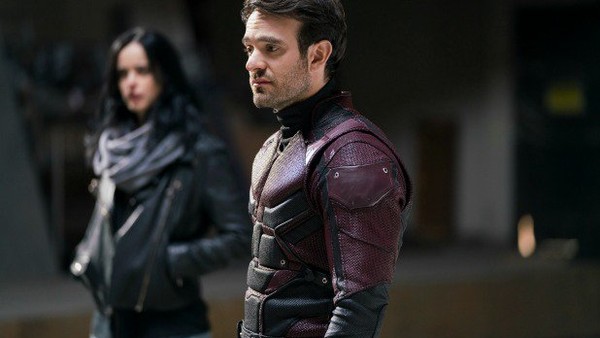
It's not a generalisation to say that the vast majority of the episodes across the Marvel Netflix shows are directed with a fair indifference, where there's precious little personality or any real sense of artistry or vision to what we're seeing.
Aside from Daredevil's admittedly spectacular fight scenes, the overwhelming majority of the scenes in all these shows are extremely flat looking from the perspective of both cinematography and shot selection. Outside of its action, even Daredevil doesn't look particularly remarkable or memorable for the most part.
The most obnoxious offender is obviously Iron Fist, which abjectly bungled its promise-filled action in its first season with headache-inducing editing and incoherent coverage.
Part of the problem might be that almost every episode is helmed by a different director, ensuring little sense of consistency across even a single season.
Shows like True Detective and The Haunting of Hill House, for instance, have shown what brilliance can emerge when a single director is allowed to impart their vision across a whole batch of episodes.
But more than anything, it feels like the filmmakers - many of them talented in their own right - aren't given enough time to prepare to shoot, and are perhaps encouraged to accept just a take or two of sequences which clearly need closer attention.
If many complain that many of the MCU's movies have a flat, TV-like aesthetic, the actual MCU TV shows take it one step more drab.
3. The Inconsistent Tone
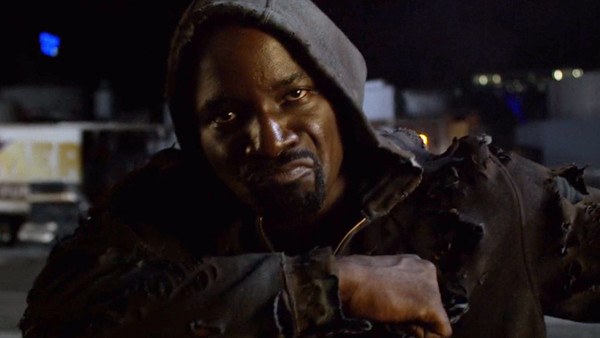
The tone of these shows couldn't really be much more different from that of the mainline MCU. The movies are strictly PG-13 and, even in their heavier moments, rarely leave audiences more than a few minutes away from an hilarious quip.
The Marvel Netflix shows are typically a lot more self-serious and "gritty", and the result is that when silly subplots and characters are introduced, the audience starts to suffer from mood whiplash.
Too many times we'd see a character be brutally murdered only for it to be followed up with an out-of-place gag or absurdly silly moment, and the result is jarring.
Elsewhere these shows also seem a bit afraid to just embrace their silliness: take the po-faced reveal of Diamondback's awful costume, which could've been knowingly fun if the show just addressed how goofy it looked.
That's to say nothing of the tonal disparity between these oft-grisly shows and the more kid-friendly nature of the core movie MCU. This only exacerbates how they don't feel remotely cut from the same cloth, let alone exist within the same city.
2. The Lack Of A Universe "Godfather"

One of the major reasons the MCU movies have scored an unprecedented level of critical praise and box office glory is that there's a single "Godfather" for the entire enterprise, in Marvel Studios big-wig Kevin Feige.
Feige takes an extremely hands-on approach to managing the various movies in-production, and the result is that even the worst offerings into the MCU - looking at you, Thor: The Dark World - aren't any worse than generic and forgettable.
More importantly, all these films feel as though they exist within the same world, making their eventual collision in Avengers: Infinity War feel mostly organic.
But the Netflix MCU lacks the same guiding force, and though it would've obviously been too much for Kevin Feige to get involved on this side of the fence, it's clear that the lack of a universal caretaker has severely dented the quality of the output tonally, stylistically and narratively.
1. The Contrived Character Arcs

Though characterisation was frequently the greatest strength of the Marvel Netflix shows, the convoluted writing did often force characters into situations that didn't really feel earned or in line with what audiences had seen prior.
This is most common in a number of the cynically forced romances throughout the shows - namely Matt Murdock (Charlie Cox) and Karen Page (Deborah Ann Woll) in Daredevil, and Mariah Dillard and Shades (Theo Rossi) in Luke Cage - not to mention a painfully overdone drug addiction plot for Trish Walker (Rachael Taylor) in Jessica Jones' second season.
Rather than allow characters to grow and interact organically, too often the shows force character development, which proves all the more frustrating given the excess time these series are given to play out.
Not every single romantic subplot feels contrived, but sadly the vast majority of them do, as though they're a box-ticking exercise intended solely to satisfy either a Netflix or Marvel Studios executive.
Agree or disagree with these points? What are your biggest frustrations with the Marvel Netflix shows? Shout them out in the comments!