10 Worst Sequels In Star Trek
We counted the best sequels in Star Trek, which begs the question: who didn't stick the landing?
For all that is good, there is something that is...less good. Though we begin with a powerhouse of composition, these examples are those episodes and storylines that simply missed the mark. We discussed the best sequels in Star Trek in a previous list, but what of those that left us cold?
There are many stories in Trek that begged a follow-up, only for the result to leave the audience wanting. Did we, for example, really need to have certain questions answered? Were certain characters reintroduced for reintroduction's sake? What, if anything, did this do for the overall narrative?
To be fair, crafting a sequel to anything is a difficult task. As soon as a sequel is announced, it carries the weight of expectation. Sometimes the initial story was so strong that any follow up is starting from the back foot, while other examples offer odd sequel choices to stories that weren't that strong to begin with.
There is always a place for further exploration in Star Trek and beyond, with so many episodes and movies delivering on the promise. Consider The Best Of Both Worlds - one of the greatest cliffhanger endings in television history followed by an episode that nailed the landing. There were many, the writer of said story included, who felt it couldn't be done. Yet it was, and we were the better for it.
This list does not feature those episodes.
10. Among The Lotus Eaters
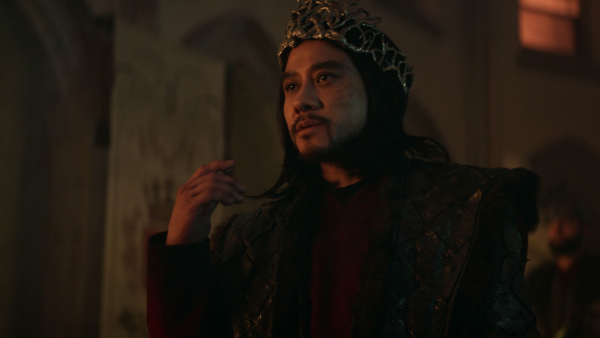
Star Trek: Strange New Worlds shone in its debut season, offering audiences a hopeful view of the future with a return to episodic form, boldly going into the 23rd Century once more. Though it played fast and loose with canon, it was able to largely create its own universe, but there were those episodes that began to confuse those following closely.
Among The Lotus Eaters serves as a sequel to both If Memory Serves and The Cage, with the Enterprise returning to Rigel VII - the scene of the ill-fated mission that had occurred just before the events of the first Star Trek pilot.
While the episode itself deals with loss, responsibility, and guilt, it also stumbles from some production errors. For example, a rogue Starfleet officer is wearing a uniform that is noticeably incorrect, despite having been marooned for years. The episode If Memory Serves, from Discovery's second season, re-confirmed that the events of The Cage did take place in the years before Discovery picks up. The uniforms worn by the crew in Strange New Worlds are new variations - ones that would not have been available to Nguyen.
This, combined with the fake-out of an Ortegas episode, makes Among The Lotus Eaters a frustrating follow-up to the Pike stories that had come before.
9. Star Trek Into Darkness
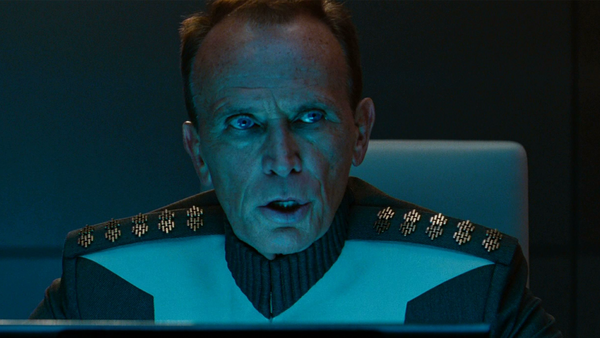
Star Trek Into Darkness has aged well. On release, it suffered from comparisons to Star Trek II: The Wrath Of Khan, while also carrying the weight of advancing the story introduced in its predecessor. As the years have passed, the performances have helped to turn the tide of opinion on this film, with Benedict Cumberbatch and Chris Pine standing out in particular.
However, the film suffers from burying itself in Trek lore, taking far too many examples of older stories into its script. Kirk's relationship with Pike may rise above the latter's tragic death, though the introduction of Admiral Marcus rang too many bells from the jump. Simply put - everyone knew where things were going when the name Marcus was said out loud.
With Admiral there comes Doctor, and Carol Marcus appeared on the Enterprise, after appearing in a shallow marketing campaign focused on selling sex to the teenaged audience. Cumberbatch delivers a blinder as HarrisonKhan, but that's two for two with needless connections to an earlier Star Trek film.
The pressure that the film faces, forcing the Khan connections, undoes its power as a sequel to the superior Star Trek, a film that reintroduced the Original Series characters with energy and a modern aesthetic. Had the film taken a different direction, similar to its follow-up, then the whole affair would be stronger for it.
8. Bloodlines
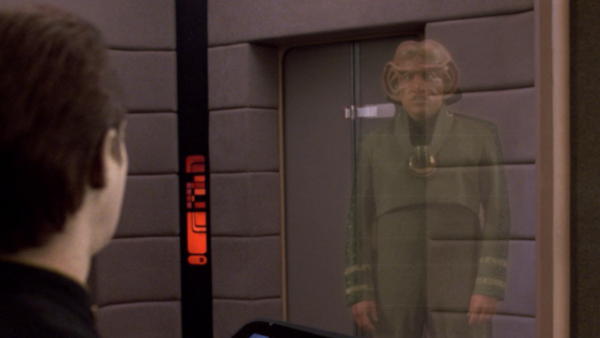
The first season of The Next Generation is a mixed bag when it comes to the quality of the episodes. The Battle is one of the stronger efforts, introducing the Stargazer, the Picard Manoeuvre, and DaiMon Bok. Patrick Stewart gets a chance to shine as he battles the Ferengi's mind-control orb, while audiences are treated to a return of the Enterprise bridge as seen in the first three Star Trek films.
Bok's grievance with Picard centres on the loss of his son in the Battle of Maxia, despite his boy's provocation of the Stargazer. At the end of this episode, Bok is arrested and taken away, returning six years later in Bloodlines.
The seventh-season sequel isn't awful by any means. When placed in the context of Picard's third season Jack Crusher reveal, it takes on greater depth, offering an early example of Picard as a family man. However, Jason Vigo is a difficult character to root for, and the eleventh hour reveal of a potential son, a former flame, and a paternal side is simply too much in the final hours of the show's last episodes.
The storyline goes nowhere, while the return of Bok feels cheap. His attempts to trick Picard feel less like a gut punch and more of a nod to an earlier, stronger episode. Also - was anyone truly looking for a sequel to that episode in particular?
7. That Hope Is You, Part 2

Star Trek: Discovery's third season was a soft reboot for the prequel series, offering audiences a breath of fresh air after the previous two years' pre-Original Series home. Moving away from the 23rd Century gave the show a chance to create its own history and write the future. That Hope Is You, Part 1 opens the season with a bang, introducing Cleveland Booker, giving us a Burnham free of the regular trappings, and there was that Trance Worm. A great start.
The rest of the season felt the impact of Covid, airing as the world was still finding its feet again post-lockdowns. While the year meandered, the finale was tasked with explaining the cause of the Burn, preventing a repeat, dealing with the Emerald Chain, and reinvigorating Starfleet.
That Hope Is You, Part 2 is over-stuffed with action setpieces, nonsensical logistics (just how big is the interior of the ship, anyway?) and a swift case of murder or two. The final scene offers hope for the future, though the cast was unable to fully gather, so camera trickery and CGI stepped in to fill the void - a trick that would be repeated in the fifth season finale, Life, Itself.
It was a rushed ending to a slow season, but unfortunately also serves as a sub-par sequel to an excellent premiere.
6. Q, Less

Jennifer Hetrick was last seen as Vash in The Next Generation's Q, Pid. That episode quickly found itself in cult territory, endlessly quoted (I must protest, I am NOT a merry man!), and a genuinely enjoyable swashbuckling adventure. While that episode ended with Q whisking her away to archaeological wonders unknown, Deep Space Nine's sequel failed to deliver.
Q, Less was an early attempt to use John de Lancie in a spin-off series, separate from The Next Generation, but it never quite reaches the heights of his interactions with Picard. Vash, though another fun performance by Hetrick, also feels underused. Quark was an inspired business partner and much could have been done with them working together but the whole affair is hampered by the misuse of Q.
No one will begrudge the episode its boxing match or the matter-of-fact actions by Sisko but, as the episode that follows Q, Pid for Vash, and comes in the same year as both True Q and Tapestry, this story doesn't stick in the mind like those other examples.
Kudos, as always, to Miles O'Brien, who is having absolutely none of Q's nonsense at his new workplace.
5. The Bounty

So many moments from The Bounty shine right out of the screen. The Titan-A's arrival at the Fleet Museum is tear-inducingly beautiful, as is Jeri Ryan's delivery while she shows Jack Crusher the great ships of yesteryear. It is an episode that offers nostalgia and heart, shining in the middle of Picard's final season.
However, where the episode stumbles is in its use of Professor James Moriarty. Daniel Davis returns to the role after three decades and despite the nostalgic warmth of his appearance, the episode then becomes a let-down coda to his arc on The Next Generation.
Elementary, Dear Data and Ship In A Bottle are iconic episodes of the earlier show, depicting some all-time moments from the series. Picard popping his top hat, Pulaski enjoying tea, and Barclay's "Computer, end program?" all linger long after those episodes end, though the adventure that Moriarty and the Countess Regina Bartholomew embarked on had been the true end to those tales until The Bounty.
Though the meaning couldn't be clearer, and the nostalgia was fun at the time, Moriarty's appearance was long-spoiled in the trailer for the season, while most of his footage was contained therein. When the episode aired, audiences had been led to believe more was to come. Instead, Moriarty is relegated now to a security program avatar, stuck on a repeat of Pop Goes The Weasel, with no Countesses in sight.
4. Judgement
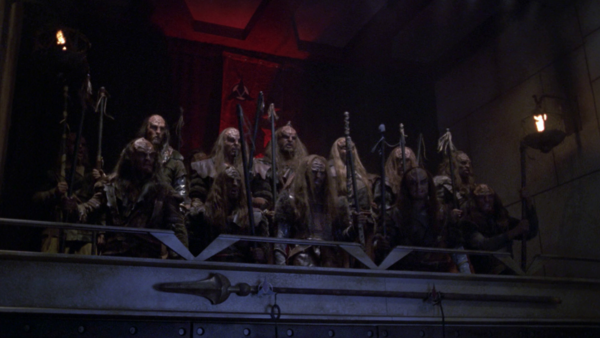
Judgement is a fine episode in isolation, offering Scott Bakula plenty to do as Archer stands trial on Qo'Nos. J.G. Hertzler and John Vickery both shine as (new) Klingons, doing more than enough to secure their legacies in the pantheon of legal representatives in Star Trek.
However, where the episode suffers is in its status as spiritual sequel to Star Trek VI: The Undiscovered Country. One might argue that it is more prequel than sequel, and one would have a point, but the episode is clearly drawing on the audience's knowledge of the sixth Trek film adventure - and the iconic courtroom scene therein.
While Hertzler and Vickery are both excellent in Judgement, it is difficult not to picture Christopher Plummer's outstanding turn as General Chang, roaring at Kirk to answer his questions, translations be damned. The episode's set suffers from budgetary concerns, resulting in a similar-looking courtroom, though one a fraction of the size.
Rura Penthe appears, smaller in scale, again serving to remind the viewer of another depiction on another scale. This episode would have been better served abandoning the nostalgia of The Undiscovered Country and creating a new setting of its very own.
3. Star Trek: Picard S1

As a sequel to Star Trek: Nemesis, the first season of Star Trek: Picard ably moves the story forward, though is at its strongest when it offers the audience a true goodbye between Jean-Luc and Data. Though some plot elements are hand-waved away, such as the rapid acceptance of banning synths in the wake of the Mars assault, the season mostly manages to stand on its own.
The season slips when one considers the context of its inspiration - The Measure Of A Man. This seminal episode of Star Trek is one of the strongest episodes from the Trek universe, exploring not just what it means to be sentient, but what it means to treat others with respect. There, Data is the subject and the catalyst for much of the examination of artificial intelligence to follow, while Riker becomes the symbol of being forced into situations one would never wish to find themselves in.
Picard's first season seemingly undoes the powerful ending to that episode, arbitrarily banning all synthetic lifeforms in the Federation, thus condemning Thaddeus Riker to an early death. The message that it delivers fails to satisfy on The Measure Of A Man's premise, instead positioning itself as a darker future for all concerned, one where Starfleet has all but abandoned its principals.
2. Star Trek: Section 31
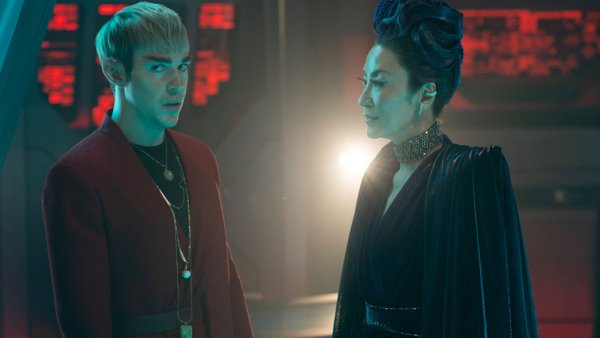
Despite scoring rather a few ups when it was released, Section 31 polarised audiences in early 2025. The Long Trek was the result of a truncated season, a lack of its stars availability, and a premise that strayed far from the universe in which it was set.
It is also a sequel to the excellent Terra Firma two-part story from Star Trek: Discovery's third season. Those episodes introduced Carl, the new face of the Guardian Of Forever, and saw Michelle Yeoh leave that series. The seeds for a Section 31 series had been planted in Discovery's first and second seasons and production looked set to begin on an ongoing saga.
Yeoh's Oscar win directly impacted production on the series, forcing a rethink and restructuring. Sadly the promised spin-off became a shortened story with a breakneck pace, sacrificing plot for spectacle, and sense for explosions.
For something that audiences had been waiting for, as well as an experiment in a new style of storytelling, Section 31 was a disappointment for those hoping for a more coherent plot centred in the Lost Era. One Garrett does not a Monster Maroon make, regardless of the number of star cameos involved.
1. The Naked Now
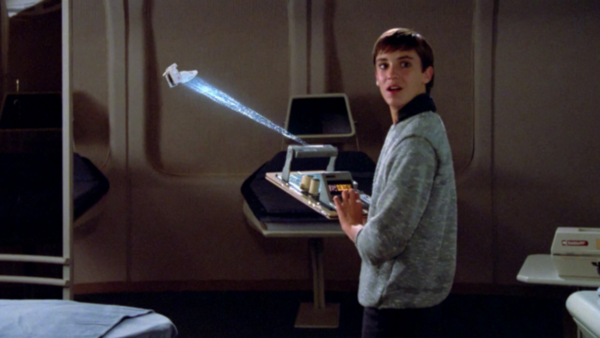
George Takei described this The Next Generation episode as 'young children putting on their parents' clothes and trying to act like grown-ups'. As this is both a direct sequel to, and quasi-remake of, The Naked Time, then one can understand why the actor felt this way.
The episode fails as a sequel as it tries so hard to recapture that feeling of the original while using characters that no one really knew yet. This, the first episode after Encounter At Farpoint, seemed intent on showcasing the cast's comedy skills, though it ended up leaning too hard on slapstick.
The episode lifts the virus wholesale from the earlier episode, moving the polywater problem from a dying orbit to a dying star. Instead of an Enterprise spiralling towards its doom, this new ship is immobilised by a drunken engineer and an insufferable teenager.
When audiences fall back on the trouble with Wesley, The Naked Now is often the example that offers the most weight to the argument. With all respect to the young Wil Wheaton, this was not his strongest performance, nor was the material the most polished. The result is an annoying child who almost contributes to the destruction of the ship.
Gone are those fun moments of Sulu swashbuckling his way through the ship, replaced now with ill conceived jokes about Data being ''fully functional''.
A romp it might have been, but a poor follow-up for all concerned.