10 Things That Must NEVER Happen In Doctor Who
Hide these ideas behind a diamond wall for 4.5 billion years, we say!

Change is sown into the very fabric of Doctor Who, and has been ever since William Hartnell regenerated into Patrick Troughton way back in 1966. And yet, Doctor Who fans can often be quite resistant to change.
The show's midnight release was the latest big shuffle to enrage the fandom, and no doubt there will be more controversies in the years to come. Every Doctor Who fan has their line in the sand when it comes to what the show cannot do, and every Doctor Who showrunner since 2005 has gleefully stepped over some of those lines with varying degrees of success.
Chris Chibnall's first female Doctor? Great! Steven Moffat introducing the Doctor to Adolf Hitler? Not so great!
But hopefully, even those pesky Doctor Who showrunners are aware that there are some elements of the show that must never, ever be tampered with. Red lines that, once crossed, could turn Doctor Who from this weird little science-fiction show into something *gasp* ordinary.
Or, y'know, just ruin it altogether.
10. Release An Entire Season At Once

Season 1's midnight release strategy was controversial to fans who either didn't want to have to stay up late just to avoid spoilers, or who felt that the show's UK audience was being treated like second-class citizens.
But look on the bright side. Imagine the whole season dropped on iPlayer and Disney+ in one go?!
While the binge-watch strategy works really well for sitcoms and miniseries, it just doesn't work for Doctor Who. Every episode is a unique adventure, taking place in a completely new location with an almost entirely new cast. Each episode of Doctor Who is a mini-movie, an event to be savoured.
If we got Doctor Who as one chunk of eight episodes, the temptation would be to skip the "filler" episodes and go straight to the finale, just so we could get back on Twitter a bit sooner.
Midnight releases of single episodes wasn't the most ideal change, but it at least ensured that everyone was on the same page week-to-week, and gave people the chance to watch the episode at a time that suited them.
Releasing a whole season in one go, however, would be a disaster for the show, and would only serve to make Doctor Who feel like throwaway 'content' rather than the huge event it deserves to be.
9. Enter The Doctorverse

Doctor Who is now part of the Walt Disney Corporation, which loves mining an intellectual property for all it's worth. David Tennant's Fourteenth Doctor may be having lunch in his garden, but that doesn't mean he won't answer the call from Mickey Mouse a few years down the line.
On top of that, bi-generation has apparently created a Doctorverse, where all the old Doctors also bi-generated and can continue to have adventures. The risk here is that the show could start to get way too complicated for its own good – even more than it arguably already is!
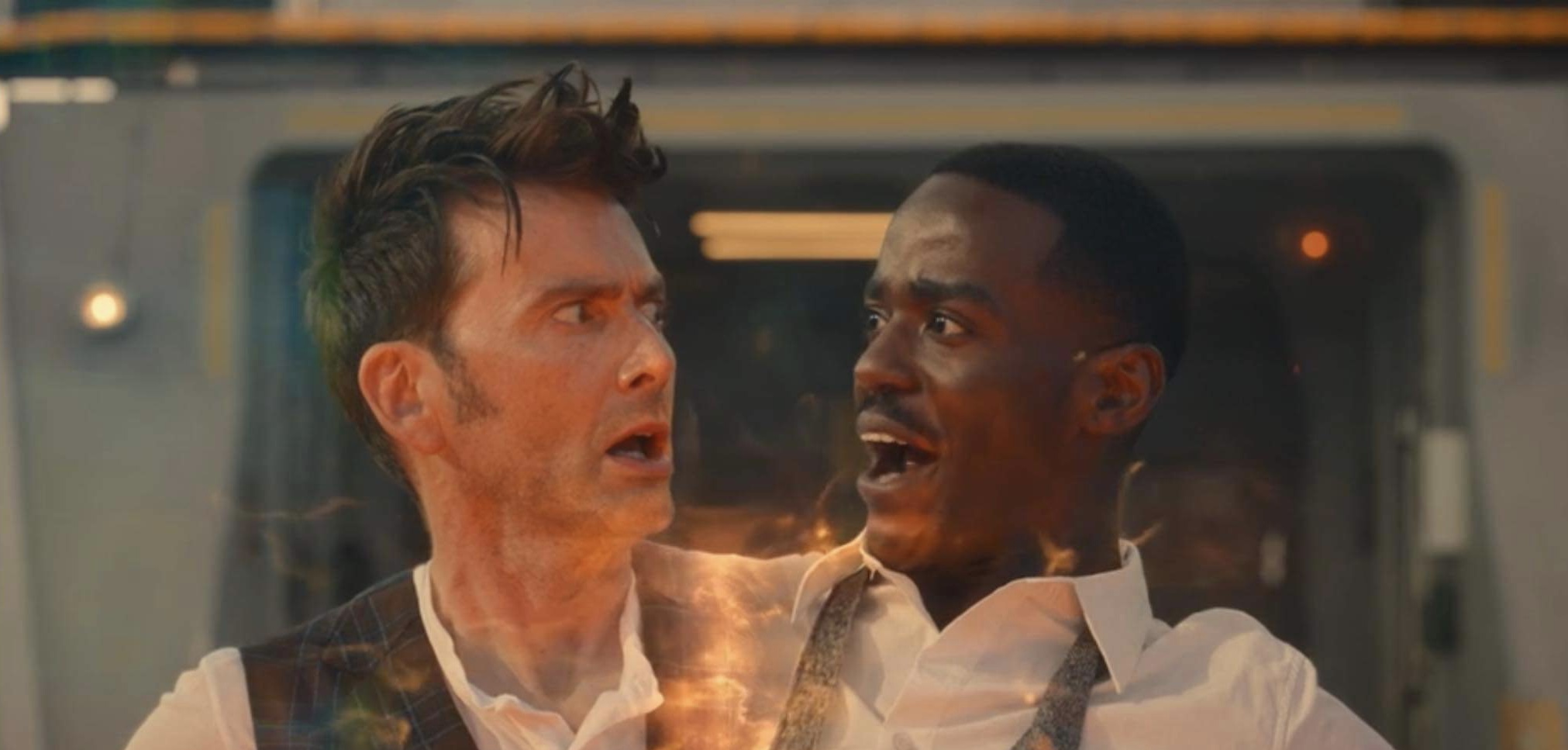
The idea of a Doctor multiverse where every regeneration is a bi-generation and past Doctors grow old in a separate timeline while also giving way to their successors in another timeline... anyone got any paracetamol? It's enough to cause a headache just thinking about it.
Not only will getting too Doctory-Woctory risk alienating casual viewers (even the mighty MCU wasn't immune to the effects of its convoluted Multiverse Saga) but going too far into the Doctorverse will destroy the finality and the power of regeneration.
By all means, find those pockets of time to have new adventures with past Doctors. Eleven's centuries on Trenzalore, for example. But isn't it nice knowing that Sylvester McCoy didn't wake up in the drawer of a San Francisco morgue?
8. The Doctor Is A God

Doctor Who has flirted with the idea of revealing that our protagonist is some all-powerful godlike being, but has always pulled back from the brink. 1980s script editor Andrew Cartmel had always intended to reveal that the Doctor was something "more" than a Time Lord, but the show was cancelled before this could be developed further.
Decades later, Chris Chibnall revealed that the Timeless Child had provided the genetic building blocks that built the Time Lords. While that revelation gave the Doctor an uncomfortably high level of mythical importance, it still, thankfully, didn't turn them into a god.
If the Doctor was revealed to be some all-powerful deity, it would ruin our relationship with the character. Nobody can relate to Superman, but they can get onboard with the shy, secretive everyman Clark Kent. The Doctor has always been Clark Kent, but has very rarely been Superman.
Yes, the Doctor is an eternal being, wandering the cosmos and answering the prayers of those in need. However, the Doctor has always done that out of the goodness of their hearts. That's why Peter Capaldi's "idiot with a box" who helps people "because it's kind" resonates with viewers.
Plus, gods are boring – that's why the Doctor ran away from Gallifrey in the first place.
7. An ACTUAL Ending

We've all been disappointed when beloved TV shows get revived and completely undo a perfect ending, right? Thankfully, Doctor Who will never do this, because there is no definitive ending built into the show's premise.
Barring extreme circumstances, the Doctor can't die, and instead regenerates into someone else, who takes off and has brand-new adventures. The Doctor isn't on some quest that has a clearly-defined endpoint, and when their companions leave, they just go somewhere else and pick up new ones.
When Doctor Who was taken off the air in 1989, the decision came so late that no clear ending was written, which was ultimately a godsend. Survival ended with the Seventh Doctor and Ace walking off into the sunset, looking forward to new adventures. Those new adventures ended up being a series of novels, and later, Big Finish audios, many of which influenced the next generation of Doctor Who.
Whether Doctor Who comes to an end next year or decades down the line, the ending has to be open-ended. As long as viewers know that the Doctor and the TARDIS are still out there, the adventure can live forever.
6. The Doctor And The Master Being Related

The hero's evil brother is one of film and television's most tiresome and overused cliches. Spock has an evil brother, Thor has an evil brother, and Steven Moffat even gave Sherlock Holmes an evil sister!
While Doctor Who hasn't joined in with the likes of Marvel and Sherlock, it's not for a lack of trying. If Roger Delgado hadn't tragically died, Jon Pertwee's final story would've revealed that, if not brothers, that the Doctor and the Master were two sides of the same coin.
A decade later, Planet of Fire teased that Peter Davison's Fifth Doctor and Anthony Ainley's Master could be brothers, and a decade after that, an early draft of the 1996 TV Movie revealed that the Doctor and the Master were brothers seeking their missing father Ulysses. Russell T Davies scoffed at this siblings idea in The Sound of Drums, but he didn't definitively dismiss the prospect either.
This wiggle room could easily be exploited by a future Doctor Who showrunner, but that would be a terrible idea.
The Doctor and the Master's relationship is far more compelling if they remain frenemies. Two Time Lords disagreeing over how best to use their gifts will always be more interesting, and more Doctor Who-ey, than two boring old dysfunctional brothers.
5. Retirement Of The Daleks

As much as we gripe about them being overused, none of us want to see the Daleks retired forever, do we? If it wasn't for the Daleks, we wouldn't have Doctor Who as we know it now, so impactful was their first appearance back in 1963.
In many ways, the Daleks are more famous than any of the actors who've played the Doctor over the past 61 years. They had their own movie franchise in the 1960s, with their names adorning the posters instead of the Doctor's.
More recently, they've starred alongside pop-culture icons like Daffy Duck and Batman in Looney Tunes: Back in Action and The Lego Batman Movie, respectively.
Quite simply, Doctor Who needs the Daleks. Try to imagine the show without them for a second. Go on, we'll wait. Not possible, is it? They're a good way to keep casual viewers interested, which is one of the reasons why the BBC worked so hard to make a deal with the Terry Nation estate back in 2005.
And not only that, but the Daleks represent everything the Doctor stands against – where the Doctor saves lives, the Daleks destroy them. Doctor Who will always need that core conflict at its heart, so exterminating the Daleks for good would be an insanely short-sighted move.
4. Change The TARDIS From A Police Box

Nothing taps into the fundamental appeal of Doctor Who quite like the image of a quaint British police box standing on an alien landscape.
Now, imagine if the TARDIS' chameleonic powers made it invisible, or made it look like a typical flying saucer. Boring, right?
This is why the original pitch documents for Doctor Who emphasised the need for the TARDIS to disguise itself as something everyday. Sydney Newman didn't want Doctor Who to be like every other sci-fi show, and by finally settling on a police box, they established the show's unique iconography.
Doctor Who isn't Star Trek. It doesn't have sleek and sterile spaceships, that's never been its deal. It's always been a show that combines the humdrum with the extraordinary. A battered old police box that can travel anywhere in time and space has always been emblematic of its core ethos.
Changing the TARDIS into an elaborate time machine like the one dreamed up by HG Wells would take away Doctor Who's ramshackle charm. So too would removing its unique wheezing, groaning sound.
That's right River, we will absolutely be leaving the brakes on!
3. Reveal The Doctor's Name

Of course Steven Moffat was never going to tell us the Doctor's name, but we all felt a wee twinge of anxiety back in 2013, didn't we? Instead, Moffat constructed a three-episode arc that explicitly stated why revealing the name of the Doctor was a very very bad idea.
The Doctor's name was so powerful that revealing it would've restarted the Time War and destroyed the universe itself. You don't get a bigger metaphor than that. Because let's face it, if Doctor Who ever did tell us what the Doctor's name was, it would collapse the central premise of the show.
"Doctor Who" was always a question, a hint of the character's mysterious nature. The Doctor is an unknowable alien time-traveller, and this mystique would be severely hampered if they turned out to be called Brian or Nigel.
Worse still, what if someone attributed a convoluted "alien" name to the Doctor to emphasize that they're not one of us? Romana's full name of Romanadvoratnelundar is a joke that sends up this very notion. The last thing we'd want is for someone to take that joke seriously and assign a similarly convoluted name to the Doctor.
What's the Doctor's name? It's a promise. A promise to be a Doctor.
2. An American Doctor

The 1996 TV Movie is probably the only time when American stars like Jeff Goldblum were seriously considered to play the Doctor. And even then, everyone involved in the production was fairly adamant that they needed a British actor to play the role.
Doctor Who is an iconic fictional character that is inextricably linked with the UK, as with James Bond or Sherlock Holmes. All three of these characters, for good or ill, are influenced by British culture, and have done a lot to influence it themselves.
An American playing the Doctor brings a completely new set of cultural stylings to the character that could dilute their homespun charm. An American Doctor would potentially be bigger, brasher, louder – elements that clash with the Doctor's default setting of humble traveller helping out wherever they can.
And while Americans have played iconic British characters like James Bond and Sherlock Holmes in a variety of formats... there's always something about it that isn't quite right.
Robert Downey Jr. gets away with it in the Sherlock Holmes movies, but only just. Do we really want a whole series of Doctor Who where Ryan Gosling does a dodgy British accent?
1. Doctors Brought Back With AI Or CGI

In an interview with Variety during San Diego Comic-Con 2024, Russell T Davies broached the subject of bringing back the classic Doctors via CGI. Disney has form in this department, having used CGI to de-age or resurrect actors like Carrie Fisher and Peter Cushing in the Star Wars franchise.
Could they do something similar to resurrect William Hartnell and Patrick Troughton, so Ncuti Gatwa can meet the First and Second Doctors? And if they could, does that mean that they should?
Aside from the huge ethical issues involved, there's the cold hard fact that it never looks good. Peter Cushing in Rogue One was convincing enough until he had to talk or move – which are both quite important factors in one of those talking picture shows. If a billion-dollar franchise like Star Wars can't do it convincingly, what chance does Doctor Who have?
None of us need to see janky, twitchy CGI zombie Doctors brought back from the dead for an episode of a TV show. It's disrespectful and more than a little creepy. We also do not need AI to recreate the voices or performances of deceased Doctor actors – though scarily, you have to imagine we're not too far off that being achievable.
If old Doctors are to return, then do it the right way. We've got the likes of David Bradley and Sean Pertwee who can ably portray the First and Third Doctors, while respecting the legacies of William Hartnell and Jon Pertwee.