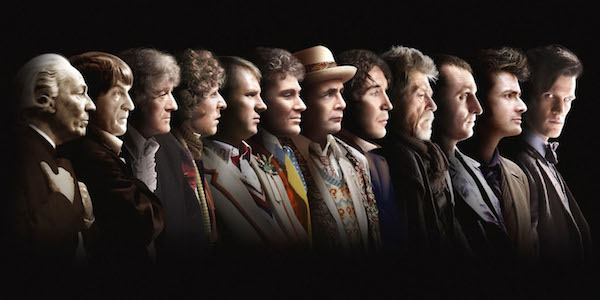
10 Things You Didn't Know About Doctor Who

Because Tom Baker's scarf was a complete accident wardrobe-wise, and people should know this. Hell, even Capaldi's shocked to hear it.
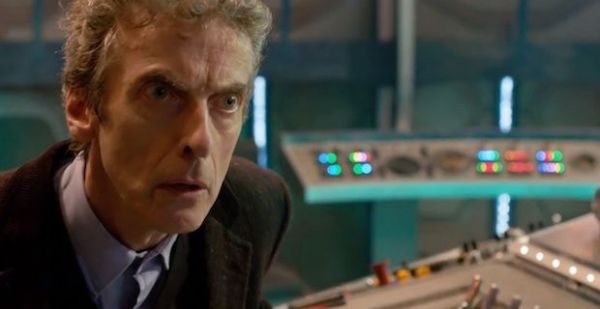
Doctor Who recently celebrated its 50th anniversary and the show is still as popular as ever. Having been revived in 2005, it's since gone from strength to strength and gained a new legion of fans who never got to see the classic episodes. People all around the world tune in to watch the time travelling hero battle enemies and avert disasters across the universe. As the series has been running for so long and had such a diverse group of people working on it there are plenty of intriguing and little known facts about the show. The variety in the show€™s followers, from the very young to incredibly dedicated adults, means that there is a huge amount of information that many will not about the shows past and present. This list counts down 10 bits of trivia that most people simply will not be aware of, from the 1960€™s up until the very last episode. They range from people who almost played the Doctor, famous writers who might have penned scripts, as well as surprising details about the cast, crew and production. Some of the entries will even surprise even the most hardcore Whovians. So sit back and enjoy 10 things you didn€™t know about everyone€™s favourite Time Lord.

10. Daleks Could Levitate In 1973

Daleks made a return to our screens in 2005 when Russell T Davies revived the series. They had an updated look, a new voice actor and several new powers. One of these was an apparent ability to fly. This caused a flurry of controversy amongst some fans who believed that the show had made the iconic villains too powerful. For decades people have made fun of the giant pepper pots for a supposed inherent weakness that made them virtually useless in particulars situation. The fact they had no legs and very little space between their base and the floor made stairs something of a problem for the Daleks. This left fans thinking that they could evade them by climbing up a couple of steps. That€™s not exactly an arch nemesis worthy of the Doctor. However this wasn€™t a power new to the series. A Dalek had used an anti-gravitation device as far back as 1973, in the serial €œPlanet of the Daleks€. Perhaps in response to fan criticism they have even directly levitated up a flight of stairs in pursuit of their adversary in €œRemembrance of the Daleks€. It€™s unsurprising that a race who had mastered space and time travel while raging war across the universe had developed a solution to getting to the top of building without an elevator.

9. Doctor Who Without The Doctor

Fans of the revived series of Doctor Who will be aware that the first few series had episodes that shifted the focus away from the Doctor and instead had other characters in the lead roles. Although the title hero would appear in the episodes in a minor way and would still take part in the adventure in a small way. This has had mixed results. Steven Moffatt€™s €œBlink€ introduced an exciting and truly scary enemy in the Weeping Angels. Whereas €œLove and Monsters€ in 2006 had an exceptionally awful story and an uninspired guest appearance from Peter Kay. Frankly the less said about it the better. What you probably do not know is that there was an episode that did away with the Doctor altogether. The 1965 episode €œMission to the Unknown€ saw a completely separate cast from the rest of the series. It featured a Space Security Agent trying to get back to Earth to warn them about a Dalek invasion. The stand-alone story was devised when another serial was cut from four episodes to three. This left a gap in the schedule and the writers decided to create a filler episode that would set up a later story arc. Terry Nation, who wrote the script, had intended for it to be a test to see if the Daleks could work by themselves. If the episode had been successful we might never have gotten to see the Doctor fighting his greatest enemies ever again.

8. Both Stephen Fry and J.K. Rowling Almost Wrote Episodes
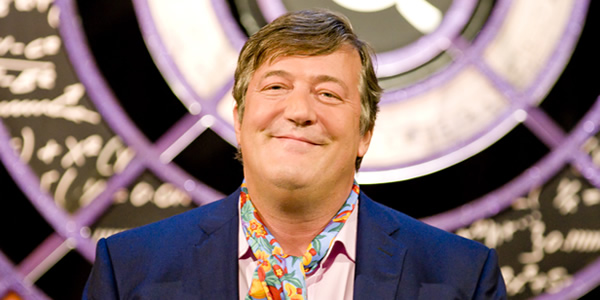
Stephen Fry is something of a fan of Doctor Who and was set to write a script for the second series of the revived show. The schedule for his episode was changed and was later moved to the third series. However Fry couldn€™t find the time necessary to edit the script as he was working on other projects. The script wasn€™t able to be quickly adapted as significant changes would have to be made to accommodate the overall theme of the third series and to take into account the fact that there was a new companion in Martha Jones. So you could blame Billie Piper and Freema Agyeman for the fact that we never got to see this story. The producers also approached Harry Potter author J. K. Rowling to write an episode in 2005. She had to turn down the opportunity as she was writing The Half-Blood Prince at the time. We aren€™t sure how Doctor Who fans would have reacted to a Rowling script, especially if she had included some of the fantasy elements from her books. At least an episode from Stephen Fry would have been faithful to the show and included elements of his unique comedy style.

7. Ridley Scott Was Set To Design the Daleks

Ridley Scott was working for the BBC during the 1960€™s as a set designer. His main responsibilities were to design props and sets for a variety of television programs. The show€™s producers assigned Scott to €œThe Daleks€, the episode that first introduced the iconic villains. However before he could get to work on the project he moved to Granada Television so that he could begin training as a director. Eventually Raymond Cusick took over the task and on a tiny budget brought Terry Nation€™s vision to the screen. As a staff member at the BBC though, he didn€™t get to share in the merchandising rights of the Daleks. Instead he got a very modest bonus of £100 and a Blue Peter badge. Now we know that the look of the Daleks is part of what makes them so great, but it would still have been great to see Scott€™s take on them. He might have had something of a lucky escape though, as Scott would have received the same rewards for his work as Cusick. Maybe directing Alien, Gladiator and Blade Runner was a better use of his time after all even if we aren€™t sure Oscar nominations beat having a Blue Peter badge.

6. One-Off Guest Appearances To Lead Roles
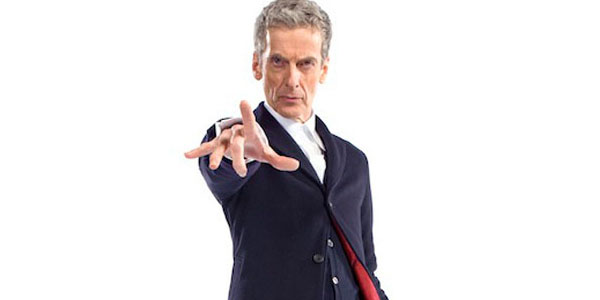
Many of the actors who have taken up long time positions on Doctor Who have made guest appearances in previous episodes. Freema Agyeman, who played Martha Jones the companion to the Tenth Doctor, first appeared the previous year as an office worker attacked by Cyberman. Similarly Karen Gillian had a minor part in €œThe Fires of Pompeii€ in 2008 before returning permanently as companion Amy Pond. Peter Capaldi who is set to be the Twelfth Doctor also appeared in the episode in a small role. This phenomenon isn€™t exclusive to the revived series either. Classic Doctor who regulars such as Ian Marter, Lalla Ward and Nicholas Courtney had one-off roles before taking up their more well-known characters of Harry Sullivan, Romana and the Brigadier. It is almost as if the producers don€™t like doing auditions and prefer to just thrown people in to see how they do. As strange as this practice is it seems to be working pretty well and has produced some of the most loved characters in the shows history. The lesson to learn here is that if you get a chance to make an appearance on Doctor Who, take it up. It might just end up being a repeat gig.

5. Tom Baker€™s Scarf Was An Accident

One of the most well-known and popular incarnation of the time travelling hero was Tom Baker€™s Fourth Doctor. With his eccentric behaviour, lively manner, love of jellybeans and questionable dress sense he is one of the most instantly recognisable television characters of all time. In fact if you ask most fans around the world to think of the Doctor they€™ll probably picture Baker€™s portrayal. One of the stand out parts of his appearance was the exceptionally long scarf that he wore at all times. Well it turns out that it should never have been that length in the first place. According to the man himself the oversized scar was an error on the part of costume designer Begonia Pope. She was given plenty of wool to choose a design after being asked to knit the accessory. But Pope wasn€™t told how long to make it and mistakenly used all of the material she was provided with, leading to the excessive size. The rest of the team liked the result so much that they decided to use it. After shortening it slightly they gave it to Tom Baker and the rest is history.

4. It€™s A Family Affair

Plenty of family members have appeared together throughout the shows long history. Perhaps the most famous though came about during the series four episode €œThe Doctor€™s Daughter€. This saw the first appearance of Georgia Moffett, who played the artificially created daughter of the Time Lord. She also happens to be the real life daughter of Peter Davison whose best-known role was the Fifth Doctor. David Tennant and Georgia later married, further cementing her relationship with Doctor Who. The couple have three children, leaving each of them with a father and grandfather who have both played the same character. A character who just so happens to be one of the most famous television heroes of all time. Though it might all end up being a bit confusing for the children, considering their grandfather regenerated five times to become their dad. Or the fact that their mom is married to her father. Maybe they should just not let them watch Doctor Who until they are a bit older. It might be worth checking the betting odds on any of those kids appearing on the programme in the future. We have a feeling they will make an appearance at some point.

3. There Are Plenty Of Missing Episodes

Doctor Who has been running since the 1960€™s and has amassed hundreds of episodes. The BBC though has lost a large number of these however, making it impossible for them to be released to home media. This has caused a major problem for the corporation considering the legions of new fans who want to go back and watch the classic episodes. The BBC didn€™t misplace the tapes, instead they were wiped and reused to save money. Many of the earlier episodes were erased during the 1970€™s due to this practice. In total there are currently 97 missing episodes from a total of 26 different serials. The BBC has been looking at recovering the missing episodes. Mainly by requesting help from fans and foreign television companies, as many episodes were transferred to film so that they could be sold to overseas broadcasters for syndication. In October 2013 nine episodes were found at a TV station in Nigeria giving hope that all the episodes might one day be discovered.

2. Benedict Cumberbatch Turned Down Being The Doctor

Benedict Cumberbatch has become one of the biggest stars in the last couple of years. Appearing in Sherlock, Star Trek and The Hobbit, he has become one of television and films most wanted actors. After David Tennant left Doctor Who in 2010 Steven Moffat offered Cumberbatch the role. The actor turned down it down almost immediately after a brief conversation with the outgoing Tennant. He said in an interview that the extreme attention and constant media scrutiny that would come with the show put him off.
"David and I talked about it but I thought it would have to be radically different. And anyway I didn't really like the whole package - being on school lunchboxes."
Being constantly in the public eye and mobbed by children can€™t be all that fun so we can€™t really blame Cumberbatch for refusing to take up the role. While it might have been interesting to see his take portrayal of the Doctor we can hardly blame him for deciding against it. It would have severely limited his ability to work on other projects and more importantly would make it harder to film Sherlock. And none of us would want that.

1. Star Wars Prevented A Doctor Who Movie Being Made

An official Doctor Who film was released in 1996 starring Paul McGann as the Eight Doctor. Taking place before the Time War it saw the Doctor battling with the Master on Earth after his TARDIS crash landed. Long before that movie though Tom Baker and Ian Marter (who played Harry Sullivan) wrote a script for a Doctor Who film. It was set to feature robotic goblins and living scarecrows, an idea that was later reused to terrifying effect in €œThe Family of Blood€. Plans for the project got to an advanced stage. The screenplay was finalised and along with an agreement with the BBC over the rights to the show. Vincent Price was even set to star as the main villain. Unfortunately funding for the film was hard to come by. Most studios were uninterested in meeting the necessary cost for what they saw as a niche film, but Baker and Marter were still confident that a deal could be struck. The final nail in the coffin came from a newly released film that the production crew went to see. That film was Star Wars, whose vast scale and incredible special effects were a killing blow to any prospect of a Doctor Who movie. They felt that it would just pale in comparison to the science-fiction hit and abandoned their project. Remember to let us know in the comments if you have any interesting facts about the series.

Contributor
Contributor

A sport, gaming and fiction enthusiast, I particularly enjoy Formula 1, rugby, tennis, athletics and football.