10 Star Trek Undercover Operations That Went Wrong
Forget the shaken martinis and exploding gadgets; Starfleet doesn't do well undercover.
After years of Star Trek adventures, we've grown accustomed to the idea that Starfleet officers are the best of the best. Until, one day, they're sent on a covert operation and everything unravels. And frankly, there are so many disastrous undercover missions on Starfleet's books at this point that it was a struggle narrowing it down to just ten.
We blame James Bond and Ethan Hunt for making it look so easy. Sort of. To be fair, mission-almost-impossible suits some of our favourite Fleeters better than others...and some even take to subterfuge and skulduggery like a whale to 23rd-century water.
Looking at you, Sisko.
But on the whole, whenever an episode opens with carefully laid plans for infiltration, disguise or sabotage, we just know that something will go wrong along the way. Blown covers, cultural contamination...even missing communicators, there are a hundred and one ways a mission can fall apart.
Maybe the plan was based on rotten intel. Or it was just a bad idea from the start. And let's face it, sometimes the person they send, for all their brilliance in their own field, just isn't suited to the world of spycraft.
There is one very important lesson we can learn from all this, though: if you want an espionage plot to go well, you just need a Garak at your back.
10. Monsieur Eyepatch
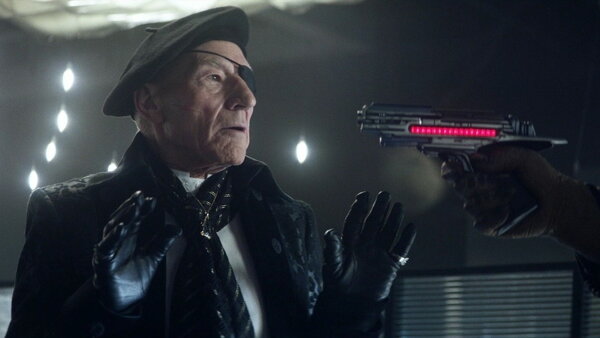
You know exactly what we're talking about. Stardust City Rag in Star Trek: Picard.
We just have to come out and say it. Who looked at Picard wearing that eyepatch and beret, heard his ridiculous French accent and said, 'yeah, that has undercover mission success written all over it'?
Seriously, someone on La Sirena should have known better and sent Picard to timeout to think about what he'd done. There was no way in the galaxy that his disguise should have worked. No matter what Raffi injected them with to fool the alien on Freecloud that can literally sniff out lies.
The strangest part is, it's not even this terrible disguise that messes up the mission. The plan was simple. Retrieve Maddox from Bjayzl by having Rios pose as a facer on Freecloud, offer the highly valuable Seven of Nine as a trade, then transport to safety.
What they didn't know was that Seven manipulated the entire situation to get close to Bjayzl, seeking vengeance for the murder of Icheb. When Seven's ulterior motive is revealed, the situation devolves into a chaotic standoff that puts them all in danger. And while Seven plays along with a deal that allows them to leave peacefully, she later returns alone to claim Bjayzl's life.
It's fair to say that Stardust City Rag is a prime example of streaming Trek's penchant for tonal whiplash, but even so, we still maintain that Monsieur Eyepatch should never have been allowed to beam down in the first place.
9. A Good Day To Lie
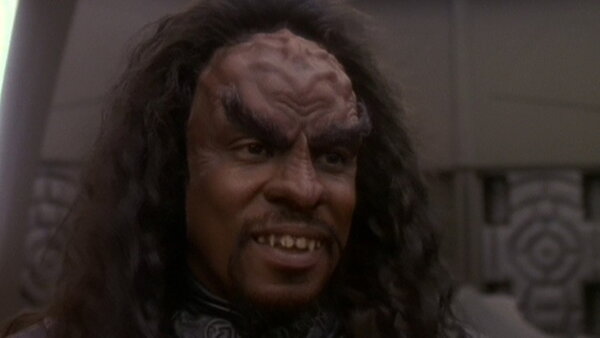
The one good thing about Monsieur Eyepatch from Picard is that it makes Sisko's Klingon disguise in Apocalypse Rising seem thoroughly professional. And damn, Avery Brooks makes it look good.
With shapeshifting paranoia running ever deeper, Starfleet Command decide to send an infiltration team to expose the Klingon Chancellor Gowron as a Changeling. Of course, by infiltration team, they mean Sisko, O'Brien, Odo and Worf. Honestly, Section 31 is the worst, but after seeing how many failed covert missions are led by random Starfleet officers, it makes you think twice.
This time, the plan is not so simple. Disguise themselves as Klingons, sneak into Klingon HQ, set up a bunch of prototype devices, and hit Gowron with dangerous radiation to expose him. It's going to go wrong, even before we see Worf's training session spiral into bickering, the mess made by Klingon drinking games, and what a terrible Klingon O'Brien makes.
And surprise, surprise, the jig is up when General Martok recognises Sisko at the most dramatic moment and throws them all into a cell. But then...Martok suddenly changes his tune, aiding their escape and encouraging them to kill Gowron (not that Worf needs encouragement; that was his Plan A all along). Hm...suspicious...
You can't fool Odo that easily. He sees through deepfake Martok and stops Worf from assassinating the very real Gowron just in time. And thank goodness; being robbed of Gowron's magnificent glare would have been criminal.
8. Shenanigans On The Voyage Home
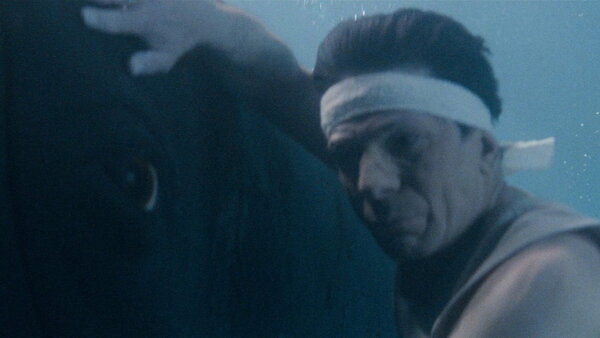
While the one with the whales isn't an official undercover mission, everyone knows the first rule of time travel is to blend in and avoid polluting the timeline at all costs...
A probe arrives at Earth to communicate with whales (for...reasons) despite their having become extinct. But the destructive probe shows no sign of moving along without an answer.
Cue Kirk and co. deciding that the easiest way to solve this problem is to travel back in time and pick up a couple of whales. As if it's just a case of popping to Aldi for milk.
Jump (through a terrifying tunnel of heads) to San Francisco, 1986, and Kirk gives his crew clear instructions to be careful and, essentially, not to draw attention to themselves.
What follows is a comedy of errors that should be shown at the Academy to warn cadets how not to 'blend in' when time travelling.
Spock takes it upon himself to nerve pinch a punk in front of a bus full of people, and about ten minutes later, he's swimming with whales, much to the astonishment of several spectators. Then, Kirk decides to tell the nice lady from the past all about his job as a spaceman.
Meanwhile, Uhura and Chekov ask every passer-by in sight where the nuclear wessles are, much to the bemusement of an unimpressed cop, and their eventual infiltration mission leads to the capture of Chekov.
Scotty hands over a formula from the future for transparent aluminium to a random manager in a plexiglass factory. McCoy cures a woman in hospital with a pill that clearly hasn't been invented yet. And that's not to mention the communicator and phaser that were left behind in the chaos.
We guess this means Sulu gets the gold star for this mission?
The icing on the cake is 20th century Doctor Gillian Taylor hitching a ride back to the future with them. But maybe it's balanced out by Rios' extraordinary decision to stay in the 21st century in Star Trek: Picard. Who knows how it works.
7. Lost And Found
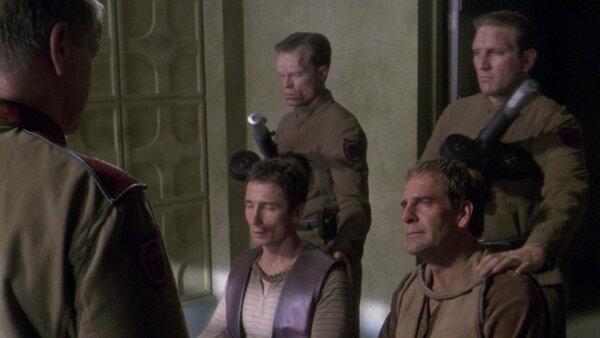
Chekov isn't the only one to lose his communicator at the worst possible moment. He followed in the footsteps of one Lieutenant Reed.
The Communicator features a covert operation that went wrong not just once, but twice. Archer leads a disguised away team to investigate a pre-warp civilisation. They return congratulating each other on a job well done...until Reed realises his communicator is missing. It really does make you wonder if this kind of mission is worth the risk.
Archer and Reed return to try and find it before it can cause any cultural contamination, but they're captured by the paranoid military who are convinced they're spies for the rival Alliance. In a job terribly done, yet more Starfleet technology is discovered on them, and T'Pol decides to contact Archer using his highly suspicious rank of Captain. Vulcans really need to up their subterfuge game.
Things take a dark turn when the pair are interrogated, examined and set to be executed. But they manage to maintain an improvised cover that they're genetically enhanced soldiers until T'Pol can rescue them.
Archer bleakly hopes that all's well that ends well, but T'Pol points out the damage is done. Yes, they might have succeeded in keeping their extraterrestrial origins secret, but they skewed their captors' view on the Alliance, contaminating the natural progression of their civilisation.
On the surface, The Communicator is a straightforward proto-Prime Directive story. But it's the way it's written and delivered that hits hard. Reed's fear of what one rogue communicator might do...Archer and Reed's earnest debate over whether they should reveal the truth or not...the suspicion and aggression of a military power faced with strangers.
So maybe we should forgive Reed's transgression, given the cracking good episode that spawned from it. Just this once.
6. Profit And Loss
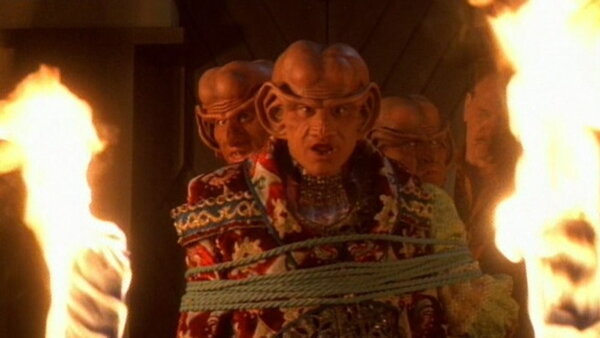
False Profits opens with a rogue replicator signal on a planet that really isn't ready for such advanced technology. Chakotay and Tom's initial covert operation to blend in and track down the replicator goes well. So far, so good. But whatever they'd been expecting, it wasn't a pair of Ferengi posing as demi-gods to exploit the locals.
You have to admire the sheer skill of the hustle; using the people's religion against them, teaching them the Rules of Acquisition and utilising their replicator for cheap tricks. They even manage to persuade Janeway that removing these people's 'gods' without explanation could cause even more damage.
But they have no idea which Starfleet Captain they're dealing with. Janeway devises a plan to beat them at their own game...sending Neelix in disguise as the Ferengi Grand Proxy to order them back home.
Now, as a viewer, seeing Ethan Phillips' turn as a Ferengi is spectacular, and a nod to his outing as Farek in the otherwise icky episode Ménage à Troi. However, in the story, Janeway sending the ship's chef on a crucial undercover mission rather than one of her highly trained crew members is...certainly a choice.
Neelix actually starts well, fooling the pair into believing his orders to return are real. Unfortunately, they take matters into their own hands and chase Neelix around with swords until he panics and admits he's from Voyager. To be clear, we appreciate Neelix around here, but he broke faster than a Vulcan in a group hug.
The hijinks escalate in true Ferengi style, with a blistering finale that almost ends with all three of them burned at the stake. It's safe to say that things got more than just a little out of hand during this adventure, but it was a nice excuse to see some familiar faces in the Delta Quadrant.
5. Data Runs Amok
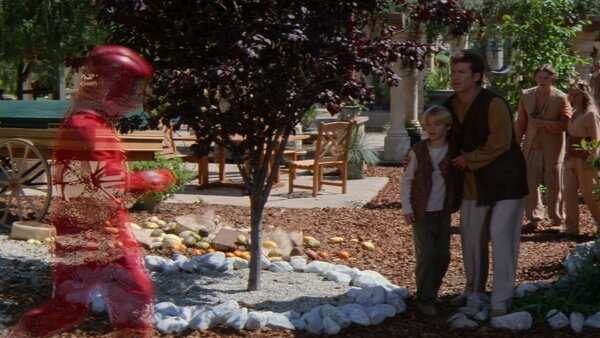
Star Trek: Insurrection begins with a spectacular covert cock up. Starfleet have been spying on what, at first, appears to be an idyllic, peaceful pre-warp civilisation (although we later discover there's much more to the Ba'ku than meets the eye). Hidden in a camouflaged facility and utilising cloaked suits to stalk the villagers out in the open, it's imperative that they remain undetected.
It turns out the motivation behind the covert operation isn't exactly wholesome. The Federation have teamed up with the Son'a, despite their obvious bad-guy energy. They plan to abduct the oblivious Ba'ku and transport them to another planet while they're still none the wiser. It would leave the path clear for harvesting regenerative particles from the rings around the planet, rendering it uninhabitable.
It sounds like the perfect, diabolical scheme...but their mistake was assigning Data to the operation. There was no way that curious, Sherlock Holmes superfan Data was not going to discover their evil plan. No way. And after he was shot, his ethical subroutines kicked in, causing him to go berserk and reveal both the researchers and their observation post to the Ba'ku.
And if this sounds at all familiar, The Next Generation episode Who Watches The Watchers tells a strikingly similar story. A proto-Vulcan pre-warp race discovers a hidden observation post, resulting in a panicky clean-up when 'The Picard' is assumed to be a godlike entity. It's nice to see that no lessons were learned between that particular misadventure and Insurrection...
4. In Too Deep
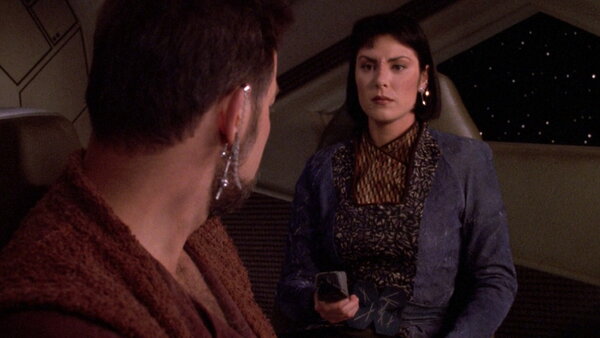
Anyone who took the time to get to know Ro Laren, even a little bit, would have realised that the mission in Preemptive Strike was never going to end any other way.
With the Maquis on the rise, Starfleet sends Ro to infiltrate the resistance fighters. It's a terrible decision that leaves you wondering (yet again) if the professionals planning covert operations possess any common sense. No one in the room put their hand up and said, 'Maybe sending a traumatised Bajoran to infiltrate the rebels fighting Cardassian tyranny isn't a good idea'?
We know they have the ability to alter anyone to look Bajoran if that was crucial (but it wasn't). So sending Ro into such a compromising position feels outright irresponsible. Her harrowing childhood in a refugee camp culminated in the murder of her father by a Cardassian...a crime she was forced to witness. She struggled to find her feet in Starfleet, and just as she started to fit in, they sent her to the Maquis.
Ro can personally relate to the heartbreaking plight of the people she meets while undercover. She identifies with their stories, with their loss, and with their need to fight back. And most of all, it's her chance for redemption.
Ro once confessed to Picard that, as a child, she had been ashamed of how her father begged for mercy while being tortured by a Cardassian, and had even been ashamed of being Bajoran. The Maquis was her chance to finally stand up as a Bajoran and fight her oppressors. So it seems almost inevitable when her undercover mission leads to Ro joining the Maquis for real.
And frankly, Picard can keep his patriarchal outrage over her decision. The man who rage-quit Starfleet because he didn't agree with their moral stance has no place throwing stones at Ro's decision to do the same. The only real difference was that Ro chose to do something about it, while Picard chose to make wine.
3. All-Action Heroes
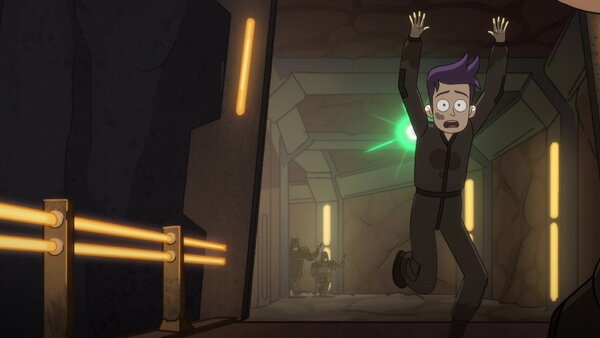
Boimler spent most of his time on the Titan in a state of anxiety, so it's a little puzzling when he's selected for a covert mission in the episode Kayshon, His Eyes Open.
The Pakled are up to no good again, and Riker sends a team of gruff, tough action-heroes...plus Boimler...to find out who might be helping them. Of course, Boimler's cover as a miner is immediately blown...thanks to his super soft hands. Who knew moisturising had its risks? And the mission completely falls apart when the overeager Starfleet warriors decide to take down a 'guard', only to discover it's just a pile of snacks.
Thinking they're a bunch of uppity miners trying to steal their food, the Pakleds chase them down with a vengeance...and a circular saw. The team take refuge in a tunnel, but finds themselves trapped.
But this is where the magic happens. As the cool kids prepare for death with a macho hands-in huddle, Boimler declines the offer to join with the kind of speech that only he can pull off. A declaration that he didn't join Starfleet to get into fights, but to explore space, seek out new life and serve as a beacon of peace.
And that's the beauty of Lower Decks. One minute, a fully grown adult is picking a fight with snacks; the next, Boimler's reminding us why we love Star Trek so much.
2. Warnings From History Ignored
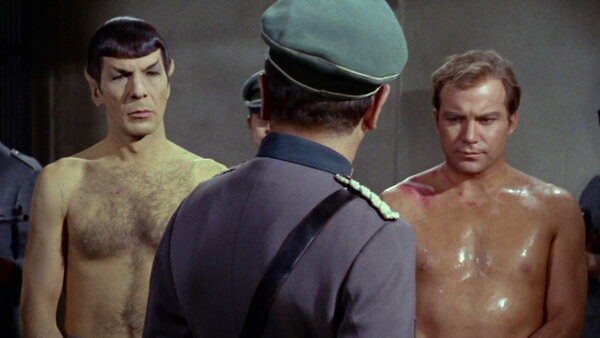
When historian John Gill fails to respond to Starfleet in Patterns of Force, Kirk is sent to make contact. As the Enterprise approaches Ekos, they're greeted with a nuclear warhead that should be beyond their capability. So, you guessed it, Kirk and Spock head down to the planet in disguise to investigate.
What they find is a fascist nightmare, a near-perfect replica of the Nazi regime...everything from open xenophobia to the uniforms and iconography. Only on Ekos, the Führer is none other than John Gill.
A classic spy escapade ensues, complete with subterfuge, capture, interrogation, escape, and a high-stakes infiltration of the Chancellery. They even knock out officers and steal their uniforms, a trope we'd usually appreciate, but given the Nazi design, it's a little nauseating this time around.
Credit where credit is due, Kirk had McCoy inject them with a tracker before they left, so he gets this episode's gold star. But we're immediately removing it for taking the obviously alien Spock with him to pose as a local. And wouldn't you know it, the reveal of Spock's ears is what blows their cover.
When they finally catch up with Gill, he reveals that he somehow thought it was a good idea to use the Nazi regime as a template to unite the fractured planet. Just...what? Seriously. We can't even...
Suffice to say, the moral of the story is that Starfleet's non-interference policy is there for a reason. And that no matter what, using fascism as any kind of template is a terrible, terrible idea.
1. There Are Four Lights
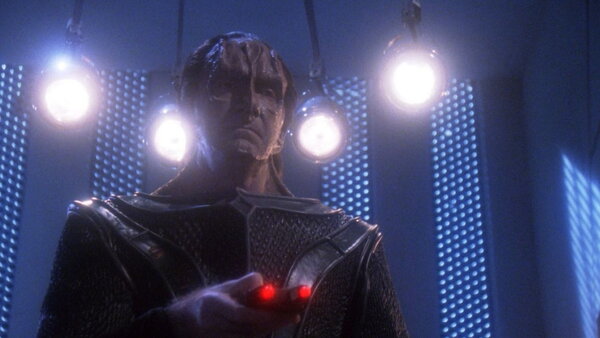
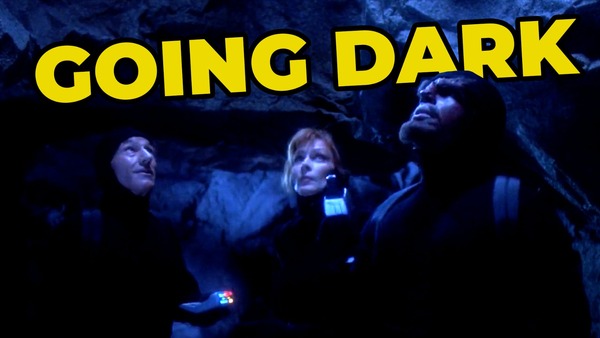
Picard has many talents, but we're not convinced that covert operations are one of them. Years before Monsieur Eyepatch, he was sent on a now-infamous mission alongside Crusher and Worf to seek out and destroy a horrific Cardassian weapon...only, it was a devious trap. And Picard was captured in the snare.
By the way, what's the hiring process for a Starfleet Intelligence Analyst? The amount of bad intel that led to monumental screw-ups is really quite impressive.
And to be fair to Picard, we're not sure why he was even there. He was apparently selected due to his familiarity with theta band carrier waves, an integral part of the superweapon's design. But in what we like to call the Armageddon enigma, we have to question why they sent a captain and a couple of his besties, used to the cushy flagship life and clearly struggling with their training, on such a strenuous and specialised mission. Surely it would be easier to brief ready-trained security or intelligence officers on theta waves? Surely?
Let's be honest though, the result is one of Star Trek's most intense battles of will. Picard is held, interrogated and tortured by Gul Madred, played by the commanding David Warner. The continued humiliation and persecution of Picard turns the Cardassians into a truly terrifying enemy. And nothing symbolises Madred's determination to break Picard, and the Captain's refusal to buckle, more than the four lights test.
Shining four lights at Picard, Madred insists there are actually five. When asked how many lights there are, Picard resolutely replies there are four lights. And every time he refuses to go along with Madred's lie, he's subjected to pain. On and on it goes, but Picard refuses to betray the truth in exchange for mercy from the tyrant.
We can easily forgive the Armageddon logic when this remarkable piece of television is the result. A gripping psychological drama, delivered by two acting heavyweights who make you feel every word.