10 Huge Revelations From Star Trek: Khan
Do we now agree that his is the superior intellect in all of Star Trek?
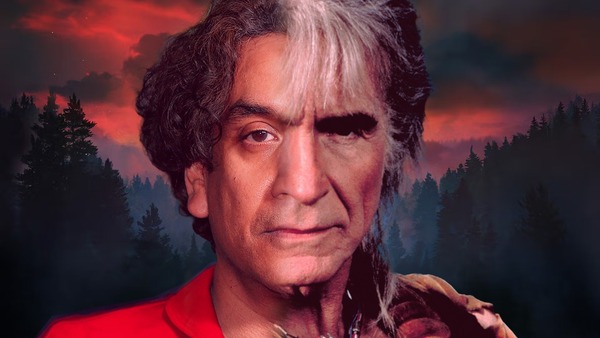
Star Trek: Khan was an experiment. Though not the first audio drama in the Trek universe, this was a swing, fully endorsed and supported by Secret Hideout and CBS. The cast was strong, the production was excellent, and the response has largely been positive.
The project was first announced by Nicholas Meyer, who of course directed Star Trek II, Star Trek VI, and co-wrote Star Trek IV. As he heralded The Wrath Of Khan, he seemed best positioned to further explore the madman's journey and life. However, that version of the story was announced as a short television arc, no more than three episodes. It went through several changes after this.
By the time it was given its first full trailer in February 2025, it had morphed to become the 9-episode audio drama that we finally received, with episodes airing weekly from the 8th of September, Star Trek day. The cast included some newcomers to the franchise, like Naveen Andrews as Khan, Wrenn Schmidt as Lt. Marla McGivers, and Sonya Cassidy as Dr. Rosalind Lear. Returning to Trek were actors like Maury Sterling as Ivan, Tim Russ as Ensign Tuvok, and George Takei as Captain Hikaru Sulu.
Audiences have been crying out for stories set within the so-called Lost Era for quite some time, so discovering this prequel would also serve as a sequel to Star Trek: Generations increased excitement exponentially. What then did we learn from this tale? And was it a worthwhile endeavour overall?
10. The True Nature Of Marla McGivers' Death
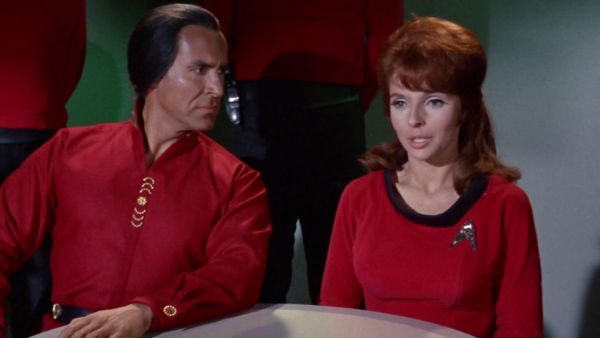
Lt. Marla McGivers was introduced in Space Seed, serving aboard the Enterprise as an historian. She was assigned to join the away mission to the SS Botany Bay, though the audience is quickly shown that Captain Kirk does not know who she is.
By the events of The Wrath Of Khan, McGivers had been given an off-screen death. Actress Madeline Rhue was unable to return, as she suffered from multiple sclerosis. Khan's 'tragedy' was then fuelled by his grief - he hated Kirk, blaming him for the death of his 'beloved wife.'
Khan adds a greater depth to this death. Yes, she did fall victim to the Ceti Eels, becoming infected with their larvae while relaxing in a natural hot spring. The series demonstrates that infection is always fatal (more on this later), though McGivers was pregnant at the time. Rather than lose both mother and child, Khan agrees to sacrifice Marla so that their baby can be delivered. This occurs years before the Reliant arrives in orbit over the planet, during which time Khan helps raise their daughter, Kali.
McGivers' death is one of the thousand paper cuts that erodes Khan's sanity over the years. While Kirk bore no direct responsibility for her fate, Khan's rage and grief causes him to group all of his ills together, giving them the form of James Tiberius Kirk.
McGivers' death was a tragedy, though the fallout from her death was a mixture of misplaced blame and unfortunate coincidences.
9. Khan Wasn't Always A Beloved Leader
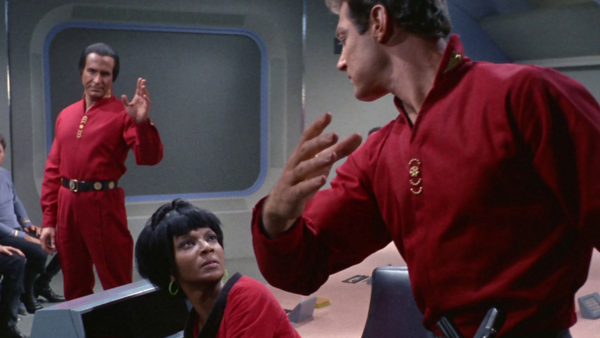
In both Space Seed and The Wrath Of Khan, the 'fearless leader' boasts that the men and women who follow him had sworn to live and die under his command centuries earlier. Their loyalty seems absolute, endless, and without question. For Chekov and Terrell, they discovered this quickly, while the crew of the Enterprise found similar responses.
However, while on Ceti Alpha V, Khan quickly found his authority being challenged. First was an augment named Hugo, caught stirring some of the followers into questioning Khan's authority. He wondered aloud how they could have twice found themselves exiled - once from Earth, then later from the Enterprise. For this, he blamed Khan's lack of leadership.
Hugo was quickly silenced, banished by Khan, but then murdered by Ivan. Ivan himself seemed loyal to a fault - until Khan began to show, in his opinion, weakness. When presented with the opportunity to take dominion over another group of survivors on the planet, Khan instead chose to ally with them - something Ivan found unforgivable.
Ivan was not alone, though he was in the minority. He openly challenged the man and lost, was banished for five years, then returned, with support, during the attempt to escape off-world. Though Ivan overplayed his hand, he certainly was not alone. Khan may have been telling the truth about that loyalty but it seems that no loyalty is ever absolute.
8. Chekov Has More Strength Than We Ever Knew
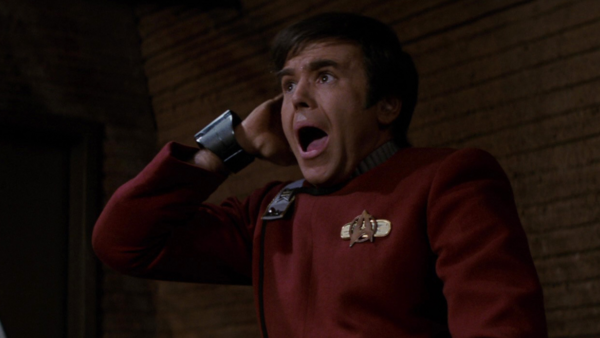
Commander Pavel Chekov was a singular officer by The Wrath Of Khan. While behind the scenes, the story of Walter Koenig's accidental exchange with Ricardo Montalban's Khan is now legendary, the audio drama further muddles this already puzzling piece of canon.
Nicholas Meyer has long since joked that Chekov was indeed on the Enterprise in Space Seed, and had held Khan up while waiting for the bathroom. This, he contends, would make anyone memorable. By the time Chekov had been promoted to first officer of the Reliant, he had clearly taken some incredible strength tests, excelling in all of them. He remains, to date, the only person to ever survive infection by a Ceti Eel.
Star Trek: Khan establishes that infection is always fatal, with several of Khan's people - genetically engineered to be stronger than average humans - falling victim to these small parasites. Lt. McGivers, with no such augmentation to even give her a hope, never stood a chance.
When Chekov and Terrell unwittingly beam into Khan's lair, they are deliberately infected with these larvae, making them susceptible to suggestion, leading to their betrayal of their comrades. While Terrell fights back, turning his phaser on himself rather than Kirk, Chekov is seemingly saved - by the larvae's self-sacrifice. With no apparent explanation, that particular larva chooses to leave his body, saving him from certain death. While this is good for fans of Walter Koenig and Chekov, it does leave us scratching our heads as to the altruistic nature of that eel.
7. The Cause Of Ceti Alpha VI's Explosion
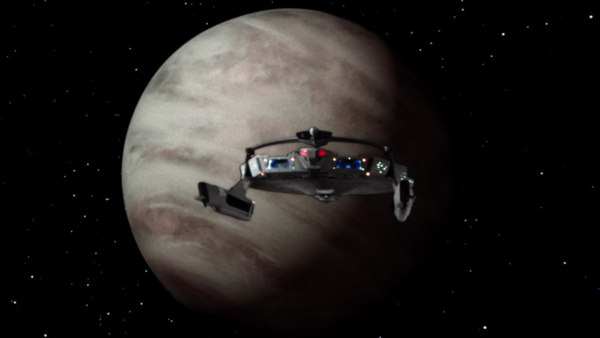
Among the many things that Khan blames James Kirk for is the hellish nature of his new home. While Ceti Alpha V was described as 'habitable, although a bit savage, somewhat inhospitable' by Spock in 2261, it still offered Khan and his people hope.
Six months after their arrival, Ceti Alpha VI exploded, changing the orbit of Ceti Alpha V. This laid waste to the planet's surface, forcing the survivors underground. The explosion of the planet was foreseen, but was still expected to take centuries. Ursula, the chief of medicine for the colony, was aware of that planet's instability, but was initially unconcerned about an explosion that she would never live to see.
While the question of how the Reliant failed to notice a missing planet in The Wrath Of Khan doesn't receive an answer, the cause for said planet is revealed. The El Boreans, another group that crash lands on Ceti Alpha V, are responsible for VI's destruction. Their ship was damaged in transit, requiring them to find an emergency landing zone.
The type of engine they used could devastate matter, though they couldn't jettison it for fear of becoming stranded in deep space. Left with little options, they allowed their propulsion system to destroy VI, which they knew was uninhabited. Their ship crash lands on V, which in turn leads to several years of tension and secrets between them and Khan's group.
6. Did Kirk Really Know?
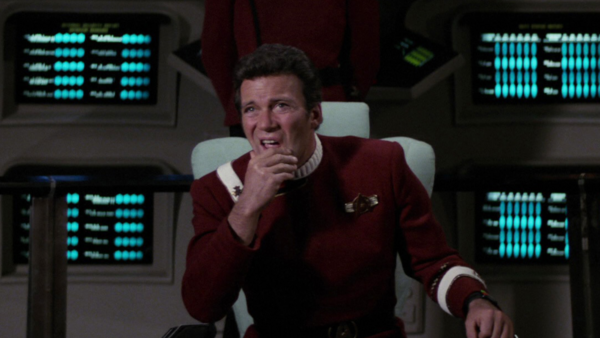
The wraparound story for Star Trek: Khan focuses on Dr Rosalind Lear, a researcher who petitions Starfleet to allow her to travel to Ceti Alpha V. She contends that Kirk, recently deceased by this point, marooned Khan on the planet while in full possession of the knowledge that Ceti Alpha VI was unstable.
While the previous entry discusses the exact cause for why VI exploded when it did, Lear's investigation raises the question - did the Enterprise conduct an adequate scan of the system before depositing Khan there? Captain Sulu is incensed at the mere suggestion that Kirk knowingly condemned these people to suffering, though even he concedes that it would be better to be sure. Kirk's logs, as indeed all deceased captains' logs, were classified upon his death.
Lear's research reveals that Kirk didn't know, nor could he have known, that VI would explode when it did. While the Enterprise did detect anomalies within the core of VI, they weren't enough to disqualify the system from colonisation at that point.
It was little surprise to the audience that Kirk wasn't aware of what would happen to Khan and his people but the question is given greater depth when one considers - Kirk never did bother to check on Khan, nor did Starfleet. In fact, the series only highlights how forgotten they truly were.
With all of the information sitting in its history banks, the Reliant still failed to notice a missing planet, nor was there any flag on the Ceti Alpha system at all. Kirk may not have been responsible for Khan's fate, but there is still plenty of blame to pass around.
5. Sulu's Anger But Dedication To Duty
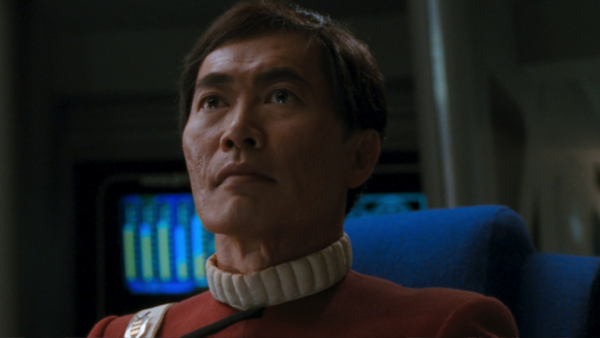
Captain Hikaru Sulu suffered at the hands of Khan Noonien Singh twice. From his point of view, Khan's death was no tragedy, nor had he any real interest in exploring what drove the man who tried to kill him. Sulu was the one tasked with shunting the Enterprise up to maximum speed after Spock's sacrifice and he was present at the funeral of that great man.
So, when Dr Lear petitions Starfleet to declassify Kirk's logs with the aim of proving the man guilty of condemning Khan, Sulu is incensed. The last thing that he has any interest in doing is vindicating the madman who killed so many of his colleagues.
However.
While Sulu's anger is evident throughout his appearances in Star Trek: Khan, so to is his sense of duty and the difference between right and wrong. He may have agreed to take Lear to Ceti Alpha V to disprove her theory, but he does take her. He volunteers the Excelsior for the mission, even staying for longer than a ship might normally remain in orbit of a dead planet.
He comes into mild conflict with Ensign Tuvok over Lear's investigation, ordering the young Vulcan to keep tabs on her. Clearly, he is not happy about any of this - but as shown, he allows Lear to complete her work, no matter the personal cost. He may be human but Hikaru Sulu remains a stalwart Starfleet officer.
4. Joaquim's Blind Loyalty
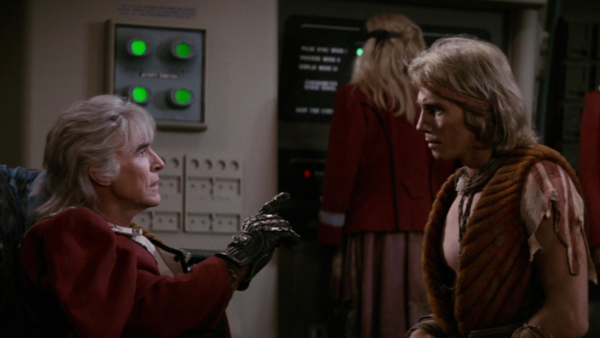
Judson Scott may not have received on-screen credit for his role as Joaquim, Khan's right-hand man in Star Trek II: The Wrath Of Khan, but he was a stark presence both on Ceti Alpha V and the USS Reliant. His death genuinely moves the audience, while also displaying his loyalty to Khan right to the very end.
There is an ease and relaxed nature, almost smug, in the way he acts in the film. In Star Trek: Khan, Joaquim is a much younger man, barely older than his teens. His father, Joaquin, is killed soon after their arrival on the planet, leaving the young man an orphan. Khan cares for him, shows him favour, and even gives him a symbol of strength - his own dagger.
Joaquim's mother, deceased before the series begins, is revealed not to have been augmented in any way. This leaves the young man in an in-between state, a child of two worlds, while also leaving him open to ostracisation from the other youths in the camp. Khan's confidence in him elevates his position, resulting in not only his loyalty, but also helps to bring him into good stead with Erika, one of the young women present.
Joaquim displays his loyalty time and again, not least in his utter lack of hesitation when Khan orders him to disembark the Venture, their one attempt at an escape from the planet. Khan nominates him to lead in his stead, only to take this mantle back. Joaquim loves Khan like a father, ready to say yes in any situation, though not above asking questions when needed. He obeys his orders but in both the audio drama and the film, it is little surprise that he offers Khan the chance to simply leave it all behind.
His loyalty may cost him his life but it was always Khan's to spend.
3. They Weren't Alone On Ceti Alpha V
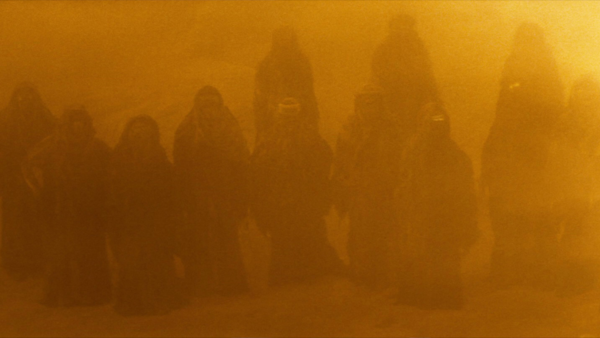
When Khan, McGivers, and the rest of the crew of the Botany Bay were deposited on Ceti Alpha V, they were alone, save for the local wildlife. While that came with its own set of challenges, the destruction of Ceti Alpha VI offered both an ecological disaster and a meeting of minds with a new group.
The El Boreans, a telepathic race, crashed on Ceti Alpha V, having inadvertently caused the destruction of the other planet. Delmonda, their leader, quickly established contact with Khan - telepathically ensuring that the augment knew they meant no harm, but were certainly capable of it.
The El Boreans had been chased from their own world in a similar fashion to Khan and his people. They were searching for like-minded people, though they were left wanting. They were linked to each other in what they called a Pandem, a hive-mind of individuals. Through this, they shared thoughts, hopes, fears, joy, and pain.
Delmonda and Khan struggled to meet each other on the same playing field, the former seeking peaceful coexistence, while the latter sought to dominate. Had Khan allowed himself to trust, there may have been a chance for a functioning colony, or even a genuine attempt at salvation.
Instead, Khan elects to deceive Delmonda at almost every turn, up to and including the attempted rescue mission and escape. The El Boreans, in their guilt for Ceti Alpha V's situation, pledge to create a craft capable of helping four individuals get off-world, then begin a search for a rescue mission. Khan co-opts this plan, intent only on saving his daughter Kali and himself.
Khan may once have had capacity to think of the greater good but his treatment of Delmonda, and the El Boreans overall, proved just how far he had fallen by that time.
2. Ivan The Terrible
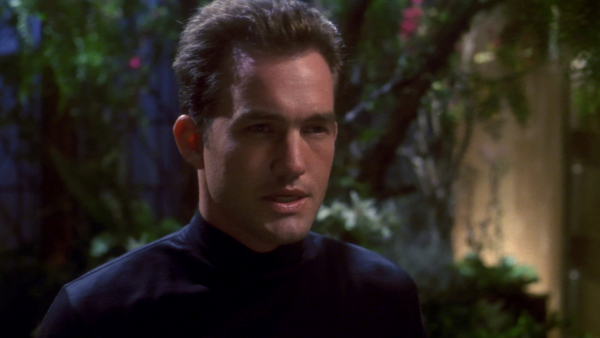
At the time of their arrival on Ceti Alpha V, Khan was supported by his chief lieutenant, Ivan. Ivan is voiced by Maury Sterling, who previously appeared in the Enterprise episode Exile as Tarquin. From the start, Ivan is single-minded in both his ferocity and intent. He sees all augments as rightful leaders in any situation, with Ceti Alpha V being no exception.
He is quick to murder Hugo for speaking against Khan, and to protect Khan whenever needed. He is absolute in his hatred of the El Boreans, killing one simply because he could. Though this causes the cracks between Khan and he to shatter, he is unrepentant. He is absolutely loyal to augmented superiority. Once Khan begins to weaken, in his eyes, that means Khan has no more right to lead them.
Another cause for their rift is his aversion to Lt. McGivers. Her status as human, unagumented, sickens him. Taking any kind of direction from her, even when her expertise can help the colony, is too much to bear. Her attempts to stand her ground with him go nowhere and, by the time of his exile, there is only hatred on his part.
Ivan is a symbol of all that humanity fears about augments. He truly believes in their position as rulers and is committed to eventually breeding humanity out. On Ceti Alpha V, he finds a new planet to conquer, though his narrow vision leads him to his final conflict. His death at Khan's hand only serves to solidify Khan's position with the remaining survivors.
In the end, Ivan may be responsible for the madness that engulfs some of those survivors - and is directly responsible for at least some of the discontent between the augments and the El Boreans.
1. The Bloodline Carries On
The biggest revelation from Star Trek: Khan is, of course, the existence of Kali Noonien Singh, the daughter of Khan and Marla McGivers. First introduced under the guise of Dr Rosalind Lear, her seemingly-single-minded focus of blaming James Kirk morphs as the season continues.
Though a resolute character, she is difficult to root for initially, doing little to endear herself to those around her. As we discover, that is very much in keeping with her true mission, which is to discover why her father never came to find her and spent his energies on revenge.
The realisation that Khan believed her dead, killed in an explosion that seemingly destroyed her and the Venture, allows her a measure of peace. Yes, her father spent his final days hunting Kirk to avenge himself upon him, but this was done in ignorance of her survival. He hadn't abandoned her - he was grieving her.
While Lear finds peace with this, Tuvok, who had attempted to understand her, Khan, and the mission, came to see the impossible position her augmented genes would put her in. The treatment and prejudice against augmented humans continues to be a theme that Star Trek explores, here presented through the lens of the first augmented characters introduced in The Original Series.
While Star Trek: Khan opens some doors to stories as yet untold, it also carefully treads the line of giving Khan Noonien Singh, and his followers, greater depth without absolving them of their sins.
It may be a secret that many of those in Starfleet are unaware of but it is a tale worth telling after all.