The Best Movie Of Each Year From 1925-2025
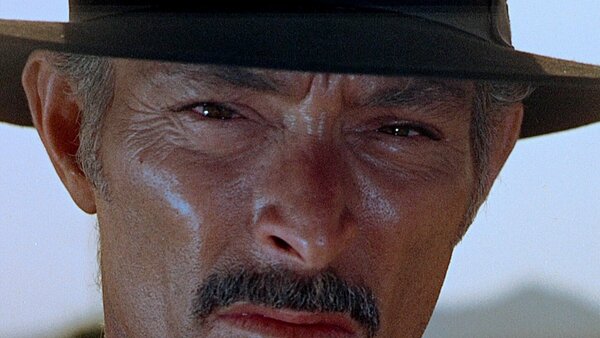
61. 1965 - For A Few Dollars More
Honourable Mentions: Doctor Zhivago, Major Dundee, The Spy Who Came in From the Cold,
With his "Dollars Trilogy", Italian filmmaker Sergio Leone reinvented the Western genre as we came to know it. Hyper stylised, violent, and perpetually operatic, Leone's iconic partnerships with actor Clint Eastwood and composer Ennio Morricone pioneered a new genre path, with the director's European sensibilities leading to an exaggerated but no less compelling picture of the American West, which many would argue reached a peak with The Good, the Bad, and the Ugly, or perhaps 1968's Once Upon a Time in the West. (The oft-forgotten Duck, You Sucker! is also just as deserving of being in that conversation.)
But while those films are each themselves masterpieces, not nearly enough praise is given to his sophomore Western, For a Few Dollars More.
The perfect compromise between the epic scope of The Good, the Bad and the Ugly and the tight freneticism of A Fistful of Dollars, Leone's 1965 sequel partnered Eastwood's Man with no Name with Lee Van Cleef's Man in Black, the latter of whom ends up stealing the whole production with a twinkle-eyed performance that belies the character's tragic past.
Eastwood and Van Cleef's partnership is an act of perfect chemistry, and the final duel between the duo and the film's villain, Gian Maria Volonté's El Indio, may just be Leone's finest hour.
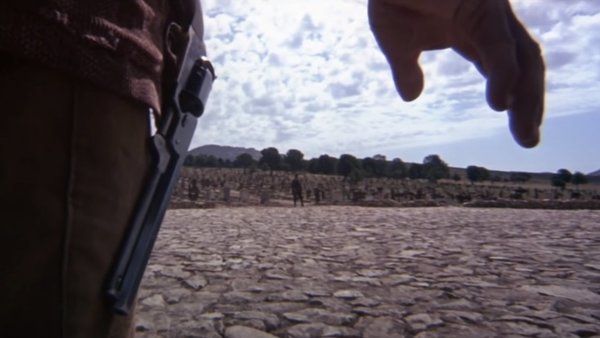
60. 1966 - The Good, The Bad And The Ugly
Honourable Mentions: The Battle of Algiers, The Professionals, Who's Afraid of Virginia Woolf?
Despite For a Few Dollars More being a high for Leone, there's no disputing the majesty of its successor, The Good, the Bad and the Ugly. Possibly the definitive Western, let alone the definitive Spaghetti Western, Leone's Civil War epic re-teamed Clint Eastwood and Lee Van Cleef but played the latter more to type as the villainous Angel Eyes, with Eastwood assuming the role of a younger Man with no Name, this time called "Blondie".
The real star of the film, though, is Eli Wallach as Tuco - "the Ugly" from the title - whose performance combines a perfect mixture of comedic timing and genuine pathos so as to outwrestle the film from his two co-leads.
With his third entry in the Dollars Trilogy, Leone's formula was fully established, only blown up to a more sweeping scale that would become the hallmark of his (sadly just three) remaining efforts. Whether you favour his preceding or succeeding films, The Good, the Bad and the Ugly is still a masterpiece.
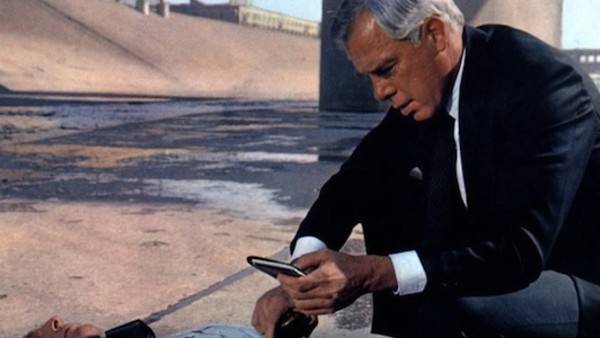
59. 1967 - Point Blank
Honourable Mentions: Bonnie and Clyde, Cool Hand Luke, The Graduate
Lee Marvin is one of the most fascinating figures in post-war American cinema. A combat veteran of the Pacific Theatre who immediately carved out an acting niche for himself as tough guys and hardmen in noir pictures like the aforementioned The Big Heat, Marvin's towering figure obscured an at times haunted screen presence which seemed to stare past the camera into something deeper, a trait that was tapped into in mesmerising fashion by John Boorman in 1967's Point Blank.
One of many adaptations of Donald Westlake's Parker novels but undoubtedly the best, Boorman's film is eerily dreamlike and rhythmic - as much a hardboiled noir picture as it is a West Coast ghost story - in which Marvin's wronged criminal seeks vengeance on the crooks that double-crossed him. A conventional premise by all means, but Boorman's execution is anything but. It's stylish, ethereal, and borderline psychedelic, with stars Marvin and Angie Dickinson totally arresting as the vengeful spirit and the lost love caught in his warpath.
Bonnie and Clyde was transformative, and The Graduate had its finger on the pulse of boomer existentialism, but Point Blank is (ironically, for a film about a man out of time) irrepressibly timeless. A sixties classic that deserves a far loftier reputation.
58. 1968 - 2001: A Space Odyssey

Honourable Mentions: Once upon a Time in the West, Rosemary's Baby, The Swimmer
2001: A Space Odyssey is, ironically, a monolith of cinema - a piece of science fiction that pushed the genre to new philosophical and technical reaches and which remains a seminal effort from one of the 20th century's most fascinating and talented directors in Stanley Kubrick. It's also somewhat obstructive to newcomers, featuring a marathon, dialogue-less prologue that unfurls at a glacial pace before eventually arriving at its iconic and highly influential space-set sequences.
With that in mind, it's no surprise that 2001's reputation remained divisive for years before its strengths were widely recognised. It has of course since been absorbed into the pop culture lexicon through decades of affectionate homage and parody, with its masterpiece status firmly - and deservedly - established.
Is it Kubrick's greatest film? Perhaps not, but as a landmark in genre storytelling and technical innovation, 2001 is one of the greatest to ever do it.
57. 1969 - Midnight Cowboy

Honourable Mentions: Army of Shadows, Butch Cassidy and the Sundance Kid, Easy Rider
John Schlesinger's Midnight Cowboy is possibly the definitive film of the American New Wave.
An X-rated picture about a pair of spiralling New York City hustlers (Jon Voight and Dustin Hoffman) that won three Academy Awards (including best picture, best director, and best adapted screenplay), Schleisinger's film encapsulated the unadulterated rawness of the New Hollywood in fierce, uncompromising fashion, with the British filmmaker taking the lessons from his own country's new wave and finding rich material by applying them to an American context.
Voight and Hoffman are magnetic - the latter delivering one of the most iconic quotes in movie history through an off-the-cuff interaction with a real New York cabbie - while Schlesinger's direction is characteristically unvarnished. A true great of the sixties, and one that shouldn't be missed.
56. 1970 - Five Easy Pieces

Honourable Mentions: Husbands, Patton, Ryan's Daughter
Another touchstone of the New Hollywood era (and also one of its most snubbed), Bob Rafelson's Five Easy Pieces remains one of the most gutting and affecting films of the 1970s, and features one of the greatest performances in Jack Nicholson's illustrious career.
After blazing a trail with a supporting role in countercultural touchstone Easy Rider the previous year, Nicholson returned to embark on what would become a defining period in his filmography, starting with Rafelson's film of working-class crisis and the decay of the American Dream. Nicholson is typically electric, with Karen Black delivering a seminal performance as a small-town waitress yearning for something bigger.
55. 1971 - Klute

Honourable Mentions: Dirty Harry, The French Connection, A Clockwork Orange
Director Alan J. Pakula's most iconic film from the 1970s was the Watergate thriller All the President's Men. It was also the conclusion of a thematic trilogy the director had forged in the first half of the decade - the "Paranoia Trilogy" - the first two parts of which were 1971's Klute and 1974's The Parallax View.
These films were built around themes of surveillance, corruption, and of course paranoia, capturing the Warren Commission zeitgeist of suspicion and fear with stories that dwelled on surreptitious stalking, assassination and conspiracy. Klute, however, is the most unnerving of the bunch - a neo-noir romance punctuated by pure voyeuristic terror.
Jane Fonda won an Academy Award for her performance as Bree Daniels, with the late, great Donald Sutherland the eponymous PI who crosses her path. Pakula set the tone for the modern thriller with his film, which also boasts perhaps the eeriest score of all time, composed by Michael Small.
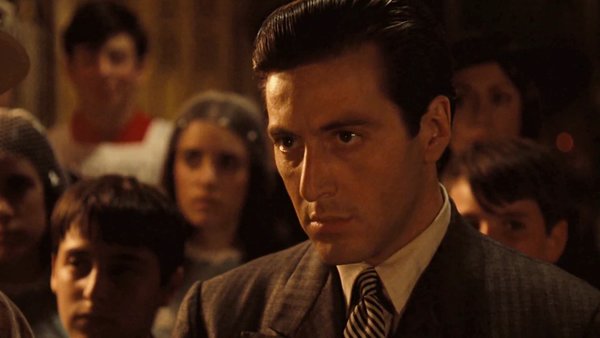
54. 1972 - The Godfather
Honourable Mentions: Cabaret, Deliverance, Pink Flamingos
Often cited alongside Citizen Kane as the greatest movie ever made, Francis Ford Coppola's The Godfather redefined the mob genre with a sweeping, sprawling narrative that mirrored America's own loss of innocence. The tragedy of Michael Corleone - a role which catapulted Al Pacino to stardom - was achingly drawn and a key moment in the development of the New Hollywood era, cementing the seventies as a decade of filmmaking freedom and gritty introspection.
Coppola would come to epitomise both the filmmaking highs and anxieties of the movement, following The Godfather with a sequel, The Godfather Part II; the Gene Hackman-starring surveillance thriller The Conversation that same year; and 1979's Apocalypse Now, whose painstaking and chaotic production became the stuff of Hollywood legend.
53. 1973 - The Exorcist

Honourable Mentions: American Graffiti, The Long Goodbye,The Wicker Man,
No film's reputation has done a greater disservice to what it actually is than The Exorcist. It's regarded as "the scariest movie ever made", and conclusions are regularly drawn from whether those expectations are met. While the movie is scary (and really, whether something is or isn't "scary" totally depends on what the viewer is bringing to the table), William Friedkin's horror masterpiece is so much more. It's tortured, existential, and laden with drama - a film about one man's crisis of faith and its rediscovery when he's confronted with pure evil.
William Peter Blatty - the screenwriter behind The Exorcist who also authored the novel on which it was based - developed the story and its true sequel, Legion, with an ideological throughline: the presence of an ultimate evil must, by logic, mean that there is an ultimate good. While he and Friedkin differed on how explicit to render those themes in certain sequences (an argument Friedkin conceded for The Exorcist's re-release in 2000), that arguably only makes the adaptation all the more fascinating. It's a film that exists in the margins of hope and despair, and as Friedkin himself believed, one that you take out of what you bring to it.
52. 1974 - The Texas Chain Saw Massacre

Honourable Mentions: The Conversation, The Godfather Part II, Young Frankenstein
1974 is in contention to be one of the greatest years in film history, so any film that ends up topping that year is also in contention to be one of the greatest films ever made. While the aforementioned honourable trio are all masterpieces in their own way, Tobe Hooper's The Texas Chain Saw Massacre is more akin to a force of nature - a film that inspires and horrifies in equal measure, the former because of its guerrilla ingenuity and technical beauty, and the latter due to the sheer visceral quality of its imagery.
Many will make the argument that The Godfather Part II is the definitive picture of the 1970s, but Texas Chain Saw is that and so much more. It's a Vietnam-era treatise on the trauma of the Cold War generation, a rattling death howl on the inexplicable nature of the decade's violence, and finally, a cathartic return to endurance despite it all.
All of this, accomplished with a few thousand dollars and a relatively meagre cast and crew, makes it all the more incredible.