The Best Movie Of Each Year From 1925-2025
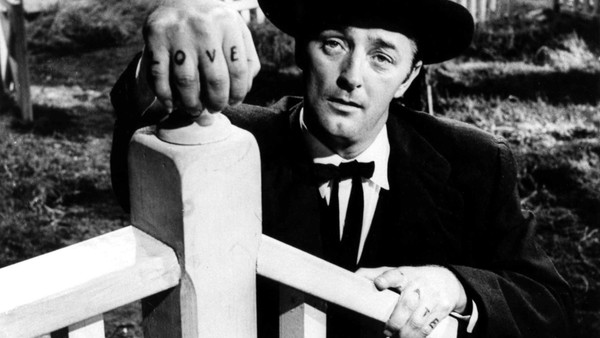
71. 1955 - The Night Of The Hunter
Honourable Mentions: Bad Day at Black Rock, The Court Jester, East of Eden
Robert Mitchum's finest hour, 1955's The Night of the Hunter is a timeless Southern Gothic marvel from the great Charles Laughton, who brought to bear German expressionist influences on a distinctly pastoral American landscape and thusly conjured some of the most haunting imagery from the decade.
In the film, Mitchum takes on the role of a psychotic, repressed "preacher" who is in fact a serial killer, one who charms vulnerable women and then, like a parasite, worms his way into their home, travelling from town to town and leaving death in his wake, a wolf in sheep's clothing.
He also doubles as a bogeyman. For much of the film, Laughton enmeshes our perspective with that of the young children who are unfortunate enough to find themselves in his sphere of violence, making the already towering Mitchum appear positively statuesque. The end result is something terrifyingly disorienting - an Appalachian nightmare that, all too sadly, proved to be Laughton's sole directorial effort.
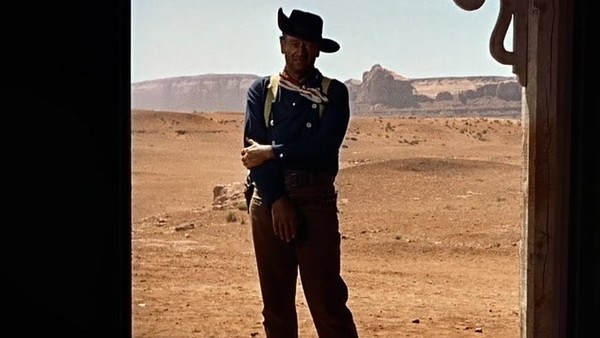
70. 1956 - The Searchers
Honourable Mentions: The Killing, Invasion of the Body Snatchers, The Ten Commandments
There are two John Fords: the pioneering genre enthusiast who straddled two distinct filmmaking eras, indulging old west mythologies along the way, and the more interrogative, post-war figure who reckoned with his wartime experiences and recalibrated Western iconography and narrative. Both Fords left an indelible mark on the medium, birthing icons, cementing legacies, and inspiring future filmmakers along the way, but the latter boasts a more fascinating oeuvre, weaving weighty, post-war introspection through history and legend.
Ford's cinema is the cinema of romance and death, which is to say it's quintessentially American. My Darling Clementine took that most legendary of Old West shootouts, the Gunfight at the O.K. Corral, and used it to explore the sense of death and injustice that had lingered in the aftermath of the Second World War's conclusion. Similar themes were apparent in 1945's They Were Expendable (an explicit WW2 drama centred around the failed defence of the Philippines), with Ford later shifting his focus to an interrogation of American mythology and its long-running duel with the pain of the past.
Fort Apache, Wagon Master, and The Man Who Shot Liberty Valance are three noteworthy examples from that era (and they are each amazing films), but The Searchers, released in 1956 and starring John Wayne as bitter ex-Confederate Ethan Edwards, who embarks on a years-long, hate-filled quest for revenge against a Native American war party, is the technical and thematic highpoint of Ford's filmmaking journey. An exorcism for Manifest Destiny, and a definitive parable of revenge.
69. 1957 - The Bridge On The River Kwai

Honourable Mentions: 12 Angry Men, The Seventh Seal, Sweet Smell of Success
As much a barnstorming WW2-set men-on-a-mission movie as it is a devastating takedown of British stiff-upper-lip traditions, David Lean's The Bridge on the River Kwai emerges not just as one of the finest films of the 1950s, but of the war genre full-stop - overshadowed though it may be by Lean's succeeding masterpiece, Lawrence of Arabia.
Starring William Holden, Jack Hawkins, and an appropriately Shakespearean Alec Guinness as the deluded colonel determined to illustrate the British Army's professionalism while interned - even at the expense of aiding the Japanese enemy - Lean's film is exceptionally photographed and genius in its subversion of post-war convention, utilising Holden's character of Shears, a US Navy officer pressed into the service of the Brits to take down a Japanese railway bridge in Burma, to illustrate the folly of British stoicism.
It's phenomenally self-critical as a piece of cinema, and all the more effective for it. "I don't care about your bridge. I don't care about your rules." Cheers to that, Shears.
68. 1958 - Vertigo

Honourable Mentions: Ashes and Diamonds, The Big Country, Touch of Evil
As a title, "Vertigo" is one of Alfred Hitchcock's most instructive. One of four collaborations between actor James Stewart and the British director, but arguably their best, the film is both disorienting and appropriately precarious, with Stewart once again excelling in the role of an ordinary man thrust into a typically Hitchcockian story of suspense, intrigue, and peril, as a former San Francisco police detective wrestling with trauma while plunging into a private assignment.
Like North by Northwest after it, Vertigo affords Hitchcock plenty of opportunities to capture the United States in all its larger-than-life glory, with the San Fran setting being used to full effect through set-pieces at notable locales like the Golden Gate Bridge and the Mission San Juan Bautista.
Add to that Hitchcock's pioneering filmmaking techniques (namely, the introduction of the Dolly Zoom to the directorial repertoire), an iconic opening titles sequence and poster developed by Saul Bass, plus one of Stewart's most layered and fascinating post-war performances, and you have another seminal effort in a filmography chock-full of them.
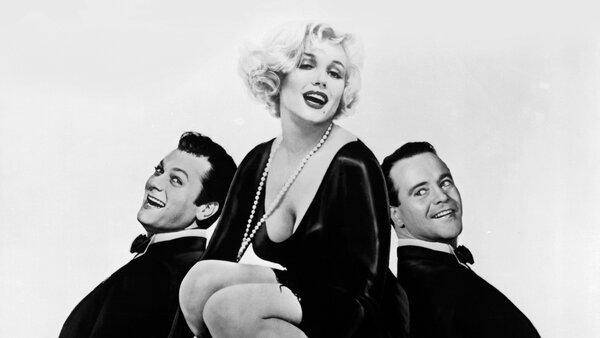
67. 1959 - Some Like It Hot
Honourable Mentions: Rio Bravo, The Diary of Anne Frank, North by Northwest
Off the back of that trio alone, 1959 would go down as one of the best movie years ever. To throw another Billy Wilder masterclass into that equation with Some Like it Hot, and you're left with a truly exceptional 12-month window.
Jack Lemmon, Tony Curtis, Marilyn Monroe - the triumvirate of Wilder's most hilarious film are beautiful, ridiculous, and relentlessly entertaining, with its story of two musicians going on the run in drag to outwit the mob handled with real humour and affection.
The 1950s were Wilder's greatest years, and he unsurprisingly closed them out with aplomb.
66. 1960 - Psycho

Honourable Mentions: The Apartment, The Magnificent Seven, Peeping Tom
The slasher sub-genre of horror can trace its roots back to the early days of cinema, but 1960 is widely considered to be the most pivotal year in its development. Michael Powell's unjustly reviled but later revered Peeping Tom crackled with invention, introducing concepts like the POV killer shot that would be popularised in the Halloween and Friday the 13th franchises.
It would take years for the influence of Powell's film to be recognised, but the other proto-slasher from that year, Psycho, didn't have to wait so long.
The granddaddy of slasher and serial killer cinema, Psycho's influence is long-reaching and well-documented, but it's obviously a whole lot more than a genre progenitor. Hitchcock revels in the suspsense of the story, manifesting an atmosphere of threat and paranoia long before Janet Leigh's Marion Crane makes it to the infamous Bates Motel. Saul Bass' jagged titles, Bernard Hermann's ominous, nails-on-a-chalkboard score, Crane's dreamlike journey through rain and monochromed neon - it's a breathtaking opening salvo from the Master of Suspense, and the guns fail to let up for the remainder of its runtime, with Anthony Perkins providing one of the all-time great performances as the troubled Norman.
(Also, yes, the stairway scene is the scariest bit.)
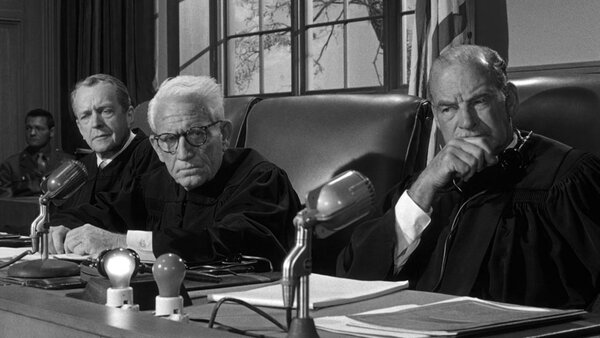
65. 1961 - Judgment At Nuremberg
Honourable Mentions: The Innocents, West Side Story, Yojimbo
Stanley Kramer's Judgment at Nuremberg is a seminal entry in that great American filmmaking tradition: the courtroom drama. A rebuttal to relitigated post-war narratives of the rise of the Nazis and whether justice was really delivered following their defeat, Kramer's film remains depressingly prescient and appropriately unflinching in its deliberations, as district court judge Dan Haywood (Spencer Tracy) presides over the prosecution of Nazi judges who played an instrumental role in facilitating Hitler's atrocities.
Spencer Tracy is joined by Maximillian Schell and Richard Widmark, who debate for the defence and prosecution respectively, while Marlene Dietrich, Montgomery Clift, and William Shatner (!) round out the supporting cast. Most captivating of all is Burt Lancaster, who plays the haunted judge Ernst Janning. Lancaster spends much of the film in silence but ultimately delivers one of its most affecting moments in a monologue of pure self-immolation.
The intent from Kramer isn't to assuage guilt, however. Judgment at Nuremberg is thoroughly righteous in holding to account not just those who enabled the Holocaust, but the victors who decided justice was inconvenient as the Cold War took shape. It's through this conclusion that Kramer yields Nuremberg's most decisively devastating moments, as Janning, confined to a cosy prison cell, is refused sympathy by the judge who delivered his sentence. Haywood leaves him standing, devoid of catharsis, before heading to the exit, with the final frames of the film revealing that, of all the judges prosecuted at Nuremberg, none were still serving a prison sentence by 1961.
When the rebuild is rotten, knock it down.
64. 1962 - Lawrence Of Arabia
Honourable Mentions: Carnival of Souls, Harakiri, The Man Who Shot Liberty Valance
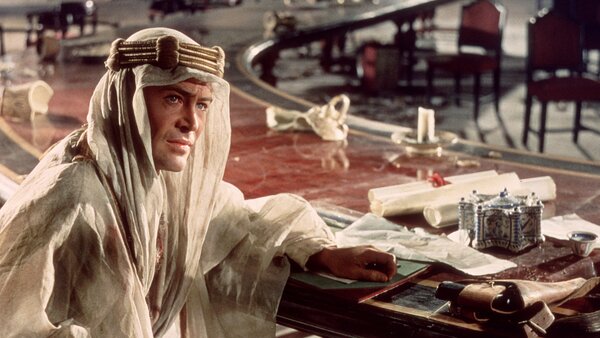
Quite possibly the biggest movie ever made, David Lean's odyssey-like Lawrence of Arabia is unequalled in its sheer comprehensiveness and visual allure, a film as resplendent in its adventurousness as it is dripping with tragedy and regret.
A retelling of the life of career soldier T. E. Lawrence, who was instrumental in organising the Arab revolt against the Ottoman Empire during the First World War, Lean's film, like The Bridge on the River Kwai, is enmeshed within the trauma of empire and British convention, with Peter O'Toole's captivating performance casting his subject as a man marooned between worlds. It's a heartbreaking and iconic turn from the actor, who is paired excellently with Omar Sharif, Anthony Quinn, and Alec Guinness - frustrating as it is that the latter two were cast in favour of actors with a Middle East background.
In any case, in scale, drama, and performance, Lawrence of Arabia is a masterpiece no matter which way you cut it. It's a film that is so big, it feels like a crime to confine it to a home viewing.
63. 1963 - 8½
Honourable Mentions: High and Low, The Great Escape, The Leopard
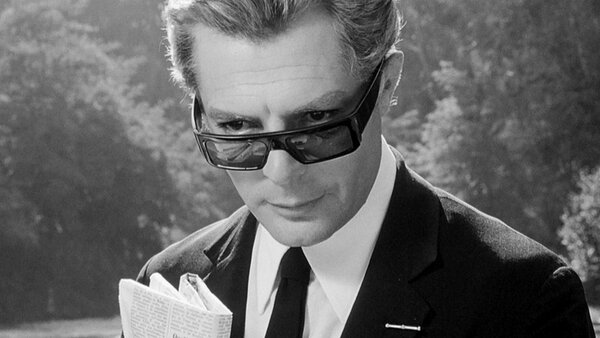
The opus of the great Italian filmmaker Federico Fellini, and one of the greatest movies about the movies ever made, 8½ won the Academy Award for Best Foreign Language Film in the wake of its 1963 release and has remained a touchstone of Italian cinema in the six decades since.
StarringMarcello Mastroianni as an embattled director engulfed by creative and personal crises during the production of his next big film, Fellini's film was whipsmart, suave, and scathingly frank in its depiction of existential drama, bolstered by the stunning black-and-white photography of Gianni Di Venanzo and stellar supporting turns from Sandra Milo and the late, great Claudia Cardinale.
62. 1964 - Dr. Strangelove

Honourable Mentions: Onibaba, The Train, The Umbrellas of Cherbourg
The Cold War was a lot of things: paranoid, scary, horrifically destructive, but it was also hilarious. The scale of the arms race between the East and West, the constant posturing, subterfuge, and proliferation of enough nuclear material to blow us all to Kingdom Come five times over, deployed on a 24-hour cycle and held together by sticky tape and the hope that human error won't factor into the equation - it's a patently ridiculous state of affairs that would be enough to drive anyone into a pit of anxiety if they dwelled on it for too long.
Unless, of course, you laugh. (Which is what Stanley Kubrick did.)
1964's Dr. Strangelove (Or How I Learned to Stop Worrying and Love the Bomb) is a film devoted to that belief - a chaotic masterpiece that takes aim at everything from Operation Paperclip to the absurdity of nuclear diplomacy. The farce is made complete by the stupendous talents of Peter Sellers and George C. Scott, the latter of whom was actually deceived by Kubrick into providing the humorous takes that made the final cut.