The Best Movie Of Each Year From 1925-2025
81. 1945 - Brief Encounter
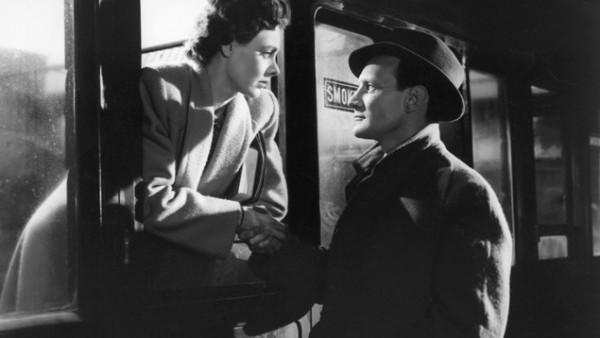
Honourable Mentions: Dead of Night, Mildred Pierce, I Know Where I'm Going
The Second World War provoked some of the most revolutionary and fascinating pictures in the history of film, and within that period, 1945 emerges as perhaps the most fascinating year of all.
With the war drawing to a close and thoughts finally permitted to linger on the future, cameras that were once focused on the external were turned inwards, arriving to meet a moment of profound social and economic change. Such a feeling was carried most vociferously in the noir and horror genres - the latter of which received a landmark entry from Ealing Studios in 1945 with Dead of Night - but also in more traditional cinematic fare, most notably David Lean's Brief Encounter.
A story of temptation and moral conflict developed by the great Noël Coward from his own play, Still Life, Brief Encounter follows two married strangers in pre-war Britain and the crisis that accompanies an emotional affair they struggle to suppress. Lean's film offers a frank and yearning portrayal of desire and duty reflective of Britain's own wartime evolution, beautifully photographed by the great Robert Krasker.
It is one of the greatest British films ever made, and possibly the definitive doomed romance of cinema's golden age.
80. 1946 - A Matter Of Life And Death
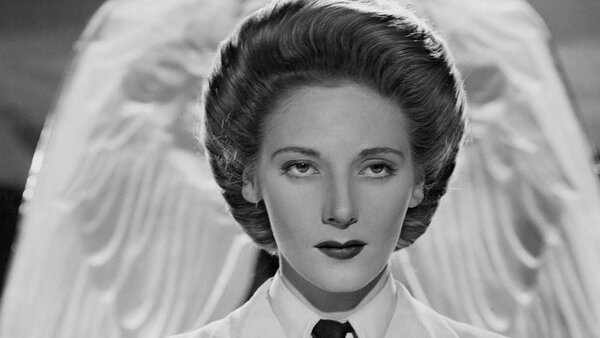
Honourable Mentions: It's a Wonderful Life, The Best Years of Our Lives, My Darling Clementine
1946 is in contention for being the greatest year in movie history, stacked as it is with classics from the likes of Frank Capra, William Wyler, and John Ford. It was a year of post-war introspection and weighty, emotional narratives, as Hollywood shifted through the rubble of six years of conflict and questioned what would come from such a violent and sudden metamorphosis.
All three of the above-mentioned honourable mentions from Capra, Wyler, and Ford bear the scars of the war, and are almost overwhelming in their vulnerability when the full context of their filmmaking journeys is made apparent. They're true masterpieces, but if one film were to exemplify that profound sense of post-war weight, it would have to be the ethereal and elemental A Matter of Life and Death.
Perhaps Powell and Pressburger's greatest film, A Matter of Life and Death brings to bear the cost of the conflict in a deeply spiritual way, as RAF pilot Peter Carter (David Niven) inexplicably emerges as the sole survivor after his bomber is shot down and falls in love with US Army Air Forces controller June (Kim Hunter). Only, cosmically, Carter was in fact meant to have perished in the encounter, but his angel - an 18th-century French aristocrat called "Conductor 71" (Marius Goring) - lost him in the fog over the English Channel.
What ensues is a battle between the technicolor of our world and the black and white afterlife, as Peter pleads his case for survival to the ghosts of history, which he does while experiencing seizures brought on by an untreated concussion. The staging of the afterlife, in this case, is a prism through which Powell and Pressburger explore the topic of survivor's guilt; Peter is desperate to live, but there's a part of him that thinks he should have died with his comrades over the channel. It's beautiful staging for a beautiful story, and while there will be those who point to 1948's The Red Shoes as The Archer's opus, A Matter of Life and Death is immortal cinema.
79. 1947 - Out Of The Past
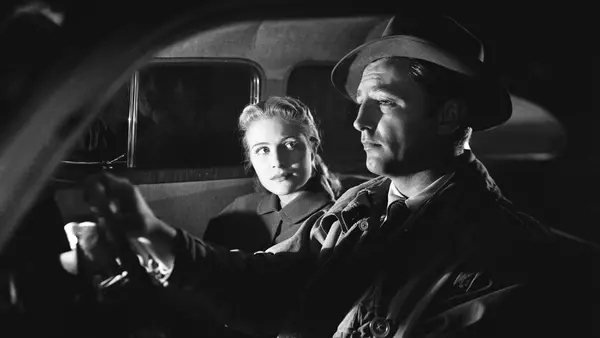
Honourable Mentions: Black Narcissus, Nightmare Alley, Odd Man Out
Robert Mitchum was one of the greatest leading men to have ever graced Hollywood, and while he arguably excelled in darker turns as his career matured, one of his career highlights came with one of the finest film noirs of all time: Jacques Turner's Out of the Past.
Paired opposite Jane Greer and with supporting turns from Kirk Douglas and Rhonda Fleming, Out of the Past is delightfully torturous and devastatingly sexy, featuring one of the all-time great euphemistic trysts in film history, as Mitchum's Jeff Bailey and Greer's Kathie Moffat embrace in a stormy cabin as their romance reaches a crescendo.
78. 1948 - The Treasure Of The Sierra Madre

Honourable Mentions: Fort Apache, Red River, The Red Shoes
Bogart's most iconic screen roles cast him as hardboiled detectives or as steadfast, reluctant heroes, but he was at his best when taking on tragedy. Whether in Nicholas Ray's In a Lonely Place or William Wyler's Dead End, the rock-like resilience of Bogey's usual screen roles gave way to erraticism, paranoia, and occasional menace, with his turn in John Huston's The Treasure of the Sierra Madre taking these traits to Shakespearean levels of theatricality.
Huston's film, which centres around three different Americans down on their luck in Mexico during the Great Depression, is a devastating mix of western and noir, as the trio endeavour to strike it rich in the hills after years of being on the receiving end of unscrupulous capitalists. Greed and paranoia soon set in, with Bogart's Fred Dobbs succumbing to gold fever before embarking on a path that leads to his destruction - as well as the loss of a shared fortune.
To that end, The Treasure of the Sierra Madre cements itself as one of the great "New Dealer" films of the 1940s - as much a call for solidarity as it was a warning, perhaps, for the return of "rugged individualism" that accompanied the post-war boom. One weak strut is enough to bring the whole experiment crashing down, which Dobbs and his former partners, one of whom includes the legendary Walter Huston (directed here by his son), are reminded of to crushing effect.
77. 1949 - The Third Man

Honourable Mentions: The Heiress,Kind Hearts and Coronets, White Heat
The greatest British film of all time, Carol Reed's The Third Man is an unrivalled piece of early Cold War cinema - a discombobulating descent through post-war Vienna made even more dizzying by the expressionistic cinematography of Robert Krasker and an undulating, zither-based score by Anton Karas.
But it isn't just the audio-visual qualities of The Third Man that make it so special. On top of boasting a never-better Orson Welles as the presumed-deceased Harry Lime, Reed's film is imbued with a sardonic sense of anger and betrayal, that out of the rubble of one war has emerged another less destructive but even more absurd, and populated by self-interested figures like Lime who are content to profit from the disorder that it brings.
At the centre of the story is Joseph Cotton's Holly Martins, a pulp western author who, imitating the cowboys of his stories, enters Vienna half-cocked and out of his depth as he tries to unravel the mystery of Lime's disappearance, all while the British security services, led by Trevor Howard's Major Calloway, attempt to educate Martins as they continue their own investigation.
Suspenseful and playful in a great many ways, Reed's film also packs a big enough third-act punch that cements it as the greatest film noir ever made.
76. 1950 - Sunset Boulevard

Honourable Mentions: All About Eve, In a Lonely Place, Wagon Master
If The Third Man is the greatest film noir of all time, then the best film of 1950, Billy Wilder's Sunset Boulevard, can't be far behind.
Arguably Wilder's most seminal work, the William Holden, Gloria Swanson-starring tragedy - all about Hollywood's ruthlessness and the corrupting influence of wealth and celebrity - kickstarted the hagsploitation genre and generated some of the decade's most affecting imagery and scripture; Holden's Gillis floating lifelessly in a mansion pool, punctuated by his own post-mortem narration; the bizarre funeral procession of a beloved but departed chimpanzee; Swanson's Norma Desmond readying for a final, parting close-up - it's a masterclass in Hollywood introspection, often immitated, but never bettered.
75. 1951 - Strangers On A Train
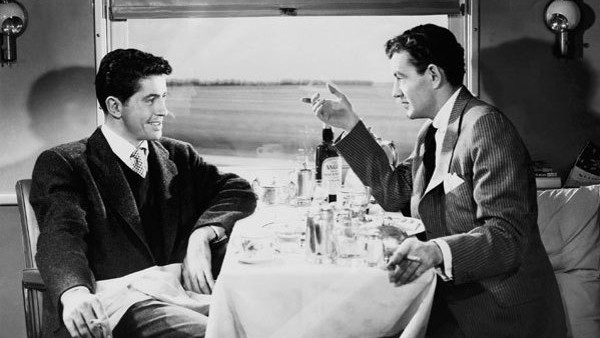
Honourable Mentions: Ace in the Hole, Scrooge, The Thing from Another World
Strangers on a Train tends to sit just outside of the all-timer Hitchcock bracket, but there's a strong argument that it shouldn't. The dynamite premise, for one - of a chance encounter with a stranger hatching a plan to commit the perfect murders - is among the best the Master of Suspense ever had to play with, while the fairground-set finale proves to be just as tense as those found in the likes of North by Northwest or Rear Window.
Hitchcock was also able to draw upon a wealth of collaborative experience for the production, with noir author Raymond Chandler adapting the script from a Patricia Highsmith thriller published the previous year. The resulting material couldn't have been better suited to Hitchcock's sensibilities, with happenstance horror by this point the director's bread and butter.
74. 1952 - Singin' In The Rain

Honourable Mentions: High Noon, Ikiru, The Quiet Man
Singin' in the Rain exemplifies pure joy - the cinematic equivalent of a warm blanket draped around your shoulders on a crisp spring day. Gene Kelly co-directed, choreographed and starred in the film about silent movie stars transitioning into the talkie era, and birthed arguably the definitive Hollywood musical in the process.
It's thoroughly resplendent viewing - an ode to expression and happiness at a time of dour conformity. Its technical merits alone make it essential viewing, but placed within that historical context, Kelly and Stanley Donen's film makes for as much of a spirited refutation of the times as Stanley Kramer's High Noon.
73. 1953 - The Big Heat

Honourable Mentions: Stalag 17, Tokyo Story, The Wages of Fear
Fritz Lang's association with noir cinema grew exponentially following his emigration from Nazi Germany to the United States, where he went on to direct several classics both during and after the Second World War, including Ministry of Fear, The Woman in the Window, and Scarlet Street.
But Lang's greatest genre contribution wasn't released until 1953 - a film that had real fire in its belly, and starred the shark-like Glenn Ford in the lead: The Big Heat.
A definitive vigilante movie all about a policeman's quest for vengeance against a criminal syndicate, The Big Heat is both pulpy and thoroughly blistering, featuring stunning cinematography, a smooth, affecting turn from Ford, and two formidable performances from Gloria Grahame and an early-in-his-career Lee Marvin.
Of the many indelible contributions Lang made to cinema, The Big Heat may not be the most influential, but it may just be his best.
72. 1954 - Seven Samurai
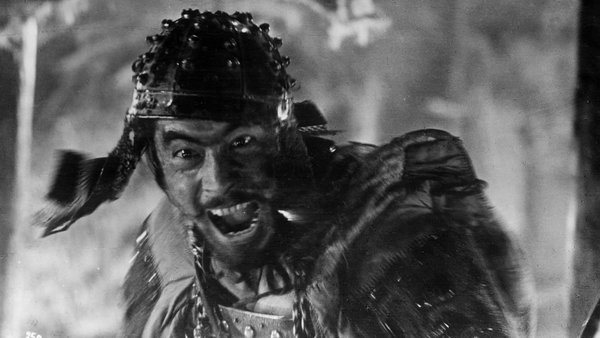
Honourable Mentions: Godzilla, On the Waterfront, Rear Window
Akira Kurosawa was one of the most breathtaking and innovative filmmakers of the 20th century, and no film within his oeuvre embodies those traits more than his 1954 masterpiece, Seven Samurai.
One of a number of collaborations with legendary Japanese actor Toshiro Mifune (many of which are equally as deserving of the 'masterpiece' label, particularly Throne of Blood), Seven Samurai is the modern birthplace of the "men-on-a-mission" movie and one of Kurosawa's most technically accomplished productions.
Rain-soaked, fiery, and as balletic as it is frenetic, it's hard to describe Seven Samurai as anything but the definitive jidaigeki picture, as well as the high point of Kurosawa and Mifune's long-running and unimpeachable partnership.