The Best Movie Of Each Year From 1925-2025
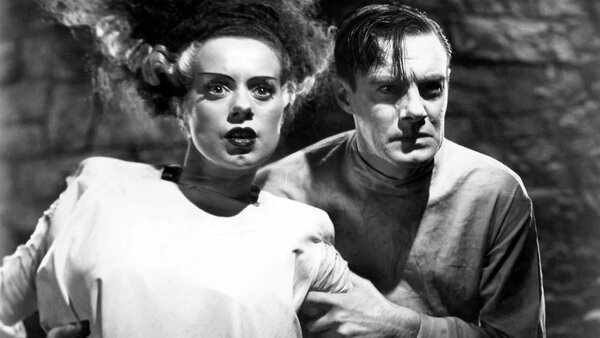
91. 1935 - The Bride Of Frankenstein
Honourable Mentions: The Informer, Mutiny on the Bounty, The 39 Steps
James Whale was a genre pioneer for Gothic horror on the big screen. While the silent era had birthed its own gripping interpretations of the literary movement, particularly through the expressionist lens of West German cinema, Hollywood was now adding sound to the equation, beginning with Tod Browning's Bela Lugosi-starring Dracula in 1931. Whale was next with Frankenstein, which, just as Browning's film did for Bram Stoker's creation, defined Mary Shelley's monster in popular memory.
That first Frankenstein film conjured some incredible imagery, particularly in its iconic windmill sequence, but it was quaint in ways Browning's film wasn't thanks to some bizarre moments of levity. Whale would not repeat the same mistake for his sequel, The Bride of Frankenstein, which enmeshed itself more dutifully in Shelley's cautionary themes of creation and consciousness and built up from them in trailblazing ways. It's an altogether more confident picture, combining a mesmerising mix of visual effects work and epic set design to create a story that's bigger, but surprisingly more intimate.
Whale's film is one of love, rejection, and isolation, but strong as its thematic currents are, there's simply no overstating the pure visceral power of Elsa Lanchester's Bride. She is, ironically, a perfect creation, and probably the single-most defining image of that original era of Universal monsters.
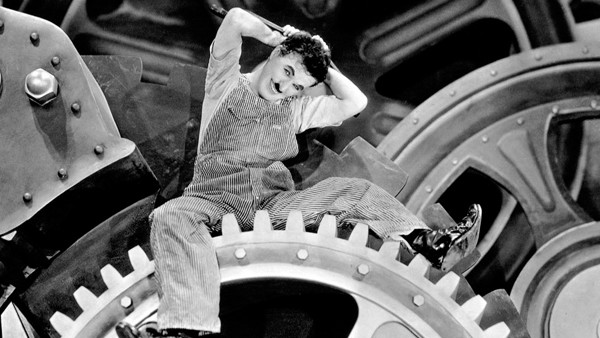
90. 1936 - Modern Times
Honourable Mentions: Dodsworth, Mr. Deeds Goes to Town, Rembrandt
No list of the greatest movies ever made would be complete without an appearance from arguably the greatest silent film star ever, Charlie Chaplin, albeit in the form of a film that was also part-talkie.
Modern Times proved to be the last time Chaplin reprised his iconic role as The Tramp, but he may have saved his best rendition for last. While The Kid and City Lights are equally marvellous, Chaplin yielded an entertaining but equally affecting feature with Modern Times, showcasing the toil of the industrial economy and the relentless pace of existence as the United States slowly galvanised from the Great Depression.
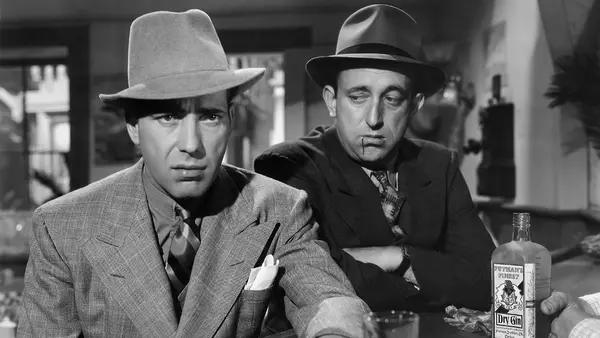
89. 1937 - Dead End
Honourable Mentions: Angel, La Grande Illusion, You Only Live Once
Most noteworthy today for a supporting turn from a pre-breakout Humphrey Bogart, William Wyler's Dead End is a proto gangster drama rooted in the zeitgeist of the Great Depression and the jarring polarity of New York City's economic composition. It's a film where the extremes of the Depression are rendered in close proximity, compacted together in a story of generational struggle and violence, with Bogey playing the role of a vicious gangster rejected by the community he once called home.
More than just a showcase of the persona that catapulted Bogart to Hollywood stardom, Dead End also exemplifies the technical brilliance of one of the greatest directors of Hollywood's Golden Age. Wyler's legacy would be cemented with his valuable wartime works and with post-war epics like The Big Country and Ben-Hur, but Dead End illustrates his versatile strengths in full clarity.
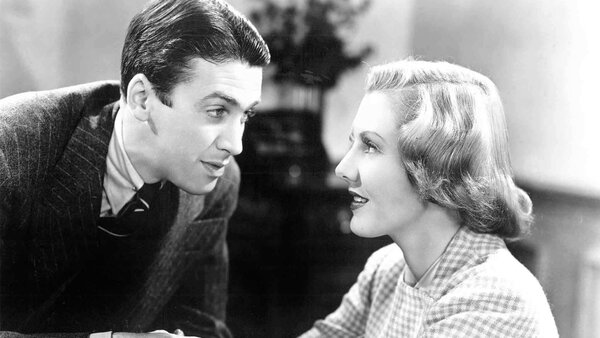
88. 1938 - You Can't Take It With You
Honourable Mentions: Angels with Dirty Faces, Bringing Up Baby, Holiday
Another classic from Frank Capra's pre-war oeuvre and of Jimmy Stewart's too, You Can't Take It with You may conceptually be nothing remarkable - another studio rom-com about class-crossed lovers - but at the end of the day, you cannot argue with Capra's execution nor the ineffable charms of Jimmy Stewart.
The latter is paired this time with the bedazzling Jean Arthur (who re-teamed with Stewart and Capra for Mr. Smith Goes to Washington), making for a Capra picture that, while less fascinating or meditative than his post-war opus It's a Wonderful Life, is still a stellar example of his filmmaking talents.
87. 1939 - Only Angels Have Wings
Honourable Mentions: Stagecoach, The Wizard of Oz, Gunga Din
A filmmaker with an imperious influence, Howard Hawks was one of the most prolific directors working in Hollywood as it made its transition from silent cinema to talkies, adjusted to the Hays Code, and then navigated the post-war years.
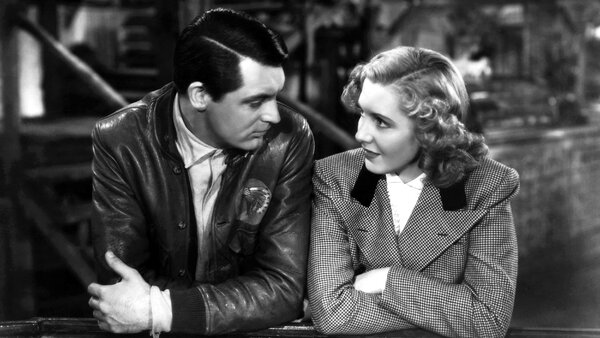
By 1939, he'd already directed a number of hits, including The Dawn Patrol, Scarface, and Bringing Up Baby, but his greatest work from that decade was Only Angels Have Wings, a romantic drama co-led by Cary Grant, Jean Arthur, and Rita Hayworth.
Centred around an airfreight company in a remote South American village and the life-or-death antics of the pilots in its employ, Only Angels Have Wings is one of Hawks' most visually breathtaking works, with the director maintaining the standard he set for aerial sequences on The Dawn Patrol through a combination of real aerial photography and clever miniature work. It also boasts a standout performance from Grant, who eschews the screwball antics of his earlier collaborations with Hawks for something much darker and inward-looking.
So many of Hawks' films were devoted to untangling the rituals of masculinity and romance, a formula he arguably perfected with 1959's Rio Bravo, but which was beautifully rendered with Only Angels Have Wings two decades earlier.
86. 1940 - His Girl Friday

Honourable Mentions: The Grapes of Wrath, The Mark of Zorro, Rebecca
Another Hawks masterwork this time, albeit one that exemplifies a different but no less integral part of his filmmaking talents - his gift for comedy. Hawks' comedies were whip-smart and relentlessly chatty, films that were propelled at a locomotive pace by actors like Cary Grant and Katharine Hepburn in Bringing Up Baby and which developed their own niche within the genre: the "screwball" picture, the best of which Hawks premiered in 1940 with His Girl Friday.
Pairing regular Hawks collaborator Grant with Rosalind Russell, His Girl Friday unleashed Hawks at his most unyieldingly ridiculous, with improvisation, rapid, tongue-twisty dialogue, and a generally unignorable pitch of noise resulting in a film that's both hilarious and somewhat stressful to sit through. It's the good kind of stress though, making His Girl Friday one of the most gratifying pictures of the 1940s.
85. 1941 - Citizen Kane

Honourable Mentions: How Green Was My Valley, The Lady Eve, The Maltese Falcon
If you were to attempt to sum up Orson Welles' Citizen Kane with just a word, monumental would probably be the most fitting. While obviously it doesn't infer the great many multitudes that comprise Welles' film on a narrative and thematic front, it does speak to its stature both in a filmic sense and as a piece of cinema history - another of those 1940s classics that, though pilloried in its time, became a lodestar for cinephiles as the years went on.
Welles' direction and performance were revolutionary and daring, and while Hollywood didn't immediately alert to this multifaceted and ultimately hugely influential talent, subsequent productions - such as The Magnificent Ambersons, Touch of Evil, and The Third Man - soon changed that.
84. 1942 - Casablanca

Honourable Mentions: Cat People, The Magnificent Ambersons, Mrs. Miniver
There's an argument to be made that Michael Curtiz's Casablanca is the most iconic film ever made.
It counted among its leads the defining actor of Hollywood's wartime and post-war era, Humphrey Bogart, as well as one of its most glamorous and acclaimed actresses in Ingrid Bergman, the pair fashioning an onscreen connection compelling enough to equal the one Bogey forged with real-life partner Lauren Bacall across the likes of To Have and Have Not, The Big Sleep, and Key Largo. Add to that the likes of Claude Rains, Conrad Veidt, Peter Lorre, and Sydney Greenstreet, and you're left with a film that boasts some of the most recognisable and animated faces ever put to screen.
But Casablanca's importance goes beyond its assemblage of such a treasure trove of acting talent. A wartime production developed by Warner Bros. during the burgeoning months of America's entry into the Second World War, Curtiz's film defined a moment in popular culture and of national sentiment, as isolationist feeling suddenly and violently gave way to dutiful sacrifice and resilience in the acrid shadow of Pearl Harbor.
Most fascinating, however, is how it also cast a watchful eye to the past, highlighting the cost of ignorance and self-preservation through Bogart's character of Rick, before shifting to the future to intimate the long, arduous road that lay ahead for many Americans, amplified in turn by so many of the non-Hollywood cast being comprised of European actors who had fled the Nazis as they strolled through the continent.
Like the very best of World War II cinema, there's a profound, unceasing weight to Casablanca, a film that is today best remembered for exemplifying an era of stardom, but whose depths extend to something much more profound.
83. 1943 - The Life And Death Of Colonel Blimp
Honourable Mentions: Five Graves to Cairo,The Ox-Bow Incident, Sahara
There is no more formidable a filmmaking partnership in the history of British cinema than Michael Powell and Emeric Pressburger, a duo whose legacy was once forgotten, but which has been steadily brought back to the spotlight thanks to the efforts of Martin Scorsese and Thelma Schoonmaker, the latter of whom went on to marry Powell in 1984.
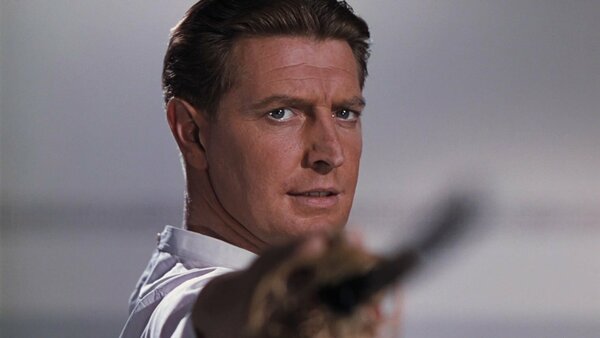
Powell and Pressburger - whose works were signposted with their production label, The Archers - first rose to prominence during the Second World War, with their fifth collaboration, The Life and Death of Colonel Blimp, their most masterful contribution from this era.
The story of two friends - one English (Roger Livesey), one German (Anton Walbrook) - and their diverging paths as military men from the early 20th century through to the Second World War, Colonel Blimp is as epic as it is tragically romantic, but perhaps its most important quality is its honesty. Powell and Pressburger render a bittersweet and at-times brutal picture of the British stiff-upper-lip through the tragic figure of Livesey's Clive Candy, whilst also confronting the impact of Versailles on the creation of the Nazi state - a frankness which proved remarkably prescient, but that also bristled against wartime convention.
Thematically, The Life and Death of Colonel Blimp is a seminal piece of World War II cinema. Add the dreamlike visuals of The Archers to the mix, and you're left with one of the greatest British films ever made.
82. 1944 - Double Indemnity
Honourable Mentions: Gaslight, Laura, The Uninvited
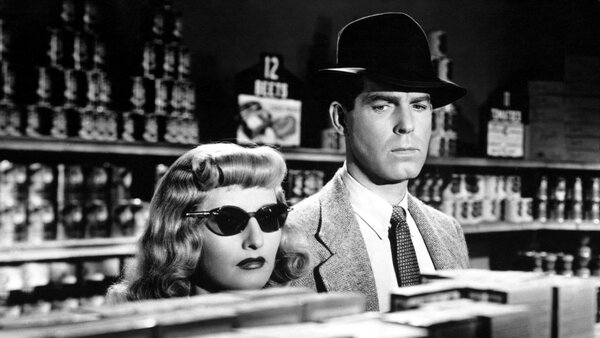
One of the most iconic Film Noirs of all time, Billy Wilder's Double Indemnity is every bit the sleek, sexy and ironically punitive classic it's made out to be, featuring perhaps the greatest femme fatale put to screen in Barbara Stanwyck's Phyllis Dietrichson, who enlists the help of a horned-up insurance salesman, Walter Neff (Fred MacMurray), to kill her husband and pocket the proceeds of a lucrative life insurance policy.
Edward G. Robinson is the intrepid investigator out to spoil the ruse, with MacMurray's Neff spiralling as his scheme frays apart. Raymond Chandler's prose was fertile ground for Hollywood, and while many of the author's works would be adapted as films in the ensuing years, none quite match the inky salaciousness of Wilder's first attempt.