The Best Movie Of Each Year From 1925-2025
The totally definitive and undebatable list of the best movies released within the last 100 years.
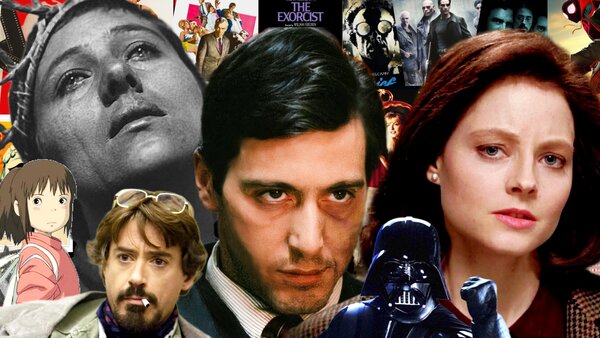
"I love my popcorn. Movies. Popcorn." Truly, words to live by.
When Tom Cruise dropped this waxy, philosophical quote in the run-up to the release of the eighth Mission: Impossible film, Dead Reckoning: Part One, he was really onto something. An off-the-cuff line to placate the social media demon that lives inside all of us? Maybe. Yes. But it also captures cinema as a vibe. An experience - sensorial in a way other mediums are not, as well as an avenue to stuff your body full of a sweet, sugary (but nutriously fibrous) snack that you never manage to get quite right at home despite the microwave packet providing clear instructions on timings and pop frequency. (Butterkist, why hast thou forsaken me?)
From these experiences - good or bad, perfect popcorn or burnt to a crisp by an uncooperative kitchen appliance - we form our own relationships with cinema. Genre, era, auteur - the length and breadth of the medium comes to us in different ways at different times and from there forges a unique path for us to navigate. There are established canons, critical consensuses and historiographical narratives that provide a linear-ish trajectory, but within that line are errant curves and diversions - rich estuaries carved out by experience and taste that distinguish each individual's relationship with the art form and which can either complement the canon or veer decidedly off trajectory away from it.
Is all of this an overly elaborate and somewhat self-indulgent way of saying that film criticism is subjective? Yes. Kind of. But it feels worth prefixing to a list devoted to singling out one film from each year that's the best of that year for the past 100 years, which is what I'm (foolishly) here to do today.
For the past few weeks, I've spent what WhatCulture editors are calling "simply too much time" going year by year, from 1925 to 2025, to pick and choose the best and most essential movies of all time. As with all the best laid schemes it started with the best intentions and then turned into something totally unwieldy and maybe a bit ugly. BUT it has real inner beauty, folks. Get clicking!
101. 1925 - Battleship Potemkin

Honourable Mentions: The Big Parade, The Gold Rush, The Phantom of the Opera
A founding figure of Soviet cinema and a director whose influence looms large over our greatest contemporary filmmakers, Sergei Eisenstein's pioneering powers led to some of the greatest films of the 1920s and 1930s, the most potent of which remains his 1925 masterwork, Battleship Potemkin. It's a fierce retelling of the famous mutiny that took place during the Russo-Japanese War against the backdrop of the 1905 Russian Revolution, breathtaking in both its drama and imagery, and perhaps the definitive entry in the canon of silent cinema.
100. 1926 - The General

Honourable Mentions: The Black Pirate, Faust, What Price Glory?
Buster Keaton. That is all.
It's hard to think of any actor - Charlie Chaplin, perhaps - from the silent era of cinema who looms as large in terms of influence on the cinema of today than Buster Keaton. An ingenious performer whose daring stuntwork and penchant for physical comedy can be found in the DNA of everything from Looney Tunes to Jackie Chan, Keaton lent his talents to 88 films across his career, with undoubtedly his most famous being The General.
Everything great about Keaton - his comedic timing, charm, and his commitment to physical peril - is present in The General, a Civil War-set comedy inspired by the real-life Great Locomotive Chase. Keaton himself called it his proudest work, and while initial consensus was unkind to the film, time has vindicated his assessment and then some.
99. 1927 - Wings

Honourable Mentions: Metropolis, Napoleon, Sunrise: A Song of Two Humans
1927 was a monumental year for silent cinema, with Fritz Lang's Metropolis and Abel Gance's Napoleon two of the most formative and defining pieces of filmmaking from that era. Masterpieces as those two films are, however, William A. Wellman's Wings is so monumental in influence and technical daring that it's impossible to ignore.
Wellman, who was himself an aviator during the First World War, orchestrated some of the most iconic shots ever put to screen in Wings, with its story of two rival pilots overcoming their feud while the great Clara Bow attempts to win the affections of one still utterly engrossing and balletic almost 100 years on from its release.
98. 1928 - The Passion Of Joan Of Arc

Honourable Mentions: The Circus, The Last Command, The Man Who Laughs
A bolt from the blue, Carl Theodor Dreyer's The Passion of Joan of Arc is one of the greatest silent films ever produced and one of the greatest films full-stop. A retelling of the trial of Joan of Arc, Dreyer's film is a monument to monochromatic beauty, a dazzling array of imagery that lingers on the breadth and depth of human feeling and the awesome nature of our history, all of which is captured in the face of Renée Jeanne Falconetti.
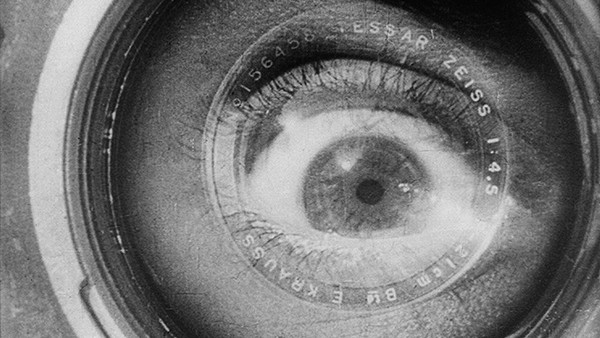
97. 1929 - Man With A Movie Camera
Honourable Mentions: Asphalt, The Iron Mask, Thunderbolt
Man with a Movie Camera - a landmark of Soviet cinema directed by Dziga Vertov - is one of the most revolutionary pieces of filmmaking ever developed. A Ukrainian-made documentary that depicted life in the Soviet cities of Moscow, Kyiv, and Odessa, Vertov's film was experimental in approach and yielded transformative technical results, pioneering cinematic techniques that would go on to form the building blocks of modern cinema. Today, it remains an entrancing viewing experience, and the first port of call for anyone looking to unpack the DNA of film as we know it.
96. 1930 - All Quiet On The Western Front

Honourable Mentions: The Blue Angel, Hell's Angels, Morocco
The single-most authoritative anti-war treatise in film history, Lewis Milestone's adaptation of All Quiet on the Western Front is also perhaps the most depressingly prophetic and urgent piece of cinema of the last 100 years, arriving under a decade before the world plunged itself into the most devastating conflict in its history.
Milestone's film is uncompromising in its approach and by extension totally distinct as a product of its time, deglamourising warfare while dwelling on the ideological and propagandistic influences that butt against the cold, simple reality of men killing other men.
Other adaptations of Erich Maria Remarque's World War I novel emerged in the decades after - including one as recently as 2022 - but none have managed to match both the contextual weight of Milestone's original nor its commitment to relaying the many nuances of Remarque's prose.
95. 1931 - M
Honourable Mentions: City Lights, Dracula, Frankenstein
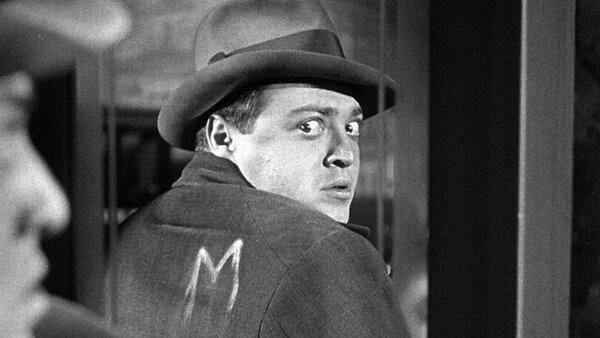
While most famous for his long-reaching influence on science fiction with 1927's Metropolis, the expressionistic stylings of Austrian filmmaker Fritz Lang were most heavily felt within a different genre: film noir. Lang would cement this reputation with multiple genre classics in the 1950s (including one that makes an appearance on this list), but one of his boldest efforts remains one of his earlier films - a German-set thriller starring Peter Lorre, M.
Lang's first sound feature and one that catapulted Lorre to international stardom, M is both deliriously paranoid and unabashedly dark, focusing its action on Lorre's Hans Beckert - a serial killer who preys upon children in Berlin - as an investigation and manhunt slowly begins to tighten the noose around his neck.
Like Metropolis before it, M exemplifies the technical daring of Weimar-era cinema as well as its thematic maturity, and remains a touchstone of noir filmmaking.
94. 1932 - Horse Feathers
Honourable Mentions: Freaks, Scarface, Shanghai Express
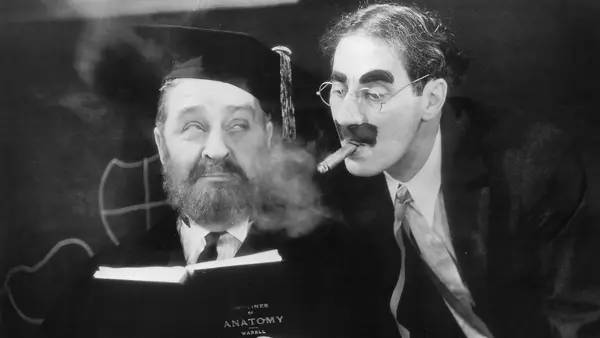
While not the most iconic or even the greatest effort from The Marx Brothers (that honour would have to belong to Duck Soup, which was released the following year in 1933), Horse Feathers is still one of the comedic troupe's best films - a riotously funny comedy where the absurdist, Looney Tunes-style antics of Groucho and co. shine brightly. Perhaps not as essential as Duck Soup, but a film that shouldn't be overlooked all the same.
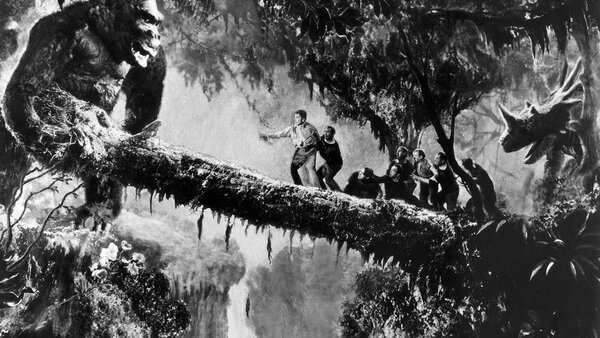
93. 1933 - King Kong
Honourable Mentions: Baby Face, Duck Soup, The Invisible Man
King Kong was a revolutionary picture when it premiered in 1933, and the technical effects wizardry on display still doesn't fail to impress almost a century later. In fact, even with a further two US remakes in mind, Merian C. Cooper and Ernest B. Schoedsack's original still stands out as the eeriest and most atmospheric (give or take the occasional meat-loving herbivore that picks off our wayward expedition).
The use of miniatures, stop motion, and rear projection conjures a version of Skull Island that is totally uncanny - a monochrome vision of primordial peril that pushed the boundaries of how far the movies could go in transporting us to complete fantasy. Many filmmakers have tried with great affection to replicate that sense of discovery and fear, but the original is the only true eighth wonder of the world.
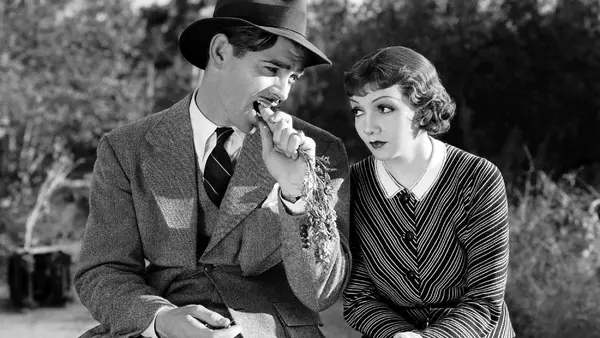
92. 1934 - It Happened One Night
Honourable Mentions: The Lost Patrol, Manhattan Melodrama, The Thin Man
Nothing goes quite as hard as Frank Capra and a pre-Code picture, and especially one that stars Clark Gable as a romantic lead opposite Claudette Colbert, which, wouldn't you know it, is exactly what It Happened One Night happens to be.
Capra's film swept the Oscars following its theatrical run and is a defining picture of the Old Hollywood, with Gable and Colbert's chemistry still just as sizzling today as it was in 1934. Capra's other pre-WW2 films Mr. Deeds Goes to Town and especially Mr. Smith Goes to Washington are just as seminal, but there's something ineffable about Gable at the peak of his powers.