True Detective Season 3: What Does The Ending Really Mean?
The biggest twists, surprises, and overall ending of True Detective's third season, explained.
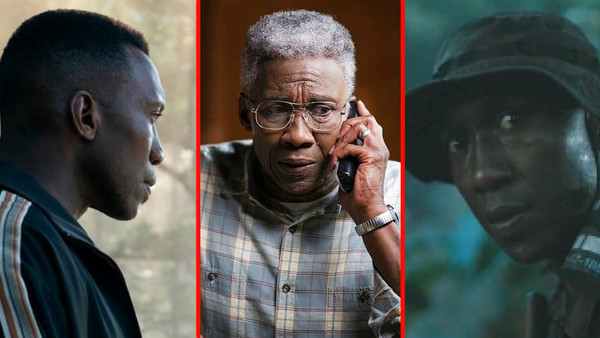
Although most people might've missed it since it clashed with the Oscars, True Detective's third season has quite quietly wrapped up. While Mahershala Ali was busy collecting a second Academy Award, Wayne Hays was still putting together the pieces of the Purcell puzzle in three different timelines.
It's been quite the journey for the show's third outing. It's had to fight its way back after fading from significance, with its lacklustre second season enough to tank the show for three-and-a-half years. But given the time it needed, True Detective had made a superb return to form this year. It might not have the same cultural cache as Season 1, nor the inherent weirdness or as character as instantly iconic as Rust Cohle. But there's been a smart, gripping, and layered storyline to invest in week after week.
There were a number of questions going into the finale, Now Am Found, but the biggest was whether it would stick the landing? While it's already proved divisive among both fans and critics, the answer is yes. Nic Pizzolatto has brought the third season of True Detective to an emotionally satisfying conclusion, but what does it all really mean?
12. What Happens
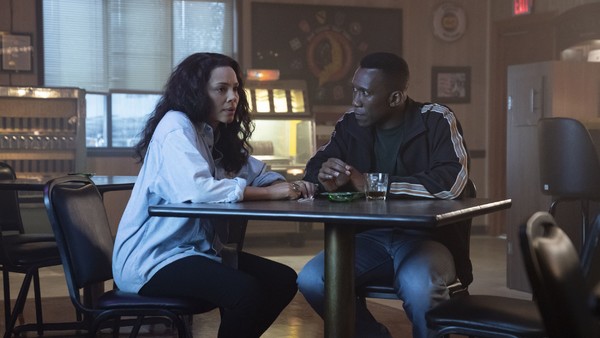
The finale runs to around 80 minutes in length, with a lot of plot and character work to try and get through.
In the 1980s, Wayne Hays is given an ultimatum at work. He can either write an op-ed discrediting everything Amelia has written, thus ruining his chance of a relationship with her, or he can be forced to take a desk job as a pencil pusher. Eventually, Hays chooses the desk job, even though it still leads to him and Amelia getting into a huge fight and seemingly ending their relationship. Roland West, meanwhile, is clearly hurt by Hays' choice.
In the 1990s, we pick up with Hays going off with Edmund Hoyt. The two go to the woods for an extremely tense conversation, but where neither man is prepared to give much away. He returns to Amelia, where the two talk about how their marriage has been so defined by the Purcell case, and Hays agrees to let it go in order to protect his family. West struggles with their murder of Harris James, and starts a fight in a bar - a fight where he takes on a bunch of bikers and is winning, until the numbers overwhelm him. In one of the season's best scenes, he sits crying and bloodied outside, before finding companionship with a stray dog.
In 2015, Hays and West track down Mr June, aka Junius Watts. He reveals the truth about what happened - the Hoyts took Julie Purcell, and Will was killed by accident, and Julia ran off when she was a little bit older before dying at a convent - before begging the detectives to punish him, which they don't. Hays and West go to the convent and corroborate the story, until Hays goes back home and begins reading Amelia's book. With her memory, he realises that Julie is still alive and tracks her down, before a loss of memory means he forgets why he's there, and his kids come pick him up. Back at home, it's all happy families, and then Hays has a flashback to his and Amelia's reconciliation, when he tells her he loves her. There's then a shot of Hays in Vietnam, before the credits roll.
11. Edmund Hoyt Was A Red Herring
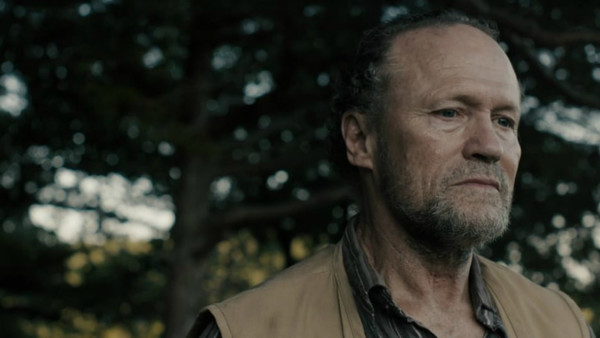
Edmund Hoyt was shaping up to be the Big Bad of Season 3. All the signs pointed to him being the mastermind behind it all: the tease of his photo, the ominous phone call to Wayne Hays, the stunt casting of the great Michael Rooker in the role. It was clear that the Hoyts had taken Julie Purcell, and since he was the head of the family and wanting a showdown with Hays, it was likely he was trying to cover things up.
The pair did have a showdown, but it wasn't as expected. Hoyt, shockingly, was completely in the dark. He didn't know for certain what had happened to Harris James, and really just wanted to find out. He knew even less about the Purcell case. Nic Pizzolatto threw in a number of red herrings this season - planting the idea that Amelia was the killer early on, and the connection to larger paedophile rings too - but perhaps none were bigger than Edmund Hoyt. Rooker played his part brilliantly, and instead of a criminal overlord attempting to hide the truth, we find an angry, older man wanting to discover it.
10. The Purcell Case Solved

It took 35 years, but the Purcell case was finally solved. As many had suspected, the Hoyts were behind it, even if Edmund wasn't involved. Isabel Hoyt's husband and daughter died in a car accident, which left her distraught, and she eventually became addicted to Lithium. One day, at an event for the Hoyt workers and their families, Isabel spotted Julie, and thought she looked like her dead daughter, Mary.
At first, Isabel simply wanted to spend time with the child, with Lucy paid off to allow it. Eventually, though, Isabel wanted more. To give Julie a supposedly better life. Near the cave where they'd go and play, a fight over Julie resulted in Will being accidentally killed. With him dead, Isabel and Mr June took Julie home to the pink room, and with the help of lithium (unbeknownst to Junius) started to erase memories of Julie, convincing the child she really was Mary. Harris James killed Lucy, Tom, and Dan to help keep this a secret.
When June discovered the truth, he helped Julie escape. The pair planned to meet up, but she fled, and he didn't track her down for another 10 years. He found her at a convent, where he was told she'd lived and died under the name Mary July. The name fit, so he believed that was the end of the case. Hays and West go to the convent, and discover much the same. There was no grand conspiracy; simply a mother in pain, a child killed by accident, and a runaway who'd been sold off by her real mother and drugged by her fake one, who died of HIV. Or at least, managed to trick everyone into believing she did.
9. Hays Finds Julie, And More Importantly, Becca

Watching the finale, it quite quickly becomes apparent that there's a lot more to the case of Julie Purcell than the story told by Junius Watts, for the simple fact it happens too early for it to be the end of the tale. There's still around half-an-hour left by the time Hays and West visit the convent, leaving plenty of times for another twist or two.
We get it thanks to Amelia's book. While reading it, she visits him and pushes him to solve the case. What if Julie hadn't died at the convent? What if an old friend, one who'd previously said he'd marry her when they were kids, had found her there as he tended to the lawn? What if he'd taken her away to safety, and the nuns lied to protect her?
Mike Ardoin was expertly seeded across the show, from his appearance as a child to his brief appearance a couple of episodes prior, right down to his meeting with Hays in the finale. Since he owns a company, it's easy enough for Hays to find his address, and he drives out to their house and finds Julie and her daughter, Lucy, in the garden. At long last, he's solved the case. Except maybe not, because right at that moment, his memory fails him. He forgets all about finding Julie, and instead becomes confused as to where he is and why he's there. He speaks to Julie, with no idea of who she is, to ask for an address. He takes a glass of water. And then he leaves her in peace.
But does he really not remember? There's a very deliberate pause when he takes a drink of water. A fleeting moment of realisation perhaps, before his memory goes again? Or more likely, he really does remember. He knows exactly why he's there. And he sees how happy they are, and remembers how much this case cost him and everyone else, and decides to let her live her life, rather than dredging up past horrors for her.
More important for Hays is not who he finds there, but who comes to collect him. Henry and Becca both turn up, and it's his estranged daughter who drives him home. "Did I lose you?" Hays asks. She tells him he never could. This wasn't about Hays finding Julie Purcell. It was about him being able to let the case go and find his family again.
8. The Purpose Of The Season 1 References
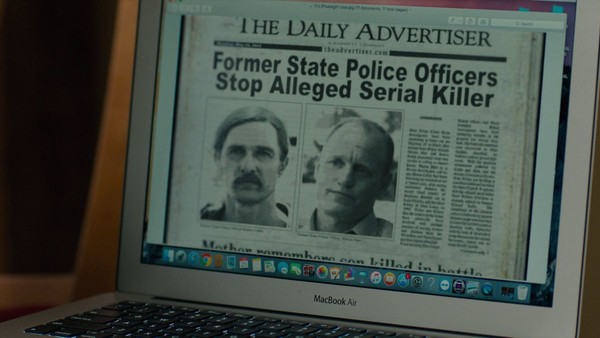
Despite Elisa drawing the link to Season 1 of True Detective, there was to be no follow-up on that connection. The disappearance of Julie Purcell didn't suddenly lead to the discovery of a wider conspiracy. There wasn't a mention of the Yellow King. Matthew McConaughey and Woody Harrelson didn't make cameos.
So was it a red herring? With regards to anyone expecting any of the above, yes, but that wasn't the point. Instead, using Season 1 as a connective tissue was Nic Pizzolatto's way of giving viewers a clue as to how this story was going to end.
While the cases are different, there are parallels in the setup of both seasons. Season 1, like Season 3, pointed to something much grander in scope, with Reddit going crazy over the Yellow King and Carcosa. The finale, to the disappointment of some fans and critics at the time, instead largely focused on giving a more personal ending for Rust Cohle and Marty Hart. Now Am Found follows the same path: the case is closed in a relatively straightforward fashion, before we get a more intimate conclusion for Hays and West. The signs were there all along.
7. Hays And West Find Peace

Since 1980, the lives of Wayne Hays and Roland West have been dominated by the Purcell case. While Hays was able to move on for a while, it was all dragged back up in 2015, but it was clear it'd already affected his relationships long before then. West fared even worse, with the murder of Harris James sending him spiralling. In 2015, he lives alone, both with regards to having no one with him (apart from his dogs, which isn't a bad thing really) and no one even close to him.
The case was never closed, and so they could never find closure. It's something they even discuss in this episode. But by the end, they've found a sense of peace and happiness. It doesn't come just through solving the Purcell case, especially since West doesn't know the full answer of it. But it's by finally being able to put that case behind them.
They've rebuilt their connection, which is the crux of this season. It's a show about partnerships and relationships, and in the two coming back together, and both once again finding a sense of family that they'd either lost or never really had, their story can come to an end. It's a quiet, peaceful, and yet emotional ending that speaks more to the power of family and friendship than it does solving a crime.
6. The Cycle Begins Again

A lot of True Detective's third season has been of a cyclical nature. What happens in 1990 with the Purcell case repeats what happened in 1980. 2015 then forces Hays and West to revisit the past. There are suggestions of loops, and as Amelia puts it, "one long story that kept going and going until it healed itself."
Which is why it's so interesting that director Daniel Sackheim uses a shot of two children riding on bikes right towards the end of the finale. Hays watches his grandkids cycle past, which ends up triggering his memory of Amelia, but it also evokes memories of the very first episode. There's a clear parallel to be drawn between Hays' grandkids here and the shots of the Purcell children in the opener.
This speaks more broadly - and in a rather literal sense - to the cyclical nature of things, but this time to how you can make things better. It's still a brother and sister, going out on a bike ride. This time, though, it's a happy ending.
5. Elisa Could Find Out
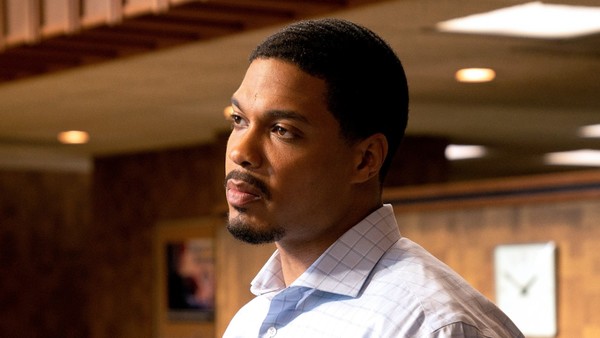
After Hays goes out to play with his grandchildren, his son, Henry, finds the bit of paper with Mike Ardoin's address on it. He briefly contemplates it, and it looks like he's about to throw it away, before he instead decides to pocket the paper.
So, what exactly is Henry going to do with that? One possibility is that he'll pass it on to Elisa. That he realises it's connected to the Purcell case, and he'll give it to the woman he's been sleeping with so that she can connect the dots and finish her documentary with a closed case. Or perhaps it's to give it to her so that she'll appreciate Julie is alive and well, and let the case go. Henry knows his father wanted the case solved, but also what it cost him. By passing it on to Elisa, he can ensure it's closed without his dad getting involved again.
There's a possibility he just wants to keep it from his father, but that doesn't explain why he'd keep it, rather than destroy it. It seems likely he has some plan for it, but it's left deliberately ambiguous. Much of the season can be read as a commentary on true crime series themselves, and this kind of nugget fits with that: designed to make everyone go crazy speculating as to what it means, when we're not going to find out the answer. But if he does give it to Elisa, and the pair do re-open the case, then that too is fitting, because it's all "one long story that kept going and going".
4. This Was A Love Story
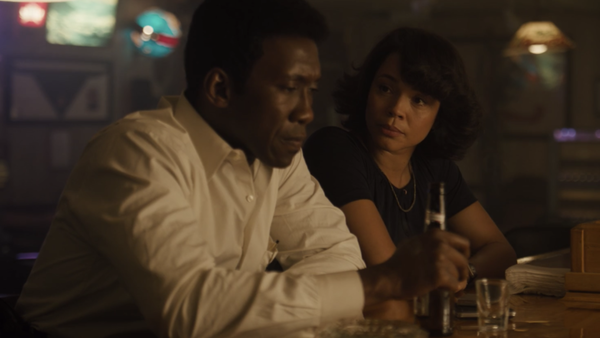
In the end, True Detective wasn't really about the Purcell case, in a similar way to how Season 1 wasn't really about The Yellow King. Nic Pizzolatto likes to build conspiracies and then defy those expectations, but more than that he likes to examine the relationships between people.
That's particularly true in a masculine sense - Cohle & Hart, Hays & West - but what makes this season stand out is the relationship between Hays and Amelia. While they're together in two timelines, it's her spectral presence in 2015 that is most important. She haunts Hays' memories, as something he can neither let go of nor ever fully capture.
The larger point of the case was Hays' connection to both West and Amelia, and how that had affected their relationships. As pointed out by Tom Knauer on Twitter, this was how he kept her memory alive, and only in 'solving' the case, or rather, letting it go, was he able to find his way back to her, and remember their life and love. This matches with his friendship with West too, and the way they're eventually able to come back together.
The biggest themes of the season speak to time and memory, but they directly connect to what become its other major themes towards the end: love, family, friendship, and conenctions lost through time. In 2015, it's not about Hays solving the Purcell case. It's about him rediscovering what he lost: his friendship with West, his relationship with his daughter, and the memory of the love he shared with his wife.
3. Was Hays Dead The Whole Time?
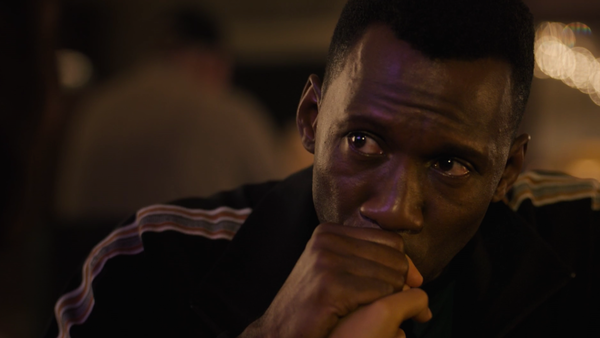
The very ending of the show is extremely ambiguous. That's a deliberate choice from PIzzolatto, especially given we've heard Hays say: "You do your best, and learn to live with ambiguity.”
So what is this ending trying to tell us? One theory, proposed by Vanity Fair among others, is that Hays was dead the entire time. The reason for this are the references in the ending to that of 1990 movie Jacob's Ladder, with the final sequences - Amelia and Hays walking out together, then Hays in Vietnam - very closely echoing the final shots of that movie.
In the film, we see hallucinations and visions from a Vietnam veteran. The very end of the film, however, finds him being led up the ladder to heaven, before then revealing that he was in a tent in Vietnam, dying, and everything else in the film had been him hallucinating his life as he approached the afterlife. Given how closely the scenes match up, it's possible that we're seeing something similar to play here.
It's an intriguing theory, and one that can't be ruled out given the ambiguity of the closing moments, and it would fit with Pizzolatto's sensibilities. Would it undercut the journey, knowing all of this was Hays learning to embrace death? Not really, but it's also not the only interpretation either.
2. Is He Dead Now?
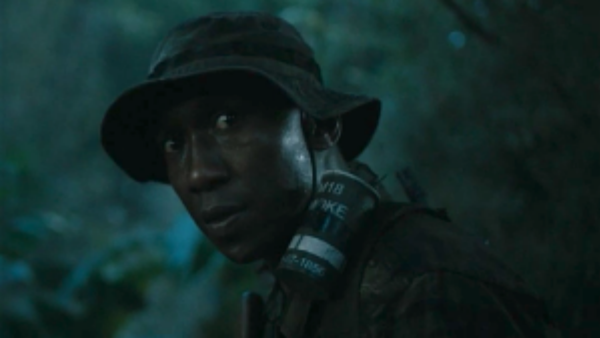
Rejecting the Jacob's Ladder theory, then, there still needs to be a meaning for those closing moments (and personally, I don't think he was dead all along). Instead, it seems more likely that the references to Jacob's Ladder were designed to further create ambiguity and obfuscate the truth - there are plenty of other red herrings along the way, after all - but also to connect to the importance of finding Amelia again.
We hear Wayne and Amelia talk of his time in the army earlier in the episode, and she references the fact he only joined because, if he died in Vietnam, his mother would be well compensated.
Going back to Vietnam, then, is True Detective's way of telling us that Hays has now passed. In 2015, he's found a sense of peace. The case is over, and he's got his family back. He's found Amelia, and with her leading him out of the door, it's like her leading him to the place he can move on. Going back to Vietnam, the place where he somewhat expected to die, is a great way of tying his entire life together at its very end.
So much of Hays has been defined by his service, and mostly his skills as a tracker. That's what led him to the police force, and to the Purcell case. That case, in his old age and illness, is that one thing he had left to track, and in turn, keep him on track. With it now over, and his family back together, his service is over, and he's finally allowed to get off track, to rest in peace, or more bleakly, get lost in the jungle (i.e. his dementia), hence why it goes back to Vietnam.
1. Was It A Letdown?
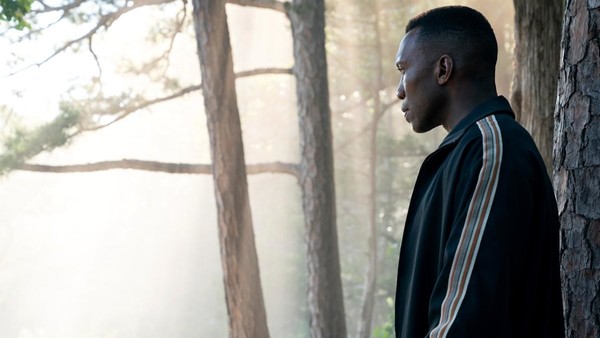
As mentioned, the finale to True Detective has proved divisive among viewers, with some fans and critics both finding it a disappointment given the grander conspiracy theories that had been hinted at, including those Season 1 connections.
It's an understandable feeling if that's what you were expecting, and to each their own, but this finale fits perfectly with what's come before. Not only does it echo the Season 1 finale - which again, some found disappointing - but it not only wraps up most of the season-long mysteries, but it resolves the character arcs in a way that fits with the bigger themes of the season. It's an intimate, emotional conclusion to a journey that was often the same, especially through the eyes of the older Hays. It gives enough answers to be satisfying, without being too neat, and makes for a powerful end to Hays' story.
What did you think of True Detective's ending? Let us know down in the comments.