True Detective Season 3 Premiere Review: 7 Ups & 3 Downs From Episodes 1 & 2
True Detective makes a return to HBO, and a return to form.

Exactly five years and a day since it made its stunning debut, and some three years, five months, and four days since it last aired, True Detective is back on HBO, proving that time really is a flat circle.
That second season soured many fans on the show, which became an instant phenomenon when Season 1 hit right at the peak of the McConnaissance. It's that reception HBO have been up against since, and may hurt Season 3's chances of success, but at least this go around they've taken their time, got creator Nic Pizzolatto a little bit of help, and found another Oscar-winning talent to lead the way, this time in the form of Mahershala Ali.
Season 3, which tackles the case of two missing children and plays out in three different time-spans, gets underway with a two-part premiere: 'The Great War and Modern Memory' and 'Kiss Tomorrow Goodbye', aiming to not only kick-start a brand new mystery, but remind viewers of why they loved the show in the first place.
So, crack open a can of Lone Star beer, pour one out into your Big Hug Mug, and let's take a look at what worked - and what didn't - in the first two episodes of True Detective Season 3. Warning: contains spoilers.
Ups...
7. It's Already Better Than Season 2

True Detective's second season was, simply, something of a mess. While most of the central performances weren't bad, the characters weren't as rich, and the tone was more in line with a bog-standard detective drama than the occultist, philosophising Season 1.
It didn't help, either, that the plot became such a convoluted mess that it seemed half the internet had to read Slate's 4,000 word breakdown of just what the hell was actually going on. The great news, then, is that even just two episodes in, True Detective Season 3 is better than Season 2.
Already there's a much greater sense of confidence in the show, and it feels like Nic Pizzolatto has got his mojo back (there's no denying that timing played a part in Season 2's lack of quality). There's a very clear setup, well-drawn characters, and a real sense of purpose about these first two episodes, suggesting, if not completely confirming, that this really is a major return to form for True Detective. Given how many had given up, that's no mean feat.
6. The Strong Supporting Cast (Especially Scoot McNairy)

The series has often focused heavily on the lead detectives, sometimes are the expense of the broader cast. That's less the case here, though, as all of the supporting cast - which really, could be considered anyone not called Mahershala Ali - are already starting to be nicely fleshed out and all contribute to the world and mystery building.
Stephen Dorff - who it's great to see given a good role here - gives a solid turn as Roland West, the partner of Ali's Wayne Hays. Their performances dovetail and complement each other well, with Dorff the more easy-going, verbose partner to Ali's more closed-off Hays. Carmen Ejogo, too, is excellent in a way the show's female characters often haven't been: more than just a romantic interest, but allowed to be empathetic, feminine, and three-dimensional. There's not quite enough of Ray Fisher as Hays' son, Henry, to get a good gauge, but the father-son dynamic with Ali does at least feel authentic.
Even better, though, are some of the townsfolk at the heart of the mystery. Michael Greyeyes only appears briefly, but gives a memorable performance that adds to its exploration of war vets (his character, alongside Hays and West, all served in Vietnam, and all have been changed by it), and Mamie Gummer does some delightful scenery chewing as Lucy Purcell, the furious and frantic mother of the two missing children.
Topping it all, though, is Scoot McNairy as Tom, the father of the two kids. McNairy has long been giving brilliant supporting performances that don't quite get enough recognition, and he's responsible for bringing so much emotion and grief to the 1980s portion of the episodes, helping to elevate it beyond a more standard mystery.
5. A Beguiling Murder Mystery
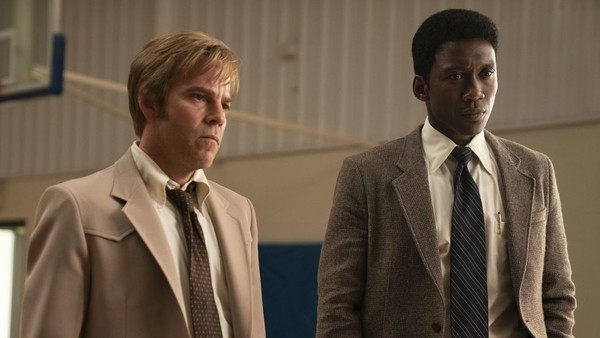
While the characters are important, True Detective wouldn't work if the mystery at its heart isn't compelling enough. It's that which pushed the first season to become a Reddit-breaking hit, and the second to fall flat.
Thankfully, Season 3's setup, so far, is much more in line with Season 1, although without just falling back on repeating the same old patterns. With the disappearance of Will and Julie Purcell, it looks to be a little straightforward, before things take a major twist at the end of the first episode: Will's dead body is discovered by Hays, in what is the new season's most haunting scene so far, but Julie is nowhere to be found. Then comes the double-whammy, as it turns out in the 1990s that Julie is actually alive, or so it seems.
We're given, then, mysteries on two different fronts, with suspects coming into the frame without quite fitting and new evidence coming to light. It maybe lacks some of Season 1's inherent weirdness, but there's enough creepiness here to suggest that won't be much of an issue, especially with those horrifying straw dolls (and, interestingly, a little nod back to the spirals of Season 1). It doesn't feel as convoluted as Season 2's mystery, but without oversimplifying things either, ensuring there'll be plenty of internet chatter and theorising as we move along, and enough to make sure you'll be tuning back in for more.
4. Seamlessly Handling Three Timelines

It's always something of a risk when a series decides to play with multiple temporalities, and True Detective's third season isn't just going for two, but three different timelines. Having two worked for Season 1, but will Season 3 be able to juggle a trio of them?
The short answer is yes. The main story plays out in 1980 - the day Steve McQueen died, we're told over and over again - with Detectives Hays and West investigating the disappearance of the Purcell children. It then follows that up in the 1990s, with Hays - now married to schoolteacher Amelia (Ejogo) and with two kids of his own - being made aware of new evidence. Then there's 2015, with an older Hays - in his 70s, with Ali under some incredible make-up work - giving an interview to a documentary filmmaker, the Purcell story becoming the subject of a true crime series in a nice meta touch.
What's impressive, though, is how Pizzolatto weaves all of these timelines together. Each period stands on its own, with important contributions to the story, but it's able to seamlessly transition between them, and often will overlay dialogue from one period on imagery from another, adding to the idea of how much this season is about time, memories, and our perception of them. It could've easily been an unnecessary gimmick that was forced in to recapture Season 1's magic, but instead, they all offer up their own piece of the puzzle, and come with three distinct performances from Ali to help.
3. The More Hopeful Tone And Themes

True Detective isn't suddenly a happy show, but there is definitely a shift in these opening episodes that moves away from the nihilistic tendencies of Season 1 or the all-consuming darkness of the second season. This time around, it lets a few rays of hope shine through, and they make a lot of difference in allowing this season to stand as its own thing.
Part of this is that Julie Purcell is still alive, which gives the case itself hope for finding the missing girl - or woman, in the 1990s - alive and relatively well. But it's something more than that, and comes from within Ali's Hays, his relationship with Amelia and partnership with West. He feels like much less of a figure doomed from the start, even if his past does haunt him.
With a much greater emphasis on the theme (and importance) of family, it lets in a little more light and plays with some different dynamics, highlight some more emotional storytelling too, with the scenes in 2015 especially crucial in adding poignancy to the whole saga.
2. Focusing On Just The One Character
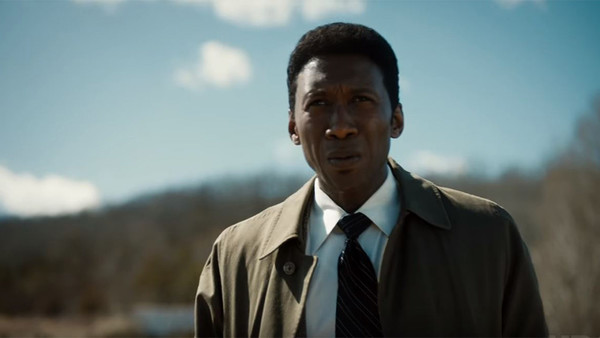
While Matthew McConaughey's Rust Cohle was the more attention-grabbing, True Detective's first season was very much a two-hander with him and Woody Harrelson's Marty Hart. For Season 2, in order to avoid the issue of replicating that dynamic, we were given a whopping four leads, which didn't work out. Now it's stripped all the way back to one. Dorff's West may be a partner detective, but this is very much about Wayne Hays above all others, and that actually serves the series well.
Hays is, from the get-go, a fascinating character. In the 1980s especially, he comes with a sense of internalised trauma and intensity just below the surface, but in essence we have three versions of the character, which makes it wiser to have him at the centre. The Hays of the 1990s is different to the man of the 80s, and the man in 2015 even more so.
It touches upon his race with surprising deftness, and the sense of him being an outsider even if he's not being racially abused. We hear of his past, but not always from himself, and see how much it's changed him over the years: he becomes harsher in the 1990s, when things aren't going so well for him, and then more emotional in 2015, when he's lost so much and is reflecting back upon things. Like Rust Cohle, he's a skilled detective, but that's about where the similarities end. Cohle was a great character, but Hays feels like a real person.
1. Mahershala Ali's Stunning Lead Performance
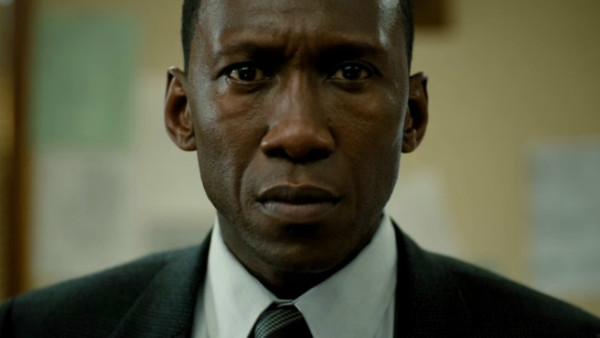
Of course, the key to Hays being such a great lead character is Mahershala Ali's performance. There's not a huge amount written for the character, due to him not being the loquacious-type Cohle and Hart were, and in lesser hands he might simply be an empty, brooding vessel.
Ali, however, imbues him with so much even when he doesn't say a great deal. He's capable of signalling meaning with subtle expressions, his eyes speaking volumes so his character doesn't need to. He expertly captures the sense of him being the kind of man's man PIzzolatto loves to inspect - he hunts boar, and served two tours of Vietnam - and yet there's a vulnerability to him too, and a genuine kindness as well.
Even when he's toning his natural charm down slightly, Ali remains charismatic and likeable, and what's really great is how he captures all three versions of Hays. He brings something different to each, without losing sight of it being one person at its core, and carries the show throughout the two episodes.
Downs...
3. Not Making The Most Of Its Setting
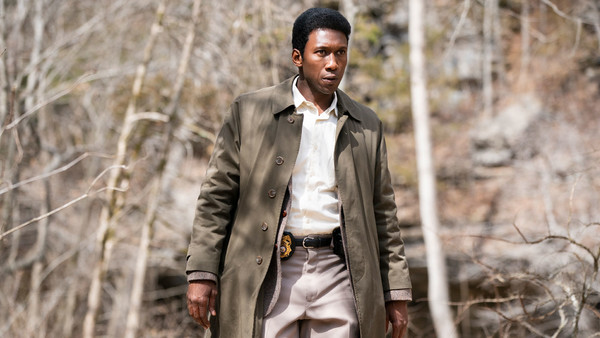
One of the elements that contributed to Season 2 being underwhelming was its setting, as it traded the otherworldly Louisana bayous for the cold hard concrete of Los Angeles stand-in Vinci.
Season 3 has the chance to get back to the stranger settings that worked wonders in the first season, with the story taking place in the Ozarks (a mountainous region across Missouri, Kansas, Oklahoma, and this show's focus, Arkansas). It's the kind of setting you might see lush hues of brown, red, and orange, eerie shades of green, or stark, barren trees. It should be a place you can get lost in, and that adds to the creepy atmosphere of the series.
Sadly, we don't really get any of that in the first two episodes. Save for a brief sojourn into the woods, there's little here to give us any realm sense of place, and definitely not to transform the settings into a living, breathing space that pulses with its own energy, which feels like a missed opportunity.
2. Jeremy Saulnier Feels Too Restrained
With Blue Ruin and Green Room, Jeremy Saulnier carved out a reputation as a true rising star of a director in the gritty area between thriller and horror, which meant him directing True Detective was extremely exciting.
Through both of these films, there was a clear style from Saulnier: his films not only managed to mix grim storytelling with real artistry, but he conjured up a real sense of claustrophobia, the intensity bubbling away until eventually it boils over, and things explode into visceral violence, with his depictions of such as inventive as they are gruesome.
While these episodes are well shot, nicely paced, and generally have some solid direction, it also feels like Saulnier's voice has been lost. There's been talk of major creative differences between him and Nic Pizzolatto, which resulted in Saulnier departing the project earlier than expected (although the official reason was 'scheduling conflicts'), and this perhaps gives us some insight here. With a murdery mystery, Saulnier's style should've worked easily to help craft that searing intensity, and given the season a clear sense of identity (much as Cary Joji Fukunaga did for Season 1), but instead it feels like he's been massively restrained, and that's something of a letdown.
1. It Shouldn't Have Been A Two-Parter

HBO are obviously hoping that the return of True Detective also means a return of the hype that once accompanied the show, and as such, they decided to make the premiere a two-hour event.
The second episode, Kiss Tomorrow Goodbye, does some great character work and further expands the narrative and central mystery, and in its own terms it is a solid episode. However, it also loses something by coming straight after the season opener, The Great War and Modern Memory. The big reason for this is the ending of the first episode, which plays out in absolutely stunning fashion: the chilling discovery of Will Purcell in 1980, followed by the shock reveal of Julie Purcell still being alive in the 90s.
It's the kind of ending that makes a real statement, and almost certainly would've had the kind of impact the True Detective of old did with regards to people talking about it and speculating as to what comes next. It would've been great to sit with that double-reveal for another week, rather than robbing it of some of its power with a more standard follow-up.
What did you think of True Detective's first two episodes? Let us know down in the comments.