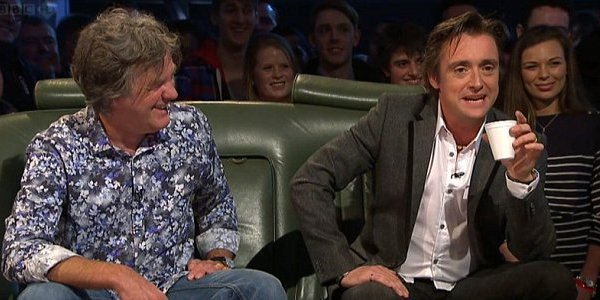
Love him or hate him, it seems that Jeremy Clarkson is no stranger to controversy. Whilst it is nothing new to see news reports of something he has said, and the reaction it has caused, there are many who believe that now he has gone too far; allegedly mumbling the word "n*gg*r". Although he seems to create controversy almost wherever he goes, through his own newspaper columns, books, or TV interviews, this particular incident occurred whilst filming an episode of Top Gear, a series which attracts what has to be an unparalleled number of complaints for what is undeniably one of the BBC's most popular shows. Despite the fact that viewers all over the world laugh at the antics of Clarkson, James May, and Richard Hammond, there are also those who find them unacceptable, and will often speak their own mind when complaining to the BBC about it. In addition to these, there are also those who take things to Ofcom itself. The Office of Communications, to use it's full title, is the governing body to which all UK broadcasters must answer, specifically in terms of adhering to the Broadcasting Code..Something which Clarkson and the Top Gear team have come to know well, Rule 2.3 in particular; "broadcasters must ensure that material which may cause offence is justified by the context". In order of the number of complaints received by Ofcom, here are those five Top Gear moments which the viewing public deemed offensive enough to take to the highest power in UK broadcasting standards.. Warning: As the title suggests, this article contains material that many have found to be offensive.
5. Speciale Needs
Controversy: Clarkson's mouth got the show in trouble, and the BBC having to justify itself, when he described the Ferrari F430 Especial as looking "like a simpleton", before dubbing it the "430 Speciale Needs Complaints: 2 Outcome: Ofcom decided that "while obviously intended as a joke and not aimed directly at an individual with learning difficulties, the comment could easily be understood as ridiculing people in society with a particular physical disability or learning difficulty." A sentiment which was acknowledged by the BBC, and the comment was removed from subsequent broadcasts, as well as the BBC's online iplayer service. As such Ofcom considered the matter resolved.
4. Ginger Beer
Controversy: For a show with such an outspoken presenter as Jeremy Clarkson, it may be a surprise to some that Top Gear's first Ofcom complaints originated with an audience member who described a Daihatsu Copen as "gay". Clarkson soon agreed with (and repeated) this statement however, and then added his own cockney rhyming slang description of its a bit ginger beer .Complaints: 5 Outcome: For any complaint to Ofcom, there are also invariably more to the BBC itself. As such the decision made by the Editorial Complaints Unit, that "in this instance there was no editorial purpose which would have served to justify the potential offence and the complaints were therefore upheld the Executive Producer of Top Gear has reminded the presenters and the production team of the importance of avoiding derogatory references to sexual orientation", was also the Corporation's statement on the matter. Although Ofcom considered this to be a reasonable reaction by the BBC, and the issue to be resolved, Top Gear apparently failed to learn from it.
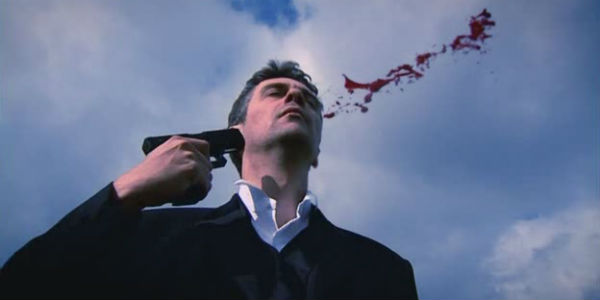
3. Suicide
Controversy: Somewhat unique for Top Gear controversies, this one was not caused by something that was said, but rather by something that was shown. When challenged to produce a new TV advert for Volkswagen, Clarkson and May came up with an idea that included a desolate man committing suicide. By shooting himself in the head. Fairly graphically. Complaints: 50 Outcome: Although Ofcom decided that severed arms were justifiable, ultimately Rule 1.11, "violence to be appropriately limited before the watershed" was deemed to have been breached by the shooting: "it was precisely because Top Gear is an established entertainment programme which features a typical sort of humour that many viewers including some adults watching with children - would not have expected such a violent scene to appear. Ofcom noted there was no information before the spoof advertisement was shown which would have prepared viewers for its potentially disturbing nature and alerted adult viewers to the fact that it may be unsuitable for younger viewers."
2. Mexican Stereotypes
Controversy: When discussing a Mastretta sports car, which May dubbed "the Tortilla", all three presenters decided to focus on it's Mexican heritage, rather than technical attributes. Whilst stereotyping foreign nationalities is nothing new to the show, descriptions such as "Mexican cars are just going to be a lazy, feckless, flatulent oaf with a moustache, leaning against a fence, asleep, looking at a cactus, with a blanket with a hole in the middle on as a coat. are hardly examples of fine journalism. Complaints: 157, plus . Outcome: Despite the Mexican ambassador demanding an apology from the BBC, this particular episode was seen to comply with rule 2.3. Ofcom stated that "the majority of the audience would be familiar with the presenters approach to mocking, playground-style humour, and would have considered that applying that approach to national stereotypes was in keeping with the programmes usual content, and the presenters typical style". The fact that the same episode also featured several jokes at the expense of Australians was also a factor, cited as evidence that no one country was being singled out individually.
1. Murdering Prostitutes
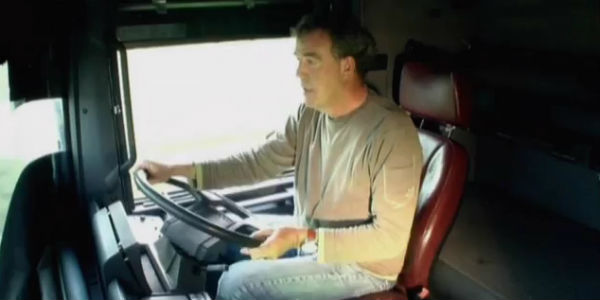
Controversy: Perhaps unsurprisingly, it was the words of Clarkson alone who received the most complaints. When driving a Heavy Goods Vehicle, he posed the question of "What matters to lorry drivers", one possible answer, he decided, was "Murdering Prostitutes". As if this wasn't enough, he also described how hard a lorry driver's job can be, "change gear; change gear; change gear; check your mirrors; murder a prostitute; change gear; change gear; murder".Complaints: 339 Outcome: Despite receiving more complaints than the other four controversies combined, it was decided that Clarkson had not breached 2.3, as Ofcom "did not believe the intention of the comments could be seen to imply that all lorry drivers murder prostitutes, nor would it be reasonable to make such an inference." Whilst he certainly has his supporters, who consider him to be a bold breath of fresh air in a Politically Correct world, it seems that Clarkson's words, and controversy go hand in hand. Although those which have been reported most recently may so far be the worst, if this collection is anything to go by, they will hardly be his last.