Thunderbirds Are Go! - 5 Things It Got Right (And 5 It Didn't)
F.A.B+ for effort, but could do better.
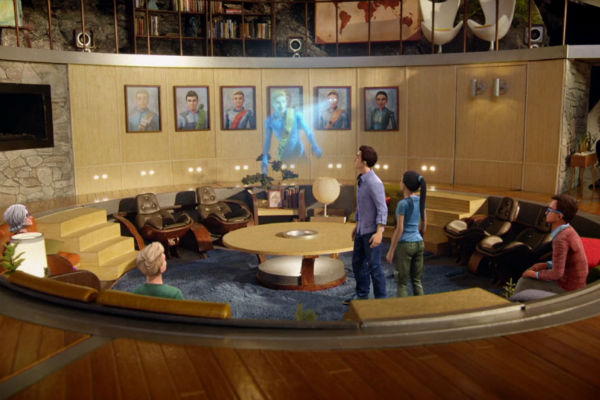
Like many great visionaries, Gerry Anderson was never one to be content with his achievements and just settle into retirement. Far from it in fact, and like a true perfectionist he instead believed that despite an impressive career spanning six decades, his most celebrated series still had untapped potential.
Alzheimer's may have claimed his life early in this new show's development, but considering Thunderbirds' own 50th Anniversary ended with a Tracy Island playset as a Christmas list favourite yet again, it's safe to say Anderson's enduring legacy is far from in any need of rescue.
As a rebooted series Thunderbirds Are Go was always fated to endure comparisons, and although it may have created yet another generation of fans, those who remember the original from its first, second, and even third broadcasts (not to mention DVD releases) have met this latest instalment with rather a mixed reaction. More than just the adults failing to find a healthy dose of nostalgia though, you know the series isn't quite what it could be when the 10 year old giving a Radio Times review would "prefer to watch the old ones."
AlmostfFive years to the day since Anderson's inital announcement of its development, this weekend saw the first season of Thunderbirds Are Go finally come to a conclusion in which the Tracy brothers themselves wonder if they could truly trust one of their own. Whether audiences are waiting for the second season, and the answers to the Hood's warning, with impatience or indifference, what better time than to take a closer look at those aspects which have been dividing them over the past 26 episodes....
10. Ring Of Fire
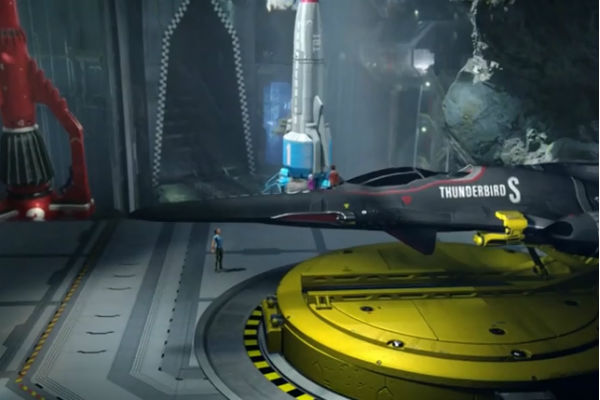
Whilst it may be the most important, in theory the job of a pilot episode is rather simple. As an example of what the series will be like, it is used by TV companies to decide whether or not investing their money will be worthwhile, and by audiences deciding whether or not to invest their time. Although it's not unusual for most pilots to start their respective shows with more bang for their buck than a regular episode, none do so quite to the level of Thunderbirds Are Go.
First broadcast in a family oriented time slot, the hour long episode Ring Of Fire looked as though ITV had finally found something to rival Doctor Who in the battle for Saturday Night supremacy. It was an action packed adventure filed with comedy and tension that, in short, was the perfect blend between the old and the new. The only problem (and it is rather a large one) is that it promises a fantastic new series that just never gets delivered.
Of all the changes from the original the biggest has to be that of Tin-Tin who, alongside a name change inspired by a copyright dispute, has joined Lady Penelope in turning International Rescue into more of an equal opportunities organisation. Although Kayo may have appeared throughout the full series more frequently than Gordon, becoming the recipient of the brand new Thunderbird Shadow, only for it to be grounded for pretty much the entire first season is something of an underhanded gesture. The fact it almost appears to crash while launching is rather ironic given that it's not seen until just three episodes from the end of the series, and when you also consider that she's had to join the queue behind Black Widow in waiting for her own action figure, you can completely empathise with Kayo's disillusionment in Touch And Go.
But this is just the start of where Ring Of Fire effectively decieves the audience at home. It's hard enough when regular episodes of any series don't live up to a pilot, but if it was more in line with the rest of the series by design, then surely the more dissapointed members of the audience might at least have been a bit more understanding.
9. It's Only Aimed At Children
When it comes to re-imagining classic TV series, there is a difference between what the producers can't, and don't get right. You don't choose to have budget and time constraints, but you can choose to limit the audience you're aiming your show towards. Targetting the show solely at children rather than fans of all ages was a conscious decision, the one which has received the biggest criticism, and may very well have been made by those who focus on words like 'demographic' rather than the actual viewers sat at home.
Regardless of when it was broadcast, Thunderbirds attracted whole families of audiences not just out of nostalgia, but because it was a show that entertained fans of all ages. By aiming Thunderbirds Are Go just at children, not only have the new producers alienated a large portion of the existing fanbase, but when you consider that the fanbase consists of countless generations, they're more than halving their potential audience figures before they've even started.
It's also a decision which seems even more bizarre when you consider the writers for the series as well. Yes, most of those who penned each of the episodes have written extensively for Ben 10 and the DC/Marvel cartoon verses aimed at those who are too young for their cinematic counterparts, but it's not as though they haven't written for an older audience either. They've also worked on series such as Monk and Beavis & Butt-head, and Recharge writer Amy Wolfram even started her career on Undressed, a series which jumped on the Sex And The City bandwagon. And this is to say nothing of comedian David Baddiel who is certainly better known for his adult material rather than his children's novels.
After entertaining everyone with the pilot, regular episodes were also relegated to the traditional kids only time slot of Saturday mornings. While the majority of those rallying against the CGI updates right from the start were long time fans (ie: adults), it still would have been common courtesy to invite them to the party, than assume they'd just rather not come.
8. CGI And Physical Models Don't Always Blend
Though best known for his work with physical models and puppet based Supermarionation, Gerry Anderson was in fact eager to use whatever medium was at his disposal. This went on to include live action (Space: 1999), hand puppets (Terrahawks), even claymation (Dick Spanner, P.I.), and eventually 'Hypermarionation' CGI with his New Captain Scarlet series in 2005.
Keen to get the best out of whichever techniques he used at the time, he also wasn't averse to experimenting, although his first (and only) foray into combining them resulted with his 1969 series The Secret Service being largely forgotten. Although not quite to the same degree as mixing puppets with live actors, the main problem with using techniques that have such specific styles is the danger of it becoming all to obvious when they don't compliment each other.
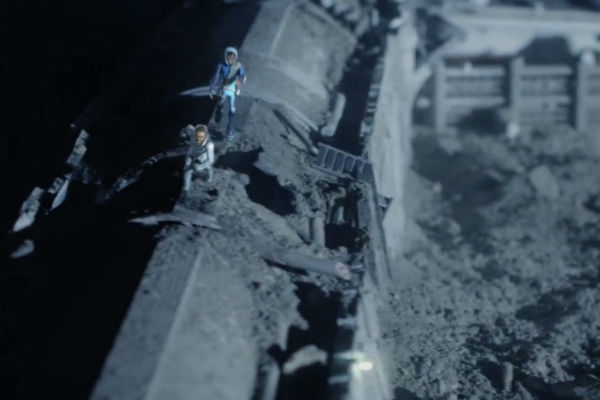
Throughout the majority of the series the portrayal of CGI characters 'acting' in physical sets does work brilliantly, especially when the union has to be seamless in order to compliment various camera movements. Where the join doesn't work however is often where it needs to most, during the action oriented scenes. Regardless of how much tension was meant to have been created, watching obviously CGI characters run across an obviously miniature lunar base pulls you out of the moment with the effect of the scene having no more atmosphere than the actual moon.
As the most basic building block to the series itself, it's something that jumps out right when you don't need it to, and being reminded that half of what you're watching isn't really there just leaves you wondering if the other half shouldn't be either.
7. The Episodes Are Too Short
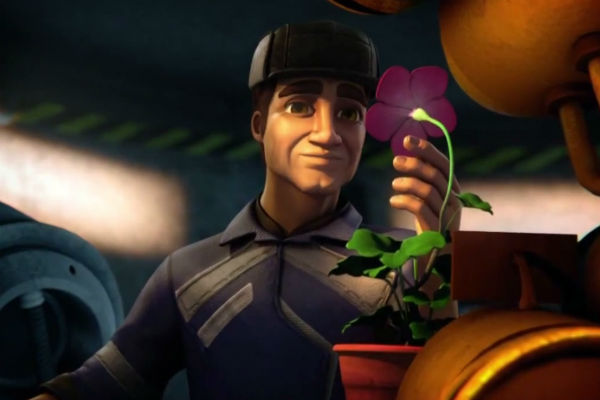
Admittedly there's not much inherently wrong with each episode being only 22 minutes long; Thunderbirds Are Go does manage to tell a basic story with a beginning, middle, and end, but misses out on so much more by doing so. When first commisioned, the only criticism of Thunderbirds was that each episode was too short, forcing Anderson and co. to extend them. Either this is criticism that seems to have been forgotten in the intervening years, or the new series was never intended to fully compete with the original.
At a full hour the original episodes were able to tell not just a complete story, but flesh it out with those in need of rescue receiving sufficient backstories to their situations, while those doing the rescuing had the time to become fully rounded individuals. As much as the new series hints at the relationships between the Tracys (on the seldom occasion it has time to include them all), they're still not much more than wide brush strokes and repeated jokes about Grandma's cooking.
Those in dangerous situations also need rescuing from much more than just their predicaments, as despite guest appearances in three separate episodes, Ned Tedford is still nothing more than a cliché with an accent. Although there are those episodes which do spend time on the characters, this focus often comes at the expense of everything else, and they stand out not as anything special but by removing any sense of consistency in the series as a whole.
More than this though, in order to fit everything into these episodes there is often one that often needed to be cut, which was just unforgivable.
6. The Rescues
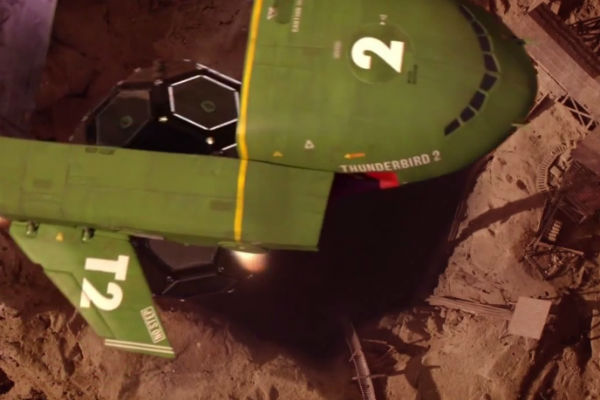
International Rescue combines the best qualities of technological and aeronautical development, with those of a family business. Each week the original series would follow hapless citizens who get locked in a bank vault because no one thought to go and check it was empty, or lose control of a deforestation behemoth thanks to extreme food poisoning, and each week the Tracy family would wheel out yet more ingenious vehicles designed for increasingly bizarre situations.
Thunderbirds Are Go on the other hand, admittedly produced in this modern age of health and safety regulations, has for some reason decided that the rescues themselves are a reasonable thing to occasionally do without. Again something which featured heavily in Ring Of Fire, in other episodes they are merely a peripheral part of the storyline, and those such as EOS don't really have one at all.
Yes they do still keep the action quota, and Grandma's Unplugged speech about relying on yourself rather than technology is welcome advice to a generation who have never experienced life without it, but it's often hard to enjoy the show when it feels like it's missing the central premise. In a moment of art imitating life, surely it wasn't just Alan to feel short changed at the anticlimax of Thunderbird 1 launching for the sake of a driving lesson in Designated Driver.
You might not be able to have everything, but for all of these elements of the show which either don't work or just aren't there, there are still those which show how Thunderbirds Are Go is upholding a legacy that entertained entire generations over 50 years ago. In several ways the show is able to hold it's own against a cult classic, and there are also those occasions it manages to out shine it too...
5. The Pod Vehicles
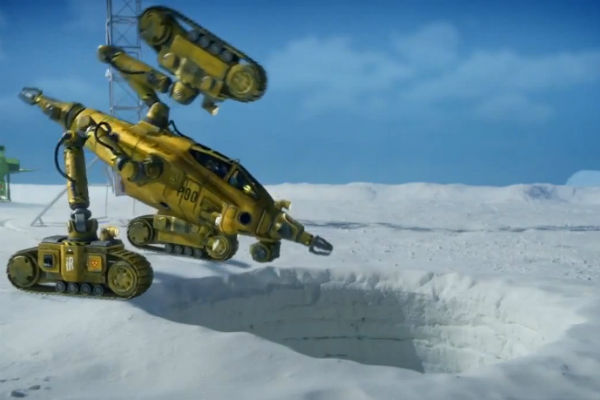
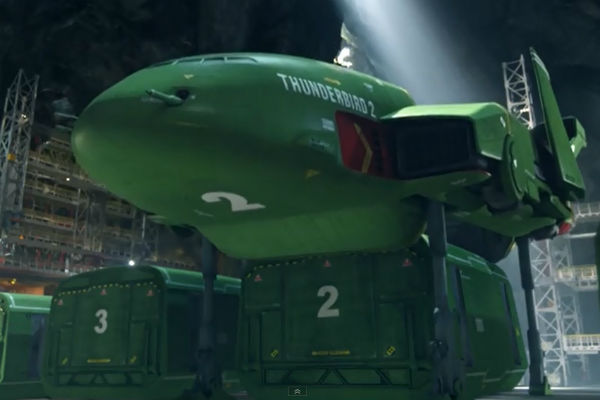
Just as the original Tracys would never know what rescues would be thrown at them each week, fans would never know what to expect emerging from the belly of Thunderbird 2's numerous pods. Typical of the 1960s, which produced a whole range of fantastical craft competing for the audiences attention, these pod vehicles came in all shapes and sizes, with a variety of uses. Although their essence has been kept in tact, it is these vehicles which have been given the biggest makeover in Thunderbirds Are Go.
Looking at it now in a post-Nolan world, one in which even the most fantastical ideas still keep one foot firmly grounded in reality, it goes without saying that for all their ingenuity the sheer number of pod vehicles really wasn't that practical. In order to solve this, the latest International Rescue instead utilise a smaller number of craft, but which are adaptable to a wider range of conditions.
With more accesories than a Swiss army knife on over-drive, Thunderbird 2's pods (referred to instead as modules) can now outfit a multipurpose vehicle (almost confusingly called pods) with any number of add ons for any occasion that may arise. Like the show itself, the final result is that the pod has been adapted to suit the latest needs of the landscape that now presents itself, without removing the eagerness of modern audiences waiting for what will appear each week.
For all the changes that have been made however, the Mole is still undeniably the Mole, and no one can complain about that.
4. Gerry Anderson References
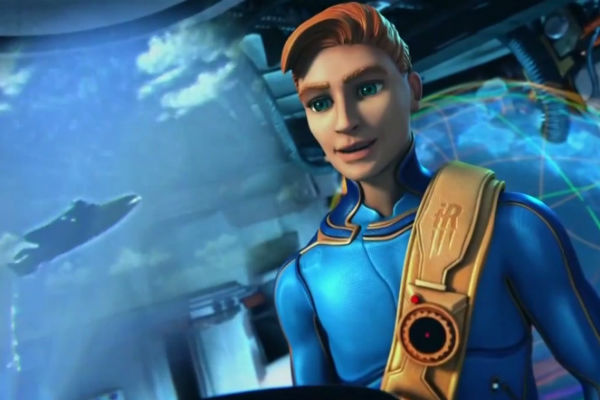
More than just the succsesor to the original series, Thunderbirds Are Go comes after a whole host of other series Gerry Anderson created over six decades. While this might be enough material to reference until the actual year 2060, Thunderbirds Are Go has managed to tread that fine line between paying homage to what has come before, but without spoiling the effect by over doing it.
Right from the start of the series we see John watching Stingray, which he describes as his favourite show, but the others are rather more subtle. Something which only the more dedicated Anderson fans would pick up on, not only is the lunar base Shadow Alpha One named after elements of both UFO and Space: 1999, but Professor Moffat's Centurium 21 could only have been named after Century 21, Anderson's own production company.
References might not seem like much on their own, but it is small details such as these which show that regardless of whatever restraints were placed on them in regards to episode length or intended audience, those who made the actual series itself did so with the knowledge, respect, and love for what came before.
Specific Thunderbirds references throughout the season also range in scale from remaking the pilot episode Trapped In The Sky as Fireflash, to the seemingly insignificant detail of adding a lemon squeezer to the back wall of Thunderbird 1's launch bay. Something which features in another area the show proved to excel at.
3. The Launches
Classic sequences which were born as much out of nessecity as choice, the intricate ways in which the Tracys would board the Thunderbirds were devised for a number of reasons. Not only did extending the episodes to an hour require something to fill out the scripts that had already been written, but as can be seen by watching any Supermarionation show, it really is a case of the less walking that puppets do the better.
The final product was something that became a staple of the classic series, and after the loving tribute from Wallace & Gromit it was something that Thunderbirds Are Go had no choice but to treat with absolute respect. Rather luckily then, it is where the advantages in CGI technology are given a place to shine. Not only are there no more strings to become tangled in the web of complex machinery, but with a virtual world being vastly larger than a warehouse in Slough, the Tracys are able to reach ever deeper into the depths of Tracy Island.
More than this though is the extra detail which has been added. Not only has everything down to the folding trees been maintained, but now there are also the pool loungers that get blown away in Thunderbird 1's wake, to say nothing of how articulated Alan has become on the way to each rescue. His impatience at rocketing towards Haley's Comet perhaps being the one that stands out amongst his different reactions each time.
Aided by a new musical score which also more than holds its own against Barry Gray's high standards, the main addition that the originals were lacking is also one that a group such as International Rescue might consider rather important: a sense of urgency.
2. The Cast
Regardless of how it is made, it is lovable characters which will keep people returning to a series time and again, and it is in this respect that real flesh and blood can never be replaced. They may not be seen on screen, but that didn't stop a whole host of talented actors from truly bringing the Tracys, as well as all their friends and foes, to life.
As the basis for their characters, each of the actors is given free reign with their performance, which the CGI visuals then have to match. Casting each character is therefore the very first step for everything that follows, and proves what strong foundations Thunderbirds Are Go has ben built on. Including Bond Girl and Oscar nominee Rosamund Pike, the regular cast of the show is made of both recognisable talents as well as the more unsung heroes who specialise in voice work, often not getting the recognition they deserve. Voice artists such as David Menkin who not only takes on the roles of both Virgil and Gordon, but by doing so often had to have conversations with himself, in two different voices, during the recording sessions.
Joining the main cast (which also includes Kayvan Novak, and Merlin's Angel Coulby) for individual episodes has also been a number of famous comedians including Rich Hall, and Jack Whitehall, although these are far from the shows more special guests. Despite having passed the torch of their most famous roles, original cast members Matt Zimmerman (Alan Tracy), and even co-creator Sylvia Anderson (Lady Penelope) granted their seals of approval by making guest appearances as Professor Harold, and Aunt Sylvia.
They may have only appeared in one episode each, but there was one character the show wouldn't have been complete without, and whose actor was more than happy to appear for the entire series...
1. Aloysius Parker

Despite appearing in only half of the original episodes, Aloysius Nosey Parker still managed to become a stand out success in what is one of Britain's most iconic series. Capturing the hearts of fans everywhere, it was he who would be the yardstick with which Thunderbirds Are Go would be measured, and passes with flying colours.
Parker's highly recognisable and rearranged h'aitches meant there was only ever one man for the job when casting such a hugely loveable character, and one who jumped at the chance to voice him once more. Already an Anderson veteran when first cast in a variety of roles back in 1965 (he also voiced Brains and Gordon among others), David Graham copied Parker's voice from a wine waiter who had himself previously worked for the Queen.
Although arguably on the lowest rung of the International Rescue operatives' career ladder (even if he did try to teach Kyrano a thing or two about butlering), Parker was given a surprising amount of backstory, with more depth than even that of ex-Astronaut and IR founder Jeff Tracy. An ex-con who had spent time in jail, he was still an expert safe cracker, and was once hired by the Bank of England to test the security of their vault. Not only was this a challenge that he overcame with a mere hairpin, but did so in mere seconds.
A scenario highly familiar to anyone who saw The Hexpert, a new episode based on the original Vault of Death, it is something that shows when remaking the elements that really matter, the producers of Thunderbirds Are Go didn't forget the most important lesson of all:
If it ain't broke, don't fix it.