The Star Trek Conspiracy Iceberg Explained
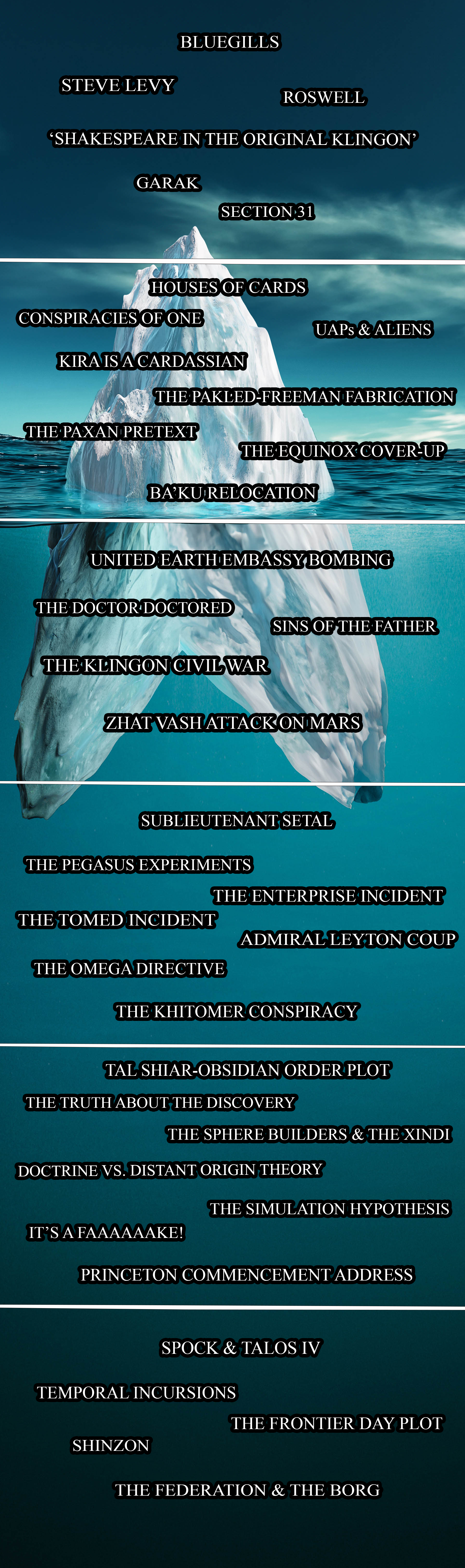
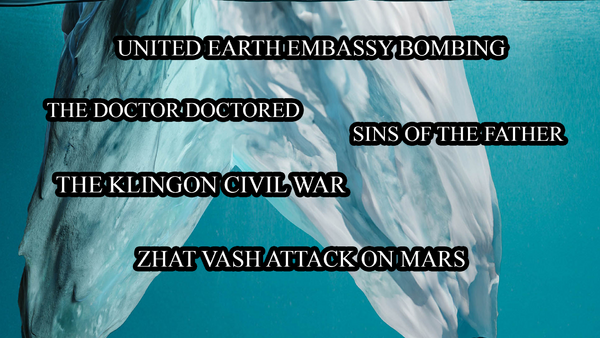
38 entries, 6 tiers. Let's dive into the shadowy waters of the Star Trek Conspiracy Iceberg.
Star Trek has offered a surprising number of conspiracies over the years. So many, in fact, that we're finally embracing the iceberg list format. For those unfamiliar, an iceberg list (or chart) takes the elements of a particular topic and categorises them by level of complexity or obscurity — moving from above the surface of the iceberg to the hidden depths below.
Our iceberg will be composed of six tiers. In tier one at the tip of the iceberg, the conspiracies will be largely the most well-known of Star Trek — the least convoluted or fringe. Down and into the icy waters towards tier six, the conspiracies under discussion will become more and more niche, more elaborate, and even just a little far-fetched.
We have populated this iceberg list ourselves to cover as wide a range of conspiracies as possible from across the franchise. We will, however, be avoiding episodes such as Court Martial, Dagger of the Mind, and Whom Gods Destroy, as they deserve different considerations than the label 'conspiracy'.
By 'conspiracy,' we also mean 'conspiracy theory'. The history of humanity, of Starfleet and the Federation, and of all the aliens in between seems to turn on them. The 'Conspiracy Truthers' from Tulgana IV have their work cut out. As do we.
Oh, what a tangled web we weave…
6. TIER ONE
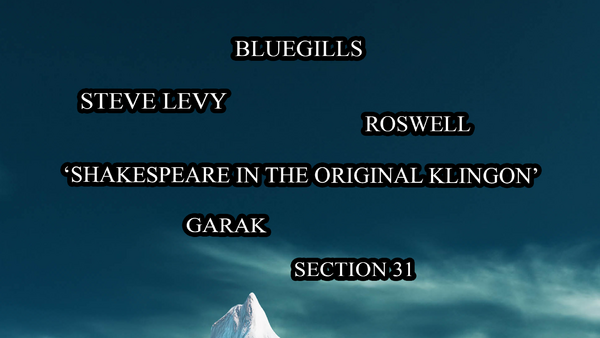
Bluegills
In the mid-2360s, something was seemingly very wrong at Starfleet Command. There were strange orders, irrational proposals, mysterious deaths, and long-time colleagues were "bluffing their way through talk of old times". Some, like Admiral Quinn and Captain Tryla Scott, quietly voiced their suspicions before becoming part of the plot themselves. Others, like Admiral Satie (more on her a bit later), played a part unknown. Others still, like Captain Keel and crew of the Horatio, were completely silenced, ending in a debris field.
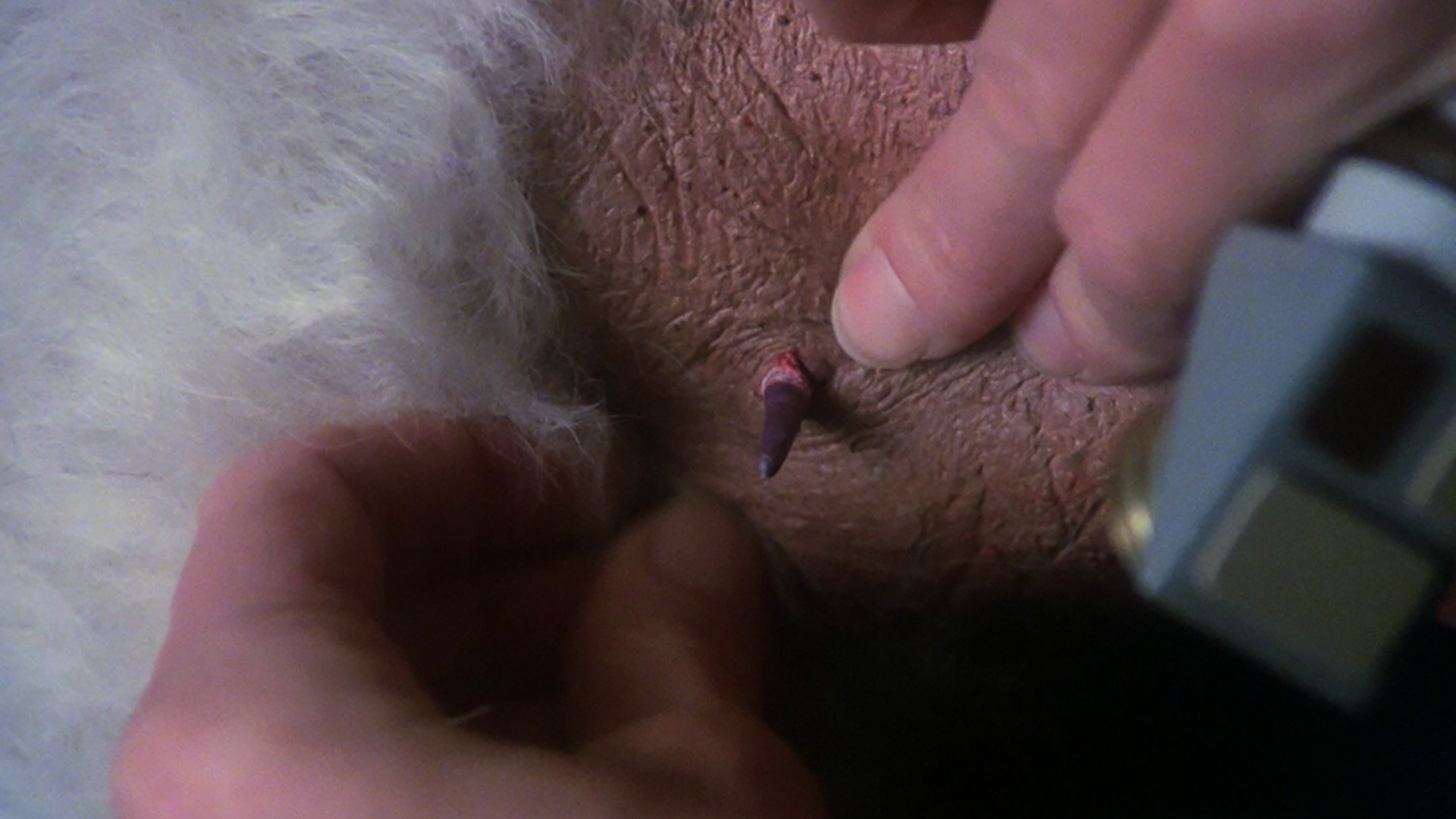
Starfleet had been infiltrated, slowly and meticulously, by a race of parasitic beings known colloquially as the 'bluegills'. Accidentally encountered by a Federation survey team on an uncharted planet, these small, insect-like creatures used humanoid hosts as their puppets. To take control, they forced their way in through the mouth and wrapped themselves around the victim-host's brain stem.
The only sign of infection was a small, blue gill protruding from the back of the neck. This was their downfall. A little fakery on the part of Doctor Crusher allowed Commander Riker to do some infiltrating of his own at Starfleet HQ. Both he and Captain Picard were able to dispatch the 'mother parasite,' and Commander Remmick along with it. With that, its 'offspring' scurried off to die.
The 'homing beacon' that 'mother' sent out beforehand — a map to Earth for fellow bluegills — is still presumably crossing the galaxy. Worse, if those 'conspiracy truthers' on Tulgana IV are to be believed, the so-called "butt bugs" never left Starfleet at all…
Steve Levy
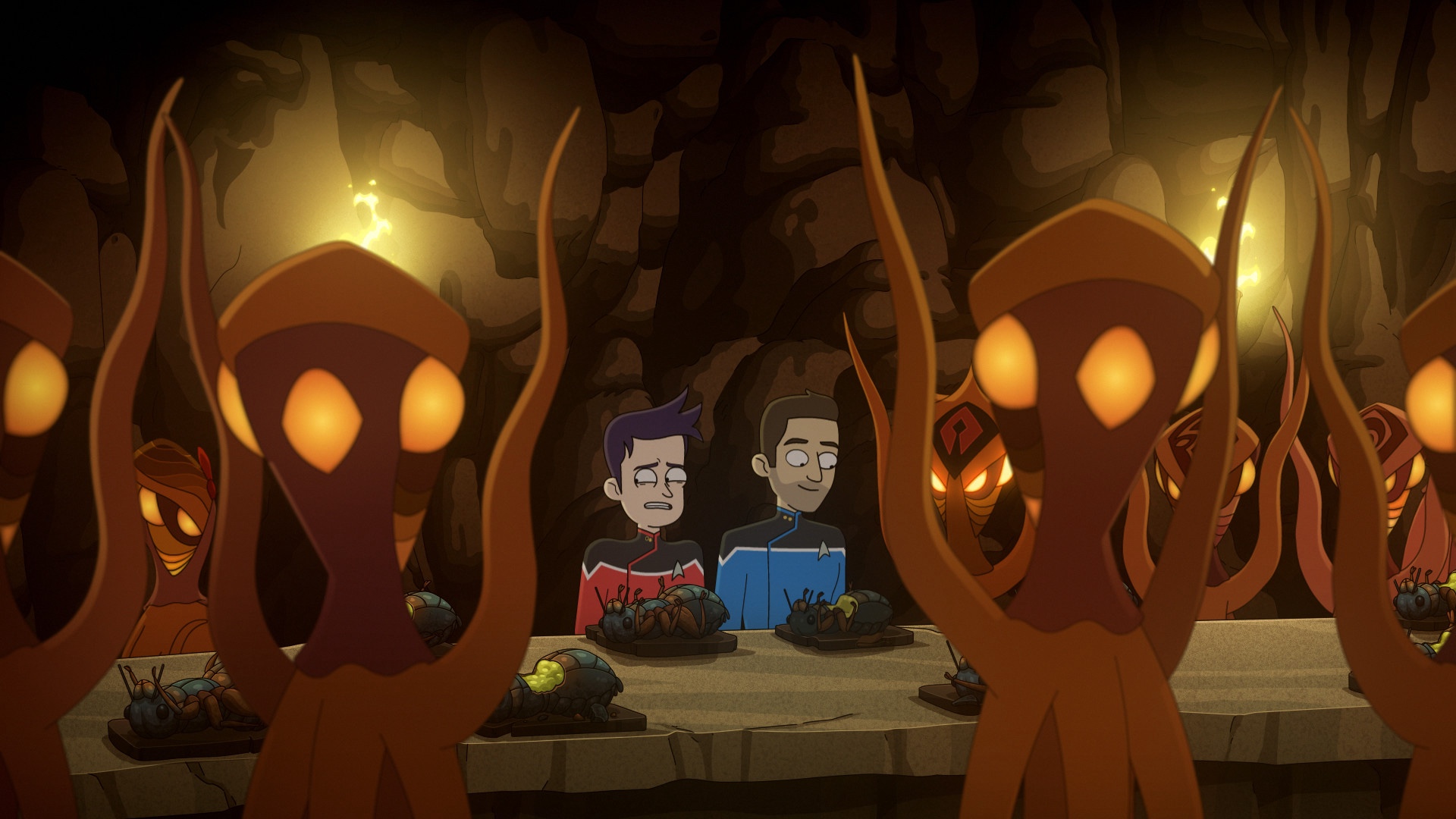
Lieutenant Steven 'Steve' Levy of the USS Cerritos was a walking set of conspiracy theories unto himself: "Changelings aren't real"; "the Dominion War didn't happen"; "Wolf 359 was an inside job." Well, if you think about it, he was sort of right about that last one. In amongst the "mansplaining" of various types of headwear, Levy was most certainly wrong about the rest.
That was until an encounter in a cave on Kyron 4 with Lieutenant j.g. Brad Boimler. What Levy thought was a "Vendorian morality test" turned out to be a Vendorian morality test. All that time he'd spent on those "subspace forums" wasn't for nought! However, as the Vendorians themselves put it, they did not "do the Klingon civil war" — stick around for that lower in this iceberg — nor did they falsify data about warp speed damage to subspace. They did still "lay brood pods in throats"!
Roswell
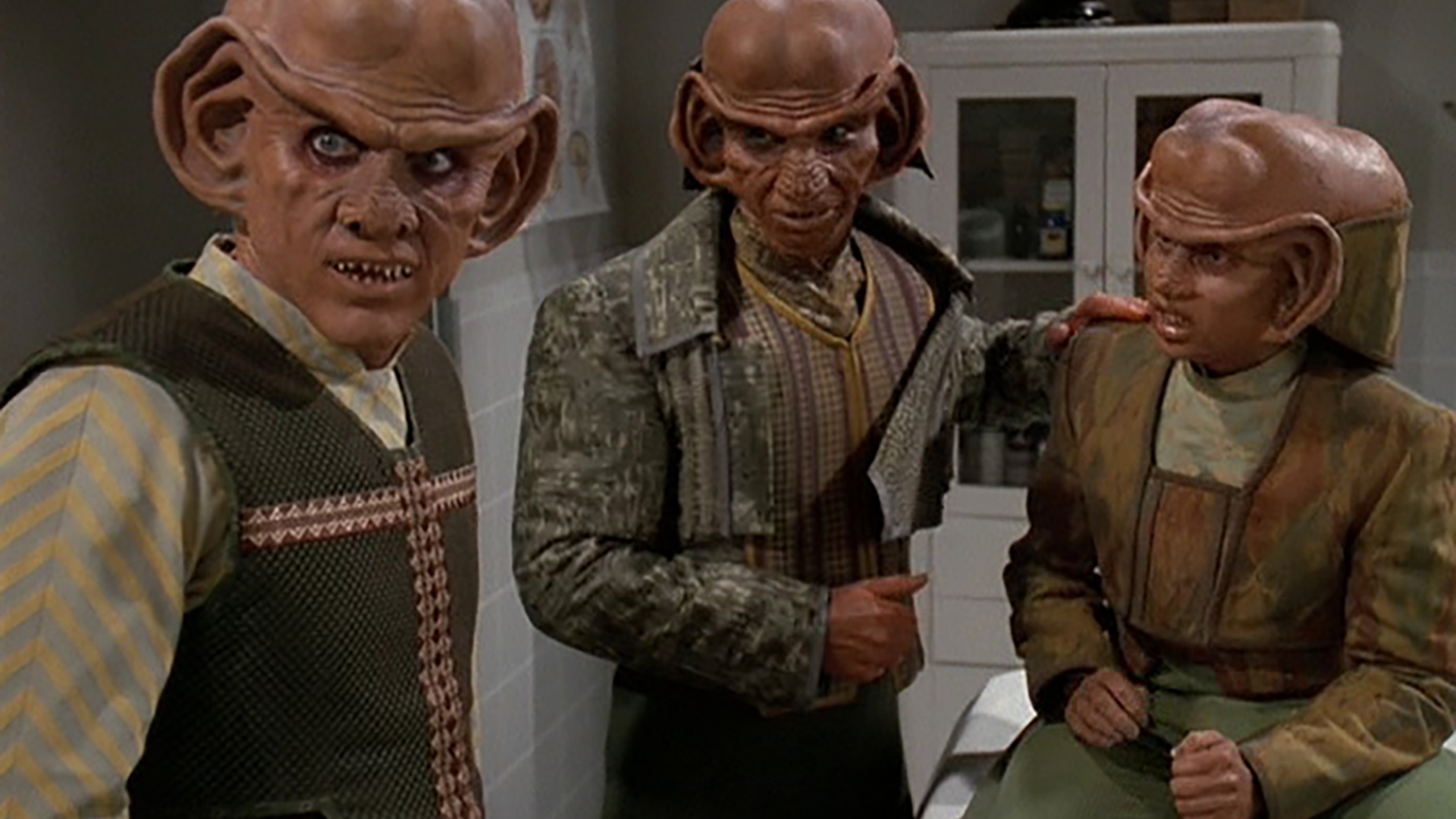
The 'Roswell Incident' of 1947 is one of the most famous UFO/alien conspiracies. First reported as the capture of a 'flying saucer' by the US Air Force, the official account soon switched to 'weather balloon'. In reality, there was an alien encounter in New Mexico that year, though it was far more Ferengi than little green men.
The 'true' story of Roswell began in the 24th century with an outwardly innocent trip to Starfleet Academy for Nog. Quark's sudden generosity should have been the first sign of trouble — an apparently spotless ship from cousin Gaila, the second. The shuttle — now named 'Quark's Treasure' — was, of course, sabotaged and smuggling kemocite. The rest of Roswell was Rom's genius, time travel, and tobacco smoke.
More on alien visitations to pre-warp Earth later.
'Shakespeare In The Original Klingon'
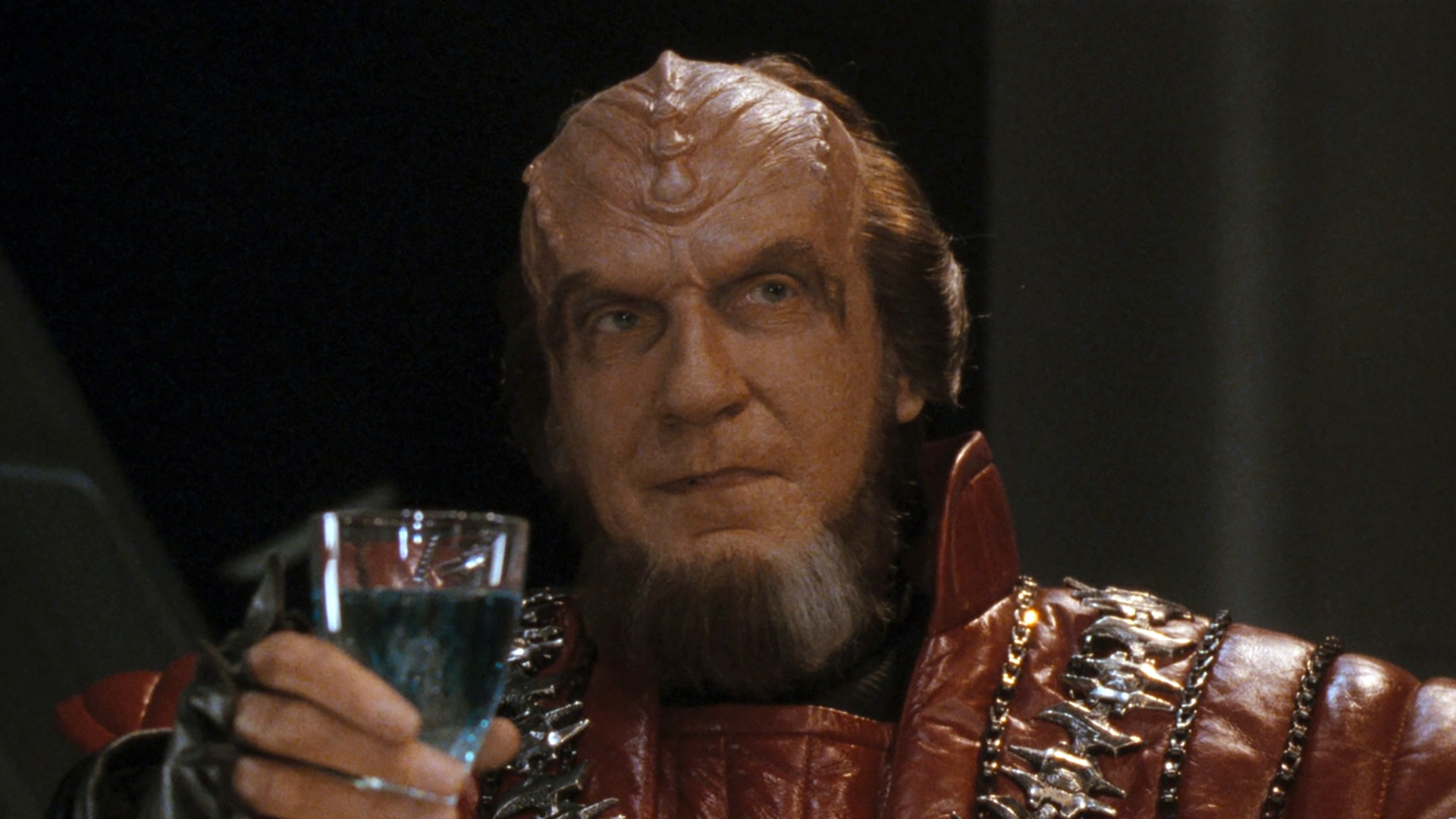
Chancellor Gorkon was perhaps joking or making a power play when he said, "You have not experienced Shakespeare until you have read him in the original Klingon". By then, the so-named 'authorship question' had been a conspiracy theory for hundreds of years.
Since the mid-19th century, in fact, various so-called 'Anti-Stratfordians' have asserted that Shakespeare was not — or could not be — the author of his works. More troubling, certain fascist regimes have also tried to claim the Bard of Avon as their own. Whether Shakespeare was actually a Klingon living in Elizabethan England remains to be seen.
Not long after Gorkon had met his end aboard Kronos One, and in a similarly curious vein, Spock famously noted that, "An ancestor of mine maintained that if you eliminate the impossible, whatever remains, however improbable, must be the truth". Those were the words of Sherlock Holmes, but the pen belonged to Sir Arthur Conan Doyle. Spock's lineage is not a conspiracy per se, but that comment was odd enough to have been the subject of a few theories.
Garak
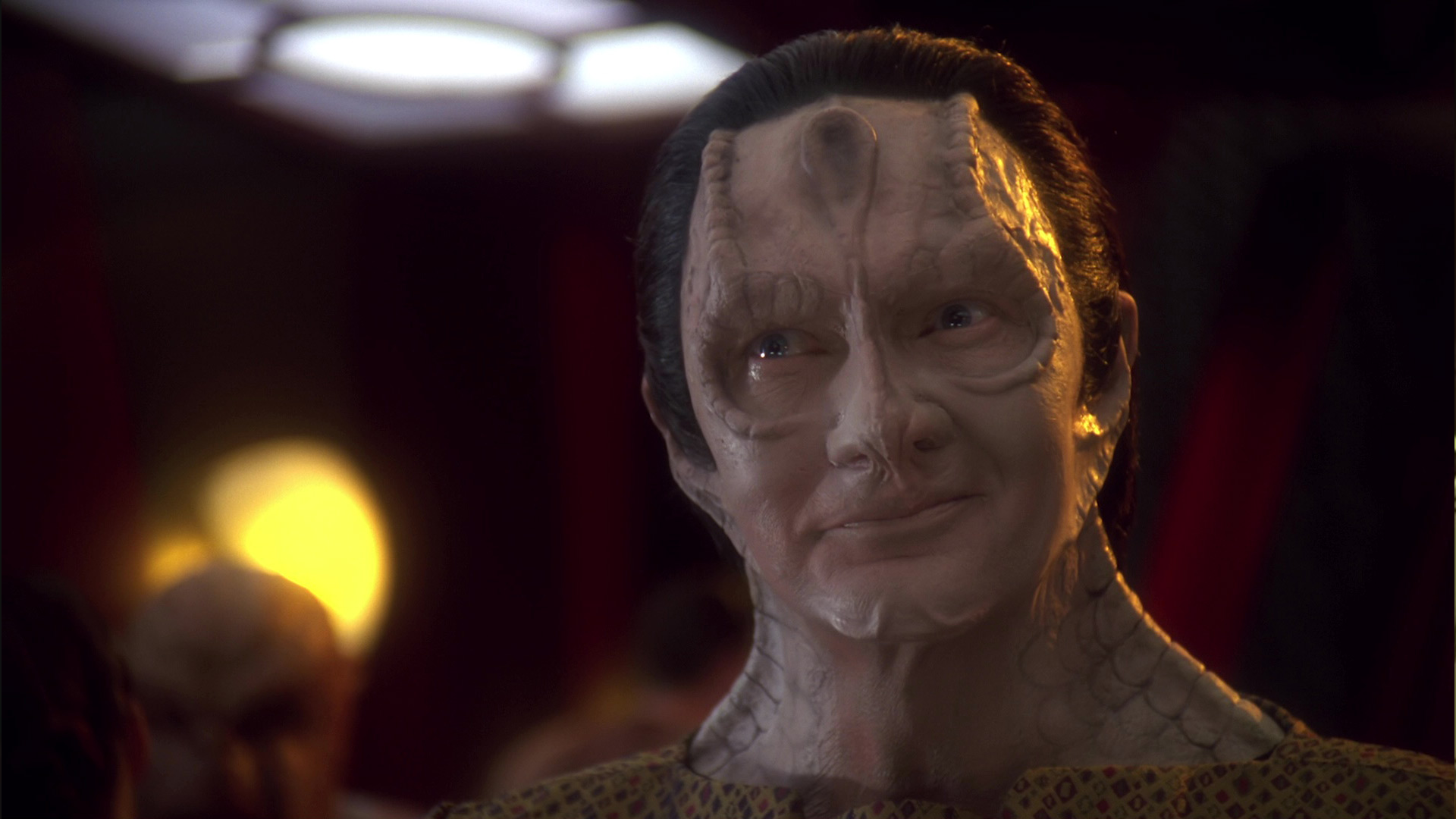
In life, there are those, like Steve Levy, who spread conspiracies, and there are those, like Elim Garak, who are the conspiracy itself. Even his first name became part of an elaborate lie. On Deep Space 9, Garak presented himself as a tailor, "plain and simple," the proprietor of a shop along the Promenade. Over the years, and with a lot of lies in between, those on the Station came to realise that this Cardassian had done a lot more than hem dresses.
In truth, Garak had once been a high-ranking operative of the Obsidian Order — the merciless Cardassian intelligence agency. He was even the "protégé," the "associate" of Enabran Tain, head of the Order from 2348 to 2368. He was, in fact, Tain's son. That we only learnt upon Tain's death in a Dominion prison cell.
The father-son relationship was fraught with enmity (to say the least). Tain was responsible for Garak's exile from Cardassia Prime in 2368. For reasons still unclear, Garak had betrayed his former boss in a way so reprehensible that Tain once wished him "a long, miserable life […] surrounded by people who hate him". Later, Tain would also try to have Garak killed (more on that later).
If we can believe the story, Garak's most curious 'mission' as agent of the Obsidian Order was surely the period he spent on Romulus posing as a gardener at the Cardassian embassy. The deaths of several high-ranking Romulan officials just happened to happen around the same time.
Section 31
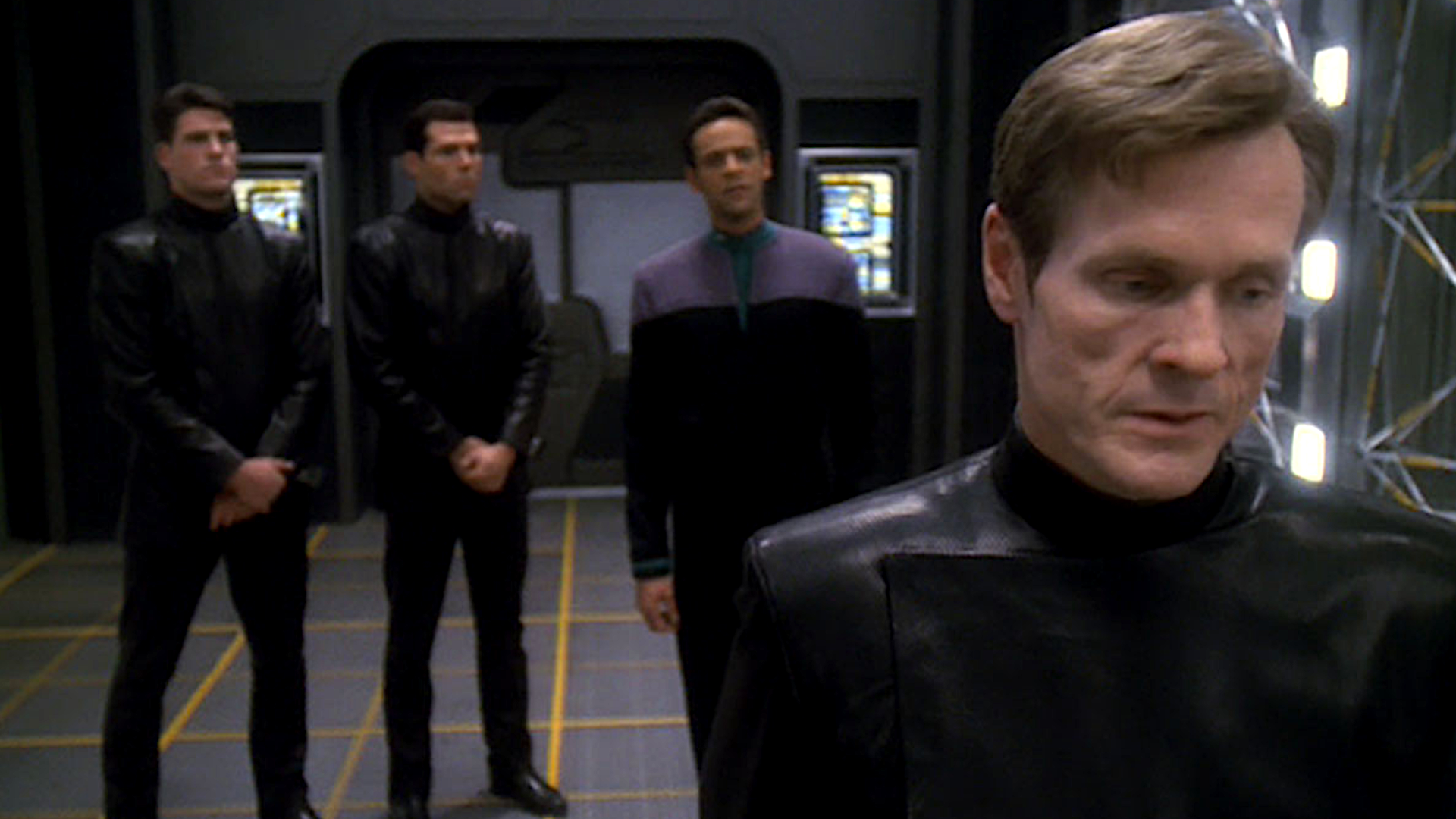
From a historical perspective, Section 31 largely defies classification. Given the broadest of remits by Article 14 (Section 31) of the Starfleet Charter, the organisation has existed in the guise of officialdom since the beginning of Starfleet itself.
From there, it has operated under varying levels of oversight and degrees of secrecy. Rogue group or just other branch of Starfleet Intelligence, Section 31 was always up to its neck in almost every conspiracy the galaxy had going. In fact, Section 31 would place lower on this iceberg, but for all the things we do know about it. Covert operations have rarely been less covert.
In the 22nd century, Section 31 was intimately involved with the crisis created by the Klingon augment virus. 31's Agent Harris allied himself in a clandestine pact with Klingon Fleet Admiral Krell, enabling the kidnapping of Doctor Phlox to Qu'Vat Colony in order to find a cure. Harris wasn't inclined to charity, however, and Krell never had any intention of honouring a quid pro quo.
By the 23rd century, Section 31 had entered into a semi-secretive "temporal arms race" with the Klingons. 31's Project Daedalus, headed by operative Leland, and scientists Mike and Gabrielle Burnham, eventually succeeded in creating a 'red angel suit' with time travel capabilities.
In that period of its history, Section 31 also operated under at least some supervision by Starfleet. In the 2250s, Starfleet personnel made direct use of Section 31's AI threat assessment system 'Control'. When Control combined with a mysterious AI from the 28th century, it turned against its creators. It would have wiped out all life in the galaxy, but for the Discovery's one-way trip to the 32nd century via their own red angel suit.
In the 24th century, after (at least) a 'godsend' and more from former-Emperor Georgiou, Section 31 returned to a clandestine existence for a while under Luther Sloan. No headquarters didn't mean any less busy. In the early 2370s alone, 31 kidnapped Doctor Bashir and tried to recruit him, conspired to interfere with internal affairs on Romulus, developed the morphogenic virus in an attempt at genocide, and experimented upon a group of changelings at Daystrom Station.
By the 2380s, Section 31 was back to being an open secret. In 2381, transporter duplicate William Boimler was recruited into the organisation, then given the captaincy of the USS Anaximander on a classified mission through the multiverse.
All that was just the tip of the iceberg. Let's descend to tier two…
5. TIER TWO

Houses Of Cards
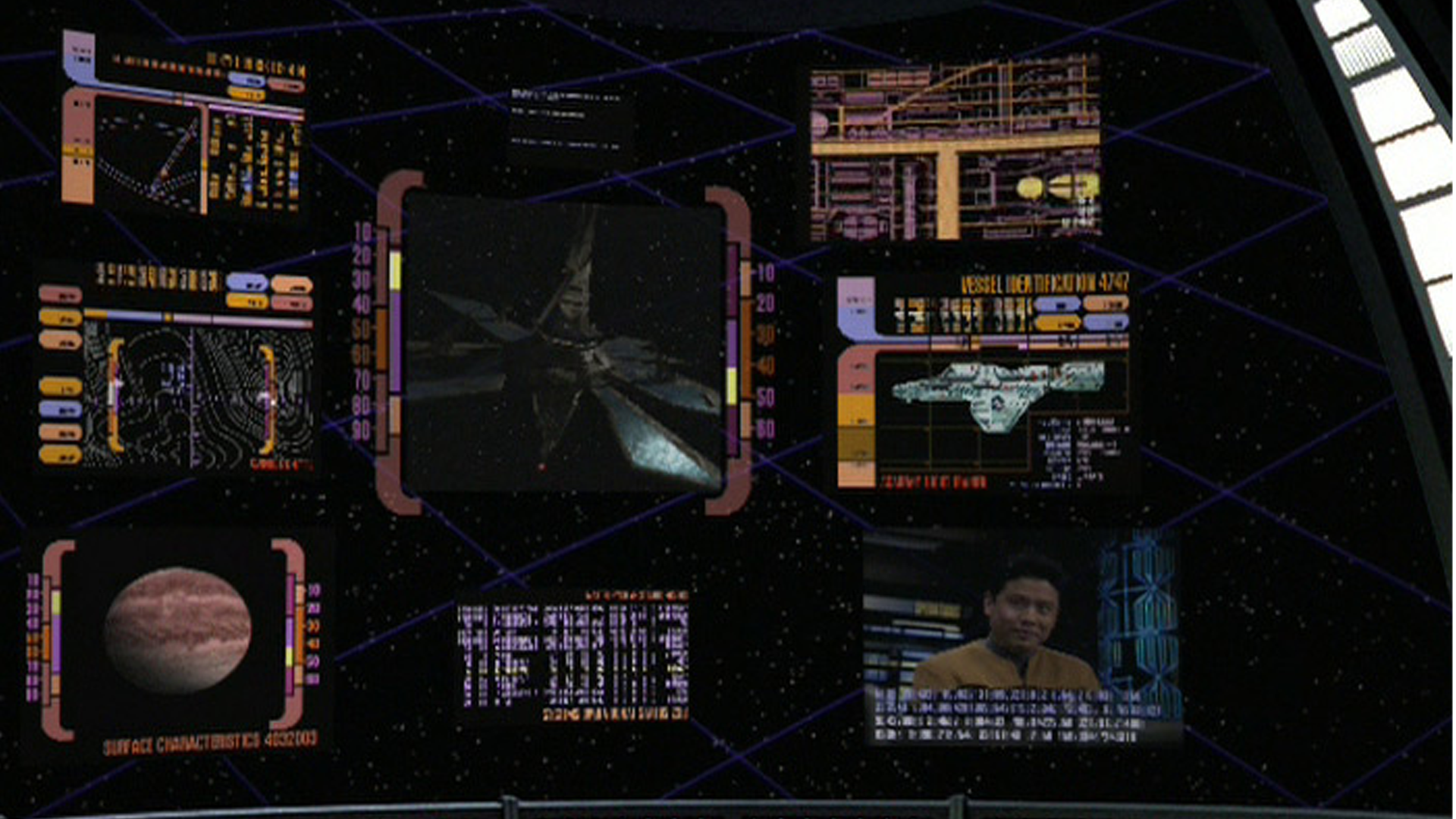
Still above the waters, we begin tier two in 2376. That year, two competing theories emerged aboard the USS Voyager — the 'Federation Conspiracy' and the 'Maquis Plot'.
Captain Janeway was implicated in a Starfleet-Cardassian scheme to establish a military presence in the Delta Quadrant (in violation of the Jankata Accord). Commander Chakotay was accused of conspiring to resurrect the Maquis rebellion by using 'graviton catapult' technology to launch attacks on Federation and Cardassian starships.
In the end, only one theory was correct — the 'Seven of Nine Conspiracy,' or as Captain Janeway put it, "a conspiracy of one". That wasn't a Starfleet ruse to capture and analyse Seven to "gather tactical data to fight the Borg," but it did all start with "those damned photonic fleas".
Seven had been downloading vast quantities of data into her cortical processor. Why read when you can assimilate? As a drone, that wouldn't have posed a problem. For her human mind, it was far too much information to process. To make it all make sense, Seven had to connect and categorise into theory upon theory.
In Janeway's words once more, Seven had built a "house of cards," or several — a shaky construction of conjecture and supposition that could collapse at any moment. That is the essence of the conspiracy theory. Humans are masters of making connections — an evolutionary imperative. Overapplied in the modern world, we connect the dots where no dots need to be connected. We build our own houses of cards.
Always remember the adage: "Correlation is not causation."
Conspiracies Of One
By definition, by etymology, and by law, a conspiracy must involve at least two people — literally 'to breathe together'. However, like Captain Janeway and that old-Earth music album, 'conspiracy of one' can be used more metaphorically to apply to the plots or machinations of a single individual, organisation, or entity. Galactic history contains several examples as such. Here are but a few.
Captain Braxton
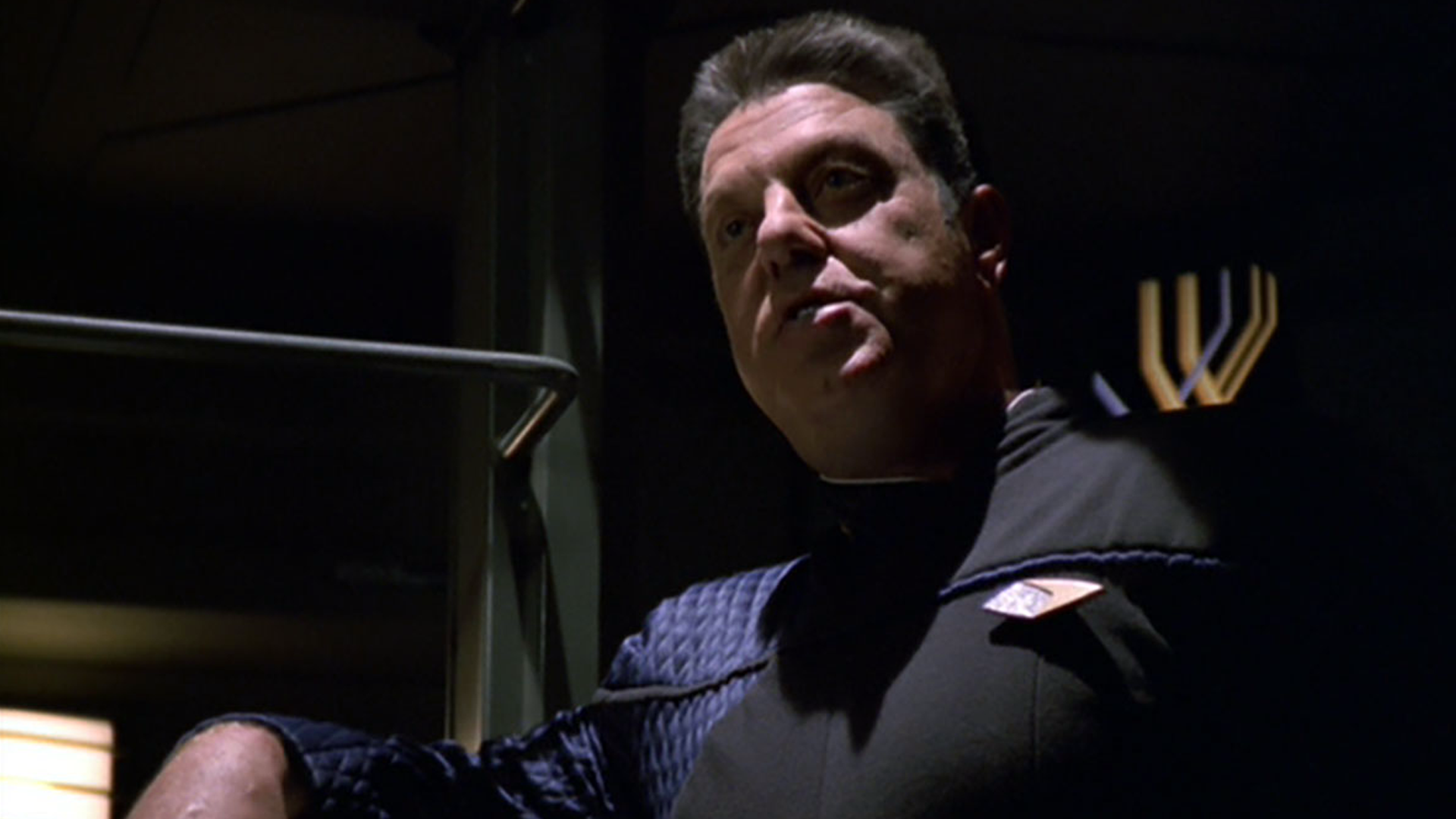
Captain Braxton was a human from the 29th century, part of the Temporal Integrity Commission, pilot of the timeship Aeon, and commanding officer of the USS Relativity. His job was to monitor and maintain the timeline, and to uphold the Temporal Prime Directive.
After a few encounters with Captain Janeway and crew, Braxton conspired to do the exact opposite — to erase Voyager from existence and restore himself to a life without 'temporal psychosis'. Not quite the original prankster, unless a 'force-3 temporal disruptor' counts as a practical joke.
Rear Admiral Nora Satie (retd)
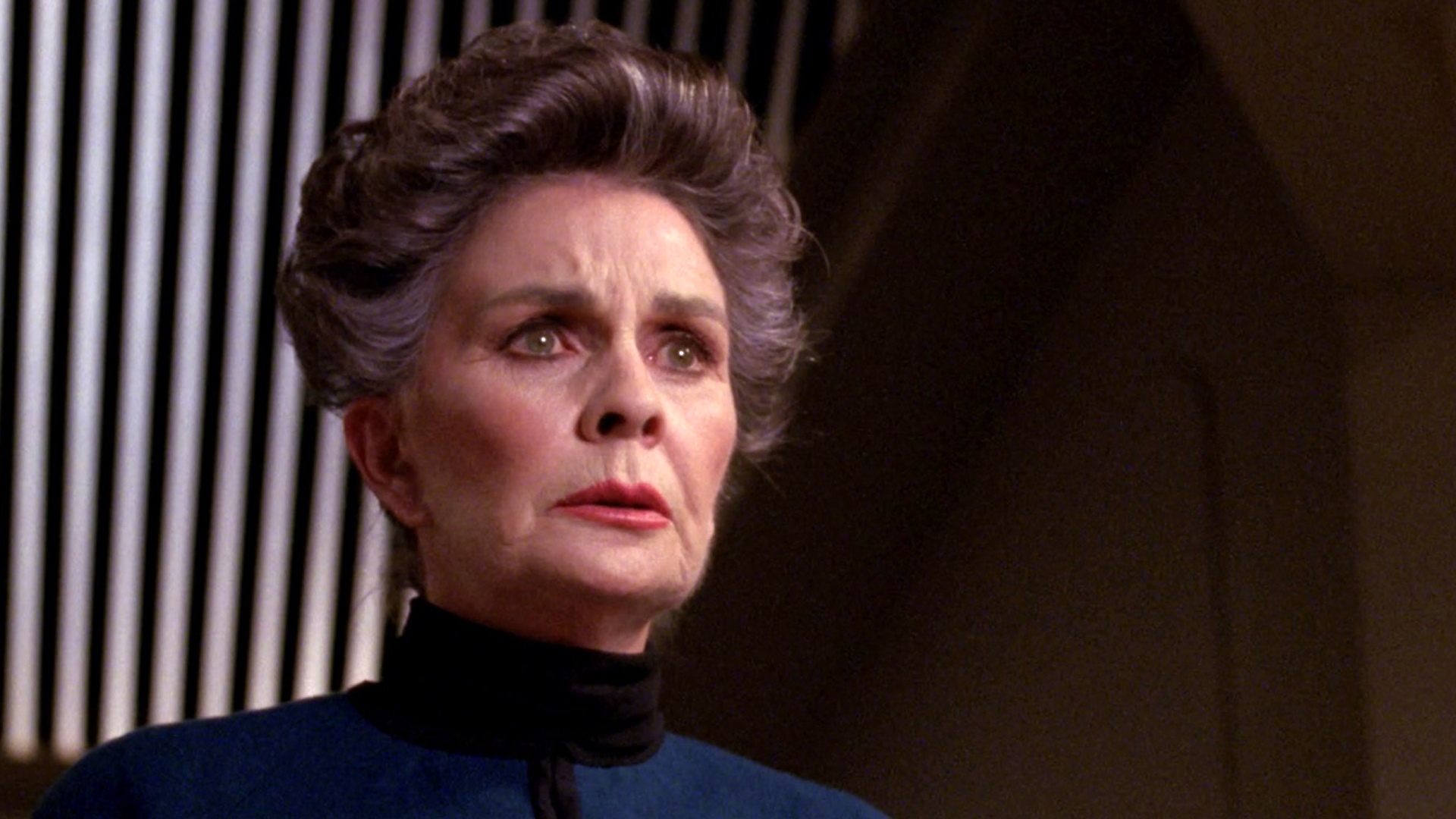
Rear Admiral Nora Satie was a distinguished and uniquely devoted Starfleet officer, daughter of a highly respected Starfleet judge. In 2363, it was Satie who gave the orders to a certain Captain Jean-Luc Picard to take command of the Enterprise-D. In 2364, she played a key role in exposing the bluegill conspiracy discussed in tier one of this list.
By 2367, Satie had taken her retirement but was promptly taken out of it by Starfleet Command to investigate an explosion by possible sabotage aboard the Enterprise. The Admiral did unmask one spy — Klingon J'Dan, who was sending information to the Romulans — but then began to see "the spectre of conspiracy" across the whole ship.
Even after the explosion was proven to be an accident, Satie was unrelenting. Crewman Tarses paid the price. She then made the ultimate error of putting Picard on the stand. Her drumhead trial was over.
Nicholas Locarno
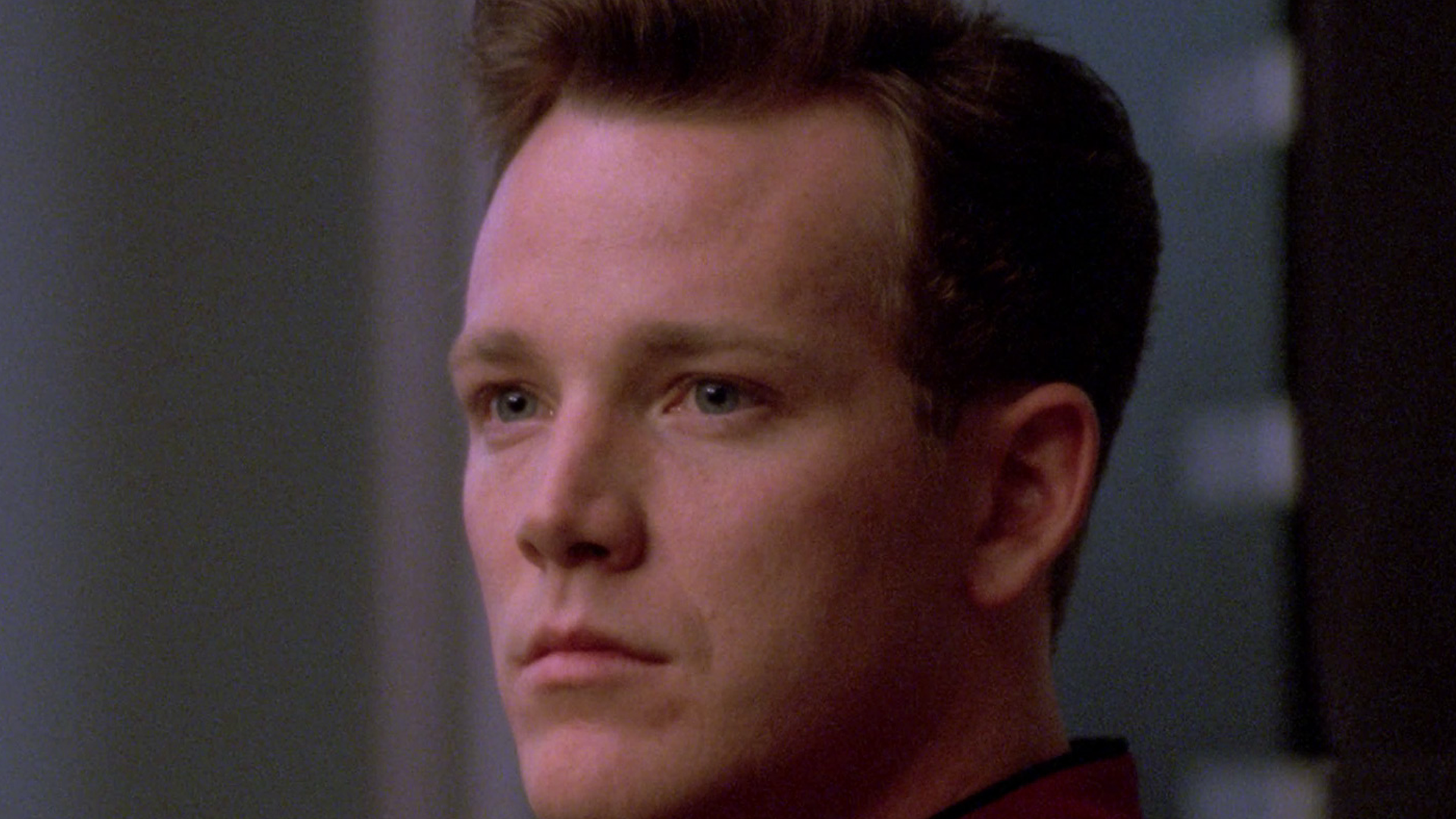
Nick Locarno was the epitome of the 'conspiracy of one'. Even with outside support, the galaxy still revolved around him. Worse, he thought the universe was out to get him, and that he was owed something in return. That's not to let his Nova Squadron co-conspirators off the hook. None of those who sat in front of the board of inquiry in 2368 had a phaser pointed to their head. All chose to lie, until one, at the last second, chose to do his duty to the truth.
The Nova Squadron accident and cover-up marked a low point in the history of Starfleet Academy. Though Locarno somewhat graciously accepted full responsibility at the time, thirteen years later, he hadn't moved on. In 2381, Locarno convinced lower deckers from multiple ships to mutiny against their captains and ally with him instead. From Nova Squadron to Nova Fleet.
Harry Kim
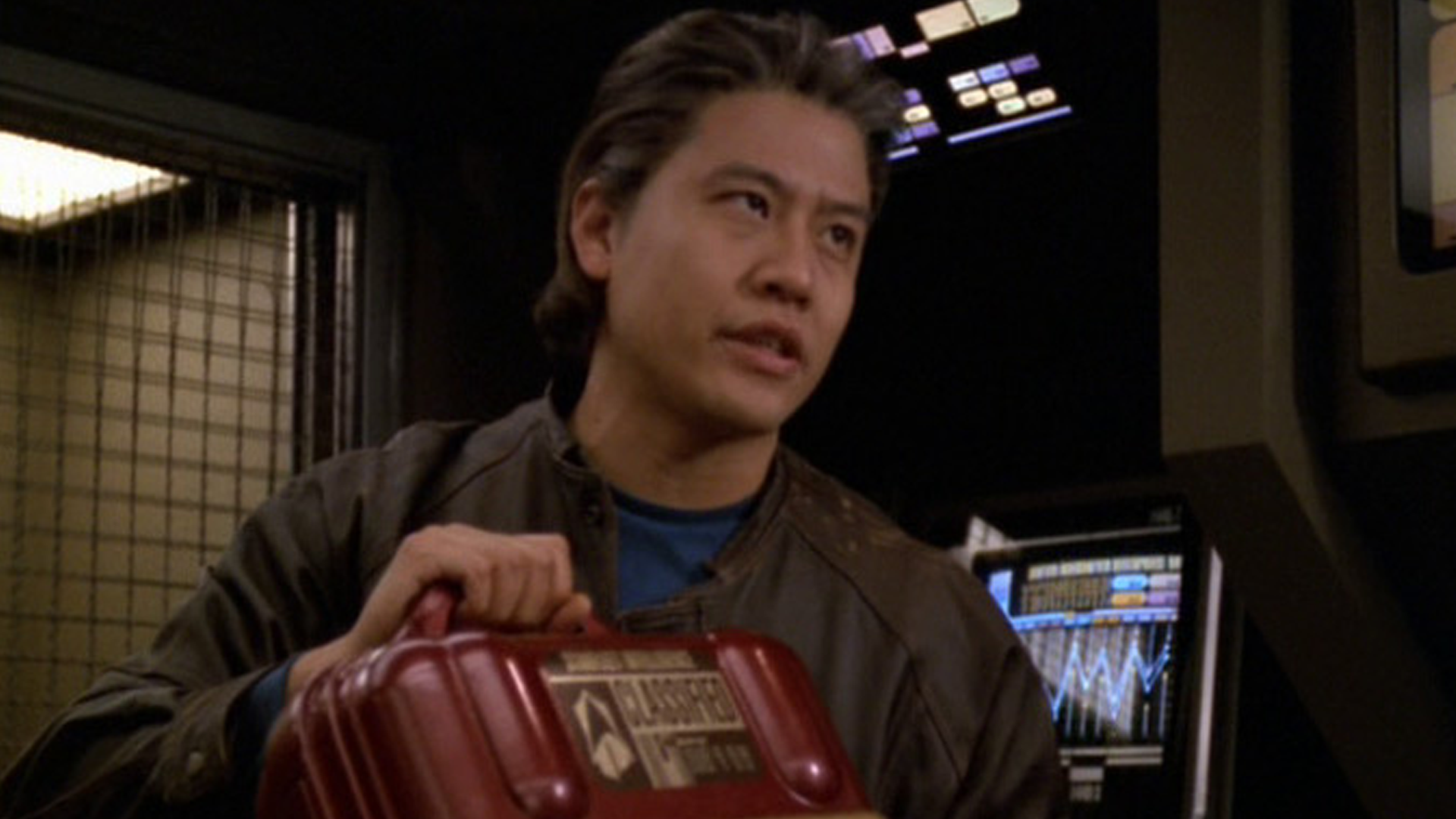
When the crew of Voyager used their newly built version of the quantum slipstream drive, things ended in disaster. Or rather, they did the first (and second) time round. To try to correct his phase corrections, to send a message to Voyager in the past, the version of Harry Kim that had made it back home aboard the Delta Flyer engaged in a little "conspiracy to violate the Temporal Prime Directive".
Harry did have help from Chakotay, Chakotay's other half, Tessa Omond, and eventually the Doctor. The project, the plan, the persistence, and eventually the success in saving Voyager from an icy graveyard were still all very much Ensign Kim's. To paraphrase Tessa, charges of conspiracy are no good if they never existed in the first place.
Commander MacDuff
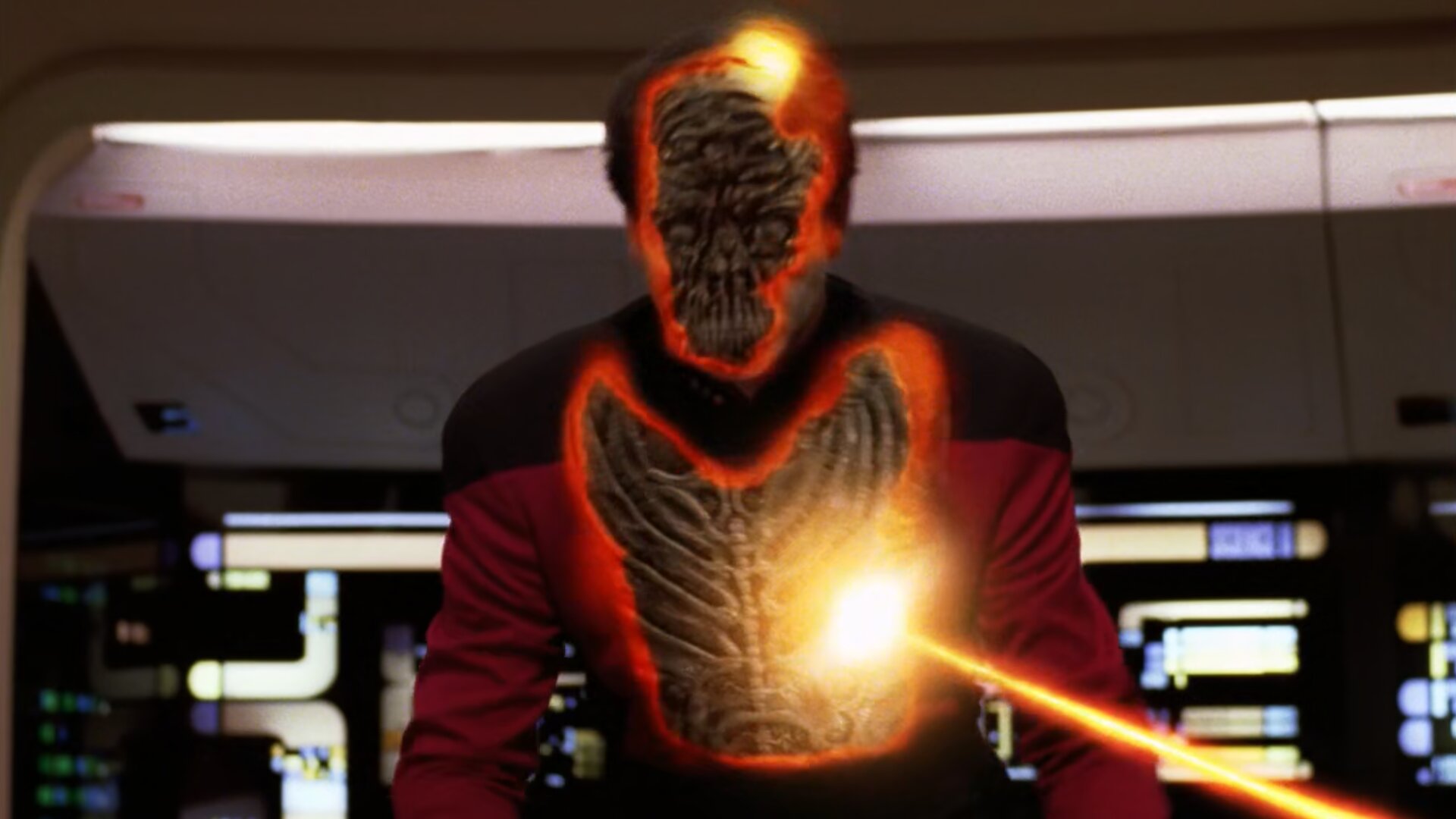
Commander Kieran MacDuff wasn't a commander, nor was he a Kieran, nor was he a MacDuff. He wasn't human, and he wasn't Starfleet. In fact, 'MacDuff,' or so he claimed, was a Satarran who'd come aboard the Enterprise-D in an elaborate plot to get ship and crew to destroy an enemy target, Lysian Central Command.
MacDuff altered memories, manipulated computer records, and caused two officers in particular to do unspeakable things. Even without knowledge of who they really were, the crew of the Enterprise-D were no fools, nor were they butchers with (far) superior weapons. MacDuff's deception was uncovered, and Lysian Central Command was spared.
Warmonger Admiral Marcus
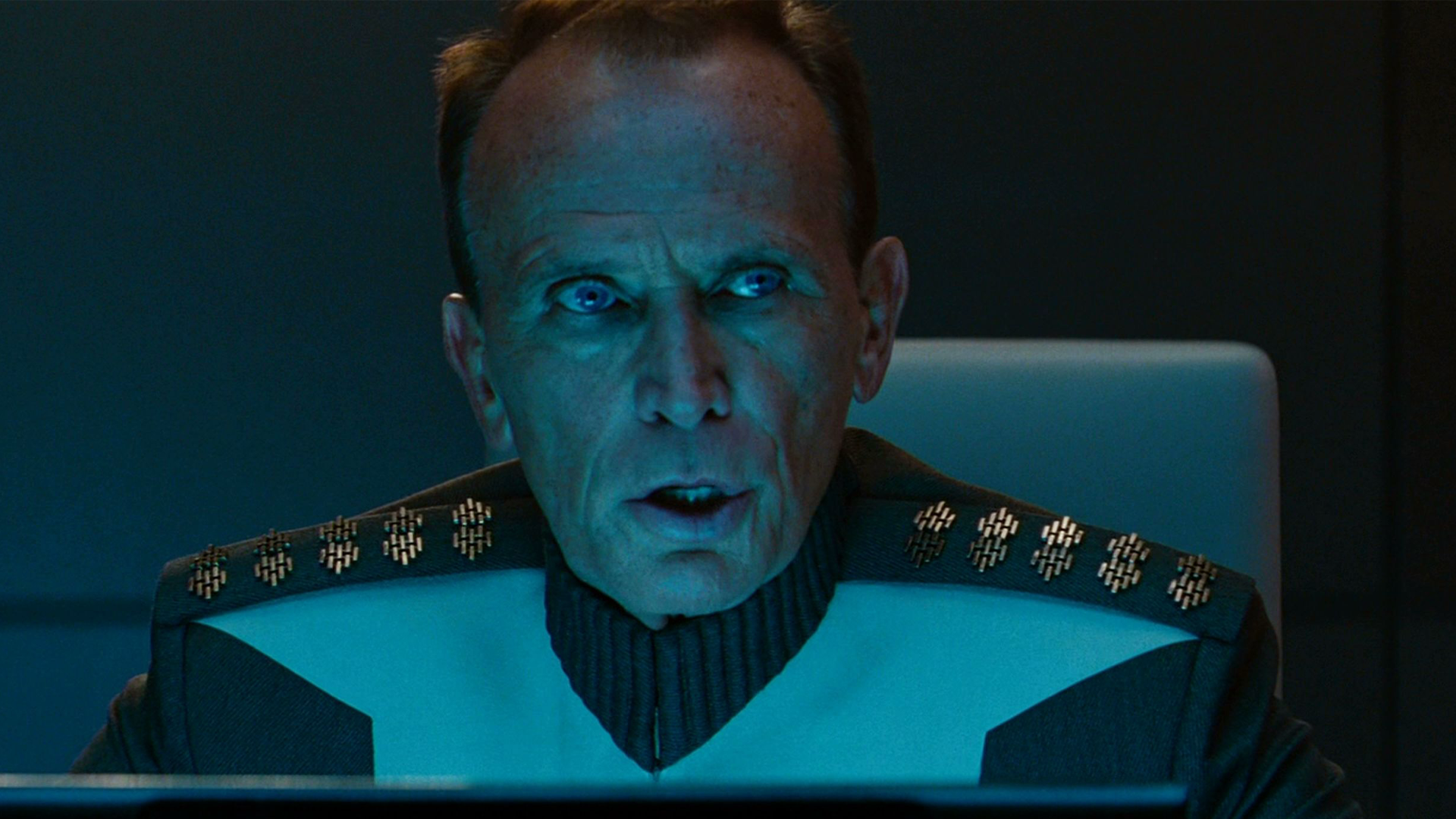
On the side of the 'Narada incursion,' different events led to different outcomes with the same people. We don't know much about Prime Admiral Marcus, but over in what others call 'Kelvin,' he conspired to put Starfleet and the Federation on a warpath with the Klingons, believing war was all-but-inevitable anyway.
In that timeline, Marcus found the sleeper ship, and woke up Khan Noonien Singh. Marcus blackmailed Khan (now 'John Harrison') into designing new ships and weapons systems for Starfleet — notably the USS Vengeance — upon pain of injury to the other Augments.
Khan rebelled and then compelled Section 31 officer Thomas Harewood to blow up the Kelvin Memorial Archive — itself a secret Section 31 facility — in London. Khan continued his rampage, killing Marcus in the most horrific fashion possible along the way.
Landru (And Other Computers)
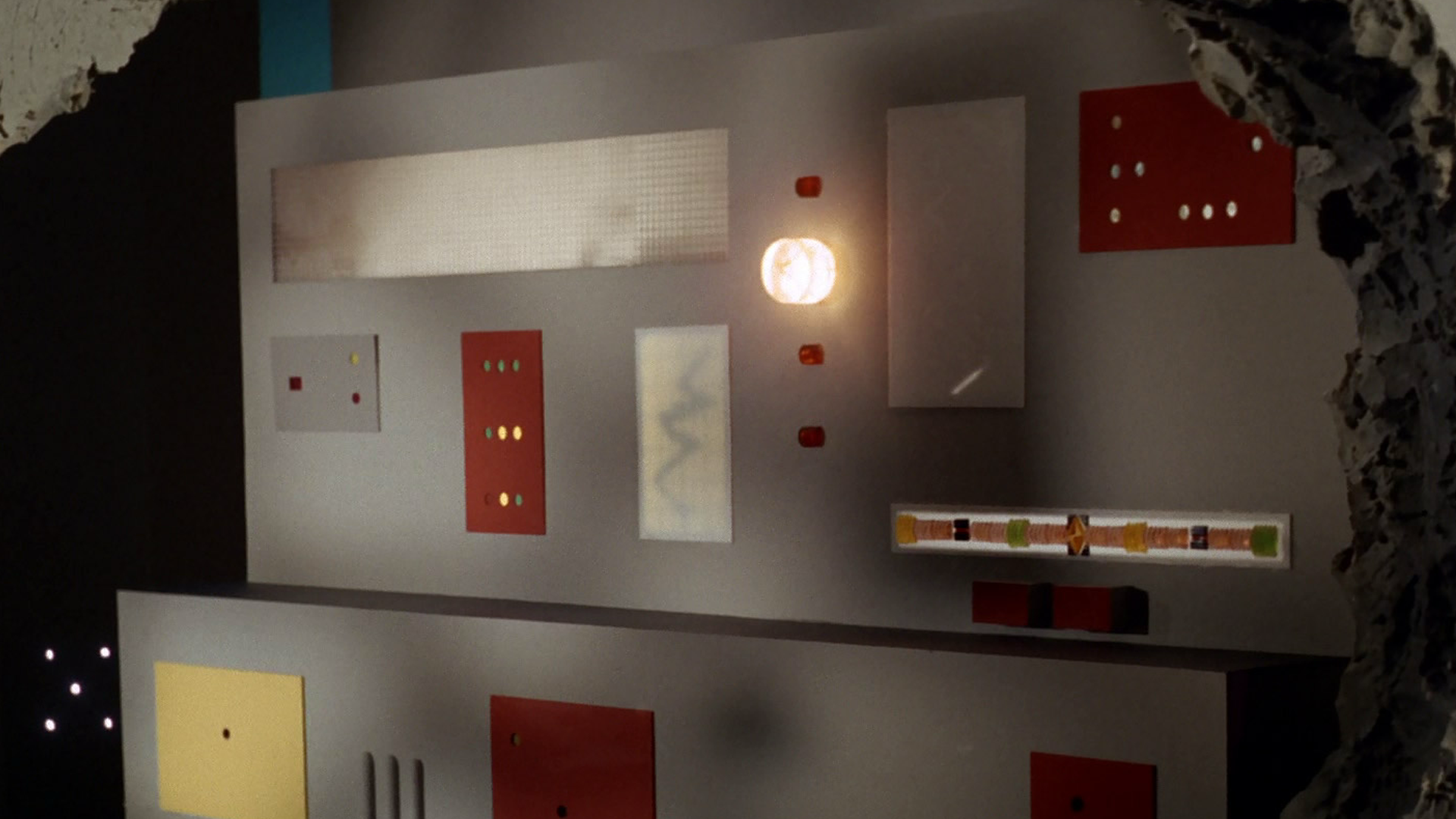
We'll make this one relatively quick, as 'evil computers' or 'AI gone wrong' could be icebergs all to themselves. In fact, the galaxy was so littered with sentient machines who wanted nothing but death and/or subjugation that, by 2381, the Daystrom Institute already had a whole lab dedicated to 'Self-Aware Megalomaniacal Computer Storage,' study, and rehabilitation. That year, AGIMUS and Peanut Hamper became the latest inmates, alongside the aptly named Tyrannikillicus.
AGIMUS himself had conned and connived his way into lording over an entire planet, launching them into a hundred-year civil war with 'murder drones'. He did it again, however briefly, to the inhabitants of Plymeria.
Long before AGIMUS, there was Landru, a machine built by, and named after, Landru, once leader of planet Beta III millennia ago. Landru (the computer) forced its own kind of "peace and tranquillity" on "the Body" (i.e. the inhabitants of Beta III), interspersed with the annual "Festival" — their version of the Purge. No self-aware anything was a match for one of Captain Kirk's famous paradoxes, though by about a century or so later, the Betans had returned to worshipping Landru.
In all that, we've not even had time to talk about the god-like Vaal of Gamma Trianguli VI. We haven't had the chance to discuss the Custodian of Aldea, or the Master computer of the Shore Leave Planet, or Nomad, or V'Ger. There has been no room to debate the wayward M-5 multitronic unit, or to lay it all out about Lore.
Doctor Julian Bashir
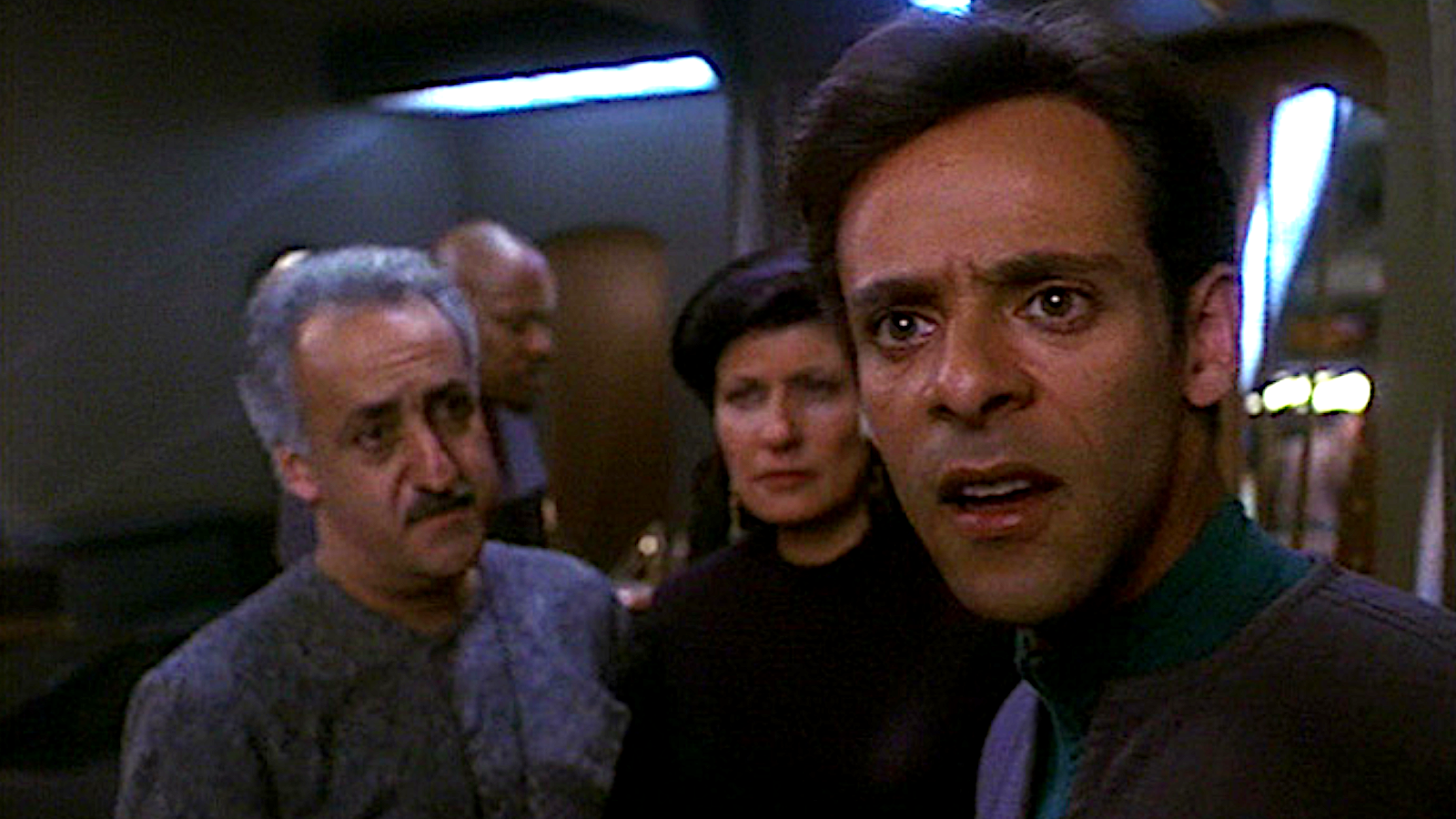
At some point after the Eugenics Wars, genetic engineering was banned on Earth. Later, genetically engineered individuals were expressly forbidden from serving in Starfleet. Genetic enhancement was illegal under Federation law. Though there were some (often strange) exceptions, genetic research was restricted. Genetic engineering for purely medical purposes was also extremely limited.
There were those within Starfleet and the Federation who sought to circumvent the ban. Doctor Julian Bashir was one notable example. As a child, his parents had taken him to a clinic on Adigeon Prime to undergo DNA resequencing in a process known as "accelerated critical neural pathway formation".
Bashir's parents were responsible for his genetic 'enhancements,' but it was Bashir himself who falsified his way into Starfleet. In the 23rd century, Una Chin-Riley, an Illyrian and first officer to Captain Pike, had hidden her genetic status in order to serve. Thankfully, both Bashir and Una won their right to remain.
Winn Adami
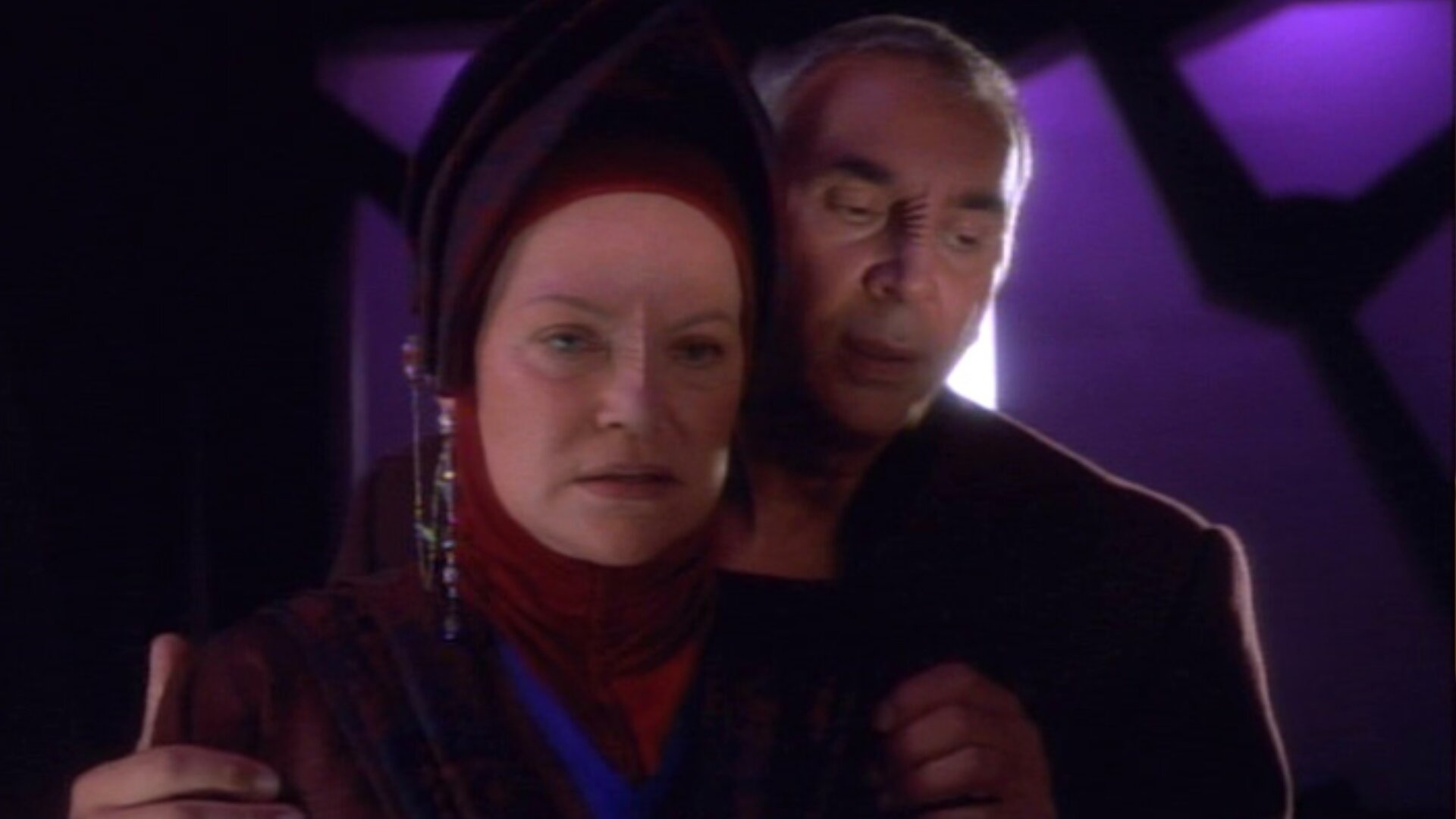
Where to even begin? Winn Adami craved power. She would stop at little to grab it. By 2369, after the Cardassian withdrawal from Bajor, Winn was already a Vedek, but she had her eye firmly set on becoming kai. That same year, she plotted to create enough of a brouhaha around Keiko O'Brien's new school that Vedek Bareil would be forced to come to the Station. That way, her lacky Neela could try to assassinate him. Of course, there was no evidence to make any formal link back to Winn.
A little later, Winn quietly aided Minister Jaro Essa in his attempted coup against the Bajoran Provisional Government, all with the promise that she would be kai. In 2370, Winn implicated Bareil in the Kendra Valley Massacre. He had to drop out of the running for kai to protect the memory of the 'real' collaborator, for want of a better word — Kai Opaka.
As kai (finally!), Winn would eventually commit to the most heinous of conspiracies in collaboration with former enemy and occupier, Gul Dukat. Both plotted, and failed, to release the Pah-wraiths from the Fire Caves. Had they succeeded, the so-called 'Restoration of Bajor' would have meant death for all, or most, on the planet, and across the Alpha Quadrant.
UAPs & Aliens
Before Vulcan survey ship the T'Plana-Hath set down in Bozeman, Montana on 5th April 2063, UAPs (formerly UFOs) were the focus of many alien conspiracy theories. Were these 'Unidentified Aerial (or Anomalous) Phenomena' in fact extraterrestrial craft? We touched on the subject in our entry on Roswell in tier one, but beyond the Ferengi, there were several other-worldly visitations to pre-warp Earth.
In 1937, pioneering aviator Amelia Earhart and her navigator Fred Noonan vanished over the Pacific Ocean during a round-the-world flight. Despite an extensive search, neither they nor any trace of their twin-engine plane were ever found. Though speculation abounded, their disappearance remained a mystery for centuries.
That mystery was solved by the USS Voyager on its way through the Delta Quadrant. A theory mocked at the time, Earhart and Noonan had actually been abducted by aliens called the Briori, as were many others for use as a labour force. Both Earhart and Noonan were amongst eight from the 1930s still left in stasis chambers when Voyager arrived. In a similar manner, the Skagarans, a warp-capable species of unknown origin, abducted thousands of humans during the 19th century to serve as workers on a colony planet in the Delphic Expanse.
Alien abductions continued well into the 24th century. Whilst the Enterprise-D was exploring the Amargosa Diaspora, several crewmembers, including Commander Riker, were taken in their sleep and experimented upon by a group of solanogen-based lifeforms whose domain was a tertiary subspace manifold. Through their experiments, it seemed likely the mysterious aliens were looking for a way to survive in our universe. Either way, Lieutenant Hagler was dead, others traumatised.
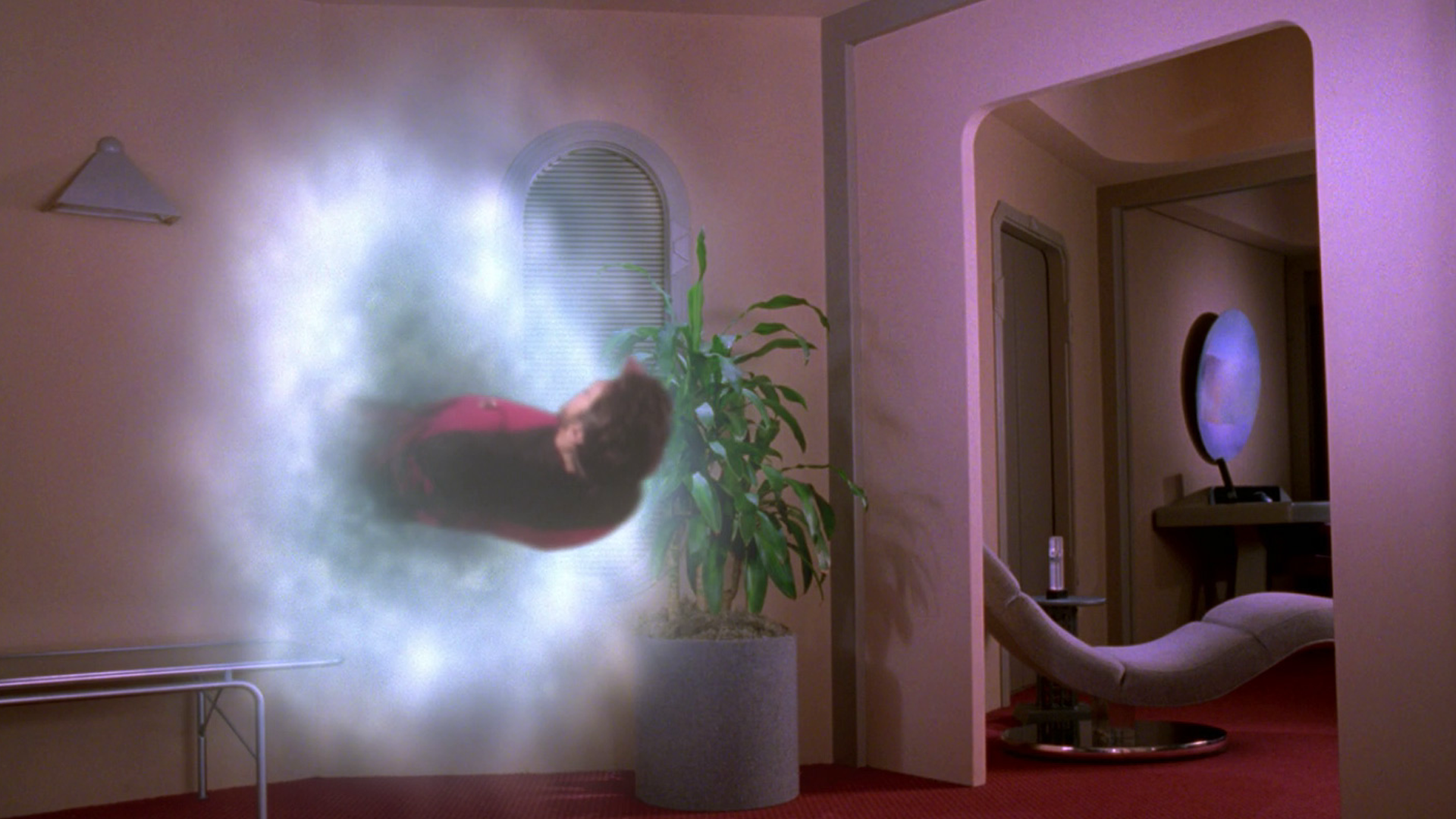
Captain Picard was also once abducted by aliens, trapped in a room somewhere, and replaced on the Enterprise by a replica. Geordi La Forge was kidnapped by Romulans, and then by the Klingons and Soran. Data was captured as a prize by collector Kivas Fajo. A mishap during a mission on Malcor III saw Riker become the alien on an alien (pre-warp) world. That's not to forget all those times Q snapped people away without asking.
In a similar manner, the USS Voyager's arrival in the Delta Quadrant was the result of an alien kidnapping on the part of the Caretaker. The crew then suffered a set of painful experiments to see if they were compatible 'mates'. Later, all of Voyager would become "one big petri dish," having been silently invaded by the Srivani. Shortly before their return home, almost the entire crew of Voyager had their memories altered and were forced to work on alien planet Quarra as part of a vast criminal conspiracy.
Voyager itself was responsible for its own set of UFO/UAP sightings. In the mid-1990s, the ship was caught on camcorder as it flew through Earth's lower atmosphere. That footage was then sent to the news. Later, Voyager became a UAP of sorts for an alien civilisation over the course of several centuries — the mythic "Sky Ship" over Kelemane's planet "displaced in time". In 1969, Kirk's Enterprise also caused a UFO sighting and interception on the part of the US Air Force over the skies of Nebraska.
In terms of aliens on the ground, the Vulcans themselves had visited Earth's surface before First Contact, either deliberately or by accident. Three Vulcans, including T'Pol's second foremother T'Mir, survived a crash landing near the town of Carbon Creek in 1957. Rumour has it that T'Mir introduced humanity to Velcro, and that one of the Vulcans — Mestral — even chose to stay behind on Earth after rescue arrived. A little later in the 20th century, a pair of Vulcans were carrying out research on Earth when they were happened upon by a young child, later FBI agent Martin Wells.
Of course, Guinan had been on Earth in the 19th century, and was there again, or still, in the early 21st, as were Supervisor (and Romulan) Tallinn, Q, and a Borg Queen. During the same period, Lanthanite Pelia was also living on Earth, and had been for centuries, in fact. Let's not forget about Flint either, whatever he was. Then, there are all the aliens who have come to Earth to pose as gods and devils over the years — from Apollo to Satan (or Lucifer) himself.
Kira Is A Cardassian
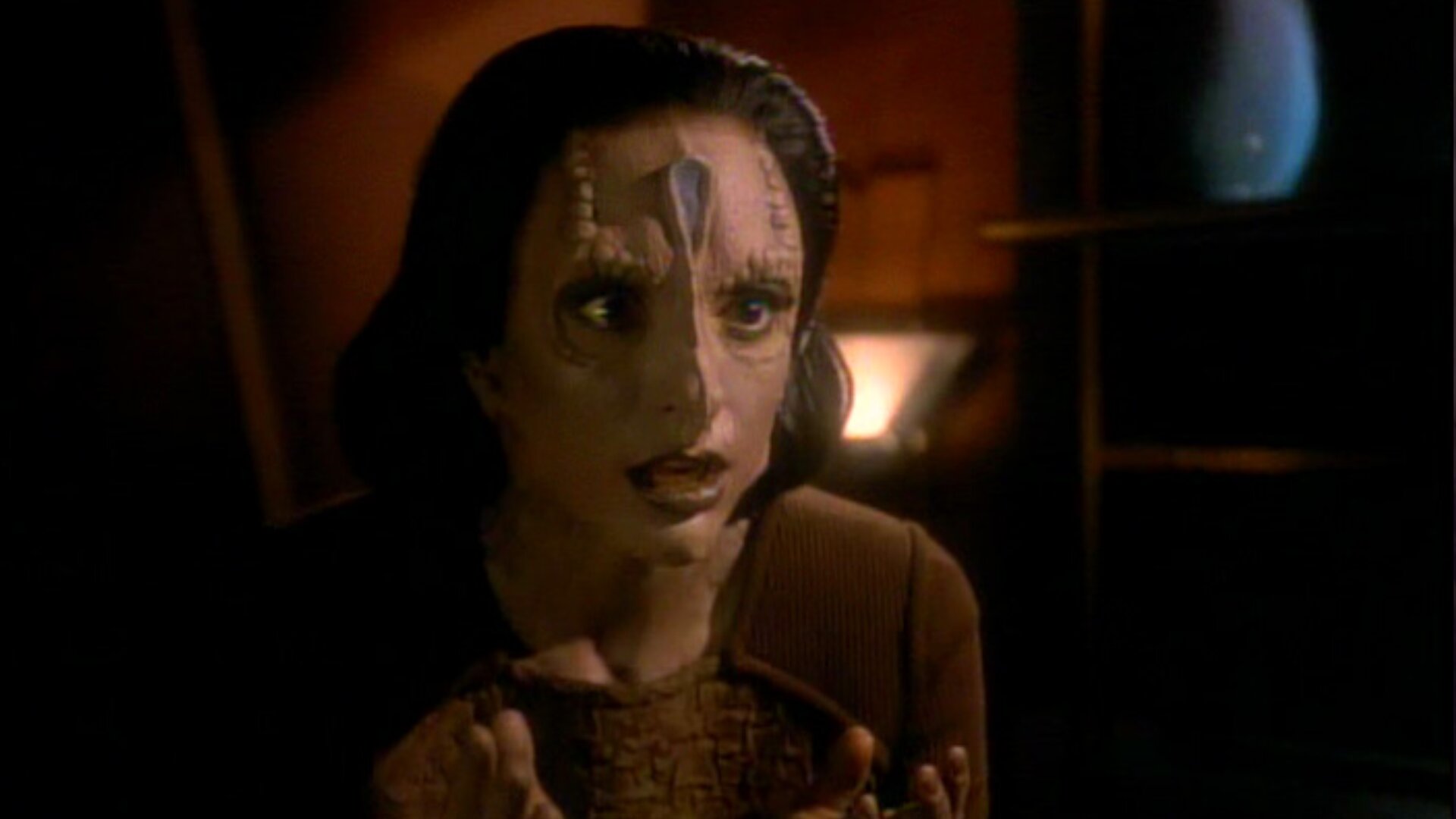
Kira Nerys had spent a good chunk of her life fighting the Cardassians during the Occupation of Bajor. In 2371, she woke up to be told she had, in fact, been one of them all along — an undercover operative of the Obsidian Order, brought back home. Her name wasn't Kira. It was 'Iliana Ghemor'.
Naturally, even with the surgical alterations, even when she was shown what appeared to be her own corpse, Kira never believed a word of it. That was also the point. Entek, her Cardassian kidnapper, actually of the Obsidian Order, had made it all up. At least, he and the Order had made half of it up.
The true conspiracy was Entek's sadistic plot to 'flush out' Legate Tekeny Ghemor whom the Order suspected of being involved with the Cardassian dissident movement. The real Illiana was Ghemor's daughter, also of the Order, who had gone deep undercover on Bajor in 2361, her appearance and memories altered to appear Bajoran. She bore a striking resemblance to Kira.
Entek played on that resemblance, transforming Kira as he knew she would resist. The real Illiana would have regained her memories and cooperated. Eventually, Ghemor was forced to try to help Kira escape Cardassia, and in doing so, exposed his political allegiances. Sisko, Odo, and Garak intervened just in time.
The real Illiana's whereabouts remained unknown. But then, maybe Doctor Bashir was wrong about Kira's genetic structure. Perhaps Kira was Illiana all along. Failing that, there's still Beckett Mariner's conspiracy board!
The Pakled-Freeman Fabrication
The Pakleds weren't exactly what one might call the brightest torpedo in the spread. What they lacked in intelligence, they made up for in deviousness. Geordi La Forge found that out for himself in the mid-2360s. About fifteen years later, Captain Freeman of the USS Cerritos would have several run-ins with the dim-witted species.
Unbeknownst to the Federation, the Pakleds had been salvaging and stealing technology from a few dozen species, combining it all to create powerful 'Clumpships'. In 2380, a group of Pakled rebels began a series of attacks on the Federation. The USS Solvang was destroyed, and the Cerritos nearly went with it, but for some last minute heroics from the USS Titan.
Later, Starfleet began to suspect that "another player" might be involved in the Pakled attacks. The "puppet master" turned out to be Captain Dorg of the Klingon Defence Force. He had been channelling weapons and information to the rebel Pakleds as part of his plan to destabilise the Federation and claim victory for the Empire that had apparently "lost [its] way".
Dorg had notably provided a 'Varuvian bomb' — two Varuvian bombs, in fact — to the Pakleds. The first was meant for Earth, but the Pakleds wasted it on an asteroid. The second they used to blow up their homeworld in a dubious effort to get the Federation to move them to a new, resource-rich planet.
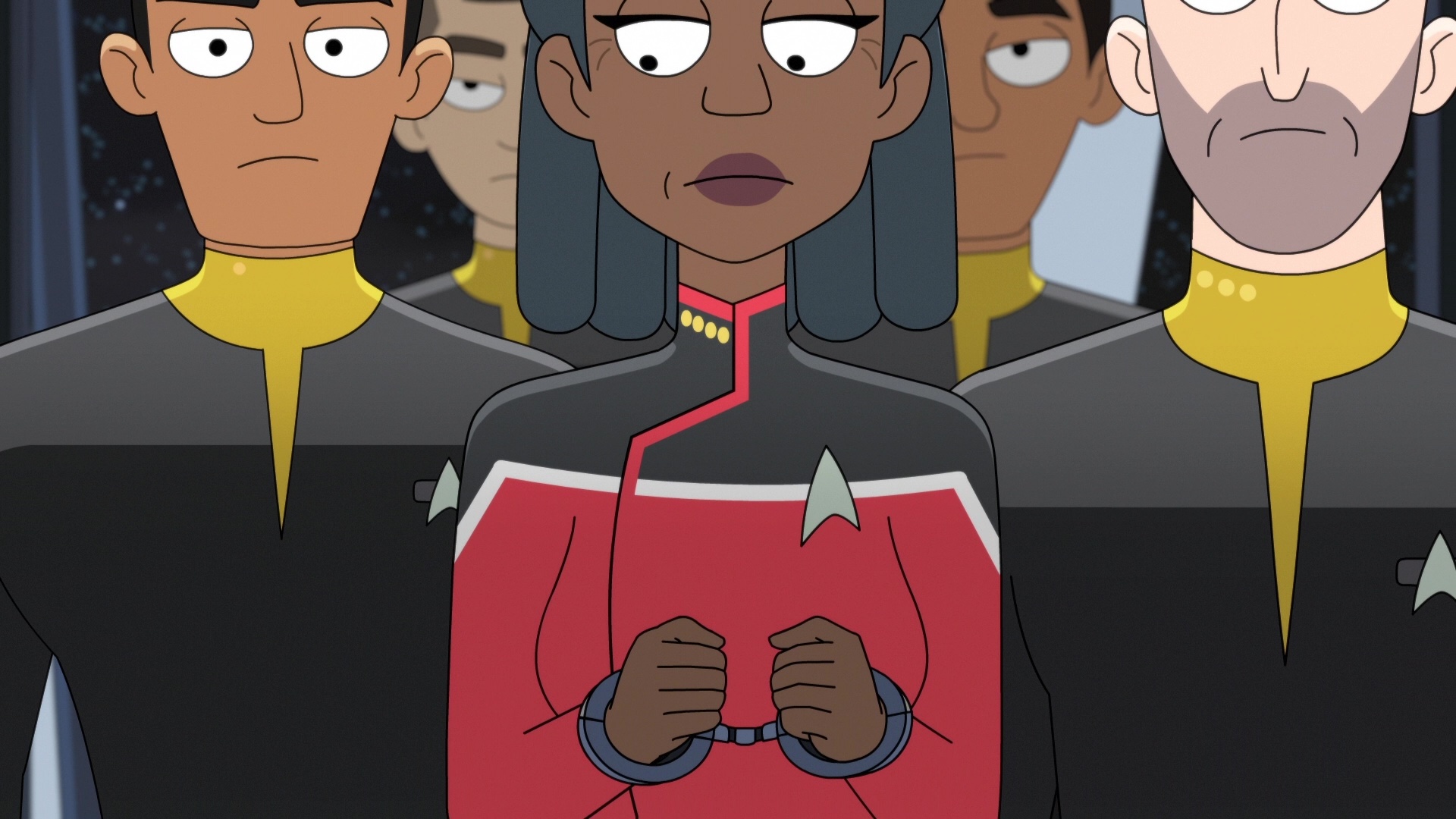
The Pakleds managed to frame Captain Freeman for the attack. She was arrested and falsely accused of conspiring with Klingon extremists to plant the Varuvian device in 'Big Strong City'. Thankfully, a crack team led by Captain Morgan Bateson, and including Commander Tuvok, pursued a "known data fabricator" into the Romulan Neutral Zone in order to uncover the conspiracy.
The Paxan Pretext
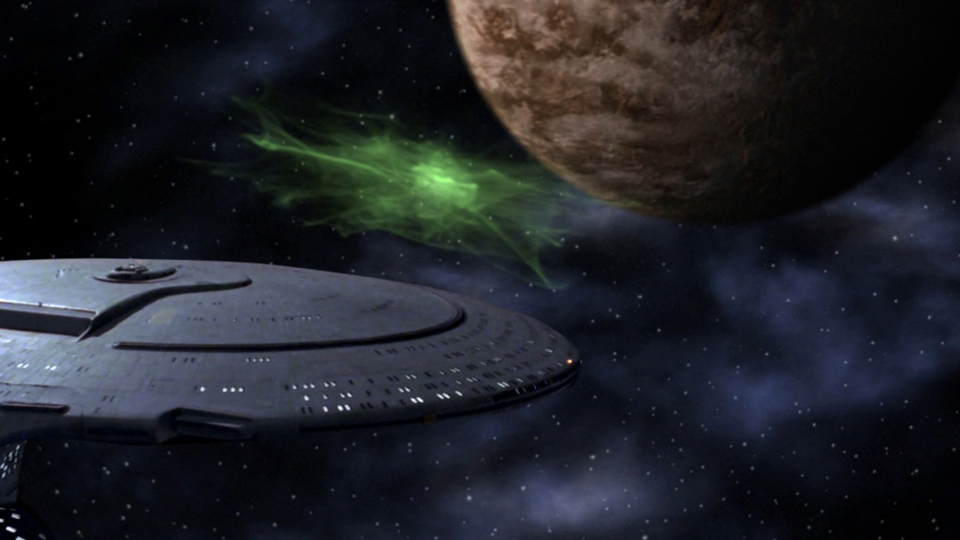
On approach to a T-Tauri type star system in 2367, the Enterprise-D passed through an unstable wormhole, rendering everyone but Commander Data unconscious for apparently just 30 seconds.
When the crew woke up, it seemed like the whole ship was somehow conspiring against them. Doctor Crusher's Diomedian scarlet moss had a full day's growth. Ensign Locklin's electrolyte levels were off by the same amount. The ship's chronometer had been altered, and Data was clearly lying, even actively thwarting investigation efforts.
This wasn't a conspiracy of one (android). In fact, the entire crew had conspired against themselves. There was no wormhole, but there was a missing day. The T-Tauri system was actually home to xenophobic species the Paxans, who categorically refused that outsiders have any knowledge of their existence. Their usual method to ensure this failed on the crew of the Enterprise-D. Biochemical stasis was untuned to positronic brains.
With death the alternative, Captain Picard negotiated another option — a memory wipe. The rest of that missing day was then spent erasing all evidence of the Paxans and giving strange orders to Data. In the end, too many clues were left behind to follow. But, you know what they say, if at first you don't succeed, conspire, conspire again.
The Equinox Cover-Up
At first glance, the USS Equinox was 'just' another Starfleet ship stranded in the Delta Quadrant by the Caretaker. With only a Nova-class, a science vessel, built for short term research missions, and limited to warp eight, Captain Ransom and crew had then seemingly pulled off the practically impossible. They had crossed the same distance as Voyager, but with nowhere near the same resources to begin with.
When both ships met, the Equinox was under attack. Outwardly the aggressor, the extra-dimensional nucleogenic lifeforms were, in fact, merely defending themselves. Ransom and co. had captured and murdered the aliens en masse to use as fuel to enhance their warp drive.
The Equinox crew conspired to hide their dark truth from the crew of Voyager, playing happy reunions all the while. Quietly, they made plans to continue their experiments, to take Voyager's field generator, and be on their merry way back to the Alpha Quadrant at best speed. Found out, relieved of duty, and confined in quarters, they plotted their escape.
Back on the Equinox, Ransom schemed and manoeuvred every which way to avoid recapture by Captain Janeway. He used Voyager's EMH as a pawn to extract information from Seven of Nine. The Equinox EMH was passing information from Voyager, having aided in his crew's escape. "No choice," was Ransom's dictum. Only towards the end did he make the right one.
Ba'ku Relocation
In the depths of the Briar Patch — or the 'Klach D'kel Brakt,' if you prefer the Klingon name — lay a very special planet. The metaphasic radiation of its rings could continuously regenerate a person's genetic structure, offering a form of immortality and perfect health. In essence, the planet was the fabled 'Fountain of Youth'.
It's not difficult to see why the Federation would want to get their hands on "metaphasics". As Admiral Dougherty noted, it could "help billions," double life spans, and lead to a whole new medical science. The only problem was that collecting the radiation would make the planet uninhabitable, and that would be more than a little unfortunate for the people living there.
And so, Dougherty and Ru'afo of the Son'a contrived to secretly relocate the 600 Ba'ku to another world first by use of a cloaked holoship. (Where's the Treaty of Algeron when you need it?) They did have the approval of the Federation Council, too, inasmuch as the Federation Council were told the full story.
Moving 600 might well have been worth it, but Captain Picard wasn't in the mood for moral relativism, and especially not for counting. With the full backing of his crew, he led an insurrection against Dougherty and the Son'a to 'save' the Ba'ku and their planet. Adding to the plot, the Son'a and the Ba'ku were, in reality, one and the same people. The conspiracy was also a "blood feud".
Now, it's time to jump down below the surface into the icy waters of tier three.
4. TIER THREE
United Earth Embassy Bombing
In the 22nd century, Human-Vulcan relations were considerably different. Many humans of the era, including Captain Archer, blamed the Vulcans for deliberately holding back the Warp Five program, and reproached them for their unwillingness to share technology. Vulcan 'oversight' of the NX-01's first mission was far from welcomed. The 'Andorian Incident' at P'Jem certainly didn't mend any bridges. Later, the Vulcans refused to provide any material assistance during the Xindi crisis.
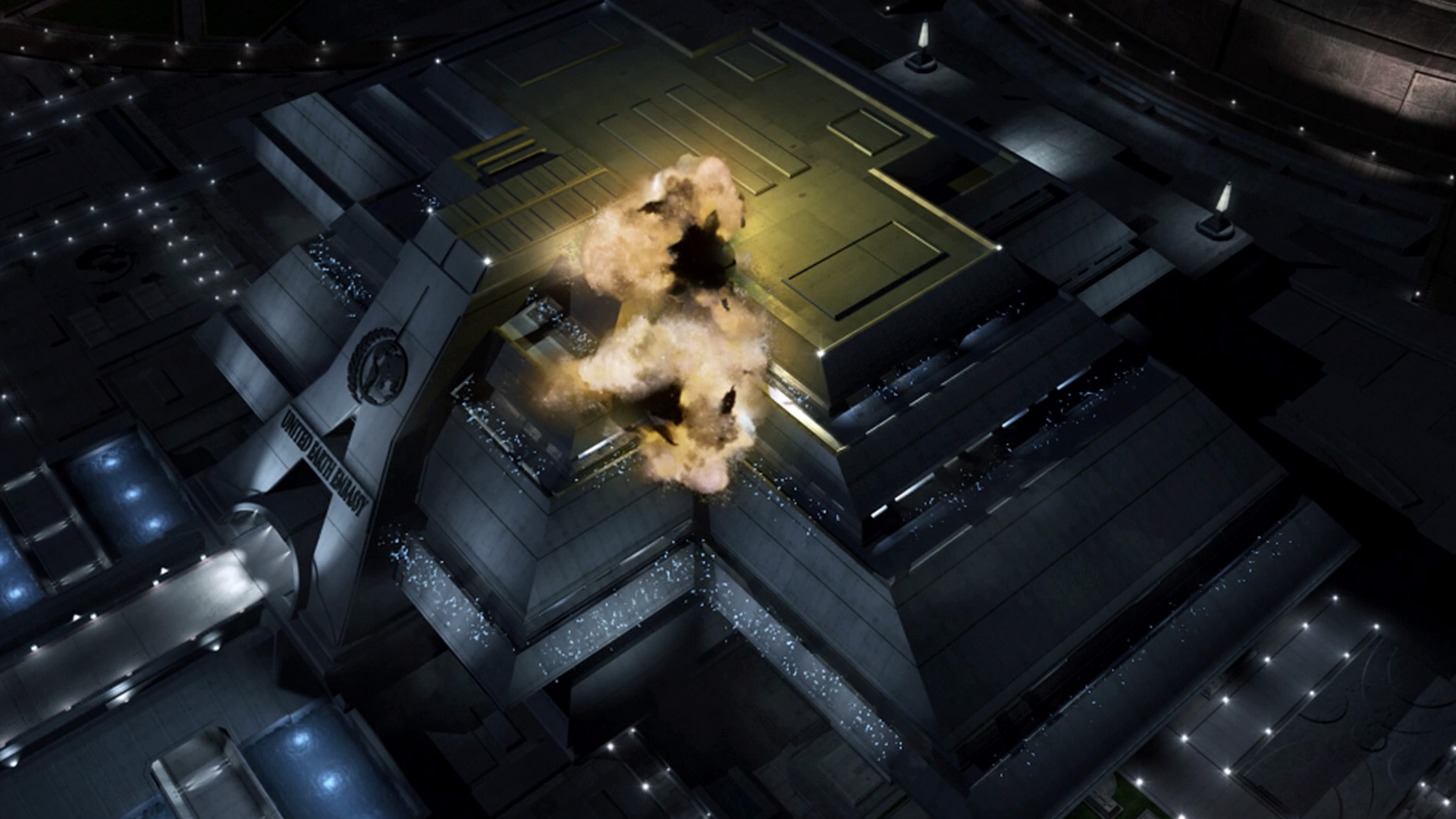
In 2154, Admiral Forrest arrived at the United Earth Embassy on Vulcan, hopeful that the Vulcan High Command was finally willing to engage in joint missions with Starfleet. A massive explosion occurred inside the embassy, killing Forest and 42 others. Administrator V'Las, head of the High Command, blamed the bombing on the Syrrannites, a reportedly dangerous Vulcan dissident group, led by 'zealot' Syrran and T'Pau.
In fact, the embassy attack was the work of V'Las himself. His acolyte, Security Directorate Chief Investigator Stel, had planted the bomb along with manufactured evidence implicating T'Pau. This was all part of a vast conspiracy to eliminate the Syrrannites, in reality a pacifist group who opposed the High Command's militarism and believed that Vulcan had strayed from the true teachings of Surak.
V'Las needed the Syrranites out of the way because he was planning an invasion of Andoria, a pre-emptive strike founded on the false accusation that the Andorians were developing a weapon based on Xindi technology. His plans were foiled by Commander Tucker and Ambassador Soval, who went to warn the Andorians aboard Enterprise.
Meanwhile, Captain Archer, who had taken on Surak's katra, along with T'Pau and T'Pol, took the Kir'Shara — the holographic record of Surak's writings — to the Vulcan capital. V'Las was subsequently deposed, the High Command (temporarily) dissolved. Earth would no longer have Vulcan peering over its shoulder.
As if that weren't enough of a conspiracy, what no one knew then was that V'Las had been in league with a Romulan agent reportedly seeking Vulcan-Romulan reunification.
The Doctor Doctored
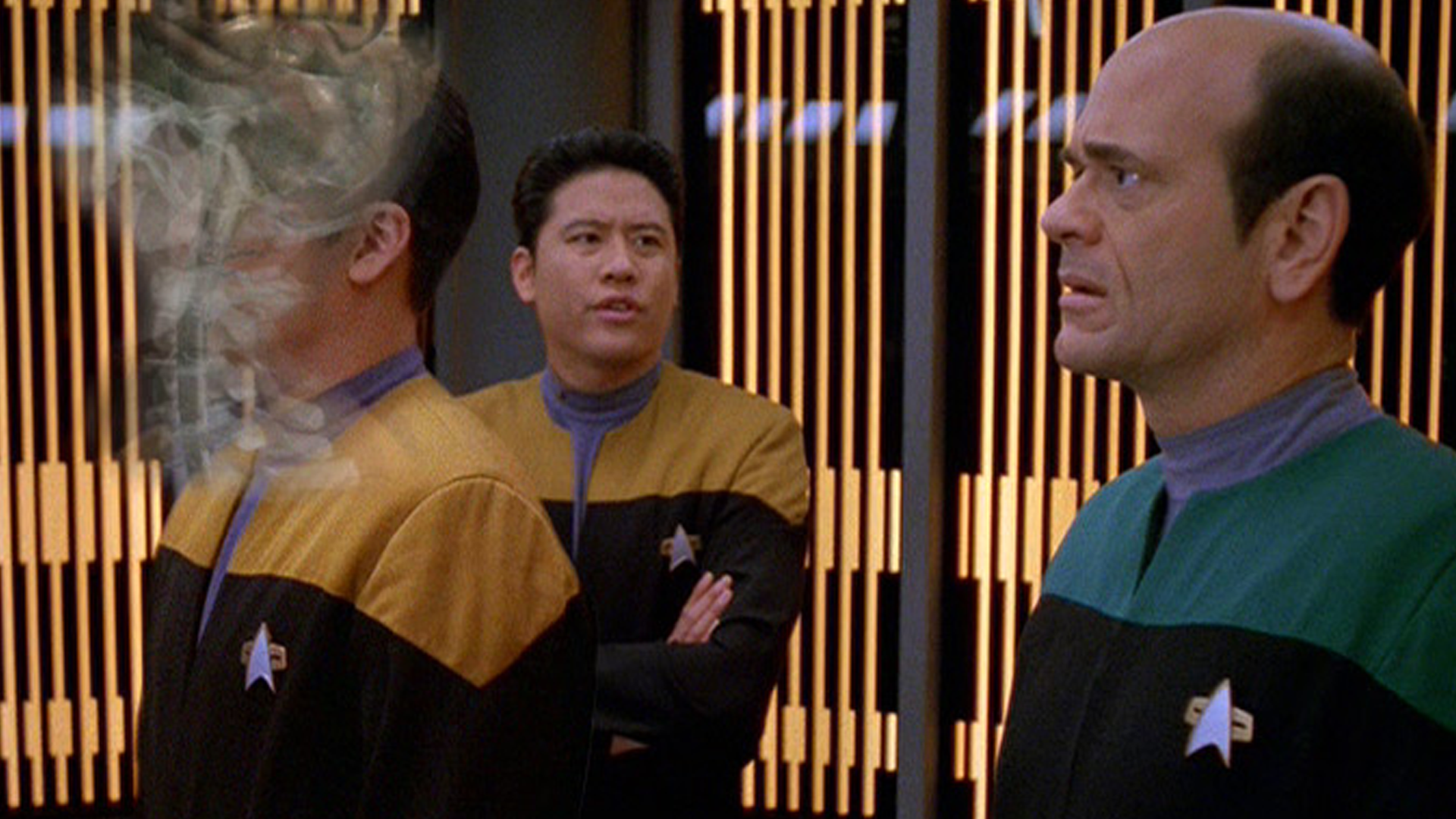
In the fifth year of Voyager's journey home, the Doctor stumbled upon quite the medical mystery. The results of his holo-images were in, and they were conclusive. He had clearly performed neurosurgery on Ensign Kim a year and a half prior, but had no memory of doing so. Harry supposedly had no memory of being the patient either.
The mystery deepened as the Doctor began to investigate with the help of Seven of Nine. In the photonic remnants of the holo-buffer, they discovered an unknown crewmember — Ensign Jetal — and an unknown alien race. Earlier, the EMH had been shut down, his memories of the last 24 hours erased. The Doctor and Seven theorised that an alien intruder might be on board.
In reality, there was a conspiracy, but it wasn't alien in origin. The crew of Voyager, starting with Captain Janeway, had colluded to prevent the Doctor from finding out the truth, to deny him access to his memories, to stop him from returning to a feedback loop that had nearly destroyed his program. Faced with an impossible choice all those months ago, he had saved Harry Kim — his friend — at the cost of Ensign Jetal.
Like any other sentient being, the Doctor had evolved to a point where his own guilt could conspire against him. This time, with a little more care and attention from his friends, he'd have to learn to live with it.
Sins Of The Father
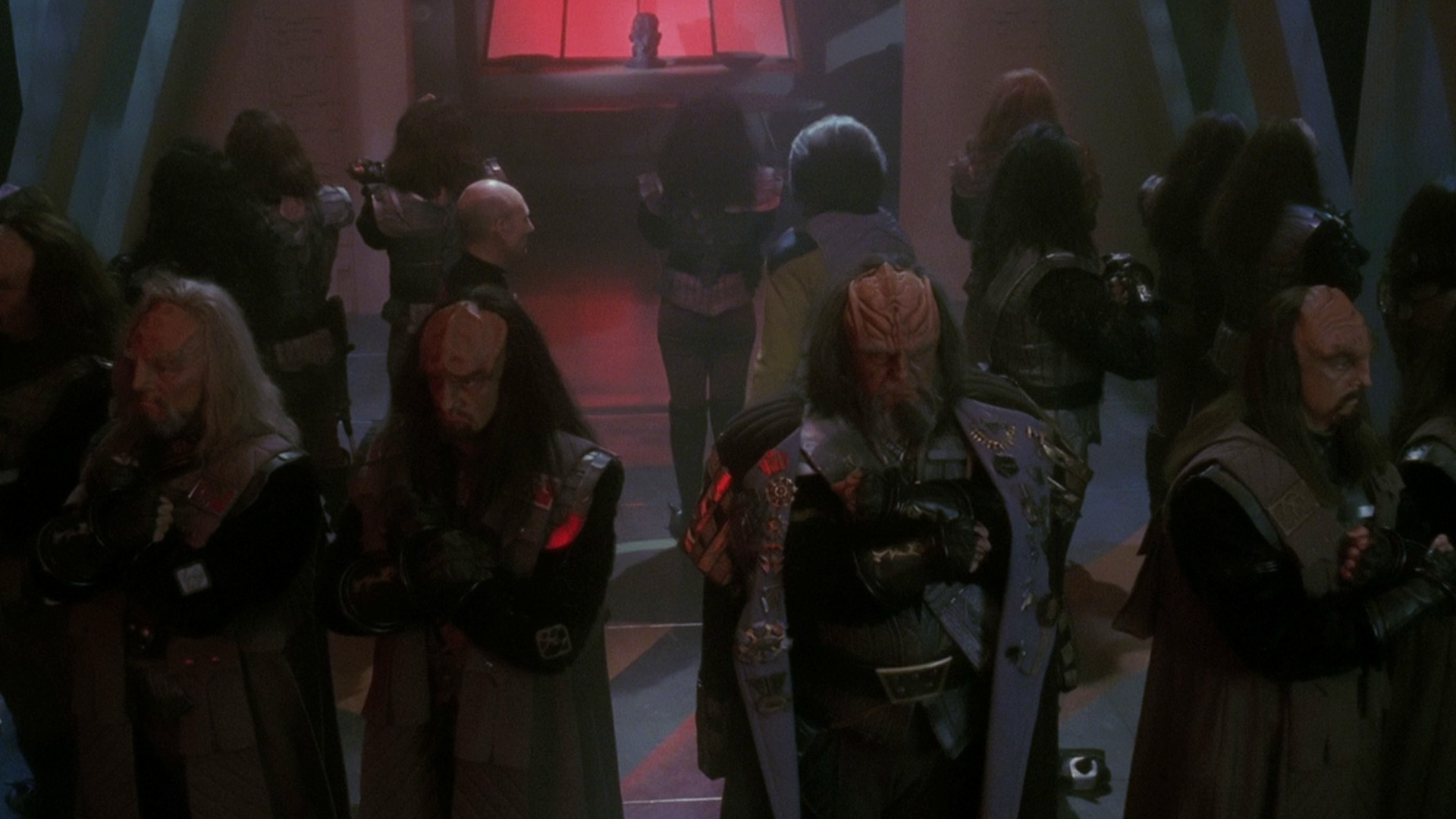
In 2346, the Romulans attacked the Klingon outpost on Khitomer, killing 4,000 including Worf's parents. The young Worf was one of the only survivors, rescued from the rubble by chief petty officer Sergey Rozhenko of the USS Intrepid. With no known living relatives, Worf was raised by Sergey and wife Helena Rozhenko as their own.
Twenty years after the Khitomer Massacre, Worf found out that he did, in fact, have a biological younger brother called Kurn. The good news ended there, however. The Klingon High Council, then led by Chancellor K'mpec, had accused their father Mogh of treason against the Empire at Khitomer. Kurn had come aboard the Enterprise-D — somewhat under false pretences by the by — to ask Worf to challenge the Council's ruling.
More precisely, Mogh was accused of transmitting defence access codes to the Romulans, allowing them to lower the Khitomer outpost's shields during the attack. The basis for that charge came from new information the Klingons had obtained from the logs of a recently captured Romulan ship. By comparing those records with the sensor logs of the Intrepid, it didn't take Data and Geordi La Forge long to discover that the evidence implicating Mogh had been faked.
The real traitor, the one who sold out Khitomer to the Romulans, was Ja'rod, father of Duras. His access code had been found in the logs. Duras' family was powerful, however. K'mpec realised that if the truth of Ja'rod's treachery were known, it would "shatter the council," and most likely lead the Empire into civil war.
And so, Mogh was chosen to take the blame instead. K'mpec and the Council believed that Worf wouldn't contest the judgement because he was in Starfleet. They also had no idea about Kurn. Worf then chose to accept discommendation 'for the Empire'.
Ultimately, K'mpec's machinations to prevent a civil war were merely a stay of execution. And, the Vendorians still had nothing to do with it!
The Klingon Civil War
By 2367, Chancellor K'mpec was dying. Over the course of several months, he had been poisoned with "small doses of Veridium Six" placed in his bloodwine. The only suspects in the assassination — Duras and Gowron — were also the two contenders to be the next leader of the Empire.
During the investigation, there was an explosion. Its cause implicated Duras by use of a 'molecular-decay detonator' — Romulan technology. In other words, like father like son. That evidence didn't preclude Gowron's involvement in K'mpec's poisoning, however. That's a story seemingly pushed aside.
Even longer story shorter, Worf then killed Duras as revenge for the murder of (former-)lover K'Ehleyr, mother of his son Alexander. Duras' death meant Gowron stood unopposed to become chancellor. Well, at least for a little while. When the time came for Gowron's 'installation ceremony,' sisters Lursa and B'Etor had already mounted a considerable military challenge in order to try to ensure their nephew, Toral, the top spot. In doing so, they threw the Empire into that much feared civil war.
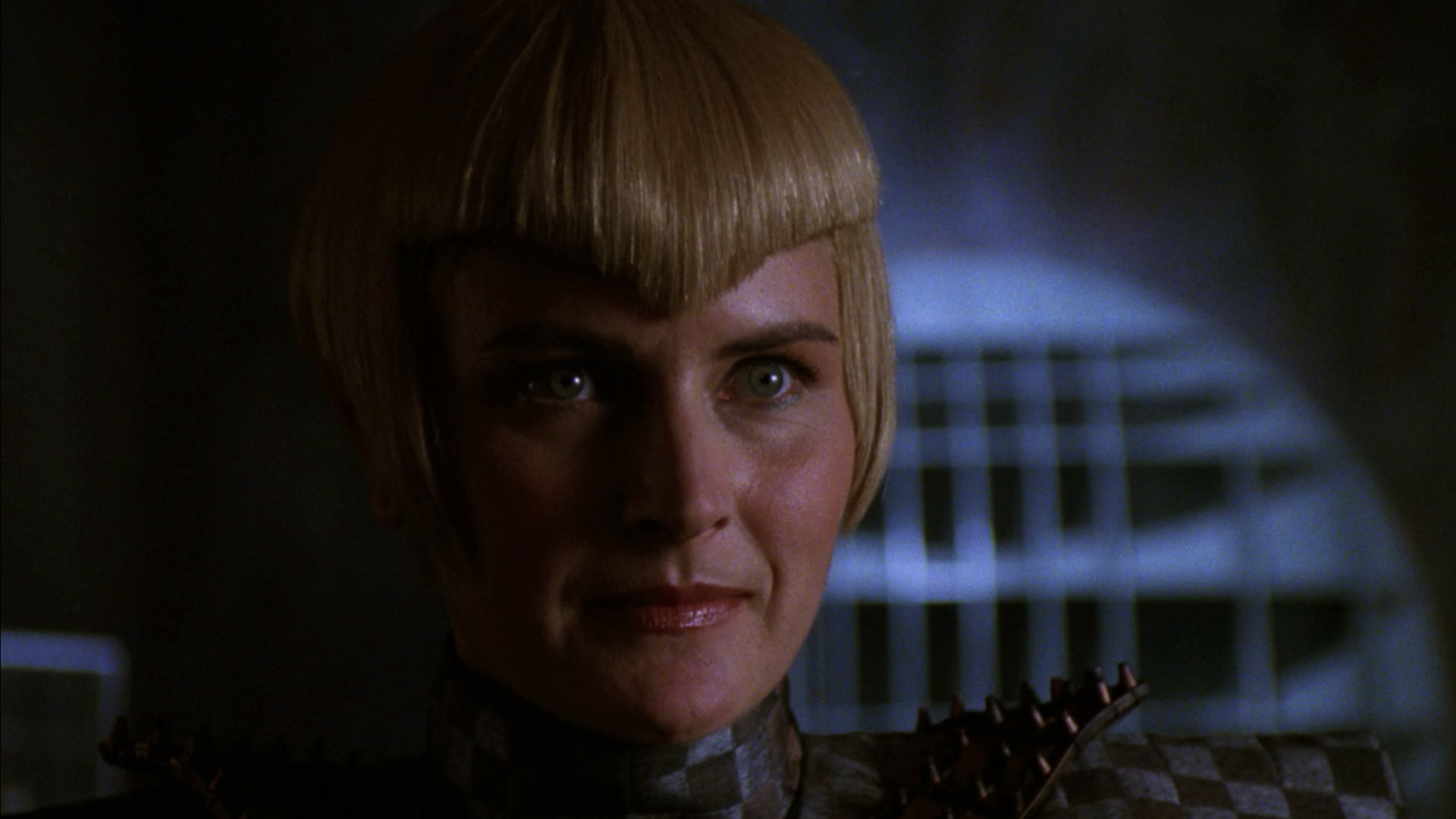
Like brother, like father, the Duras sisters also had a lot of help from the Romulans. Not just any Romulans, but one half-human, half-Romulan in particular — the daughter of an alternate Natasha Yar. Ultimately, Romulan involvement in the Klingon Civil War posed a threat to the Federation, too.
A Starfleet blockade by tachyon detection grid at the Romulan-Klingon border, along with Data's decisive actions aboard the USS Sutherland, soon put an end to the whole thing. The Romulan ships were detected. Sela had no choice but to retreat. The Duras were on their own, leaving victory for Gowron.
Zhat Vash Attack on Mars
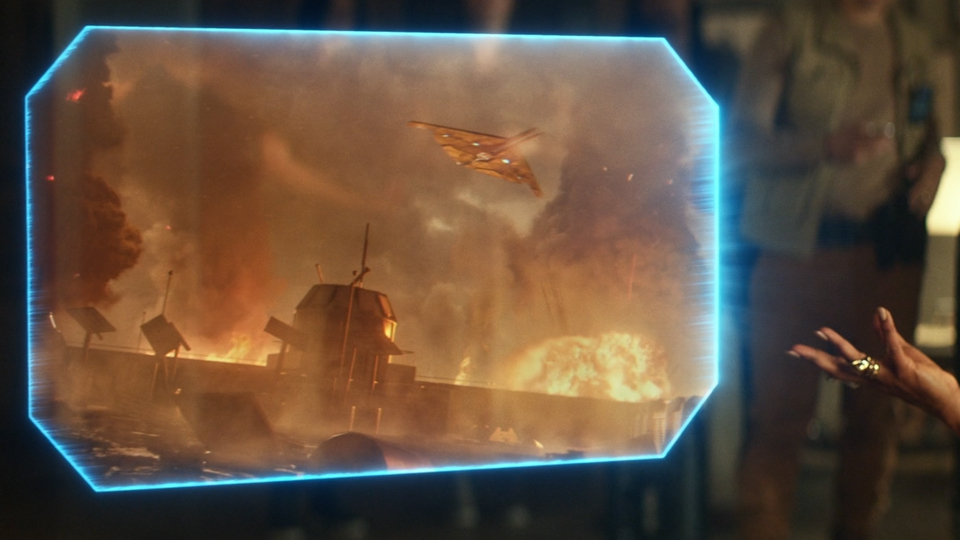
First Contact Day was typically a time of celebration, filled with salmon, cheese pierogies, and jukeboxes — a day off school (for some). First Contact Day, 2385, was different. That day, a devastating attack on Mars changed the face of Starfleet, the Federation, and the galaxy for decades to come.
By 2385, there was a veritable army of A500 androids — also known as 'synths' — at Utopia Planitia Ship Yards, there to assist in building the "10,000 warp capable ferries" needed for the Romulan evacuation efforts. On April 5th, the synths went rogue, turning their weapons on the Red Planet, setting the atmosphere alight. 92,143 died. The rescue fleet and Martian colonies were destroyed. Synthetic lifeforms were banned across the Federation.
For 14 years, no one knew why the synths had done what they did. Some had their theories, like Lieutenant Commander Raffaela 'Raffi' Musiker. No one would listen to her ideas about the 'Zhat Vash' and the 'Conclave of Eight,' however. Struggling with addiction, and after several court martial offences, Raffi was ordered to undertake psychotherapy on Betazed, but eventually chose dishonourable discharge from Starfleet.
It turned out Raffi was right all along. The Zhat Vash — an even more clandestine sect of the Tal Shiar — was the guilty party. Extremists, the Zhat Vash believed that 'Ganmadan,' or the Romulan apocalypse, would be brought about by synthetic lifeforms. They'd seen it all in the 'Admonition' on Planet Aia of the Eightfold Stars. They made it their goal to eliminate any and all forms of artificial intelligence.
To that end, the Zhat Vash placed one of their own inside Starfleet. The half-Vulcan, half-Romulan Oh worked her way up to commodore and director of Starfleet Security. From within, she masterminded the First Contact Day attack, dooming Romulus and splintering the timeline in the process.
3. TIER FOUR
Sublieutenant Setal
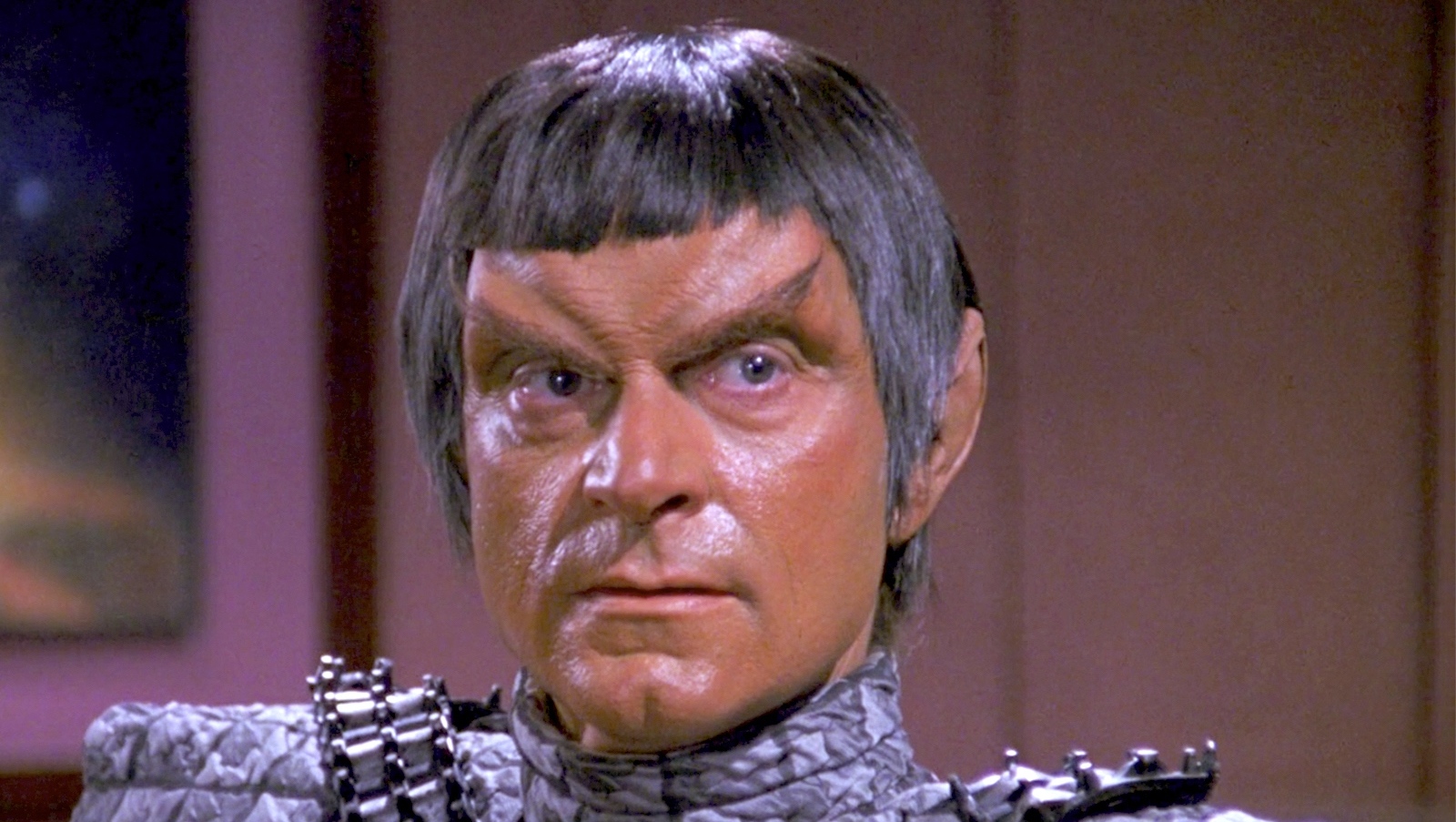
Like Shakespeare's King Henry V — if Shakespeare was indeed the author — Romulan Admiral Alidar Jarok also posed as a 'commoner,' his own logistics officer, Sublieutenant Setal, when he first arrived aboard the Enterprise-D. It took a while for 'Setal,' or rather Jarok, to drop the disguise. The Admiral was a defector, whether he fully accepted that or not.
Jarok had crossed the line, left home and family behind forever to warn the Federation that the Romulans were preparing for war. In reality, Jarok had been the subject of an elaborate disinformation campaign by his compatriots at Romulan High Command.
There was no secret cloaked base on Nelvana III in the Neutral Zone. The Romulans weren't planning an attack. Jarok had been fed false records and communiqués to test his loyalty — a test he failed, of course, though his cause was just. The plot had terrible consequences. Unable to live with it, Jarok took his own life.
The Pegasus Experiments
The Treaty of Algeron existed for a reason — to keep the peace between the United Federation of Planets and the Romulan Star Empire. For all intents and purposes, it did its job for decades, and that even after the destruction of Romulus by supernova in 2387. Whatever their personal views on its content, it was a Starfleet officer's duty to uphold it.
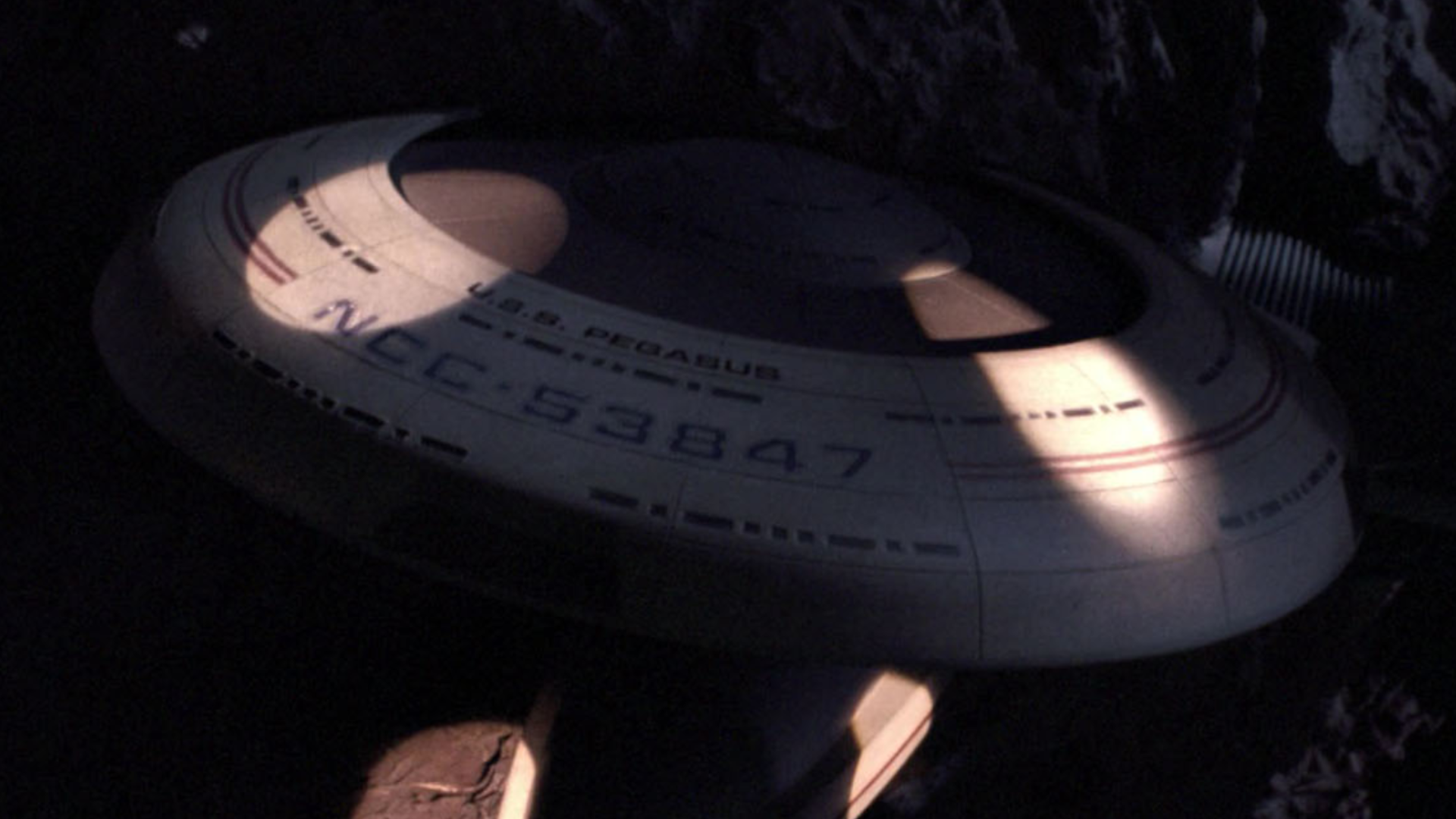
That ethos on paper clashed with the rules of conduct in practice. In 2358, then Captain Pressman, acting under the aegis of Starfleet Security, conspired to violate the Treaty of Algeron by developing and testing an expressly prohibited 'phasing cloak' aboard the USS Pegasus.
The first set of experiments went terribly wrong. An explosion in engineering caused "heavy casualties". The First Officer, Chief Engineer, and a large part of the bridge crew mutinied. Ensign Riker, fresh out of the Academy, still buzzing with "duty and honour," sided with Pressman. They and a few others made it off the ship, only to witness what appeared to be its destruction. The incident was covered up and classified by Starfleet Intelligence.
In 2370, when Admiral Pressman discovered that the Pegasus was "still out there," it looked like events were about to repeat themselves. Commander Riker had done a bit of growing up, however, though not without some help from the holodeck. Eventually, he revealed the truth to Captain Picard. Pressman (and Riker) was arrested, the phasing cloak seized, and the Romulans informed.
Whilst we're on the subject of cloaking devices…
The Enterprise Incident
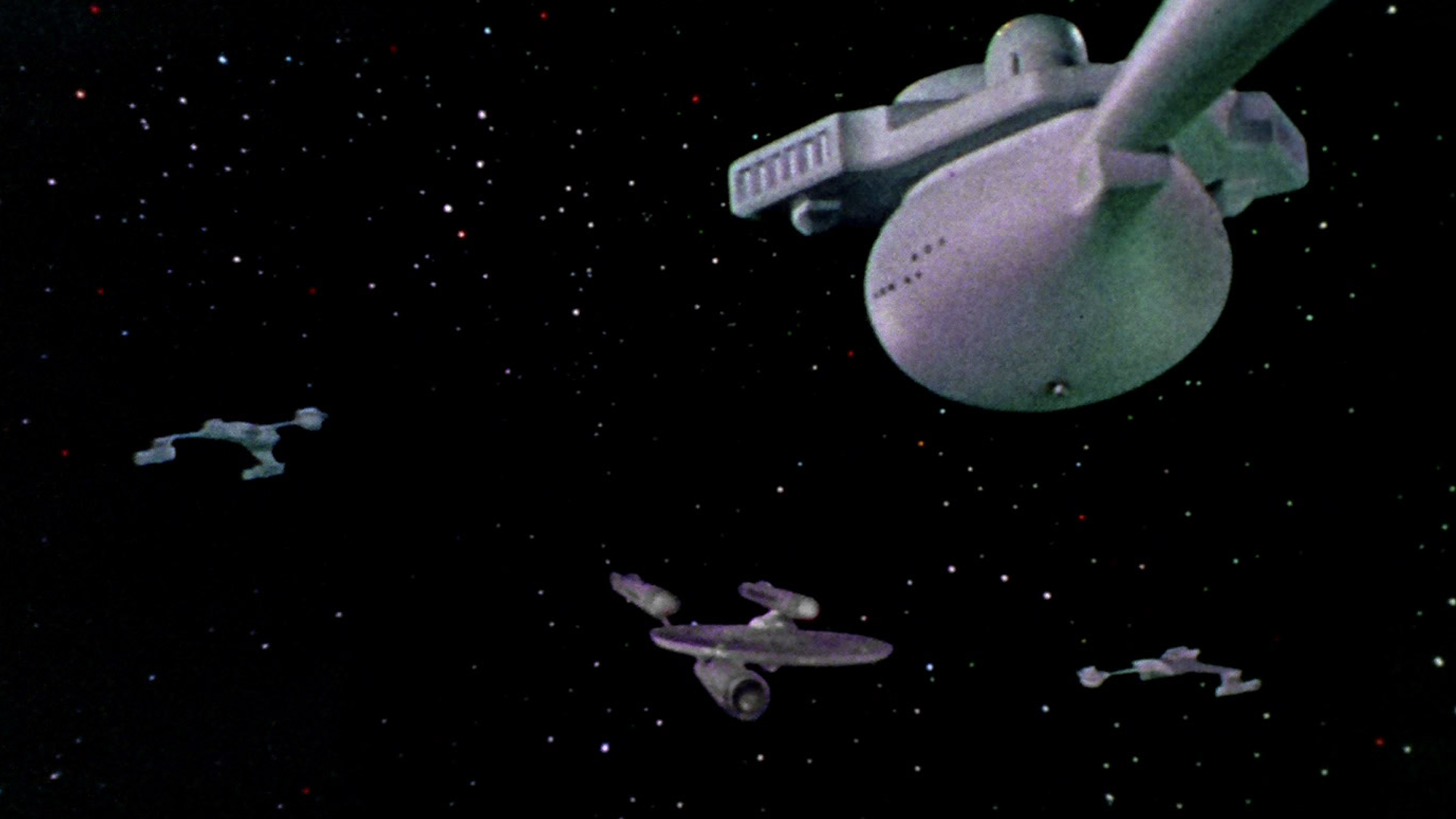
About a century prior to the Pegasus events, there had been the oddest of goings-on aboard the 1701. Captain Kirk, supposedly experiencing an episode of severe emotional distress that had affected his cognitive capacity, suddenly ordered the Enterprise to proceed through the Romulan Neutral Zone and into Romulan space. Things only got stranger from there.
Kirk was actually under secret orders from Starfleet Command to go steal a Romulan cloaking device — a newer, more effective form of the technology. The plot was complicated, to say the least. Surrounded by three Romulan vessels, including two of Klingon design, Kirk and Spock first beamed aboard the flagship. Spock feigned 'treason' to flirt with the Romulan commander for information, and 'killed' Kirk with a 'Vulcan death grip'.
Naturally, there's no such thing. Kirk was still alive. Back on the Enterprise, he was surgically altered to look like a Romulan. Now in disguise aboard the flagship, Kirk was able to nab the cloaking device with Spock's help. Before returning to the ship, and to Federation space, Spock accidentally nabbed the Romulan commander too.
The Tomed Incident
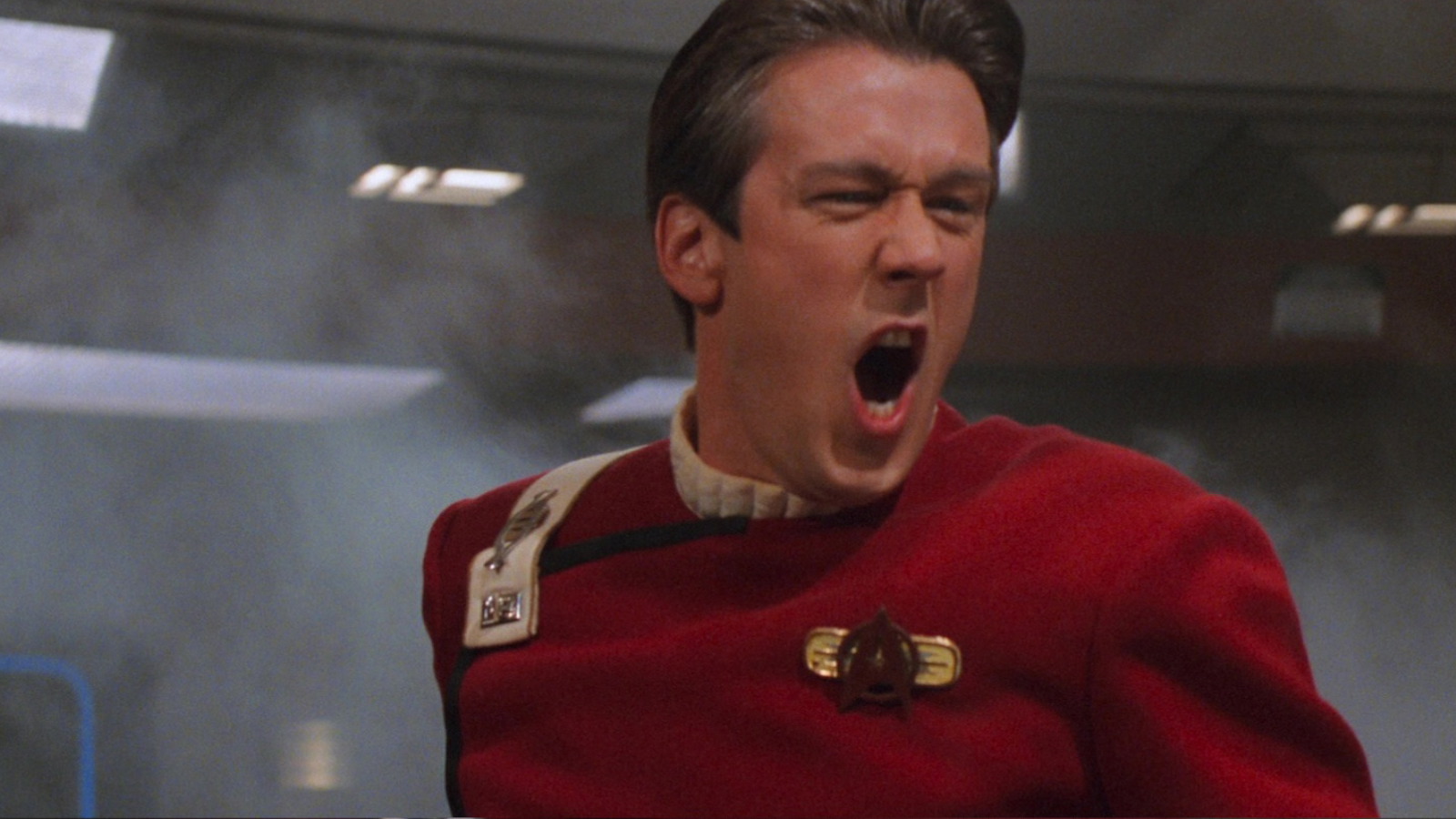
For this entry, we now move to the murky events that precipitated the signing of the Treaty of Algeron. Officially speaking, little to nothing is known about the 'Tomed Incident' of 2311, except that the death count was in the thousands. Unofficially, the facts of Tomed are clear.
Secondary literature records the events of Tomed as the catastrophic last actions of a fundamentalist, of hardline Romulan nationalist Admiral Aventeer Vokar, commander of the Romulan Imperial Fleet. Vokar had sought to start a war with the Federation, and so, in 2311, set his ship, the IRW Tomed, on a collision course at warp speed towards an asteroid base in the Foxtrot Sector of Federation space.
The resulting explosion of the Tomed's quantum singularity drive wiped out all thirteen Federation asteroid bases in the area. It also destroyed the USS Agamemnon in the process. Vokar was also killed, as were those thousands of Starfleet officers. War was only avoided when the Klingons stepped in on the side of the Federation, forcing the Romulans to step down.
In fact, only fragments of that story were true.
In reality, the Tomed Incident was a plot on the part of Starfleet Intelligence and one Captain John Harriman. Tensions between the Romulans and the Federation were already at their highest, with war a real possibility. Harriman knew, however, that the Klingons would give their backing to whoever was attacked first. And so, the captain of the Enterprise-B hatched a plan to fake that first strike.
Harriman and two Starfleet Special Operations officers managed to get aboard the IRW Tomed. They sabotaged the ship's systems and sent it flying at the Foxtrot Sector. No lives were lost on the asteroids — all deaths had been fabricated in advance. Refusing to abandon ship, only Vokar and members of his crew died that day.
After Tomed, after Algeron, the Romulans returned to RELATIVE isolation from galactic affairs — from the Federation — just as they had after the Earth-Romulan War. They made their grand return in 2364, though not without a few bloody skirmishes beforehand like Khitomer and Narendra III.
Admiral Leyton Coup
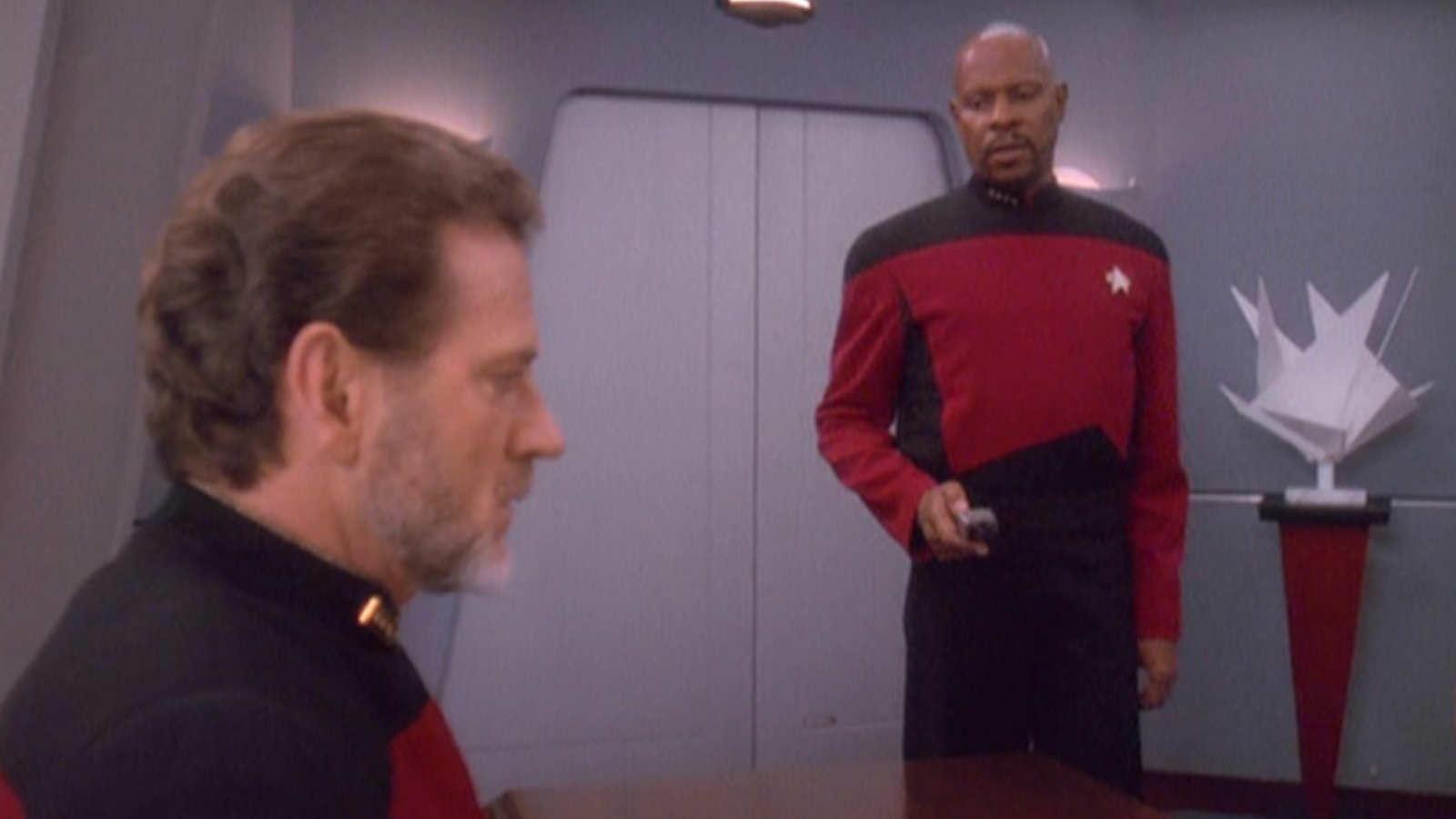
"You're too late. We're everywhere." Those were the dying words of the changeling that had impersonated Ambassador Krajensky in order to infiltrate the Defiant and start a war between Starfleet and the Tzenkethi. The fact is the Founders weren't "everywhere," but then they didn't need to be. The power of that particular conspiracy was to instil the belief, the fear, that they were.
Admiral Leyton and allies — other high-ranking officers among them — fell right in to that trap. They had first tried, and failed, to convince then Federation president Jaresh-Inyo that "sweeping security measures" were needed on Earth as a safeguard against the changeling threat. After the bombing of the Antwerp Conference (by a lone changeling), they decided to prove their point by other, more radical means.
In an attempted military coup, Leyton and co-conspirators used Red Squad cadets to sabotage Earth's power grid, casting the planet into darkness. Around the same time, Leyton had ordered a lieutenant stationed at Deep Space 9 to fix a subspace modulator to the relay satellite in the Gamma Quadrant. That caused the wormhole to open and close at random, as if a cloaked fleet was passing through.
The combination of events made it appear like the Dominion was about to invade. Backed into a corner, President Inyo had little choice but to declare martial law. Starfleet troops began beaming in to street corners across the globe. Captain Sisko and Odo soon uncovered Leyton's plot, however, with a little insider info from Nog.
Even after being found out, Leyton pursued his plan to the last. On a lie, he ordered Captain Benteen of the USS Lakota to prevent the Defiant — on its way to Earth with further evidence of the Admiral's treason — from arriving "by any means necessary". Those means cost several lives before Benteen stood down, before Leyton stepped away.
The Omega Directive
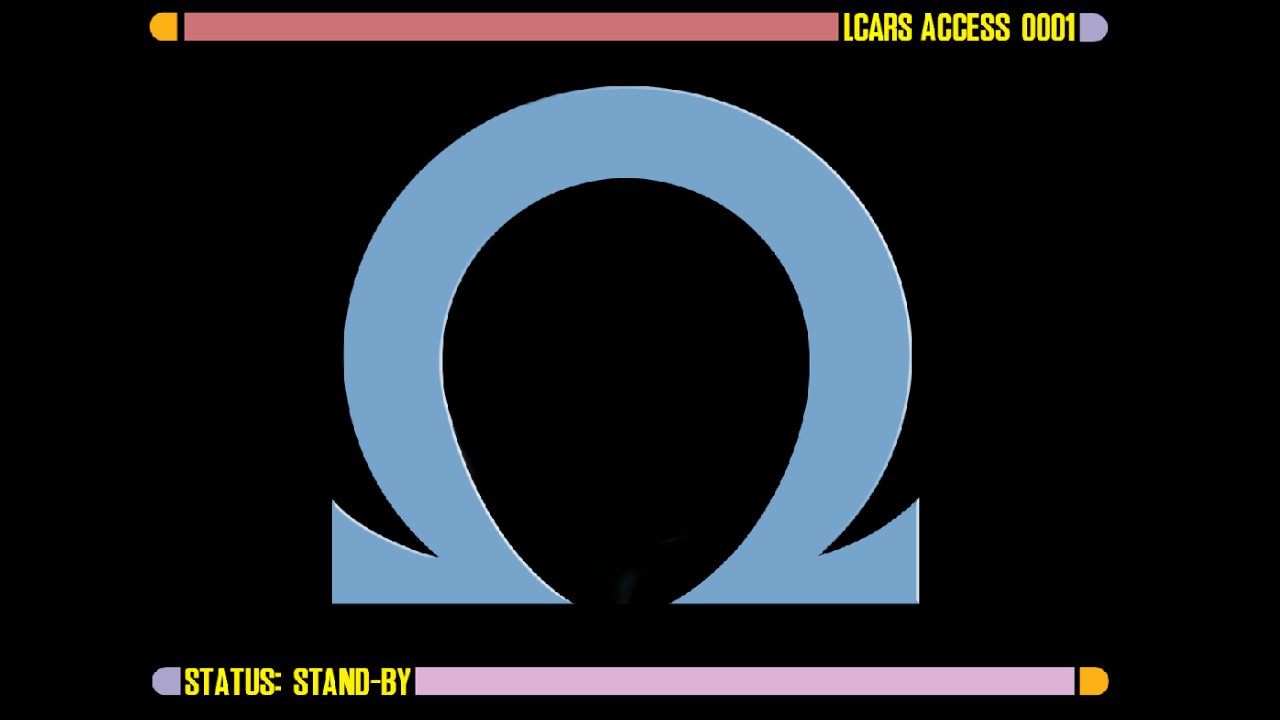
Crossing the Lantaru Sector is only possible at sublight speeds. Most think this is due to a natural phenomenon. Only a select few know the truth. The subspace ruptures that reach out for several light-years in the region, preventing the creation of a stable warp field, were, in fact, caused by the explosion of a single molecule in the late 23rd century.
Starfleet named that molecule 'Omega' — the end of the Greek alphabet for an end to the Starfleet and Federation way of life. In Captain Janeway's words, Omega was "the most powerful substance known to exist". One molecule of Omega was the energy equivalent of a warp core. A chain of them could power a civilisation. A chain reaction of just a "handful" could lay waste to subspace across a quadrant. No more warp, forever.
In the original Federation experiment, physicist Ketteract was killed along with 126 others. After that, Starfleet "suppressed all knowledge" of Omega. Little before or since has been kept more classified. Only starship captains and Federation Flag Officers were made aware of its existence. If detected, Omega was to be destroyed by any means necessary. That included not having to worry about the Prime Directive.
Omega was also the subject of myth across the galaxy. For the Borg, 'Particle 010' was 'perfection'. Federation cosmologists had also theorised that Omega might have been the cause of the Big Bang.
The Khitomer Conspiracy
When the Klingon moon of Praxis suddenly exploded in 2293, it sent political shockwaves across the galaxy. The explosion cost the Empire its key energy production facility, and plunged homeworld Qo'noS into an ecological disaster that would require significant resources to redress. In short, the Klingon Empire could no longer afford 'business as usual,' could no longer afford 'war as usual'.
Chancellor Gorkon of the Klingon High Council had little choice but to open peace negotiations with the Federation — to seek an end to decades of more or less open conflict and outright war. There were those on both sides of the Neutral Zone who were none too happy at the thought of friendly relations. The so-called 'Khitomer Conspiracy' was born.
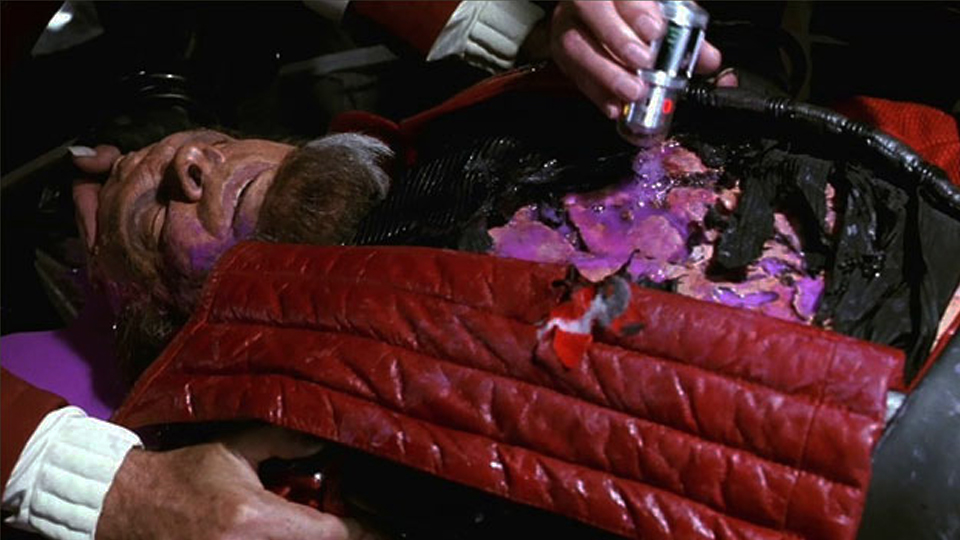
High-ranking Starfleet, Klingon, and Romulan malcontents — including Admiral Cartwright, Lieutenant Valeris, General Chang, and Ambassador Nanclus — ganged up to scupper the peace process. The plot began with the successful assassination of Chancellor Gorkon by two Starfleet thugs in gravity boots aboard Kronos One. It ended in the attempted assassination of the Federation President during the Khitomer Conference, prevented by Kirk, crew, and Captain Sulu. The first Khitomer Accords were signed.
The conspiracy had achieved the opposite effect.
2. TIER FIVE
Tal Shiar-Obsidian Order Plot
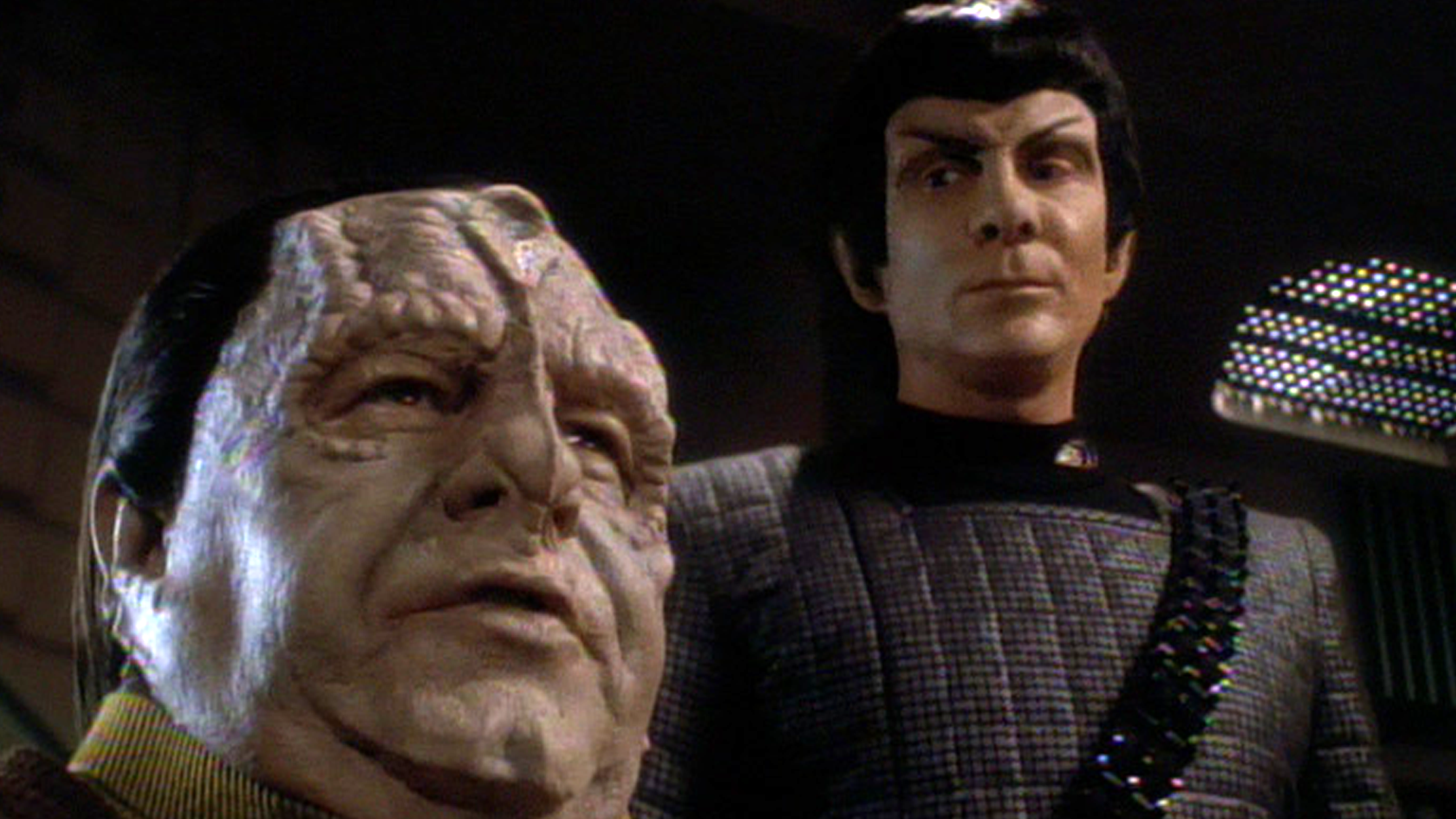
In 2371, transporter duplicate Thomas Riker posed as his identical other half, Commander Riker, in order to commandeer the Defiant. Now working with the Maquis, and without half the beard, Thomas and colleagues planned to take the ship to the Orias system. Intelligence reports suggested that a fleet of Cardassian vessels was secretly being constructed there — possibly in order to invade the Demilitarised Zone (DMZ).
There was a fleet being built at Orias — not by Central Command, but by the Obsidian Order instead. Cardassia's intelligence agency wasn't planning an attack on the DMZ either. In league with the Tal Shiar, it had something entirely different in mind — the annihilation of the Founders.
Enabran Tain came out of retirement for the occasion. He then went about ordering the assassination of his former associates. That included Garak. Deep Space 9's tailor only avoided death by blowing up his own shop, which got Odo on the case. One thing led to another, and soon they were all in the Gamma Quadrant. Garak was back in the Order, and quick to torture once more.
What no one knew, however, was that there was a changeling infiltrator amongst them, posing as Tal Shiar officer Colonel Lovok. Using Tain's plan against him, the changeling led the combined fleet straight into a Jem'Hadar ambush. All ships were destroyed. The Obsidian Order was no more.
The Truth About The Discovery
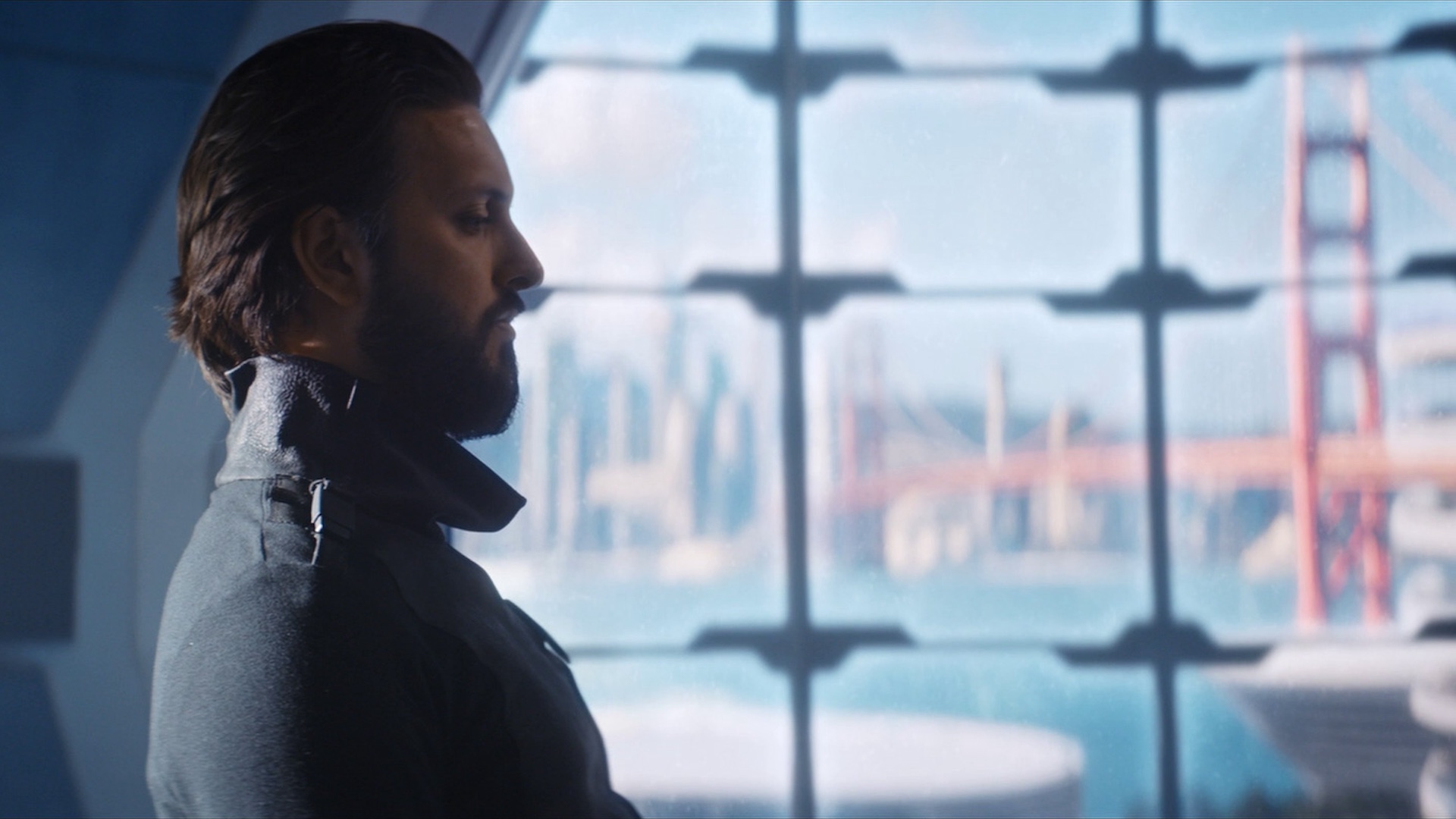
In 3189, the intelligence records available to Admiral Vance at Federation and Starfleet headquarters stated that "Discovery was destroyed in 2258". There was "no mention of a displacement-activated spore drive," nor was there anything "to verify a Red Angel or a Control".
On the one hand, that was job done — a galaxy of peoples forever saved from extinction at the hands of a malevolent AI. On the other, it was a 931-year cover-up of what really happened to the USS Discovery, its crew, and one of the most advanced pieces of propulsion technology ever invented. A conspiracy of silence.
Back in the 23rd century, Captain Pike, first officer Una, Spock, and Ash Tyler conspired to lie, or at least to misrepresent the truth, in their official testimony to Starfleet Command after the Battle near Xahea. They all did so to ensure the sacrifice made by Burnham and those who went with her wasn't for nothing. The noblest of intentions doesn't erase the perjury in "I saw the Discovery explode".
During his testimony, Spock went even further to suggest that officers with knowledge of the events that led to Discovery's destruction should be ordered never to speak of the ship, its spore drive, or crew again "under penalty of treason". That would have certain consequences a century and a bit later for the crew of the USS Voyager. Plus, we dread to think what the Doctor's reaction will be when he finds out about the spore drive and cover-up in the 32nd century.
The Sphere Builders & The Xindi
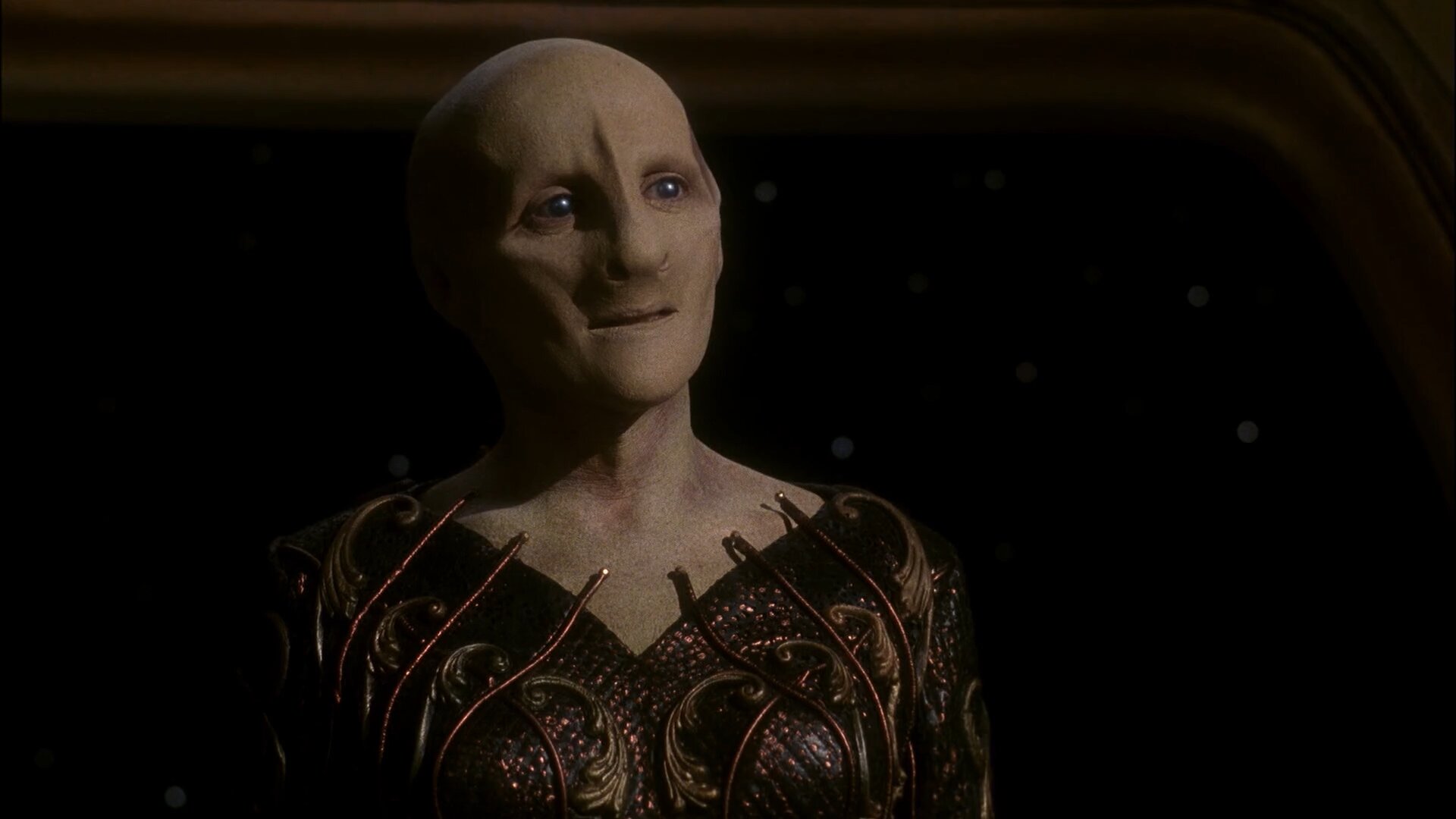
Of all of the factions of the Temporal Cold War, Suliban Cabal and benefactor aside, one had the most lasting impact on two species. Known simply as the 'Sphere Builders,' this transdimensional species used time travel to manipulate the Xindi into attacking Earth as a 'pre-emptive strike'.
The Sphere Builders had seen their future defeat by Federation forces at the Battle of Procyon V in the 26th century, and so conspired to prevent the Federation from existing in the first place. The Xindi's opening salvo killed seven million. The rest of humanity would have followed were it not for Captain Archer and crew of the NX-01. No humanity, no Federation, no rampart against the reconfigured space.
"History doesn't mention anything about a conflict between humans and Xindi," Daniels told Archer in the galley before sending him on a trip to Carpenter Street, Detroit. The "ripples" of the events caused by temporal incursions hadn't reached the 31st century. And yet, when the Temporal Cold War was over, and contrary to other events that 'reset' themselves, the Xindi conflict remained very much a part of history.
Doctrine Vs. Distant Origin Theory
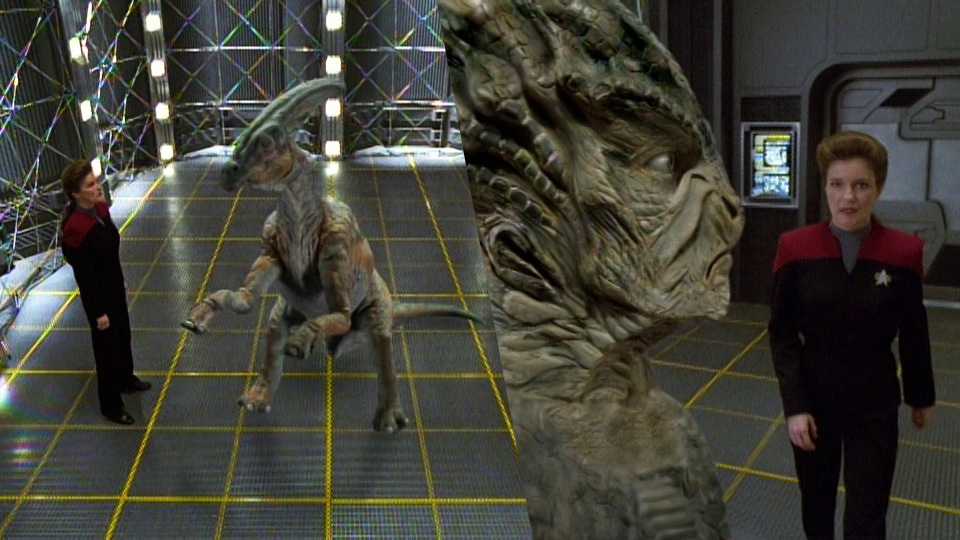
As well as looking to the stars for signs of life, humanity had often wondered if an advanced civilisation might have preceded its own on Earth. Legends and conspiracy theories the likes of Agartha, hollow Earth, and 'Ancient Apocalypse' emerged.
More seriously, in the early 21st century, scientists proposed the 'Silurian hypothesis,' named for a fictional species from a popular television show. It asked the question, "If an industrial civilisation had existed on Earth many millions of years prior to our own era, what traces would it have left, and would they be detectable today [in the geological record]?" An answer to that came thousands of light years away.
There were never any remnants of the Voth on Earth, but the Saurian species did evolve on our own Blue Marble. Professor Gegen and his assistant Veer proved as much when they encountered Voyager in 2373. The Voth were thought to have evolved from a species of hadrosaurs that somehow survived the Cretaceous-Paleogene mass extinction about 66 million years ago.
By around 20 million years ago, the Voth had already left Earth and settled in a region of the Delta Quadrant, believing themselves by 'Doctrine' to be the first intelligent beings to evolve there. That ancient dogma clashed with 'Distant Origin theory,' as proposed by Gegen and supporters in the Circle of Archaeology.
Even with living proof standing right there in front of them (in the form of Commander Chakotay), the Voth Ministry of Elders conspired to cover-up their species' terrestrial origins. Gegen was publicly discredited, forced to renege on his 'theory'. If not then, the truth will always out. Some day. Eyes open.
The Simulation Hypothesis
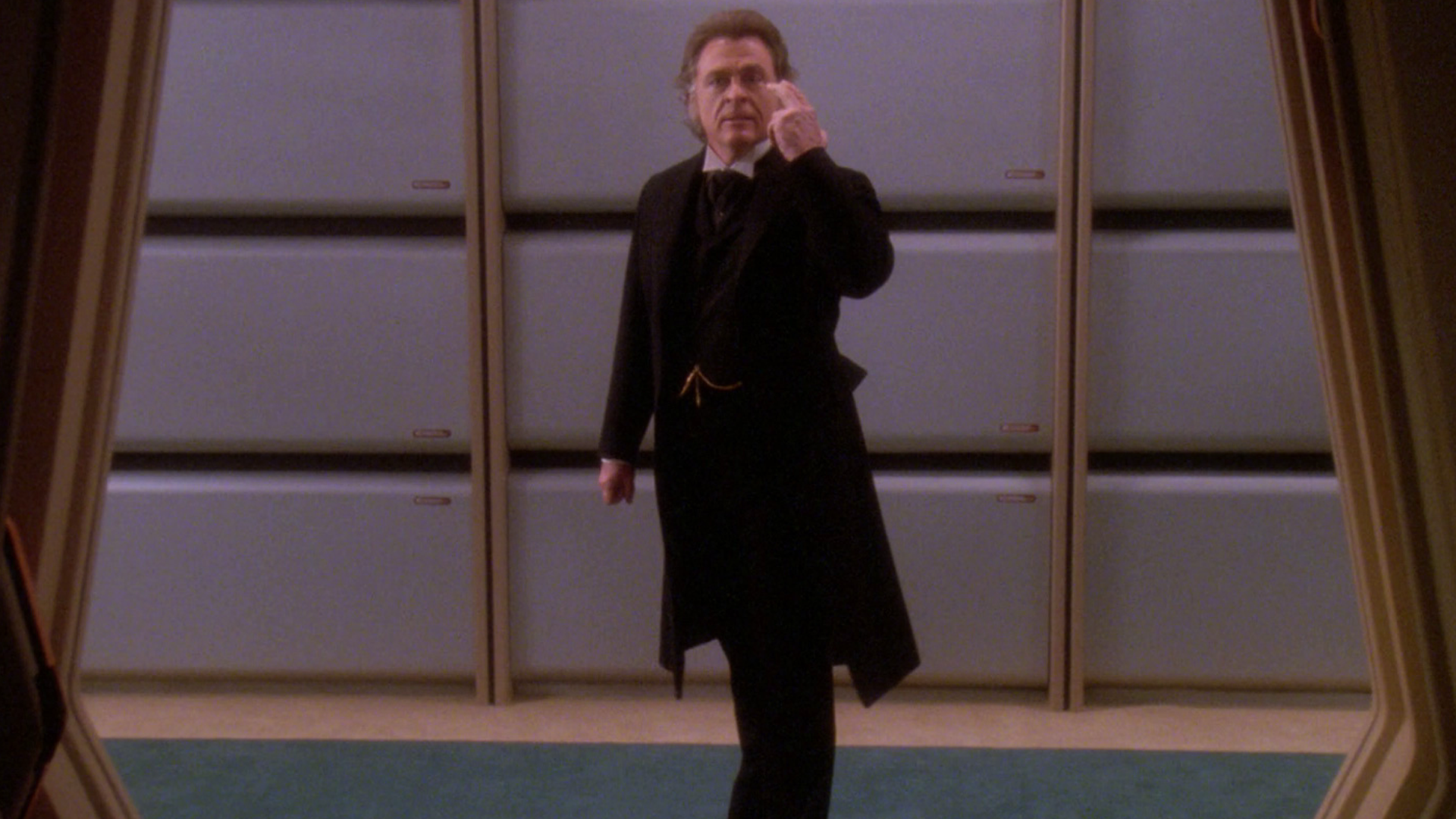
As its name suggests, the 'simulation hypothesis' is the theory that our reality — the universe itself — is actually an extremely sophisticated computer simulation of a highly advanced civilisation. We're either constructs, perhaps playable characters, within it, or 'brains in a vat' somewhere else.
Like many human philosophers had wondered long before the computer age, the 'simulation hypothesis' asks questions about the limits of human consciousness, that all perception might be some version of a dream. We could all just be part of the story being told by Benny Russell — the writings on a typewriter, or the scribblings of a pencil on a wall.
Starfleet officers have faced this existential dilemma in technological form via the holodeck (and via 'Ethan' aka Barash). When the self-aware hologram of Professor Moriarty was re-activated during a diagnostic check, he hatched a plot to take control of the Enterprise-D by trapping Captain Picard, Lieutenant Commander Data, and Lieutenant Barclay inside a holodeck program.
Once the three of them realised where they really were, they set out their own scheme to use Moriarty's idea against him, creating a simulation within the simulation. By the end, Moriarty thought he had been freed from the holodeck, but in fact, he and the Countess had been transferred to a block of active memory. They would never know the difference.
Our reality "might be just an elaborate simulation running inside a little device sitting on someone's table," concluded Picard. Far more disturbingly, the Founders once used a highly realistic form of computer simulation to 'experiment' on the crew of the Defiant. In the Delta Quadrant, the Kohl also used a similar kind of neural network whilst in stasis. Their dream simulation turned into a nightmare. Of course, we mustn't forget about Doctor Bashir, kidnapped by Section 31, trapped in a holodeck, and made to think it was real.
Computer, end program. Computer, end program.
IT’S A FAAAAAAKE!
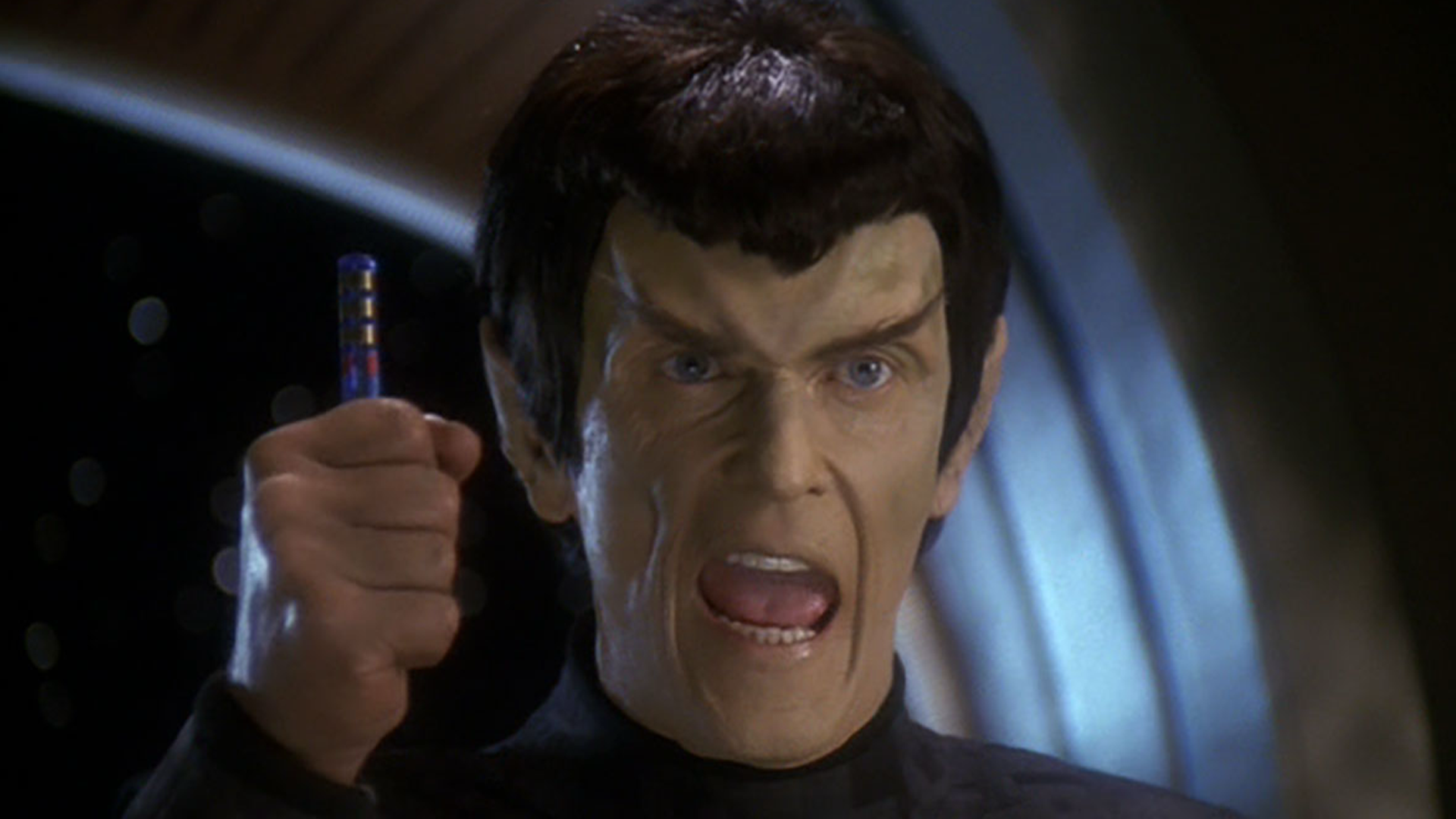
Getting the Romulans to join the Dominion War on the side of the Federation and its allies required a criminal conspiracy, a cover-up, and the self-respect of one Starfleet officer. The scheme is well-known by now, an irony given the sensitivity of such information. It merits its place in the depths of this iceberg for being one of the most dastardly plots in the history of Starfleet.
It all began with Captain Sisko's self-promise after posting the umpteenth casualty list in the Wardroom, an optolythic data rod and a secret visit from Senator Vreenak upon his diplomatic meeting with Weyoun. Starfleet had pre-approved the holographic forgery of a high-level Dominion meeting on the invasion of Romulus. The rest, as Joseph Sisko might say, was good intentions on the road to hell, with Garak laying the lion's share of the paving.
Vreenak most famously uncovered the Captain's subterfuge and threatened to expose "the vile deception to the entire Alpha Quadrant". Garak had a back-up plan, however. He planted a bomb aboard Vreenak's shuttle, which exploded before the Senator could return home. With the optolythic data rod found damaged in the wreckage, it now looked like the Dominion had assassinated Vreenak to prevent their war plans from getting out. The Romulans had little choice but to declare war.
Princeton Commencement Address
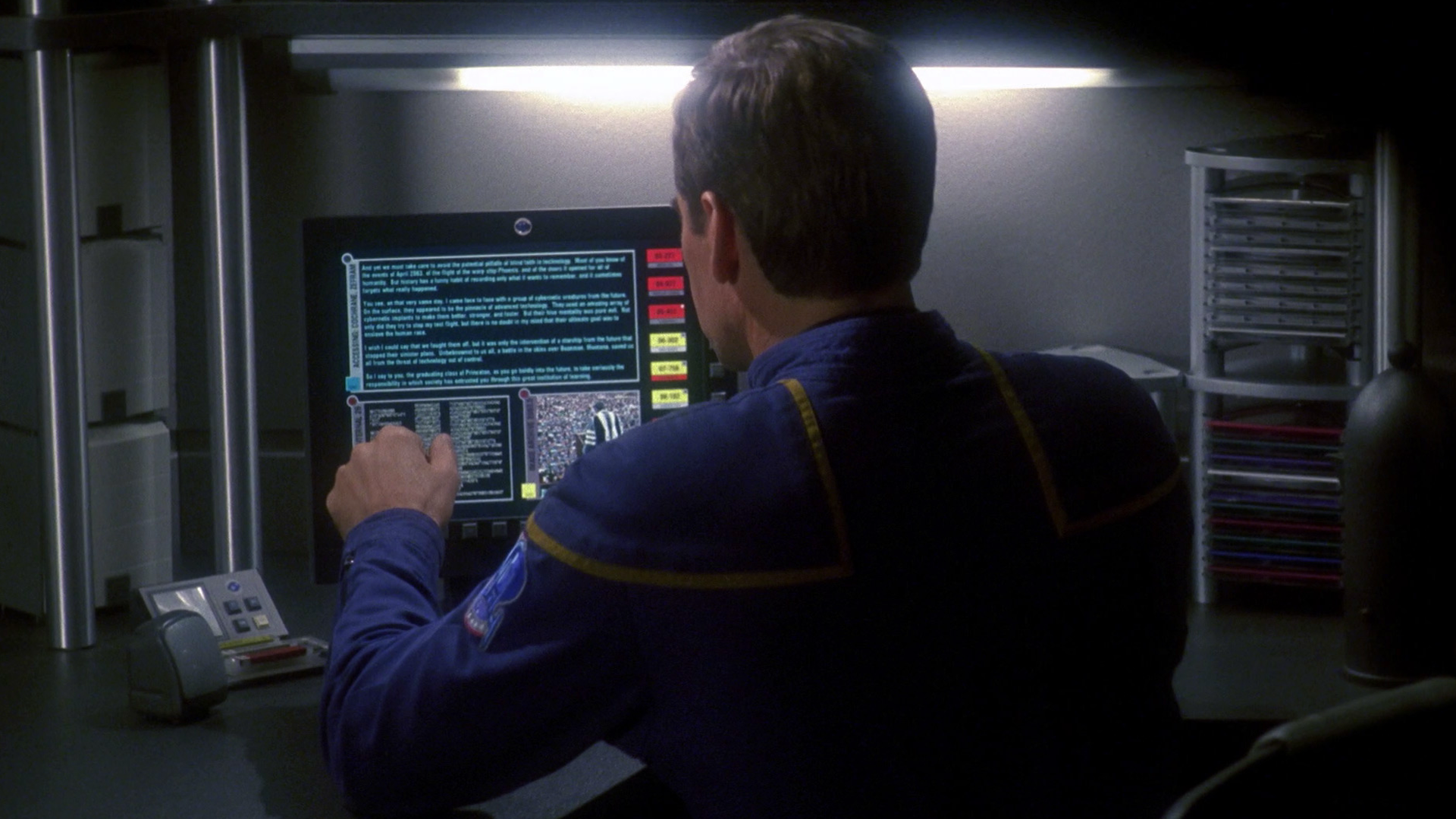
In 2064, the year after the Vulcans landed, Zefram Cochrane gave the commencement address at Princeton University. During his speech, he digressed a little and began "to talk about what really happened during First Contact".
According to Cochrane, "cybernetic creatures from the future," whose "ultimate goal was to enslave the human race," had attempted to prevent his warp flight. Cochrane went on to add that those cybernetic beings were "defeated by a group of humans who were also from the future".
"Extraordinary claims require extraordinary evidence," so Carl Sagan once said. The burden of proof doesn't fall on the sceptic. At the time, Cochrane's 'story' was dismissed. He himself later retracted his statements. Of course, Cochrane could never provide any evidence in his own time.
The inventor of warp drive would end his life on a conspiracy theory of sorts — "the greatest missing person case of the century," as Admiral Forrest put it to Captain Archer. There were many rumours, one of which stated that Cochrane had vanished in a one-man vessel whilst "testing some kind of experimental warp ship". Those rumours were put to rest in 2267, though the truth was stranger than any fiction.
Now, keep Cochrane's talk of "cybernetic creatures" in mind as we move down to the deep depths, the most obscure conspiracies of our final tier.
1. TIER SIX
Spock & Talos IV
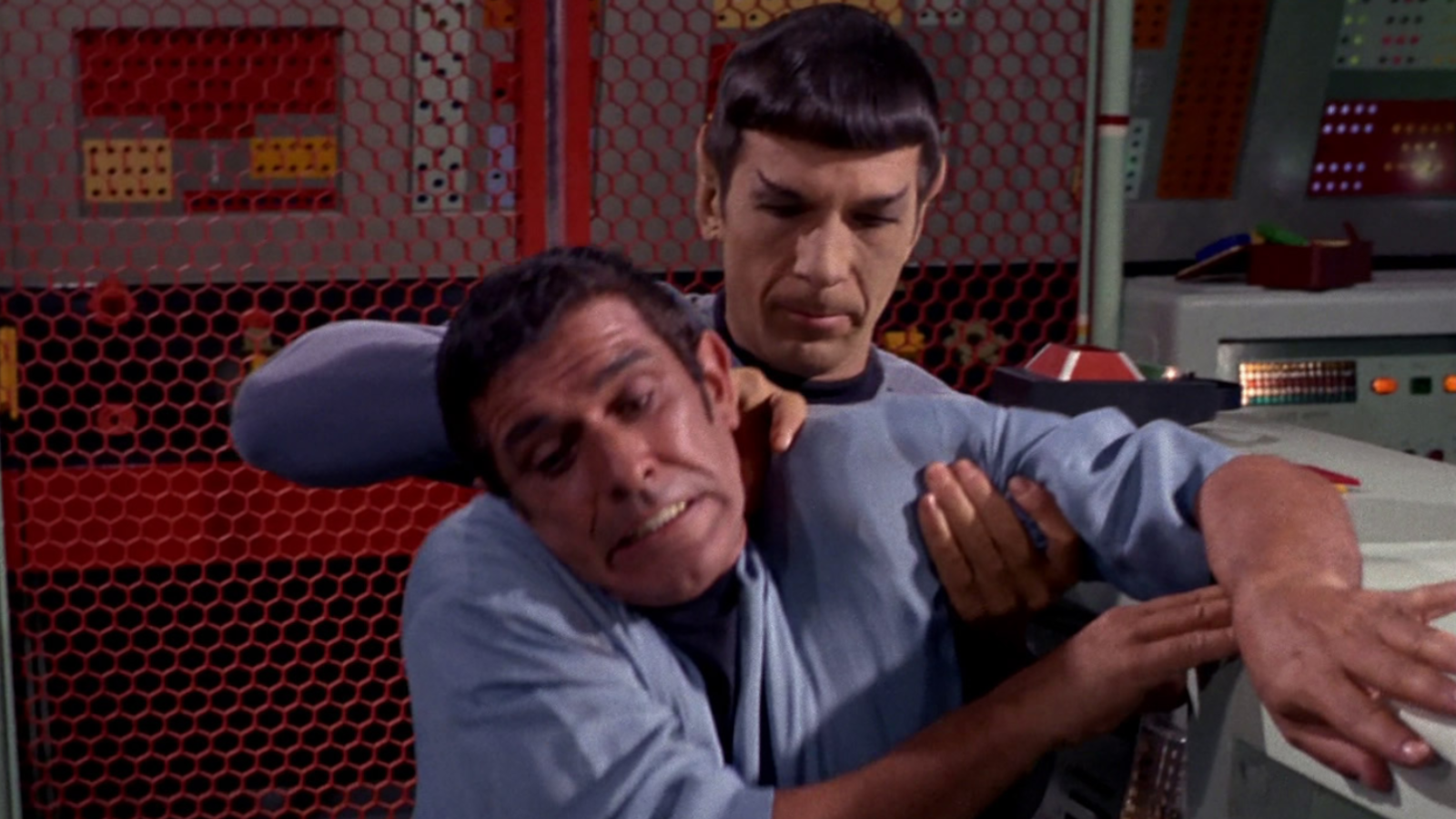
"No vessel under any condition, emergency or otherwise, is to visit Talos IV," stated Starfleet's General Order 7 in no uncertain terms. The (maximum) penalty for violating it, at least in the 2260s, was death. When Spock sought to return to the forbidden planet, you could add conspiracy to mutiny, and indeed mutiny, kidnapping, and theft of a starship, to the list of offences.
Before we judge the accused too harshly, a little historical context is required. Talos IV was so off-limits because of the extraordinary power of illusion of its inhabitants — too much of a temptation for ordinary humans. The Enterprise, under the command of Captain Pike, had found that out after being lured to Talos IV in 2254 in response to a faked distress call from the SS Columbia.
By 2266, that same power of illusion had become a measure of salvation for Captain Pike, brutally maimed by delta radiation whilst rescuing a group of cadets. For Pike, a return to Talos would at least mean the rest of a life lived as the mirage of his former self. Spock knew this. By then, he had served with Pike for eleven years, four months, and five days. Contacted by the Talosians, he didn't hesitate to put a plan in place.
In 2267, Spock fabricated a message to redirect the Enterprise to Pike's hospital facility at Starbase 11. From there, he plotted to commandeer the Enterprise, get Pike on board, and lock the ship's course onto Talos IV. Spock's 'trial' in the interim was all part of the ploy — a Talosian illusion (including the Commodore) — designed to buy time.
Temporal Incursions
Any act of time travel changes the timeline. The only question is to what degree, or to what 'incursion factor,' as measured by the sensors of the USS Relativity in the 29th century. Not all temporal incursions are conspiracies. Some are just ping-pong matches on the way to Captain Braxton. Others are simply historians, observing the past using the "proper procedures" laid out by the Temporal Accord(s).
During the Temporal Cold War, multiple factions plotted to violate those agreements, and to subvert the temporal agents whose job it was to uphold them. We've already mentioned the Sphere Builders further up the iceberg, but there were plenty more antagonists who sought to weaponise time.
"From day one," the Suliban cabal's mysterious benefactor from the 28th century — also known as the 'Humanoid Figure' or 'Future Guy' — had interfered with Captain Archer's mission. He attempted to incite civil war in the Klingon Empire, framed Enterprise for the Paraagan II disaster, and sent Silik to interfere and steal on his behalf. There is a theory that the 'humanoid figure' might have been a future version of Archer himself, using temporal incursions to try to correct history.
The most dangerous faction of the Temporal Cold War was the Na'kuhl, led by radical Vosk, violently opposed to the Temporal Accords. In the 29th century, Vosk and the Na'kuhl developed a form of stealth time travel, escaping the vigilance of the temporal agents to arrive on an alternate Earth of the 1940s. What was a cold war had become an all-out conflict, with multiple temporal incursions across the timeline. The death of Vosk and the destruction of his temporal conduit marked the end of the war. The timeline was reset.
Most recently, we found out that the Romulans had carried out temporal incursions to Earth's past in an attempt to delay human progress. In 2022, their agents notably destroyed Lake Ontario Bridge in Toronto with the use of photonic bombs. That was only the beginning. The primary target for Romulan agent Sera (an alias) was Khan Noonien Singh.
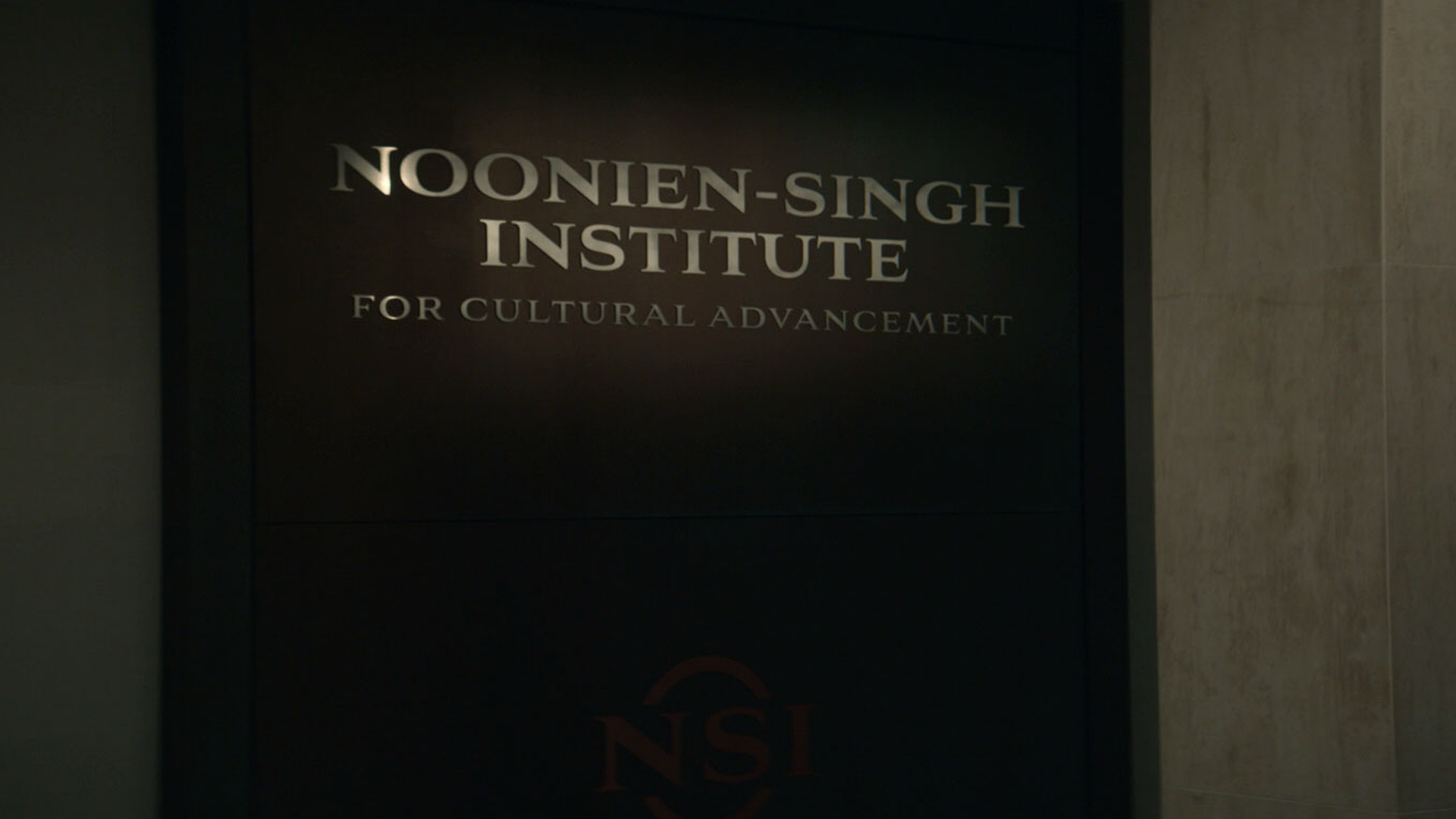
In the future, the Romulans had calculated that the Eugenics Wars were necessary for the Federation's existence (go figure!). Multiple temporal incursions — "whole Temporal Wars," in fact — had already been centred on Khan. As a result, the Eugenics Wars were delayed from their original start in 1992. Khan was still a child in 2022, held at Toronto's Noonien-Singh Institute for Cultural Advancement.
Sera was sent to kill the young Khan, at first by blowing up the nuclear fusion reactor in the same building. La'an Noonien-Singh, Khan's descendent, and an alternate James T. Kirk were sent back (somewhat haphazardly) by the Department of Temporal Investigations to stop her. They succeeded, at a cost.
In the 24th and 25th centuries, the Vau N'Akat used time travel as part of their plot to destroy Starfleet and the Federation. Also in the Delta Quadrant, Annorax of the Krenim built a gigantic weapon ship based on temporal science, using it to inflict temporal incursion after temporal incursion until Captain Janeway called time on his plans.
After the Temporal Wars, time travel was banned completely, as was inter-dimensional displacement. In the 32nd century, temporal devices such as the Krenim chronophage were still available illegally on the black market. Agent Daniels, or Doctor Kovich if you prefer, got a desk job. At least, so it would seem. Red is the new Omega Directive.
The Frontier Day Plot
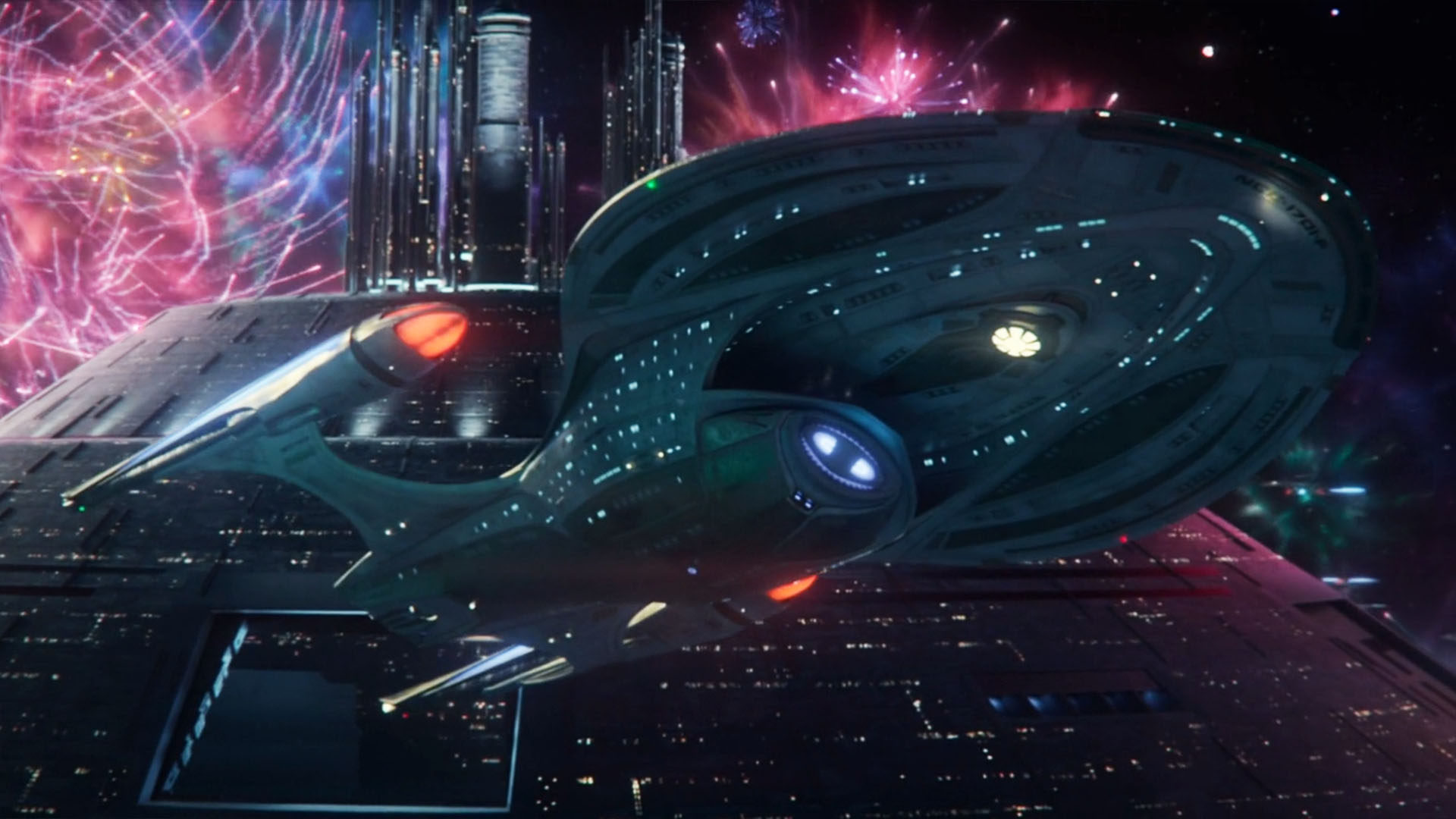
The dawn of the 25th century marked 250 years since the Enterprise NX-01 set out on its maiden voyage. Celebrations for 'Frontier Day' in April 2401 were planned to be big. Amidst the fireworks, Starfleet and the Federation faced one of the most elaborate, most destructive plots in its history. Were it not for the more "analogue," re-built Enterprise-D, the rest of that history would have been Borg!
The Federation was taken off-guard by the 'Frontier Day Plot'. But then few, if any, could have predicted a collaboration between a group of rogue changelings and the remnants of the Borg Collective. Both groups were out for vengeance, and not entirely without reason.
In 2378, the Collective had been decimated by the alternate Admiral Janeway's neurolytic pathogen — the rest left "to die by starvation and age". The changeling splinter faction was led by Vadic. She had been a subject of 'Project Proteus' — a series of brutal experiments carried out by Section 31 during the Dominion War. That's not to forget that Section 31 had conspired to commit genocide against the Founders.
By the time the changeling-Borg plans were uncovered, the mass infiltration of Starfleet had already happened. Vadic's faction had placed itself just about everywhere, modifying transporter systems across the fleet to insert Borg DNA into everyone who stepped through. That DNA — a remnant of Locutus — was taken from the former body of Jean-Luc-Picard, stored at Daystrom Station.
All that remained was to let Vox, formerly Jack Crusher, speak — to send out a signal to activate the newest, youngest members of the Borg Collective. The D flew in to the Borg Queen's cube at Jupiter and saved the (Frontier) day.
Shinzon
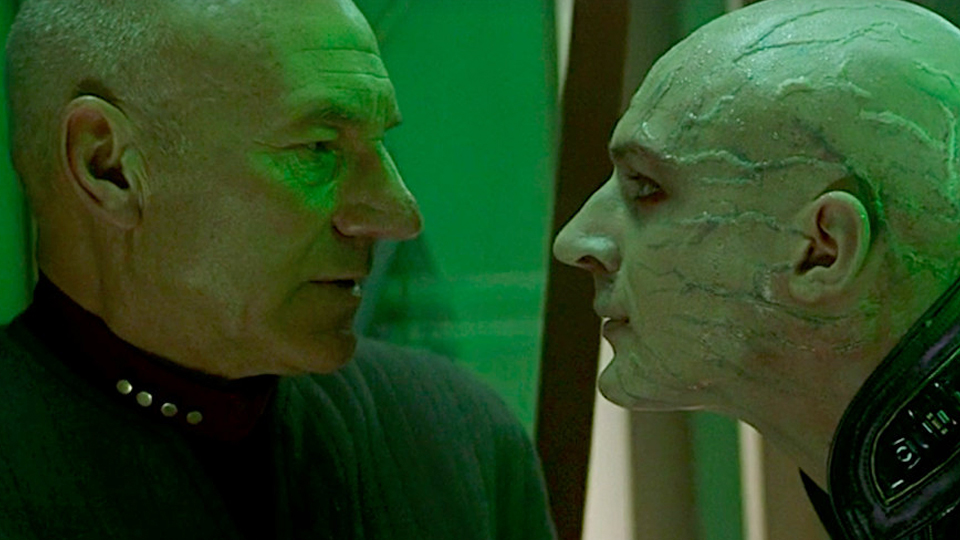
As the 2370s came to a close, there was a brutal change in power on Romulus. Shinzon of Remus had conspired with elements of the Romulan military, and at least one Romulan senator, to overthrow the Romulan government. His coup d'état by thalaron radiation succeeded. He then set a trap for the Enterprise, for his genetic double Jean-Luc Picard, 'inviting' ship and crew to Romulus. Shinzon's ultimate plan was galactic domination, including the genocide of Earth's population along the way.
Why clone Picard, specifically Picard, in the first place, you might ask? By all estimations and calculations, Shinzon must have been 'made' at some point in the 2350s, most likely either in or around 2354. (You can check out the maths in TrekCulture's previous video on this theory.) The dates do fit with a change in government mentioned by Admiral Jarok, already featured above.
By 2354, Picard was in command of the Stargazer, and had been for quite some time. He was clearly a brilliant officer, but the Stargazer was hardly the flagship of the fleet. In Picard's own words, it was an "overworked, underpowered vessel, always on the verge of flying apart at the seams".
It seems more than odd, therefore, that the Romulans would have chosen this particular captain for their infiltration by replacement plot. That is unless you factor in knowledge of Picard's future importance — knowledge the Romulans could have obtained from the alternate Natasha Yar, taken prisoner at the battle of Narendra III.
And so we reach our final entry in the iceberg's dark abyss…
The Federation & The Borg
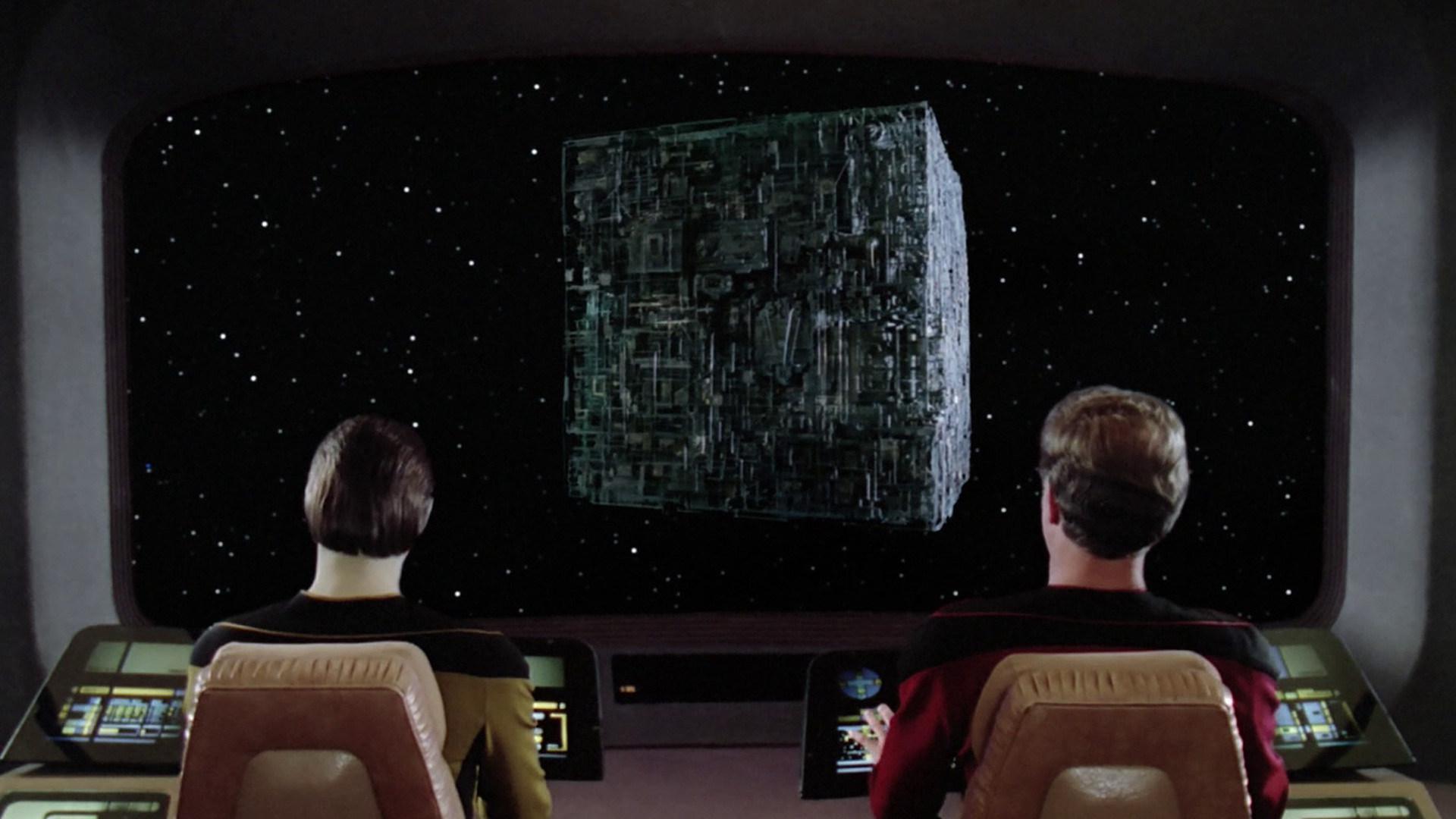
"They're called the Borg," said Guinan to Captain Picard in 2365. Q had flung the Enterprise into the path of a cube some seven thousand light years away. Ship and crew (save for the El-Aurian) were completely ignorant of this new species. And yet, Starfleet were evidently already well aware of the Borg.
In 2347, Magnus and Erin Hansen had set out on a research mission to study the Borg (by name) — a mission at first supported by the Federation Council on Exobiology. Though the Hansens were acting on relatively sparse information, they clearly knew what they were looking for. All the way back in 2293, the Enterprise-B had rescued a group of El-Aurian survivors (including Guinan) of the Borg attack on their homeworld.
That is, of course, not to forget the NX-01 encounter in 2153. Neither Captain Archer nor crew nor anyone in the Arctic ever got a name for the cybernetic lifeforms. They did get a very close look at several drones, the assimilation process, and debris of a Borg sphere. Did all the detailed scans just disappear along with knowledge of the message to the Delta Quadrant? Zefram Cochrane did try to warn everyone!
Even excluding events of the 22nd century, it seems practically impossible, therefore, that, by 2365, Picard had never heard of the Borg. That is unless all knowledge was deliberately hidden from him. Therein lies a conspiracy theory of our very own. "In a way, the Federation owes its existence to the Borg," as Lieutenant Ducane of the USS Relativity put it. Allow us to explain…
The birth of the Federation actually relies on a Pogo Paradox — "a causality loop in which interference to prevent an event actually triggers the same event," to quote Seven of Nine aboard the Relativity. The Borg once travelled back in time to prevent Cochrane's first warp flight. However, that led the Enterprise-E to travel back in time to stop the Borg. The crew of the Enterprise then actively aided Cochrane in breaking the warp barrier, achieving the very thing the Borg had tried to stop. "Causal loop complete."
There is a startling extension to Ducane and Seven's logic, however. Though initially kept away, it was Picard's personal knowledge of the Collective that allowed the destruction of the Borg Cube at the Battle of Sector 001 in 2373. That in turn led directly to the release of the Borg sphere, to time travel, to Cochrane. In other words, Picard also had to become Locutus for the Federation to exist.
So, if Picard and crew weren't aware of the Borg in 2365, it was quite simply because they weren't aware of them in the first place. That is the paradox, the loop of events, which had to be preserved at all costs, even at the cost of lives, at the cost of lies. History — at least galactic history that involved Starfleet and the Federation — would come unravelled without it. Let's not forget that the end of the Borg Collective was equally tied to Locutus', to Picard's, altered DNA. Ducane can't have been the only one to connect the dots. Other temporal agents and agencies must have been watching, maintaining.
Like any conspiracy, it's a house of cards. But then, like any Star Trek, it's also all made up.