Star Trek: 15 Most Hilariously Unthreatening Alien Races

Take one dog, one horn and one glue gun, and voila, the scourge of the known galaxy!
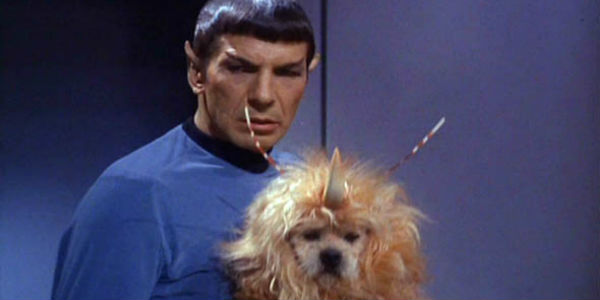
Part of being an older sci-fi fan was the experience of watching any show from the 1960's that involved special effects of some sort or some type of extra-normal creature, and willingly accepting that suspension of disbelief was part and parcel of the process. Shows had neither the money nor the know-how to compete with the CGI heavy modern competitors, but without precedent, or the greener grass to compare to, nobody particularly cared; you went along with the ride because you wanted to be entertained as the story unfolded. At the heart of the matter, when it came to depicting alien races, sometimes the technology just wasn't there: even the ground-breaking Star Trek had to suffer what the limitations of mid-20th century special effects could provide. That much you could forgive. But sometimes, it wasn't just the special effects; sometimes the writers €“ the creative engines behind the show also created some races that we just COULDN'T accept: they were either flawed creations that simply didn't make sense or were just downright silly in nature, like the frankly depressed looking Alfa 177 canine (in reality a normal dog with some bits and pieces glued to it) in the image above. Luckily, these things didn't detract from Gene Roddenberry's incredibly creative vision, but there were still those wince-worthy moments when you had to grit your teeth and overlook the vast cloud of cheese, whether it was in 1968 or 1988.

15. The Tellarites €“ "Journey To Babel" €“ TOS

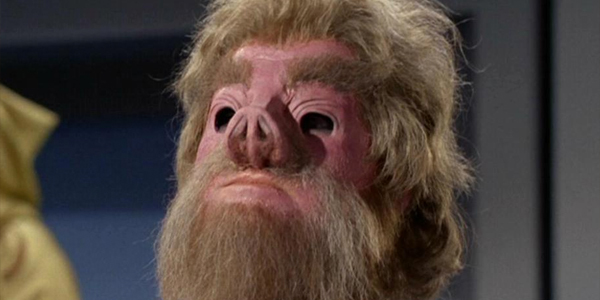
Whoever thought that humanoid, man-sized pigs were a threat to the galaxy? Perhaps the Tellarites were originally thought to be some sort of boar-like creatures with razor-sharp tusks and a powerful, muscular build. If so, then the casting director and the make-up guy should have been given their walking papers. What we got was a walking reason to avoid pork for the rest of your life: the Tellarites were chunky, dyspeptic, argumentative and just downright irritating. Plus, you could easily see the plastic ridges of the mask eye-holes. You're supposed to hate the Tellarites, but fearing them is out of the question: they're repulsive, butt-ugly and their colour sense is all wrong - of course, that could be a function of the 1960's choice of tones and shades, but the effect is the same: you hate them for what they are instead of what they represent. The problem with the Tellarites was the reach; the creators of Star Trek tried too hard with a plastic mask and extra padding in the costume, which failed because you can see the human skin under the eye holes. Where's the verisimilitude in that? In Star Trek: Enterprise, they improved the mask using skin-contact latex and modern cosmetics, but it's pretty interesting to note that you still couldn't accept them. The ghastly make-up of the 1960's ruined the hostile effect of this species for future generations of Trek-watchers.

14. Balok €“ "The Corbomite Manuever" €“ TOS

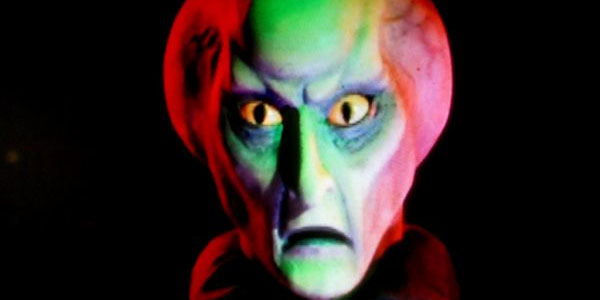
The name of Balok's species isn't identified in this episode, other than being a representative of the First Federation, which is a real myopic stretch of the imagination. Should the United Federation of Planets take offense to the First Federation's name? But the real hint that this is an alien you shouldn't worry about is that he hides behind a giant mannequin alter ego in order to test the true nature of humanity of the crew of the Enterprise. Aside from Balok's two-faced nature, there are two things wrong with this species. First of all, the mannequin doesn't even look real: it's supposed to look alive, but how can the Enterprise crew be fooled by this thing that doesn't even look at them properly? It's exaggerated, mechanical motion and it looks like the love-child of E.T. and some misanthropic sex-doll. Secondly, when Balok reveals himself, he's actually some kid with a tea-cozy strapped to his head with really badly-formed dental work. Furthermore, the question that bugged my adolescent mind was how could this tiny individual ever hope to fool us into thinking that he controlled the entire Fesarius from an incredibly small yet well-cushioned murphy bed? It just boggled my mind. Plus, he dressed like a little girl.

13. The Horta - "The Devil in the Dark" €“ TOS

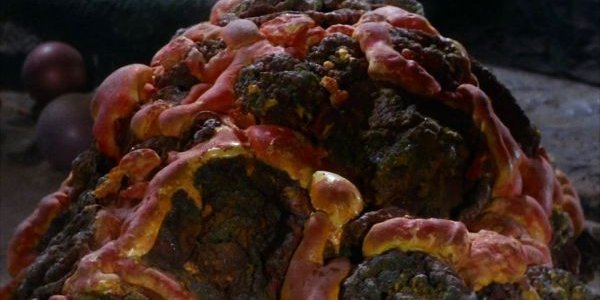
A generation of older Star Trek fans won't have liked pizza as children, and there's a good chance that this alien is the reason why. The only thing that's believable about this creature is Leonard Nimoy's expression of pain when Spock tries to mind-meld with it. He's probably channelling the ridiculousness of the situation of pretending to telepathically communicate with what looks like a party size pile of plastic vomit. It's literally a carpet of plastic and foam with some poor schmuck sweltering inside, crawling around the floor of the set in an attempt to convince the viewers that it has the capacity to burrow through rock as easily as people move through air. After seeing it shuffle away from Kirk in fear of the phaser he held in his hand, you had to doubt that it could move though anything unless it was a double door and didn't have a staircase. Even the name isn't acceptable. The only way we know its name is through Spock's mind-meld, so we're taking his word that that's its name, but how exactly does Spock receive vocalized thoughts from something that looks like the results of what the dog brought up last night? Is it a coincidental collection of various thought impulses that somehow Spock translates into combination of vowels and consonants? Maybe it's just something that Spock can't pronounce and makes up for the sake of the lesser humans he's palling around with? Either way, both visually and vocally, this patch-work, plastic horizontal human camp-carpet is hardly convincing.

12. The Mugato €“ "A Private Little War" €“ TOS

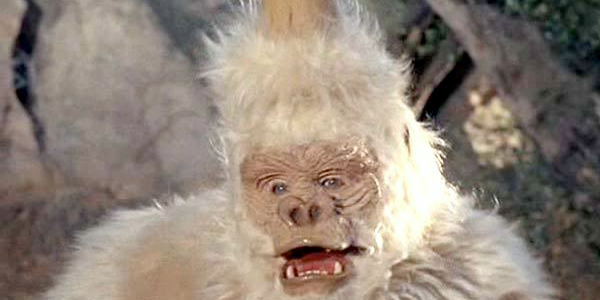
It's an ape costume that's been dyed white, and there's a plastic horn glued to the head. It's difficult to imagine that anyone didn't have a hard time believing this monster: it was little more than a rental costume. A costume suit is the easiest and less believable type of effect, but they really didn't try with this one. Remember the Gorn outfit? At least with that one they created skin texture, eye detail and some facial movement, but this was a fake fur gorilla suit that could have been picked up in the local rental store and gluing a horn on top of it. Very low points for effort. And with respect to the horn, just like the poor cocker spaniel that had one attached to its head to create the Alfa 177 canine, it seemed that the horn was the default characteristic for defining alien-ness. Without any question, the Mugato was probably one of the alien races with the highest suck factors. But then, at least you couldn't see the zipper.

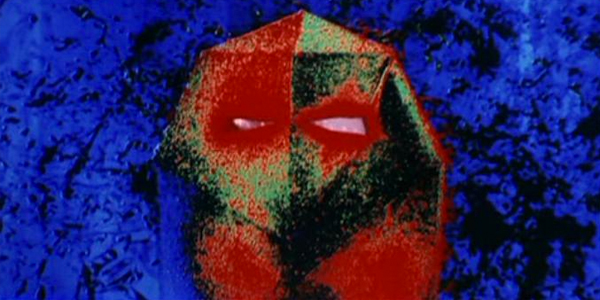
11. The Tholians €“ "The Tholian Web" €“ TOS

There were two factors that prevented anyone from taking these aliens seriously, and strangely, neither had anything to do with their physical representation, which wasn't particularly terrible. The Tholians were silicon-based entities who lived in extreme heat, so all the special effects people had to do was show a polyhedral-shaped head with eye slits that didn't have to move - it's not like you expect a rock to have too much animation, right? Plus, with the reddish background in the Enterprise's view screen, which provided enough background to be as believable as needed. The issue was the voice. When the Tholian commander threatened the Enterprise, his high-pitched whiny tone made it seem that Captain Kirk was being threatened by a high-speed centrifuge. And then there was their primary weapon: the Tholian web, a weapon that lacked any kind of threat. Unlike a Romulan plasma torpedo or a Breen energy dissipater, the Tholian web is an energy field that requires the opponent to sit completely still while two Tholian ships fly slowly around it for about 18 uninterrupted hours. Terrifying. And this is how the Tholians defend themselves? Where's the tactical superiority in this weapon? That's like relying upon the good graces of your enemy not to attack you until you're ready. What's the next tactical manoeuvre in the Star Trek combat lexicon: the mulligan?

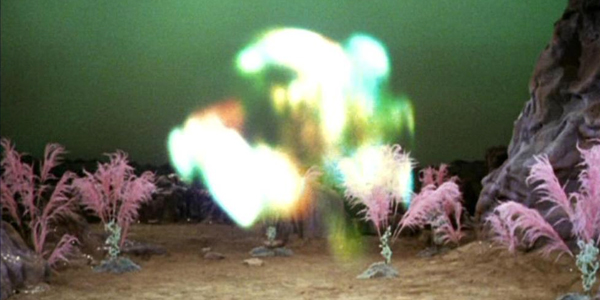
10. The Energy Entity €“ "Day Of The Dove" €“ TOS

This thing doesn't even rate a name €“ that's how unthreatening it is. But let's just get this straight: a creature that supposedly transmutes matter, amplifies emotions, can survive and travel in space, creates imaginary sub-space radio signals and can also assume control of the Enterprise's engines. Right? But somehow, all that's needed to defeat it and allow it to harmlessly phase through the insulated and pressurized decks of the Enterprise are a couple of good jokes and a Klingon proverb? To top it off, it looked like a broken pixel on a television screen - now, obviously, they had to have an episode wrapped up in under 50 minutes, but couldn't Jerome Bixby have come up with some other way to defeat this creature that would have added an extra layer to its danger level?

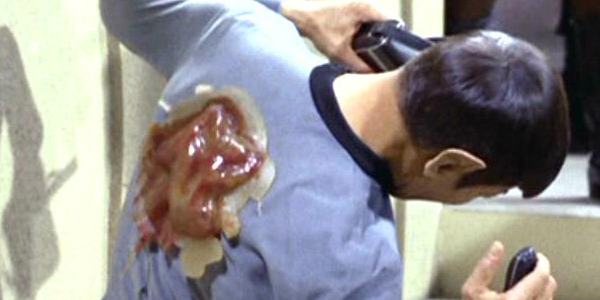
9. The Denevan Parasites €“ "Operation Annihilate!" €“ TOS

The story behind this episode was actually quite good: it was a fantastic idea, written by Steven Carabatsos, involving single-celled creatures that infested a population to force them into expanding and moving outward to allow the creatures to spread throughout the universe. Unfortunately, the creatures looked like flying fake vomit-piles, or large, gruesome ravioli. Clearly even a kid could work out that the best defence against these things would be to simply duck, or stay out from under ledges and shadowy areas, like you would if ever someone threw a Frisbee at you. It was basically the same principle, except that the uneven and bumpy surface of the parasites would make them less aerodynamic and slow their approach somewhat, giving you a bit of an advantage. Here's a tip if you're making a sci-fi show: if you want to threaten someone with an alien, don't imagine it to look like flying vomit.

8. Tribbles €“"The Trouble with Tribbles" €“ TOS

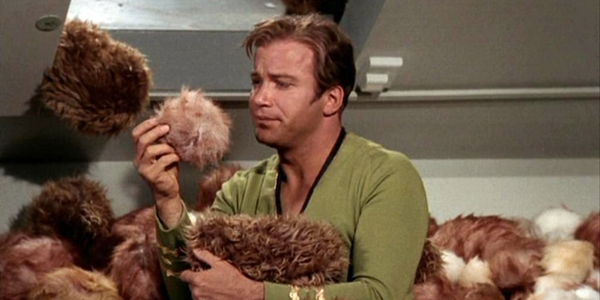
You knew it was only a matter of time before the Tribbles were brought up ... Back in the sixties, it seemed that anything furry was appealing, which is possibly why Sean Connery's chest frequently made shirtless appearances in Bond movies. But Tribbles were supposed to be threatening because of their seemingly unlimited ability to reproduce, like rampant, unbound Catholics. What else lay in their arsenal? When you are faced with an inanimate creature whose only threat is to eat and reproduce, it makes you wonder what else could have been considered just as dangerous. Let's go through a potential list: a full lint trap? How about a pilly sweater? Oh ... how about the useless accumulation of odd socks that lays in the forgotten corner of the laundry room? All have roughly the same threat level, as all are cute, useless and fuzzy. Yes they're now iconic, but it's not for the right reasons.

7. The Ferengi €“ "The Last Outpost"€“ TNG

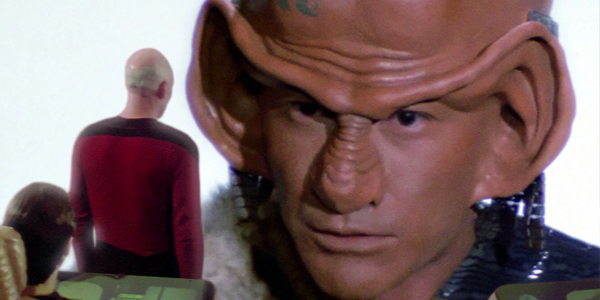
The first appearance of the Ferengi was a painful one. These feral creatures hopped and cavorted like misshapen misanthropes straight out of a 1930's Hammer horror film. They hissed, spluttered (because of the prosthetic teeth the actors were forced to wear) and lusted after every clothed human female they saw. They originally wore animal skins, stole technology and punctuated their conversations with crouching and hunch-backed scurrying. The sight of Riker striding amongst them like a colossus towering above as they tumbled underfoot beneath him gave the audience a major superiority complex. Even their weapons were laughable. Energy whips? Come on €“ this is the 24th century, people. Can't we get with phaser rifles or disruptors? The idea was to make these creatures look as base and primitive as possible, without a thought for their longevity. Eventually, the Ferengi were to get a reprieve, as, for some reason, the audience seemed to like these creatures and they wound up getting a complete make-over and became a race that completely changed from its original concept of a cowardly, shallow collection of second-rate villains to one that had depth, character and a very complicated, yet still laughable social system. There was no comparison to the initial appearance of these creatures to the Ferengi that showed up later who became actually entertaining; still not a threat, but kind of kitschy. These creatures were weird, silly and hardly dangerous when they first appeared, but give one of them a bar on Deep Space 9, and they became downright palatable. Of course, maybe the alcohol had something to do with that.

6. Bynars €“ "11001001" €“ TNG

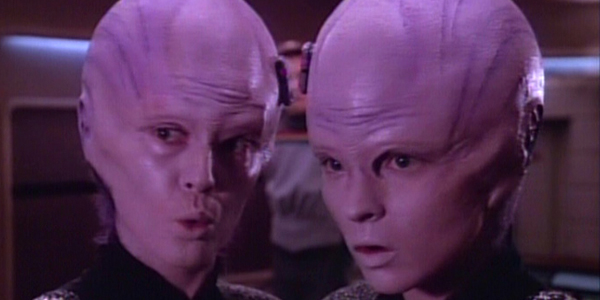
Even for the eighties, a binary theme was incredibly uninspired, which came from the school of obvious detective work. We get that the team of four Bynars are paired because of the whole mathematical notion of the race, but why do they look like shaven-headed pre-pubescent females with about as much appeal and emotional intimidation as Oliver Twist asking for more gruel at the soup line? They look like rejects from "Close Encounters of the Third Kind" in their pyjamas - talk about your squares squared. Still, regardless of their lack of physical intimidation, this is the only species that actually managed to capture the Enterprise and succeed in getting what they wanted from it. Moreover, what's really funny about this episode is that it won an Emmy ... for Outstanding Sound Editing. Apparently make-up supervisor, Michael Westmore's efforts in trying to create a visually memorable alien species got passed over that year. Still, Minuet was pretty sweet to look at, wasn't she? She certainly took the attention away from the Bynars, that's for sure.

5. The Pakleds €“ "Samaritan Snare" €“ TNG

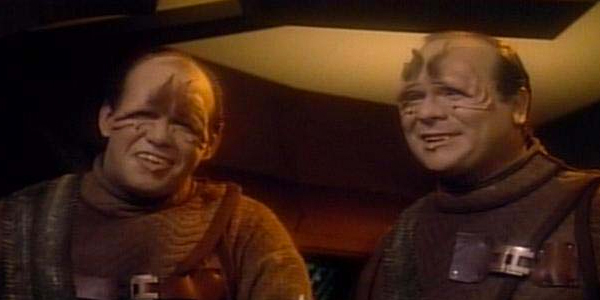
The Pakleds are distinguished by their stupidity. And that's basically it. They steal technology and resist developing their own by kidnapping or exploiting other races to make it for them. That's what happened to Geordi La Forge when the Enterprise answered a fake distress call from a Pakled ship. They stunned him, imprisoned him and then refused to give him back to the Enterprise, forcing a pursuit and stand-off. Of course, he eventually was returned but by a carefully conceived stratagem of simply being smarter. The dialogue from these guys was about as painful as listening to the callers on a daytime AM radio talk show sharing their cultured opinions with the radio host. Seriously, why did we have to watch a bunch of tubby simpletons repeat lines like "You make ship go now", or "you smart €“ you be smart for us" or "we not give man back €“ man smart" for an entire hour? Seriously, lob a couple of wide-spread, low-yield photon torpedoes to reduce their shields, beam an away team over there and have Worf pound the hell out of these Tele-Trek-Tubbies. Let him go "tinky-winky" on their backsides and see how much of a threat they are.

4. Benzites €“ "A Matter Of Honor" €“ TNG

Did you know that Benzites are immune to poison? They can also pretty much eat anything ... but it seems to me that if you take that big metallic vaporizer away from their faces that apparently allows them to breathe our atmosphere more easily then that would pretty much screw them up now, wouldn't it? In a combat situation, the big, protruding metal arm that's sticking out in front of them is a pretty big disadvantage. They also look like fish: it's a known fact that any species in a sci-fi show that looks like a fish is always physically weak and unintimidating. There's precedent: Admiral Ackbar from Star Wars? Yeah, good strategist, but you think those floppy squid-hands are going to save him in a fist-fight? He'd be on his butt faster than you can shout "it's a trap"! Then there's Abe Sapien from "Hellboy" €“ think he's a threat? Seriously, fish aliens are not what you work with to create an intimidating species. They're also about as detail-oriented as a 75-year old counting change at the cash checkout line. In "A Matter of Honor", one Benzite didn't even want to report crucial information to Captain Picard until he had figured everything out first. He had to do sensor analyses, biological testing and if the hull-eating life-form that he noticed on a visiting Klingon ship was the same one that was on the Enterprise. That's pretty much like trying to explain Facebook to your grandmother.

3. Armus €“ "Skin Of Evil" €“ TNG

There's no doubting that this thing was pretty evil: it killed Tasha Yar and its main motivation was to sadistically torture the crew members stranded on Vagra II. It was immune to phaser fire, discharge energy blasts, generate energy fields that could block sensors and communicators and could change its shape. But it was also a walking oil slick. It was goop €“ plain and simple - supposedly the left-over residue of all the negative emotions and vices of a race known only as the "titans". Remember them? No, apparently nobody did. Still, if you wanted to convey that this alien was supposed to represent the complete sum of an entire race's negativity, then don't you think it would be a little bit bigger than a walking outline of bubbling crude? It's obvious that this creature was incredibly powerful on a superhuman level, but it was near impossible to accept the package. Furthermore, it killed Tasha Yar in what had to be one of the most pointless deaths ever imagined for a cast member of a TV series - all she did was try to walk to the shuttle, for Q's sakes.

2. Nagilum €“ "Where Silence Has Lease" €“ TNG

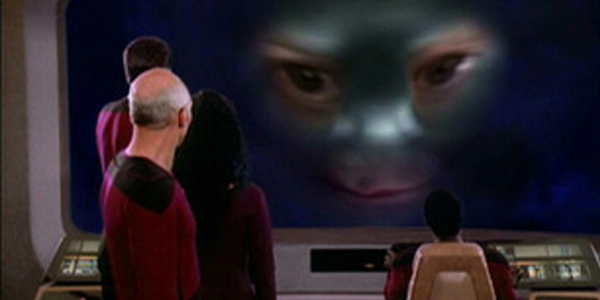
Another one of these God-like aliens that are supposed to be massively powerful and the Enterprise has no chance at resisting €“ and completely daft in appearance. Just like with Armus, if you want to sell the concept of omnipotence, then you have to package it correctly. Nagilum was an other-dimensional creature that, for all his power and ability, could not understand human creatures, especially the concept death. So, this dimensional explorer/scientist that has the ability to manifest itself in the middle of space, create a composite image of itself that somewhat resembled a human face (ostensibly to put the crew of the Enterprise at ease as it announced it was going to kill a third of them) and can't understand the basic concept of the end of a life-cycle? The universe is a big place, but there are basic rules to pretty much everything, and asking us to accept that this thing is conceptually completely unaware of the finite capacity of life-forms? This is the problem with trying to push the envelope in creating strange new life for the Enterprise to encounter. Give credit for imagination and the willing suspension of disbelief and all that, but this thing undercuts its own threat level in that it can't understand basic notions life and death. Everything in life ends at some point and that is a universal constant. In the Original Series, the failure to properly represent the danger level of the species rested with the inability of the make-up guys to create something with as few fake-looking bits as possible -that the audience could accept. In the Next Generation, it was the writers who failed the audience. They created creatures like Armus and Nagilum that were flawed in what they were capable of and what they wanted to achieve. Their goals were way beneath their scope for us to actually take them as credible and serious threats. So how does Captain Picard defeat this thing? He threatens to destroy the Enterprise via the auto-destruct sequence to deny Nagilum his experiment. If Nagilum has that much power to destroy a third of the crew with apparently very little effort, then isn't it logical to assume that he'd be able to halt the destruct sequence? Why waste time bantering with Picard at all? This thing is either incredibly lazy or not that much of a scientist. Either way, it's hardly a witty or dynamic resolution to a supposedly overpowering threat. You can't take Nagilum seriously, particularly when he looks like a reptilian version of those poor hairy-faced wolf people in Mexico.

1. Talaxians - "Caretaker"€“ Voyager

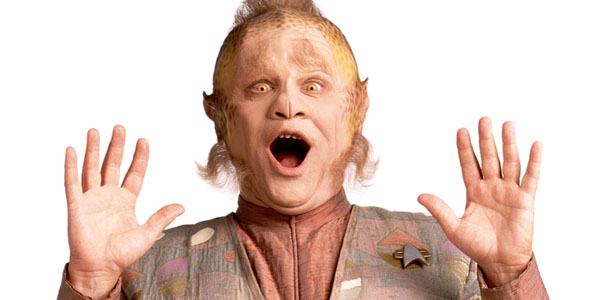
Other than the colour on their faces, these guys have to be the most boring aliens ever introduced into a Star Trek series - but then, Star Trek: Voyager was a dishwater dull series altogether. It didn't help that the captain had about as much personality as an artichoke and sounded like she was grinding gravel up her throat. She was no Jane T. Kirk, that's for sure. The Talaxians were thus a by-product of this environment. Neelix, the first Talaxian we meet is fussy, overweight, shifty and insecure; he was constantly looking for ways to ingratiate himself with the Star Fleet crew lost in the Delta Quadrant. He becomes their guide, the cook, the morale officer and eventually their ambassador and a serving member of their crew. Really, talk about your inferiority complex ... or writers just struggling to find a role for this guy. If the best characteristic the Borg can identify about this species is that their stocky build makes for excellent drones, then that pretty much says it all, wouldn't you agree? If the writers of the show can't take them seriously, then why should we? Did we miss any more terrible Star Trek aliens who deserve to be included on this list? Share your thoughts below.

Contributor
Contributor

John Kirk is a Teacher-Librarian and currently a History/English Teacher with the Toronto District School Board. But mostly, John teaches Geek. Comics, Sci-Fi (Notably Star Trek), Fantasy and Role-Playing and table-top games all make up part of John’s repertoire, There is a whole generation of nerds-in-embryo who rely on him to make sense of it all, to teach that with great power comes great responsibility, that the force will be with us always and that a towel IS the most useful thing to have in one’s possession. When John isn’t in the classroom, he can be found in his basement writing comic reviews for www.popmythology.com and features for Roddenberry Entertainment's www.1701news.com.