Star Trek: 10 Episodes That Are UNWATCHABLE Now
Do all franchises see themselves become the villain after enough time has passed?
How do we decide which episodes of any show are unwatchable? Surely, we must look beyond whether they were ‘good’ or ‘bad, as taste is subjective. There may well be episodes on this list that have their fierce defenders, so let us be clear: we will make our arguments, but this is a list of episodes deemed unwatchable by us. If these are your favourite episodes, we can only beg forgiveness.
Having said that, no franchise is perfect, nor is there any show in existence that offers only perfect episodes. With a franchise like Star Trek, featuring sixty years of choice, there were always bound to be a few episodes that simply didn’t age well, alongside those that stumbled right out of the gate. This is a universe that offers episodes like The Inner Light, In The Pale Moonlight, and The City On The Edge Of Forever. This is also a series that offers episodes like Spock’s Brain, Move Along Home, and Stardust City Rag.
Peaks and troughs.
There are those episodes that started out fro a positive place with the best of intentions, though sadly somewhere along the way, they lost track of themselves. Sometimes, certain people involved in those episodes have been revealed as far from ideal, affecting rewatches as the time passes. Sometimes, one can separate the art from the artist. Sometimes, it’s that little bit harder.
Here, we’re focusing on those episodes that, for one reason or another, go straight into the skip list on any rewatch of their respective series. Brace for impact, for these are the hours of television that will leave a serious dent in your good will.
10. Code Of Honor
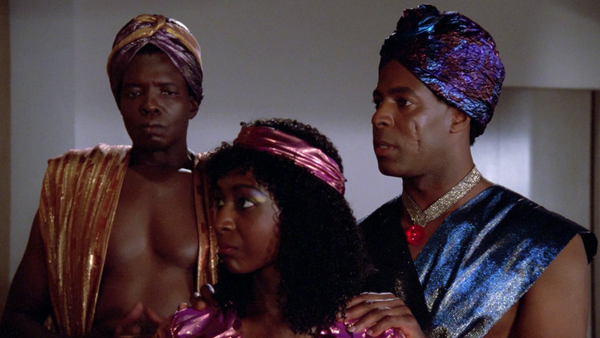
We’re beginning with the episode that everyone knew would be here on this list. There is simply no defending it, regardless of the fact it’s one of the very few Tasha Yar-centric episodes available to the audience. If you don’t know the story, the Enterprise-D arrives in orbit above Ligon II, where the Ligonians possess a vaccine desperately needed by Starfleet. The Liogonians are race of people depicted as tribal people of colour. The outfits are stereotypical, the misogyny is on full display, and Tasha is quickly kidnapped by Lutan, their leader.
Cue a ritualistic fight to the death between Tasha and Yareena - Lutan’s ‘woman’.
The original filming script didn’t specifically call for the Ligonians to be played by black people. What resulted was an episode that was described by Jonathan Frakes as a "racist piece of shit."
It’s uncomfortably stereotypical, leaning heavily on western notions of African tribalism, offering little to no nuance, and the resolution, while offering some catharsis in Lutan’s deposition, feels a bit too tacked on to really work. This, being the third episode of The Next Generation, came at a time when the show hadn’t earned any good will from the audience yet. Neither Encounter At Farpoint or The Naked Now had done much in that respect either, offering a rocky start for the first live-action Star Trek spin-off.
9. The Enemy Within
While Richard Matheson’s The Enemy Within is classic Star Trek for many reasons, the events surrounding one its lead performers have left a sad, bitter stain on the episode. Splitting Kirk into his good and evil halves was an excellent idea, exploring how every person is a combination of both, requiring all parts of themselves to truly be the best version of themselves. That, along with the adorable dog in the costume, certainly help to give this story a warmer reception than one might expect, considering its on this list.
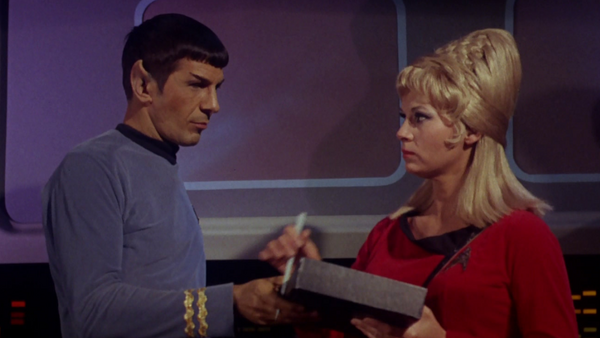
‘Evil’ Kirk assaults Janice Rand while aboard the ship. Though the overall attack is stopped, leading to the now infamous scratches on Kirk’s cheek, the episode handles this poorly in almost every respect. Yeoman Rand was originally set to be one of the stars of Star Trek, and Grace Lee Whitney featured heavily in the initial marketing for the series. However, she vanishes after just seven appearances, with the reasons behind the scenes leaving a truly disturbing stain on this episode.
At the story’s close, Spock remarks, to Rand, that the evil Kirk had some interesting qualities, then asking if she agreed. Consider - this person had just assaulted her, so why would Spock say such an insensitive remark? Even for a Vulcan, repressing emotions as he does, that was cold. Then, when this is combined with Grace Lee Whitney’s account of her assault at the hands of an unnamed producer, in their office, shortly before she found herself out of a job - the episode takes on a disturbing new level.
In her autobiography, Lee Whitney was candid about both the assault, and how she felt about Spock’s line in particular. She felt, quite justifiably, that this was an incredibly insensitive, thoughtless inclusion. Knowing what we know now, The Enemy Within becomes something of a dark example of the rampant lack of safety in the 1960s in Hollywood, though that is not to suggest that things are entirely fixed in 2026.
8. Turnabout Intruder
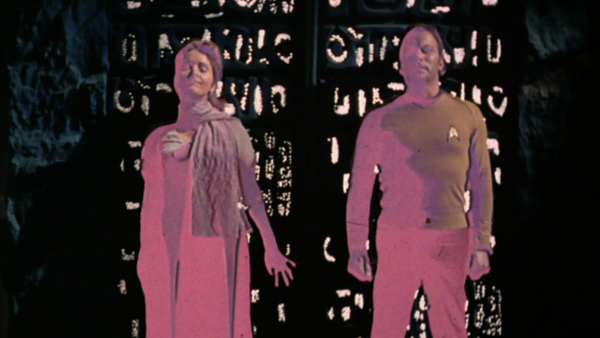
Turnabout Intruder is another episode that was bound to be on a list like this, though it is a more frustrating entry. William Shatner, as Janice Lester as James T. Kirk, is acting his pants off here, truly selling it for the back seats. There is a lot of fun to be found in this final episode of The Original Series, though then - that final line ruins everything.
Head canon has done a lot of work in retconning Kirk’s closing assertion - her life could have been as rich as any woman’s…if only… This inadvertently became the final line of Star Trek, referencing Lester’s madness, brought about by her exclusion from Starfleet on the basis of her sex. In short - in 1969, women couldn’t become Starship captains.
Enterprise quickly changed that, introducing Captain Erica Hernandez of the NX-02 Columbia, and thank the great bird for that, because for a show that was as progressive as Star Trek was, that was a curiously strange, regressive inclusion. Gene Roddenberry had been removed from active involvement in Trek by that point, with Fred Freiberger stepping in as show runner. Whatever the exact logic behind the line, its placement in Star Trek history immediately ensured it became infamous.
When rewatching Star Trek, there are some episodes that are ‘so bad they’re good,’ with Spock’s Brain easily falling into that camp. It’s nonsense, but it’s harmless. There are those stinkers like And The Children Shall Lead, while some other episodes are simply dull. Turnabout Intruder is sadly misogynistic, it’s the final episode, and it was a low point for the show. If one was to watch it, we suggest watching it out of order. Try not to leave that taste in your mouth before moving on to Beyond The Farthest Star.
7. Mudd's Passion
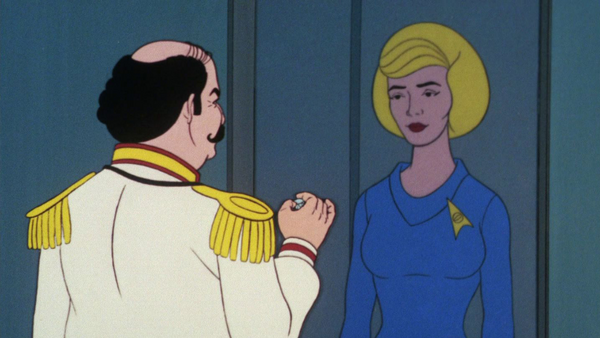
Strange New Worlds has done terrific work in fleshing out some of those characters introduced in The Original Series who didn’t, perhaps, get the best initial run. Jess Bush’s Christine Chapel is granted more agency, more room to grow, and her’s is a performance that is easily one of the best parts of the recent series. Majel Barrett was working under very different conditions, with very different restrictions. While Chapel is a largely likeable and capable character in The Original Series, she was often relegated to pining after Spock.
The Animated Series episode Mudd’s Passion takes things to a new level, though not in any kind of positive way. Harry Mudd, space pimp and trader in illicit goods, returns to Star Trek. This time, rather than transporting women or finding himself controlling android planets, he’s selling roofies to lonely miners. And that’s how the episode begins. Surely, when the crew of the Enterprise intervene and arrest him, he will face all sorts of justice and punishment? Well, if you believed that, you obviously thought a little too highly of Chapel - who takes one of these drugs from him, fully intending to use it on Spock.
While it’s described as a drug that causes infatuation in the victim, what it effectively is is a date rape drug, which Chapel knowingly poisons Spock with. The entire affair is kept light, as The Animated Series was largely targeted at children, and the result is that Spock develops feelings for Kirk instead (as if they weren’t already there, Spirk fan fiction having already been around for years.)
Chapel drugs her superior officer and faces no repercussions whatsoever. If we somehow managed to put the ethical implications of that aside, one must then consider the character assassination that this is. Chapel is now an attempted rapist at the very least, so one wonders how she kept her commission, let alone stayed out of prison. Mudd’s Passion is best left to the side when rewatching The Animated Series, which itself is sad, as Roger C. Carmichael returned to voice the character once more.
6. Profit And Lace
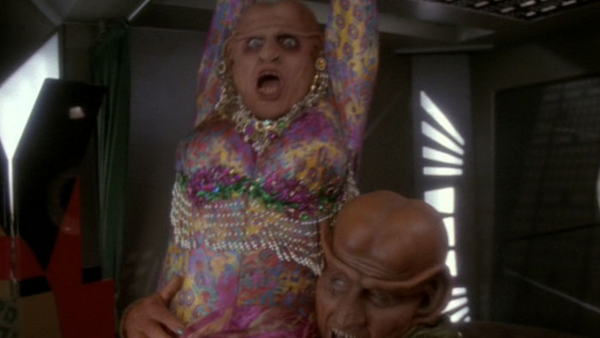
This late episode of Deep Space Nine, directed by Alexander Siddig, started from a good place. Ferengi society was male dominated, with women barred from going outside without a male escort, and from wearing clothing. This was the episode to attempt to change that, as Ishka and Zek attempted to change Ferengi society for the better. Rather than a serious exploration of the end of a misogynistic society, it became a slapstick comedy featuring some incredibly dated and uncomfortable cross-dressing jokes. The end result was the death of Ferengi episodes for a time, something that had generally been a success on Deep Space Nine.
Quark, after a fight with his mother, must step into the role of Lumba, tasked now with convincing a powerful and influential Ferengi businessman named Nilva to support female emancipation. The story quickly devolves into a strange depiction of gender reassignment surgery, exposure, attempted assault, and Quark saving the day by showing his breasts. It’s not handled very well at all.
At best, it’s an outdated, low-brow attempt at humour. At worst, it’s an open mockery of those people who undergo gender reassignment surgery, relegating them to a comedic role in society. There is no doubt that Quark is never played as an actual transgender individual, but there are too many jokes about him suddenly becoming overtly emotional once having Dr Bashir casually operate on him.
Armin Shimmerman wasn’t a fan of the end result, and for good reason. He had hoped for a more serious attempt to depict the wrongs of Ferengi society, and the attempts to fix it, but instead was presented with a send-up of those same things, closer in style to a Carry-On movie than a drama. With the current focussed attack on transgender people in so many western societies, it was an episode that’s wasn’t funny to begin with, and has only aged even more poorly as time has gone on.
5. Extinction
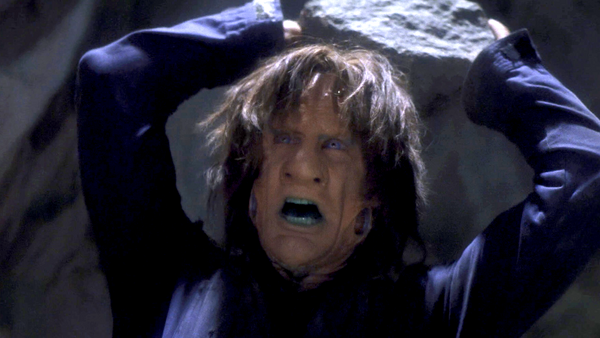
If the episode is so bad that LeVar Burton regrets directing it, then you know it’s got to be a real dud. Indeed, such is the case with Extinction, the third season episode of Star Trek: Enterprise. In a year that began with the fallout from Trek’s own 9/11, in the form of the Xindi attack on earth, having an episode where two of your lead actors spend forty minutes grunting and running around on all fours was a choice.
Not even Jolene Blalock, bravely trying her hardest to make something of this script alongside a non-verbal Scott Bakula and Linda Park, can save it. The episode was meant to highlight a species facing, well, Extinction, but instead veers too far into the pantomime, killing the message along with the pacing of the season.
This was Enterprise’s darkest year, told in the early days of the Second Iraq War. Whatever one’s feelings on that conflict, stopping that story for a toddle around a forest set with a face covered in plasticine did no one any favours. The setting is dull, the action is sparse, the grunting and hissing is hard to hear. This is a story that should have never escaped the writers’ room, let alone made it through all of the stages to actually airing.
Thankfully, Enterprise had some far better offerings along the way - this simply wasn’t one of them.
4. Very Short Treks - Skin A Cat, Holiday Party, Worst Contact
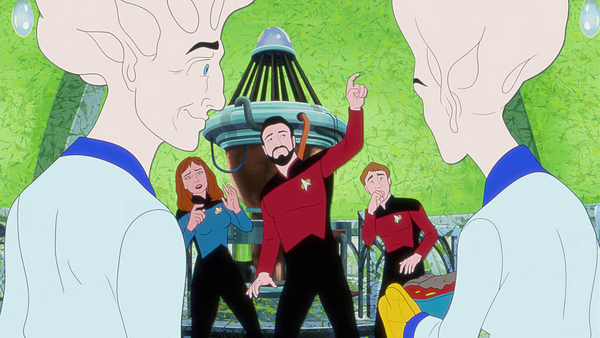
To celebrate the fiftieth anniversary of The Animated Series, CBS commissioned five ‘Very Short Treks,’ which were to be comedic episodes animated in the Filmation style of the seventies. Created by Casper Kelly, these five episodes were released on YouTube for free. Of the five, two of them - Holograms All The Way Down and Walk, Don’t Run - are charming, fun, and are an attempt to honour both The Animated Series, and Trek in general. Cameos from Trek Alum, like Ethan Philips and George Takei, helped to make these episodes more enjoyable.
The same cannot be said for the first three episodes of this series. Skin A Cat is a poor attempt to parody political correctness, where a flustered Kirk continually puts his foot in his mouth, with the gag seemingly being a very boomer-esque ‘everyone is offended these days.’ The short ends with the ship exploding, for which we are all grateful.
Holiday Party features the Strange New Worlds cast watching a ‘blooper reel,’ as Spock describes it. It’s an uncomfortable lesson in Spock having no sense of humour. It was, unfortunately, another example of a lack of understanding his character. Spock wasn’t funny because he was trying to be - he was often funny because he wasn’t trying to be. Watching him cry as T’Pring breaks up with him - hardly funny at all.
Worst Contact is a joke about snot, inconsiderate people in the workplace, and gross out humour.
Sigh.
As a tribute to The Animated Series, one could be forgiven for wondering if CBS actively hated that show, and used these shorts as a way to prevent even the mildly curious from ever seeking them out. The decision to greenlight these truly was a blooper.
3. Section 31
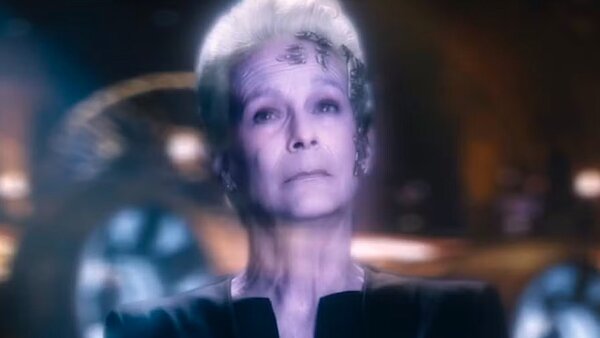
Star Trek: Section 31 is a lesson in why committing to a deadline, regardless of the cost, can often result in a mess rather than a success. Fresh off the back of Michelle Yeoh’s deserved Oscar win for Everything, Everywhere, All At Once, production on this tv film began in earnest. Section 31 had originally been touted as a series, though Yeoh’s lack of availability killed that idea. The ideas that would have informed that series were then cobbled together into this scant hour and a half release, resulting in a poor attempt to deliver on the premise and losing a lot of goodwill for Secret Hideout along the way.
Calling this a feature film would not be accurate, nor too would it be to call it a backdoor pilot. Perhaps there was a chance, somewhere along the way, that this could have led to more stories featuring Georgiou, Sahar, and Garrett, but the audience reaction immediately cleared up any uncertainty there. The film was panned by critics and audiences alike, citing a wildly inconsistent tone, hammy acting, and the barest hints at a connection to the larger Star Trek universe.
This was hardly a surprise to those who were involved in the production as the Trekkies in the cast were aware of the reception that awaited them. While it is never a bad thing to try something new in an ongoing franchise, this was simply too far away from what Star Trek had espoused in the six decades of its life. This sadly felt more like a cash grab than a serious attempt to tell a new story, outside the borders of Federation space. While Michelle Yeoh looked to be having the time of her life on screen, the audience was having anything but.
As the film doesn’t really connect to any ongoing series, it is easy to skip it in any rewatch. There are certainly those who enjoy it, and rightly so. To every project, an audience. To each, their own.
2. Four And A Half Vulcans
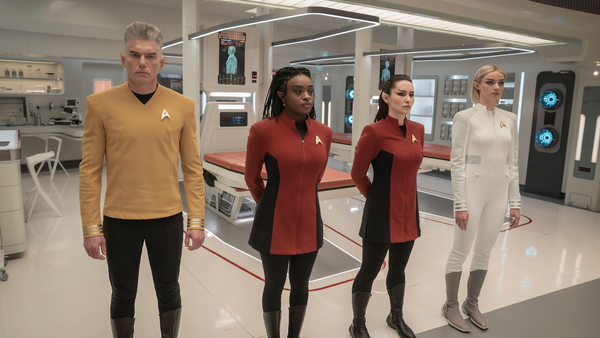
Strange New World’s third season leaned on the comedic for several of its episodes. While Wedding Bell Blues offered genuine laughs in the shape of Rhys Darby’s ‘Wedding Planner’, the later offering, Four And A Half Vulcans, was a wide swing and a miss for the prequel series. A standard MacGuffin results in Pike, La’an, Chapel, and Uhura transform into Vulcans. Hilarity was meant to ensue. Instead, Star Trek once again sank into racial stereotypes, unfunny jokes at Spock’s expense, and an uncomfortable allusion to taking away someone’s consent.
The ‘Vulcans’ of the piece are said to have skipped the decades of mental training required to control their emotions (because science) and immediately set about highlighting their racial superiority to the half-human Spock. He is referred to as ‘half-a-Vulcan’, rather than simply ‘Vulcan.’ Logic is used to hand wave away his abuse, with an air of ‘don’t worry about it,’ rather than any real tackling of the impact of this segregation.
The episode that aired just before this one, What Is Starfleet? (Though not without its own issues) revealed that, as a child, Spock had engaged in self-harm to cut the human part out of himself. One week later, it is played for laughs, abandoning any attempt at taking this stark topic seriously. The episode seems more concerned with making surface level jokes than truly engaging with what it’s saying. Genetic directives play a large role, with La’an becoming more Romulan than Vulcan because of her augmented DNA.
The episode’s sole saving grace is Patton Oswalt’s Doug, and a post credits scene that show Spock attempting to teach him some human jokes. Otherwise, it’s a dismal affair across the board.
1. These Are The Voyages
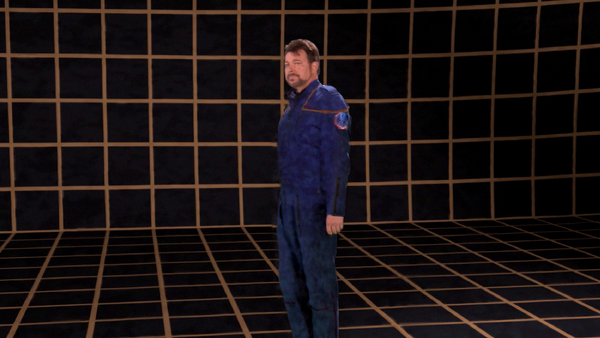
Star Trek: Enterprise was sadly cancelled during its fourth season, leading to a rushed finale that couldn’t possibly sum up the promise of Star Trek’s prequel series. While Demons and Terra Prime offer a powerful, yet bittersweet ending to the ongoing story of the show, These Are The Voyages has gone down in history as not only one of the worst episodes of Enterprise, but also retroactively damages one of the stronger episodes of The Next Generation as well.
Envisioned as a tribute to Star Trek, the episode sees Riker viewing the final days before the foundation of the Federation on the holodeck. All regular characters from Enterprise appear in holographic form, Trip is killed, Archer’s speech is cut off before the credits roll, and no one is given any sort of resolution beyond surface level. Was it truly necessary to kill Trip for shock value? Was it truly necessary to cut away from one of the most famous speeches in Federation history just so Riker and Troi can leave the holodeck?
There were some nice cameos in the crowd at the end, including the show runner Manny Coto, but nothing about the episode feels earned or enjoyable. Rick Berman and Brannon Braga have since claimed that the episode had always been planned, which is why is was set ten years ahead of the events of the penultimate episode, but one has to wonder whether that is actually true.
Dominic Keating, who played Malcolm Reed on Enterprise, has said that he enjoys the episode, though others have claimed it was the only time that Scott Bakula was ever visibly upset on set. These Are The Voyages can best exist in a ‘what If?’ Scenario, unrelated to the overall plot of the show, as opposed to the actual finale of this bold step backwards into Star Trek’s history.