Sherlock Holmes: 5 Awesome Performances And 5 That Sucked

When you have eliminated all the suckiest performances, whatever remains must be awesome.
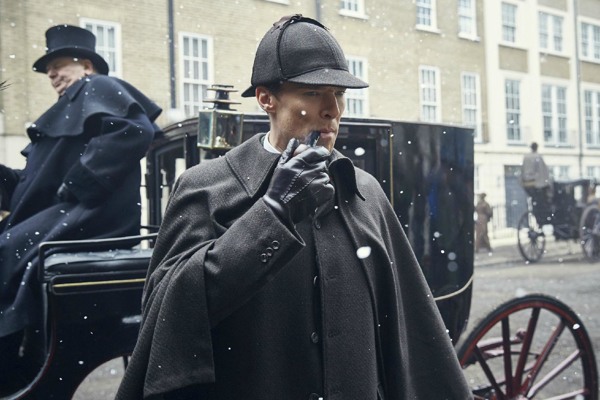
Over the past few years, the 5 Awesome And 5 That Sucked series has brought you classic and dire performances from such screen legends of wildly variable output as Nicolas Cage, Mickey Rourke or Michael Caine. There is another kind of film and TV hero, though, that has an equally hit-and-miss performance history to the iconic actor: the iconic character. Yes, just as one genius Cage performance leads straight on to one that is almost unimaginably awful, the same can be said of the progression from one Dracula or Robin Hood to the next. Very few classic characters have appeared more often on screen than Sherlock Holmes and never has Baker Street's great detective been more popular than right now. The last couple of years have given us interpretations of the deerstalker loving sleuth from Robert Downey Jr. and Ian McKellan on the big screen to Jonny Lee Miller and Benedict Cumberbatch on the small one. With the latter making his much anticipated return to the role in this week's The Abominable Bride, it's the perfect time to look back at the performers for whom embodying Holmes was elementary and the others whose acting choices were nothing more than a series of curious incidents. You lucky people are receiving a double dose of the Awesome/Sucked column this week (see our Bradley Cooper article for the release of Joy, which also went live today). There are 136 credits for Sherlock on IMDb, making him a screen star almost as ubiquitous as Samuel L. Jackson, so no place here for Downey, McKellan or Miller, enjoyable though their detective work was. Who out-sleuthed them? Let's kick-off with the awesome Holmeses...

5 Awesome Performances...

5. Robert Stephens - The Private Life Of Sherlock Holmes
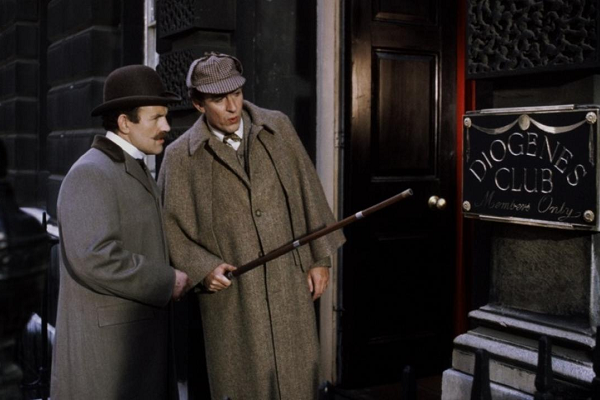
Viewed at the time as an over-ambitious, over-priced, misfiring folly from Hollywood great Billy Wilder and his Some Like It Hot co-writer I.A.L. Diamond, The Private Life Of Sherlock Holmes is an oddball film whose reputation has continually improved with age. Critic Kim Newman, who has penned his own Holmes novels, has called it "the best Sherlock Holmes movie ever made", while Sherlock creator Mark Gatiss also numbers himself among the movie's fans and credits it as one of his major influences. Stephens, an enormously respected Shakespearean stage actor, never really had the film career of some of his theatrical contemporaries, not least then-wife Maggie Smith, but here gives what is probably the standout performance of all his work for the big screen. Stephens' pronounced, dramatic, and rather theatrical line readings are perfect for delivering the barbed quips and witty back-and-forth exchanges in Wilder and Diamond's irreverant, sardonic script, full of attempts affectionately to deconstruct and satirise the popular cinematic image of Holmes. It is in the character's more quiet, melancholy side that he excels, though, perfectly playing the understated and unrequited romantic subtext that he develops towards Colin Blakely's Watson.

4. Jeremy Brett - The Adventures Of Sherlock Holmes
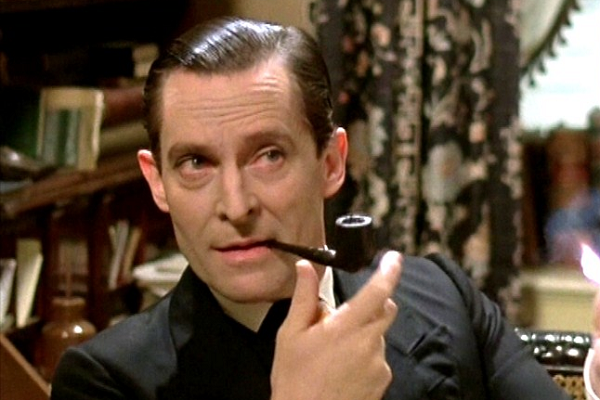
Over a decade in the late 1980s and early 1990s, another former stage actor would become probably the most faithful screen rendition that there has yet been of Holmes as written by Arthur Conan Doyle. Across 41 episodes of the Granada TV series, Brett completely absorbed himself in the role that will forever be his legacy. Formerly appearing on stage as Watson (opposite Charlton Heston, whose movie Holmes was almost bad enough to make the upcoming "5 That Sucked" list), Brett is a far better fit for the eccentric detective than he is as the affable sidekick. His own personality meant that he was attracted to Holmes' wild swings between periods of lethargy and energetic outbursts, giving the character a distinctive set of vocal tics and passionate gesticulations. Brett's take on Holmes was meticulously, even obsessively, researched and accurate to the source stories in almost every detail. While this focus on fidelity above all else sometimes left the writing and direction of the show seeming a little flat and lacking in ambition or flair, as an actorly performance it does a great job of bringing the Holmes of the books to life. As the series went on, the strains of Brett's bipolar disorder (and sixty-a-day smoking habit) took their toll on his physical and mental health, but he continued to return to his signature role with a series of impressive performance up to his death.

3. Peter Cushing - The Hound Of The Baskervilles
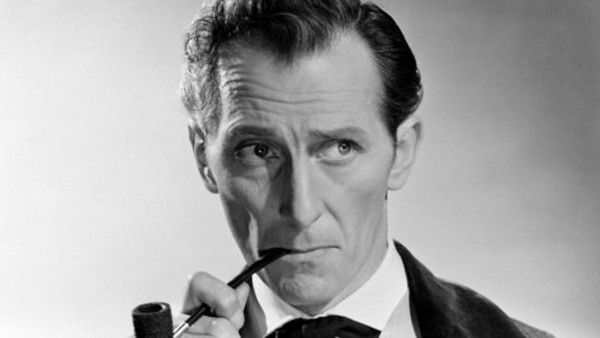
At the opposite end of the fidelity spectrum to Brett's ultra-researched take on the pipe smoking crime solver was Hammer's delightfully lurid version of the most famous (and, not coincidentally, most gothic) Holmes story of them all. Having helmed their biggest hits, Hammer brought in Frankenstein and Dracula director Terence Fisher to bring his and the horror-loving studio's unique style to the decades old story. Naturally, Fisher brought his Van Helsing and Victor Frankenstein along to play the lead. Every bit the Holmes aficionado that Brett was, Cushing ensured that little details from the Conan Doyle stories were included in the film, although arguably the picture's strength is in ramping up the gothic horror elements with the likes of poisonous spiders and ritual sacrifice (neither of which appear in the book). Cushing certainly looks the part, with his high cheekbones and arched eyebrows, but he also brought a forceful energy to Holmes, in the same way that he had rescued the part of Van Helsing from being a fusty academic and made him a man of action. There is, equally, a wry, whimsical quality to Cushing's performance that means you never quite know what he will do next. Cushing would return to the role in the late 1960s for the BBC's low budget and somewhat rushed adaptations of Conan Doyle's stories, including a more faithful but far less fun Hound Of The Baskervilles. Old frenemy Christopher Lee appeared in the Hammer film as Sir Henry Baskerville, as well as in Wilder's Private Life... as Mycroft and a handful of passable TV appearances as Holmes himself.

2. Benedict Cumberbatch - Sherlock

It may have seemed a bit of a strange, risky idea at the time - a modern day update of the quintessentially Victorian detective, starring the smarmy snob from Starter For 10 - but five years later Sherlock has produced a level of devoted obsessive Holmes fandom not seen since readers wore black armbands after Conan Doyle killed Holmes off at the Reichenbach Falls in 1893. It is not the first attempt to set the Holmes stories in a contemporary environment (Hugh Laurie medical detective series House, for example, was both a very successful loose adaptation of the character and an obvious influence on the BBC's decision to commission Sherlock), but the very mixed bag of previous attempts didn't necessarily bode well for the then largely unknown (not to mention unpronounceable) Cumberbatch. Now the show has become a major success, it's hard to imagine it any other way. Cumberbatch has seen himself become a major player in Hollywood, an Oscar nominee and Marvel superhero, all off the back of his Sherlock, but the Baker Street detective remains his finest role. Like fellow Frankenstein Cushing, Cumberbatch specialises in a kind of arrogant genius that finds its perfect outlet in Holmes. Unlike some of the more warm, generous-spirited Holmeses in previous adaptations, Cumberbatch's success is in playing up Sherlock's self-confidence and seeming self-sufficiency, before exploring his gradual opening up to forming emotional connections.

1. Basil Rathbone - The Hound Of The Baskervilles

South African born Shakespearean stage actor and First World War intelligence officer Rathbone had a rich, diverse career, giving notable performances as the villain in the swashbuckling adventures of Zorro and Robin Hood, but once he started appearing as Holmes in 1939 all of that was forgotten as Rathbone and the detective became forever linked in the popular imagination. Of his fourteen appearances as the eccentric consulting detective, the first two, made for 20th Century Fox as glossy, high budget Victorian adventures, stand out as the classic interpretations of the character and Conan Doyle's stories. Even the later Universal pictures, made for a much lower budget and updated to the contemporary world of the Nazi-battling 1940s, have their merits, though, thanks to Rathbone's compelling lead performance. Rathbone makes for a suave, effortlessly capable and quick-witted Holmes with an eager edge and a hungriness to get to the bottom of each case. That later performances and performers of the role have tended to refer back to Rathbone, or construct revisionist versions of the character in contrast with his, indicates just how definitive his Holmes is. Now that we've seen the best examples of perfection in detection, let's take a look at the actors whose appalling performances as Holmes were practically criminal...

...And 5 That Sucked

5. Matt Frewer - The Hound Of The Baskervilles
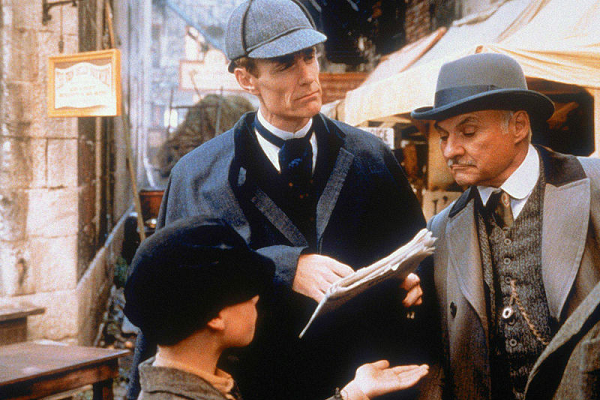
Not exactly known for creative artistry or bold innovation, the purveyors of cut-price sentimentality at Hallmark brought exactly the kind of predictable bland inoffensiveness to their four Holmes TV movies in 2001 and 2002. Given this deliberate attempt to bring absolutely nothing new to the party, doing a version of the already often adapted Hound Of The Baskervilles feels like an odd choice. As with much of Hallmark's output, it was cheaply filmed in Canada (utterly failing to pass for Victorian England), with Canadian TV actor Matt "Max Headroom" Frewer in the lead. Frewer is a capable actor, but he has tended to work in family friendly movies and animation, giving him a style that is absurdly overplayed against the flat, uninspired backdrop of Hallmark's attempts at a period crime story. Frewer never seems to settle into the role and doesn't appear to know what to do with the material, with his characterisation appearing to change to suit the needs of each scene. More often than not, he takes Holmes' patronising arrogance and dials it up to a level in which the character is nothing but thoroughly unlikable.

4. James D'Arcy - Sherlock: Case Of Evil
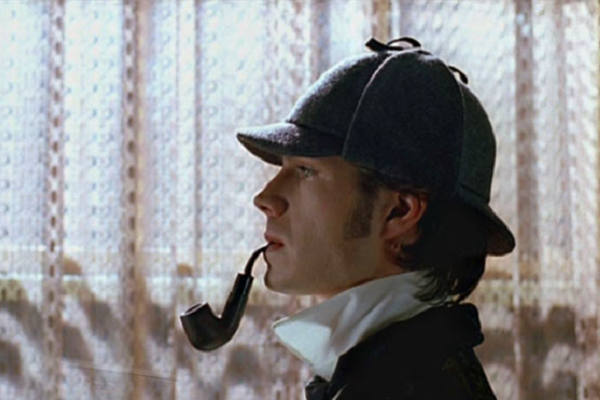
A Case Of Evil is the point at which, in the early 2000s, there was the perhaps inevitable attempt to "sex up" Sherlock Holmes (before producers realised that an avowedly sexless, arrogant and judgmental Holmes might actually excite audience passions more). So, here we have a version of the famously cold, analytical detective as a dandyish young man, sleeping around and making impulse emotion-led decisions. Even as a sort of origin story of the character as we know him, this is a bold departure and one that the talent behind the camera and the casting utterly fails to justify. Even accounting for the story's desire to use a younger Holmes, D'Arcy looks and feels like a boy pretending to be a grown up. He comes across as petulant, whiny and just a little pathetic, rather than a man of great genius. D'Arcy and Vincent D'Onofrio have both earned themselves justifiable praise in the last year for their TV work for Marvel, but here, as Holmes and Moriarty, each is as dreadful as the other, trying to outdo each other in scenery chewing absurdity. The film was clearly intended to be the first in a series. More episodes did not follow.

3. Ben Syder - Sir Arthur Conan Doyle's Sherlock Holmes
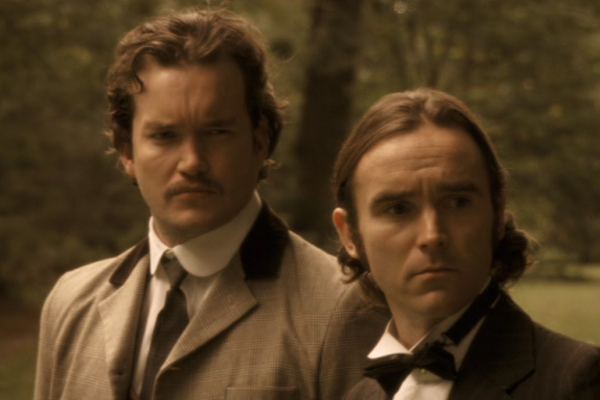
For The Asylum, the knock-off merchants behind such nearly-movies as Transmorphers, Alien vs. Hunter, and Atlantic Rim, Hollywood's love of adapting out-of-copyright, public domain sources is a godsend. When the blockbuster of the moment is War Of The Worlds or Journey To The Centre Of The Earth, the mockbuster doesn't even need to downgrade the title to a cheaper locale a la Snakes On A Train. You can just make a movie of the exact same thing. In response to the Guy Ritchie-Robert Downey Jr. Holmes, therefore, The Asylum released their own version, titled with impressive, and entirely misplaced, chutzpah "Sir Arthur Conan Doyle's" Sherlock Holmes, although exactly what the writer would have made of this mess is anybody's guess. Unusually, the actor playing Holmes, who here has to fight a lot of cheap CGI monsters with steampunk trappings, does not get top billing, with that honour instead going to Torchwood supporting player Gareth David-Lloyd. Holmes having to play second fiddle in his own movie is probably not a good sign and it is indeed indicative of a performance which is bland, wooden and lacking in any kind of personality at all. Syder made his film acting debut here and his entire resume since includes nothing but a couple of shorts. His performance as Holmes, though, is enough to make you long for The Asylum's usual roster of washed up 80s pop stars and former porn actors.

2. Peter Cook - The Hound Of The Baskervilles
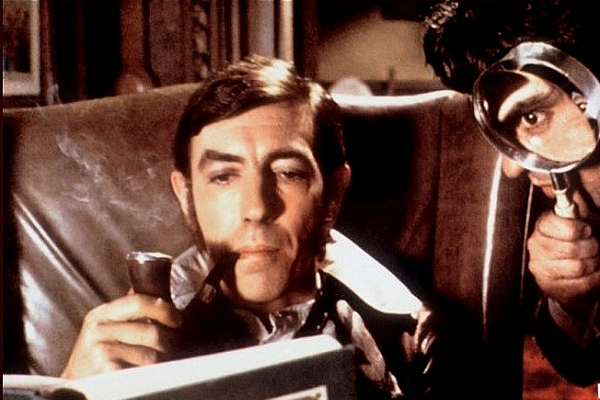
You can see why this sounded like a good idea. Holmes and Watson, especially in their myriad screen interpretations, are quite broad characters in their distinct and instantly recognisable tropes and tics, something that would lend itself to a successful comedy double act to send up. As such double acts go, the relative screen personas of Peter Cook and Dudley Moore are also a good fit for the detective duo, with the more imposing Cook with his arrogant sneer widely seen as the star with Moore as his perennial sidekick. Unfortunately, the whole thing is a horrible mess with neither Pete and Dud nor frequent Andy Warhol collaborator and Flesh For Frankenstein director Paul Morrissey having the creative control to make the film that any of them wanted. What we are left with is a film that strives for the Carry On style and never quite achieves even that. Cook seems to think that a stereotypical "Jewish" accent and mummy issues will be the making of a hilarious Holmes, but the entire thing falls completely flat. Much of the time he appears not to be bothered at all, as if he'd already lost interest in the project by the time filming came round, which, to be fair, he probably had.

1. Roger Moore - Sherlock Holmes In New York
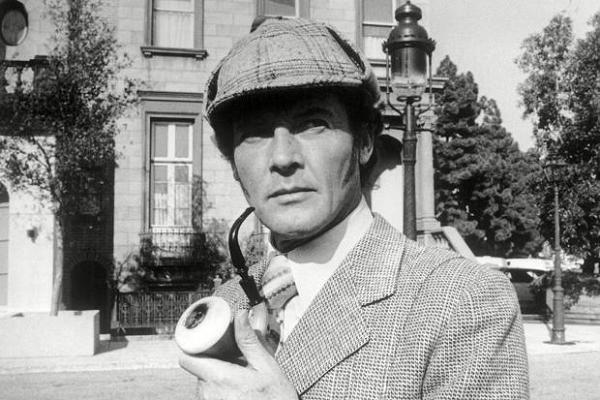
This mid-1970s American TV movie, which sees a predictable Holmes vs Moriarty plot transposed to the Big Apple (presumably because the locations were cheaper), nevertheless provides an impressively all-star cast with John Huston as Moriarty and Charlotte Rampling as Irene Adler. At the heart of it is Roger Moore, at the height of his fame in between two of his actually decent Bond movies The Man With The Golden Gun and The Spy Who Loved Me. Debate is likely to rage on about whether Moore's smug, smarmy, eyebrow raised, pun-tastic take on Ian Fleming's hard edged assassin-spy was a decent version of 007 or not. Whether that exact same approach is at all appropriate for Conan Doyle's ultra-rational, unemotional detective is easier to tell. It's just plain odd. Moore seems to only have one mode of performance and, as a result, the entire Holmes movie appears to have been tailored to allow him to play Simon Templar or James Bond, just in a deerstalker and with some extraordinarily unconvincing stuck-on sideburns. The thing that really stands out, though, about Moore's performance is that he is somehow at the same time both trying too hard (over-performing, over-enunciating and a little hammy) and yet also phoning it in (almost unaware that Holmes might require a different approach to Bond). Even Moore mega-fan Alan Partridge would struggle to justify this as worth a watch.

Contributor
Contributor

Loves ghost stories, mysteries and giant ape movies