Gotham: 19 Easter Eggs, In-Jokes And References You Totally Missed

Who knew a Batman prequel had so many Batman references?
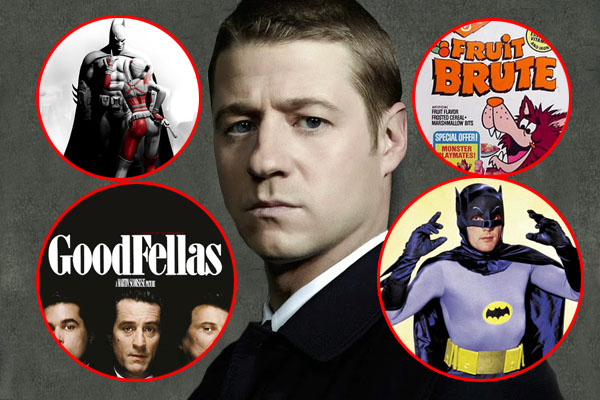
It's probably not unreasonable to suggest that if you're watching Gotham, you're probably something of a Batman fan. The show's whole gimmick is that it's a prolonged origin story for Bruce Wayne and his transformation into the Dark Knight, but with Bruce mainly shoved into the background (since he's a child) so the grown-ups can work. But amongst those grown-ups, and Bruce's fellow kids, there's a bumper crop of ne'er-do-wells who are destined to be amongst Batman's rogues gallery. And Gotham really wants you to know that. Which is why a young Selina Kyle dresses as a feline and refers to herself as The Cat, and a young Ivy Pepper is always glimpsed near some plants. Gotham is not a particularly subtle program. That's because it's appealing to the wide spectrum of Batman fans: those who have read every one of his umpteen comic book appearances cover-to-cover, multiple times, and those who quite liked the Christopher Nolan films and would like to check out more of this Caped Crusader chap. Which is why, say, you get the cloyingly obvious Edward Nygma who enjoys riddles, Ivy Pepper, the Flying Graysons and all that. But that's not to say the makers of the show are forgetting the die-hards €“ in fact, they're so ingenious at hiding the nods to the hardcore audience in Gotham that there's at least nineteen Easter Eggs, in-jokes and references you totally missed.

19. The Arkham City References

Arkham Asylum has already been and gone in the world of Gotham, but halfway through the first season the gates of the mysterious, possibly cursed old sanitarium were thrown open again so they could house the waves of new colourful criminals that have started to blight the city. Curse that wily Electrocutioner! When the hospital is introduced, it's as a pet project of the Waynes before their unceremonious deaths. They wanted to raze the building and make something much more humane and hospitable. According to plans glimpsed in the episode €œArkham€, there was a proposed design to build a city around the renewed facility. As sort of...Arkham City. In fact, it said the words Arkham City right there on the paper, which is an obvious name to the award-winning Batman video game of the same name. The premise of the game is that a portion of Gotham's worst neighbourhoods are cordoned off, the bad guys stuck in there, and it acts as a self-regulated prison.

18. The Crew Appear In Gerald Crane's Yearbook
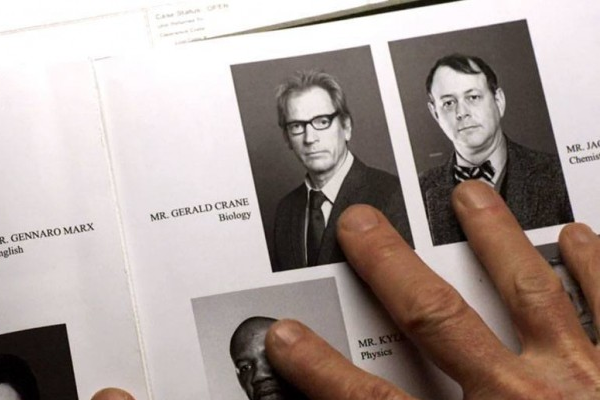
€œThe Scarecrow€ is a story that'll be familiar to most fans of the Dark Knight, whether they've come to Gotham from the comic books or from Batman Begins. The episode was all about Jonathan Crane's father, the equally unhinged Dr Gerald Crane, who unleashed an early version of The Scarecrow's fear toxin to torture gang members and then himself. Yeah, it was weird. And actually an engaging, fresh take on The Scarecrow's origin story and abilities. For the most part the episode didn't feature any Easter Eggs besides the obvious appearance of the toxin and the Cranes, neither of which are really €œhidden€. But there is a funny in-joke regarding the show's crew. When Harvey Dent looks through the yearbook of the high school Crane teaches, all the names of the staff are members of the Gotham crew: Todd Baxley is second assistant accountant, Charlie Reeves is a script assistant, Jack Bavaro is a production accountant, Daniel Gay is a production assistant and Lauren Rockman is an assistant art director.

17. The Court Of Owls Are Always Watching
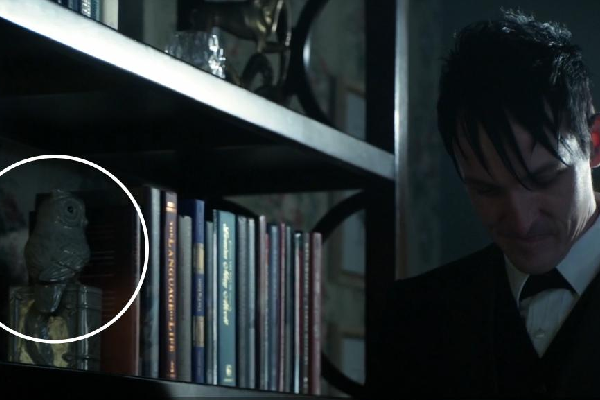
It's not often that creators feel the need to add anything to Batman's mythology; its so rich and voluminous as it is. Gotham certainly benefits from drawing from the source material in all its forms, from the various comic books to the film and other television adaptations which inform the plots, characters and locations of the show. Scott Snyder and Greg Capullo are not like other creators, however. Taking charge of the main Batman title following a recent relaunch, their first story arc introduced The Court Of Owls: a shadowy, clandestine Illuminati-style organisation who had been controlling everything in Gotham from behind the scenes, going back decades. And Batman knew nothing about it. He wasn't pleased to found out he'd been played for most of his career. Knowing a good idea when they see one, no matter how recent, the makers of Gotham put a few references to the Court in the show; most notably, the big bust of one The Penguin has in his study.

16. A Nod To Batman's Roots

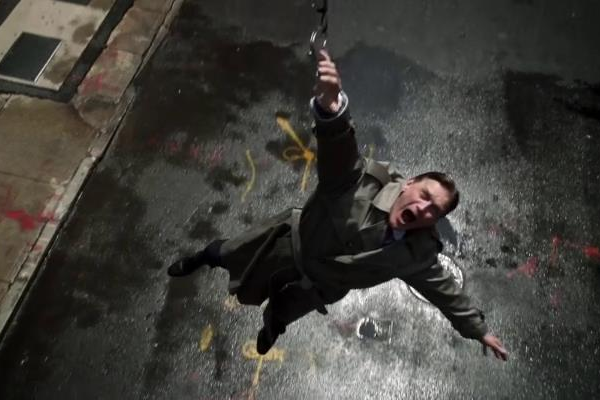
The Balloonman, the eponymous vigilante from the episode of the same name, was the absolute nadir of Gotham's first few episodes. In a show that was struggling to finds it feet and was settling on a more serious, less campy tone, introducing a guy who ties weather balloons to crooked cops and criminals so they floated to their deaths as beyond silly. Still, it did facilitate a couple of fun little Easter Eggs for eagle-eyed (and eared) viewers. The pig mask that the Balloonman is first seen wearing looks an awful lot like that worn by Professor Pyg, a disturbing torturer who appeared as a Batman villain fairly recently. Then there's the name of his first victim in the episode: a cop called Officer Cranston. Not a belated shout-out to the Breaking Bad star Bryan, but a reference to The Shadow. He too was a masked vigilante who operated at night and relied on urban legend to make him scary to criminals; but he appeared before Batman, and is largely considered to be the character's main inspiration. And his real name is Lamont Cranston.

15. Barbara's Cereal Box Was Designed By A Batman Legend
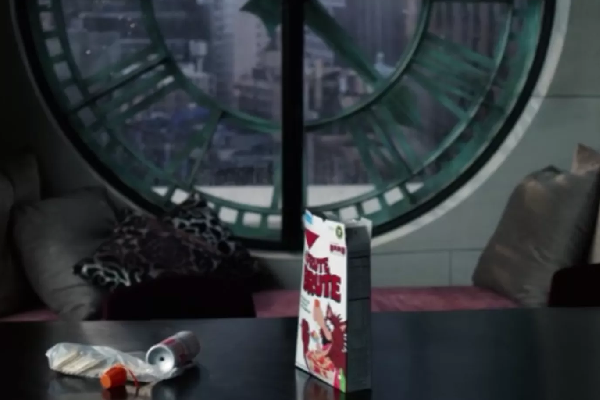
Perhaps the crummy reputation of Gotham City can be put down €“ at least partially €“ to the diet of the populace. Food appears to be in short supply in Gotham, eaten either at that grubby diner Gordon and Bullock frequent, or at home. And at home it looks like the only edible thing on display is children's breakfast cereal. At least, that's how it looks from a trip to Barbara's apartment in episode €œThe Blind Fortune Teller€. It's there that a box from General Mills' €œmonster cereals€ line appears. The company recently gave a makeover to the likes of Count Chocula, Frankenberry and Boo Berry, and the man they tasked with that revamp was none other than Jim Lee. Currently DC Comic co-publisher, Lee made himself as an artist on €“ among other things €“ Batman, specifically the classic €œHush€ storyline written by Jeph Loeb. It's his interpretation of Fruit Brute that you can see there on the table. Which just goes to make the timeline and fictional universe setting of Gotham all the more screwy...

14. Tommy Elliot Is Destined To Be A Bad Guy
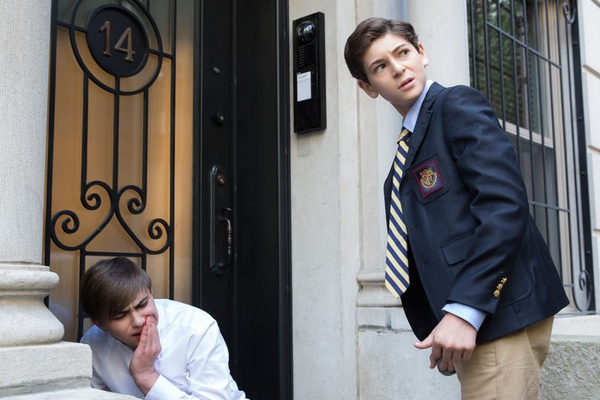
Gotham's eighth episode, €œThe Mask€, actually has the origin stories for a couple of infamous modern Batman villains hidden amongst its main plot of an investment banker who holds a fight club to decide who can join his company. Richard Sionis, the banker in question, is investigated and turns out to be a criminal who wears a kabuki mask. Richard's son, Roman Sionis, makes a brief appearance in the episode as well. In the comics the influence of his terrible parents leads him to becoming the Black Mask, a brutal crime boss who also wears a mask. Then there's the small role for Tommy Elliot in the episode, as a student at Bruce's school who makes fun of his parents being dead. Even for a kid, that's pretty cold. Having asked Alfred for self-defence advice, Bruce kicks the kid's ass. Bully for you, Bruce; when they're both grown up, Tommy will become Hush, a bandaged bad guy who has surgery to make him look like Wayne, in order to try and ruin Batman's life for humiliating him like that. At least, that's what happens in the comics.

13. There's A Reason The Inmates Were Performing The Tempest
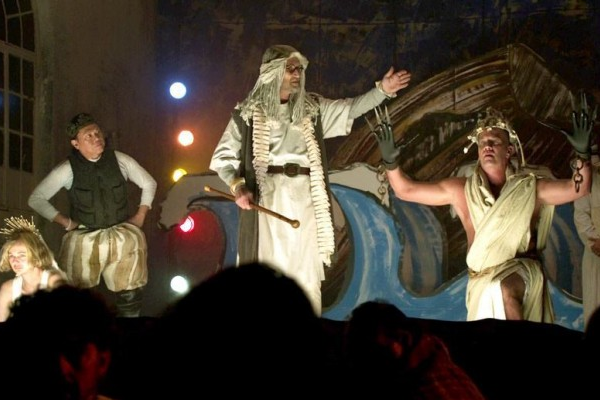
€œRogues' Gallery€ was a mid-season highlight for the first season of Gotham. A disgraced Jim Gordon demoted to guard duty at the reopened Arkham Asylum set the stage for first a deliciously dark murder mystery and then a full-blown prison riot, featuring many of the enemies seen throughout the show up to that point and introducing a few more. There's also a bizarre interlude where the inmates are performing a play. Odd, but not unheard of; apparently theatre is one of the many extra-curricular activities prisoners are encouraged to join in with. In this case they're performing Shakespeare's The Tempest; the Bard's plays often have a significance to the imprisoned. In this case The Tempest had a very real significance for the plot of the episode: it involves an evil magician controlling the mind of beast-man Caliban, which mirrors the actions of Jack Gruber €“ disguised as a doctor €“ manipulating inmate Aaron Helzinger to kill Dr Lang and various other people around Arkham.

12. Mayor James Is Basically Rudy Giuliani
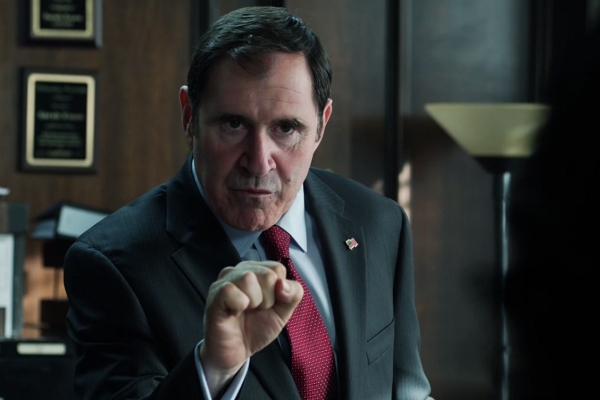
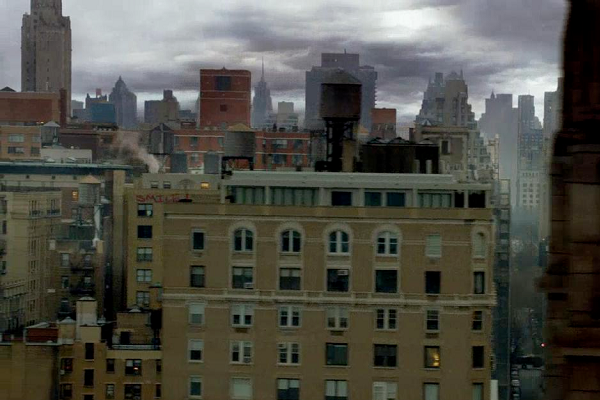
In the DC Universe, the United States is populated by cities which are loosely based on actual American locations. Green Arrow's home of Star City (by the coast and with a famous suspension bridge) is San Francisco, The Flash's Central City is in Ohio, and Superman's Metropolis is New York in the daytime; Gotham City is New York at night. Some will argue with that latter concept €“ introduced by Dark Knight Returns creators Frank Miller €“ with claims Gotham is actually Chicago. Christopher Nolan shot the Dark Knight films there, after all. The skyline is clearly New York all over, though, and Gotham films in the city. The show has also made the comparisons all the more concrete. Introducing a bit of real-world contemporary commentary into the show, the corrupt and morally dodgy Mayor James is shown in the episode €œSelina Kyle€ to basically be an analogue of New York Mayor Rudy Giuliani, since both instigated a scheme to send their city's homeless upstate to clear the streets and try and reduce crime statistics.

11. Fledermaus...That Name Seems Familiar...
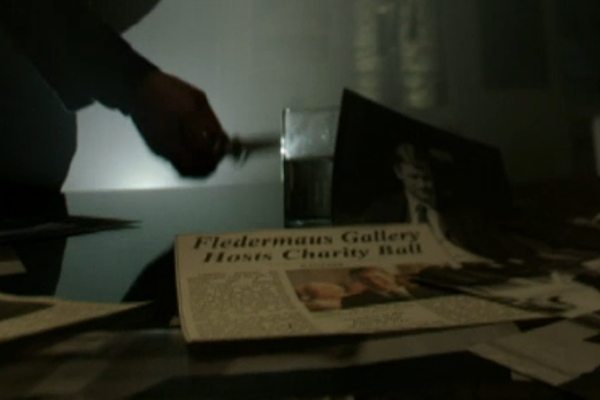
Sometimes, the makers of Gotham just can't help themselves. They latch onto an idea, a stupid little joke, and they have to repeat it over and over. That's the case for, say, everybody always saying that Oswald Cobblepot has something of a penguin about him (foreshadowing his future supervillain name) or all those Joker-related red herrings. Then there's €œFledermaus€. In the first season's twentieth episode, €œCharity Case€, Wayne Enterprises holds a charity ball that takes place at somewhere called the Fledermaus. Then there's a brief shot of a newspaper on the ground in next episode €œThe Anvil And The Hammer€, which is called €œ Fledermaus Chronicles€. Fledermaus, for those who aren't fluent in German/using Google Translate, is the German word for bat. It literally translates as €œflying mouse€. How about that for an obscure reference as foreshadowing? Of course, it could be a double-edged Easter Egg, since Die Fledermaus is also a famous opera about revenge, which these episodes are all about.

10. The Clock Tower Is A Birds Of Prey Nod
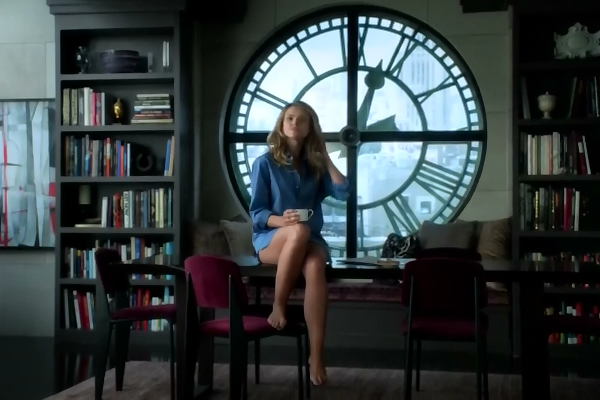
Barbara Kean and James Gordon's relationship on Gotham has already been shown to be very different in the comics. Initially engaged at the beginning of the show, they wind up breaking up far earlier than they did in the source material; just in time, too, since Barbara's revealed to be an unhinged murderer who killed her parents. Still, who doesn't have that one psycho ex who was brainwashed by a serial killer called The Ogre and then been arrested herself? In the comics, they broke up for a far more prosaic reason: Jim cheated on her. But that wasn't before they'd already had a kid together, the younger Barbara Gordon, who would later become Batgirl. ...Then she was paralysed by The Joker, and instead became Oracle! In her new role as wheelchair-bound computer genius and liaison to superheroes across the globe, Barbara took up residence in a clocktower that overlooked Gotham City. Identical to the penthouse apartment Barbara and James occupy during Gotham. Maybe they'll patch things up yet!

9. Viper Is A Predecessor Of Venom

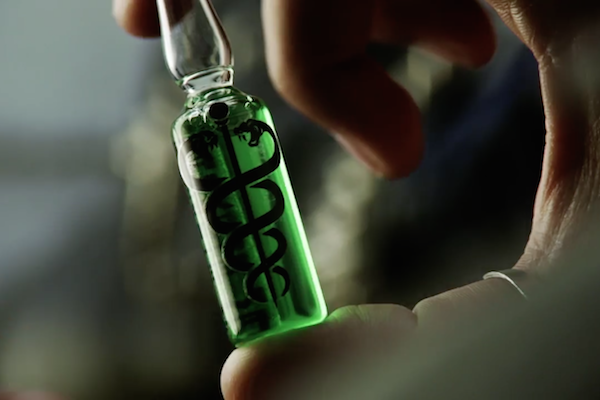
The time period Gotham is set in has been kept deliberately ambiguous throughout the show's run. The fashions and cars of the main characters are straight out of forties film noir, Gotham City Police Department have computers but they're the kind with the old bulky CRT monitors, and Harvey Bullock wields an old-school flip phone. All of those feel like vague signposts that Gotham is taking at sometime in €œThe Past€. That's all you need to know: this is in both the audience and Batman's past, which is why all the technology is slightly worse versions of the sort we use now. That also applies to concepts from the comic books used on the show. Take, for example, Viper, from the episode of the same name. It's a street drug that gifts it user with super strength and endurance for a limited period, and proves to be highly addictive. The name and the drug's effects are both a clear reference to Venom, the drug that powers bad guy Bane and which Batman was briefly hooked on. Viper, Venom, see?

8. There's Links To The Wider DCU

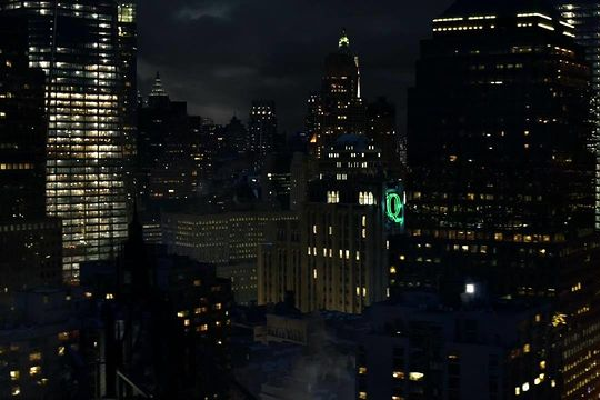
Whilst it's been confirmed that Gotham doesn't have any links to the various live-action iterations of Batman seen on the silver screen, it does appear to share a fictional universe with some of its television brethren. Nobody's quite made up their mind how connected the DC Television Universe actually is, although The Flash and Arrow are closely linked. It's been hinted Constantine, whose show appeared on NBC or the upcoming Supergirl (on CBS) could crossover with the two CW series. Gotham, which airs on Fox, didn't bother beating around any such legal bushes and chose to just stick in an Arrow reference in its second episode, a Queen Consolidated logo clearly seen on a skyscraper. Interestingly, recurring Gotham villain The Dollmaker also popped up in Arrow, albeit played by a different actor and with a different MO. Then there's the €œTRIDENT INTERNATIONAL SHIPPING€ billboard seen on the streets of Gotham, which is almost certainly tied into underwater, sea-fork wielding superhero Aquaman.

7. Multiple Characters Named After Goodfellas
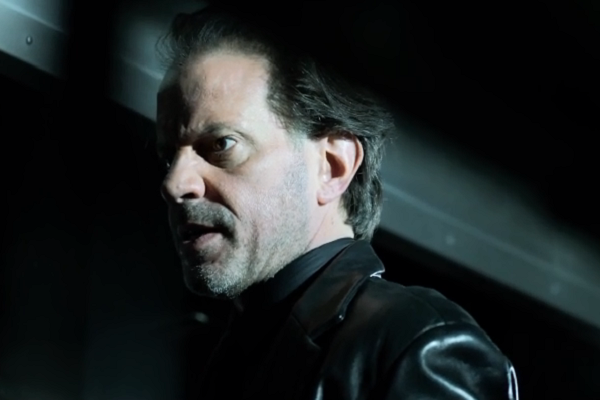
They've been a presence throughout other Batman media, from the first Nolan film to classic graphic novel Year One, but Gotham really goes all-in on the mob that rules the city. They're a very traditional, Godfather-esque Mafia, with warring factions lead by Carmine Falcone and Sal Maroni, both of whom speak their native Italian at times. In seeking inspiration for these gangster characters, however, Gotham went not to a real-life source, but a previous (and possibly the best) depiction of the Mafia in live action: not The Godfather, but Goodfellas. The first season saw two characters named for crooks from the iconic Martin Scorsese film, a couple of neat Easter Eggs for movie fans. The titular blind fortune teller from the episode of the same name is called Paul Cicero, and then there's Frankie Carbone, Sal Maroni's second-in-command; you might recognise the names from Goodfellas, but the unique face of the Frankie is more widely seen in The Simpsons as Louie, a character in Fat Tony's entourage also inspired by Carbone.

6. A Glimpse Of Killer Croc

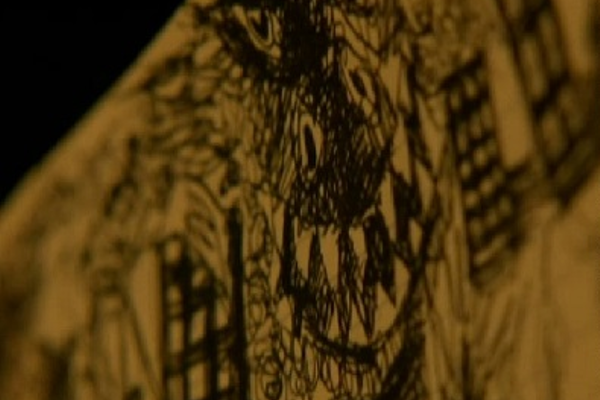
Batman is one of the few superheroes in the DC Universe who doesn't have any superpowers. No traditional ones, anyway; his ungodly wealth, intelligence, gadgets and years of training are certainly not within the grasp of most mortal men. Often this leads to accusations that the Caped Crusader isn't a €œreal€ superhero. Well Gotham puts paid to that argument, because Bruce Wayne clearly does have a superpower. He's got some natty precognition abilities, on the basis of some of the things he sketches in that notebook of his. The young Bruce's constant scribbling is supposed to signify his withdrawn, quiet and creative nature. It also suggests that he can see the future, because in the episode €œThe Blind Fortune Teller€ his illustration of a big scary monster devouring Gotham City looks an awful like Killer Croc. He might have been going for Godzilla, but with that human-like smile of awful jaws and the scaly skin, it's way closer to the classic Batman villain.

5. And Bruce Sketches The Batcave

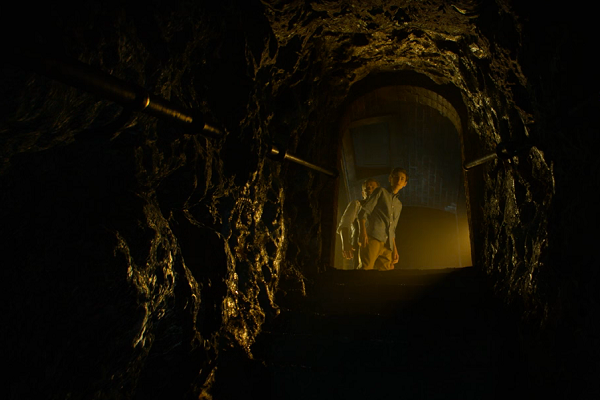
You could be forgiven, admittedly, for not paying much attention to Bruce Wayne's notebooks. One of the bum notes in those early episodes of Gotham was the young orphan's completely cliché downward spiral into teen angst, which involved him listening to a lot of heavy metal, wearing black, and writing scary words in Biro in his school books. Along with that drawing that looks a lot like Killer Croc, the second episode €œSelina Kyle€ also sees Bruce labouring over a sketch that suggests another iconic figure in Gotham's future. That's the Bat-Cave, right? He's a fair ways off of deciding to be a vigilante and having an awesome hide-out, admittedly. But he's also a young boy who likes to disappear into his imagination, and he knows about the caves beneath Wayne Manor. Which mean, according to Gotham's telling, that the Dark Knight's secret base of operations comes from the same place as Tracy Island. Good thing they found that cave beneath Wayne Manor at the end of the first season...

4. The Painting In Wayne Manor Is Apposite
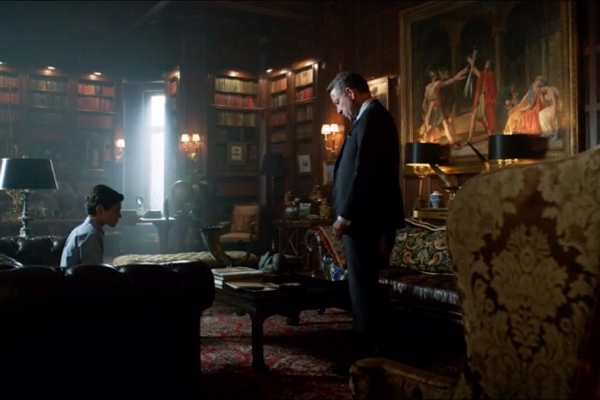
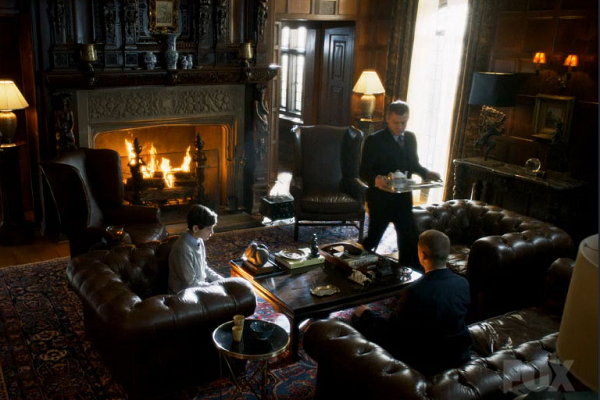
Wayne Manor isn't the ideal locale to be raising a troubled, orphaned young man. It's huge, there's apparently an easily accessible and very high roof, and then there's the huge system of caves underneath for him to get lost in. Factor in all those displays of medieval armour wielding real swords and it's a wonder Bruce Wayne makes it to adulthood. That's before you even get onto the gruesome paintings Bruce's parents saw fit to decorate the family home with. Amongst those is Le Serment des Horaces, or €œOath of the Horatii€, by French artist Jacques-Louis David, painted in 1794. It shows a scene from Roman legend of the €œimportance of masculine self-sacrifice for one's country€. The piece depicts three brothers, all but one of whom sacrifices his life for the good of Rome, saluting their father who holds their swords out for them. If the Batman mythos is about anything, it's masculine self-sacrifice for the greater good. Apposite painting, then. Bonus Easter Egg: Gotham writer Bruno Heller's last big show? Rome.

3. Lots Of Nods To The Adam West Series...
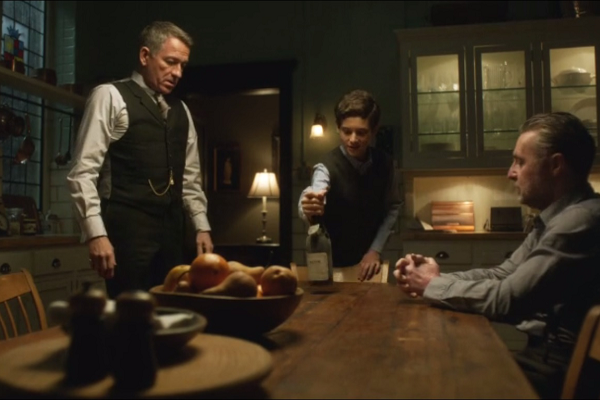
Gotham has mostly settled into being on one side of the Great Batman Divide. That divide being between the grim, gritty Batman you see in the work of Frank Miller and Christopher Nolan; and the colourful, camp Batman that was seen in the Silver Age comics, Brave And The Bold animated series and (most crucially) the sixties TV series. The Adam West Batman show is about as far from Gotham as it's possible to get. Despite these seemingly irreconcilable differences, there's been plenty of references to the old show, beginning with it being played on TVs all across Gotham. Then there's Selin Kyle's locket, which contains a photo of her mum: actually Julie Neymar, the sixties Catwoman. Along with those is the Shakespeare bust seen in Wayne Manor, which was a major prop in the sixties Batman show: lifting the Bard's head up revealed a secret red button, which unveiled the fireman's poles which transported Bruce Wayne and Dick Grayson to the Batcave. Then, in the episode €œRed Hood€, Bruce bring Alfred a bottle of wine, vintage...1966.

2. ...And The Animated One

Many have drawn comparisons between the gothic, art deco architecture of the skyline in Gotham, and the similar production design of Tim Burton's two Batman films made in the late eighties/early nineties. In actuality the look of Gotham seems more inspired by Batman: The Animated Series, for many the high-water mark of Dark Knight media. The clash of modern and retro design in the buildings, outfits and cars are straight out of the animated series, which suggests Bruno Heller and company paid as close attention to the old cartoons for their research as they did the Gotham Central comic that serves as the most obvious influence on the show. Then there's the very direct reference to Batman: The Animated Series, which is so obscure and small even the most hardcore would notice it. In Gotham, the address of Wayne Manor is clearly stated as being 1007 Mountain Drive; that's the same address that appeared in a single episode of the cartoon, €œThe Demon's Quest€.

1. Every Little Joker Reference

As The Joker is so fond of telling his nemeses almost every time they tango, he and The Batman can't exist without each other. They're two sides of the same coin, yin and yang. So it makes sense that even in Gotham, when Bruce Wayne's still a good decade or so off of pulling on the cowl, the Clown Prince Of Crime should make an appearance. In fact, showrunner Bruno Heller teased before the series began that there would be a Joker €œreference€ in almost every episode, with numerous red herrings planted amongst the numerous potential candidates who could become the killer clown (including a stand-up comedian in the first episode and cackling Jerome in €œThe Blind Fortune Teller€). Those are the more obvious nods to the Dark Knight's arch nemesis, but you might have missed the graffiti occasionally spotted around Gotham which reads €œSMILE€ in a crazed, red-painted scrawl, or the dancers at Fish Mooney's club in red-and-black-lingerie; why, that's the colour scheme of The Joker's girlfriend Harley Quinn! In fact there's not one, but two long shadows cast over Gotham: the city's future protector, the young Bruce Wayne, and its future tormentor. He just wants to put a smile on your face...

Contributor
Contributor

Tom Baker is the Comics Editor at WhatCulture! He's heard all the Doctor Who jokes, but not many about Randall and Hopkirk. He also blogs at http://communibearsilostate.wordpress.com/