Doctor Who Series 10: 14 Easter Eggs & References You Might've Missed In 'Smile'
Some easily-missed details to put a smile on your face.
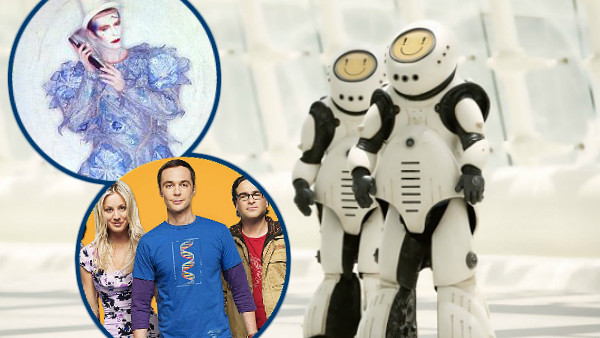
Doctor Who season ten continued apace this past Saturday with Smile. Following opening episode The Pilot, it was another adventure that stripped back the show to its constituent parts - just the Doctor and his new companion heading off to the future and saving a civilisation. It was a charming episode, then, even if its traditional format meant it wasn't particularly remarkable. Still, at least it came packed with all the usual nods to the world of Doctor Who and beyond.
As you will see over the following entries, many of them are references to episodes from either 2005 or 2010 - notably the two years where the show rebooted itself. It seems the show is really keen to enforce the idea that everything is starting again with this season.
There are also a lot of callbacks to outside of Doctor Who, as well. For instance, Bill wonders at one point if the Doctor can stretch his arms like Mr Fantastic (and if you don't know who that is, you can hand your geek card in at the door). Likewise, the visual of a futuristic city surrounded by wheat fields was reminiscent of Disney's Tomorrowland.
But those are two obvious examples, and there were lots of Easter eggs and references in Smile that you might not have spotted.
14. Everything That Ever Happened Or Ever Will

The Doctor pitches the TARDIS to Bill in this episode by saying it offers “everything that ever happened or ever will.” This is exactly the phrase used by his predecessor the Eleventh Doctor when talking to Amy in The Eleventh Hour.
He later clarifies that you don’t steer the TARDIS but “negotiate” with it, as it takes you to “the still point between where you want to go and where you need to be.” This recalls another Eleventh Doctor episode, this time The Doctor’s Wife. In that, the Doctor asks the TARDIS (briefly in human form at the time) why she never took him to where he wanted to go. She replies that she always took him where he needed to go.
13. Mina Anwar
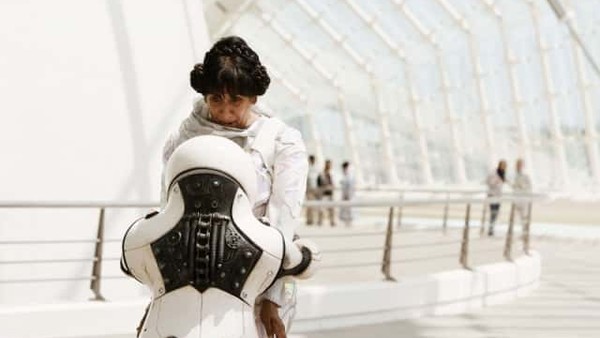
Speaking of the episode's pre-credits scene, it features a face that should be familiar to Doctor Who fans. Mina Anwar stars here as a beleaguered colonist whose mother has just died. She previously appeared as a regular on spin-off The Sarah Jane Adventures as Gita, the mother of Sarah's teenage neighbour Rani Chandra.
This makes two episodes in a row that have starred returning Whoniverse actors. The Pilot also saw Jennifer Hennessy return to the show, after appearing in an episode in 2007.
12. The Happiness Patrol

The premise of this episode draws from several previous sci-fi works. Doctor Who fans will immediately be reminded of 1988’s The Happiness Patrol. In that, the Doctor arrives on a human colony world where the civilians must always be happy on pain of death.
The premise perhaps originated in It’s A Good Life, a short story by Jerome Bixby in which a super-powerful child controls a small community and forces everyone to be cheery. It was memorably adapted for an episode of The Twilight Zone in 1961.
The idea of white robots that intend to aid their human masters but end up harming them is also similar to 2011’s The Girl Who Waited. The Handbots in that episode attempted to administer medicine to Amy, which unbeknownst to them would kill her.
11. Scotland In Space

In Smile, Bill questions how the Doctor can sound Scottish when he's an alien. She jokingly asks him if there are Scotlands in space to which he replies: "They're all over the place."
This exchange heavily recalls a scene from 2005’s Rose when the titular companion asked Christopher Eccleston’s Doctor why he had a Northern accent. “Lots of planets have a north,” he retorted.
In this episode, the Doctor carries on by joking that the Space Scotlands "always demand independence from every planet they land on." This also recalls a line from 2010’s The Beast Below – funnily enough, this was Amy’s first trip to the future, too. In that episode, it is mentioned that Scotland’s population left Earth in a separate spaceship from the rest of the UK.
10. The Vardy

Though they were referred to simply as Emojibots in the promotional material for this episode, in Smile itself the robots are called the Vardy. This is an in-joke on the part of writer Frank Cottrell Boyce. Professor Andrew Vardy, of Canada's Memorial University, studies swarm robotics - much like the microbots that form the city. Vardy is a friend of Boyce's and they once co-wrote a short story together.
Microbots have appeared in many modern Who stories. Most notably, nanobots were the reason for the gasmask plague sweeping through war-torn London in 2005's The Empty Child/The Doctor Dances (written by current showrunner Steven Moffat).
Elsewhere, the Doctor attempts to blow up the Vardy's city by overloading its cold fusion reactor. You can glimpse the name 'Fleishman' written on the machine in some shots. This is presumably a (misspelled) reference to Martin Fleischmann (1927-2012), who was a pioneer of research into cold fusion.
9. Ashes To Ashes
When trying to convince a Vardy that he is happy, the Doctor says "I'm happy, hope you're happy too." This sounds like an Easter egg-free line at first, but it's actually a direct quote from David Bowie's Ashes to Ashes.
This is the second time that Capaldi's Doctor has quoted the Thin White Duke. When he was entertaining a crowd of medieval peasants in The Magician's Apprentice, the Doctor got them to recite "we are all the young dudes!" All The Young Dudes is also a song written by Bowie and first performed by Mott the Hoople in 1972.
8. Another Ark In Space
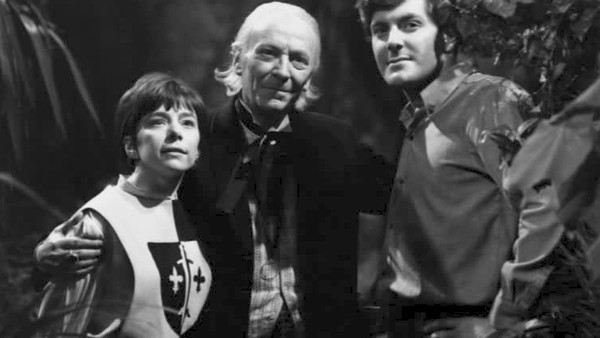
When the Doctor realises what the colony is, he comments that he has met a couple of similar refugee colonies of human beings escaping the end of the Earth before. This is actually an idea that goes all the way back to the First Doctor’s era.
1966’s The Ark sees the TARDIS land on a spaceship that is escaping the sun swallowing the Earth. Like in Smile, the human’s servants – the Monoids – want independence. The idea is revisited in 1974’s similarly-titled The Ark in Space. That story, in particular, featured the humans stored in cryogenic pods during their journey, as in this episode.
In more recent years, The Beast Below – yep, that one again – saw the UK bundled into a starship and set off across the stars.
7. The Seeds Of Doom
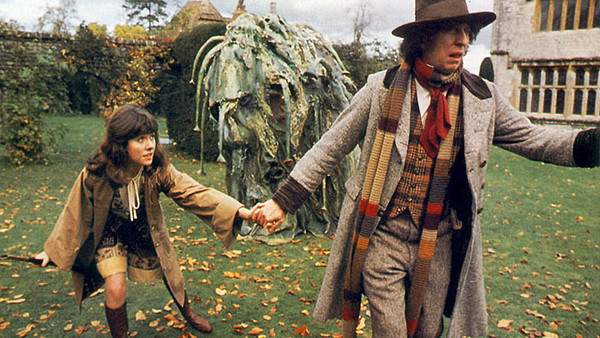
Elsewhere in the episode, the Doctor and Bill discover the gruesome fate of the early colonists: they have been turned into fertiliser by the Vardy. In another nod for Fourth Doctor fans, this recalls 1976's The Seeds of Doom.
In that story, plant-obsessed villain Harrison Chase dispenses with those who cross him by shredding them into mulch in his giant compost machine. Spoilers - at the end of the episode, Chase gets his comeuppance and is fed to the machine himself.
6. Don’t Read The Doctor’s Browser History

When things get dangerous in this episode, the Doctor pretends to Bill that they are going to escape in the TARDIS. This is a fairly regular trick he pulls to ensure his companion’s safety. He did it before to Rose in The Parting of the Ways and to Clara in The Time of the Doctor.
He mentions that Bill can watch movies in the TARDIS while she is waiting for him to return, as he the ship has broadband. This isn't the first time we've heard that the TARDIS is decked out with earthly entertainments. Back in 2005’s Aliens of London, Mickey Smith wanted to use the TARDIS to watch a football game on TV.
Before he goes, the Doctor orders Bill to “stay away from my browser history.” He said the same thing to Osgood when she borrowed his sonic shades in The Zygon Inversion. Just what have you been googling, Doctor?
5. Erehwon
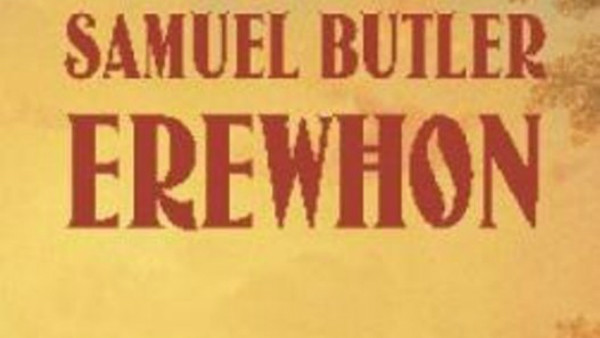
The colonists' ship in this episode is called Erehwon 190484. Disregarding the numbers for a moment, you might notice that Erehwon is 'nowhere' spelled backward.
There may be more to it than that, though. Erewhon (with the w and h transposed) is a novel by Samuel Butler that was written in 1872. It is an early work of sci-fi dystopia. In the novel, Erewhon's inhabitants don't use machines as they fear that they will become sentient and rebel against their human masters. Sound familiar?
As for the numbers, they could also be a nod to another literary dystopia. In George Orwell's 1984, the opening line establishes that the story takes place in April. So the number could be the date 04/1984 jumbled up.
4. United Earth
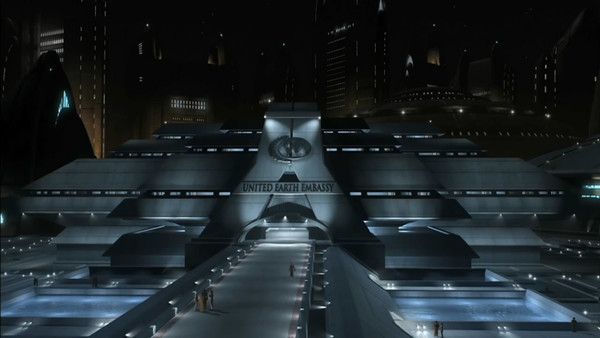
On the doors of the colonists' ship are emblems bearing the phrase 'United Earth.' While this might fly over the heads of Who fans, Star Trek lovers will recognise this immediately.
In that other long-running sci-fi show, United Earth is the planetary state formed when the world unifies following humanity's first contact with the Vulcans in the 22nd century. Apparently, the Doctor Who universe has its own version.
The planet the episode is set on, by the way, is Gliese 581D. In the real world, the Gliese star system really exists but, while there are definitely three planets in the system, the fourth is only conjectural. If it does exist, 581D is believed to be much larger than Earth.
3. Bill Watches The Big Bang Theory
When Bill accesses the ship's computer, it plays a high-speed video containing the history of the Earth. All this scene needs is Barenaked Ladies' The History of Everything playing over the top and this scene would be a dead ringer for the opening credits of The Big Bang Theory.
Naturally, this blitz through human history brings up some nods to past Doctor Who adventures. For instance, we get a glimpse of Stone Henge - which appeared in 2010's The Pandorica Opens - and Vincent Van Gogh - who the Doctor befriended in the same year's Vincent and the Doctor. Elsewhere in the episode, Bill espies a bust of Egyptian queen Nefertiti. She travelled with the Doctor in 2012's Dinosaurs on a Spaceship.
Lastly, Bill crying while watching a video of some tragedy happening to Earth in the future is highly reminiscent of - here it is again - The Beast Below. In that episode, the camera shows Amy's sobs as she watches footage of solar flares hitting the planet.
2. The Magic Haddock
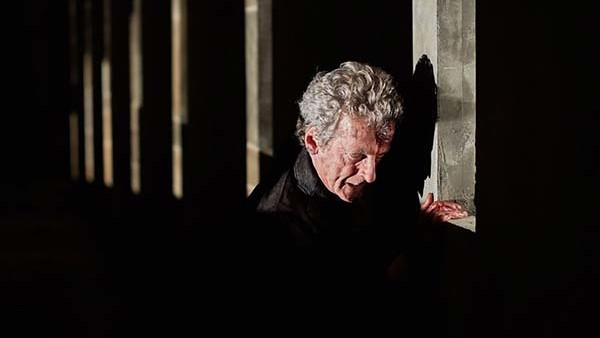
The Doctor compares the situation between the humans and the Vardy in this episode to the tale of the Magic Haddock, a variation on The Monkey’s Paw-type story about being careful what you wish for.
This recalls the last time that the Doctor compared his current predicament to a fairy tale. In 2015's Heaven Sent, the Doctor is trapped behind a wall of unbreakable Azbantium and recites the tale of The Shepherd’s Boy, a Brothers Grimm story about a bird who pecked away at a mountain over eternity.
Interestingly, the story of the Magic Haddock seems to be an original creation of Cottrell Boyce. The Grimms did write a different story about a wish-granting fish, though, called the Fisherman and His Wife.
1. Next Episode Cliffhanger
At the end of the episode, the TARDIS arrives in a new location - the frozen river Thames where the Doctor and Bill encounter an elephant.
This kind of lead-in to the next episode was once commonplace on Doctor Who. Back when the show was heavily serialized in the First Doctor's era, just about every episode would end with a scene setting up the following adventure (along with a caption revealing next week's title).
After that, the device was only occasionally used in the classic series (e.g. Fifth Doctor story Frontios). The modern series is more fond of it, though. Episodes like The Poison Sky, Flesh and Stone and our old friend The Beast Below have used it, as well.
What other Easter eggs & references did you spot? Let us know down in the comments.