Doctor Who Review: Under The Lake – 7 Ways To Sink Or Swim
Three episodes in and series nine Doctor Who is showing no signs of taking on water.
WARNING! SPOILERS: This post contains spoilers and speculation for the Doctor Who series nine episode “Under the Lake”.
Three episodes in and series nine Doctor Who is showing no signs of taking on water. “Under the Lake” is another tight, well paced episode with intriguing bad guys that are so much more than bug-eyed monsters in rubber suits. Base under siege stories are a classic Doctor Who theme and writer Toby Whithouse does not disappoint with this spooky tale of an underwater facility beset by murderous apparitions and an amoral corporate puppet.
Reminiscent of the tenth Doctor story “The Waters of Mars”, this episode features an intelligently written female commander who also happens to be deaf. Sophie Stone brings the character of Cass to vivid life, needing no sound to convey a range of emotion from determination to desperation. Her performance ensures that the commander never feels less than an integrated and respected part of the crew.
“Under the Lake” is a return to the kind of rip-roaring adventure yarn Doctor Who does best. Yet it is more than a well told horror tale. The script is filled with explorations of the importance of language and how we communicate. Let’s dive into the many reasons why “Under the Lake” succeeds so swimmingly.
7. A Base Under Siege

Placing a group of characters in an enclosed space with an imminent threat is a tried and true way to create intensity within a story. The claustrophobic atmosphere heightens the tension and the group begins to fight among themselves as the danger increases. Writer Toby Whithouse keeps his script fresh by giving us interesting and nuanced characters to both sympathize with and scorn. Pritchard is especially effective as the company man who cares only for profit. His panic as his former commander reaches for the airlock button is well played as it lends a tinge of sympathy to a character that is otherwise easy to revile.
In a call back to Whithouse’s series six story “The God Complex” the original ghost is from Tivoli – a planet whose survival depends on the people’s willingness to submit to any force that decides to invade them. In that story the monster fed off a person’s faith. In this one the pilot’s sealed capsule is found within the ruins of a church. Is there a connection?
6. The Complexities Of Language

Two of the things that define sentience in a species are self awareness and complex language. Language is not limited to speech; ideas may be conveyed through hand gestures, facial expression, body movement, even marks on a spaceship wall. Words have the ability to literally shape our consciousness. When concepts are introduced to us our brains create new neural pathways so that we may create long term connections and retain memories. The idea that marks on a wall could turn a person into a communication beacon is fascinating and not so far-fetched.
Cass is a key component in the unraveling of the plot of this story because she is a person who has learned not to rely on the spoken word. She was forced to learn to closely observe the world around her and take in every nuance of a person and place in order to ensure her understanding of a given situation. She knows there is something wrong inside the spaceship even if she can’t quite put her finger on it. She is adamant in keeping her interpreter Lunn from entering the vehicle even if neither of them quite understand why.
5. Becoming The Monster

There are many ways to become a monster. Pritchard is the beast long before he is murdered. He chose to give up his humanity in exchange for money and his slavish devotion to profit ultimately leads to his downfall. Commander Moran is a victim of circumstance. He is the risk we take whenever we decide to explore something new. His life was cut short but it appears to be a life well lived as his crew obviously respected and cared for him. While Pritchard’s demise may be viewed as karma, Moran’s is tragic. The monster in his case is death itself and its aching randomness.
One could argue the underwater base is a kind of monster. It is certainly a time bomb waiting to go off. Nuclear reactors are a peculiar kind of temptation for human beings as our greed for power overcomes the inherent risk of a cataclysmic disaster. Perhaps there is nothing more monstrous than our own arrogance.
4. The Nature Of Death
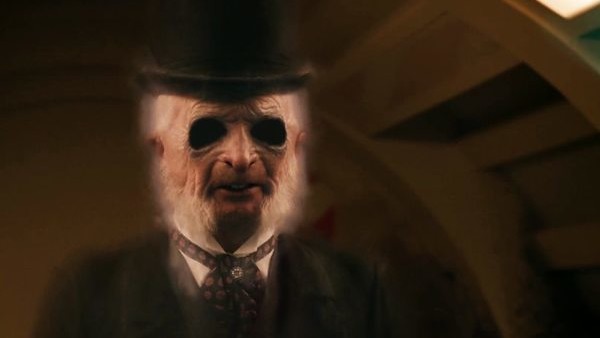
The Doctor is fascinated with death. This is not surprising as it’s something he cannot experience in the same way most other people do. One has to wonder if he throws himself into dangerous situations as a way to walk a little closer to the grim reaper. He’s dying of curiosity. He takes the suggestion of ghosts as a personal affront – there is nothing beyond death so nothing may return. Yet in this case there is an anomaly that the TARDIS senses and does not like. She refuses to go near it. Are the “ghosts” perhaps caught in a sort of limbo? Has something created a pocket of time between life and death that holds the bodies in stasis and uses what’s left of their consciousness as a means to communicate? It’s a singularly creepy idea.
The first three episodes of series nine are particularly reminiscent of the Philip Hinchcliffe era of Doctor Who. Hinchcliffe was a producer in the mid-seventies who oversaw many of the most favored Tom Baker / fourth Doctor episodes. The tone of the series under his reign was darker and more adult and filled with elements of gothic horror.
3. The Body Electric

The crew retreat to a Faraday cage, an enclosure that blocks electrical fields, in order to protect themselves from the imminent threat. The ghosts can only grasp metal which is a good conductor of electricity. Does this have something to do with the missing power cell? Have the dead been converted into some kind of electrical impulses and is that how the signal is being generated? This is such a clever episode, enjoyable on so many levels. It’s not necessary to understand what a Faraday cage is (I certainly had to look it up) to enjoy the premise but it’s obvious the writer put a lot of thought into this and it lends an air of welcome authenticity.
Since Cass kept Lunn from entering the spaceship he is the only one who has not seen the marks on the wall. Will he be the key to resolving the situation? If the cliffhanger is anything to go by he may be the only one left. Unfortunately the reveal of the Doctor’s ghost was not the best cgi effect but the idea was certainly effective. The two-parter format this season is proving its worth. There was a danger of sacrificing story coherence for the sake of gimmickry but so far the episodes are confidently written and well characterized and use their shock endings in a way that furthers the plot rather than killing it.
2. The Relationship Between Clara And The Doctor

Clara is aware of the Doctor’s problems in regard to effective communication with humans and uses her experience as a teacher to come up with a solution. She creates flash cards he can use to mimic the nuance of emotion. The problem however is that the Doctor is not human. We can’t fully understand him but he in turn is constantly grappling with who we are. The Doctor fails miserably even while reading a pre-fabricated platitude because he has no idea where to stop. The important thing though is that they both keep trying. It’s not the outcome that is the most important thing but the willingness to put in the effort.
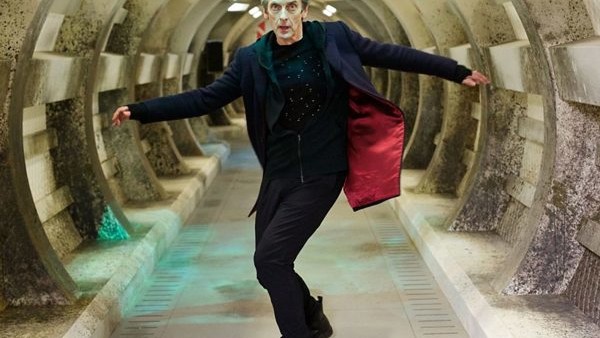
In a dazzling display of awkwardness the Doctor attempts to warn Clara that she can never be him. He cares about her. He sees where this is going. But he cannot change her and his helplessness is beautifully portrayed by Peter Capaldi. Clara assures the Doctor she understands what he is saying but it’s obvious she really doesn’t. And maybe she shouldn’t. If those of us who live with death hanging over our heads go around worrying about it all the time then we would curl up in corners and never accomplish or experience anything. Sometimes denial is the only way to go on.
1. Motives And Manipulation

Once again we are presented with a supremely manipulative Doctor. When the crew is ready to flee the base the Doctor does not hesitate to use the power of his words to reel them back in. What is most interesting is Clara’s role in the Doctor’s manipulation. She is not a typical companion in the sense that she is there to be the Doctor’s moral compass. She is quite capable and willing to assist the Doctor with his head games and play a few of her own. She’s also an adrenaline junkie, drunk on the adventure and damn the consequences.
The biggest problem with “Under the Lake” is that we have to wait an entire week to find out what happens next. It sounds like we’ll be tackling one of Doctor Who’s biggest conundrums. Why doesn’t the Doctor simply go back in time before a disaster happens and fix everything? There are multiple ways in which to address that particular plot point of course and I can’t wait to view Toby Whithouse’s take on it. He had me hooked from the moment his line hit the water.