Doctor Who Review: Sleep No More – The Good, The Bad And The Crumbly

A jumble of mismatched puzzle pieces that never quite fit together and the weakest episode of a very strong season.
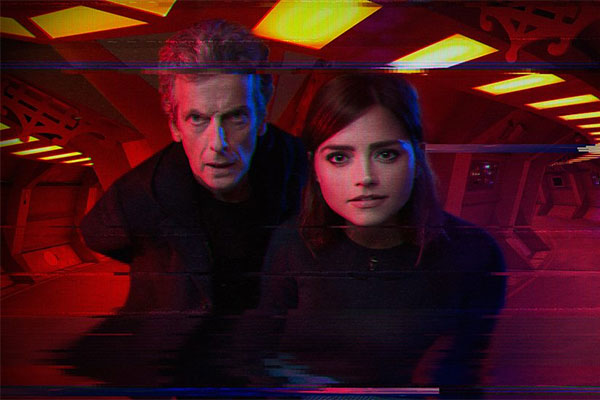
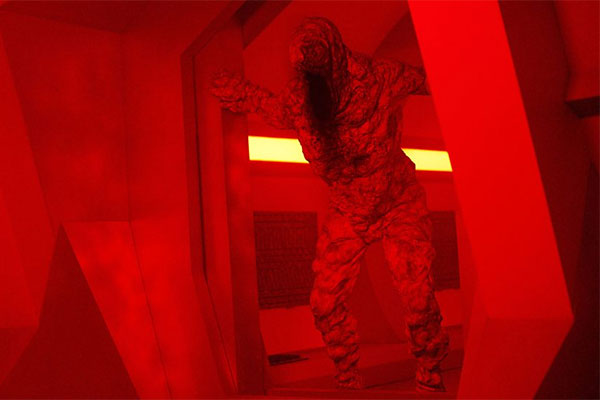
WARNING! SPOILERS: This post contains spoilers and speculation for the Doctor Who series nine episode €œSleep No More€. Sleep is a mysterious thing. We are left vulnerable in a world of shadows as our brains attempt to collate and classify the experiences of the day. €œSleep No More€ capitalizes on our mistrust of a commonplace occurrence that we do not fully understand. The idea for a story based on monsters formed out of the detritus of sleep is an intriguing one yet the execution suffered from the lack of a cohesive narrative. The found footage format is choppy by nature and when combined with a multitude of viewpoints devolves into a muddled mess. There are strengths to laud in this experimental script by Doctor Who veteran Mark Gatiss and while there may be just as many weaknesses an ambitious failure is always worth more than a mediocre retread. As series nine slides into the final stretch Gatiss treats us to an old fashioned even nostalgic adventure with a contemporary twist in the final moments. Does it work? Not really, but it sure is fun to watch it fall apart and almost redeem itself at the end. The premise of €œSleep No More€ is ridiculous, some performances are over the top and the monsters look like a blob of Play-Doh rolled in a bag of kitty litter. It€™s a jumble of mismatched puzzle pieces that never quite fit together and the weakest episode of a very strong season and still more entertaining than almost anything else on television.

7. A Foundation Of Shifting Sand

€œSleep No More€ crumbled under the weight of multiple character viewpoints that were too easy to dismiss because we were never allowed to get to know any of these people. There€™s a reason a found footage story is often focused through a single camera. When you keep switching from one narrator to another the story collapses into confusion. I suppose you could argue the dust was a single entity made up of component parts like a body filtering its experiences through separate cells that make up a whole. Perhaps what we experienced was the multi-faceted vision of an overlying consciousness but like everything else in this story that was never made clear. Perhaps Rasmussen€™s breaks into the narrative to explain a plot point were intended as a kind of glue to bind the structure of the story together but if so it wasn€™t successful. There were already too many perspectives to keep track of and Rasmussen€™s appearances felt jarring. They broke us out of the story rather than moving things along and it was difficult to settle back in and pay attention to the next bit.

6. Viral Videos And The Mad Scientists Who Love Them
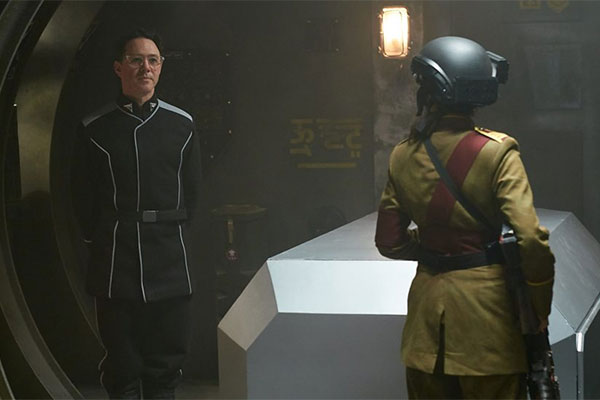
Reece Shearsmith does a good job with a role that left him with little more to work with than standard cartoon villain. Rassmussen is a character we care nothing about as he is given no backstory. Without any sense of his motivations he is little more than an annoyance. Shearsmith does imbue his performance with a wry whimsy however and that helps to keep this one-note villain from completely fading into the background. Rasmussen is the poster child for the unreliable narrator. He has apparently engineered this story from beginning to end, though to what degree is again unclear, in order to create a video that is entertaining enough that people will be compelled to spread it throughout the solar system. Someone watching it will then have their brain chemistry altered in such a way that they are turned to dust. That€™s a fascinating idea and it€™s unfortunate we weren€™t given more time to explore it. This story is such a curious mixture of classic and contemporary psychological horror and neither part works though it was a brave attempt. It feels like a two-parter that was compressed to fit into a shorter time frame and the disparate bits somehow ended up jumbled together in one incoherent out-of-order stew.

5. Call In The Cannon Fodder

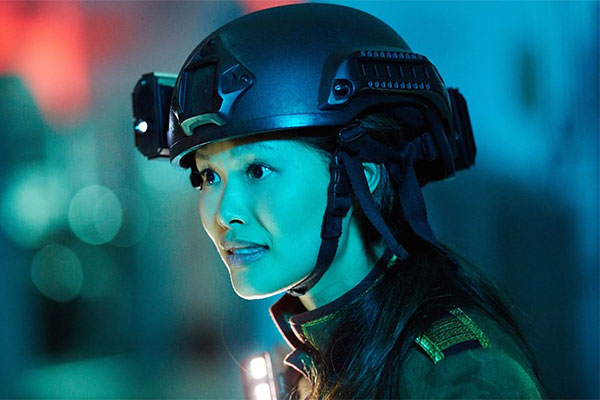
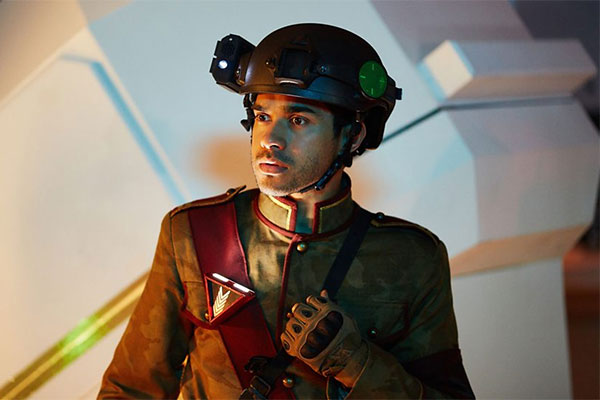
If the homage to Hammer Horror and €œThe Ring€ weren€™t enough we also have the crew from €œAliens€. Or maybe they are more accurately defined as red shirts as they only exist to serve as Sandmen snacks. We can€™t feel for them as they were only given attributes and not personalities. I€™m left wondering how much backstory was cut as this episode went into production. Mark Gatiss is perfectly capable of creating memorable characters. Ada from €œThe Crimson Horror€ is one fine and haunting example. But here he spreads himself too thin and we never get a sense of who these people really are. The only marine to come close to making an impact on the audience is the cloned grunt known as 474. Bethany Black is the first openly transgendered person to appear in Doctor Who and she brings a sweet and sad pathos to a character that is underwritten but intriguing. It is interesting to note that while 474 is denigrated for her supposedly subpar intellect she is the first one to recognize that there are €œeyes in the sky€ and to find the pod that Rasmussen is hiding in. She ultimately sacrifices herself not in service of her in-bred function but for love of Chopra. If only we were given more of this potentially fascinating person and less of the rest of this disposable crew.

4. The Dust Bowl

Monsters that rise from the matter that collects in the corners of our eyes is silly, absurd and classic Doctor Who. I admit I cringed at first but then laughed and joined the party. It doesn€™t matter as the creatures were no more or less a hindrance to the success of the story than all the other underdeveloped ideas. Did we need a corporeal monster at all? The plot may have been better served if the antagonists remained motes of dust. As those can be found anywhere and everywhere they seem more chilling than the vaguely humanoid blobs we were presented with. Yet another unrealized theme here is that of people subject to constant surveillance. As Chopra points out they can no longer escape into their dreams as they are denied sleep. While it does him no good in the end, Chopra is the only one who has retained a semblance of privacy by refusing to give in to the Morpheus propaganda. Again this is a worthwhile concept to explore but it doesn€™t go anywhere.

3. World Building

To his credit Mark Gatiss does manage to swiftly build a sense of a complicated, multi-layered society and it€™s a shame we are not allowed to know more of it. The conceit that India and Japan have merged after a cataclysmic disaster is an interesting one as are the polytheist undertones. Combine that with a culture of drones and workaholics and you€™ve created a fabulous framework to set a story in. I want to go down to that moon and wander around in that environment as I have a feeling it€™s more interesting than what€™s happening on the space station. Peter Capaldi skips up to the edge of pretension as he grimly recites lines of Shakespeare and the breaking of the fourth wall becomes tedious. Still he continues to exude an aura of otherness that is a joy to watch as he flits about trying to figure out what is going on. He takes charge effortlessly and keeps the story from getting too bogged down in its myriad of details. While the other characters fall flat Capaldi€™s Doctor is lovingly written and never drops the ball. He is the strength of the episode.

2. The Look In Your Eyes

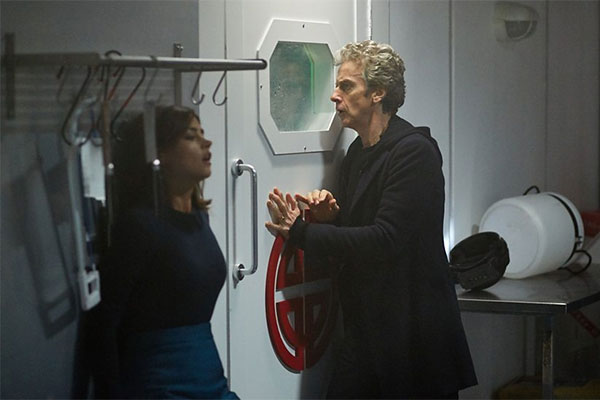
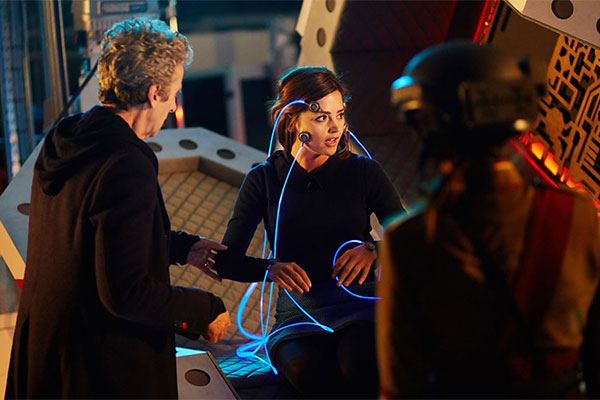
Clara is given little to do in a story that is overwhelmed by too many voices. There is however a lovely bit of interaction between her and the Doctor when they are first discovered by the Marines. It€™s a beautifully written piece of sweet and silly dialog that clearly portrays the affection these two have for each other. Clara has come into her own at last in series nine and her impending loss is shaping up to be a heartbreaking one. Is Clara€™s infection by the dust a hint of what is to come? The Doctor sounded less than convincing when he attempted to reassure her that he would fix the problem. Is he even traveling with Clara prime? I€™m beginning to wonder if something has already transpired and we have witnessed the Doctor traveling with some of the Clara echoes. At the end of series eight it felt like Clara was overstaying her welcome. But her character is so strong and well-written this series that it€™s impossible to imagine her not being a part of it.

1. From High Resolution to No Resolution
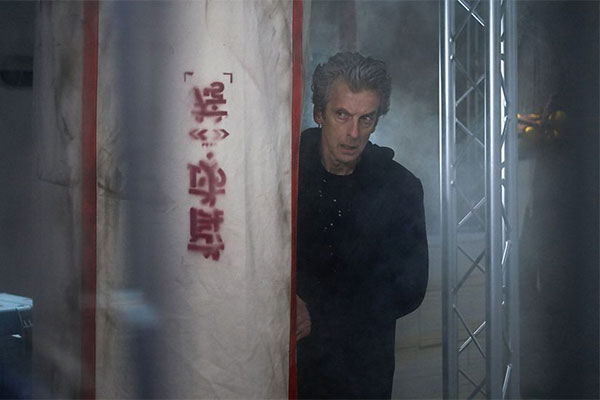
The reveal at the end of €œSleep No More€ may well be the best part of the episode while at the same time the most aggravating. Rasmussen digging into his own eye and crumbling to dust is suitably creepy and the idea of a viral video infection a more interesting direction to take. The Doctor apparently does not win this one and while there€™s nothing wrong with that we are left feeling frustrated at the end of an episode filled with multiple annoyances. Is €œSleep No More€ a failed experiment? Yes, but not without its moments of genius. Peter Capaldi is fantastic as usual and many of the concepts are brilliant ideas to begin with we just never get to explore them. It€™s a mess but an ambitious one and I€™ll take that over lackluster television that refuses to do anything but play it safe any day of the week.

Contributor
Contributor

Mary Ogle is the author and illustrator of “Orangeroof Zoo” a whimsical tale of magical realism told through the pages of a coloring book for adults. Working as a professional artist in the digital medium, Mary’s commissions have included everything from fine art to fan art, book cover design, illustration and book layout. Find more of Mary’s work at www.maryogle.com. Mary currently finds inspiration in the Ojai Valley, residing in a snug little cottage with a recalcitrant cat.