Doctor Who: All Of Series 8 And Last Christmas Ranked

The definitive countdown.

2014 was an incredible year for Doctor Who. The eighth series and its Christmas special achieved an extraordinarily high level of quality throughout, guaranteeing that Peter Capaldi's first year in the lead role was one audiences will remember for a long time. Daleks, Cybermen and the Master all returned, but none of these rematches felt forced or stale. Each time, the creative team behind Who found ways of injecting fresh life into the proceedings. After only a couple of weeks, fans could tell the new era of Doctor Who was going to be a fun and exciting chapter in the programme's unfolding history. By the end of 2014, audiences were convinced that showrunner Steven Moffat was reinvigorated and many of the voices that had been calling for a change at the top had been silenced - at least for a while, anyway. Also, the new leading man had demonstrated beyond any doubt that he was not too old to be the Doctor and that he had most certainly been a superb choice for the coveted part. Given the consistency of this series, ranking the episodes is something of a challenge. How can one great story be rated higher or lower than another? It's only by looking at the finer details of each adventure that distinctions in the degrees of greatness can be made. There is no disgrace in an episode being less good than another - it still has many redeeming qualities and even a relatively unsuccessful episode of Doctor Who was, in 2014, head and shoulders above much of the competition. But which episode was the best of the crop of Capaldi's tenure so far and which episode succeeded least in amazing the show's ever growing legion of fans? Let's begin!

13. In The Forest Of The Night

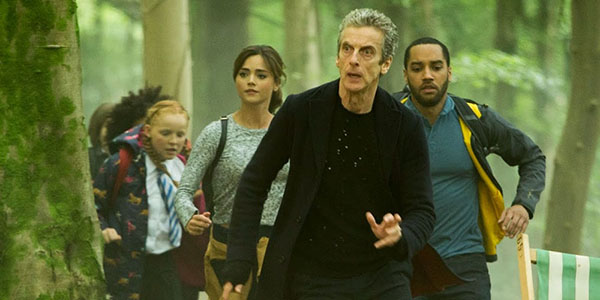
There are many worthy aspects of the 10th episode of the series. The interaction between Clara and Danny Pink works well and Danny continues to show appropriate concern for the pupils in their care (a real-world care that Clara sometimes fails to share). He even gets to save the Doctor and Clara from an escaped zoo animal. Most importantly, the basic scenario of the world suddenly turning into a forest overnight is truly wonderful and it's easy to see why this script got commissioned. Unfortunately, though, the initial promise is never fulfilled and the episode eventually limps to a cop-out ending featuring glowing alien lights that have protected planet Earth forever... that nobody has never heard of. Despite multiple prior threats that were just as serious, these lights save the world from solar activity with a blanket of oxygen. Seriously. Oh, and then the trees vanish just because it's convenient. The scientifically inept ending merely confirms what audiences could see coming - the writer had a good central idea for the story but couldn't find a satisfying way of ending it. This serious flaw reduces the episode to merely being good and in a series this great, that grade puts it firmly in last place.

12. Time Heist

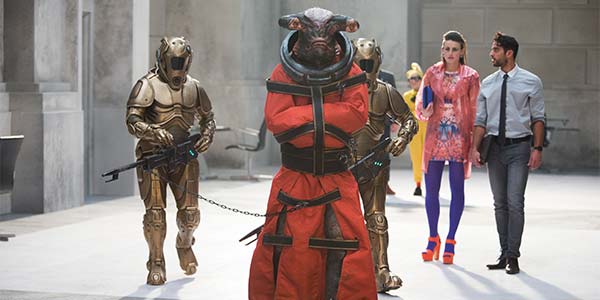
Again, there is much to commend in Time Heist, the 5th episode of the series. The villains and misunderstood Teller creature are effective and entertaining. The supporting characters are generally up to the challenge and the plot twist of the heist being the Doctor's idea (spoilers, by the way!) is original enough to avoid being a cliché. In fact, having a bank heist as the central element of the story is a great idea. But there just aren't enough tropes from the "Heist oeuvre" in the episode. In most heist films, time is spent assembling a team of experts, plans are made, complications are overcome... and that's before the job even begins. All the pre-robbery shenanigans are an essential part of why heist stories are so much fun. However, to prevent viewers from realising the Doctor is behind it all, the very elements that make this genre enjoyable have to be left out, leaving fans with a vague sense of being cheated. An adventure more along the lines of "Doctor's 11" would have been much more entertaining.

11. Robot Of Sherwood

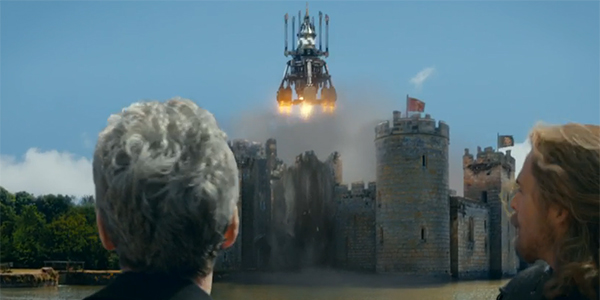
First off, there's nothing wrong with having a comedy story in Doctor Who. The jokes in this episode were even funny, as might be expected when Mark Gatiss is the writer. Especially noteworthy was the Doctor's battle with Robin Hood for which the time traveller was armed with only a spoon. The guest cast was also good, with the Sheriff of Nottingham being suitably despicable. The reason why this adventure languishes near the bottom of the rankings is not the jokes but rather the plot. Robots trapped on Earth? OK. Robots make a pact with a local bigwig to get what they need? Fine. Robots need gold to make circuits that will repair their ship? Hmm, that's a little too much like The Fires of Pompeii, but whatever. The Doctor has an unconvincing fight with the robots for which he uses a mirror to deflect their fire? No, that's just awful. The Doctor shows he's a good man by warning the robots their plan won't work? Sure. The heroes must get extra power to the ship so it doesn't explode so close to the Earth? Well, OK. So, they fire a gold arrow at the robot's ship... Sorry, at that point the audience winces and collectively points out, "Even if the arrow could hit the ship at that range, just bouncing the tip off the hull wouldn't achieve anything". Having jokes be the main point of a story is perfectly acceptable. What's not acceptable is failing to polish the actual plot the jokes are attached to.

10. Kill The Moon

More than half of Kill the Moon is wonderful television. The CGI shuttle crash on the Moon is well realised and the Moon base is a convincing set. Having Courtney along for the ride is a nice touch too, since her inclusion allows the decision about the fate of the Moon to be made by the three symbolic ages of woman (the maiden, the mother and the crone). And it's about time Clara was forced to make a hard decision instead of critiquing the Doctor's choices all the time. Less pleasing is Clara's over-the-top wigging out about the Doctor letting her make the decision (a moot point since the Earth wasn't in much danger either way). This unconvincing falling out feels emotionally untrue, like many of the Doctor/Clara arguments in the series, where much of the disharmony could have been solved with simple honesty and plain, forthright communication. The emotional core of the story isn't the only thing that fails the smell test - gravity can't go weird in just one small area in a single room. Worst yet is the impossible reveal at the end. The Moon is an egg for a giant space chicken which can lay another egg just as big as the first one mere moments after it hatches. No, just no. At least it all looked good.

9. Into The Dalek

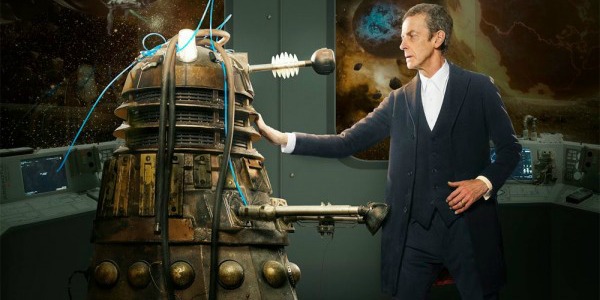
"Am I a good man?" asks the Doctor. "Yes, you very obviously are," replies the audience, ending that debate. It'll take the Doctor until the series finale to reach the same conclusion, though, confirming he really is just an idiot in a box. The 2nd episode of the series started with an impressive space battle and then focused on a moral dilemma for the Doctor, complete with Fantastic Voyage taking place inside a Dalek for good measure. A combination of elements so diverse could only produce a result this mad and enjoyable. Capaldi's performance is spot on too, convincingly conveying that the Doctor really doesn't like Daleks. The only downside to attempting a story wherein the antagonists are shrunk down and placed inside a potential enemy is that the effects have to be up to the challenge. In truth, the effects only got most of the way there. There were times when the Dalek interior just didn't look convincing. One final niggle: the resolution is again a little too easy, with Clara conveniently being able to trigger just the right memories in Rusty the good Dalek. Endings are turning out to be this series' weak point. However, the episode is very entertaining overall and the Daleks are well used. Credit where credit's due.

8. Death In Heaven

The series finale has so many things going for it. An army of Cybermen, the Master singing "Hey Missy", a semi-regular (Osgood) being properly bumped off and then - to the audience's disbelief - a series regular (Danny) being offed, too. With all these elements (and flying Cybermen to boot), the episode cannot fail to entertain. It's fast paced, well acted and the effects are good. Why then, if there's nothing all that wrong with it, is Death in Heaven only 8th on this list? The answer: there are just too many plot elements that don't make sense. Most critically, the Master's plan is bonkers. Now, before you say anything, his/her plans are always over-complicated and insane, but this time the plan is even more nonsensical than usual. Did she mention... "bananas"? She has been following the Doctor up and down his timestream to upload the minds of particular people he's met to the Nethersphere. She causes Clara to meet the Doctor. She presents uploaded individuals with a choice in the Nethersphere (to delete or not to delete, that is the question). And then she converts untold numbers of dead humans into Cybermen. However, she could easily build her Cyber-army regardless of whether any of their number had met the Doctor previously, regardless of whether Clara was there and regardless of whether the uploaded minds had made a choice (unless emotions can't be purged the old-fashion Cyber way for some reason). Also, there's the whole question of how the Master escaped from Gallifrey in the first place. Leaving questions of logic aside, the inclusion of Cyber-Brig also feels tonally out of whack.

7. Deep Breath

The sequence from the series opener's trailer of the dinosaur roaring next to the Houses of Parliament is so visually arresting it can now be considered iconic. Fortunately, there were many other things in the story that were just as good. The scene in which the Doctor and Clara in the restaurant is hilarious and nerve-wracking in turn and the final struggle between the Doctor and the half-faced robot, during which the audience is left to guess whether the Doctor threw the robot out of the door, is genuinely thought provoking. And who can forget Clara being hit in the face with a rolled-up newspaper? Classic. If any criticisms need to be made, though, it could be noted that tyrannosaurs really weren't that big - regardless of what Vastra thinks. Also, the meaning of the story's title wasn't immediately obvious to many viewers, since there wasn't sufficient emphasis placed on Clara taking her deep breath. Other commentators have written at great length about how Clara should have been more open to the Doctor's new appearance and those quibbles are hard to dispute. Lastly, it's unusual for a series opener to be ranked higher than the finale but, in this case, Series 8's opener ultimately felt more cheerful and thus more pleasing than its ultimate conclusion.

6. Dark Water

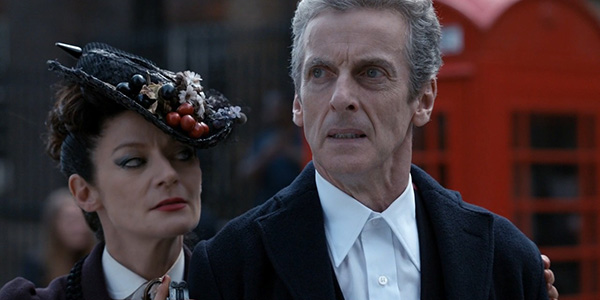
The penultimate episode of Series 8 is vastly entertaining. Although fans guessed Missy = Mistress = Master weeks earlier, the final reveal of her identity still works (Capaldi's reaction sells it). Throughout this episode, events gather pace in a natural manner. Danny's surprise fatal accident, Clara threatening to melt the TARDIS keys, the Doctor and Clara meeting Missy, the watery dead turning out to be Cybermen and Missy blurting out her secret - all of these parts are honestly interesting and engaging. And when a Cyberman invasion story shows the silver giants marching out of St Paul's Cathedral, fans can only grin wildly. It's always easier to build up the threat in a story than to resolve it, which is why Dark Water is better than Death in Heaven. However, Dark Water deserves to be appreciated on its own merits. Apart from everything else, it provided viewers with a genuinely excellent cliffhanger, which is something that Doctor Who had lacked for quite a while.

5. Last Christmas

It's not often the Christmas Special ranks this high but when one features solid performances from every single actor, scary monsters and a plot without any noticeable holes, it would be churlish to place it any lower simply because it's intended to be nothing more than a piece of festive fun. At least, that's the usual purpose of Christmas specials, but this one actually advanced the larger plot, reuniting the Doctor and Clara and resolving the lies told at the end of Death in Heaven. Finally, the two series leads communicate honestly. Fans, of course, guessed that Santa would be revealed as part of the dream state caused by the alien creatures. They also guessed that the possibility of Santa being real would also be left open. In fact, fans pretty much foresaw everything that happened in Last Christmas, except for Shona's dance routine (which was totally awesome, by the way). As for Shona's choices of TV viewing being the reason for the dream being an Alien vs Miracle on 34th St mash up - that revelation was sublime.

4. The Caretaker

Ranking a humorous mid-series episode so highly might seem an odd choice but bear in mind the following: the script was by Gareth Roberts so fans knew it was going to be laugh-out-loud funny even before watching it. This story also gave Capaldi the chance to show how his Doctor would fare trying to fit in as a human in a normal environment (his Doctor stood out even more than Matt Smith did in The Lodger). If there is any doubt as to the episode's comedic success, re-watch the part in which the Doctor examines his "Go Away Humans" sign and remarks quietly, "Never write a sign when you're angry". The story also advances the series-long arc of Danny and Clara's blossoming romance and provides viewers with a memorable encounter between Danny and the Doctor in the TARDIS wherein Danny correctly identifies the Doctor's penchant for acting like an officer. True, there are misfires. The Doctor repeatedly referring to Danny as "PE" is grating and Danny's somersault over the Skovox Blitzer is distinctly odd. However, if the five or six seconds comprising these clunky parts are ignored, what is left comprises solid gold dramedy, epitomised by the Doctor assuming that Clara's boyfriend must be the Matt Smith lookalike.

3. Listen

'Listen' is Series 8's 'Blink'. It's the best Moffat-penned episode of the year. It begins with a fantastic premise (people are never truly alone because there are creatures that have perfected hiding), continues well by adequately exploring that idea and then has a satisfying ending to boot. Along the way, fans get to glimpse the Doctor as a young boy. (It wasn't only Seb who got to shriek "Squee!" in 2014.) Honestly, there's hardly anything to fault in this episode. Well, the only niggle that might crop up in conversation is how viewers never got to see Orson Pink again or how the little soldier figure is still owned by grown-up Danny - but those are actually criticisms of other episodes and how they failed to deliver on the promise of Listen. If the only fault Listen has is that it showed up the relative lack of imagination in later episodes, then that's not a bad problem to have.

2. Flatline

One of the defining characteristics of Doctor Who is that the programme doesn't do things that other science-fiction shows do. Nothing demonstrates this quality more than Flatline. In this episode, two-dimensional creatures break through into the three-dimensional world and rapidly learn how to conquer it. Stand-out moments abound. The Doctor's hand making the tiny TARDIS look like Thing from the Addam's Family, the "paintings" on the underpass wall coming to life, Clara pretending to be the Doctor... actually, pretty much the entire story is memorable. The only part that didn't entirely work was calling the aliens "The Boneless" late in the episode. Flatline can be watched again and again without getting stale - a true sign that it will go down as a classic. With this adventure, Jamie Mathieson proved he was the writer to watch in future series of Doctor Who. Now, who could possibly have written the No. 1 ranked episode of 2014?

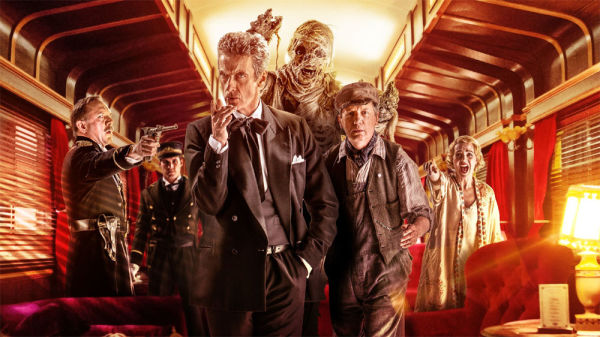
1. Mummy On The Orient Express

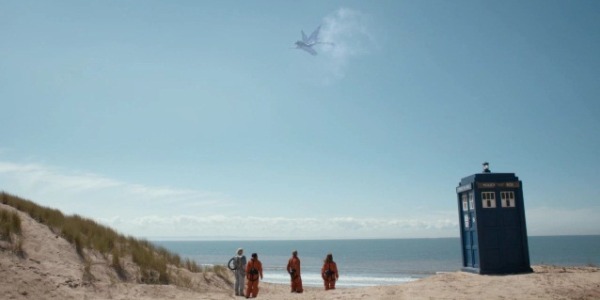
There's a mummy coming and the victim only has 66 seconds to live! The brief of "do an Egyptian mummy on an Orient Express in space" might have been given to Mathieson by Moffat but it was ultimately Mathieson who made the episode shine. Every element works, from the train captain with a secret to the homicidal computer, Gus. The CGI for the mummy creature is also extremely effective, as is the CGI for the space train. When these story elements and effects are combined with great acting, good sets and nice costumes, the result is an absolute corker. From the opening tease of the mummy killing its victim to the final scene in which the Doctor scribbles in the sand of a beach whilst Clara sleeps, there is nothing to change, nothing to fix. Indeed, as with Listen, there are only things that disappoint because they weren't explored further in subsequent stories, like the nature of the Doctor's scribbles, and that is a sin committed by others, not Mathieson. What do you think of this ranking? Do you agree/disagree? As always, leave your rankings in the comments section below.

Contributor
Contributor

Mike has lived in the UK, Japan and the USA. Currently, he is based in Iowa with his wife and 2 young children. After working for many years as a writer and editor for a large corporation, he is now a freelancer. He has been fortunate enough to contribute to many books on Doctor Who over the last 20 years and is now concentrating on original sci-fi & fantasy short stories, with recent sales including Flame Tree, Uffda, and The Martian Wave. Also, look for his contribution on Blake's 7 to "You and Who Else", a charity anthology to be released later this year. You can find him on Tumblr at https://www.tumblr.com/blog/culttvmike