Doctor Who: 10 Similarities Between The Classic And Revived Series
They're not so different after all.
The ten year anniversary of the revived Doctor Who series has brought us five Doctors, new and old companions and enemies and fantastic overarching storylines. It'S become increasingly popular in the Americas, Europe, Asia and Australasia, breathing new life into a show that has lasted for 51 years and still going strong. Of course, fans of the new series and purists who stick to the old may constantly butt heads, the latter pointing to its legacy and humble beginnings in 1963 and the wealth of spin-off media during the hiatus, while NuWho fans claim superiority through better cinematography, young handsome actors, and the accessibility of media in the age of technology.
While both series have their differences - the role of female actors, the episodic format, and the age of the Doctors spring to mind - the show has always endeavoured to remain the same throughout the years, telling the tale of the alien Time Lord in his blue box that travels through time and space. Despite obvious disparity, it can be seen that Doctor Who, no matter in which medium, has similar storylines and plot devices repeated over the decades.
Still skeptical? Here are 11 similarities between the Classic Doctors and the New.
10. Bad TARDIS Piloting Skills

THE NEW: Everyone knows that The Doctor has a TARDIS that travels through time and space. Most also know that he is a terrible driver - the equivalent of a young teenager behind the wheel of a car for the first time and deciding to go fast to impress his friends. Watchers of the new series will remember the Ninth Doctor sending Rose home 12 months late, the Eleventh constantly arriving late for Amy Pond (anywhere from a month to three years to twelve years) and the Twelfth landing Clara in a hot, humid jungle after she dressed for a ski trip. Sure, the TARDIS may be a sentient being and takes the Doctor where he needs, not wants, to go, but for a Lord of Time, one would expect the Doctor to actually arrive at his intended destination, and time, on the first try.
THE OLD: The Doctor, in his previous incarnations, has always had trouble piloting his Type 40 craft, not counting the times where some temporal anomaly or other plot device has pulled the TARDIS off-course, or where the Time Lords themselves sent the TARDIS to places for covert missions. The Fourth Doctor, much to the bane of the young Romana I and II, constantly ended up on Earth in different points of its history without aiming for it, even with a randomiser attached, or materialised on an unknown alien planet and immediately springing outside excitedly without so much as checking the scanner for hostiles. The Fifth Doctor similarly got lost or frequently returned to Earth much to the consternation of his young travelling companions (especially the aliens Nyssa and Adric) and spent the better part of a season trying to return Tegan Jovanka home to Heathrow, 1970, and his later attempts to take Tegan and Turlough to visit the Eye of Orion (the most peaceful place in the universe) led to him instead ending up in other places (definitely not the most peaceful place in the universe). Such was his failure to do so that the only occasion that he arrived at that time and place was when he wasnt even aiming for it. It seems, therefore, that with age does NOT come better piloting skills.
9. Change of Outfits
THE NEW: The Doctor, throughout his years, has always been dressed to the nines. What those nines are, of course, is still unknown. The Time Lord has always dressed in an outfit unique to that incarnation - who can ever imagine the Fourth Doctor without his floppy hat and mile-long scarf, or the Fifth without his trademark decorative vegetable? Who can forget the immaculate pinstripe suit of the Tenth or the often promoted bow tie and tweed jacket of the Eleventh? What many don't know, however, is that the newer incarnations tend to alter their colour schemes slightly - the Tenth changes between a blue suit and a brown one, while the Eleventh swaps between a red bow tie, a blue one, and occasionally none at all - in relation to their place in time. Such an Easter Egg for discerning viewers must surely be unique to the modern series, yes?
THE OLD: Not quite. While it is true that such minutiae is a product of the modern series, previous incarnations of The Doctor have had colour changes in their outfits during their tenure. For example, similar to the Twelfth Doctors constant changes of clothes while still looking similar (anything from a suit to a cardigan to a hoodie), the Third Doctor constantly switched up different coloured velvet jackets. However, more major changes in outfits HAVE taken place in the same way with later Doctors, with each of them gradually getting darker as their personalities themselves get darker - the Fourth changed his from brown to burgundy (which was also mirrored by the Eleventh Doctor), the Sixth changed his psychedelic jacket to a more subdued blue-chequered one and the Seventh Doctor gradually replaced his cream-coloured coat to a depressing brown. Even the Eighth Doctor, as events of the War between the Eminence and the Last Great Time War began unfolding, replaced his Wild Bill Hickok (or Lord Byron) costume with a simple leather jacket. If clothes make the man, the Doctor, as time goes on, slowly becomes darker indeed.
8. Victorian Adventurers

THE NEW: Madame Vastra is a Silurian, having renounced her species bloodthirsty ways and helped by the Doctor to see the light and channel her energies into helping people. Jenny Flint is her maid, lover, and is also human, thank you very much. Commander Strax is a Sontaran nurse (as punishment) and serves as Vastras butler and armourer. Jenny, Vastra and Strax, the Paternoster Gang and the Victorian Adventurers. This motley band in the Victorian era are detectives, friends, and valuable allies of the Doctor, owing him a debt of gratitude and doing their best to battle extraterrestrial threats (as well as eating the odd serial killer). No matter where the Doctor goes, should he ever return to Victorian London, he knows that he has a group of friends he can rely on.
THE OLD: Except, of course, he already has a couple of friends in Victorian London. Jago and Lightfoot, first introduced in the Fourth Doctor episode The Talons of Weng-Chiang, Henry Gordon Jago, the Palace Theatre owner and verbose performer, and Professor George Lightfoot, the police pathologist, met the Fourth Doctor and Leela and took part in many adventures over their and the Doctors lives. While they had many solo adventures against human and extraterrestrial threats, Doctor Who spin off novels and Big Finish audios reveal they also encountered and teamed up with the Fourth, Fifth, Sixth, Seventh and Eighth Doctors and their companions besides. They have travelled in time and space, battled vampires, despots, robots and Zygons, and have also laid claim to being the inspiration for Sherlock Holmes. Victorian adventurers they were, and heroes as well. Now all fans need is for both groups to team up with a grumpy Twelfth Doctor.
7. Doctor-Companion Romantic Relationships
THE NEW: Ah, NuWho, a time of romance and hanky-panky in the TARDIS. With the Ninth, Tenth and Eleventh Doctors crashing into the lives of their companions with dashing good looks and a leather jacket, its no small wonder that they instantly fell in love with him - and often him with them. Rose managed to snog two Doctors and ran off with a Metacrisis third, Martha was mooning over the Tenth for an entire season, Clara, River and Amy both had their fun with the Eleventh, and Jack? Well, lets just not bring up the idea of multiple Doctors whenever hes around. The amount of flirting in the TARDIS has led many traditionalists to decry the modern series and thats why the Twelfth Doctor and Clara's new dynamic of (friends? Teacher-student? Grumpy parent and errant child?) is so invigorating.
THE OLD: Unfortunately, those traditionalists would have to stick solely to the old episodes to avoid romantic overtures. It appears that the Doctor has been busy in many of his early incarnations in many spin off media. The Fourth Doctor and Romana certainly shared some flirtatious moments and it is a fan theory that they both definitely had romantic interests in the other. The Fifth Doctor was extremely fond of his Trakenite companion Nyssa, too - so much so that others tended to mistake them for a couple and even he admitted that he was more than fond of her. And then theres the Eighth Doctor kissing Dr Grace Holloway in Doctor Who: The Movie and even falling in love with his companion Charley Pollard. In fact, many of his companions also fell in love with him - Charley Pollard, Mary Shelley, Samantha Jones - but the Eighth Doctor refused to pursue a relationship with them for their own safety. That may be all well and true, Doctor, but perhaps you didnt need to go so far as to grow a whole new Doctor out of your severed hand in order to avoid romantic entanglements with your companions.
6. Multi-Doctor Meetings

THE NEW: Its always a treat for viewers to see previous versions and incarnations of The Doctor meeting - whether it be for some huge crisis (The Day of the Doctor), a convenience (The Big Bang) or merely to stop by and chat (Time Crash). Breaking the first rule of time (i.e. never cross your own time stream) always seems to come easily to the Doctors. There always seems to be some universal emergency or lack of Time Lords to enforce it. Fans always enjoy the interactions between the different Doctors, whether it be the grumpy Fifth Doctor wondering why theres a skinny idiot in his TARDIS or the Tenth Doctor making fun of the Elevenths chin. After the mind-blowing effects of the 50th anniversary special and thirteen incarnations working together to save Gallifrey, as well as the recent Deep Breath episode which had the Twelfth Doctor almost-but-not-quite talking to his Eleventh self, every single fan always remembers and praises this unparalleled crossover.
THE OLD: Except, of course, paralleled it has been. Most fans would remember The Three Doctors featuring the First, Second and Third Doctors and The Five Doctors to celebrate the 20th anniversary featuring Doctors one through five. Classic fans will also remember The Two Doctors featuring the Second and Sixth Doctor, made just for kicks. Not content with these three multi-Doctor episodes, various spin off media has had Doctors interact with his past selves many times - in books, including every single Doctor paying their respects at the Brigadiers funeral, in comics, where all their incarnations (minus the War Doctor) band together to defeat the Master and Adam, and in audios, where the Fifth, Sixth and Seventh saved Gallifrey, where the Fifth, Sixth, Seventh and Eighth defeated the Daleks (and later on just turned up for a chat) and Doctors one to eight all defeated the Master and rammed his TARDIS through time just for the heck of it. It appears that for a person not supposed to cross his own time stream, the renegade Doctor sure seems to get away with it a lot - and enjoy it, too.
5. Companion-Companion Romantic Relationships

THE NEW: Many viewers would remember the ubiquitous couples in and out of the TARDIS - those bright, shining companions that, if not for the Doctor, would never have got together. Martha Jones and Mickey Smith obviously spring to mind, both getting over their respective crushes and getting together after the Doctor left their lives, and Mr and Mrs Pond (Amy & Rory, of course) who were set up by their daughter who had travelled back through time and done so to secure her existence, with the help of a time travelling sect of priests aiming to kill the Doctor in the future. Even Clara Oswald only really deepened her relationship with the help of the Doctor and his big blue box. Those happy couples, unique to the modern series, all had their origins in, and travelled for a time, in the TARDIS.
THE OLD: It should not come as a shock that the Doctor has inadvertently played matchmaker in his previous lives. His first ever human companions (i.e. Ian and Barbara) got married after their time in the TARDIS (and were also rumoured not to have grown a day older since they were returned some 10 years later), in his second incarnation his Scottish companion Jamie had a massive crush on his other companion Victoria, in his third incarnation Jo Grant got married to a scientist who reminded her of the Doctor, in his Fourth Leela got married to a Gallifreyan Guard, in his Fifth incarnation Adric apparently secretly held feelings for Nyssa and in his Eighth incarnation his companions Fitz and Trix began a relationship and lived happily ever after on Earth. All these people owe their happiness to that mad man in the blue box - but all in all it certainly seems that there is a pretty good chance of you picking up if you become a companion.
4. Sonic Screwdrivers

THE NEW: The Sonic Screwdriver - the most used tool other than the TARDIS itself. The Doctor has been running around with it for centuries fending off foes and assembling cabinets. Viewers of the modern series will instantly recognise the Ninth and Tenth Doctors versions with the silver, green or gold casing and a blue tip, being so thin and small you could easily lose it in a handbag, and the Eleventh and Twelfth Doctors version with extendable claws, the green glowing tip, and a girth large enough to replace the caber for all your fabulous tossing needs. The sonic screwdriver has been whipped out on many an occasion (no innuendo meant) to do anything from reprogramming an answering machine to blowing up a lightbulb to messing up a Cyberman to tracing temporal energy. You name it, its done it.
THE OLD: And it probably had been done in the Classic era as well. Beginning its life with the First and Second Doctors as a small, simple, metal rod (beat that for minimalism, Apple), it evolved into a large one with stripes and switchable heads for different functions and was eventually destroyed in the Fifth Doctors era due to Peter Davidson considering that it had been overused as a plot device. Hmm. It was finally replaced at the end of the Seventh, and throughout the Eighth Doctors, run of stories - its design gradually changing from a metal casing with an emitter-ring head to one with a diode and even temporarily having a sonic screwdriver with a wooden base during his fight against the Eminence. No matter what the design, no matter what the incarnation, the sonic screwdriver is just like the Doctor that uses it. Same software, different case.
3. Season-Long Story Arcs
THE NEW: The revived series of Doctor Who, especially the Eleventh Doctors tenure, has been notable for having story arcs that last an entire season (or three, depending on how you interpret The Time of the Doctor). The Ninth Doctor has been followed by the words Bad Wolf to herald the arrival of Rose Tyler with TARDIS powers, the Tenth Doctor encountered Harold Saxon and his name around England and also had to solve the mystery of Donna Noble and the returning Time Lords. The Eleventh was far worse, though, caught up amidst a timey-wimey conspiracy that lasted his entire run - Who Blew Up the TARDIS, Who is River Song, Who is the Impossible Girl, Who is the Silence, Doctor Who? Fans may await eagerly at the edge of their seat to find the solution to the overarching mystery but others may consider this to be view-bait and decry the lack of standalone episodes - claiming that in the end, the story is about one man in a box and not the wild chase or sinister enemies in between.
THE OLD: Those fans would come in for a serious shock - the use of overarching storylines, plots and goals have been a staple of Doctor Who even back in its Classic times. The Second Doctor was on the run from the Time Lords, the Third was constantly trying to repair his TARDIS and foil the Masters plot-of-the-week, the Fourth Doctor was thrust into a season-long quest to find the Key to Time (and the powers that be loved it so much that they did it again for the Fifth Doctor), the Fifth was constantly trying to take his companions to Heathrow or the Eye of Orion (very similar), the Sixth spent an entire season defending himself in Trial of a Time Lord, the Seventh Doctor fought the sinister Fenric over space, time and two seasons and the Eighth Doctor spent countless years figuring out the mystery of Lucie Miller, defeating the Eminence, finding out a way not to destroy Gallifrey (well, the first time), and trying to let Charley down gently in rejecting her advances. Should the Twelfth Doctor go off this next season trying to find Gallifrey, he is only following his predecessors in constantly getting himself embroiled in new and seemingly never ending - schemes.
2. Long Stays By The Doctor

THE NEW: The Doctor has lived for centuries, and if you believe Rule One, he has almost certainly lived for more than two millennia. While fans only get to see some parts of it (and read about a few more), the sad truth is that for a long-lived alien with 13 lives, he has lived for an admirably long time. He is not adverse to staying for a long, long time, either. Most notably the Eleventh Doctor fled from his death at Lake Silencio for 200 years, being stuck in a white hole for three years, and defending Christmas and Trenzalore for 900 years. Even the Tenth Doctor spent an undisclosed amount of time searching for his friend Carla in the Haldenmor Fugue. The modern incarnations are certainly willing to spend large parts of their life in a fixed time and place, surely strange for a Time Lord often eager to fight and leave.
THE OLD: Unfortunately, its a trait not unique to his later incarnations. The Doctor in his early lives have also been so stuck in one place and time - the First Doctor had to be educated on Gallifrey for countless years, the Third Doctor was lost in the time vortex for ten years, the Fifth Doctor was trapped in Victorian London for a year while looking for both his TARDIS and Nyssa (not necessarily in that order) and the Eighth Doctor was comatose for 100 years, stuck on a Wetworld for 600 years defending jellyfish-resembling aliens and was kept a prisoner for three years preventing a space station from blowing up. The Doctor may be a wandering mad man in a blue box but occasionally he can choose to stay to help the ones in need - and hardly look a day older than when he first started.
1. Companion Deaths & Sacrifices
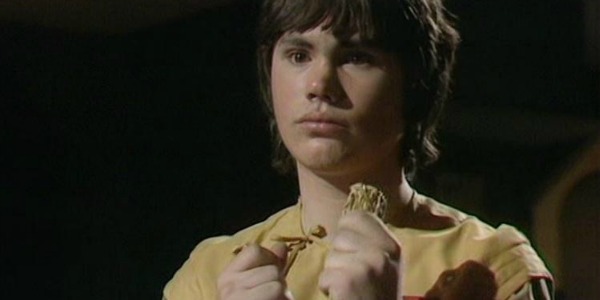
THE NEW: What would the Doctor be without death dogging his very heels? For a man constantly trying to be a noble light and a moral guide in a universe full of darkness, his travels are full of sacrifices, collateral damage and loved ones dying at the hands of his most formidable foes. Who can forget Rose Tyler, who looked into the Heart of the TARDIS, or Clara who leapt into his time stream and splintered herself across time to stop the Great Intelligence? Who can forget his daughter Jenny who took a bullet for him, or Harriet Jones, former Prime Minister (yes, everyone knows who she is) sacrificing herself at the hands - or plungers - of the Daleks? Who can forget Donna Noble, for a moment the most important woman in the universe, and now forced to forget? His friends may make him human by their wonder and moral compass but they make him all too human by their deaths, too.
THE OLD: Which is why it is even more depressing that the loss of companions is not one which is unique to the modern series, but a trait which has followed him all throughout his life. From his first incarnation (Katarina, Dodo Chaplet, Sara Kingdom), his fifth (Adric, Kamelion, Robert McIntosh), his seventh (Hex), his eighth (Lucie Miller, Tamsin Drew, Alex Campbell, Jemma, Crizz) end even the War Doctor (Cinder) - and those are just the ones who have travelled with the Doctor long enough to be considered his companion. Even Jamie and Zoe, companions of the Second Doctor, in a similar fashion to Donna Noble, had their memories wiped by the Time Lords and sent home. They all gave their lives to save worlds, universes, and the Doctor himself - and even after 51 years of this show being broadcast, this has never changed.
What do you think of this list? Are there any other similarities between the Classic Series and NuWho? Join the conversation in the comments below.