Doctor Who: 10 Huge Plot Holes The Writers Hoped We Forgot

Remember when the Doctor was half-human? Well, they wish you didn't.

Terry Pratchett once said that there was no such thing as a plot hole, just history being rewritten. That might work for Steven Moffat, who likes to bring out the timey-wimey to excuse continuity errors, but others are still waiting to find out why the Doctor said he was half-human. Every writer has their own take on the show, and every writer adds to the mythology of the Doctor. Sometimes though, writers blatantly ignore what's come before; established facts become blurred when a show runs as long as this one, and given the time travel element, it's sometimes hard to keep track. Here are ten moments in the show though can only be described as plot holes; they oppose the existing facts, they make no sense in relation to what we know, and there's often no kind of explanation for them.

10. Two Hearts Or One?

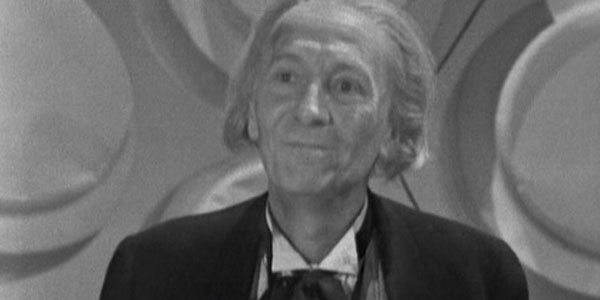
It's an established part of the show these days that the Doctor's got two hearts: he tells us enough, and after meeting Clara, he declared it to be one of the first things that she should know about him. But the binary-vascular system of the Time Lords wasn't established from the very beginning. There's a moment in 'The Edge of Destruction' when Ian Chesterton listens out for the First Doctor's heart, and lo and behold, there's only one beating: did he grow the second one when he regenerated? It's possible that Ian only heard one, but given that everyone who's listened to his heart since has heard two, he couldn't have been checking properly, could he? It's probably a happy accident that the heartbeat of a Time Lord mirrors the drumbeat of the theme tune. There's yet to be a plot when the Doctor's extra heart saves the day, but it's certainly a nice biological detail to the character.

9. Where Exactly Did The Daleks Come From?
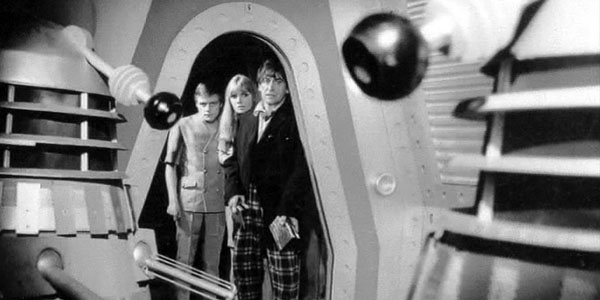
The Daleks are almost as old as the character of the Doctor, appearing in the second episode of the series, and terrifying children across the nation. But there's a lot of inconsistency on how the creatures actually came to be. When they first appeared in the show, the Daleks were creatures who had mutated from the Dals, after a nuclear war; they were a peaceful race forced into war, but they became monsters when they tried poisoned their own atmosphere. In 'Genesis of the Daleks' though, the Dals were now called the Kaleds, and they had a creator, Davros, who genetically engineered them. From the 70's onwards, their original backstory was somewhat unmentioned, in favour of the Davros idea; he's widely regarded as the canonical creator of the Daleks these days. The new series has implied that history was rewritten, but modern writers are too busy wiping out all the Daleks to bring them right back again, right? This isn't new though; the Daleks seemingly all died in their first serial, but were only brought back because they were so popular.

8. The Immortality Of The Time Lords

A Time Lord's life is thirteen incarnations long: that's a fact that's always stood, apart from that one time that Russell T Davies penned a tongue-in-cheek line in The Sarah Jane Adventures, claiming the Doctor could actually change face 507 times. And, apart from the time when the Second Doctor claimed the Time Lords could live forever, "barring accidents". There's no excuse to get this one wrong, is there? The First Doctor died of old age. The Time Lords obviously can't live forever, they can just live until their thirteen bodies wear out. If it wasn't such a culturally-recognised fact that Time Lords have thirteen lives, Steven Moffat might have totally ignored it when it came to introducing Peter Capaldi's incarnation; Neil Gaiman suggested he should, claiming the limit of thirteen should be more like a "speed limit" than a set amount. In retrospect, that might have been a preferable idea to run with: we're only going to go through the same plot every thirteen lives aren't we?

7. Where Were The Reapers When They Were Needed?
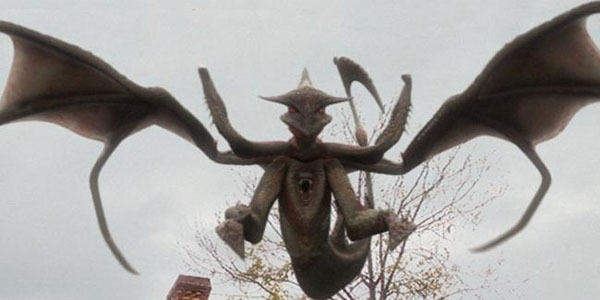
In the first series of the revived Doctor Who, Paul Cornell was set the task of providing the basic answers of time travel repercussions. What happens if you meet yourself? What happens if you change a big event? 'Father's Day' was an episode that built foundations for all future timey-wimey NewWho episodes; there are set points in time that cannot be altered, and the Doctor can see them all. If you change one of these fixed points, there are horrible consequences; reapers appear from outside time itself, trying to sterilise the wound in the universe. Paradoxes = Very bad. What must happen must always happen, and all that malarky. So where were the reapers when River refused to shoot the Doctor on the beach in Utah? Did the reapers die when all of time and space exploded at once? When Amy and Rory jumped off that roof, why didn't they just die, for the reapers to feast upon their freshly dead bodies? What was this talk in 'Hide' of the paradoxes resolving themselves by and large? It's as if that episode was written out of existence or something.

6. Age

Exactly how old is the Doctor? It appears that not even he knows. In 'Time and the Rani', the Doctor states his age to be 953 not long after regenerating into his seventh body; fast forward to 2005 and Nine's 900 apparently. He's fifty years out on his own age there; the War Doctor meanwhile, claims to in his 800s. What exactly is going on? In 'The Pirate Planet', Romana works the Doctor out to have been about 236 when he stole the TARDIS, so how come the First Doctor looked so old for his age, when it took Eleven a full 500 years to even show signs of wrinkles? In 'The Day of the Doctor', Steven Moffat saves all confusion by claiming the Doctor's so old he's lost count of how old he is, but that doesn't explain why he was so specific in the first place. Given that age is measured in years though, and years are measured by how long a planet takes to orbit a star, and given that Doctor's not actually on any planet for anywhere near close to a year, it's understandably difficult for him to keep up.

5. Who Came Up With The Acronym, TARDIS?
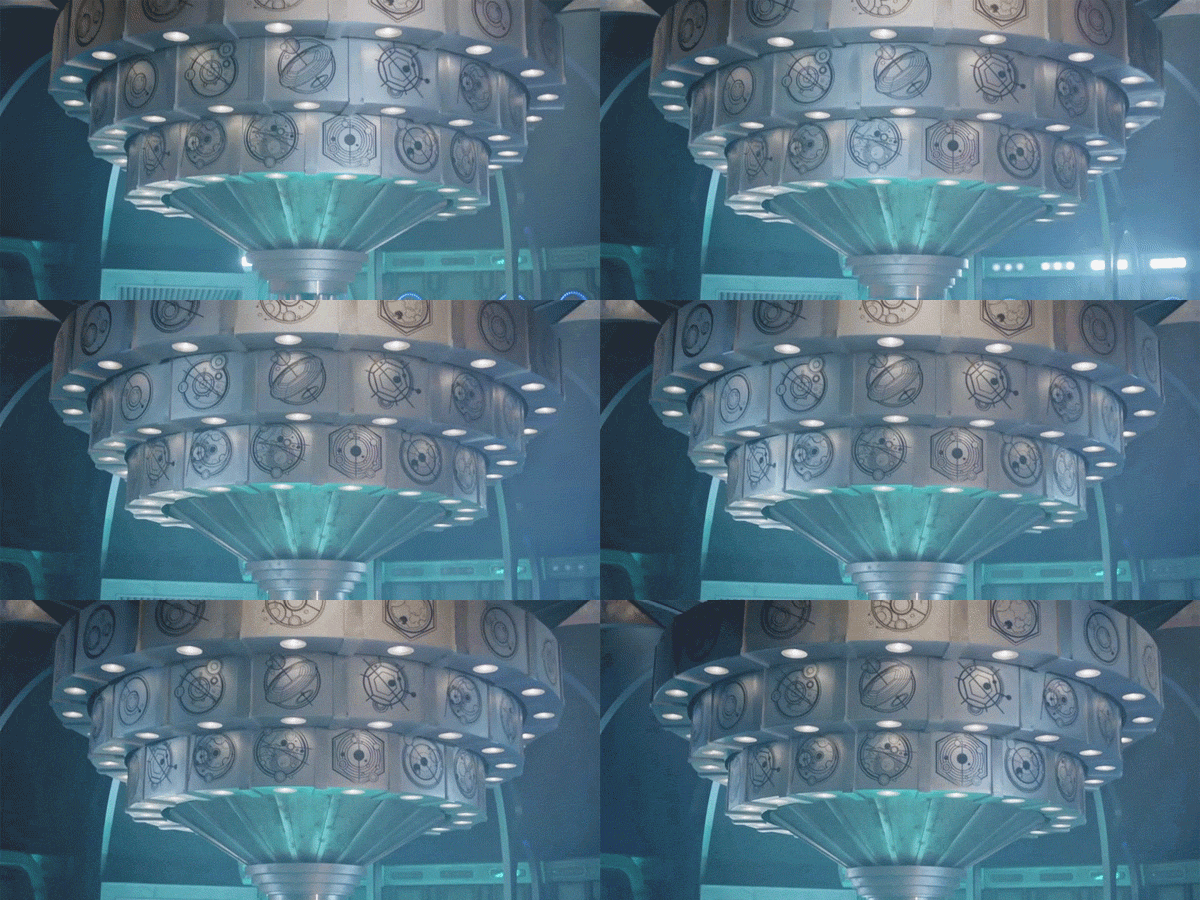
TARDIS, or Time And Relative Dimension In Space, has entered the Oxford English Dictionary. Police boxes these days are often referred to as TARDISes, and the symbol of that blue box has become synonymous not just with Doctor Who but with science-fiction and British television in general. But who came up with the name? Any self-respecting Who fan will tell you it was Susan Foreman, the Doctor's granddaughter. So why exactly, in 'The Name Of The Doctor' was there a "TARDIS repair shop" if Susan was the one to name them? Why do all Time Lords and Gallifreyans within the show call it a TARDIS? It's something that the show's never felt the need to correct: unless one Gallifreyan girl renamed these things that had been around centuries before she was born though, it's simply not true. One possibility is that the translation circuit of the ship translates any word that the Time Lords have for the TARDIS; it would explain why the word translates to a useful acronym in our language, anyway.

4. Why Does Eleven Pretend He's Not The Last Incarnation?

After 'The Time of the Doctor', we learned that Matt Smith was the final incarnation of the Doctor: it was a bit of a plot twist to spring on us though, because watching any of Eleven's adventures, up to meeting the War Doctor, you'd honestly have no idea. On the beach in Utah, the Doctor began to regenerate. Come 'The Angels Take Manhattan', he used regeneration energy to fix River's wrist, despite not actually having any more to use for himself, it would seem. In 'Let's Kill Hitler', he was prepared to regenerate after River killed him, and in 'Nightmare In Silver', he threatened to do it to get Mr Clever out of his head. Sorry, but does the Doctor actually know that he's on his last incarnation, or did it take John Hurt to remind him? Moffat claims he doesn't keep count of his bodies, but that's just scatterbrained of him, especially given all the references to Eleven we've heard these past few years. It's just as well he remembered which one he was in time, otherwise he'd have died in 'The Time of the Doctor' with no help from the Time Lords.

3. UNIT Inconsistencies

Dates, ages and years can cause huge problems of inconsistency in most shows; Ross from Friends was 29 was three years, for example. Luckily, the Doctor's a time traveller, so he avoids much of those problems; his human friends aren't quite as lucky, though. In 'Mawdryn Undead', it's claimed that the Brigadier retired in 1976; 'The Invasion' though, three Doctors prior and UNIT's first proper story, takes place in 1979, from what we can work out. Oops. Former script editor Terrance Dicks once claimed that he'd avoid dating UNIT stories because of the confusion, and there was even a reference to the mistake in 'The Sontaran Stratagem', when Ten claimed he worked for UNIT, "During the 1970's, or was it the 80's?" Even the UNIT tie-in website waded in by adding a "UNIT History" page to the site, claiming that it started in 1968. There's pretty much no way to retcon the mistake over the Brigadier's retirement though. Just put that one down to human error.

2. Incarnations Before The First Doctor

When the John Hurt Doctor was leaked to have been an incarnation before Eleven, that left two options of who he might be. Either he was a Doctor between Eight and Nine, or before the First Doctor; those were the only possible times that the Doctor could've regenerated, and we wouldn't have seen it. Any incarnation before the first Doctor sounds preposterous now, given what an icon William Hartnell was, but 'The Brain of Morbius' showed us a whole eight lives before William Hartnell landed on Totter's Lane. During a mental battle with Morbius, all four of the Doctor's incarnations flashed up on the screen, followed by another eight faces we'd never seen. Given what we know now about the Doctor's incarnations not being set in stone from birth - he's just regenerated into a face he's already met - these faces could have potentially been from his future; obviously though, history was changed, and he became different people. So that's who these Doctors must have been, right? Future incarnations? No. Producer Philip Hinchcliffe claimed that these were meant to be incarnations prior to the First Doctor. "We tried to get famous actors for the faces of the Doctor. But because no one would volunteer, we had to use backroom boys," he claimed, "And it is true to say that I attempted to imply that William Hartnell was not the first Doctor."

1. "The Doctor's Half-Human"

Surely the biggest facepalm moment in the history of Doctor Who, and a moment that no fan has quite forgiven writer Matthew Jacobs for, it was claimed in the 1996 Doctor Who TV Movie that the Doctor was half-human. Not once, but twice. The freshly-regenerated Eighth Doctor claimed that it was on his mother's side, but the line was delivered with enough of a smile that it could have been intended as a joke. The Master however also claimed the Doctor was half-human, after seeing that he had regenerated; whilst some fans claimed that it could be possible, 'Journey's End' decided to retcon the decision - much to the delight of many €“ by making making Donna "half-Time Lord". If the Doctor really was half-human, Donna would've become a quarter Time-Lord. Right? Many novelists and theorists have tried to explain why the Master thought the Doctor was half-human, with the general consensus being that it was a trick of the chameleon circuit. Apparently, Russell T Davies nearly made an excuse for it for 'The End of Time', but didn't want to confuse the audience with John Smith of 'Human Nature'. How do you think the Doctor faked being half-human though? Comment below!

In this post: 
Doctor Who
 
Posted On: 
Contributor
Contributor

Mark White hasn't written a bio just yet, but if they had... it would appear here.