Doctor Who: 10 Heart-Stopping Moments When The Doctor Became The Villain
10. "Just Save Someone"
 Pompeii is crumbling, the Doctor is walking away and Donna is crying, asking him to save someone. Sure, you might make excuses about how the Doctor knows he shouldn't interfere with history, but when does that ever stop him? This moment's one of Ten's most defining (yes, he's still Ten after 'The Day of the Doctor') because it typifies the darkness inside him; he wallows in his own self-pity of not being able to save anyone, and that's what nearly kills Caecilius and his family. This is a scene that places Donna squarely as the hero, and leaves the Doctor in much shadier territory; it's clear that he can't live without his companions, which makes the road to Time Lord Victorious all the sadder, and more ironic, considering that he began travelling alone because he was so upset with losing his friends. Ultimately though, it might prove to be a good job that he saved Caecilius. You know, given that Caecilius helped saved Gallifrey.
9. "Which One Of You Said That?" "...Me."
 Shortly before the episode aired, Neil Gaiman was full of praise for Matt Smith's performance in 'Nightmare in Silver', claiming that he was finding new things to do with the role three years into it. And watching his performance as the Cyber Controller, it's hard to argue with that. Whilst this isn't actually the Doctor, it's hard to tell at times which Matt's Matt. He may have had his head invaded by a cyborg, but this feels like the Doctor is still the villain, skipping through his incarnations at whim and manipulating Clara. The scream of "They're here!" is absolutely chilling, and the way Matt plays it - half classic Bond villain, half twisted madman - really suggests that the Cyber Controller's drawing more evil from the Doctor than we think. Gaiman was right: it's one of Matt's greatest episodes in the role, and fantastic example of him subverting a character he's so brilliantly portrayed.
8. "Doctor, You Can Stop Now!"
 Again, the Doctor commits genocide. Again, the companion makes him stop. This moment wouldn't have carried so much weight if it wasn't for 'Turn Left', but the scene where Ten kills the Racnoss places him squarely as a villain. Mainly, because there isn't much conflict in the Doctor's mind; he offers the Racnoss an ultimatum, to leave for another planet, and obviously, it's refused. But the Doctor then floods the pit, and won't leave until Donna tells him to. He kills the offspring of the Racnoss, and won't stop; he has so little compassion left after losing Rose. Compare it to two series later where he offers Davros help. This is why companions are needed in Doctor Who.
7. "If The Doctor Had Never Visited Us... Would Anybody Here Have Died?"
 'The Family of Blood' is one of the most revered episodes of Doctor Who, ever. It's a masterpiece, it's wonderfully written, and David Tennant is superb. But what's perhaps so brilliant in the episode is the contrast between the human John Smith and the Time Lord Doctor. And the difference between the Doctor and the human nature of his character (pardon the pun), has never been so brilliantly established. He's set up throughout the story as a god, and he uses the power of one to eternally punish the Family. Yes, he's doing it for good. Yes, he was kind enough to give them a chance first. But you can't help feeling like it's partly not just cold-blooded revenge. Suddenly, he's no better than the Family. Even Joan comments on his nonchalance to death, when she refuses to join him in the TARDIS. Maybe it's a subtle comment on religion, that she should refuse to travel with the almighty Time Lord god. But it's certainly a transparent statement that the Doctor's not always the safe hero that we know and love.
6. "I'm A Time Lord. Everything She Despised."
 This one's a bit of a curveball choice, to be honest. These moments are all chosen on acts committed by the Doctor. Acts that change our opinion of him slightly, where we don't feel safe around him, and we're willing someone else to change his mind. But in 'The Night of the Doctor', he's not a villain to us. He's a villain to everyone else. The Doctor finds a brave, strong, young girl who needs his help; he rushes to the rescue, attempts to save her life: we've seen it all before. But then comes the twist, and the Doctor becomes the villain: she'd rather die than let him save her. "Who can tell the difference anymore?" Cass remarks on the similarity between the Daleks and the Time Lords. It's both a heartbreaking and thought-provoking turn to the story; suddenly the Doctor can't save the day. Suddenly he's a villain who needs redemption.
5. The First Doctor Nearly Kills A Caveman
 Anyone will tell you that the Doctor wasn't actually the hero of Doctor Who when the show first began, back in 1963. Anyone will tell you that he was "an anti-hero". But few people actually tell you just how ruthless he was. It's one thing to kidnap two school teachers, but he's hardly the villain of the piece for that: without that action, there'd be little story, and we all know they're going to return home anyway. What's slightly more concerning is that Ian Chesterton had to stop the Doctor from killing a caveman with a rock. This caveman hadn't wronged him in any way. And he can't use the loss of Rose as an excuse this time. It was to become the first of some crazy ideas from the First Doctor; he'd even tell the Thals to abandon their peace treaty later on. But it's interesting to wonder if that evil streak is still inside him even today.
4. "Well, We All Know The Fate Of Alien Spies"
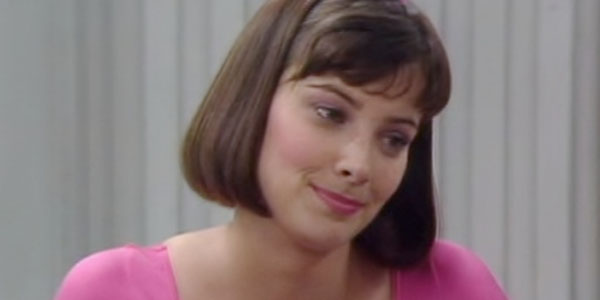 It takes away from the sacrifice of giving your life for someone, if you return in another life and physically abuse them. But that's what the Doctor did in his egotistical Sixth incarnation. In a post-regeneration crisis, he assumed his companion Peri was in fact an alien spy, likened her to a fairy, and then strangled her. The idea behind it was probably to introduce a Doctor as loopy as the Master, and in that sense, it worked. But it's a moment despised by many Doctor Who fans even to this day, compounded by the direction that Peri's character went after that, eventually having her head shaved and her mind wiped, for her body to be used by a Mentor. Colin Baker has in the past claimed that he takes the bullet for the other Doctors by being "the unpopular one". It's not exactly a stretch to see why sometimes.
3. "There's Only One Person In The Universe Who Hates Me As Much As You Do"
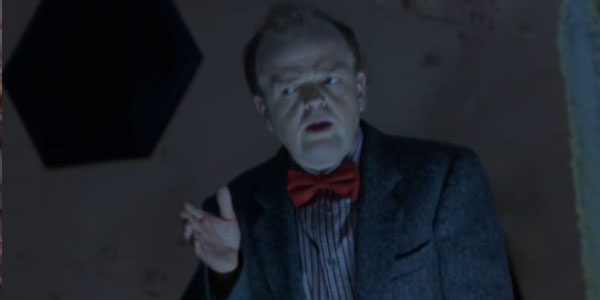 Mr Clever was unnerving because it was the character we loved, but invaded. The Dream Lord though, is still the character we love. It's a fantastic premise to place the two sides of the Doctor's psyche off against each other, but Toby Jones would actually make a good Doctor: the Dream Lord was charismatic, witty and imposing, despite all the name-calling, the creepiness and the malice. This wasn't such a straight good against evil, it was simply two competing voices in the Doctor's head; that's what made it so scary, as we've seen this side of the Doctor rear its head on many an occasion - the Doctor teasing River he didn't trust her in 'The Impossible Astronaut' somewhat reflects the scene with the Dream Lord asking Amy if she knows his name. And in the end, it's hard for the Doctor to admit to his companions that it was him all along. That's the part of himself that he buries deep in his soul, along with John Hurt and the choice to wear a multi-coloured coat for a few years. But it's episodes like 'Amy's Choice' that really present to us that the Doctor can be in fact the perfect villain, as well as the perfect hero.
2. "This Isn't Fair. You're Turning Me Into You"
 'The Girl Who Waited' is an episode similar to 'Amy's Choice' in many ways, but ultimately 'The Girl Who Waited' goes one step further. It doesn't just reflect the Doctor in the villain, it is the Doctor that's the villain. The only other things we meet are the handbots, and actually, they're a lot like the Doctor too: they claim that they're only being kind, doing what they're doing for the best; which is pretty much how the Doctor treats Rory when he makes him kill Older Amy. What really makes this a dark moment for the Doctor though, is that he knows how it's going to end, and he knows from the beginning. He gives false hope to Rory and Amy, supposedly his best friends, and then ultimately lets one of them die without much remorse shown at all. It's not because he's the villain of this episode, it's because he's betraying his friends, and as Rory says, making them become him. That's what makes this episode such a dark one for the Doctor: he's there to save them, keep them safe, and yet he can do this. And when Rory declares "That's not fair", we as an audience find ourselves saying the same thing.
1. "The Time Lord Victorious Is Wrong." "That's For Me To decide."
 It's a scene legendary in NewWho: David Tennant in his orange spacesuit, standing over the fiery control pit of a crumbling base on Mars; Lindsay Duncan deploring him to stop, a look of manic, Master-like excitement in his eye. 'The Waters of Mars' though isn't a Marvel comic rip-off of the great scientist becoming tired of watching everything die around him. It's greyer than that. Good and evil simply aren't definable in this case, just like with the destruction of the Family; here, the Doctor's arrogance is leading him to do something morally grey. The Time Lord Victorious scene is one of the most famous in New Who history, because it shows the Doctor at the start of a new path. A path where he'd bend the laws of time to his will and forget the pain of committing double genocide. This is a Doctor we don't recognise, and for once, we're not on his side. What makes the Doctor scary in this scene though isn't what he's become. It's his willingness to go further. He declares himself the "winner" of his species. He shows a total disregard of altering a fixed point in time. If Adelaide hadn't have brought him back to earth with her death, who knows how he'd have reacted to the Time Lords returning? This is the Doctor's most villainous scene, because it's frighteningly believable. He's about to turn evil - if anything, it's a wonder he didn't turn to evil sooner - and it feels real.