Breaking Bad: 7 Flaws That Nobody Seems To Have Noticed

Brilliant? Yes, but not perfect.

It may seem like a cliche to say it now, but Breaking Bad was undoubtedly one of, if not the best television series in the past decade: it swept international television screens, with interest peaking throughout the fifth season, which unthinkably picked up an 8 million viewer boost on the preceding season for the finale. The writing and acting is incredible, and form the incredibly strong foundation on which the show's success was built. The transformation of Walter White from the bored teacher and husband suffering with lung cancer to the evil drug king pin is so palpable and believable that those placed in his shoes, seeing through his eyes, find emotional investment impossible to resist. We feel his pain, and crucially, we feel his need to do bad, in an irresistibly perverse way. It also of course helped that the technical side of the show - and particularly the cinematography - were as impressive executed as the writing and acting. But whilst we've been swept along in the whirlwind that is Walter White and his meth empire, there have actually been plot flaws, no matter how minimal, that seem to get a pass when praise for the show is peddled out. Whether they're chemical impossibilities, sexism, plot holes or the unexpected involvement of The Butterfly Effect, these flaws deserve attention, precisely for the reason that they denied the show perfection. Warning: Spoilers in force. Obviously.

7. It's Incredibly Sexist

There, I said it - Breaking Bad is a showcase of sexism. Think about it; can you, off the top of your head, imagine a scene where Skyler is funny of her own accord? Does she ever have any problems that aren't showcased as affecting Walt, or another of her male connections? The only real insights to her life as given purely to demonstrate the repercussions for her husband. And the "I f*cked Ted" line? Cringe-worthy, to say the least. Then there's Jane, who enters the show as this neurotic, fleeting tattoo artist (with no tattoos) and quickly becomes the femme-fatale character. Luring Jesse in quickly, he in turn is used briefly as a foil character - to show Jane's weakness. Despite being in recovery, as soon as she's offered more drugs, she succumbs to Jesse's offers. It didn't even take any convincing, did it Jane? In fact, she is the one that lures Jesse to heroin in the first place. Showing all the signs of the heroine, getting Jesse his money from the evil Mr. White, Jane promises they'll get clean and use the money to leave and start afresh together... only, of course, after they finish their remaining heroin. That night, as we all know, the dumb chick only goes and chokes to death on her own vomit. Thus, showcasing another fine Jesse moment where we see him in that despicable state in rehab - even after death Jane is attempting to emasculate Jesse. A heroine struck down by heroin - oh, the irony. Do any of our male protégés fall victim to drug addiction to the extent that it is strong enough to take their life? Of course not.

6. It Is Incredibly Self-Indulgent.

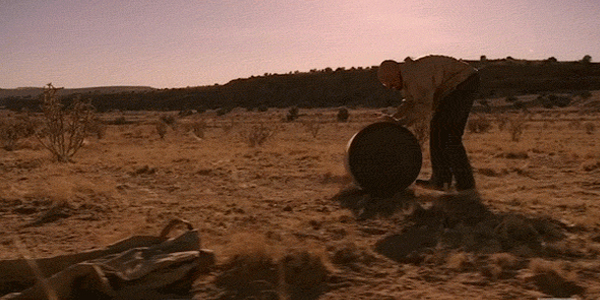
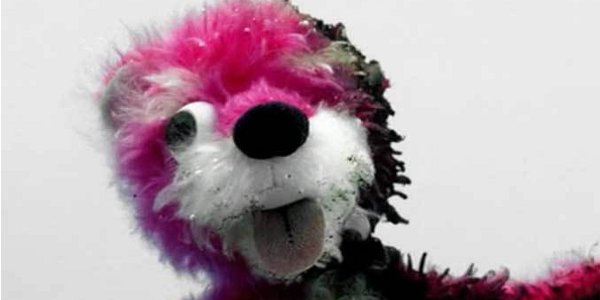
What's that? You want an excuse to have a man's head mounted on a turtle crawling across the Mexican desert? That is absolutely fine, it needs no story of any real substance surrounding it at all. Vignettes like the turtle and the incident with the drug addict crushing her husband's skull with an ATM are part of the raw style of Breaking Bad, but the represent the show at its most self-indulgent. More moments include the twin cousin hitmen; they get a huge build-up, a massive focus on their background and their stories, but in the grand scheme of things they actually turn out to be fairly irrelevant, save for hospitalising Hank. The show doesn't just indulge itself with over-dramatic cut-scenes and additions to the storyline which prove fairly pointless, they actually cheat just a little too. Think of the prologues in the second season. Their black and white with a splash of colour is reminiscent of Schindler's List, and hints at danger for the main characters which actually never materialises. None of the primary characters came to any harm as a result of the plane crash, after all. Vince Gilligan has referred to the plane crash as an attempt to visualise "all the terrible grief that Walt has wrought upon his loved ones" but has also admitted that he is "not sure I can tell you with 100% certainty of what the symbolism is" of the pink bear that falls from the wreckage. Self-indulgency at its finest; you want to create a symbol with this pink bear that ends up everywhere, yet you're not sure what that symbolism it? And you want to use an old man to commit suicide in order to kill his lifelong enemy? Well, alright, we'll give you that one...

5. Fur Coat, No Knickers.

Let's be honest here: Breaking Bad's flash-forward moments don't really contain that much substance. Was Hank's tossing away of Tuco's gold teeth so significant that it warranted the flash-forward to the working chap discovering them in a river bed? They're very arty, and when you're unsure what they represent in the long run then yes, they look great and build suspense... but when you come full circle and link them all up together, they're really not too breathtaking at all. There was also the slightly rushed feeling during the final episodes where we were waiting for the flash-forward scenes to be brought back into the main story. Since Hank's discovery of Walt's secret at the end of the mid-season finale in series five, not much time passed at all to bring us back to Walt celebrating his 52nd birthday in a diner, picking up heavy weaponry and heading back to the shell of his former house, covered in graffiti. In fact, it was only really in the last four episodes that the conclusion was made, leaving the question; was this how it was always meant to be? The rushed feeling from the flash-forwards suggests that Gilligan had planned for more episodes. In my eyes, I'd rather not have seen the flashforwards at all. Whilst it was interesting to discuss and theorize how the end might come, taking the flash fowards into account, the shock value of the finale would have been amplified had we not been shown anything at all. We knew a lot of important things ahead of time; Walt's empire would disintegrate, that he would return to Albuquerque rather than remaining in the cold, that the ricin and the gun dealer would be brought back into the storyline rather than another shock moment. How different would the experience have been if those flashforwards had been moved to the finale?

4. A Plane Crash?! Really?!

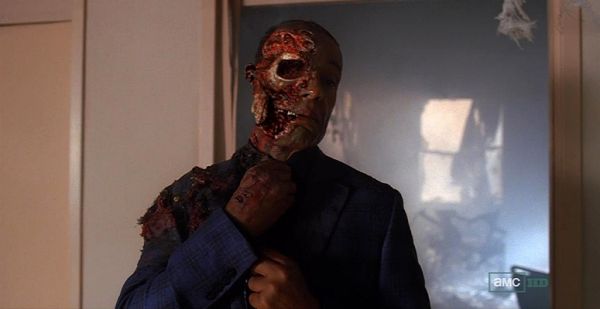
Leading on from their flash-forward moments, we were teased for an entire season about just what happened around Walter White's house to ensure men in hazmat suits were fishing out debris from the pool including the signature pink bear with the scorched, empty eye socket. But what caused it? Was there an explosion in a makeshift meth lab? Had the big guns descended on Walt's home, massacring the neighbourhood as they went? No - a plane crash was responsible for these items, but in a rare moment Breaking Bad's plot wasn't too dissimilar to The Butterfly Effect. The writing between "Walter watches Jane die" and "A plane crashes over Walter's house" is very ... cause and effect. The structure is a little too abstract, and there are far too many coincidences falling into place to really pull off the plane crash. But, if you think about it, the crash was responsible for that quite frankly hilarious scene where Walt has to give a speech in front of his entire school, and you can just see the cogs turning as he attempts to think of worse things that have happened... and so begins Walter White's descent into self-denial - he never does a thing wrong, you see.

3. Weird Science

It's a scientific fact that no amount of hydroflouric acid would have disintegrated the bathtub in the manner that it did - that is, all the way through the base. This isn't the only scientific error in the show, either - it's actually laden with them. The show's very own science expert has said that the colour of the methamphetamine Walt produces would never be the shade of blue that it is in the show. Meth, the more pure it is, the clearer it is. At the purity it is, it is more likely to have been a slightly yellow colour, or a little cloudy. Vince Gilligan, after having been made aware of this fact, claimed that as it's Heisenberg's trademark to create blue meth, the colour was heavily exaggerated on the program. Want another one? There is no chemical element Ch as shown when Mi'Ch'ael Slovis' name runs in the credits in the early seasons. This is corrected towards later seasons, though, so perhaps we'll let it slide. Finally, in an early season Jesse takes meth and hallucinates, but methamphetamine isn't actually a hallucinatory drug. The show Mythbusters also famously tested the explosion which Walt used to blow up Tuco's office, and it was only when five times the amount of mercury fulminate was used and thrown by a robot arm at superhuman speed that there was any real destruction.

2. The Fake Baby

Holly White was a baby that didn't cry, which as any parents know is the most ridiculously fabricated BS possible. All babies cry - there's no way in hell that Walter White could have operated a multi-national meth empire with a newborn, all they do is cry and demand attention. But, in the show Walter would come into the house with her in his arms, set her down in her playpen and then get to work plotting murder, building bombs and otherwise being generally evil. H Holly White more aptly resembled a baby rock: she seemed to have no demands and certainly didn't cry. I imagine the feeling parents got watching these scenes would be similar to the feelings those well acquainted with the Albuquerque meth trade felt whenever Badger and Skinny Pete appeared on screen, but I obviously don't have any real life comparison to make there. I do know, however, that babies demand attention 24/7 and there is absolutely no way you could run a bath with one in the vicinity, let alone an international meth chain like Walter White did.

1. Skiving Federal Agents

Towards the end of the series federal agents are surrounding Skyler and her house, in order to protect her from Walt's possible return, so how is it that when he does decide to pay her a visit, he slips in un-noticed? He wasn't spotted driving across the country despite being the subject of a nationwide manhunt and having his face plastered all over television, he made contact with a gun-man, bought a garage-door opener, found Badger and Skinny Pete, and faked being a newspaper man with ease. Cops in that world are laughably poor. He's also able to call her and Walt Jr. repeatedly from public phones without anyone noticing or tracing his calls, or them making the police tighten their focus around Skyler? Some protection Skyler is offered, huh? Let's not even mention the fact that he's able to slip in to the Schwartz's home, on top of that. It sort of sounds like a dream situation, but we're not here to discuss alternative therories. So, there we have it. The world's most perfect television series did actually have its flaws. Though it is of course arguable how many of these flaws severely affect the plot, and we can definitely admit that we're just picking holes here, the flaws exist regardless. There are many more smaller moments throughout too, such as being able to see the crew in some scenes, continuity errors and scientific inconsistencies, we can forgive all of the above on the basis that it's the most addictive television show we've ever bore witness to.

Contributor
Contributor

Cheri is a freelance music and gaming journalist, running her own outlet Invicta Media alongside contributing regularly to NME and the Metro. Her favourite games include Destiny, Pokémon and anything cute and cosy.