9 Problems With The Walking Dead Nobody Wants To Admit
The zombies should be scary, shouldn't they?
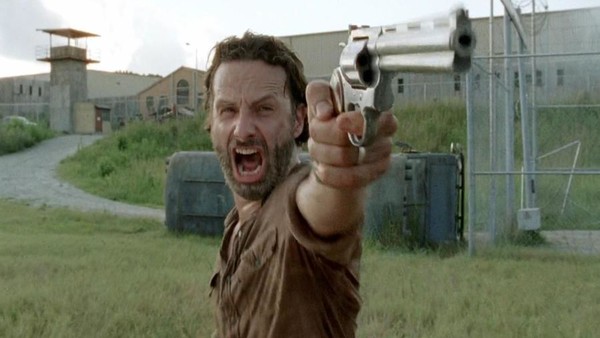
Even with a steep drop in ratings, The Walking Dead is one of the most popular and celebrated shows on television. Sitting pretty atop the current renaissance of TV dramas (despite, somewhat paradoxically, being a genre show - what with all the zombies - compared to the usual serious business crime stuff like The Wire and The Sopranos), The Walking Dead is almost unparalleled when it comes to viewership, fandom, and critical notices.
People bloody love The Walking Dead. And who can blame them? It's a pretty good show. It's one of the first long-form attempts at telling a zombie story, breaking out of the usual undead ghetto to identify the ongoing war of attrition between humans and walkers, chronicling the toll that particular battle for survival takes on the the living.
There's high stakes drama, the unfurling of the worst sides of mankind, and plenty of gore. Also: eyepatches. The show is far from perfect, however. It never quite matches up to the standards of its AMC forebears Breaking Bad and Mad Men. Sometimes its attempts at drama miss the mark. Dale was super annoying. Here are ten other such problems with The Walking Dead nobody wants to admit.
9. The Zombies Kinda Suck
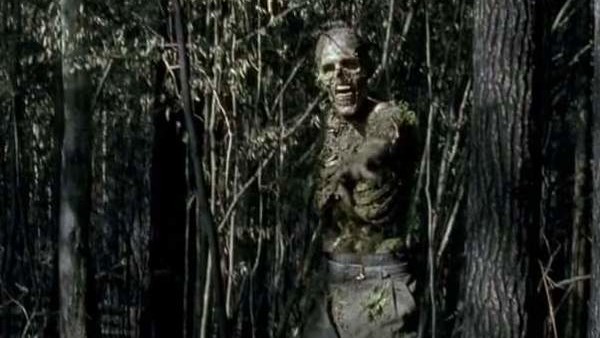
The look of the shuffling, shambling hordes of the undead on the show is top-notch, taking its cues from the comic book source material and running with it. The walkers of The Walking Dead are noticeably recognisable as zombies, but are different to most on-screen depictions of the undead, with long term horror veterans KNB EFX providing some terrifying new spins on the traditional ghoul. There are zombies that are impossibly thin, with all sorts of pieces missing, and those terrifyingly milky, glassy eyes.
So yeah, they look really cool and creepy (thanks, Greg Nicotero!) but ever since they first appeared on screen they've been...well, sort of lame. And ineffectual. Honestly, how did they manage to ravage the world so totally? Rick's first encounter with a walker doesn't even involve any walking. It's a legless, emaciated zombie corpse. He kills it easily. As the show has gone on the survivors have gotten a lot of practice in felling walkers, to the point that they rarely pose any sort of threat. Kind of a problem if the zombies in your zombie show are more like flies than inescapable flesh-eating monsters, and just as easily swatted.
8. Everyone Still Looks Pretty Good

In terms of the aesthetics of The Walking Dead, making the zombies look good is one thing. Having all the survivors still looking pretty peachy keen after supposedly living without being able to wash, shave or style themselves for an extended period of time (coupled with all the blood, guts, sweat, mud and tears they've been smeared with over the seven seasons so far) is stretching credulity a bit. Even for a show where that plummy Brit out of teachers is playing a hard-bitten Texan cop.
Rick Grimes has shown signs of wear and tear as the show's gone on, his close-cropped haircut slowly morphing into a straight-up mullet and his face fuzz often venturing into festive Santa Claus territory. His son Carl has grown upwards, but his skin remains surprisingly pimple-free considering Clearasil is low on the list of priorities when they go raiding pharmacies for supplies. Everyone else, meanwhile, retains a Hollywood level of style and glamour.
It's here that the artifice of the show falls away, because actors (rightfully, since they mostly trade on their looks) are resistant to being too uglied up. Mostly everyone's hair doesn't look nearly as greasy as it should be, their teeth remain spotless white diamonds, Glenn doesn't suffer from hat hair nearly as much as he should, and seriously how does Maggie even look like that.
7. The Games Are Way Better

It started off as comic book, but by now if you mention The Walking Dead you're almost certainly talking about the TV show. The source material has been adapted into a whole host of other media, however, including a series of spin-off novels and a bunch of video games, from the crummy cash-in FPS Survival Instinct to the series of heartbreaking adventure titles developed by Telltale.
Seriously, those games will actually break your heart. Borrowing the world and art style of the comics but taking them off in a totally new direction, the Telltale Walking Dead games chronicle the struggle for survival first of escaped convict with a heart of gold Lee and then adorably tragic orphan girl Clementine.
The pacing, dialogue and character dynamics of said games totally leave the TV show in the dust. Hershell's farm? You spend about five minutes there compared to the entire season of the show. Annoying characters? Almost always get their comeuppance, with the cast regularly rotating and featuring more shocking deaths than the TV show and Game Of Thrones combined. That combined with some genuine humour and humanity put it head and shoulders above the show.
6. What About The Rest Of The World?
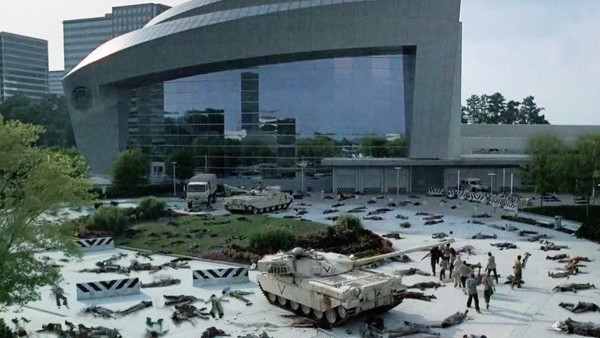
Whilst the enclosed nature of The Walking Dead makes for some intense television, after a while you can't help but thirst for some wider context. It previously teased that with the trip to find a cure in Washington, but that was all for nought. The first season also hinted at somewhat with its finale, as the group make their way to the CDC (that's Centre For Disease Control for the acronymically challenged), where there was a similar search for a cure which culminated in the revelation that everybody on Earth was carrying the zombie virus: it was dying which would activate it. Such hopeless news that the scientist who discovered it blew himself up.
Since then, however, there hasn't been a whole lot of info about how the rest of the world's doing. In fact there's been now information at all, removing some critical context from the show: is it just the US and Mexico (which has been shown on Fear The Walking Dead, not that many people seem to care about it)? What about Canada? Europe? Africa? Are they all equally blighted? Not a clue. It'd be nice to at least hint at a wider world outside the claustrophobia of the tiny group.
5. Daryl Isn't The Most Interesting Character

People adore Daryl Dixon. It's not hard to see why: in a show which has frequently starred totally useless characters who spent more time bleating about their feelings than dealing with the fact that there were ravenous, brain-starved ghouls clamouring to chow down on then, Daryl was a refreshing exception to the norm. Stoic to the point of silent and handy with a crossbow, he was everything the rest of the cast wasn't. So, relatively, he's a pretty great character.
In isolation, though? Daryl just doesn't add up. He's a relatively one-dimensional member of the group, as proven by the few times he's struck out on his own and...well, it's been kind of boring. Remember when he decided to go find that doomed little girl in the second season, fell into a ravine and hallucinated his racist brother making fun of him? Yeah, that was a bit rubbish. His motivation is forever muddy, his personality never making it much past sensitive tough guy written on some whiteboard somewhere, and Norman Reedus mostly coasting by on the goodwill afforded to him by starring in The Boondock Saints and being particularly fortunate looking.
4. The Cast Is Too Big

Daryl is symptomatic of a larger problem with the show. Whilst they've been pretty ruthless with killing people off when they've outstayed their welcome, the core group that traverses the desperate plotlines of The Walking Dead is bursting at the seams. Too many cooks spoil the broth and all that. Or, more accurately, too many characters means that nobody ever quite gets a chance to properly shine or be at all interesting.
The early seasons were principally the Rick Grimes show, as the centre around which the rest of the characters orbited, and that didn't make a whole lot of sense. That initial encampment got cut down to size sharpish, which was good, because no way was a weekly audience going to be able to keep track of a good two dozen starring roles.
Unfortunately, the writers didn't learn from that and continue in the same vein. That means they end up with characters like T-Dog (who was marooned in the background for the entirety of the second season) and Carol (who didn't do anything until the more recent seasons). Now with all the new communities you've got dozens of characters vying for screentime, but few of whom it's easy to care are about. Characters who are there to fill out the numbers and don't do much else, existing like background extras you feel you need to pay attention to, but rarely do. Best to just shed all that dead weight.
3. Robert Kirkman
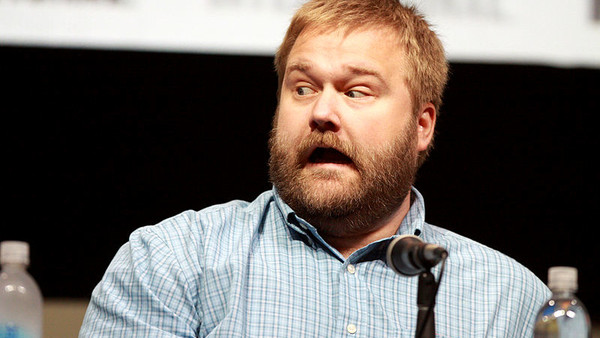
One of The Walking Dead's greatest assets might also be one of its greatest hindrances. The comic book was created by writer Robert Kirkman and artist Tony Moore (replaced by Charlie Adlard after the first story arc), and Kirkman has since parlayed that success into a whole media empire encompassing comics, games and TV shows, serving as an executive producer on the show and apparently having a fair amount of creative control. Or, at least, they're open to his suggestions.
The show has thus far been happy to deviate from the comics on more than one occasion, with the fate of Shane being entirely different in the TV show, and the group on screen currently being in a very different position than they were on the page. When they're so happy to throw out that much of the comic books, though, they should be equally enthusiastic to ignore some of the other problematic parts of Kirkman's work.
Robert Kirkman is kind of a jerk. He has written some good comics, and he did set the groundwork for the TV show, but overall? Bit of an idiot. The often weak female characters of the show especially are down to Kirkman, who has some rather old-fashioned (read: intensely sexist) ideas of gender dynamics which have unfortunately infected the show too.
2. Everything Is Finite

The Walking Dead can't go on forever. It certainly looks like it might go that way, with the cast being constantly updated and the show still going strong; the comics, meanwhile, have run up over 160 issues, having started the monthly publishing schedule in 2003 and not letting up since. For a show called The Walking Dead, however, there's a heck of a lot of walking and not a lot of dead.
The writers have since said they regretted it, but they put a ticking time bomb front and centre at the end of that first season. Yes, everyone is carrying that zombie plague within them, dormant, ready to get going as soon as they pass on. That means that, ultimately, however long the characters survive, their attempts to do so are meaningless. The show is totally lacking in hope. Things are never going to work out. The world of The Walking Dead is a world in decay, where everything is finite, and yet characters like Rick Grimes continue to go from strength to strength so long as the actors' contracts aren't up. Things are supposed to be falling apart but, well, they don't really look it. Partly because of the whole contract thing.
1. It Needs An Ending

One day The Walking Dead is going to have to end. The series has broken new ground by being the first mainstream attempt at telling a zombie story that actually runs for more than ninety minutes, with the usual end point being when everybody is finally consumed by the overwhelming enemy without. The Walking Dead, meanwhile, deals with the long-term repercussions of living in a world where death is awaiting around every corner from either your fellow man, or those ghouls wanting to nibble on you. It's a lot longer than your average zombie story, to be sure, but it's got to end sometime.
That aforementioned ticking time bomb has to go off at some point, but besides that one reference to the virus thing there hasn't been any indication that the series is building to any sort of endgame. The three-act structure is mostly non-existent when you've got a serialised drama like this, but it's definitely not gonna go on forever, even if AMC seemingly want it to.
How will it end, though? A huge dip in the ratings (even more than the recent slide), a sudden disinterest by the viewership at large could see the show cancelled pretty much overnight. If that happened, how on Earth would The Walking Dead end? Everyone killed off? Rick and the rest walking off into the sunset, facing an uncertain future? Both of those would be inherently dissatisfying. At some point The Walking Dead will reach some sort of finale. Right now, though, it doesn't seem like they're planning for that one bit. Which means that it probably isn't going to end well.