9 Common Medical Myths TV Shows Always Get Wrong

Yeah, that's not how that works.
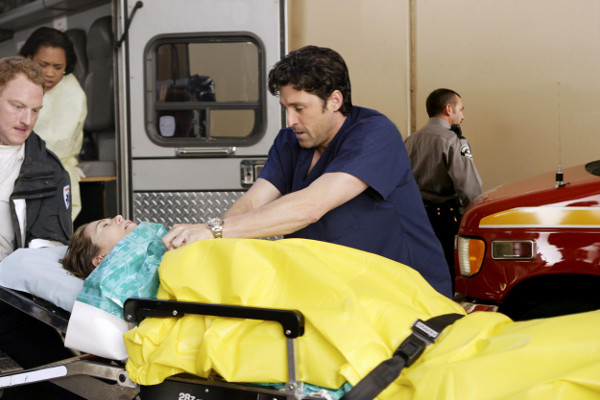
As with anything created for entertainment value, there's a necessary suspension of disbelief that's required to enjoy most TV shows. If you were to roll your eyes and throw your hands up at every improbable or unrealistic event to happen in your favorite series, you'd pass out from dizziness right after tear your rotator cuffs. So while it's understandable for sitcoms to trade factual representations for a quick laugh, it's disconcerting just how many shows (many of them of the serious, dramatic variety) seem to go out of their way to perpetuate medical inaccuracies that should have died off long ago. When it comes to even basic medical knowledge, most television writers wouldn't be able to find their way out of a first aid kit. These long-debunked myths have remained stuck on our television sets for too long, and have erroneously become "common knowledge" for people who spend a lot of time in front of the TV. So let's replace that misinformation with some real facts.

9. Tilting Your Head Back During A Nosebleed Is Actually A Bad Idea
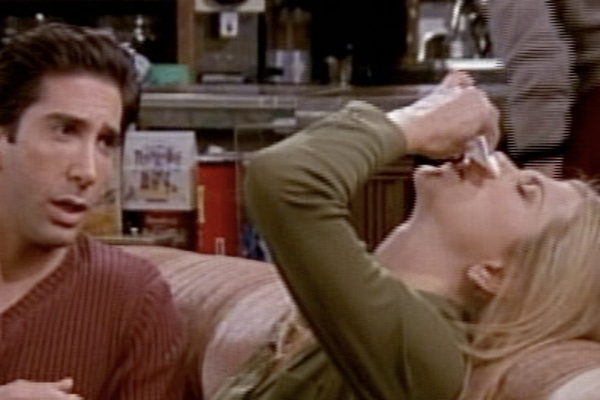
This one still happens so frequently all across television it's surprising most medical shows don't have entire episodes dedicated to telling people not to do it. Sometimes it's played for laughs ("oh man, it's really pouring outta there!") but most times it's just something that...happens. Like a character getting a flat tire or losing a shoe. And it happens weirdly often in meet-cute scenarios, where the two adorable lovebirds bump heads, and one of them (usually the woman...because they're just so fragile) gets a trickling nosebleed. To the rescue is the clumsy-yet-hunky lawyer/architect/bookstore owner with some blouse-saving advice: "Just tilt your head back into my firm-yet-supple hand. There ya go. I'm Sam, by the way, and I have no idea what the f--k I'm talking about." Tilting your head back only diverts the blood away from your nostrils, sending it down your throat. That presents the (albeit slight) risk of choking, with the added bonus of stomach irritation and nausea. So don't listen to that Sam douchebag. Instead, simply tilt your slightly forward, and pinch the soft part of your nose, just below the bridge.

8. Getting Knocked Out Actually Has Longterm Effects
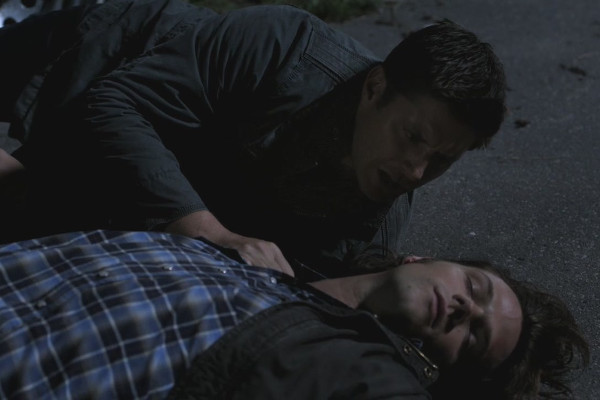
Over the course of any standard action series, there's almost always a scene where our hero gets knocked out by the bad guy. (This was pretty much a standard day at the office in 24.) They're unconscious for an unspecified amount of time, though usually for long enough to be hauled away to a different location. (Usually the bad guy's secret hideout and/or abandoned warehouse.) When they wake up, they're a little groggy but otherwise completely fine. In fact, most times they even have a witty retort at the ready. But if you've been concussed for more than five minutes, chances are you're going to have major brain trauma. You won't be tossing out one-liners like John McClane. If you can speak, you're probably going to sound as mush-mouthed as John C. Reilly. We're talking about irreparable damage here, often with a good dose of brain bleeding to boot. And that's not to mention the cumulative effects our hero would endure after the eighteenth mini-coma.

7. Defibrillators Aren't Actually Used On Flatlining Patients
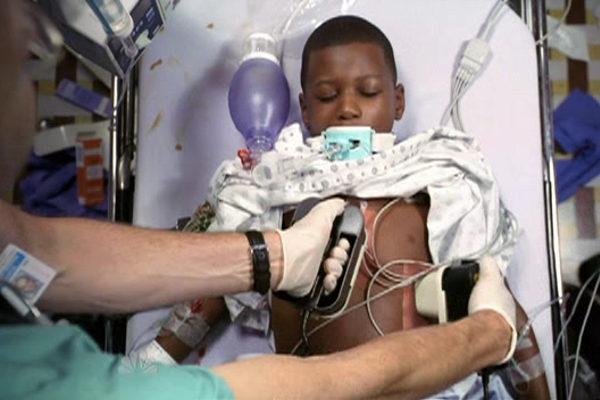
Medical dramas love nothing more than a good defibrillator scene. Trying to bring someone back from the brink of death using electrical shocks is one of the most exciting, legitimate medical processes they can show. Grey's Anatomy can't resist rubbing them together every other episode. ER probably hired a separate prop guy just to wrangle defibrillators. Even Scrubs, which is surprisingly accurate in many regards, broke down and put the paddles to work on a flatliner. And while the good ol' defibs can certainly prove useful in correcting irregular heartbeats, they're pretty much worthless when someone is flatlining. Actually, scratch that, they're worse than worthless. Because sending a massive shock to a non-beating heart is the same as tossing it in a frying pan for a few minutes. Defibrillators are NOT an automatic restart button for the heart muscles. In flatlining situations, there's a greater success rate using simple CPR, and maybe a big shot of adrenaline. Oh, and while we're on the subject, you don't rub the defibrillator paddles together before using them. It's pointless. And it can ruin the equipment. And just...stop it.

6. CPR Is Actually Painful And Doesn't Usually Work
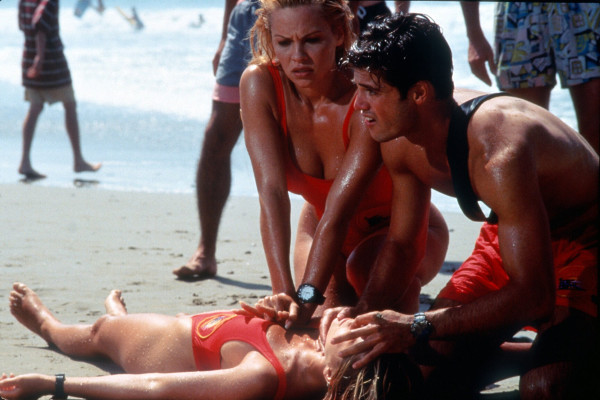
Okay, so remember that thing you just read about how CPR tends to be a better option than pulling out the heart paddles? Yeah, well, there's still some bad news on that front. There's a reason the most affecting scenes of CPR on television end with the person dying anyways. Because, unfortunately, that's how it usually happens in real life. Your garden variety medical dramas seem to favor more positive outcomes, though, presenting cardiopulmonary resuscitation as a simple, triumphant ordeal. Which is a tad misleading, to put it mildly. As it turns out, the pressure and persistence required to basically resurrect somebody from the dead using chest compressions can often lead to cracked ribs, among some more gruesome internal injuries. And there's a slim chance it will even work. In fact, according to a study in the New England Journal of Medicine, three relatively recent dramas (ER, Chicago Hope, and Rescue 911) had an on-screen resuscitation success rate of 75 percent. In studies about reality, however, the success rate of CPR performed on people who suffered cardiac arrest was between 2 to 15 percent, depending on the exact circumstances. That's not to say you shouldn't learn CPR. But you should also understand that there may be more bone-cracking and eventual death involved than you bargained for.

5. Bullet Wounds Aren't Actually Merely Flesh Wounds
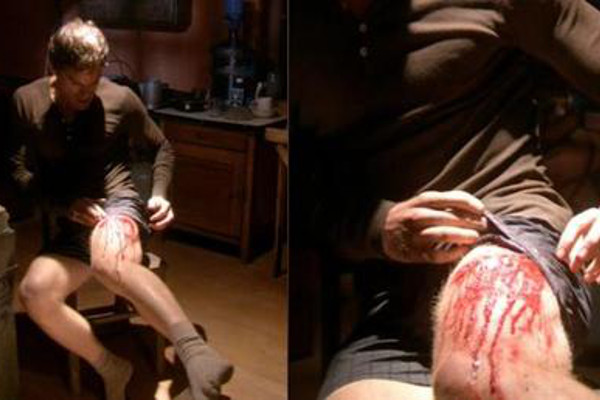
Any action movie worth its salt is bound to feature the hero taking a bullet, usually to a part of their body deemed unimportant by the writing team, like the shoulder or the thigh. But you'd better believe certain TV writers spent their childhood watching entirely too many Schwarzenegger movies, because this pops up all too frequently in serials, as well. The most egregious example shows up in an episode of Hawaii Five-O, with a fake assassination that involves an expert marksman shooting a politician in "just the right spot" above his chest to avoid hitting bones or arteries or the all-important heart. (Which is ludicrous and so many levels of impossible.) It also happens repeatedly in more recent shows, like Person of Interest, where our hero constantly shoots "to wound" by aiming at people's legs and arms. But in truth, there are way too many arteries, particularly in the upper part of the leg, to take a bullet without needing immediate medical attention. There is no hobbling off to hide behind a parked car for the rest of the shootout/ensuing car chase. There is only bleeding. So, so much bleeding. Imagine, if you will, a watermelon stuffed two-thirds full with explosives. (Because using your imagination can be fun!) It would be unreasonable to think anyone, trained assassin or not, can shoot at that watermelon from 30 yards away without at least nicking something that is going to go kaboom.

4. Peeing On Jellyfish Stings Won't Actually Ease The Pain

This is one of those that seems just ridiculous enough to work, but is in no way a real thing. It dates back, at least, to an episode of Friends in which Monica is stung on the leg by a jelly and Joey pulls this factoid from his (apparently vast) knowledge of Discovery Channel programming. It's popped up as recently as a Season 2 episode of New Girl, which means there are still people out there who believe that a little topical urination is a legitimate pain reliever. The myth is so well-ingrained in people that, after noticing an increase in jellyfish along Britain's shores, the Red Cross even released a statement warning the general public not to start peeing on themselves if they get stung.
€œA sting from a jellyfish can be extremely painful, but trying to treat it with urine isn€™t going to make your day any better." - Joe Mulligan, head of first aid at British Red Cross
If you want to ease the pain, you can try pouring vinegar over the affected area, as the acid will help neutralize the sting and soothe the irritation. If there's no vinegar around, you can use seawater. But note there's nothing about the chemical make-up of urine that will help in this situation. You're just going to continue writing around in pain, but now you'll be covered in pee.

3. Don't Actually Remove The Knife That's Stuck In You
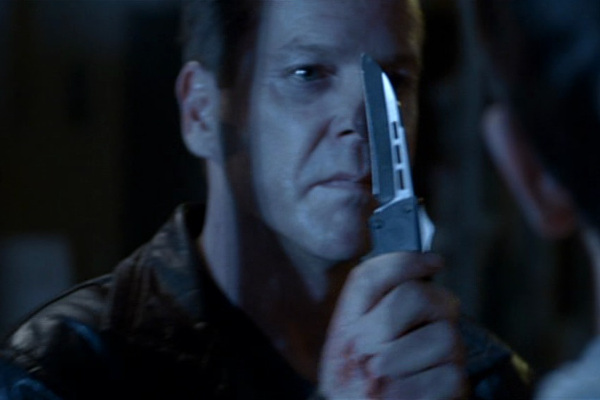
Another oddly enduring trope in every major action series from the last 30 years is the scene where someone gets shanked in the stomach with a nice, long blade. After dismantling (or momentarily subduing) their attacker, this embodiment of all that is man decides to pull that thing right out. ...And then he bleeds to death because he doesn't understand how sharp things interact with the human body. That's how most of those episodes should end, because removing it from your body is one of the top 3 worst things you could do in that situation. (Just behind wiggling it around in a tornado motion and trying to shoot it out of yourself with a pistol.) It looks super badass, but what's not so cool is the extra amount of blood that's going to come gushing out of you. While the knife is inside of your body, it acts as (an admittedly uncomfortable) seal, which keeps all of those important fluids from leaking out. But more importantly, if the object is close to any blood vessels, there's a solid chance you're going to sever something trying to yank the thing out. Think of it this way: Knife does damage going in, knife does damage coming out. Removing it like a caveman isn't going to help the cause.

2. You Should Actually Stay Away From A Person's Mouth During A Seizure
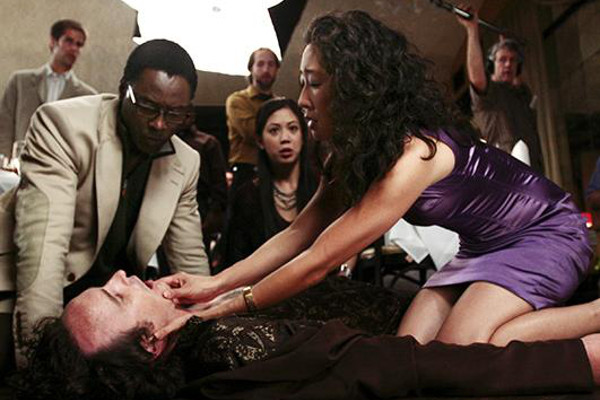
First of all, you can't swallow your tongue. Not while it's still attached, anyways. Despite what every character in the history of television has ever proclaimed while someone is having a seizure, it's a physical impossibility to swallow your tongue without first cutting it off. With that out of the way, let's address the advice that every medical drama from House to Private Practice has given over the last couple of decades, which is to wedge something in a seizing person's mouth. This, according to our fictional physicians, will prevent the aforementioned tongue swallowing, as well as keep them from choking. HOLY HELL THIS COULD NOT BE FURTHER FROM THE TRUTH. PLEASE DON'T DO THIS. ALWAYS STAY AWAY FROM THE MOUTH. Sorry to be so pushy with this one, but trying to make the victim of a seizure bite down on something has all of the bad repercussions, including you getting your fingers bitten off. Also, since the human jaw basically acts as a bear trap in these scenarios, it's impossible to pry that thing open without causing severe damage to their jaw or teeth. Plus, whatever you're trying to jam into their mouth could easily get lodged in the airway, which kind of goes against the medical care you're trying to give.

1. For The Love Of God Do Not Suck Out Snake Venom

Back in the days of the Wild West, when snakebites were as duels and cirrhosis of the liver, the simplest treatment was to just suck it up and walk it off. But like...literally. Just find someone with strong suction who's cool with putting their lips on your bloody appendage and have them take a few slurps. Poof! No more venom! Sitcoms like It's Always Sunny In Philadelphia occasionally play this up for laughs (though they maintain the treatment's plausibility), while pretty much every western ever made (Gunsmoke, Bonanza, Lonesome Dove, etc) feature a key scene with someone doing this. But there's literally no way a person can suck the poison out fast enough. The moment a person is bitten, that venom stars coursing through their lymphatic system. So by the time ol' Tex asks the classically beautiful cattle queen to "get to sucking," that venom would already be well on its way. Also, it's not a great idea to add all that bacteria from a human mouth into a fresh wound, because infections, unlike this treatment option, are very real. The good news, however, is that most times venomous snakebites aren't as fatal as people think. Even in the old days, there was only about a 25 percent fatality rate. (It helps that the snake doesn't automatically release his venom every time it bites onto something.)

In this post: 
Baywatch
 
Posted On: 
Contributor

Jacob is a part-time contributor for WhatCulture, specializing in music, movies, and really, really dumb humor.