8 Things Breaking Bad Taught Us About Science

Can you really use beans as a deadly weapon?
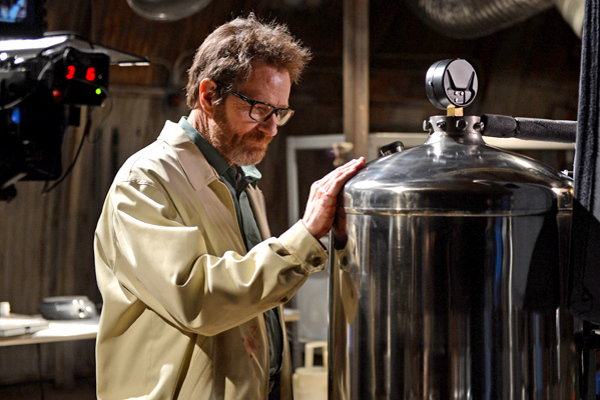
Beneath all of Breaking Bad's drama, it's easy to forget that there was a foundation of solid scientific work. Writers and producers of the series involved experts from various scientific fields when putting the show together, and even actual DEA agents were consulted to ensure the meth cooking was reflective of real science. Vince Gilligan advertised for organic chemistry consultants in current scientific journals, these guys were responsible for everything from the iconic chemistry we saw on blackboards throughout the high school Walt worked at, right down to things as subtle as the shine and sparks caused by thermite. From handcuffs to murder, Walt€™s scientific prowess gives him the chance to wiggle out of almost any situation and evade the law. Was all the science Walt used accurate though? After all, Breaking Bad was a hit drama rather than a scientific documentary. Could any of this stuff happen in real life? We take a look back over Walt and Jesse€™s escapades for some answers. Disclaimer: Breaking Bad ended in 2013 and it€™s on Netflix, this article obviously contains spoilers, but you really should have watched it by now. Additional disclaimer: Please don€™t use this information to dispose of bodies, kill people, or synthesise illegal drugs; it€™s not cool.

8. How To Dispose Of Bodies

What happened in the show: Potentially one of the grossest scenes in the entirety of Breaking Bad, Jesse attempts to dispose of a body by submerging it in hydrofluoric acid. Walt warned him to store the reactive acid in a particular type of plastic, but of course Jesse knew better and went ahead and put the body and acid in a bathtub. The body was reduced to a gooey mess, and the acid also ate through the bathtub and the floor below it. The clean-up process was grim. Could it really happen? Probably, but unsurprisingly it wouldn€™t be pleasant. Even highly concentrated hydrofluoric acid is considered a relatively weak acid; a solution of this acid does not fully dissociate (split into hydrogen and fluoride ions) in water. That€™s not to say it isn€™t dangerous; it can corrode metal and can even eat away at the bonds in glass, so it€™s definitely able to dissolve a body. The weak nature of the acid would mean it would require time to dissolve a body though, and whether it would ever dissolve it to the human soup we saw in the show is another question. The fumes that come off concentrated hydrofluoric acid can damage lungs and cause blindness, so the main problem (we€™re skipping over the morality of everything here), would be getting close to an acid so highly concentrated and not doing serious damage to yourself in the process.

7. How To Make A Battery

What happened in the show: Relatively early on during Jesse and Walt€™s meth cooking career we see the duo take the RV into the middle of the desert and cook for a long weekend. Jesse leaves the key in the ignition for safe-keeping, failing to notice the dashboard indicator lamp lights up. The lamp drains the RV€™s battery completely, leaving them stuck. After several squabbles, Walt realises he can make a mercury battery using chemicals, coins and galvanised metal. The battery works, the RV fires up, and they€™re able to drive back to civilisation. Could it really happen? No, not at all. Sure Walt could have made a homemade battery given the tools he had available to him; the coins, nuts and bolts he used provided zinc, which serves as the anode. The potassium hydroxide used in the pair€™s meth making acts as an electrolyte to conduct a charge, and the cathode is mercury. Unfortunately, even though Walt made multiple batteries they would never have been powerful enough to get the RV back on the road. The engine would have required power of around 200-300 amps to get it started, and a homemade battery would generate an estimated 3% of that at most. In the real world Jesse and Walt would have been stuck in the desert with no water and no hope.

6. How To Kill Someone Without Leaving A Trace
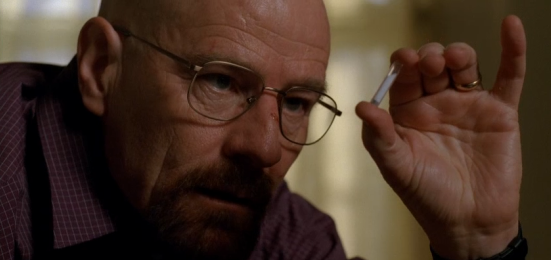
What happened in the show: Walter White prepares ricin twice in the show, the first batch was intended to kill Tuco Salamanca but the drug kingpin didn€™t bite and tossed the packet aside. We saw the real effects of ricin towards the very end of Season 5. Lydia Rodarte-Quayle originally supplied methylamine to Gus Fring, later working with Walt€™s drug empire and Jack Welker€™s white supremacist gang. Walt replaces a packet of sugar substitute with ricin and she happily stirs it into her chamomile tea. A few hours later she€™s feeling under the weather and Walt tells her she€™s been poisoned with ricin €“ there€™s nothing she can do. Could it really happen? Yes. Ricin is highly poisonous if inhaled or injected, meaning just a few grains can kill an adult; around 20 micrograms per kilo of body weight. Injecting ricin is a method used by the KGB to assassinate defectors so it€™s definitely a real thing. When ingested though, it€™s much less potent. More of the product is needed to kill a person and if caught early, patients can recover. In Breaking Bad, Lydia doesn€™t realise she€™s been poisoned, she experiences symptoms similar to flu and that€™s when it€™s too late. Depending on dose, it can take victims 3-5 days to die after initially ingesting ricin.

5. How To Make Beans Into A Deadly Weapon
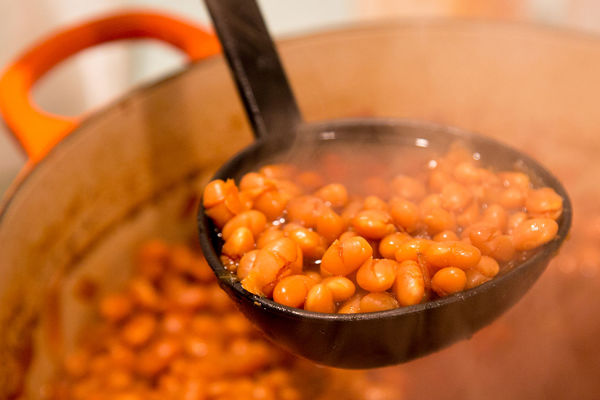
What happened in the show: As I explained just before, Walter prepares ricin twice in the show, the first batch intended for Tuco but the attempt failed, and the second is used to kill Lydia Rodarte-Quayle. What we didn€™t mention though was that Walt made this deadly poison from beans. Yes, beans. Maybe not your average baked beans, but a seemingly harmless food stuff nonetheless. Could it really happen? It's very unlikely. It€™s true that ricin can be extracted from castor beans, but it€™s by no means an easy process. There€™s tonnes of ricin recipes online, detailing the stages from softening the outer coat of castor beans, through cooking, mashing, filtering and adding solvents to ultimately synthesise your very own ricin. It looks easy; €˜you can do the entire process in your kitchen using glass jars and coffee filters€™ they say, but it€™s really not that simple. Pure ricin is highly dangerous, but the home-brewed form is not so pure as the methods to make it are crude. It€™s also likely that home brewing will degrade the activity of the ricin protein €“ so even if you do manage to find a technique that€™ll increase your purity levels, it€™s pretty likely that the protein will probably decay as you€™re making it anyway.

4. How To Blow Up A Building

What happened in the show: Fulminated mercury, or mercury(II) fulminate is first introduced to us in Season 1, where Walt uses the substance as an example of an explosive chemical when teaching his high school Chemistry class in Episode 6. Later on though, we see its effects in the real world when Walt uses it to blow up the headquarters of Tuco Salamanca. He throws a small bag of it to the floor to €˜activate€™ it, and it causes the windows to shatter and the cronies inside to run for cover. Walt walks away unscathed. Could it really happen? Yes, but not like it did in the show. It€™s true that fulminated mercury is a highly explosive chemical; it€™s very unstable and can be detonated by triggers such as friction, heat, spark or shock. Walt goes for the shock option and throws it at the floor. The amount that Walt had was very small though, and he would have needed a much larger quantity of the compound thrown at much faster speeds to trigger an explosion of the size we saw. In that case though, he and everyone else in the building would have died €“ so it wouldn€™t exactly have made good TV, accidentally killing off one of the main characters.

3. How To Escape Handcuffs

What happened in the show: In Season 5 Episode 6, Jesse and Mike decide to sell the $15million of methylamine they have acquired to a distributor named Declan. Walt€™s not interested in the sale but Jesse and Mike need his share otherwise Declan won€™t pay. Jesse asks Walt to sell his share, but he€™s on a bit of a power trip at the time, and replies that he isn€™t in the meth or money business, he€™s in the €˜empire business€™. Walt€™s being a big shot due to his damaged ego, harking back to his daft decision to sell his stake in Grey Matter Technologies before it got big. Mike catches Walt as he tries to retrieve the methylamine and prevent the sale, and happily zip-ties him to a radiator. Walt tries to free himself with a broken pot but fails, eventually escaping after melting the plastic of the cuff using an electrical arc created from a nearby socket. Could it really happen? Probably not. Plastic is an insulator, which would stop the wire from being live. Walt would have needed to get the current to flow in order to generate enough heat to melt through the plastic. This is certainly possible, but Walt would have definitely been electrocuted €“ probably killed or at least severely injured €“ as a result.

2. How To Burn Through A Steel Door

What happened in the show: Season 1, Episode 7 €“ Jesse€™s followed Walt€™s instructions to get a variety of chemicals together so they can begin to cook, but a key chemical is missing. Jesse can get some professionals to steal it from a warehouse but it€™s going to cost them $10k, so Walt decides they can do it themselves. One hitch however, the warehouse€™s lock isn€™t easy to break. It€™s a secure unit and a crowbar just won€™t do. After careful planning they go ahead, locking the security guard in a port-a-loo and melting the warehouse€™s lock using thermite that Walt made earlier on from aluminium powder extracted from the back of an Etch-A-Sketch. Could it really happen? Absolutely, but not just with an Etch-a-Sketch. Thermite is indeed the chemical for the job €“ it€™s used for welding and cutting through railway tracks so a steel door is child€™s play. The inaccuracy comes in the way Walt chooses to make the thermite. Thermite is made from a mixture of aluminium and other reactive metals. Walt only uses the iron or aluminium filings that are present in an Etch-A-Sketch. It€™s probably not a bad thing that the show didn€™t give step-by-step instructions on how to effectively break into high security premises though, so they could've missed out the other reactive metals on purpose.

1. It's Possible To Trigger A Bomb By Ringing A Bell

https://www.youtube.com/watch?v=R6CjCEyAJ2s What happened in the show: The finale of Season 4 did not disappoint. The episode works well at wrapping up the whole plot because the production team weren€™t certain they€™d get a commission for Season 5 at the time of writing. Walt plans the murder of Gus Fring with absolute precision, predicting his movements repeatedly to lead him to the nursing home of Tuco Salamanco€™s Uncle and former drug lord Hector. Gus goes with the aim of killing Hector, injecting him with poison, but his plan backfires somewhat. Hector rings the bell on the arm of his chair multiple times, and the bell triggers a bomb which Walt has attached to Hector€™s wheelchair. Could it really happen? If you had nothing else to do, were good with engineering and didn€™t kill yourself in the process, yes. This is hugely far fetched, but possible. Theoretically, the vibrations from the bell could ignite a detonator if they were both tuned to a specific frequency. If the detonator then exploded the main charge €“ our old friend fulminated mercury for example €“ then an explosion could be triggered. This would take aaaaages though, not the few hours Walt spent chucking it together.

Contributor
Contributor

I have a pet hedgehog, I like to bake and I do science for a job.