10 Things Everyone Always Gets Wrong About The Walking Dead
If Daryl dies we riot? Not quite...
Despite still being one of the most popular shows in the world, The Walking Dead's stock has taken a nosedive over the past couple of seasons.
With fans and critics alike getting fed up about the lack of any substantial development, the decision to keep focusing on the wrong characters and the butchering of the comic-book source material, the increase in criticism has resulted in the usually under-the-surface grumblings about AMC's world-conquering show becoming more vocal than ever before.
While some of the complaints and claims aimed at The Walking Dead - especially in recent years - are pretty bang on the money though, there are some things that constantly crop up that just don't make any sense.
Being spread around message boards, reviews and even memes, despite how controversial The Walking Dead is, these popular claims which have hounded the programme for years now only result in people overlooking the things the show actually doesn't do well, and it's time to finally put them to bed.
10. "It's An Ugly Show"
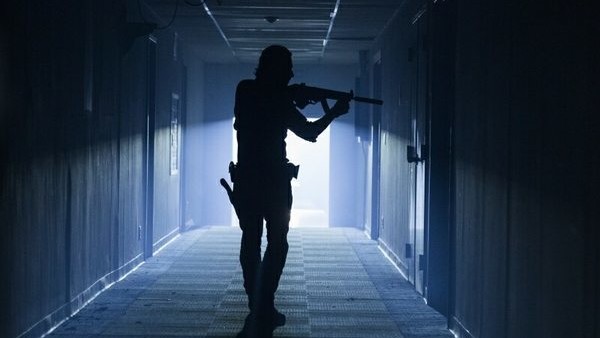
Unlike most other shows on the air, The Walking Dead has always stood out thanks to its unique visual design. Opting for a grittier aesthetic to properly reflect the rough post-apocalyptic wasteland the characters occupy, the programme is photographed on 16mm film rather than with crisp HD digital cameras, giving it a grainy look that, while distinctive, can be a little ugly at times.
Still, although that purposefully rough image doesn't look great when it's blown up on a big-screen TV, the show's cinematography has always been hauntingly beautiful. The director of photography for the first couple of seasons, David Boyd, gave the action a cinematic look despite the low-quality film stock making everything appear as though it had been stamped on, before Michael E. Satrazemis took the reigns to give the show a more expressionistic, darker visual style from season 4 onwards.
For the most part the visuals are supposed to be as natural as possible in order to properly depict a stark, believable dystopia, but that hasn't stopped the show from looking stunning at times, most recently exemplified in the fire-and-brimstone orange and blue used throughout the mid-season finale.
9. "The Special Effects Are Always Terrible"
Look, there's no denying it: the CGI on The Walking Dead can be absolutely abysmal. Hell, even I'm guilty of pointing out some of the show's most egregious (and embarrassing) uses of botched special effects. With that said, it shouldn't be overlooked just how good a job the people working on the show do for the most part.
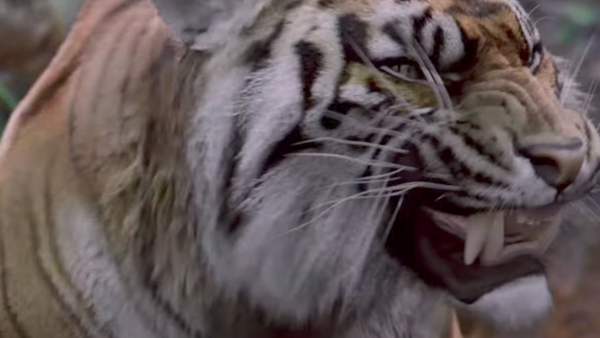
The impressive computer-generated visuals that immediately come to mind are obviously the likes of Shiva or the gigantic hordes of walkers, which would be impossible to bring to life without CGI trickery, but it's actually the effects you don't even realise have been created in post-production that should be recognised.
A cursory look at some behind-the-scenes featurettes from throughout the years highlight just how much of each episode is actually filmed on a soundstage, rather than in the Georgian wilderness, with the backdrops filled in later. So yeah, we can laugh at how naff the green screen was when Rick first went to meet the Scavengers, but that only looked so bad because the backdrops in the show look pretty damn good most of the time.
It's these little details that sell the believability of The Walking Dead, and the fact you don't even notice them is probably enough proof that the effects team deserve more credit than they're given.
8. "It's One Plot Repeated Over And Over Again"

One of the biggest complaints about The Walking Dead, especially in the earlier seasons, was that the show pretty much only had one plot point it kept repeating over and over again. Rick and the rest of the survivors would find somewhere to call home, stay for about a season, and then be forced back out on the road by walkers/other survivors/eye-patch wearing dictators with tanks.
While yeah, that broad look at the structure of the first few seasons is sort of applicable, it ignores all of the unique stories that were told under this framework. The fall of the farm is completely different to the fall of the prison for instance, and the fourth season, as well as the majority of the fifth, saw the survivors constantly on the move from place to place, with the hostile wilderness being far more threatening than any villains they come across.
Likewise, although that rinse-and-repeat structure might accurately describe the first couple of years, the story hasn't been that way for a long time. In fact, Rick has had a pretty steady home for a while now, and the show's whole dynamic has shifted from being about surviving to thriving, as the world has opened up and the scant few good people left attempt to rebuild something resembling civilisation.
7. "The Early Seasons Were Better"

As The Walking Dead has waned in popularity, fans have begun pining for a return to the "good ol' days" of the earlier seasons, seemingly forgetting those initial years weren't actually all that much better.
The show has been hit and miss since its inception, with the stellar first season being followed up by the dreadful slog that was season 2. Even then, while season 3 was a return to form, the back half once again descended into inanity, resulting in one of the most disappointing season finales in the programme's history (and that's saying something).
Of course there have always been good runs in between the bad stuff, and admittedly some of the strongest storylines were found in seasons 1, 4 and 5, but the consistency hasn't dropped that much in recent years.
It's easy to look back on the show's history through rose-tinted glasses and forget that the complaints fans have now are almost identical to the ones they had nearly eight years ago, but the harsh reality is the show has always been this inconsistent.
6. "Negan Is The Best Villain"

For years comic-book fans waited for the introduction of the foul-mouthed, skull-cracking Negan, while viewers without any knowledge of the source material were constantly told that the villain was going to be The Joker to Rick Grimes' Batman.
However, despite how much love the vast majority of the audience has for Negan and his cocky attitude, a lot of that affection most likely has to do with Jeffrey Dean Morgan's performance, rather than the character himself.
Because taken purely on his own, the show's current main antagonist is completely one-dimensional. Threatening when the writers need him to be but for the majority of the time coming across like a posturing prick, there's no depth to Negan (despite some very vague hints towards a tragic backstory), and without the sweary charm of his comic-book counterpart, the character doesn't have the complexity to carry the show at the moment.
It's the same problem The Governor had in season 3, where the villain became essentially a moustache-twirling cartoon baddie. However, there the writers realised their mistakes and strove to make him deeper and more relatable with his own standalone episodes.
Negan hasn't enjoyed such a luxury, and despite being around for a few years, still feels as one-note as he did in his introduction.
5. "None Of The Actors Can Actually Act"

Despite being one of the most popular shows on cable, The Walking Dead's cast is occasionally filled out by actors you'd expect to see guest starring in the cheapest basic network shows. Audiences have taken notice too, and the quality of the acting is often criticised for being more lifeless than the zombies themselves.
However, these weaker links in the main cast only look so bad because the majority of the talent is exceptional. The likes of Melissa McBride and Lennie James transformed potentially forgettable characters into fan favourites entirely through their engaging performances, while the likes of Lauren Cohan, Steven Yeun, Danai Gurira and Jon Bernthal have all given memorable turns over the years.
And then, of course, there's Andrew Lincoln. Pretty much carrying the entire show on his shoulders, the actor is the glue that holds the whole enterprise together, and his performance is sorely missed in every episode he's absent from.
If this was any other major programme, the actor would have had about five Emmys under his belt by now, but because this is a genre show, his talents are always criminally overlooked.
4. "It's All Action And No Character"

The Walking Dead has always had a weird relationship with action. After balancing character and bombastic set-pieces pretty well in the first season, its second year was notoriously zombie-free. Responding to the backlash over the sudden drop in spectacle though, the common complaint moving forward was that the writers would habitually throw action at a problem whenever criticisms would arise.
But that's only been true maybe twice in the show's history. Season 3 ramped up the action after the super-slow previous year, but even that was sprinkled with great character moments and the introduction of an entirely new settlement. Likewise, after the much-criticised seventh run, season 8 had episode after episode focused on shootouts, but an increased dose of adrenaline was to be expected considering, you know, the storyline was literally called "All Out War".
Unfortunately though, even when the series does take a step back from the action it still can't win, because fans then say...
3. "Standalone Episodes Are Garbage"

One of the most contentious decisions Scott Gimple made when he took over as showrunner in season 4 was to break away from trying to cram each major player into every episode. While a good chunk would still feature the ensemble cast, the writer wasn't afraid to split people up, focusing solely on the stories of specific characters.
Done sparingly, this approach actually resulted in some of the series' greatest episodes. The back half of season 4 is generally considered one of the best - featuring all-time favourite episodes like The Grove - and that split up the whole group for eight episodes.
Obviously there have been a few stinkers here and there (the Tara-centric ones can get in the bin forever), and the show arguably started to rely on these standalone episodes much more in later seasons, but small missteps are more than worth it if fans continue to receive great hours of television on the level of Here's Not Here.
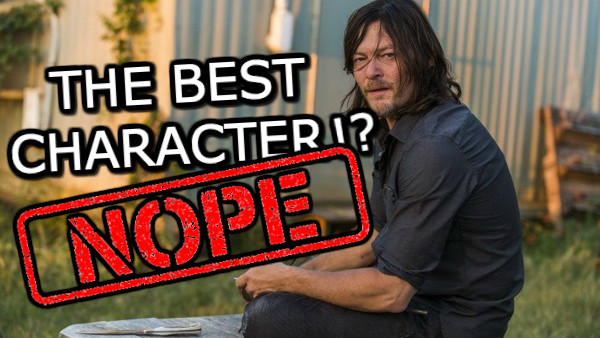
2. "Daryl Is The Best Character"

The very first breakout star of the show, Norman Reedus' Daryl became a fan favourite in season 1 and 2 thanks to his rugged, anti-hero charms, as TWD's early years saw the character morph from being a volatile hothead into the heart of Rick's group.
While watching him strike up a friendship with Carol, transform into Rick's right-hand man, and bond with Beth while on the road made for some of the series' most memorable character moments though, the once face of the show hasn't actually had all that much to do recently.
As a result, other characters have had space to grow into more compelling heroes. Carol's struggle to reconcile her murderous new identity with the person she used to be has made her an unlikely main player, while Morgan turning into a full-on Terminator (but still retaining his unique moral complexity) has even belittled Daryl's signature role as the show's action hero.
Their stories are far more interesting, and it's resulted in Reedus being mostly pushed to the side or relegated to dialogue-free action sequences. That hasn't stopped the "if Daryl dies, we riot" memes from still popping up, but it's clear the character has been coasting along on his popularity for far too long now.
1. "The Only Drama Comes From Wondering Who'll Die Next"
Long before Game of Thrones was commended for doing the same thing, The Walking Dead was one of the first shows to proudly proclaim that none of its main cast members were safe. This was a zombie apocalypse after all, and you couldn't really depict a true end-of-the-world tale if the main cast was never put in any genuine danger.
For the first few seasons this approach was considered revolutionary, as beloved characters were offed - sometimes seemingly at random - while even fans of the comic book weren't secure in knowing whether or not their favourites would make it through to the next season.
Consequently though, the one big criticism aimed at the show became that the only way it could create drama and intrigue was through raising the question of who would be next on the chopping block.
However, the series has seemingly recognised the problem of relying on this once-innovative gimmick, and although it still features major cliffhangers that tease the fate of its main cast members, has done its best to constantly subvert expectations.
Featuring seasons where barely anyone dies at all, the show has morphed from being not only about who will survive, but how they'll survive.
What do you think everyone gets wrong about The Walking Dead? Let us know down in the comments.