10 Silver Linings To Otherwise Terrible TV Shows

If the term brilliantly awful ever applied to any shows, it was these.
Whether you€™ve happened upon a long-dead series on Netflix or you€™re following up on a promising new pilot, investing in another TV series is always a bit of a gamble. Sometimes you€™ll have bet on a winner and sometimes you€™ll have picked one so unwatchable that you jump ship before episode two, but more often than not it€™s easy to lazily burn through four or five episodes before you realise that what you€™re watching is, put simply, not all that good. Fortunately for you and your dignity, we€™ve put together a list of fairly terrible TV shows which nonetheless have a redeeming quality with which you can justify your use of your time. Yes, in an ideal world all television would be possessed of a complex plot, stellar cast and sharp dialogue, but sometimes all you need are a few bright spots to make an episode worthwhile. Not everything can be Breaking Bad. So if you need a little reminder that there€™s a silver lining in every cloud, look no further than this article, as we comb through some terrible television which got it right, at least some of the time.

10. The Dresden Files

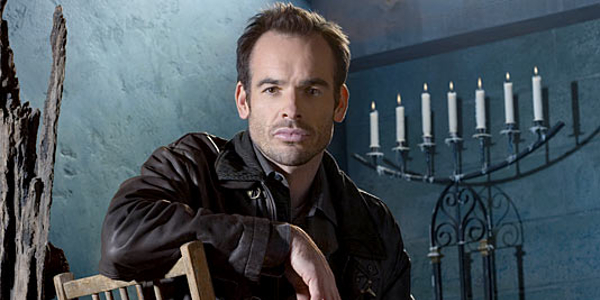
The Dresden Files was a short-lived adaptation of Jim Butcher€™s popular book series of the same name which centres on Harry Dresden, supernatural private investigator and the only wizard in Chicago€™s phonebook. The novels are notable for their wry humour and Harry€™s likeable supporting cast, and feature a menagerie of mythological creatures and legendary figures who usually swap wisecracks and punches with our protagonists. The television series, working with considerably less than the unlimited budget afforded by pen and paper, shelved the more unique fantastical aspects of the books in favour of a by-the-numbers procedural with some muddled magical exposition. It lasted only twelve episodes before cancellation. Backstories were tweaked, the rules of magic were rewritten, and a blonde female protagonist became a brunette, much to the fandom€™s dismay, and hopes were dashed when it emerged that Paul Blackthorne had been cast as Harry in place of popular choice James Marsden. Nonetheless, although he plays a wizard whose use of magic is limited to special effects loaned from the 1980s, Blackthorne manages to capture Harry€™s world-weary and somewhat self-destructive personality. It€™s almost as if Butcher€™s original character has ended up in some bizarre crossover fanfiction, but the portrayal is a bright spot in a series which sorely needed the same investment from its writers. Also, Nicolas Cage was a producer because he's such a fan of the books, which is almost a silver lining in itself.

9. Smash

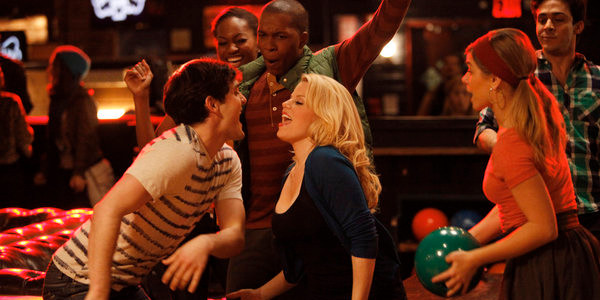
To put it bluntly, Smash was awful. Ostensibly about the production of a musical about Marilyn Monroe, it constantly marginalised its best character €“ Ivy, played to perfection by Megan Hilty €“ in favour of a growing number of walking cardboard cut-outs and storylines which would be too soapy for EastEnders. Its fans/prisoners watched in horror and fascination as it burned itself out after two seasons, having thoroughly squandered its relatively entertaining premise in favour of a conclusion which featured its leads more or less singing about their show€™s upcoming demise. If we discount Megan Hilty, who was served so poorly by her storylines that her presence eventually just added to the frustration, that unwavering commitment to musical numbers at the most inappropriate moments was Smash€™s sole redeeming feature. It was possible to tune into an episode and vaguely grasp the plot only to find yourself nonplussed by a tribute to Bollywood, or a disco number performed in a bowling alley. Had Smash had a sense of time or place, it would have become unbearable very quickly, but any series which deploys a Broadway rendition of €˜Under Pressure€™ because its characters are literally under pressure can€™t be all bad.

8. Almost Human

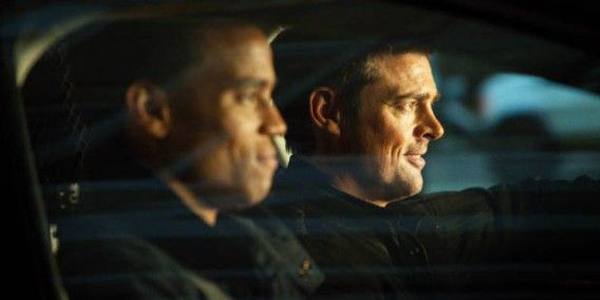
It€™s a telling indication of Almost Human€™s ratings impact that the obligatory petition for its second season at change.org has only garnered 2,500 signatures. The sci-fi procedural had pacing issues and was still working on differentiating itself from influences like Blade Runner and I, Robot, both of which overshadowed the visual and thematic elements of the series. It also abandoned its overarching mystery about the whereabouts of the lead€™s girlfriend for so long that it stagnated in the interim, leaving most fans uninterested in its inevitable return. However, during the first season€™s apparently standalone episodes, Almost Human did develop one of the best odd couple partnerships this side of Jaime Lannister and Brienne of Tarth. Karl Urban€™s grumpy cop Kennex would have been a cookie-cutter protagonist alone, but when the show paired him with Michael Ealy€™s robot with a soul, Dorian, sparks could fly. The best scenes of any given episode were those which featured Dorian and Kennex exchanging insults and witty retorts before the case of the week began to grind into motion. In an otherwise slow and serious hour, those five minutes of levity and chemistry were welcome.

7. Charmed

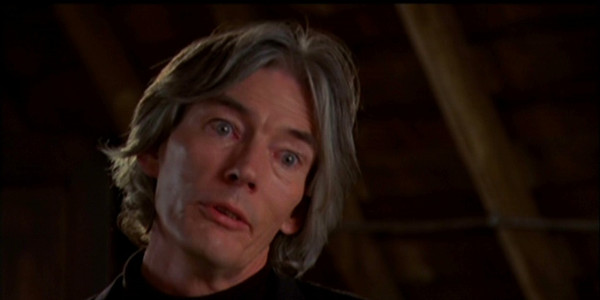
Even the most dedicated fans of long-running supernatural soap Charmed would be hard-pressed to argue that it was more than an indulgent guilty pleasure. While Buffy the Vampire Slayer was pushing the boundaries of genre television, Charmed was re-treading the path of countless soaps and witchy dramas before it and doing so inconsistently as it aged. It also somehow managed to continue to dress its leads in unidentifiable nineties fashion well into the twenty-first century. Fortunately for Charmed, almost everybody who guest-starred on the series was self-aware enough to ham it up enormously, particularly if they€™d landed a role as a villain. Billy Drago, who played the recurring character Barbas, the Demon of Fear, was particularly committed to his role, but then an understated performance would have been lost on such gems as, €œI€™ll be back! Fear always comes back!€ Even Julian McMahon managed to get some mileage out of perpetually miserable half-demon Cole Turner, who attempted to thwart his immortality with the help of a guillotine. It turns out that Charmed could be kind of funny, and occasionally even when it wanted to be.

6. Blade: The Series

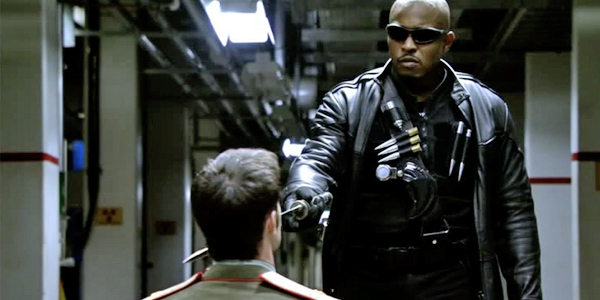
The television adaptation of Blade borrows the gratuitous violence, gore and sex from the films and just about musters a lower-budget and less convincing reflection of its big screen predecessors. The writing left much to be desired, as did the acting, especially since Kirk Jones doesn€™t have the same intense screen presence as Wesley Snipes, whose Blade always seemed a little unhinged. Still, while well-written characters and dialogue would have elevated the show beyond a series of disjointed fight scenes, it does do those fight scenes well. For the most part, the excellent fight choreography overshadows the limitations of the budget, and surprisingly the series doesn€™t compromise on blood and gristle. Blade even gets a few snappy one-liners in from time to time while he€™s ripping out the jaws of his enemies, which is all you can ask for, really.

5. No Ordinary Family

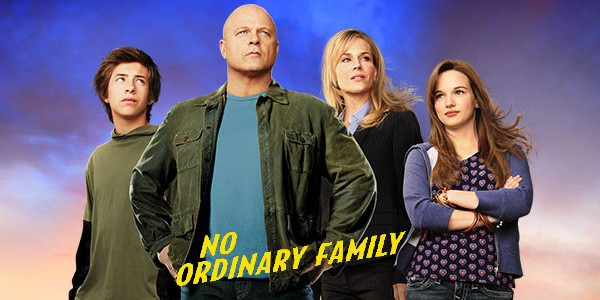
No Ordinary Family, a superhero drama about a family who discover mysterious abilities after a plane crash, aired in 2010 to little fanfare, and disappeared quietly off the face of network television after a single season. Although it was headlined by the capable Michael Chiklis, who has more than a little experience playing a superpowered tough guy, even he couldn€™t salvage the clunky dialogue and cliché-ridden episodic plots. The series also bore more than a few similarities to the superior animated film The Incredibles, but its dubious scientific exposition also owed a debt to the original super family, the Fantastic Four. No Ordinary Family aired only months after Heroes finally limped off our screens, but it had more in common with the €˜60s Batman series than the modern dark and gritty superhero genre, and even seemed strangely nostalgic. For comic book fans, it was like sinking into a comfy if somewhat threadbare armchair.

4. FlashForward

Seemingly cobbled together from discarded drafts of Lost scripts, FlashForward was a uniquely difficult viewing experience. The titular glimpses of the future gave the show its finish line, and it proceeded to trudge forward at a glacial pace until the end of the season, throwing in tired sci-fi tropes like creepily knowledgeable children to pass the time. It had a likeable cast on paper, featuring Joseph Fiennes, John Cho and Jack Davenport among others, but each of them was limited to looking pensive and occasionally delivering overwrought monologues. Nonetheless, FlashForward was a high concept sci-fi series which not only united its fans in complete frustration but also in constant speculation. The execution may be poor, but commit to the whole season and you will be swept into the guessing game against your better judgement. Puzzling through its mythology is unexpectedly enjoyable, as long as you€™re prepared for the somewhat spiteful cliffhanger in the finale, which essentially rewards your efforts with a slap in the face.

3. Dark Angel

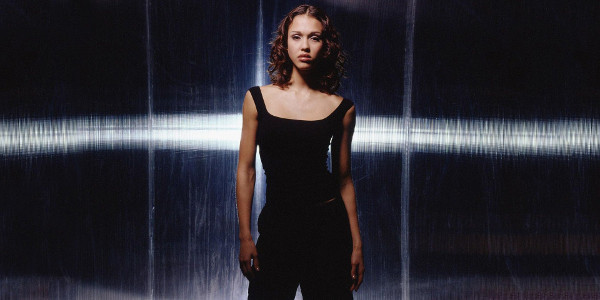
Co-created by James Cameron, Dark Angel is best remembered as the vehicle for Jessica Alba€™s breakout performance as genetically engineered super soldier Max. It€™s also notable for its incomprehensible technobabble, grating dialogue and thin plot, and although Alba was praised for her role, the acting can be inconsistent. The series survived for two seasons before it was cancelled in favour of Firefly, because one cult sci-fi show wavering in the ratings was quite enough for Fox, thank you. Dark Angel reportedly exceeded its $3 million budget in every episode of its first season, but the effort shows. The series was set in a post-apocalyptic Seattle after an electromagnetic pulse has destroyed the majority of modern technology, which allowed Cameron and co-creator Charles H. Eglee to draw heavily on cyberpunk for the city€™s grimy and corrupt atmosphere. The irritating invented slang never quite works, but the odd combination of hovercrafts, pagers and turn of the millennium hip-hop somehow coheres into a visually striking and fully realised futuristic world. Was there much point in that carefully developed world when its inhabitants were usually too absorbed by their ongoing love triangles to explore it? Perhaps not, but it made for a pretty background, at least.

2. Camelot

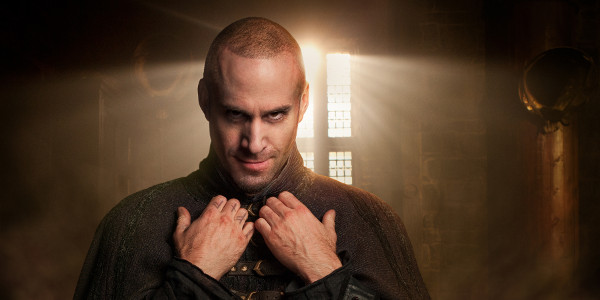
Camelot was the lavish Starz version of the Arthurian legend which managed to coat the entire story in a sticky layer of sentimentality. Arthur€™s defining trait was his sexual attraction to Guinevere rather than his leadership or courage, and it didn€™t help that Jamie Campbell Bower looked a little too light to be swinging a sword about. Joseph Fiennes, who€™s already popped up on this list as the star of the ill-fated FlashForward, overacts to his heart€™s content as a darker and grittier Merlin and surprisingly, it works. Merlin€™s mysterious origins and his complicated relationship with magic could have been overplayed, but somehow the show managed to keep its cards close to its chest, and its hints were genuinely compelling. Unfortunately, whole episodes therefore went by in which Merlin played only a minor role, and we were left to watch Guinevere and Arthur engage in a romantic post-coital staring contest on the beach. Swordfights and magic, Camelot! It shouldn€™t have been that hard.

1. The Tudors

At the top of the list we have possibly the televisual equivalent of chocolate cake: sumptuous to behold, almost too rich to consume, and absolutely terrible for you. Historian David Starkey, who admittedly seems to permanently exist in a state of mild righteous anger, described The Tudors as €œgratuitously awful€ for its many anachronisms and factual inaccuracies. The acting ranges from amateur dramatics to the sublime (Natalie Dormer is fantastic as Anne Boleyn), but it€™s marred by constant and exhausting exposition and some truly strange accents. The Tudors was the epitome of style over substance, but wow, it did have a lot of style. It takes a certain amount of guts to introduce Victorian carriages into Tudor England presumably purely because they look a lot better than the historically appropriate equivalent, not to mention to cast a male model as the notoriously overindulgent Henry VIII. It may be a silver lining its detractors can€™t quite stomach, but The Tudors rightfully garnered multiple awards for its costume and production design, and the result makes for some beautiful, if vacuous, television. Henry would likely have approved.

Contributor

Grace Murray hasn't written a bio just yet, but if they had... it would appear here.