10 Secret Worst Heroes In TV

These aren't the hero-protagonists you're looking for.
In your typical television show, the protagonist is there to act as the prime mover for the narrative: the show is all about them, after all, and their actions and reactions are supposed to create the story. A lot of the time, the protagonist is the hero of the piece, noble and moral as well as capable and powerful in his or her own way. But what about those occasions when the show€™s narrative stars a fairly traditional hero-protagonist€ who then turns out to be something else entirely? If you€™re lucky, it€™s completely intentional €“ the show€™s creators are trying to subvert your expectations, to fake one way and then go the other, making watching the show a rewarding experience and adding depth to the narrative. Of course, that€™s not always the case. Sometimes the story gets away from them, or they€™re too close to it, and can€™t see what€™s happening to their central character until the show airs and the fans tell them where they€™re going wrong. Sometimes the weight of seasons of continuity means that a character has simply messed up too many times (there may be a reset button at the end of many TV shows, but the fans remember. The fans always remember). Perhaps the hero isn€™t as strong or competent as he€™s intended to be, the cumulative effect of his actions making his efforts seem weak or unimportant. Maybe your favourite show features a hero-protagonist who continually seems to screw over her friends, or her lovers, despite being written to be morally above reproach. Or perhaps they€™re just written badly, screeds of supposedly witty dialogue coming across as meanspirited and sarcastic instead. We€™ve trawled the depths of the television schedules, past and present, to come up with a list of hero-protagonists that, for whatever reason just don€™t live up to the name: the secret worst heroes in television.

10. Jackson Teller €“ Sons Of Anarchy

You may be thinking: €œbut WhatCulture, Jax is supposed to fall from grace. That€™s the ending they intended all along!€ And of course you€™d be right. Jackson€™s realisation that he€™s stepped beyond the pale and has to meet Mister Mayhem is the focus of the show€™s narrative€ but it doesn€™t happen quite as Kurt Sutter and co. intended. Throughout the early seasons of the show, Jax is increasingly at odds with his stepfather and the club€™s president, Clay €“ and increasingly committed to getting the club out of illegal activity and back into the spirit of freedom that his father had originally intended when he formed the Sons Of Anarchy. As time goes on, however, Jackson€™s machinations to make his dream a reality €“ and to keep his family safe €“ take on an increasingly violent and lurid tone. Committing more murders to eventually end violence, making more criminal deals to eventually end all illegal trade€ the fact is that Jax is off the reservation very, very quickly. The more in control he feels, the more he manipulates events and people around him, the further away he moves from the idealistic man his father had been, to the pragmatist Clay had been. The events of the season six finale didn€™t act as the catalyst for his downfall and his eventual end. Jackson had been headed downhill fast since the beginning; Tara€™s death just took out the brakes. Jackson was a violent criminal in the pilot episode. The only change by the finale is that he has far too much blood on his hands, and has orphaned his children through his own actions.

9. John Locke - Lost

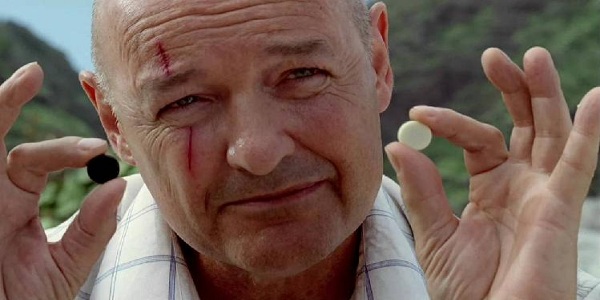
To counterbalance the flawed man of science in Lost€™s main protagonist Jack Shephard, the show gave us John Locke: a man initially set up to act as the spiritual yin to Jack€™s yang, the believer versus the sceptic. If there€™s a real secondary protagonist in the early going, it€™s Locke€ and that€™s why it€™s so senseless how the character ends up. The finale of season three shows us an unattended funeral and a coffin, revealing the events of Jack€™s €˜flashback€™ to actually be a flashforwards: Jack and some others will leave the island. The finale of season four reveals that the coffin contains Locke€™s body, while the fifth season episode €˜The Life And Death Of Jeremy Bentham€™ shows him resurrected, and details in flashback the events leading up to him leaving the island, suffering a crisis of faith and being murdered by Ben Linus. But it€™s okay, right? I mean, we know that he€™s brought back to life when they bring his corpse back to the magic island he€™s dedicated his life to. So even though it€™s damn harsh what happens to him off the island, his story is far from over€ €except it is over. The season five finale reveals that the Locke we see back on the island, walking around being enigmatically cool and inscrutable again, isn€™t our beloved secondary protagonist but the antagonist: the demonic smoke monster, who can take Locke€™s form now the same way it took the form of other dead people. Far from being an engaging part of the narrative for seasons four and five, Locke€™s been on a collision course with a noose in a crappy hotel room, and that€™s all she wrote. Worse is the realisation that one of the show€™s best and brightest characters dies almost as an afterthought. Locke€™s murder carries almost no dramatic weight in €˜€Jeremy Bentham€™ because it€™s a flashback €“ the beginning of that episode shows him resurrected again. Finding out in the season finale that he wasn€™t: that Locke died for good ages ago and that we should have mourned him then, is bad storytelling, and a poor way to treat such a special character.

8. Ross Geller - Friends

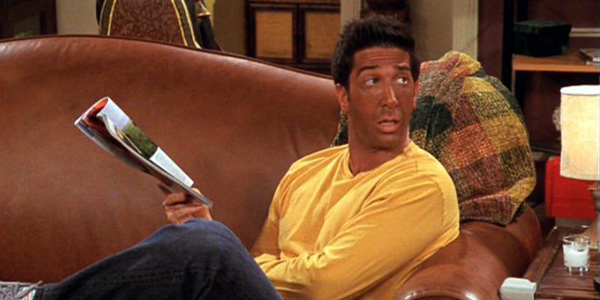
Out of all of the six characters at the heart of one of the most successful sitcoms of all time, Ross Geller was initially the most relatable guy: just a bloke, slightly geeky, unlucky in love but goodhearted, clever and sweet. He€™s that nice guy that always gets friendzoned (just like us!), so we rooted for Ross and Rachel all the way through season one €“ and in season two, he got the girl. Then the problems started€ insecurity and paranoia set in, ruining the relationship, and finally Ross cheats on Rachel (it doesn€™t matter whether they were on a break or not, cheating is cheating) with a virtual stranger. What follows is a weird melange of anxiety-related mishaps, more bad marriages and divorces, and generally Ross being a terrible, terrible boyfriend €“ because it turns out that the €˜nice guys€™ that complain about being friendzoned aren€™t relationship material, or really very nice guys at all. Then there€™s the casual yet weirdly aggressive homophobia. Ross is selfish and acts out when he doesn€™t get his own way. He has absolutely no respect for or trust in any woman he€™s involved with, and his character arc in the show (over ten years) goes from science-geek-obsessed-with-Rachel to science-geek-obsessed-with-Rachel. Zero growth, zero maturity. Contrast that with Chandler, the neurotic chatterbox of season one who€™s a mature, grown-up married man starting a family and a new home by the series finale€ just like us. Oh, and the friendzone is a myth, boys. She€™s just not into you. Deal with it.

7. Buffy Summers €“ Buffy The Vampire Slayer

The titular character of a television show is more than just the hero-protagonist: they carry the show on their backs, because they€™re everything the show is supposed to be about. C.S.I. can recast the lead roles, because the show€™s a procedural about crime scene investigators; Eastenders can have a rotating cast of regulars inhabiting Albert Square because it€™s a soap opera about the rotating cast of regular inhabiting Albert Square. Buffy The Vampire Slayer is about Buffy Summers€ but Buffy Summers doesn€™t want to be the Slayer. She€™s a hero-protagonist who doesn€™t want to be the hero-protagonist, and throughout seven seasons of the show, her constant refrain is a valley-girl whine that her life isn€™t the way she wanted it to be. However, Buffy is surrounded by an ensemble cast of friends and allies who are there precisely because of her: who€™ve chosen this life, despite not having super powers and a supernatural calling, because they want to support her. Those people suffer through their voluntary association with Buffy and rarely if ever complain about their lot in life. Giles, Willow and Xander all see their partners murdered during the course of the show. Xander loses an eye, Willow becomes addicted to black magic, Spike is killed€ the list goes on and on. At last, in the season finale, after a whole heap of death and mayhem, the Hellmouth is closed, the entire town of Sunnydale collapsing to cover it. The final shot of the series? Buffy slowly smiles, realising that she can retire now, that with dozens of Slayers in the world she doesn€™t need to be one anymore. Way to be self-obsessed, Summers.

6. John Cena €“ WWE Monday Night RAW

For a decade now, John Felix Anthony Cena has been the poster boy for a PG era WWE: a cartoon fan favourite, or €˜babyface€™, pushed to be the WWE Champion no less than a record twelve (12) times. Beloved by children and women of a certain age the world over, John Cena is also the most divisive figure in professional wrestling history€ because he€™s a good guy that gets booed out of the building almost everywhere he goes. It got to the point year ago that he acknowledged the weird reactions he was getting, and these days he pretends he€™s not bothered by it. Some say it€™s Cena€™s tired, stale character that€™s at fault. Pro wrestling suffers from burn-out like any other form of entertainment, and Cena€™s character has barely even fluctuated in ten years, except for the colours of his excruciatingly bad merchandise. Some say it€™s the fact that Cena is written by the powers-that-be in WWE to be an undefeatable Superman figure, like Hulk Hogan back in the eighties€ only it€™s not the eighties anymore, and we prefer Batman these days (hey CM Punk, how€™re you doing? >waves). Some say it€™s because he can€™t wrestle, although those people are kind of kidding themselves... Still others reckon that the much hyped Cena heel turn €“ whereby the pro wrestling fanbase fantasise about the different storylines, the different matches and feuds, that might take place if John Cena was turned into a bad guy €“ has actually already taken place€ that we€™re booing him because they want us to. Is that a conspiracy theory too far? Don€™t ask Cena. Summa y€™all like him, and summa y€™all hate him, and that€™s fine with him. Jack.

5. Skye €“ Agents Of S.H.I.E.L.D.

We get it, Agents Of S.H.I.E.L.D. You want us to think that Skye is a special snowflake. Ever since the pilot episode, this show has hammered home the message that a sarcastic, stroppy computer nerd is in some way the greatest thing the Marvel Universe has thrown up, but given us very little reason to believe it. Another show with two leads in an ensemble cast, it€™s Phil Coulson and Skye (real name Daisy Johnson) who are the focal points of that cast. Skye is recruited to S.H.I.E.L.D. despite being a hacktivist who€™s against everything she believes S.H.I.E.L.D. stands for, and is kept on the team despite constantly questioning and disobeying orders€ not good form when you€™re a rookie member of a paramilitary espionage organisation. This isn€™t teething trouble, either: Skye continues to act like she€™s a bored child at camp throughout the second season, even after becoming a full-fledged agent. You€™d think she€™d understand the whole €˜need to know€™ aspect of being a spy by then, but she€™s still insisting that her boss tells her everything, throwing massive sulking fits when she€™s repeatedly politely asked to respect the chain of command. She gains superpowers, becoming an Inhuman partway through season two, but apparently this isn€™t what makes her special: her new abilities are treated as reason not to trust her, although she€™d already proven herself to be an arrogant, insubordinate jerkass before they cropped up. To paraphrase the immortal Mean Girls€ stop trying to make Skye happen, Agents Of S.H.I.E.L.D. No one is ever going to like Skye.

4. Petyr €˜Littlefinger€™ Baelish €“ Game Of Thrones

There aren€™t many heroes left in Game Of Thrones these days. Protagonists, on the other hand€ we have more protagonists than we can count, and if anyone€™s still a mover and a shaker on this show after season five, it€™s Petyr €˜Littlefinger€™ Baelish. He€™s the master manipulator, the ultimate player of the game of thrones. Right? Actually, probably not. Game Of Thrones likes to tell us that Littlefinger is this great schemer, this spider at the heart of a great web, but where€™s the evidence in the show? From the moment we€™re introduced to him, no one trusts Baelish. He€™ll tell the world exactly how unreliable his support and friendship is, but pretty much everyone already knows: he€™s a sly little weasel with an evil pointy beard and a sinister smile who talks like the villain in an old black and white Republic Pictures serial. Can anyone think of anything that this supposedly Machiavellian political genius has really achieved in five seasons of messing around? He€™s betrayed the Starks for the Lannisters and then the Lannisters for the Tyrells and Sansa. He€™s been given Harrenhal but probably lost it again, and his hold on the Eyrie depends entirely on whether anyone picks holes in his craptastic fiction about Lysa Arryn€™s mysterious sudden death. In fact, that spur of the moment murder is a case in point: it was so badly thought through that it took some quick thinking on Sansa€™s part to save him. That€™s right€ the mastermind had his beans yanked off the stove by a nervous teenager.

3. Sherlock Holmes - Sherlock (BBC)

Sherlock Holmes is really not that great a detective. Now bear with us here... The major problem in all of fiction with writing about genius detectives is that you€™re attempting to write stories about the prowess of someone far, far smarter than you are. Firstly, it can be argued that it€™s actually not possible to get into the head of a character with greater intelligence than your own€ but the greater issue here is that it€™s simply not practical to write about a detective€™s investigative skills when the character is an order of magnitude smarter than the person writing them. In the BBC TV series, Sherlock is forever using abductive reasoning to analyse facts about people and events, and then relying on his results as conclusive in and of themselves. What€™s abductive reasoning? Without going into too much fiddly detail, it€™s when you take observed facts and formulate a hypothesis that satisfactorily explains them: a wrestler lies on the mat, another wrestler standing over him with a folding chair. Hypothesis? The second wrestler has hit the first wrestler in the head with the chair. If, like Sherlock, you€™re lightning fast in perceiving and analysing the facts available, and you€™re knowledgeable enough to understand and discard the many likely explanations of those facts to arrive at the most likely, then it may well appear as though you€™ve magically grabbed the correct result out of thin air. Of course, you€™re equally likely to be completely wrong (what if the first wrestler threw the folding chair to the second wrestler and himself to the mat, feigning unconsciousness to have his opponent disqualified?), especially if, like Sherlock, you become complacent about always being right. Rarely, if ever, does he wait to find out whether his hypothesis is accurate before acting upon it. However, since he€™s being written by someone of only average intelligence with no background or interest in genuine problem solving and logical puzzle techniques, an environment is created whereby, despite the massive fallacies involved, Sherlock is pretty much always right. It€™s a magic trick, sleight of hand to distract the viewer and make them believe that the character is an extraordinary detective. It doesn€™t work if you remove that artificial environment of success, though: take any scene of brainy, detectivey brilliance from an episode of Sherlock, and without the context in the fiction (that Sherlock is actually correct), ask yourself whether there could be another hypothesis that also explains the facts being observed. Nine times out of ten, you€™ll come up with another one, maybe more. But that€™s the problem with writing someone smarter than you are. You just can€™t do their huge brain justice.

2. Dexter Morgan - Dexter

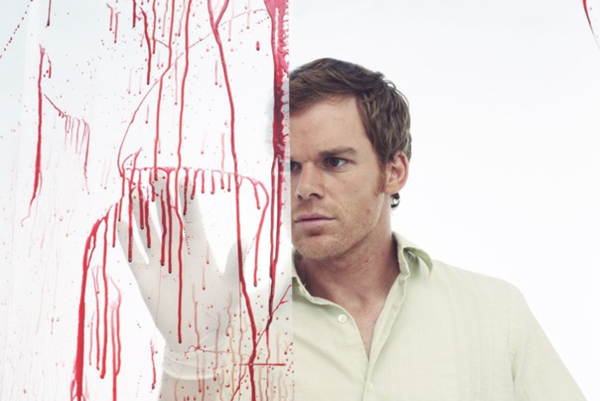
Where do you even begin with Dexter? He has to be the stupidest killer in any serious drama, and probably dumber than most comedy criminals. The show tries to make out that its protagonist is careful, cautious and wily, more than capable of hiding in plain sight. In fact, he€™s exactly the opposite. Dexter€™s public persona is intended to be affable and friendly to put people at their ease, exemplifying the normal family man next door€ except he€™s actually socially awkward, repressed and tongue-tied around pretty much everyone, and this, coupled with his professional obsession with blood, makes him more than a little creepy. This is the kind of guy people would automatically suspect, simply because he€™s€ well, a little buggy. This is a serial killer, working for the police in forensics as a blood spatter expert, who €˜s been killing bad guys for years with an almost identical MO and body disposal method, a troubling pattern for a supposedly ferociously intelligent, highly experienced and qualified expert who was trained by his police officer father. Half the time he investigates his prey at work using a police workstation, and his idea of security while doing so is pulling the blinds in his office. The server and the computer are police property: they wouldn€™t even need a warrant to examine them, even if they didn€™t simply happen upon him in mid-search. There€™s also the question of why on earth a forensic tech has access to every single database the Miami police have, but that€™s just the slipshod attitude of the police, not Dexter himself. And that€™s the problem, isn€™t it? Dexter has stayed at large, not because he€™s a stealthily silent predator, a shape in the night, yadda yadda yadda. No, it€™s because his colleagues in the force €“ including his own sister €“ are a bunch of clueless clownshoes. Despite the fact that he or his family are involved, often publically, with the antagonists of every season, and despite the fact that no less than four police officers privately suspect Dexter and mount their own off-the-books enquiries into him in their spare time, no formal investigation is ever sanctioned by the police. It€™s simply Dexter€™s very, very dumb luck that he isn€™t caught or killed long before the series limps to its lame duck finale.

1. Ted Goddamn Mosby €“ How I Met Your Mother

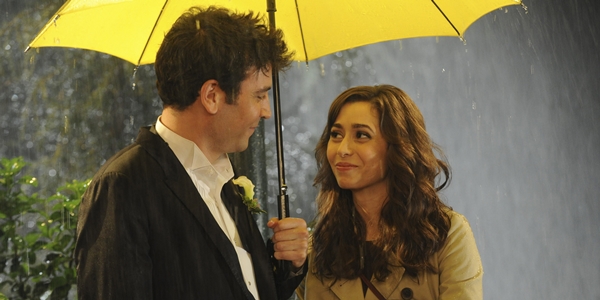
When How I Met Your Mother first started in 2005, the concept was fresh and innovative: told in flashback throughout, with framing devices and callbacks making it the ultimate shaggy dog story, lead character Ted Goddamn Mosby (played by Josh Radnor) would tell his kids the story of how he met their mother. Nine years later, any vestiges of goodwill that the show €“ and especially Ted Goddamn Mosby €“ had with the audience were well and truly shredded. Ted, intended to be a lovelorn romantic on the lookout for Miss Right, had very quickly become the kind of self-obsessed indie-kid bore that you want to slap, and slap hard. As time went on, and on€ and on, Ted Goddamn Mosby became first everything you disliked about twentysomething blokes, and then everything you disliked about people in general. He€™d treat his girlfriends like crap, then whine about how he could never find anyone. He€™d mope about wanting to fall in love and get married, then go out on the pull with his weird, emotionally stunted friend Barney, treating women like pieces of meat. He would repeatedly demand love from close friend Robin, despite knowing that they weren€™t right for each other, constantly begging for attention, neediness and insecurity oozing from every pore like flop sweat. When we finally met The Mother, Tracy McConnell (played beautifully by Cristin Milioti) was everything that Ted had wanted his future wife to be, and more than justified the long wait for the audience to meet her. There was just one problem. By that time, Ted Goddamn Mosby didn€™t deserve her, and hadn€™t for some years. Why Ted €˜Goddamn€™ Mosby? You try spending 208 episodes with the insufferable little maggot.

Contributor
Contributor

Professional writer, punk werewolf and nesting place for starfish. Obsessed with squid, spirals and story. I publish short weird fiction online at desincarne.com, and tweet nonsense under the name Jack The Bodiless. You can follow me all you like, just don't touch my stuff.