10 Reasons Why Elementary Is Better Than Sherlock

Later to the party, but undeniably better? You decide...
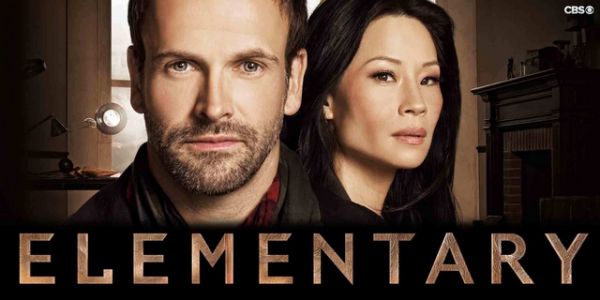
Sherlock and Elementary have a great deal of things in common. This is to be expected, as they both follow a pretty standard pitch €“ to take Sherlock Holmes and place him and the other characters within his short stories and novels into a modern context. But the similarities are greater than that, due to the origins of Elementary which resulted in legal threats being issued by some of the Sherlock production staff. To explain, CBS approached the producers of Sherlock with the intent of remaking that show for an American audience. This didn't go ahead, but then CBS separately created Elementary. In the words of Sherlock executive producer Sue Vertue on Twitter:
'Mmm interesting CBS, I'm surprised no one has thought of making a modern day version of Sherlock before, oh hang on, we have!'
For those that have managed to miss the obvious, Sherlock is the BBC-created modern version of the Sherlock Holmes story. It is set in London, and stars Benedict Cumberbatch as Sherlock Holmes while Martin Freeman plays Dr. John Watson. In the American created Elementary on CBS, Sherlock is played by Jonny Lee Miller while Lucy Liu plays Dr. Joan Watson. Naturally, gender-switching John to Joan caused a fair volume of controversy when it was first announced. Especially when it was revealed to be Lucy Liu, who was portrayed in the media as nothing more than her characters from Ally McBeal or the Charlie's Angels films. In fact, the CBS take on Sherlock may not be as intrinsically linked to the BBC's Sherlock after all. You see, in 1987 the channel produced a TV film called The Return of Sherlock Holmes. The notable point is this €“ it was set in modern day America and had a gender-swapped Watson called Jane. Sound familiar? Then in 1994 they did a similar plot again, once more with a female Watson although her name was completely different. In short, Elementary is the third CBS take on Sherlock Holmes to be set in modern America, each time with a female Watson. I'm going to stick my hand up. I expected to not only dislike Elementary but properly hate it. The fact that they had Lucy Liu as Joan Watson just seemed stupid and I hated the idea that they had moved the location to New York instead of London. But the series won me over, by making several changes and twists which I feel now makes Elementary the superior show to Sherlock. Some of these are subtle, others are quite obvious and of course they have to contend with doing many more episodes of a show than the BBC normally do. I'll warn you now; this article is going to be rife with spoilers. If you haven't seen Elementary then some of these points are going to ruin some major twists and plots. Now you've been warned, let us have the first point... because the game is afoot!

10. There Is More Of It
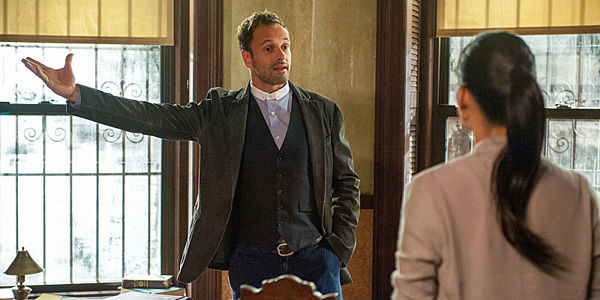
Yes, this is a rather obvious point, but one worth making because Elementary is not one of those shows that seems content to only have one good episode out of every five. There is a good standard to the episodes, one which very much reminds me of House (more on that later). The season lengths are very British and American-centric. The BBC's Sherlock has typically very short seasons, but seeing as it's a Sunday night show, the episodes themselves are quite long €“ verging on movie length. By the end of season three, there will have been nine episodes broadcast since the series premiered on 25 July 2010. In typical American fashion for season lengths, the number of episodes of Elementary blows Sherlock out of the water. By the end of the second season later this year, some 48 episodes will have been broadcast. Also remember that Elementary started later than Sherlock did €“ the premiere episode was on 27 August 2012. So Sherlock had a two-year head start and yet has only produced a fraction of the number of episodes. This need for a pretty standard American-length season also required a number of changes in Elementary. On an episode by episode basis, Sherlock is better written. But you've also got to wait two years for another three episodes. In Sherlock, you tend to get stories either based on the old stories, or where they've used the old story titles as inspiration for new ones. But because Elementary would burn through these in half a season, they needed to be far more original in the plots of each episode. So you only get hints of those characters appearing in Elementary, such as when Vinnie Jones played the character of Sebastian Moran. Of course you also have the corresponding reveals of Irene Adler and Moriarty in both Sherlock and Elementary... but more on both of those in a while.

9. The Police Are Not Idiots

One key thing that tends to happen in Sherlock is that there are regular displays of how inept the Police are, because for some reason we need a constant reminder that Sherlock is smarter than they are. It's rather unnecessary, since we already shown that Sherlock is incredibly clever in every episode and with every investigation. Sure Elementary went slightly down this path with them showing that the British Police were lazy, but they do something different for the American Police. In a post-9/11 America, you don't call the Police stupid. Even if you did, the viewer would never buy it since we have a bucketload of Police procedural television shows on the air, plus shows such as CSI which show the Police conducting very smart investigations. Elementary maintains this position, and the Sherlock Holmes in this version doesn't have to tell them about the basic elements of the investigation like "don't touch the body, its evidence!" Basically, Elementary has Holmes brought in as a contractor, to aid in investigations that they just don't get. But in Sherlock, he gets brought in because the case is downright odd. It is a key difference, and one which reflects on the police and the abilities of the Holmes' in the two different series. Elementary shows the Police being clever and able to investigate. This just means that you can then have Police as proper characters in the show, again something you can attribute to the additional hours it has to fill. Sure, Tommy Gregson fills the mould of every central police officer you've ever seen in an American police procedural show, but that's also a really good mould.

8. Joan Watson Is More Interesting

I wouldn't be writing this particular point if season one of Sherlock had only just been shown. Because back when that was first broadcast, the character of John Watson would have been considered to be the interesting one. He had the limp, the background in Afghanistan; he was basically a very well rounded character with as many quirks as Sherlock had. But somewhere down the line it was almost as if the writers stopped writing about John Watson and just made him well... dull. His character is effectively a blogger who just got married now. There doesn't seem like there is anything interesting left in his story, unless the final instalment of season three introduces something. On the other hand, Lucy Liu's Joan Watson still maintains that early interest. The character is complex, we see her dating, she has a bit of a thing with Mycroft Holmes, and she is still harrowed by what happened to her when she was a surgeon. The other key change in the Watsons is that Joan isn't ex-military. She was a civilian surgeon, and I think this simply opens more possibilities for storylines, especially in a version of the show which has to fill a great number more episodes. I think this is one of the reasons why Joan is so much more interesting than John has become €“ there are only so many murders that can take place, even in New York City. The rest of the time needs to be filled with character development and for that, you need to have characters worth developing. Joan simply has more time to be fleshed out on screen, and the character is better for it.

7. Sherlock Holmes Is Not A One-Note Character

I was a big fan of Hugh Laurie in House, and Elementary has several things in common with that show. For example, it shares writers and the characterisation of Holmes as seen in that show is similar to House. They're both brilliant in the same way, although while House was abusing prescription drugs, Holmes in Elementary is a recovering drug user. Both have addictive personalities as can be seen in their approach to work. This is just a broad way of saying that Elementary uses the character's drug use as a tool in helping him understand his thoughts. I guess the British Sherlock does this in a different manner, as it shows his thoughts straight-up on screen. Now while I do like the effect in Sherlock, I can't help think that it is used because there isn't enough time to show some further characterisation. The former drug addiction angle is actually the way that Holmes and Watson meet in Elementary, as she is written in as a "sober companion" hired by Holmes' father. So it is rather key. Of course, it does mean that they can go to the well of relapse when needed €“ just like they did in House. The British Sherlock hasn't gone anywhere near that side of the character, and I wouldn't expect it to. It is a Sunday night BBC One show, after all.

6. The Supporting Cast Is Different

Perhaps this isn't really a reason why Elementary is better than Sherlock, but a statement about how when Elementary came along they at least had some realisation that it was going to be watched by fans of Sherlock. In writing the characters like they have with those plots, they've allowed room for both series in our hearts. When watching Sherlock's third season, I don't feel like I'm having a fling before going back to Elementary afterwards. You can't say that any of the characters are the same in either series, they are all different and not just because they've been played by different characters. Not only the main characters, but the supporting cast too. But Elementary show them in a better light €“ one of the key points in the first episode of season three of Sherlock was that the surprise element of Sherlock's fall (at least in one dubious version) was that Molly Hooper was in on it. But this wouldn't work in Elementary, because there isn't a naïve character who could be a surprise element. For example it would be no surprise to find Marcus Bell in the middle of a complex plot and right now that character is undergoing an interesting and unexpected angle. Which shows that even minor characters in Elementary are free to evolve, whereas in Sherlock it seems that character change is unexpected and to be used as a surprise.

5. Elementary Is More Diverse

I know I'll get some stick for saying this one from some quarters. I've had it before when I've talked saying that it was about time that Star Trek introduced gay characters. Sherlock has a predominant white cast, with only Vinette Robinson as Sgt. Sally Robinson being the apparently token non-white cast member. Whereas if you take a look at Elementary, you obviously have Lucu Liu as Watson, but also Jon Michael Hill as Marcus Bell and Ato Essandoh as Alfredo Llamosa €“ and those are just he cast members who have appeared in multiple episodes. Also add to that the sheer variety of people involved in cases which cover a whole range of people from various walks of life. Oh and Candis Cayne appeared as a Ms. Hudson... a transgender Ms. Hudson. What's more, Elementary manages to deal with these diversity issue without wandering into gay jokes like BBC's Sherlock does. But that's the difference between British television and American television. You can get away with gay jokes in a British series, but I couldn't see a police procedural being broadcast at 10pm on CBS managing to get away with it without a heap of complaints from American viewers.

4. Sherlock Vs. Holmes

Now, I'm not about to come out and declare that Jonny Lee Miller is better than Benedict Cumberbatch. In fact, we have almost the perfect evidence to show that their acting skills are as good as each other. Back in 2011, both Miller and Cumberbatch were involved in a rather unique performance of Frankenstein at the National Theatre. Both of them played Dr. Frankenstein and the monster, alternating the roles on different nights. So one night, Miller would play Frankenstein with Cumberbatch as the monster, and then the next night Cumberbatch would be Frankenstein with Miller in the monster role. Both the actors received good reviews in both of the roles, although obviously they highlighted different aspects of the characters and didn't just copy each other's performances. Something that the reviews at the time didn't cover was how the performances changed over time, because I'm sure that there must have been a sense of one-upmanship going on, it would be only natural. I'm sure this relationship has continued with both of them playing Sherlock Holmes. But I will say one thing that is for certain, something that is linked to a previous entry on this list. By the end of the current season, Benedict Cumberbatch will have been excellent in nine episodes of Sherlock. However, Jonny Lee Miller will have been excellent in 48 episodes of Elementary.

3. I Don't Expect Mycroft Holmes To Be A Super-Sherlock

I love Mark Gatiss on Sherlock. He does a great job, both as a writer and as an actors in playing Mycroft Holmes. While Mycroft is written in the books as having similar skills to Sherlock, and actually in the BBC modern retelling it's a fairly straightforward version of the character. But over the years in the various versions of the stories, Mycroft has been messed with quite a bit. I'm used to those other versions; I like my Mycroft to be sensible yes, but no genius. He should have certain skills, but also you shouldn't know where his loyalties lie. With the Gatiss version of Mycroft, his loyalties were not obvious at the start but with season three we know that both he and Sherlock are on the same side. Elementary benefits from this not yet being so clear. This might be exactly how the book portrays Mycroft, but I'm simply not used to the idea. In Elementary, Mycroft benefits from being played by Rhys Ifans, who is doing some of the best acting of his life right now both onscreen and on the London stage. He was a masterstroke of casting, and the involvement between his version of Mycroft and Joan Watson led to additional tension between the trio. The Elementary Mycroft is a restaurateur who for reasons unknown is trying to bring Sherlock home to London. The two have barely spoken for years and only during the course of the show have they reopened communication. We don't know Mycroft's motives yet in this version, but I suspect they will get a lot more complicated before we are done. Yet Mycroft comes across as an equal, but for different reasons and with intelligence in different areas. This makes the character more interesting than simply a more cunning version of Sherlock with all the same abilities.

2. Sherlock Is Not A Superhero

One of the key points about the British Sherlock is that he is a genius. He just needs to look at an object and many, many thoughts about it spring to mind. We even see it on screen. This seemed like a great idea when I saw it in Sherlock, but it isn't something that Elementary does at all. The problem with this idea is that it effectively makes the character into a superhero that would be at ease in a Marvel film. That doesn't detract from the series, but it does mark it as different. I also really enjoyed it when a drunk Sherlock couldn't get anything better than "thingy" as a label on an object. The point I'm making is that in Elementary, Holmes doesn't have this ability. It's more of a traditional thing, where he walks around and points at specific things on screen and they're all items that we can see. This gives it an appearance that he's actually working for a living, rather than simply walking into a room, taking one look and immediately finding what he's looking for. But Sherlock Holmes shouldn't have super powers. He should be extremely clever, but as with any hero you want to be able to relate to him. I can't relate to a Sherlock Holmes who seems to have an innate ability, but I can relate to one who visibly puts in hard work to the extent that learning as much as possible is his new addiction. It makes the Miller version of Sherlock Holmes a character we can all relate to, whereas Cumberbatch's Sherlock is far similar in mannerisms to Sheldon Cooper from The Big Bang Theory.

1. The Moriarty Arc Is Better

Don't get me wrong, Andrew Scott was great in his role as Moriarty in Sherlock. But when all was said and done, he was a pretty typical Moriarty. He was clever, witty and importantly the intellectual equal of Sherlock Holmes. But really it was all just a bit of a toned down version of John Simm's performance as the Master in Doctor Who. Elementary went for something entirely out of left field which I'm sure annoyed the hell out of some Sherlock Holmes fans to no end. You see. Moriarty is a woman. But not just any woman. She's actually Irene Adler. For the entire first season we were teased about Moriarty and Adler; about how Moriarty killed Adler and chased Sherlock into his drug habit. Then casually at the end of season one, we're introduced to Adler. We all think that this is the fairly normal take on the character, in this case played by Game of Thrones' Natalie Dormer. Then the bombshell hits that Adler is in fact Moriarty. This is played up even more by it being portrayed by Dormer who didn't give a single hint before hand that Adler was anything more than a simple painter. It's marvellously done, and so far in season two the character is continuing to change. Of course Elementary has managed to make one further important change €“ it didn't kill off its main villain. For season two I suspect the character will continue to change, and I see it as similar to the second season of Alias (my personal favourite season of that show) where Sydney's mother is locked up for most of the season and breaks out again at the end.

Contributor
Contributor

I'm a pop culture addict. Television, cinema, comics, games - you name it, and I've done it. Or at least read the plot synopsis on Wikipedia.