10 Best Genre TV Show Spin-Offs

Sometimes going back to the genre well pays off.
Spin-offs are often seen as a desperate money grab, an attempt to cash in on the popularity of an existing property. While there is no doubt some truth to this criticism, there's also an argument to be made that the spin-off show has been unfairly maligned over the years.

Case in point: genre shows. Believe it or not (or agree with it or not), there have been more than a couple of genre show spin-offs that have rivalled, and in some cases surpassed, their progenitors.

Spin-offs were once relatively rare, but it seems like everyone's doing them these days. Better Call Saul has premiered to rave reviews; The Flash looks good so far; and spin-offs to The Walking Dead, Supernatural, and even Dexter may be on the cards. After all, they're a sure bet, right?

That's not always the case, of course. For every great spin-off, there's Joanie Loves Chachi, or, in the realm of genre shows, a Caprica.

Still, there's more than enough great spin-off shows to prove that, on their own, spin-offs can be successful and compelling, able to establish themselves as shows with unique identities apart from the originals that spawned them. Some have gone on to be successful, while others, in some cases, have been unfairly ignored.


10. The Lone Gunmen
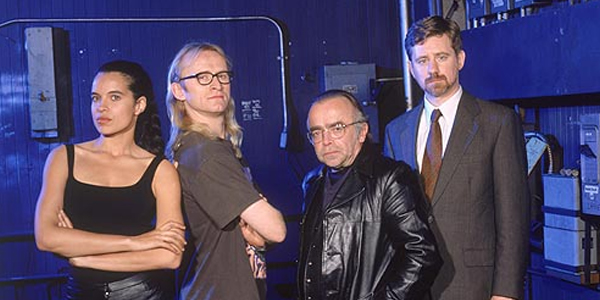
In the 90s/2000s, Chris Carter was on top of the world thanks to The X-Files. During this period, he also launched Millenium, which became a cult hit for three seasons before being cancelled by Fox and wrapped up in a crossover with The X-Files. A third series by Carter, Harsh Realm, didn't last long. So Carter/Fox were looking for their next hit. With original properties since The X-Files failing to find success commercially, the spin-off route was taken, using three of the show's recurring characters, The Lone Gunmen, a rag-tag group of hapless hackers that added a comedic element to the show. The X-Files had dedicated two episodes to the trio that were quite popular; thus it was felt the group could carry a show. They did - but not for long. The show debuted with 13 million viewers, who witnessed an episode with an airplane deliberately crashed into the World Trade Center, an eerie premonition of 9/11. However, viewers dropped off in droves as the season progressed. Cardboard supporting characters like Yves Adele Harlow (an anagram for Lee Harvey Oswald) and Jimmy, the dimwitted muscle of the group, didn't help. Yet the show wasn't without its merits. The likeable leads would later return to their parent show. They remained geek icons, and the show likely could have been salvaged had they been given more time. Sadly, when the 9/11 attacks took place, any hope of extending the show was lost.

9. Transformers: Beast Wars

Sure, Transformers is "just a cartoon", and a cartoon based on a line of toys at that. Still, it has managed to remain an iconic franchise for decades, spawning a series of high-grossing (if artistically bankrupt) live action movies. It's not the movies, however, that are the focus here; instead, it's the 90s spin-off show Beast Wars, which reinvigorated the franchise. Produced in Canada, and running for three full seasons, Beast Wars (or Beasties, depending on what region you lived in) introduced the Maximals, led by Optimus Primal, and the Predacons, led of course by Megatron (as a T-Rex). It took a little time to win over fans of the original series. When Beast Wars first hit television screens, some fans of the classic series were outraged. Animals, rather than machines, were transforming - and that was sacrilege. There was initially nothing connecting the show to the original Transformers series either. However, little by little, the show won over fans: references to the original series were planted within and the planet on which the show took place was eventually revealed to be a prehistoric Earth. The storytelling turned out to be some of the best of all the various Transformers series, and though the CGI looks dated by today's standards, at the time it was quite cutting edge (the show's production designer, Clyde Klotz, took home a Daytime Emmy for Outstanding Individual Achievement in Animation).

8. Agents Of S.H.I.E.L.D.

A bit of a cheat, if only because Agents Of S.H.I.E.L.D. is spun off from Marvel's big screen properties (mainly films like Thor and The Avengers), not another TV show. Still, Agents Of S.H.I.E.L.D., now in its second season, is finally starting to find its footing - which is great news for both Marvel and Joss Whedon fans. Featuring the popular Agent Coulson (Clark Gregg, reprising his role from the films), the show struggled early in its first season, but found its legs towards the end. Following the exploits of a team of S.H.I.E.L.D. agents after the agency has imploded due to infiltration by HYDRA, the show has now deftly woven its storylines in with the various Marvel titles being released, something which has resulted in a huge boost to its creativity. In particular, the events of Captain America: The Winter Soldier really turned things around for Agents Of S.H.I.E.L.D., and guest spots from Samuel L. Jackson and Patton Oswalt didn't hurt either. While it will never rival the big screen Marvel adventures (or even the Whedonverse), Agents Of S.H.I.E.L.D. may turn out to have a longer run than many expected.

7. Stargate Atlantis

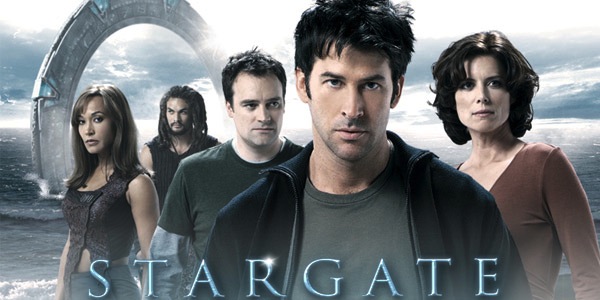
Who would have thought that Roland Emmerich's sci-fi flick starring Kurt Russell and James Spader back in 1994 would spawn multiple spin-off television series? The first, Stargate: SG1, starring Richard Dean Anderson, was the longest-running, but even that spawned its own spin-offs, including Stargate Atlantis, which proved to be quite popular in its own right. Fairly mythology-driven, Stargate Atlantis was set in the legendary lost city, and was set up by the original Stargate: SG1 series. It ran for five seasons and was initially a ratings success. Starring Joe Flanigan, and later adding Jason Mamoa (Game Of Thrones), Amanda Tapping, and Jewel Staite, Atlantis was nominated for 62 various awards, including Emmys, over its five-year run. Not a bad haul for what is essentially a spin-off of a spin-off.

6. Star Trek: Voyager

Is it any surprise that a Star Trek series appears on this list? (Rest assured, it's not the only one.) Voyager might have been derided over its run as simply not as good as Star Trek: The Next Generation or Star Trek: Deep Space Nine, but Trekkies still tuned in enough to make the show last for seven whole seasons. Airing on UPN, the tale of a starship lost in space remains the only show in the Star Trek universe to feature a female captain/lead character. It also brought the former Borg Seven of Nine to the Trek universe, and managed to overcome a lot of criticism by the end of its run. Voyager turned out to be the second longest-running television series in UPN history, in the end, making it the last successful Star Trek television series to date. It also won multiple Primetime Emmy awards, and Satellite awards from the International Press Academy for both Kate Mulgrew (Captain Janeway) and Jeri Ryan (Seven of Nine).

5. The Flash

The most modern entry in the list (along with Agents Of S.H.I.E.L.D.), The Flash is, of course, a spin-off from Arrow as far as television is concerned (the character appeared twice on Arrow), though The Flash has had a long and storied history in the comic book world as well. It's hard to tell, this early on, how successful The Flash will be - thus far, it's a 'so far, so good' situation. The show's pilot was the second largest in CW history, the show took home the People's Choice Award for Favourite New TV Drama in 2014, and as of earlier this year, it was renewed for a second season. It also looks as if the show is headed towards the popular Flashpoint storyline from the comics, where the hero goes back in time to change past events. Either way, as long as the ratings hold up, The Flash could be part of the CW line-up for many years to come. That's great news for D.C., who have struggled to make cinematic properties work beyond the Batman franchise, television's Smallville, and the recent Superman reboot, Man Of Steel.

4. Star Trek: Deep Space Nine

Star Trek: Deep Space Nine was for its first few seasons the oft-derided little brother of the superior (at least initially) The Next Generation. And then something happened: the show came into its own. Maybe it was the addition of the Defiant, which allowed the crew to get off the space station a little more frequently, opening the door for new plotlines in different locales. Up until that point, many might have chosen Babylon 5 as the superior space station show. Or perhaps it was a familiar face turning up in Michael Dorn's Worf. Whatever the case, Deep Space Nine was a show that got better with age, and by the end of its run in 1999, many Trekkies actually considered it the best Star Trek series of all. High praise for a show that was met with a roll of the eyes early on by many fans.

3. Torchwood

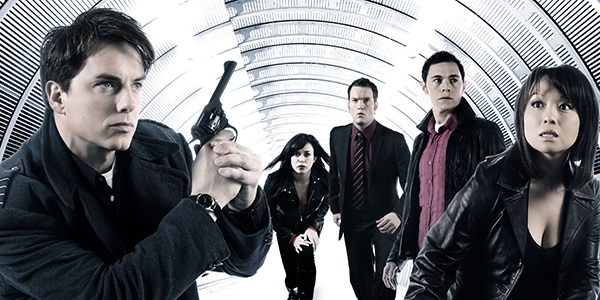
Doctor Who has had a handful of spin-offs stemming from it (The Sarah Jane Adventures, for one), but none have been as successful as Torchwood. Created by Russell T. Davies, Torchwood followed Captain Jack Harkness and his band of alien hunters as they investigated extraterrestrial events as part of the Torchwood Institute, a covert agency operating outside of any government or law enforcement group. Torchwood was an ensemble show, even with Harkness in the main role, and had a number of tie-ins, including comics and novels. Over the course of four seasons, Torchwood expanded to include the likes of Bill Pullman and Alexa Havins, and garnered solid ratings on both sides of the Atlantic. The show was such a success that it managed to draw in viewers unfamiliar with the Doctor Who mythos, no small feat. Equally impressive was the show's move within Britain from BBC Three to Two to One as its audience grew each season. While critics saw it as just an 'adult' Doctor Who, in reality it was a strong series that stood on its own.

2. Angel

A spin-off of Buffy The Vampire Slayer, if any show on this list surpassed its parent, it's Joss Whedon's Angel. Early on, Angel leaned heavily on its Buffy ties: Oz, Spike, and Buffy herself crossed over in year one, while Cordelia and Wesley (after Doyle's death) were already part of the cast. Yet the show viewers tuned in for that first season would be nearly unrecognisable by year two. The Pylea storyline at the end of season two, which saw the Angel Investigations team sucked into another dimension, sparked character growth unlike anything else in the Whedonverse. Angel's cast of characters developed at a rapid pace, often tragic events forcing them to adapt to an increasingly dark, cruel world. By season five, James Marsters joined the cast to up viewership, as Spike (Buffy's sometimes foe, sometimes lover) was as popular as ever. The network wanted bigger returns, and renewal was uncertain. Then Joss Whedon made his biggest blunder: he insisted on early renewal. The WB didn't want to commit so soon, and Angel was cancelled, the power play failing for both parties. Angel's ratings were actually up, while the fifth season had met critical acclaim; The WB would later apologise for the move, and admitted they would have brought the show back.

1. Star Trek: The Next Generation

No surprise here: the greatest genre show spin-off of all time managed to not only be successful on the small screen, but, like its progenitor, would later jump to the big screen as well for a series of films. Fans to this day argue over the original series vs The Next Generation, and over Kirk vs Picard, but the one thing fans cannot argue with is how successful Star Trek: The Next Generation was in its own right. Giving fans memorable characters like Q and The Borg, bringing back members from the original series, and offering off one of the greatest cliffhangers off all time with the Locutus storyline, Star Trek: The Next Generation went boldly where no other genre spin-off had been up to that point: into mainstream relevancy. The Next Generation set the stage for multiple spin-offs to come, and ensured that the Star Trek franchise would continue on for, well, generations. Any genre spin-offs we forgot? Let us know in the comments below.

Contributor
Contributor

Primarily covering the sport of MMA from Ontario, Canada, Jay Anderson has been writing for various publications covering sports, technology, and pop culture since 2001. Jay holds an Honours Bachelor of Arts degree in English from the University of Guelph, and a Certificate in Leadership Skills from Humber College.