20 Horror Movie Box Office Bombs EVERYONE Saw Coming
Who was ever going to watch a big-budget remake of Psycho?

There are multiple ways the success of a movie can be measured, be it critically, come award season, or financially. There will always be differing levels of importance placed on these aspects by those involved, but the latter cannot be ignored.
While most of the creative minds behind a project, and certainly the audience, will simply want something good to be made, the industry, at the end of the day, is a business, and so the bottom line is crucial - often to the most important people in the room.
This is what makes some of the decisions that have been made, particularly in the world of horror over the years, so questionable. The genre can produce some incredibly lucrative pictures when done right, and yet there are films released that are obviously going to bomb. Nobody likes to see it, but for a multitude of reasons, there was no hope for any of the following 20 horror movies, and it wasn't exactly tough to predict.
Classics have been remade, budgets have been inflated, and genuinely good films have been let down by bad marketing, all leading to some outings that were so obviously going to flop that it was painful.
20. Jennifer's Body

A film can often have its make-or-break moment long before it ever actually releases. It is the trailer where the marketing machine has the biggest opportunity to sell tickets and get bums on seats, but if it misses the mark, it could be a setback that simply cannot be recovered from.
It's not uncommon for marketing to undersell a movie, but how Jennifer's Body was sold to prospective audiences was downright criminal. In 2009, hot on the heels of Transformers two years earlier, the trailers utilised Megan Fox to target teenage boys rather than the actual intended audience.
It's a strategy that didn't work and was never going to work, as it sent the wrong message about the entire thing. The story was complex in its exploration of feminist themes, whereas the marketing showed it as nothing more than another generic sexy horror flick doomed to obscurity.
Without the expectations set by a poor marketing performance, Jennifer's Body has gone on to become a cult classic, but with just $31 million at the box office, it unequivocally flopped, unsurprisingly so, thanks to its marketing. If it was sold as the movie it actually was, instead of as little more than a way of seeing Megan Fox on screen, it may have had a chance.
19. The Mummy

It wasn't just the landscape of superhero movies that was changed with the emergence of the Marvel Cinematic Universe, as the MCU kicked off a trend that would see shared universes attempted, typically unsuccessfully, in all areas of the industry.
Arguably, the next most successful outing behind Marvel Studios' is that of Legendary's MonsterVerse, and while even taking into consideration what a hot mess the DCEU was, the worst by a mile was Universal's Dark Universe. The plan to bring the classic Universal monsters together was doomed from the start.
This wasn't a case of trying to catch up with the shared universe trend by running before they could walk; this was trying to set a world record in the 100m sprint before they could crawl. Publicity shots with Tom Cruise, Sofia Boutella, Russell Crowe, Johnny Depp, and Javier Bardem were released before a single project was; something that couldn't help the fact that nobody wanted another version of The Mummy.
Ultimately, the film made $409 million, but taking into account the reported production budget of $195 million, as well as distribution and marketing, this was a disastrous result. Yes, the potential upside was high, but anyone could see that very few shared universes had actually worked, and that the studio was maybe getting more than a little ahead of themselves.
18. Book Of Shadows: Blair Witch 2

When The Blair Witch Project released back in 1999, it struck gold with its unique marketing ploy. Cleverly dropping cryptic hints throughout the as-of-yet-young internet, potential audiences genuinely believed that the found-footage story was real.
Of course, it wasn't, but this didn't stop people flocking to the cinema in their masses, allowing the film to bring in a ridiculous $248 million against a minuscule budget of just $60,000. This largely came down to marketing ingenuity rather than the actual quality of the piece, and is something that simply couldn't be replicated.
That's not to say that this wasn't attempted, but, of course, it fell as flat as it possibly could have. Not only was the found-footage framing dropped altogether for Book of Shadows: Blair Witch 2, but without the same lightning-in-a-bottle marketing, box office numbers dropped to just $47 million.
This wouldn't have been ideal had Book of Shadow's budget stayed roughly the same as the first picture, but it still would have made a tidy profit. Considerably less so than the original, but still a profit. However, production costs inflated a ridiculous 250-fold to $15 million, making the overall intake an unthinkably bad result for the sequel.
17. Death Of A Unicorn
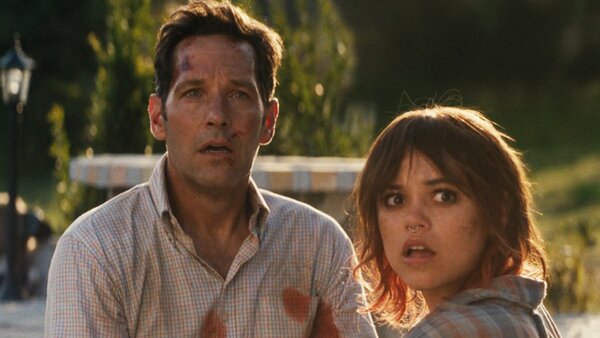
The days of actors selling tickets based just on their names are long gone. Certainly, a big star can be a huge get for any project, but they simply can't be relied on as a box office draw by themselves, with very few exceptions.
So, while it was great that Death of a Unicorn could boast both Paul Rudd, a bona fide legend of the comedy world, and Jenna Ortega, one of the most prominent voices in the world of horror over the last few years, it unfortunately wasn't enough.
Horror comedy is a tough line to walk, and while the likes of Zombieland and Shaun of the Dead excelled, Death of a Unicorn fell flat before it ever released. The trailers didn't offer a great sell on the quirky vibe it was shooting for, and with reviews being as mixed as they were, cinema-goers were never going to be rushing to see it.
Unsurprisingly, the tone didn't land with too many people, leaving the film with a painfully low $16 million intake against a budget of $15 million, making Death of a Unicorn arguably one of the biggest flops of 2025.
16. The Bride!
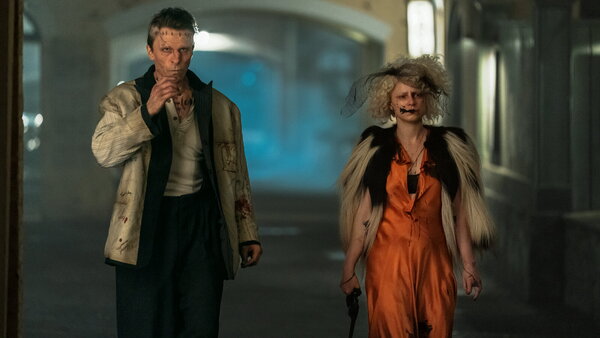
At first glance, from the trailers at least, Maggie Gyllenhaal's new take on the Bride of Frankenstein story looked to be a bold and eccentric, off-the-wall vision of a property that has been adapted onto screen so many times before. Truly putting Frankenstein's monster in a supporting role to the Bride instantly made it intriguing.
It didn't even matter that Guillermo del Toro's Frankenstein had released just months earlier, as tonally the two projects couldn't have been more different. However, the bravery and passion to do something not seen before isn't always rewarded with a strong box office performance.
Though the concept was interesting, there was undeniably some confusion over what the film was aiming for, whether it would be horror, adventure, crime, or even a bit of comedy, which didn't help proceedings. That, plus the unflattering comparisons made to Joker: Folie à Deux, gave The Bride! something of an uphill struggle from the get-go.
In fairness, Universal monster movies typically aren't the most lucrative anyway, but with the reviews not exactly setting the world on fire, an intake of $23 million against an eye-watering budget of $90 million was disastrous, though not exactly unexpected.
15. The Invasion

While reboots and remakes may be all the rage in Hollywood these days, to the point that there is something of a stigma attached to them against telling original and new stories, it isn't exactly a new phenomenon.
Invasion of the Body Snatchers in 1978 itself is one of the rare reboots that earned its own merit, but there have been multiple other versions of the story in the years since, with arguably the most disastrous coming in 2007. Abel Ferrara's 1993 Body Snatchers was bad, but The Invasion just threw money away.
Of course, there is the initial skepticism around remakes, particularly when it is of such a popular property to begin with. Lightning was caught in a bottle in 1978, and the chances of it happening again in 2007 were slim to none. Honestly, closer to none.
It's also an example of the double-edged sword that casting global stars can be. Yes, Nicole Kidman was a huge name to attach to the project, but she came with a price tag of a reported $17 million. Add to that $10 million of extensive reshoots, taking the production budget up to $80 million, and it was clear that The Invasion would fall short of turning a profit. Its ultimate intake of just $40 million was insane.
14. Him

2017 saw the world of horror ushered into something of a new era with the release of Get Out. The line in the sand was drawn when Jordan Peele entered the arena after making a name for himself in comedy, and essentially changed the entire game with his outstanding directing debut.
Naturally, after such huge success that continued with Us and Nope in 2019 and 2022, respectively, having Peele's name attached to a film, in theory, would be a huge boost. However, there is a big difference between having the man as a director and having him as a producer.
The likes of BlacKkKlansman, Honk for Jesus, Save Your Soul, and Monkey Man didn't even come close to pulling in the same kind of numbers as Peele's directing efforts, and there was never any doubt that Him would be the same.
Add into the equation Him's shockingly poor reviews, with the 2025 outing currently sitting at 31% on Rotten Tomatoes, as well as prospective audiences having plenty of other horror options to choose from at the time - Demon Slayer: Infinity Castle, The Conjuring: Last Rites, and The Long Walk, for example - and the picture was always going to flop. In all honesty, there was a danger of doing much worse than matching its $27 million budget.
13. Wolf Man
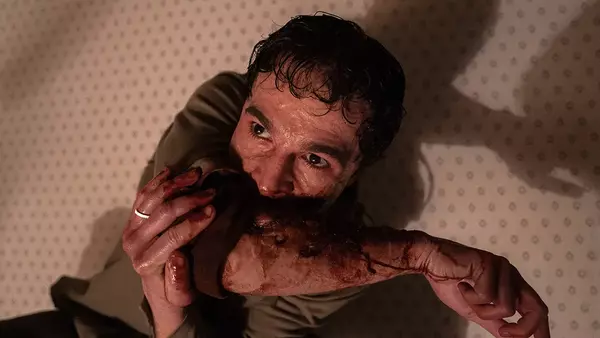
Back to another reimagining of a classic story here, this time being Leigh Whannell's take on The Wolf Man. As one of the Universal monsters, there's no scarcity of Wolf Man stories or appearances across the cinematic landscape, and so you could argue that, being only 15 years removed from Benicio del Toro and Joe Johnston's effort, there was really no need for another just yet.
However, Whannell was coming off the back of a huge box office win, bringing in $144 million with The Invisible Man against a budget of just $7 million, which gave the studio more than enough belief that a similar thing could happen with Wolf Man.
These were two very different situations, unfortunately. Wolf Man's aesthetic had been the subject of much derision across the internet in the build to its release, and the reviews also didn't help at all.
While aggregator sites certainly aren't the be-all and end-all for a film's quality, they can often persuade the casual movie-goer either for or against spending their hard-earned money at the cinema. As soon as middling to low scores on the likes of Rotten Tomatoes and Metacritic dropped, it was the final nail in the coffin. Wolf Man's $34 million intake wouldn't have been so bad if the budget had remained as small as that of The Invisible Man, but with the production inflated to $25 million this time around, it became a problem.
12. Predator: Badlands
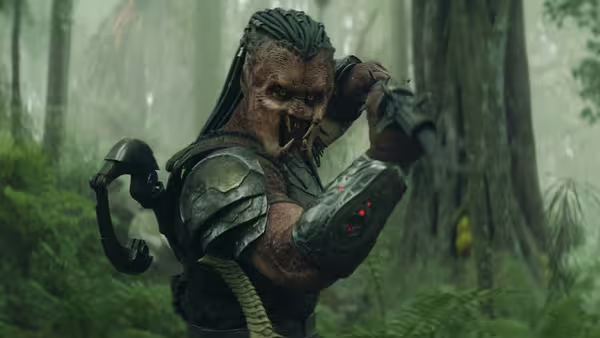
There hasn't been too much to complain about for fans of the Predator franchise over recent years. After being run into the ground with three subpar sequels following the original, Dan Trachtenberg has taken the franchise and elevated it beyond what anyone could have expected.
Both Prey and Predator: Killer of Killers released straight onto Hulu to almost universal critical acclaim, with Predator: Badlands following, gaining a theatrical release and a box office intake of $184 million. That is more than any other entry in the entire series.
While there are some movies on this list that would have killed for a number like that, for Badlands it wasn't enough, thanks to an astronomical production budget of $105 million, again higher than any other film in the series, and it's not even close. As good as the movie is, and as good as Prey and Killer of Killers are, Badlands was never going to bring in enough to break even.
Yes, it is a strong outing, but the previous two proved that a huge budget wasn't needed to make a great Predator feature, and aside from this inevitably insurmountable obstacle to overcome, there was a huge portion of potential audiences put off by the PG-13 rating. Ultimately, this didn't affect the final product in the slightest, as it is one of the best in the franchise, but it certainly didn't help in terms of ticket sales.
11. Jason X
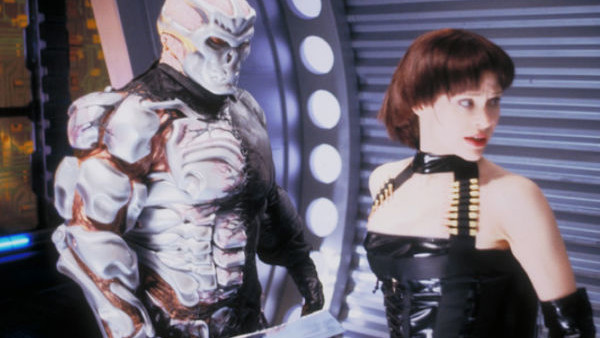
Within the Friday the 13th franchise, there has been a consistency that has to be respected. Yes, the films were largely terrible after the iconic original from 1980, but the first handful of sequels were made with similar production budgets and were all successful at the box office.
Even Jason Goes to Hell, the eighth installment in the franchise, coming nine years after the so-called Final Chapter, made five times its budget, in spite of being poorly received across the board. The formula, however, changed when the series was brought into the 21st century.
Previously, the budgets of the franchise had roughly ranged between $2-3 million, with Jason Takes Manhattan the outlier at the top end at $5 million. As said before, the formula worked, but in 2002, the budget was hiked up to an astonishing $15 million to put out Jason X, a huge upturn in costs that was never going to see a return on investment.
The entire brand of Friday the 13th was low-budget, and so when Jason X made $17 million, it was a major bomb. This return wasn't any less than could typically be expected from the series, but with such an inflated budget, any profit was always going to remain elusive. If it ain't broke, don't fix it. The Friday the 13th movies never needed to be good, but they did need to be cheap.
10. The Strangers - Chapter 3
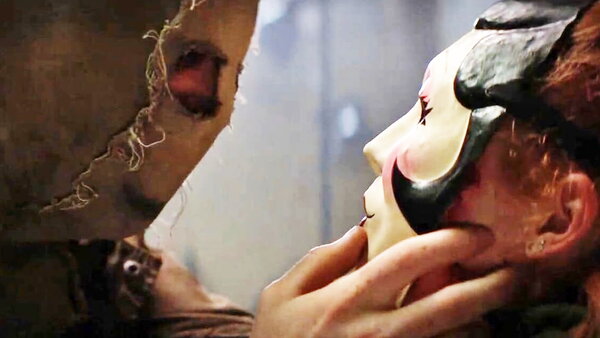
While it has absolutely hamstrung plenty of movies in the past, and will do so in the future, poor reviews aren't bound to affect box office performance every single time. What it can ensure, though, is that any sequel that follows will have an uphill struggle from the start.
Take a look at the recent Strangers trilogy. Chapter 1 released in May 2024 and, despite an awful reception, earned an impressive $48 million against an $8.5 million budget. The poor reviews didn't hurt that initial release, but they certainly did hurt the sequel.
Knowing exactly what to expect, since all three films were shot back-to-back, the turnout for The Strangers - Chapter 2 was significantly less 18 months later, bringing in just $21 million against the same budget.
Now, it wasn't exactly difficult to spot the trend here. Most were smart enough to give up on the trilogy after the first dreadful chapter, while those who gave it a second chance were burned by that. Audiences weren't about to make the same mistake twice, and it was arguably the least surprising news of the year, particularly with there only having been six months since the previous installment, that The Strangers - Chapter 3 was a massive bomb, bringing in just $9.6 million.
9. Scream 4

If a franchise has managed to earn a loyal fanbase over time, it may be allowed a transgression or two without too much consequence. However, the same simply cannot be said about the casual audience, who tend to have no loyalties one way or the other.
After the first two Scream movies impressed both critically and commercially, the third entry saw a significant dip in terms of the former. It still pulled in an impressive $161 million, but the poor reception set the tone for the next film that followed in the series.
This would be Scream 4. Not only were there the poor ratings of the previous picture to contend with, but there was the fact that there had been 11 years between Screams 3 and 4. If this had been the wait after Scream 2, chances are there would have been excitement after the announcement, but with the franchise seemingly killed by the threequel, this was not the case.
Unsurprisingly, Scream 4 brought in by far the lowest haul of the entire franchise, a record held still to this day, as its $97 million gives it the unwanted title of the only entry in the entire series not to break into triple digits.
8. The Crow (2024)

Typically, even the best remakes and reboots are met with skepticism to begin with, while very few of them are actually able to overcome such initial misgivings. More so than most, Rupert Sanders' The Crow suffered from this.
The original 1994 movie adaptation of James O'Barr's source material has become the epitome of a cult classic over the years since its release, which automatically means a remake would be on rocky ground. Then, there is the fact that Eric Draven star Brandon Lee passed away during filming of the original Crow picture, which has given it more emotional weight and even further reason to just be left alone as something of a legacy to the actor, discounting the three largely unrelated sequels that focus on different characters donning the Crow get-up.
However, this was all ignored when the new iteration, starring Bill Skarsgård as Eric Draven, was announced. Skepticism and anger then turned to second-hand embarrassment with the first look at the main character's aesthetic.
The look of Skarsgård's Draven was likened to Jared Leto's Joker, which, of course, is far from a compliment, and was something that only reinforced the fact that absolutely nobody wanted or needed this project to begin with. Lo and behold, it released in 2024 to tumbleweeds, bringing in just $24 million, half of both the original's intake and its own budget. No one went to see it, even out of curiosity for how bad it would be!
7. Eddington
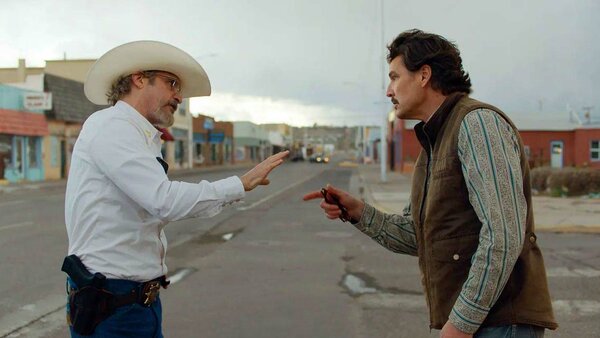
Along with a number of names that announced themselves on the horror stage within the last decade has been Ari Aster, who, with Hereditary and Midsommar in 2018 and 2019, respectively, made a more than impressive start to his career.
Working off roughly a $9-10 million budget for each project, Hereditary and Midsommar both saw commercial success, something that eluded 2023's Beau is Afraid. This acted as something of a litmus test for Aster's next work, 2024's Eddington.
Though not quite as expensive as Beau is Afraid (which cost $35 million), Eddington still ranks as one of A24's most expensive projects to date, with a price tag of $25 million, the majority of which likely went to the likes of Joaquin Phoenix, Pedro Pascal, and Emma Stone. A huge haul was needed for this to avoid the label of box office bomb, but, particularly after how Beau is Afraid went down like a lead balloon, it was never likely to happen.
Aster's name was proven not to be a big enough draw with the masses to get bums on seats, and there was nothing that suggested this would change for his fourth outing. Then, of course, there is the fact that the vast majority of audiences go to the cinema for an escape from the real world, and something based so heavily on the COVID-19 pandemic was never likely to be a winner.
6. The Thing (2011)

As said before, box office numbers don't necessarily mean everything to a movie. Awful films can bring in literally billions of dollars, while some great efforts can go under the radar at release; case in point of the latter being The Thing.
Now considered one of the greatest horror movies of all time, John Carpenter's 1982 outing famously failed at the box office. Maybe there was a view to rectify that in some way with the 2011 prequel, but anyone could see from the off that this wasn't a good idea.
It's yet another case of not messing with a classic. There was absolutely nothing that could have been brought to the table here that would have willed audiences to go and see it in their droves. The CGI was never going to be a match for the classic, practical effects that have made the original so beloved over the years.
The 2011 Thing, starring Mary Elizabeth Winstead and Joel Edgerton, brought in $31 million. This was $11 million more than the original movie, but given the near-40-year gap between the films, this is not particularly impressive, and when taking into consideration the $38 million budget, it is a downright disaster, and one that could have easily been seen and avoided. Don't. Mess. With. The. Classics.
5. Doctor Sleep

In the previous entry, it was referenced that good movies can suffer at the box office for a number of reasons, and Doctor Sleep absolutely falls into that category. It is a fine continuation from Stanley Kubrick's The Shining, even if no one could have possibly expected it to be.
In spite of it being a direct adaptation of a Stephen King novel, rather than a sequel made for the sake of it, there were unfortunately just too many preconceptions going against the movie, as well as a few other factors, that stopped it from being the box office hit it deserved to be.
Of course, there is the natural skepticism that is to be expected around revisiting such a classic from 39 years prior. If this were happening in a vacuum, it may not have been such a big deal. But very much in the era of pointless and disappointing legacy sequels, this would have been looked at in the same way as the likes of Star Wars, Jurassic World, Jigsaw, Halloween (2018), and others.
Very much assumed to fall into this category, and with Mike Flanagan not quite yet the household name he is today, Doctor Sleep was always going to struggle. $72 million intake against a $45 million budget could have been worse, but it was still far from what was needed.
4. Psycho (1998)
As a general rule of thumb, horror movies present the opportunity for low-risk, high-reward projects more so than any other genre. They can typically be made relatively cheaply and can enjoy a huge return on investment in the right circumstances.
Made for just $800,000, and going on to a box office total of $32 million, as well as the status of one of the greatest pictures ever made, there is nothing that proves this point more than Alfred Hitchcock's Psycho. So, why would anyone think that a big-budget remake almost 40 years later was a good idea?
Production costs and box office figures do not always correlate, and if the studio were expecting to hit the jackpot when spending $60 million on Gus Van Sant's 1998 Psycho remake, they were painfully mistaken. The $37 million it made was a fraction of a fraction of what was needed for a profit, and barely beat the original from four decades before.
No one wanted or needed a Psycho remake at all, let alone one that was made at this price; the only stranger decision being the casting of Vince Vaughn as Norman Bates. This was set up for failure from the very beginning, so why could everyone see it but those who actually made it?
3. The Haunted Mansion

With the likes of Disney Animation, Pixar, Star Wars, Marvel, 20th Century Studios, and so many more properties under its umbrella, there is no shortage of options for potential Disney projects. That being said, throwing $150 million at a Haunted Mansion adaptation raised questions from the very beginning.
Of course, the House of Ideas had huge success adapting another Disneyland attraction, namely Pirates of the Caribbean, which was followed by a Haunted Mansion film in 2003 that was actually a box office success, but the same cannot be said for the reboot.
Coming 20 years later, already screaming of an unnecessary revisit to the property, the 2023 effort both cost more money to make than the Eddie Murphy-led original ($150 million against $90 million), and brought in less money ($117 million against $182 million). It truly was a non-starter for a number of reasons.
Apart from the fact that nobody was asking for another Haunted Mansion film, and the fact that such a hefty price tag made breaking even all but a pipe dream, the supposedly spooky, haunted house tale released in July of 2023. You wouldn't send a Christmas movie out at the height of summer, so why would you do the same with an outing that had "Halloween release" written all over it?
2. 28 Years Later: The Bone Temple
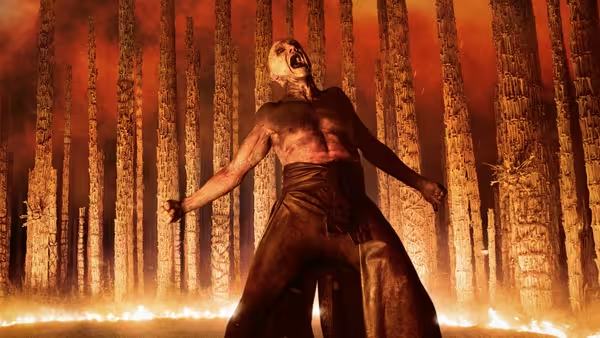
When 28 Weeks Later released as a follow-up to 28 Days Later, it was something of a dud both critically and commercially. However, 28 Years Later followed (22 years later, in truth), and grossed more than the previous two films combined.
It was incredibly well received, and when 28 Years Later: The Bone Temple followed, it garnered similar reviews but earned just $58 million, the least of the entire franchise. The Bone Temple had a lot going for it, but all this to say that it's surprising that Nia DaCosta's effort flopping wasn't actually that surprising.
It may not have been expected to bomb quite so badly, as drawing less intake than 28 Days and 28 Weeks is utterly catastrophic, and has put the previously planned threequel in jeopardy, but there were signs that this wouldn't be a commercial hit like its predecessor.
Firstly, while 28 Years Later enjoyed a summer release, The Bone Temple was stuck with a notoriously difficult January release, and coming just six months after Danny Boyle's return to the franchise, it was never going to draw the right amount of people. It's also entirely plausible that the bizarre ending to 28 Years Later - introducing the Jimmy Savile-inspired Jimmy Crystal - may have put a lot of people off the upcoming sequel. It's a pity, as Ralph Fiennes and Jack O'Connell's performances in particular deserved to be seen by as many people as possible.
1. The Toxic Avenger
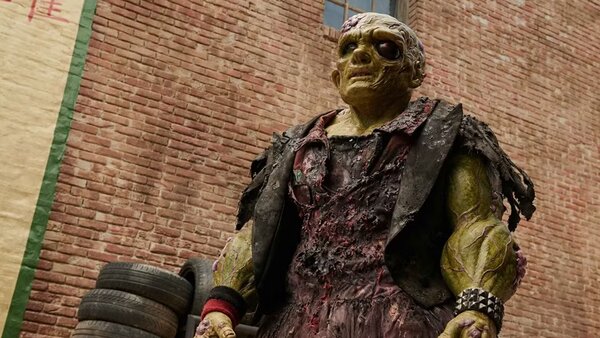
No matter what the cause, there will always be projects stuck in development hell that ultimately never see the light of day. It's been seven years since Mahershala Ali was announced as the new Blade, and by this point, it would be genuinely shocking if the movie ever actually gets made.
However, there are some that do eventually see the other side, with Macon Blair's The Toxic Avenger being one. The remake of the 1984 film of the same name was first premiered at Fantastic Fest in 2023, but didn't get released in cinemas until 2025, at which point nobody went to see it.
Said to be unreleasable due to scenes of ridiculous graphic violence, by the time the film found a home, it seems as though no one truly cared. A box office gross of $3.5 million cannot be argued with against a reported budget of up to $50 million.
You didn't have to be clairvoyant to see that this film was going to struggle at the box office after such a rigorous journey to being released, but at least it did actually get there. The remake saw the light of day, and it was uniquely charming, which is a win.