20 Most Divisive Horror Movies of the 2020s (So Far)
These polarising horror flicks split audiences down the middle.
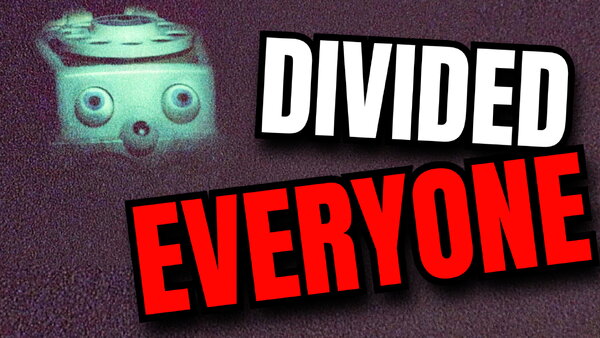
The horror genre has had one hell of a decade so far, because while other genres have struggled to maintain relevance in this most challenging era for cinema, horror has only continued to surge in popularity.
Recent mega-hits like Obsession and Backrooms have proven the potential for horror to connect with the mainstream in a unique way, but of course most horror movies don't achieve quite such stratospheric popularity.
And there's something to be said for horror films that end up splitting audiences straight down the middle - this typically means that they're taking a bold swing and doing something risky which will naturally not connect with everyone.
And throughout the 2020s so far, these are the 20 horror films that, above all others, caused a huge stir in the genre's fandom, for their innovative style, uncompromising storytelling, and even their boundary-pushing approach to violence.
To some, these films are sheer masterpieces while others will consider them abject failures, but none of them can be called safe-playing genre offerings that weren't trying to do something brave and different - whether for better or worse...
20. Skinamarink

Let's kick things off with perhaps the single most polarising horror movie on this list, and of not only the 2020s but basically ever.
Kyle Edward Ball's feature debut Skinamarink became a viral sensation even before its theatrical release, when pirated clips of the movie were shared on social media, emphasising its unique visual style and atmosphere.
This viral popularity is precisely what allowed the $15,000 film to secure a theatrical release at all and ultimately turn a profit at the box office, but a few brief clips don't really do justice to what Skinamarink actually is.
This deeply experimental and singular horror film, centred around two siblings navigating their house in the middle of the night, eschews conventional genre storytelling in place of a more vaguely defined, slow-moving narrative propelled forward by its sheer mood.
At 100 minutes, Skinamarink is a patient experience that's ultimately too slow-moving for some, with many left feeling that it would've been more effective as a 30-40 minute short.
Yet there are also a lot of horror fans who love that Ball did something completely unique with the genre here and consider that well worth championing.
19. Halloween Ends

It's wildly understating the case to simply say that Halloween Ends divided fans - the reactions ranged from deeming it the worst film in the series to declaring it an unsung masterpiece.
The big elephant in the room - or rather, not - is that Michael Myers (James Jude Courtney) isn't really in the film all that much, the focus instead shifting to a new character, Corey Cunningham (Rohan Campbell), who the film teases might inherit The Shape's mantle by film's end.
Corey's story takes up the lion's share of Halloween Ends' runtime, enough that the widely hyped final showdown between Michael and Laurie Strode (Jamie Lee Curtis) ended up feeling like a rushed afterthought to many.
But there are absolutely those Corey defenders who love that writer-director David Gordon Green took a less-predictable path for this saga-capping entry, and also that it ended by killing Michael Myers in such decisive, unambiguous fashion.
It's certainly a bold and interesting film to a point, even if many wished that Green went the more conventional, crowd-pleasing route with it.
18. In a Violent Nature

Chris Nash's unforgettable feature debut In a Violent Nature was basically tailor-made to divide, given that it took the prototypical slasher movie formula and fed it through the art-house meat grinder.
The result is a "slow cinema" take on Friday the 13th, as a hulking masked murderer stalks the woods and brutally dismantles hapless youngsters.
Though Nash's film was sold on its intense imagery, the end product is a decidedly more patient sit, often following serial killer Johnny (Ry Barrett) slowly stalking his prey for minutes at a time, while the human victims are given scarcely little development at all.
More broad-minded genre fans unsurprisingly bounced off the movie in short order, but many found Nash's approach fascinatingly unique and provocative, to tell an age-old story in a refreshingly stripped back and methodical way.
It's certainly not for everyone, and even many who respect the film may ultimately have little desire to revisit it, but it's an undeniably inspired take on well-trod material, and proved successful enough that a sequel is due to release early next year.
17. MaXXXine

MaXXXine is absolutely a film that suffered from audiences expecting one thing and the filmmaker giving them another.
As the conclusion to Ti West's Mia Goth-starring slasher trilogy - preceded by X and Pearl - fans naturally anticipated another thoughtfully composed horror flick that served as a spellbinding showcase for Goth's talents.
But this clearly wasn't the film West was interested in making, instead pivoting into a trashier, schlockier homage to giallo films that ultimately left many fans of the two previous films thoroughly underwhelmed.
West absolutely prioritised style over substance this time around, serving up a lacklustre killer reveal and, most surprisingly of all, not even giving Goth all that much interesting to do.
And so, as a conclusion to the story of Goth's budding actress Maxine Minx, MaXXXine fell strangely flat for many who were firmly invested in this most unexpected low-budget slasher trilogy.
Yet there are also plenty of West fans who will defend it to the hilt as a frothy, expectation-defying finale.
16. Terrifier 2

There are few modern horror franchises more polarising than Terrifier, and after the original film found major success on streaming, filmmaker Damien Leone was able to produce one hell of an epic sequel.
On a considerably larger budget, Terrifier 2 was a much bigger and more ambitious follow-up - one packed to the gills with nauseatingly gory set-pieces, while expanding the lore of Art the Clown (David Howard Thornton) and introducing the series' new Final Girl, Sienna (Lauren LaVera).
While there was plenty of praise for Leone so thoroughly raising the bar above his more rough-edged original, others found Terrifier 2 to be an over-indulgent sequel which, with a 138-minute runtime, was in desperate need of a more disciplined edit.
Furthermore, some felt that Leone's violence ultimately went too far - especially during a certain infamous bedroom sequence - even if, for many, the gonzo practical effects are a large part of the series' appeal.
Ironically Leone did address the runtime concerns for Terrifier 3, only for a lot of fans to complain that its ending felt rushed.
15. Beau Is Afraid

Beau Is Afraid is nothing if not the sort of bold swing you get to make after producing a few solid genre hits, and following Hereditary and Midsommar as it did, few were fully prepared for what Ari Aster served up.
Less an outright horror film than a surreal tragicomedy with genre window-dressing, Beau Is Afraid follows the paranoia-riddled title character as he embarks on an odyssey to his mother's house after learning that she has apparently passed away.
Aster's film has zero interest in spoonfeeding the audience a conventional story, instead offering up an intensely strange cinematic rendition of what debilitating anxiety feels like.
While many of Aster's fans respected the sheer boldness of his vision here, not to forget Joaquin Phoenix's superb central performance, there was also plenty of pushback from others who simply couldn't vibe with what he put out there, unaided by the film's admittedly challenging three-hour runtime.
Considering that Aster followed it up with the near-equally polarising Eddington, this very much appears to be his filmmaking brand at this point.
14. Scream (2022)

Though 2022's fifth Scream was undeniably successful in reinvigorating the iconic slasher franchise, fan reception to it remains firmly split.
For one, Melissa Barrera's new protagonist Sam Carpenter left many cold, even if Barrera's performance was substantially improved in sequel Scream VI.
It didn't help that making Sam the daughter of original killer Billy Loomis (Skeet Ulrich) felt like a pandering legacy sequel move, made all the worse by the woeful presence of a digitally de-aged Billy in Sam's twisted hallucinations.
Many were also disappointed that original protagonist Sidney (Neve Campbell) was relegated to a rather throwaway supporting role and that Dewey (David Arquette) died such a dopey death.
However, the sequel taking satirical aim at toxic fandoms was a fun, timely twist, even if some maintain that it was too on-the-nose for its own good.
Ultimately while Scream 2022 brought the series back to life, the jury's still very much out on precisely how good it is.
13. Iron Lung
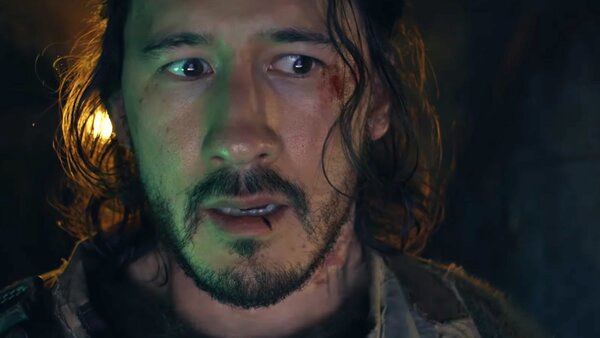
Depending on who you ask, Markiplier's Iron Lung is either a refreshing triumph of low-budget, do-it-yourself genre filmmaking or an exhausting, frustrating example of filmmaker self-indulgence run amok.
Though there was certainly praise for the sci-fi horror film's atmospheric, source-faithful adaptation of the hit indie video game of the same name, opinions were far more mixed on Markiplier's performance and especially the movie's pacing.
Iron Lung clocks in at 125 minutes - a relatively beefy runtime for a single-location movie with only one on-screen character.
But above all else, the film's sluggish pacing ensures many felt that runtime in their bones. It's desperately clear to many that Markiplier needed to bring in somebody else to edit his work and cleave this bloated cut down to a pacier 80-90 minutes.
Yet again, the film was a commercial success and is sure to endure as a cult fave for its undeniable mood and stark, low-fi visuals.
12. Bodies Bodies Bodies

Bodies Bodies Bodies is certainly a horror film to test your capacity to spend 90 minutes with deeply obnoxious characters, because while this horror comedy's young cast is clearly supposed to be gratingly self-obsessed, that's inherently not an experience everyone will want to put themselves through.
The film's satire of Gen Z also split audiences, some finding it a fun takedown of the generation's most exaggerated characteristics - being chronically online, performatively righteous, and so on - while others found it dated and surface-level.
And this is all without getting into the movie's climactic twist - a rug-pull which many found to be a hilarious summation of the film's central theme, while others felt it turned the tantalising murder-mystery into a bit of a joke.
Curiously despite the film being well-received at the time of its 2022 release, Bodies Bodies Bodies doesn't get brought up much in horror circles these days.
11. Lee Cronin's The Mummy
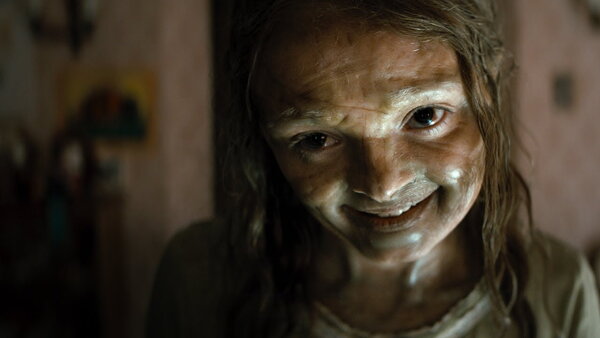
Lee Cronin's The Mummy was plenty divisive before it even came out, many questioning if we really needed another Mummy movie at all - especially one without Brendan Fraser involved.
And when the movie finally came out, it caused a huge gulf of opinion, many complaining that it was effectively a reskinned Evil Dead film, that its central characters were too stupid to root for, and its 132-minute runtime was absurdly excessive.
But Cronin's film did nevertheless get its defenders, who felt the Evil Dead-style tone, pinballing between gross-out brutality and blacker-than-black humour, was a net positive, especially with Cronin having previously directed Evil Dead Rise.
There was also praise for the performances and the decision to do something so different with the Mummy IP, even if many found it to be a disappointing use of both the titular monster and Cronin's filmmaking chops.
Expect this one to remain a hugely contested weirdo of a movie forever more.
10. The Sadness

Taiwanese body horror film The Sadness is one of the genre's most contentious films in recent memory - an uncompromisingly brutal zombie movie in which a viral pandemic turns the infected into depraved maniacs who act out their most psychotically violent impulses.
It's a terrifically twisted setup for a thoroughly unique take on one of horror's most overcrowded subgenres, yet filmmaker Rob Jabbaz's fearless approach also ultimately proved to be too much for many.
Without getting into too much detail, the logical outcome of the film's plague is that it enters nauseatingly transgressive territory, resulting in one especially horrifying sequence that's sure to be the tapping-out point for a lot of people.
But those with stronger stomachs and less of an aversion to envelope-pushing violence evidently respected a filmmaker who dared to visit places few others would.
It's not a pleasant film to sit through as a result, but it is one that fiercely challenges the audience's capacity for the very worst of human behaviour.
9. Shelby Oaks
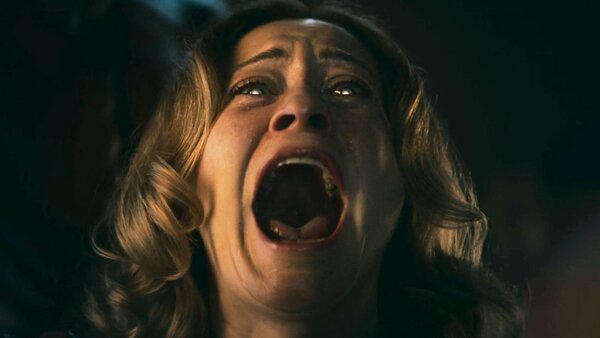
There were a lot of people rooting for Chris Stuckmann's feature debut Shelby Oaks, considering the critic-turned-filmmaker's massive social media following and clear love of cinema.
And though the film premiered to a solid response at festivals, the general reception proved decidedly more mixed once it hit cinemas.
While there was plenty of praise for the movie's atmospheric opening faux-doc found footage segment, many felt that the switch to a more conventional cinematic style at the end of the first act was ill-advised, resulting in a far more forgettable movie overall.
Camille Sullivan received wide praise for her central performance, yet Shelby Oaks' third act took the brunt of the film's criticism, which was widely pilloried for its tonally jarring, excessively mean-spirited nature.
If certainly an indication of Stuckmann's filmmaking chops, Shelby Oaks is nevertheless the weakest of all the recent major horror movies directed by YouTubers - falling far behind Obsession, Backrooms, and arguably even Iron Lung.
8. The Coffee Table

The Coffee Table is one of the most challenging horror films of the decade - an almost unthinkably disturbing Spanish black comedy which asks audiences to consider what they'd do if the most horrific scenario a parent could likely ever endure happened to them.
It's best not to spoil the precise particulars of the devastating inciting incident, but it sets the stage for a squirm-inducing psychological horror film designed to make the audience as uncomfortable as possible.
Whether that's a good thing or not will surely vary wildly among audiences, some simply finding it too traumatic to stomach, while others with a love of white-knuckle cringe comedy found themselves unable to look away.
Ultimately this is a film many will respect for its nimble tonal shifts and sheer ballsiness - after all, getting a film this provocative made cannot be easy. And yet, even the movie's admirers probably won't want to revisit it very often, if ever.
7. Dashcam

Dashcam was filmmaker Rob Savage's follow-up to his acclaimed pandemic-era screenlife horror Host and received sharply polarised reviews from critics and audiences alike for one reason - its obnoxious protagonist.
This found footage film stars Annie Hardy as a conservative conspiracy theorist who finds herself caught up in a series of horrifying supernatural events one night.
And while many praised the intensity of Savage's vision, there's been consistent pushback against Hardy's protagonist - a character so unlikeable and irredeemable that it becomes nigh-on impossible to root for her survival.
Others however praised Savage for daring to saddle viewers with such a prickly main character, the film seemingly serving as a provocation to audiences, many of whom were left additionally frustrated that Hardy's protagonist actually survives to the end of the movie.
Love it or hate it, Dashcam is definitely a bold piece of filmmaking and one which tests the bounds of audience tolerance - for better or worse.
6. Men

Alex Garland followed up his sublime sci-fi horror Annihilation with a surrealist folk horror flick which made that film seem positively commercial by comparison.
Jessie Buckley stars as a bereaved wife who takes a holiday to a countryside village where she finds herself tormented by the locals, all of whom resemble the same man (Rory Kinnear).
It's a deliciously weird setup for a movie, no question, but Garland clearly has no interest in telling an easily digestible rendition of this marketable premise.
Instead, he offers up an aggressively weird, tonally jarring odyssey of a movie that split critics and audiences alike straight down the middle.
While there was much praise for the performances of Buckley and Kinnear and the overall foreboding atmosphere, some found Garland's feminist messaging to be clunky and on-the-nose.
But it's the film's utterly demented body horror finale that truly left viewers arguing - either praising it for its shocking audacity or adamant that it left the film lurching uneasily into unintentional comedy territory.
5. Presence

The most divisive aspect of Steven Soderbergh's Presence is that it's arguably not much of a horror movie at all.
Despite clearly being marketed as an eerie haunted house film, this is really more of a supernatural thriller-drama with a genre fringe, focusing on a family that's observed by a strange presence residing in their new home.
And then there's the movie's bold stylistic hook, where it unfolds entirely from the perspective of the presence itself.
Though certainly a unique way to present such a story, it's also a technique that's inherently going to cause some people to bounce off the movie.
There are long sequences where we're merely observing the family going about their lives, which left some viewers impatient for more genre-forward shenanigans.
And without getting into spoilers, Presence climaxes with a twist primed to divide, some finding it ingenious and immediately wanting to rewatch the movie, while others felt excessively manipulated.
4. Hope
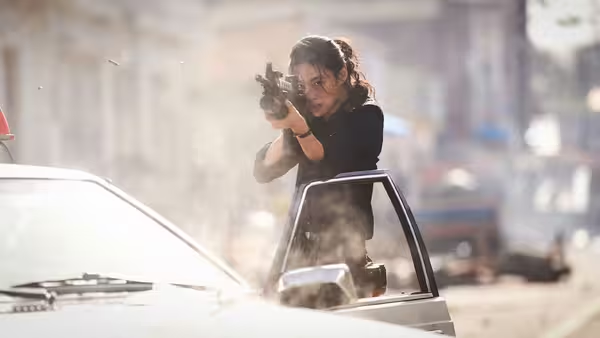
Hope is the long-awaited follow-up to filmmaker Na Hong-jin's 2016 masterpiece The Wailing - a sci-fi horror-action film in which the residents of a rural South Korean village find themselves facing off against a fleet of monsters in their midst.
But Hong-jin's film is already one of the decade's most-contested horror flicks.
While there's been ample praise for its opening hour - a deeply suspenseful, technically sublime build-up to the creatures' emergence - the reception to the rest of the movie is far more mixed.
The big elephant in the room is, of course, Hope's much-discussed visual effects, which look laughably cheap at times while being on frequent display throughout the film.
Then there's the fact that the film is effectively a series of chases and confrontations which, while beautifully shot and well-acted, become repetitive long before movie's end.
And finally we have the film's absolute head-scratcher of an ending, where the story basically just stops without anything close to a resolution, while dumping a slew of scarcely comprehensible alien lore in the audience's lap.
While Hope is basically destined to endure as a cult classic either way, it's split audiences firmly down the middle.
3. Resurrection

Resurrection was marketed as a horror-thriller in which Rebecca Hall's protagonist finds herself pursued by an abusive ex-partner (Tim Roth), but Andrew Semans' film has a few incredibly daring ideas up its sleeve which naturally didn't work for everyone.
Though Hall's performance as a woman coming apart at the seams received basically universal acclaim, the story's third act takes one especially courageous swing that ensured the film wouldn't land unanimously.
While for much of its runtime this appears to be a more accessible and grounded psychological horror film about a woman being tormented by her ex, the finale twists this into a more provocative and ambiguous direction which, per the online response, clearly didn't hit for all.
It's certainly at the expense of the movie's wider, mainstream appeal, but for a particular brand of genre sickos who love films that commit fully to their weirder ideas, Resurrection ends on one hell of an unforgettable note.
2. Titane

Let's be real - a film whose instigating incident involves a woman shagging a car was always going to rub some folk the wrong way, and Julia Ducournau's 2021 body horror film Titane absolutely did that.
Titane follows Alexia (Agathe Rousselle), a serial killer who has a titanium plate in her head from a childhood car accident and harbours a strange sexual interest in cars, eventually resulting in her somehow falling pregnant by one.
That logline alone is likely to either compel or disgust, and sets the tone for a film that skirts genre convention at basically every turn.
What's perhaps most surprising about Titane, though, is that Ducournau largely dares to take the premise seriously, eschewing a schlocky treatment in favour of something that's ultimately surprisingly affecting.
But considering the film won the coveted Palme d'Or at Cannes, many likely went into it expecting a very different movie, the film straddled precariously - but brilliantly - between its genre trimmings and artsy aspirations.
1. The Shrouds
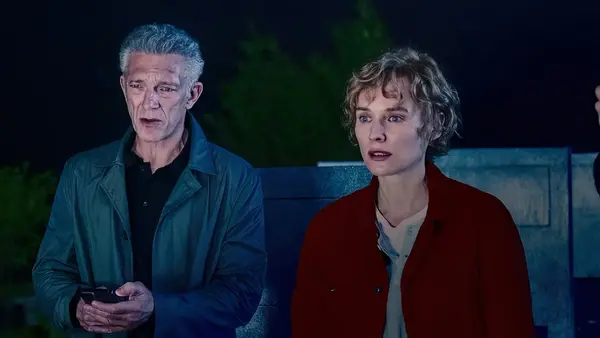
David Cronenberg is about as polarising as horror filmmakers come, but with decades of transgressive body horror films behind him, it's safe to say that audiences know precisely what they're getting from.
And that's why his most recent film, The Shrouds, proved such a strange surprise.
Though technically a body horror film, this is really more of a morbid drama about grief - and clearly one inspired by Cronenberg's own mourning of his late wife, who passed away in 2017.
And so, for anyone hoping for more grotesque body modification from the master of it, that's not quite what The Shrouds is - a film far more concerned with the beauty of bodily decay and how we as humans process the loss of a loved one.
It's certainly one of the oddest and most unexpected films of Cronenberg's entire career, and so it's little surprise that it's proven so polarising ever since it premiered at Cannes 2024.