25 Best Video Games Of The 2000s
6. Halo 2

The first Halo might have brought about regenerating health, two-slot weapon inventories and that Silent Cartographer level, but it was the second that took us all online, had one of the best campaigns designed so far in the behind-the-curtain look at controlling ex-Covenant soldier The Arbiter, and really set about establishing Halo as a console heavyweight in the pantheon of first-person shooters. In terms of actual gameplay Bungie nailed it first time round, the feel of controlling both the Chief and Arbiter continuing here.
Jumps were just as floaty, melee attacks just as meaty and tactile, but the big change was dual-wielding, letting you snap up twin machine guns, shield-rupturing plasma pistols, a couple of needlers etc.
This was before developers (including Bungie) would switch gears and focus on going multiplayer only, and so Halo's lore was fleshed out in an extremely well-designed campaign. The whole thing ended on a cliffhanger that millions got more than annoyed by (time-restraints close to release were eventually blamed), but the ride it took you on, that feel of just getting to play 'more Halo' comprised of vehicular, airborne and on-foot warfare, embodying the Chief in an even greater sci-fi setting - it remains one of Bungie's most important releases as a developer.
5. Batman: Arkham Asylum
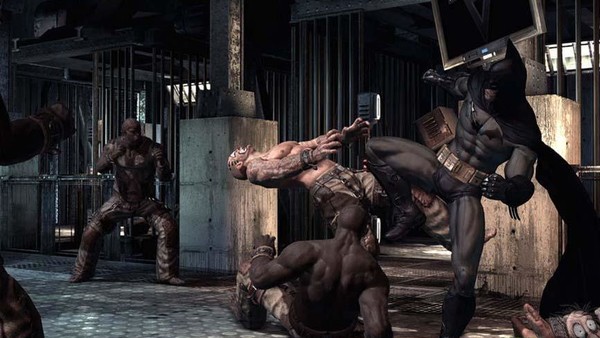
The game that set the industry standard for close-quarters combat. Previously we'd had God of War or Devil May Cry's 'mash buttons to win' setup, the occasional quick-time event directing a cutscene to match a cinematic look with an engaging sense of gameplay. Rocksteady suitably said no to that, and (from the ashes of an original rhythm-based design) assigned counters, attacks, dodges and stuns to the various face buttons, before letting that form the basis for your entire repertoire. Naturally the Dark Knight isn't complete without a slew of gadgets, and that's where a subtle take on the Metroidvania formula came in, gating off certain areas until you had the requisite means to get to them. Production-wise Warner Bros. gave the studio any financial clout they needed, to which they used to recruit Batman's Animated Series' cast Kevin Conroy as Batman and Mark Hamill as Joker. Everything played better than any of us expected, and Batman himself had a character model befitting of artists' Frank Miller's heft and Jim Lee's definition, letting you move him with an unprecedented feeling of precision and power regardless of if that was fist-to-fist or skulking from the shadows. No game had ever let you genuinely feel like Batman quite as perfectly as this before, and it's a landmark point that not only set the bar for all future superhero games, but third-person combat in everything else going forward.
4. Metal Gear Solid 3: Snake Eater
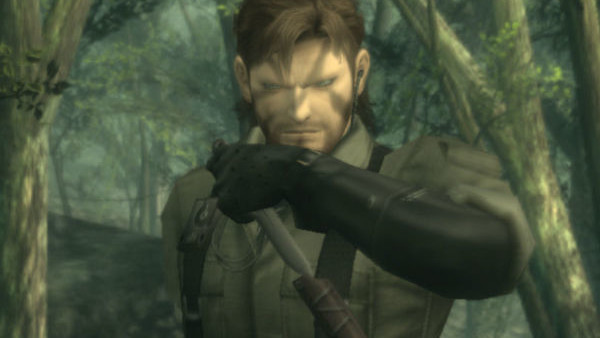
The world (of gaming) needs guys like Metal Gear Solid-mastermind Hideo Kojima. He's a man of unrestrained genius, his cerebellum firing off in a million directions at once, the resulting compilation of ideas forming some of the most unique, incredibly epic and influence-filled games ever created. Picking just one MGS out of the three that came in the 2000s is no easy task.
However, one that advanced the core gameplay of 1 and 2 in meaningful ways (giving you camouflage options, close-quarters combat takedowns and uses for enemies like bullet shields or throw-knockdowns) alongside a story that proves Kojima can reign in the madness to nail an emotional moment for the ages, it just has to be Snake Eater.
Of course the craziness is there in abundance too. The opening credits are a massive tribute to James Bond, there's a 'boss fight' (of sorts) with a gigantic ladder, a host of enemy characters range from one being made of hornets to another so old and decrepit he can photosynthesise, alongside many chances to ogle various characters' sexy-parts in first-person. If you're forever wondering where to hop on the Metal Gear train, it's right here.
Snake Eater took the timeline of the series back to the 60s, fleshed out the motivations and machinations of everything that would eventually create the maniacal Big Boss who you'd fight in the very first MSX game, and ultimately shows a creative force tying all of his works together in one of the most ludicrously enjoyable ways possible.
3. Bully
We can all look back on GTA III as a pinnacle of game design meeting innovation, but as with almost all trailblazing franchises, game mechanics or mission designs, it's what comes after that can cherrypick the best traits of what's on offer, forming that into something even greater.
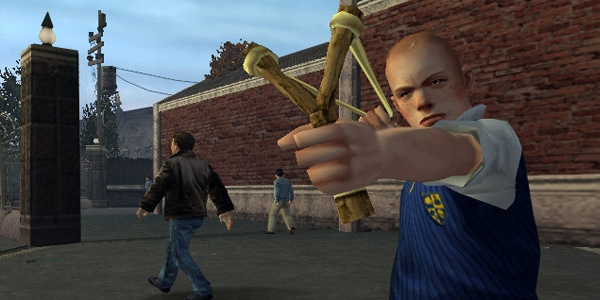
With Rockstar having perfected their open-world game engine by the time Bully came around, it let them focus on the presentation of everything instead. That meant even more dialogue for our protagonist - this time the wondrously pugnacious Jimmy Hopkins - a score that connoted the most whimsical and mischievous parts of Harry Potter, and a fully-interactive school packed full of cliques warring with each other, teachers to annoy, lessons to be learnt - and a schoolyard heirarchy to overcome.
Bully's appeal as a high school escapist fantasy gave us all a context we were immediately familiar with, something the GTA series could never truly do. All the same it meant we could reapply Rockstar's now-iconic formula to an entirely new and unique setup, one that was positively dripping in charm, character moments and hilarious dialogue.
There's just something about Bully's entire presentation that speaks effortlessly to every generation of gamer; a point exemplified by a musical backing that as a score (not a selection of songs), is easily Rockstar's finest work to date.
2. Jak II: Renegade

There's a great moment in Naughty Dog's 30th Anniversary art book, where after mentioning they'd produced a string of Crash Bandicoot titles, had developed something of an isolated work ethic, sticking to their guns and getting their heads down to create the first Jak & Daxter. Then GTA III happened, the gaming industry was irrevocably changed, and they quite understandably "looked up".
That game's influence is still endless, but for J&D they noted how the industry felt like it was growing up. Enter Jak II, their openly GTA-inspired left-field turn that kinda came out of nowhere, but one that thanks to their perfected execution when it comes to animation and level design, injected proceedings with one of the best casts of characters, explorable worlds, ability rollouts and overall spit n' polish that still makes it endlessly replayable to this day.
Now Jak had a voice, he was given a gun (or four), a timeless motive (tortured prisoner looks for revenge) and the whole thing was shifted over to Haven City; a futuristic hovercar-filled hovel of smog and broken technology, the place where amidst the throws of a revolution he'd play a key role. Gameplay was expanded on, you got everything from a Dark Eco 'rage mode' to a Tony Hawk's-style hoverboard, more missions and characters than any of ND's previous games, and a feeling that every inch of the game's world was put together by a group of people at the collective height of their careers.
1. Grand Theft Auto III

You can look to all manner of titles that came after GTA III as doing certain things better or in a more immediately enjoyable fashion, but developers wouldn't even have had those ideas if not for Rockstar's open-world masterpiece in the first place.
Scratch any on-mission annoyances, GTA is digital anarchy; something that works best when the shackles are off and you're free to do as you please. That became a trait that fuelled your wildest dreams and tapped into a sense of breaking the game for the better whenever you could. See that Banshee, locked up inside a car showroom? Smash the glass and take it.
A mission with a car making a getaway? Put one of your own in the way before triggering it, then you can hop out and take a rocket launcher to their face. Heard about the tiny biplane Dodo being able to take flight? Grab it and see for yourself.
GTA III was a world you could essentially live in, and although Vice City and San Andreas would push Rockstar's original game engine to breaking point, it's this first proof of concept that has within it the potential for all sorts of dastardly deeds, a city design everyone who played has memorised by now - and a string of missions that introduced us to all sorts of celebrity-voiced gangsters to boot.