25 Best Video Games Of The 2000s
16. Resident Evil 4

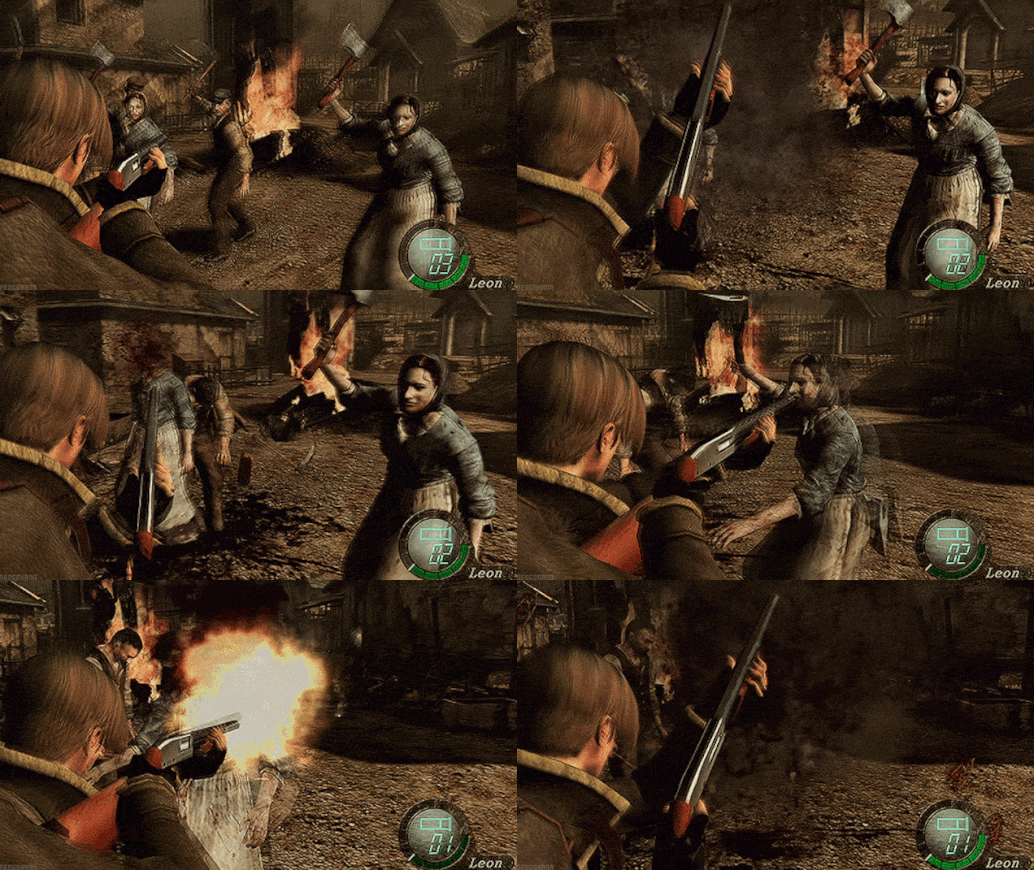
With one foppy-haired character, a shotgun and a seemingly abandoned Spanish village, Capcom rewrote the rulebook on survival horror all over again. Design was led by the genius mind of Shinji Mikami, who chose to get you right down in amongst the action, ramping up the gunplay aspect of the series that was - up to this point - quite literally hit n' miss at the best of times.
This seemingly simple switch in perspective was all it took to breathe immortal life into the franchise, and that led to the aforementioned exploration of a dilapidated living space all the more enjoyable. The game went off the rails in the best way possible in the second half, combining sprinting 'zombies' (infected citizens) with all manner of weapons, a plot that was more atypical action fare than beforehand, and a good smattering of hulking creatures to take down along the way.
And the first time you feel that shotgun kick? It's enough to be a defining moment of the decade in itself.
15. Bioshock
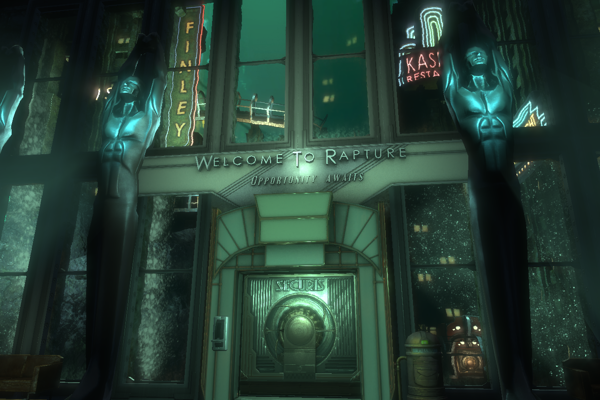
The game that changed everything about how we consume the medium itself.
Why are you doing what you're doing? What does it mean to explore a world and go off down some secret path of your own accord? What roles do the mission-givers have, and how can that affect the experience? Bioshock tackled all these issues both overtly and in a meta-instance, a midpoint reveal being one of the most shocking, utterly unexpected and incredibly memorable of all time. If you've not actually got round to playing this inaugural instalment I'll not spoil the particulars.
Sufficed to say when things start kicking off, you'll immediately feel a sensation close to that of the end of Assassin's Creed II. For its base gameplay, sadly Bioshock just doesn't play as well as it needed to get it higher up the list, as fighting in the series has forever been something you trudge through to get more of the story or explore more of the area itself, rather than for enjoyment.
That said, Ken Levine's vision for an underwater breakaway utopia-gone-sour is one bursting with personality and dark agendas, some only the most intrepid of secret-hunting gamers will uncover, making it a masterclass in game design, despite the bolted-on combat.
14. Call Of Duty: Modern Warfare 2

You know a game got something impeccably right when it then gets annual instalments afterwards, as despite some shaky sequels that overused their base elements to make that year's quick buck (looking at you, Ghosts!), back when COD's Modern Warfare stint got going, Infinity Ward's innovative take on multiplayer and the pace of FPS gameplay was revolutionary.
For this second instalment, they doubled down on an already-established perk-based multiplayer, upping the amount of tweaks and modifications you could make to your online avatar, whilst not ignoring the campaign one bit. Instead they created a level that would ink itself into the history books; an extremely controversial and somewhat misguided scenario that saw you undercover amongst a gang of terrorists infiltrating an airport.
MW2 ended up getting all sorts of coverage as a 'terrorist simulator' despite the team's apparent intent being to highlight whether or not you pulled the optional trigger on any civilians or not, and that's without covering how the rest of thewh story felt like the best parts of a Jerry Bruckheimer/Michael Bay action flick come to life. COD might have become the go-to insult for anyone not willing to give something as experimental as 2015's best indie titles a fair shake, but you can't deny when it's on-form, there's nothing as all-round entertaining as this.
13. Shadow Of The Colossus
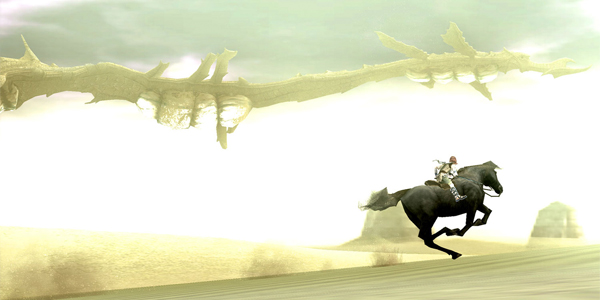
From one landmark release to another (there'll be a lot of this on here), Shadow of the Colossus did its own spin on the whole "Who are you and what are you doing, really?" ideology. Throwing you into a world full of cloud-tickling behemoths named the Colossi, game logic says if you have a sword and a princess that needs saving, you best get to taking them down - something will come of it, right? Well, yes and no.
The end result is best experienced for yourself, but the really nuanced feeling you get is one of environmentalist conservationism; you find yourself pondering exactly what it means to bring down one of these towering creatures, and it's a feeling games almost never give you. Remorse. The battles themselves are absolutely outstanding, the majesty of each encounter having various standout moments in its own way, going from attempting to slay a humungous serpentine Colossus in a large body of water, to having one bolt out a sand dune and you to give chase on your horse, hoping there's some way to climb aboard.
There's a indescribably serene ebb and flow to the overall feel of SotC that only Team ICO can deliver (hence them naming their studio after the first game that was a runaway success), and whilst we're in limbo for their next creation The Last Guardian, returning to Shadow's lands, hopping on your horse and exploring the world around you is one of the most joyous experiences ever put to code.
12. Uncharted 2: Among Thieves
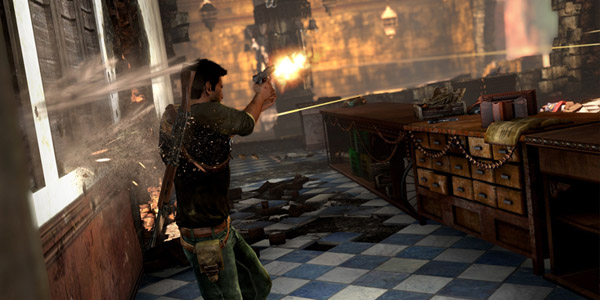
Metal Gear Solid set the 'Can games beat Hollywood?'-ball rolling in '98, and Naughty Dog's impeccable Uncharted series scored a touchdown with it. Drake's Fortune (the first game) just had an immediately 'next level'-feel when it came to cutscenes and character portrayals, something reputable voice actor Nolan North helped take to its fullest potential.
For Among Thieves the now-beloved writing duo of Neil Druckmann and Bruce Straley took centre stage (you can thank them for The Last of Us, too), adding a sense of frailty to some of Drake's actions. They really cemented the character as someone who's scrappy yet dependable, moulding his heart into one we could relate to, champion in his most oppositional moments and love no matter where the story would take him. There's a good reason Nate is one of the only memorable modern characters to stand alongside the heavyweights of yesteryear in the memorability stakes.
With Uncharted 2's continuation of the game's multi-levelled third-person combat, out-of-nowhere melee attacks and desperation-filled grenade tosses, it became a series that plays like an embodiment of its character's own sensibilities; something that makes this second instalment stand the test of time like no other.
11. Half-Life 2

Valve may have dropped and lost the ball they were once (in theory) going to deliver with Half-Life 3, but no matter - we already got the physics sandbox that was part two back in 2004. Building on one of the most enjoyable sci-fi lores in gaming history (putting you once again in the shoes of mute protagonist Gordon Freeman tackling the insidious human-harvesting Combine), people rarely talk about the story when it comes to why this felt so incredible to experience.
Why? Because although HL2 did further cement the idea of 'cutscenes' playing out around you as you're able to walk through them, it's the Havok physics engine giving weight and definition to all sorts of ancillary objects alongside the Gravity Gun to fire them off in all directions that blows everyone's hair back when they see it in action.
A testament to the rising tide of physics-based gameplay set to roll out in everything from action titles, puzzlers and everything in between, Half-Life 2's potent mix of tech demo-style experimentation allowed for a sense of playfulness that's all but died in an industry where genuine innovation is very few and far between.
10. Final Fantasy X
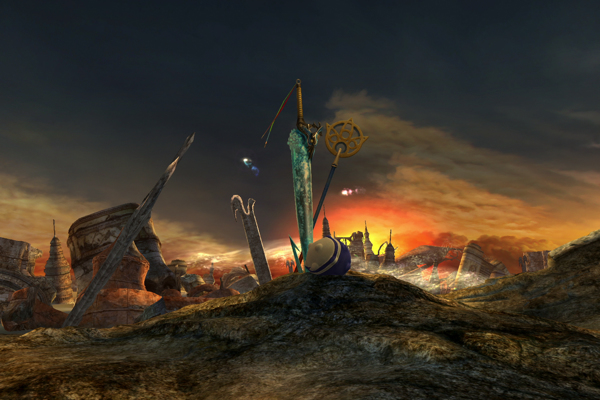
The last Final Fantasy with turn-based battles was also one of the finest, as although the voice acting has aged about as well as a piece of cheese from 2001, the gameplay systems therein, cast of loveable characters and all-round sense of next-gen spit n' polish that brought us our first look at what Final Fantasy's worlds would look like on new hardware, was a resounding success.
At this point in gaming's ever-changing relationship with RPG design, Square were still firmly set in their turn-based routes, essentially meaning FFX played like the 'golden trilogy' of Final Fantasys VII, VIII and IX. In addition, the wonder came from having a fully-voiced cast, gorgeously-rendered graphics, animations, tactics while on the field, summons looking absolutely jaw-dropping (for their time), and a story that took you from a lowly Blitzball player through a world-saving water-sworded badass, falling in love with the mystical Yuna along the way.
Speaking of Blitzball, it was the neatest mini-game since FF VIII's Triple Triad, an underwater spin on football that played out through taking turns, essentially assigning totals and numbers to things like scoring goals or making saves. It might sound crazy, but hopefully the comment section will back me up as to its addictiveness, and it's little pockets of separated fun like this that really make you appreciate the effort put in on the whole.
9. Fallout 3

From eastern RPG design to the west, and Bethesda's crowning 2000s-based achievement Fallout 3, a game that to this day fans are still replaying to explore every polygon of detail around every corner.
Acquiring the rights from Black Isle Studios, it's pretty crazy to note this was actually the team's first foray into the world of Fallout, and although many fans point to New Vegas as the best of the two last-gen instalments (thanks to members of Black Isle being on development again), it's the absolutely unrestrained freedom and push towards exploration here that established an unmatched sense of world-building.
Throw in the V.A.T.S. system of pausing action to allocate where you'd like to target enemies, and it was the perfect combination of the older games' turn-taking nature, with that of satisfying modern-day head-popping fun. It might have that trademark level of Bethesda-jank when it comes to world glitches and certain NPCs disappearing through the floor (something Fallout 4 is finally looking to remedy), but when the city of Boston itself is so expansive, the options for your combat so varied and the moral quandaries you'll come across so impactful, it makes for one hell of a franchise debut from one of the greatest studios of all time.
8. Assassin's Creed II

Forget the barely iterative money-grabbing abomination AC has turned into, and remember the good days; the days when we were still interested in the modern day story, when climbing up the sides of buildings still made your eyes bulge in excitement, and when stabbing dudes was routed in stealth, not taking on entire platoons of people to create an opportunity.
The first Assassin's Creed suffered in the eyes of some by having too many similar-feeling quests, building up to an assassination, Hitman-style. Personally I loved that approach, but you could tell Ubisoft were hungry to please, taking onboard all criticisms and creating the swagger-happy Ezio as a loveable Italian Renaissance-man, giving you a simple-sounding revenge arc to kick things off. As this was 2009 and the second instalment, iteration and refinement of the core experience was of utmost priority.
That meant now you could pull off double-kills, chain attacks together between enemy guards, leap greater vertical distances - all set in sun-dossed Italy, meaning even the look of watching it all come together felt incredible.
7. The Legend Of Zelda: The Wind Waker
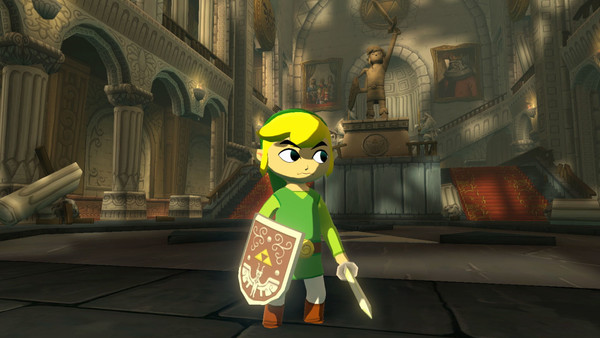
Controversial? Perhaps.
People outright hated Wind Waker back at launch, primarily as it looked like the 'big serious RPG' they'd grown up with was getting too many lashings of Nintendo's cute paint tipped overtop, but in hindsight (and if you didn't mind such a thing in the first place) this tenth instalment was like some gorgeously-rendered, playable fairytale-twist on a formula that was always begging to be done in such a way anyway.
Nintendo didn't change a whole lot to the now-standard gameplay formula and control schemes established in both Ocarina and Majora's Mask, but they did throw in a huge amount of sailing; something that was used in abundance to get between the various islands and caves of the world, the game pulling a GTA and loading everything around you without the necessity of load screens.
Fans can point to Majora's Mask as having the most expansive set of abilities for Link to use in the world thanks to its titular masks, but chances are the affinity you have towards something like Ocarina was down to it being one of the first times you truly let yourself get lost in an entire world of possibilities - something Wind Waker taps back into through bucketloads of charm and identity.