Steven Spielberg: Ranking His Movies From Worst To Best
9. Close Encounters of the Third Kind (1977)
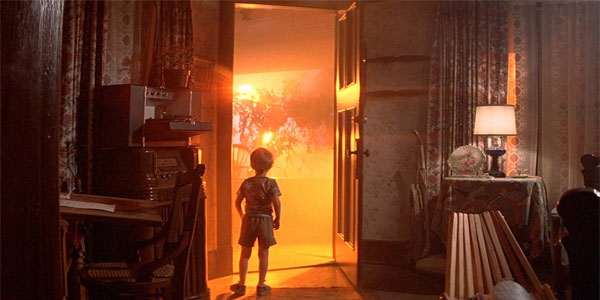 Few films capture a genuine sense of wonder and inspiration as well as Close Encounters does. These are sentiments that Spielberg became famous for, and that trademark style truly started with this film, which is arguably one of the most personal film of his entire career (it is one of the few films Spielberg has directed on which he also wrote the screenplay). Spielberg doesn't shy away from the negative implications of Roy Neary's journey to seek meaning in his life after an encounter with a UFO. Neary essentially abandons his family in order to pursue his obsession, and the ending of the film is surprisingly melancholy. It is interesting to hear Spielberg talk of the film today, as he has mentioned in interviews that now, after getting married and having children, he would have never made Close Encounters the same way. As it is, Close Encounters remains a testament to Spielberg at his prime: a young, thirsty, eager director who would stop at nothing until he fulfills his grandest, wildest dreams of seeking true meaning and inspiration. Aided by gorgeous imagery courtesy of legendary cinematographer Vilmos Zsigmond and one of John Williams' many iconic Spielberg scores, Close Encounters remains a triumph of Spielberg's early career.
8. Minority Report (2002)
 It may have been his advancing age or perhaps the major cultural paradigm shift caused by 9/11, but the year 2000 came and gone, something changed in Steven Spielberg's style. Gone was the childlike wonder and naivety of films such as the Indiana Jones Trilogy, Close Encounters, and E.T. The new millenium brought about a darker, more cynical Spielberg, and subsequently, his films thrived. With his one-two punch of A.I. Artificial Intelligence and Minority Report, the new, darker Spielberg showed us that he was here to stay. John Anderton is not your typical hero. He is a dedicated police officer, sure, but also an aimless drug addict crushed by divorce obsessed with the disappearance of his young son. He finds himself thrust into a mysterious conspiracy of epic proportions, and ends up having to fight for his name. Like Blade Runner, Minority Report (similarly based on a Philip K. Dick story) fuses film noir with science fiction to create a truly remarkable experience. Minority Report is at its core an action film, and features some of the best set-pieces and most striking imagery of Spielberg and cinematographer Janusz Kaminski's careers. It's also a good old-fashioned detective yarn, keeping us guessing at every turn. Featuring brilliant performances from Tom Cruise, Collin Farrell, Max Von Sydow and Samantha Morton among others, Minority Report also serves as one of the finest and most fascinating depictions of a future Earth ever committed to film. Its a riveting, masterful film that deserves another look.
7. Jurassic Park (1993)
 Spielberg has made an entire career of creating entertaining films spanning multiple genres and styles. Sure, he had a few misses, but for the most part, his filmography is at the very least enjoyable and watchable. However, it is of my opinion that throughout his career, Spielberg has created four truly flawless masterpieces of entertainment that are quite simply unmatched by any other films ever made. And the first of these masterpieces on this list is Jurassic Park. This film is so flawlessly structured and brilliantly executed I simply do not understand how anyone could watch it and criticize Spielberg as a director. The characters are completely different from the type of characters we usually expect to see in these genre films - and Spielberg's casting of character actors Laura Dern, Sam Neill, and Jeff Goldblum reflects this sentiment. The story structure is the epitome of perfection - everything that is planted early on pays off in the end, and the descent into madness and chaos is thrilling and horrifying to watch at the same time. The set pieces are perfectly structured and there are some genuinely terrifying moments that I still get the chills from even though I know that everything will turn out alright in the end. And then there are the dinosaurs. Spielberg had already conquered aliens, but for many of us in the early 90's and still today, nothing exemplified the sense of childhood wonder more than dinosaurs. Seeing them come to life - and underscored by some of the absolute best work of John Williams' career - is a revelatory experience. The CGI in the film is literally flawless - it is impossible to discern from the animatronic live-action elements utilized, and holds up better today than most CGI used in subsequent films, including in recent years. Though there have been countless imitators, there is simply nothing quite like the original.
6. Munich (2005)
 Met with critical indifference when it was first released and still not considered by many to be among the top echelon of Spielberg's works, I personally believe Munich to be one of his unsung masterpieces that deserves far more recognition and respect. Often ridiculed for one small moment (which really isn't that over the top when viewed within the context of the entire film), Munich is actually one of the most tense and well-made espionage thrillers of recent years. In line with Spielberg's post-millennial self discovery, Munich is also one of his darkest and most morally ambiguous films. Spielberg takes a story that could be made as a simple good-vs-evil story of a group of skilled assassins sent out to take out members of a terror cell, and injects it with so much maturity, ambiguity and cynicism it is truly amazing to think that this is the same director who made E.T. Because fact of the matter is, the assassins make mistakes. They mess up. They doubt the purpose of their mission, the fidelity of their information, and even the guilt of their targets. All of this is wrapped up in one of Spielberg's best-crafted films. Featuring a subtly unsettling score from John Williams, it is Janusz Kaminski who goes all out and has a field day with camera angles and movements, bold lighting, filters and film stock choices all utilized to maximize intensity and in order to create a portrait of various European locations in the 70's. It's not a subtle film, but it's an important statement from Spielberg's part that things are never simply black and white anymore.
5. E.T. The Extra-Terrestrial (1982)
 Spielberg's work is often discussed through the lens of the auteur theory - an commonly accepted analysis put forward by the French magazine Cahiers du Cinema in the 60's that explains that the director is the true "author" of a film and that films must be viewed within the context of their entire body of work. While Spielberg is undeniably an auteur - his stamp and style is clearly prevalent on all of his films - Spielberg's actual skills as a director, eliciting effective performances from his actors, is often overlooked. And few of his films demonstrate his true talents better than what is possibly his most stylistically iconic film. E. T. the Extra-Terrestrial. One of Spielberg's unsung triumphs is his ability to elicit some truly mesmerizing performances from child actors, and Henry Thomas' turn as Elliott in E.T. is one of the finest child performances in any Spielberg film. The emotional maturity and complexity of Henry's performance on screen is quite remarkable, and one can only imagine the work Spielberg had to do with his young star to get him into that emotional place. Child actors can't rationalize acting decisions; theirs is a purely instinctual and reactionary style. And the fact that Spielberg managed to get such strong emotional reactions from Thomas over a rubber animatronic is a true testament to his abilities as a director. I chose to single out Henry Thomas' performance because everything else that can be said about this film has pretty much been said already. Along with the following two films, it is undoubtedly the most iconic work of Spielberg's career, and a flawless masterpiece of entertainment in every possible sense of the word: Flawlessly structured, perfectly made, hilarious, touching, heartfelt, thrilling, and wonderful. It deserves all of the love and praise it has received over the years and then some.
4. Jaws (1975)
 For all intents and purposes, this film shouldn't have been good. Originally conceived as a cheap creature feature, Spielberg faced down the elements, a malfunctioning shark, an inflating budget, a drunk Robert Shaw, and his own inexperience and came out the other side with a character-driven horror film that managed to land a Best Picture nomination. How many films can make that claim? Indeed, the malfunctioning shark and production setbacks forced Spielberg to adapt and shift the focus to the characters while keeping his main movie monster, the shark, mostly off screen. The result is the iconic film we all know and love today. And one of the biggest testaments to Spielberg's talents and legacy is not that this film is one of the most brilliant and flawless works of entertainment ever crafted, but rather that it should and could have been a total disaster, but thanks to Spielberg's ingenuity and level-headedness in the editing room, that was not the case. Of course, John Williams' brilliant score doesn't hurt either.
3. Raiders of the Lost Ark (1981)
 Along with Jaws, E.T. and Jurassic Park, Raiders of the Lost Ark completes the quadrilogy of Spielberg's masterpieces of entertainment. This film is simply without faults. Every frame, every image, every dramatic push-in, musical cue, composition and cut is flawlessly constructed in order to create what is simple the most enjoyable and entertaining experience possible. Raiders is not burdened by emotional depth or social relevance. It is a Saturday Morning serial, action/adventure in its purest form. And it is also cinema at its finest. There is a reason Indiana Jones is one of the most iconic and memorable film characters in history, and not any of the countless other lead characters in the dozens of action-adventure films that preceded and that followed this one. Fact of the matter is, Indy ISN'T pure good, and that's what makes him so great. He fights dirty and without honor. He doesn't care about anyone but himself. He lacks faith. He sleeps around. He is a scoundrel... and we love him for it. The effort that went into crafting his character in such a compelling way is what makes this film stand out from the rest of its knock-offs and follow-ups. Add to that the brilliantly structured set pieces, beautiful settings, evil villains, hilarious comic relief, and iconic score, and the film is elevated to true greatness.
2. Saving Private Ryan (1998)
 Movies - and audiences - would never be the same again after the Normandy Beach sequences that opens this film. Watching it again, the technical prowess and ingenuity of staging and setting demonstrate Spielberg at the peak of his ability. Every decision made and every image shown in this sequence is intended to maximize the experience. And the effect has to be seen to be believed. For the first time in his career, Spielberg strips away the sleek, saturated, commercial look that he himself practically coined with his earlier films, and thrusts us right into the action, handheld, with grime and mud and water on the lens, choppy images, sloppy framing, and total chaos. The Normandy sequence is so groundbreaking and iconic many people tend to neglect the rest of the film, which actually has more in common with Raiders of the Lost Ark than Spielberg's other heavily lauded "serious" film, Schindler's List. Just as Raiders is Spielberg's homage to the Saturday Morning serials from the 30's that he grew up watching on television as a kid, Saving Private Ryan is actually a brilliant homage to the ensemble "men on a mission" war films from the 50's and 60's such as The Dirty Dozen. Saving Private Ryan hits all the tropes - throwing a hodgepodge group of soldiers together and sending them out on a unified mission - but it does so with a twist: the added perspective a history buff intent on portraying WWII in the most realistic and harrowing way possible. What follows subsequently is a fascinating and sobering deconstruction of the myth of the American Soldier: filtering the story through the cultural and historical relevance of previous war films, Spielberg shows us that war was hell, that soldiers could be cowards, died horrible deaths, and risked their lives for things that ultimately didn't really matter in the grander scale of things. The film's bookend sequences set in present day are often derided, but I think they carry a darker and more depressing undertone than most viewers give them credit for. Either way, Saving Private Ryan remains one of Spielberg's greatest triumphs as a director, a masterpiece in every meaning of the word, and quite possibly the greatest war film ever made.
1. Schindler's List (1993)
 1993 in many ways epitomizes Steven Spielberg's entire career. Always a prolific director, Spielberg released two films that year. The first came out during the Summer and was one of the finest entertainments ever crafted: Jurassic Park. But while in post-production on that first film, Spielberg braved the cold of Poland and set out to create his grandest and most important film yet. Released just six months after Jurassic Park, Schindler's List would turn out to be the defining moment in Spielberg's career, a monumental achievement that most directors could only dream of reaching. The historical context and harrowing nature of the film tends to overshadow the fact that, at its core, Schindler's List is very much a movie. Though it dwells on extended tangents depicting the horrors of the Holocaust and makes a point of contextualizing the events that it depicts, Schindler's List is essentially the story of a greedy, morally ambivalent industrialist who sees the Holocaust at first as a business opportunity, only gradually but eventually grow to see its true horrors and grow a soul in the process. It is an epic film but also a very intimate one. The craftsmanship on display is some of the best as well: Kaminski's cinematography has never been better and John Williams' score is truly heartbreaking. Many people tend to criticize this film's ending as suffering from Spielberg's usual dose of sentiment, but once again I would chalk this up to a complete misunderstanding of Spielberg's intentions. When viewed in context, Schindler's breakdown is not stirring or inspirational. It is sad, and terribly tragic. Here is a man who realized, too late, that he had the power to save lives. He did so much for these people, all but throwing his life away in the process, and all he can think about is how many more he could have saved. It is a sad, humbling moment, and though often ridiculed, is actually one of the most tragically poignant moments in a film filled with tragedy. Not only is Schindler's List the finest film of Spielberg's illustrious career, serving as the pinnacle of his humanistic and emotional instincts as well as his directorial skill and aptitude, but it is also one of if not the most important and greatest films ever made. Do you agree with these rankings? Are there films that are too low on this list? Too high? Or do you agree with my assessment of one of the greatest film careers in history? Feel free to discuss in the comments.