Steven Spielberg: Ranking His Movies From Worst To Best
19. Indiana Jones and the Temple of Doom (1984)
 Similar to Hook, the second installment of the Indiana Jones trilogy (actually a prequel - the date present during the opening credits places the film a year before the events of Raiders of the Ark) suffers from an overabundance of cheesy, cringe-inducing sequences including Short Round's quips, the Indian feast sequence, and pretty much everything involving Willie Scott (Spielberg's future wife Kate Capshaw). However, despite its silly moments and various shortcomings, Temple of Doom is still a classic Indy film, never once losing its energy or sense of exotic adventure. The set pieces are brilliant, in particular the famous mine cart scene. Overall, the film is just too darned entertaining - and surprisingly dark - not to enjoy.
18. War Horse (2011)
 On paper, this seemed like it should have been the perfect Spielberg film. Based on one of the most raved about stage plays in recent years and telling the epic story of a horse who finds itself inadvertently caught up in the horrors of WWI, the film ultimately fell a little short of its immense potential. Though it is still a good film featuring some incredible set pieces and beautiful cinematography and production design, the emotional beauty of the stage play felt a little too simplistic and - yes - saccharine when translated to film. This isn't to say it is a bad film, per se - the episodic structure works, it features some great performances, and the best scene in the play is also by far the best scene in the film (involving barbed wire). But it starts to lag a bit in the end, and one can't help the feeling that there should be something more there.
17. The Color Purple (1985)
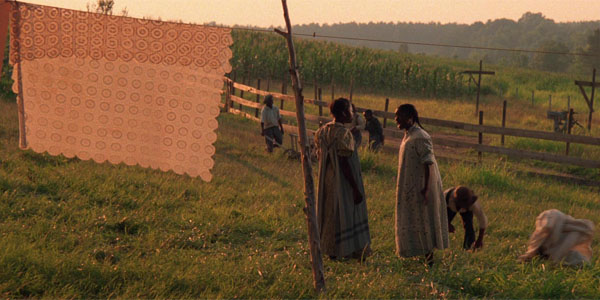 Spielberg's first foray into "serious" filmmaking isn't his best, but isn't a bad film either by any regards. Spielberg deftly handles the Pulitzer Prize-winning source material, delivering a compelling, emotional, and ultimately moving and inspiration drama, enhanced by stellar cinematography and career-best performances from cast members including Whoopi Goldberg, Danny Glover, and a then-unknown Oprah Winfrey. It's not quite as deep and hard-hitting as other Spielberg dramas, but it's still a great film, and more than anything a demonstration of good things to come from a director who was starting to step out of his comfort zone.
16. War of the Worlds (2005)
 It is of my opinion that Spielberg has three films among his ouvre that are criminally underrated and have a lot more value and worth than is commonly assigned to them. And one of them is his brilliant adaptation of this classic H.G. Wells tale. Overshadowed by Tom Cruise's couch-jumping antics which occurred while promoting the film and maliciously maligned for its ending (which, to be fair, is indeed a bit of a stretch and a cop-out), the fact of the matter is that the first 3/4 of this film features some of the most thrilling, terrifying, relentless filmmaking Spielberg has ever directed. Gone are the docile aliens of Close Encounters and E.T. - in this dark, post-9/11 world, Spielberg's aliens are out to get us, and we are utterly defenseless. The feeling of total despair hanging over the film and its characters is masterfully crafted and sustained, and Spielberg does a great job at creating an unlikable, reluctant protagonist who is taking all of this much harder than a more competent "hero"-type would. It features some incredible CGI and brilliant set pieces, and is overall just a very entertaining, thrilling film.
15. Duel (1971)
 I'll admit, this entry is kind of cheating: Duel was a made-for-TV movie directed by Steven Spielberg in 1971 for ABC (though it was later re-cut for theatrical release). However, though Spielberg directed a number of mostly forgettable TV movies in this period of his career, Duel stands out as a true sign of the great things to come from the young, thirsty director. It is a taught, relentlessly thrilling and refreshingly simple tale of a man who finds himself caught in a truly terrifying situation. Cribbing off of Hitchcock's "innocent men in over their heads" trope (most prominently featured in North by Northwest), Spielberg truly makes this film his own, establishing some trademark techniques and shots that would later become staples of his filmography. It's quite a thrill watching this film and spotting the seeds of what will later become mainstays of Spielberg's style and career, but mostly it's just an entertaining, engaging story.
14. Empire of the Sun (1987)
 The second in Spielberg's unofficial "criminally underrated" trilogy, Empire of the Sun is the fascinating story of a young British boy in WWII who has to fend for himself after becoming separated from his parents and is captured by Japanese forces invading Shanghai. Based on J.G. Ballard's semi-autobiographical novel, Empire of the Sun is a riveting clash of two of Spielberg's most common filmmaking sentiments: The sense of childlike wonder that pervades films such as Close Encounters and E.T., and a darker, broader historical context he would explore in subsequent films such as Saving Private Ryan, Schindler's List, and Munich. The film is often accused of its overly simplistic depiction of what were actually very dark and difficult conditions in the Japanese interment camps, but what many people seem to miss is the fact that the film is extremely subjective and is told entirely from Jim Graham's point of view. Thus, the overly simplistic and "glossed over" depiction of war is simply how this young boy sees the world. Showcasing a brilliant performance from a very young Christian Bale, this is one of Spielberg's greatest and most under-appreciated triumphs.
13. A.I. Artificial Intelligence (1999)
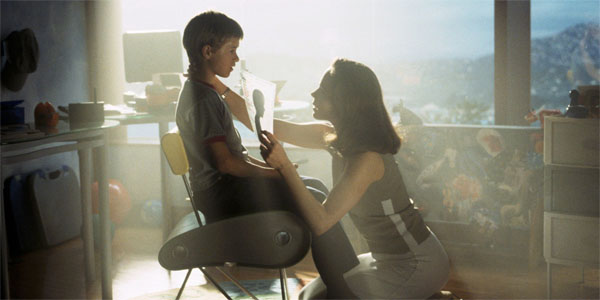 Holding the title of Spielberg's most criminally underrated film, this movie is often derided for its hugely divisive third act, which detractors claim is Spielberg succumbing to his overly-sentimental sensibilities and worse than that, tarnishing the memory of Stanley Kubrick, who had been developing the film for years before bequeathing it to Spielberg. Naturally, this couldn't be further from the truth. One important detail many detractors ignore is that Kubrick handed the film over to Spielberg four years before his death, having felt that the project was closer to Spielberg's sentiments. The other is that Spielberg remained very faithful to the original treatment, polarizing ending and all - Kubrick's version would have ended the exact same way. If one is willing to look past the ridiculous controversy and accept that the film refuses to adhere to a traditional Hollywood structure, one is rewarded with one of the most complex, intricate, and morally ambiguous films of Spielberg's career. A.I. lacks the simplistic black-and-white sense of good-vs-evil that pervades most of Spielberg's other genre work, and instead aims to ask bigger, heavier questions about what it means to be human and to have a soul. Moreover, if you think about it, the ending is actually shockingly melancholy, pervaded by some brilliant visual flair courtesy of Janusz Kaminski. It is a dark, resonant, brilliant film that I wish more people would appreciate.
12. Catch Me If You Can (2002)
 It is interesting that Spielberg would follow up one of his darkest and most melancholy films (A.I.) with one of his funniest and most light-hearted (Catch Me If You Can). Indeed, Catch Me If You Can is a unique film in Spielberg's ouvre, as it fails to fall into one of his two main categories (action/adventure genre films or historical dramas). Instead, Catch Me If You Can is an infectiously entertaining period yarn, telling the incredible true story of Frank Abagnale Jr., one of the most famous and successful con artists of all time. Everything in this film is firing on all cylinders starting with the cast, including one of Leo DiCaprio's best pre-Aviator performances, Tom Hanks at his loosest and funniest, a pre-fame Amy Adams and Christopher Walken at his very best. Janusz Kaminski's cinematography is lush, saturated and mouth-watering, John Williams' score is uncharacteristically jazzy and breezy, and Spielberg's direction is taught, focused and energetic, keeping the story moving along as even though it is fairly episodic, hitting on many beats in Abagnale's life and the interesting people he encounters along the way and lead up to his eventual coming of age.
11. Lincoln (2012)
 Easily Spielberg's best film since 2005's Munich, Lincoln shows just how much the director has matured and grown since he made Amistad almost 15 years ago. Lincoln tells a similarly historically important story, but it does so with such a refreshing sense of energy, if I didn't know any better I would think a different director were behind it. Far from the "stuffy history lesson" many people make it out to be, Lincoln is actually an incredibly funny and endearingly honest depiction of one of the great historical characters of our time. Working off of one of the finest screenplays of any of his films courtesy of playwright Tony Kushner, Spielberg assembled one of his very finest ensemble casts, led by the greatest actor of this generation, Daniel Day-Lewis. Kushner's sharp, witty dialogue rolls off these thespian's tongues like a cascading waterfall, and the result is a restrained, breezy, character-driven procedural deconstructing myths and presenting an honest, entertaining depiction of a fascinating series of events. Where old Spielberg would indulge and sensationalize, new Spielberg lets the characters and the writing do all the legwork here, aided by gorgeous cinematography and production design courtesy of Spielberg's regular collaborators.
10. Indiana Jones and the Last Crusade (1989)
 Often overshadowed by the first film in the series, The Last Crusade is actually quite a brilliant film in its own right. After the entertaining-but-silly romp that was Temple of Doom, Spielberg showed us he meant business with one of the greatest opening sequences of any film, featuring River Phoenix as a young Indiana Jones acquiring all of Indy's trademarks in one big, thrilling set-piece (the love for archaeology, the whip, the chin scar, the fear of snakes... it's all there). Much of The Last Crusade is a retreading of what made Raiders so good - but that isn't necessarily a bad thing. It features thrilling action set-pieces that rival those from the original film, stunning imagery, intrigue and espionage, and a truly brilliant and surprisingly subdued finale that actually requires Jones to use his knowledge of archaeology for one of the only times in the trilogy. In many ways, The Last Crusade actually harbors more emotional depth and resonance than Raiders with the added element of Jones' dynamic with his father Henry, played by Sean Connery. No longer a free agent, Indy now has to worry about his poor father and keep him out of trouble, all the while still trying to seek his approval even after all these years. It's that extra layer of genuine character that truly lends this film the Spielberg touch. A true classic.